How to build a surplus building materials marketplace that keeps good stock out of the dumpster.
This guide covers building a marketplace for leftover, overstock and reclaimed building materials: choosing an area and a type of seller, the details buyers filter on such as quantity, dimensions and lot numbers, how commission and pickup work for heavy goods, finding the first contractors and salvage yards, hazards like asbestos and lead paint, the searches to win, and a launch around building season.
Free for 15 days · No credit card · Plans from $19 a month
Connect the people who over-order with the people who need a little.
Almost every building job ends with leftovers: half a pallet of pavers, eleven boxes of tile, a door ordered in the wrong swing, lumber offcuts long enough to use. Contractors store it, forget it, and eventually throw it out. Meanwhile homeowners, small remodelers and makers pay full price for small quantities, or search for one more box of a discontinued tile to finish a floor. Reclaimed materials such as old brick, barn wood and salvaged doors add a second market of people who want character, not just savings.
The two sides
- Sellers: general contractors, remodelers, flooring and tile installers, supply yards with overstock or returns, manufacturers with discontinued lines, demolition and salvage crews, and homeowners after a project.
- Buyers: DIY homeowners, small builders, landlords doing repairs, artists and furniture makers, community workshops.
Pick the angle
Heavy goods do not travel well, so go local first: one metro area where pickup is a short drive. Then choose a focus. Contractor surplus, new and unopened, sells on price. Architectural salvage sells on age and character. Both can live on one site, but lead with one. Today this trade happens on general classifieds, in reuse store aisles, in contractor group chats and at salvage yards, where nobody can search by size or quantity.
Your buyers search by quantity and size. A site that lets them filter "at least 200 sq ft" beats one with more listings.
Make quantity, dimensions and lot numbers searchable.
Keep categories to the trades: lumber, tile and stone, flooring, doors and windows, roofing and siding, bricks and pavers, insulation and drywall, fixtures. The fields decide whether a buyer drives across town. Quantity is the most important one, and it needs a unit: square feet of tile, linear feet of trim, pieces of lumber, pallets of pavers. A buyer covering a 180 sq ft kitchen will skip any listing that does not say how much is there.
For tile and flooring, the lot or dye lot number matters: boxes from different lots can differ in shade, and buyers matching an existing floor need the same one. Ask for brand and product name too, since many buyers are hunting a discontinued line. For reclaimed materials, ask for age where known, the building it came from, and whether nails have been pulled.
Every listing also needs the pickup area and any loading help: a forklift on site, palletized or loose, ground floor or upstairs. A buyer with a pickup truck needs to know whether a pallet of brick can be loaded for them.
| Category | Example listings | Fields buyers filter on |
|---|---|---|
| Tile and stone | 12x24 porcelain tile, 14 boxes | Square feet, size, brand and line, lot number, new or reclaimed |
| Lumber | 2x6 pressure-treated, 40 pieces | Dimensions, length, quantity, treated or untreated |
| Flooring | White oak engineered plank, 260 sq ft | Square feet, species, thickness, finish |
| Doors and windows | Solid core door, 32 in, left-hand swing | Width, height, swing or opening, frame included |
| Bricks and pavers | Reclaimed red clay brick, 2 pallets | Quantity, pallets, color, age, cleaned or not |
| Fixtures and hardware | Pedestal sink, unused; antique door knobs | Condition, finish, brand, connections |
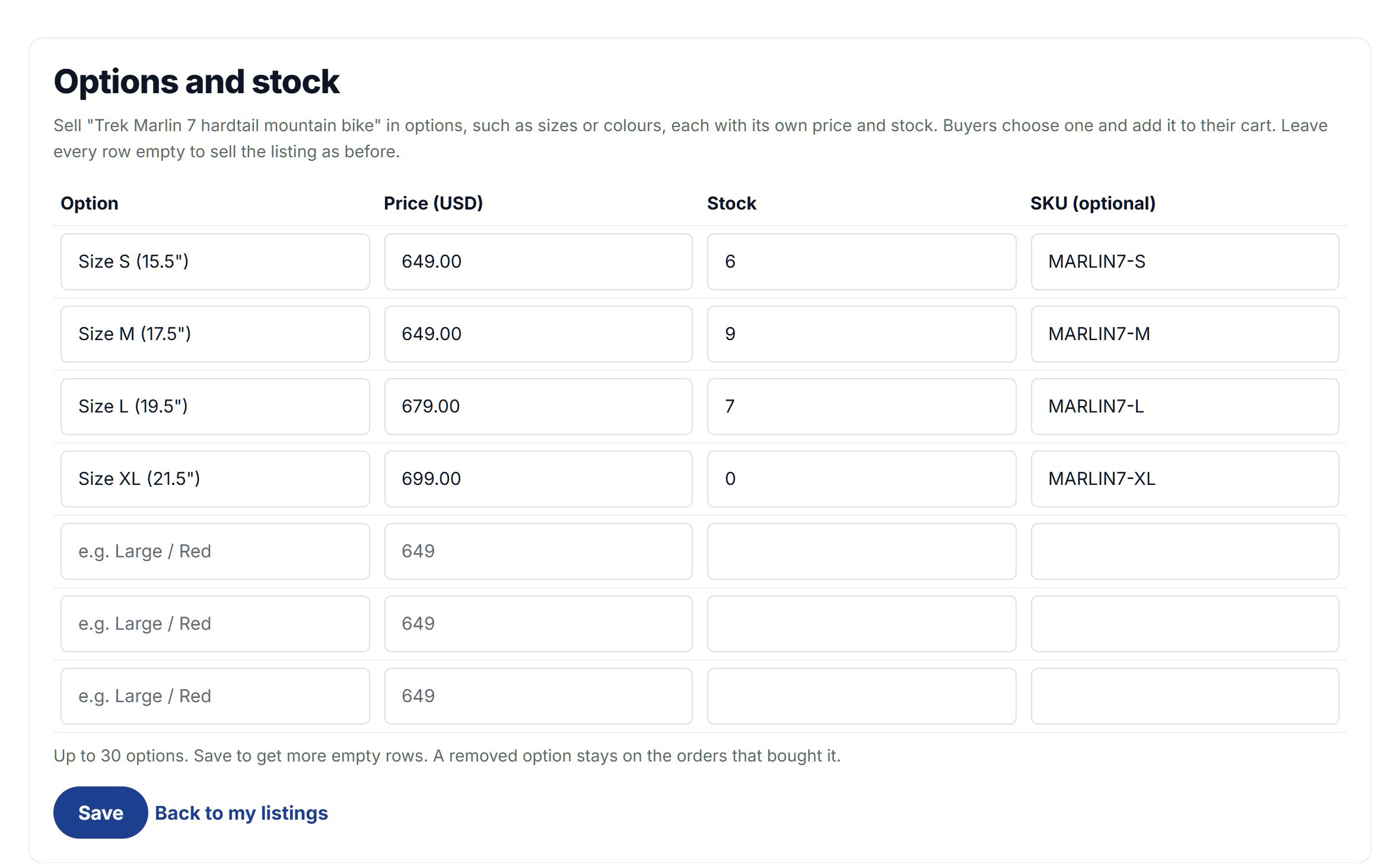
Make quantity a number field with a unit dropdown so buyers can filter by how much is available.
Earn on sales, and keep pickup simple for heavy goods.
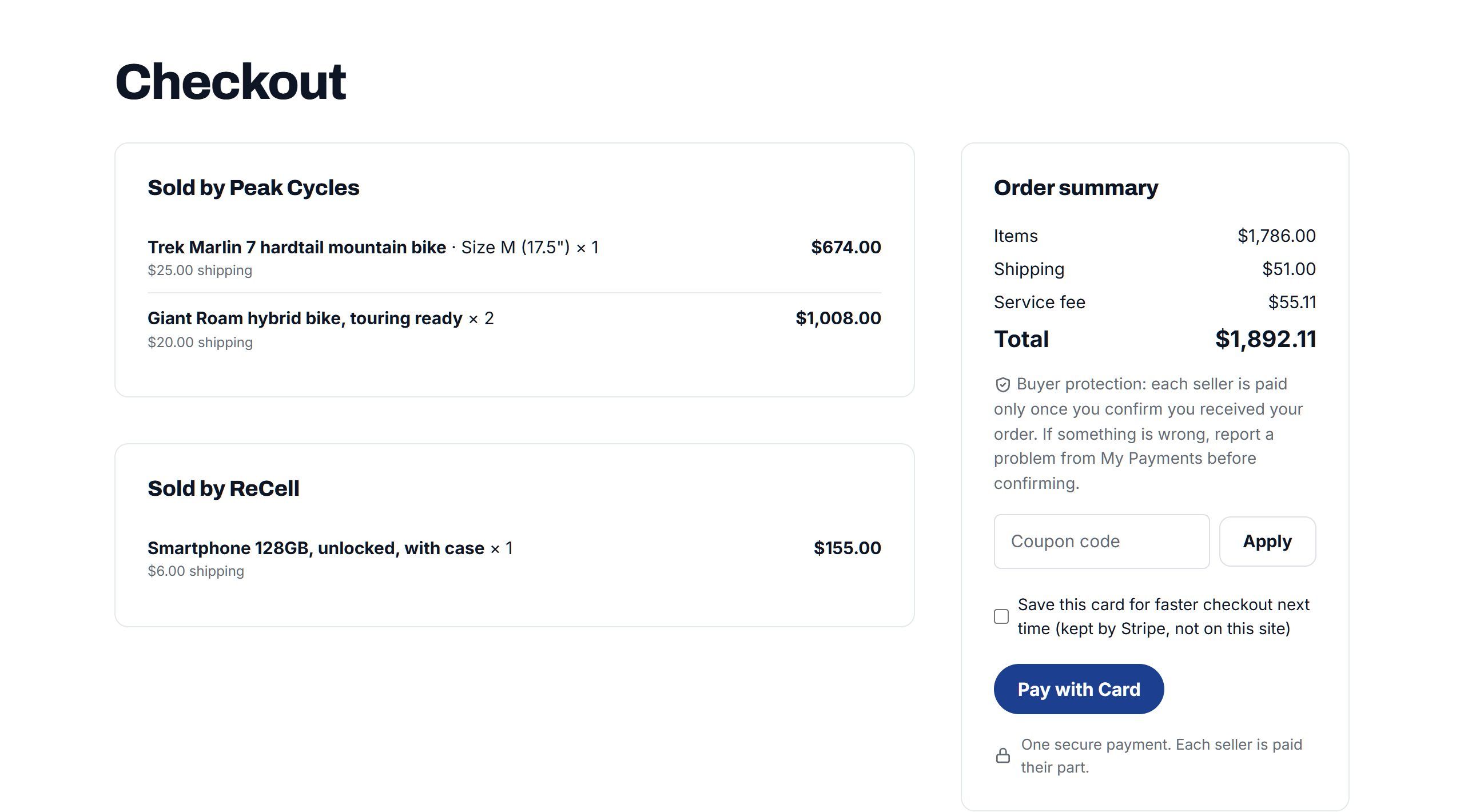
When buyers pay at checkout, you keep a commission on each sale. Contractors selling leftovers are mostly glad to recover anything, so a commission is easy to accept as long as the listing sells quickly. For low-value items such as a few offcuts, the commission is small, and that is fine: they bring visitors who come back for bigger lots.
Shipping is set per seller, and most will choose local pickup or their own delivery at a set price. A pallet of brick or a stack of drywall rarely ships, so make pickup the default and let sellers with a truck add delivery as an extra.
Supply yards and salvage businesses list steadily and benefit from memberships that cover many listings. Featured listings work for large lots, such as a full pallet of discontinued tile, where one sale is worth a lot to the seller. A buyer service fee is possible but can feel odd on a site built around saving money; leave it until buyers clearly value the convenience.
| Model | Works when | Switch it on |
|---|---|---|
| Commission per sale | Buyers pay on the site and collect | From the first sale |
| Featured listings | Large or rare lots compete for attention | When categories have dozens of listings |
| Seller memberships | Salvage yards and supply yards list weekly | Once three or four businesses post regularly |
| Paid delivery by sellers | Sellers have trucks and buyers lack them | When pickup becomes the main complaint |
| Banner spaces | Local dumpster rental, haulers and tool hire want builders' attention | When you can show visitor numbers |
Find the leftovers sitting in garages and yards today.
Supply is everywhere in this niche; it just is not listed. Your first job is to get it photographed, measured and online.
- Remodelers and tile installers. They keep leftover boxes from every job. Visit their shop or yard and offer to list it all in one visit.
- Building supply yards. Ask about special orders that were never collected, returns and discontinued lines. One yard can fill several categories.
- Salvage and deconstruction crews. They already sell reclaimed brick, beams and doors and want more buyers.
- Reuse stores and nonprofits. Some take donated materials and may welcome an online outlet for larger items.
- Homeowners after a project. Neighborhood groups are full of "leftover pavers, come take them" posts. Invite those people to list.
Supply yards usually have their overstock in a spreadsheet: import it as a CSV with quantities and sizes filled in. For contractors with a garage full of mixed leftovers, the AI listing from a photo saves the most time: they take a photo, the AI fills in the title, description, category and price, and they check the details, adding quantity and lot number.
One afternoon in a contractor's yard with a tape measure can produce thirty listings.
Watch for stolen materials, hidden hazards and quantity disputes.
Building materials carry some risks that general classifieds rarely think about. Write clear rules and moderate new sellers closely.
- Stolen materials. Theft from job sites is common, and stolen copper, lumber and tools often appear for sale soon after. Be wary of new sellers with large lots of new material at very low prices, and approve their listings by hand at first.
- Asbestos and lead paint. Old floor tiles, siding, roofing, insulation and painted doors or windows from older buildings may contain asbestos or lead. Rules on selling these differ by place; check the rules where you operate. Ask sellers to state the age of reclaimed items and, for anything likely to contain these materials, either ban it or require a test result.
- Treated and damaged material. Pressure-treated or chemically treated wood should be described as such. Water-damaged drywall and insulation should not be listed at all.
- Quantity and condition disputes. A buyer arrives to find nine boxes, not fourteen, or chipped tiles. Ask for photos of the full lot, a count in the listing, and set a returns policy for items paid on the site.
- Pickup safety. Heavy loads, yards and empty sites. Tell buyers to bring help and a suitable vehicle, and to meet during working hours.
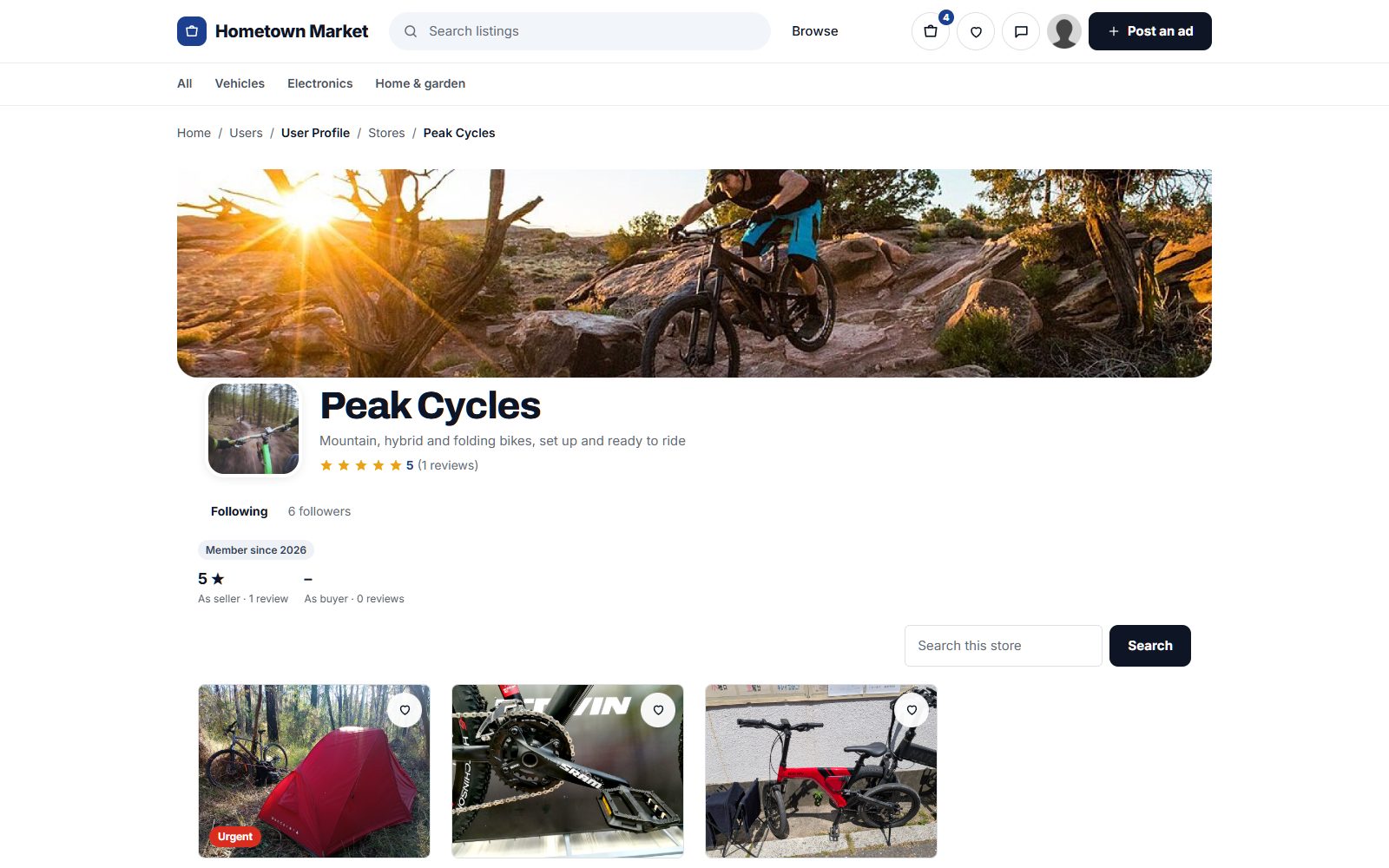
Seller profiles with ratings and reviews show buyers which contractors describe lots honestly.
Rank for discontinued products, local surplus and salvage.
Searches in this niche are often very specific, which makes them easier to win. Buyers look for exact products: "discontinued Daltile Rittenhouse square", "leftover hardwood flooring for sale", "surplus pavers near me", "reclaimed brick Chicago" and "used interior doors cheap". Many people search a brand and product line by name because they need a few more boxes to finish a floor.
Pages to build
- Category and city pages: "Surplus tile in Phoenix", "Reclaimed lumber in Portland".
- Listing pages with brand and line in the title, so a discontinued product search lands on the right boxes. Keep sold listings online with a sold note: they still catch those searches.
- Guides: how to match a discontinued tile, how many boxes for a room plus waste, how to clean reclaimed brick, how to check old wood for lead paint.
- Price guides: what leftover tile or reclaimed brick usually sells for compared with new.
Content on reuse and landfill diversion also draws links from city recycling programs, sustainability groups and reuse nonprofits, which helps the whole site rank.

Launch in spring, when building season and cleanouts begin.
In most climates spring is when remodeling starts, contractors clear their yards, and homeowners plan summer projects. Launch a few weeks before, so supply is in place when buyers start searching.
First steps
- One metro area, with pickup within a short drive for most buyers.
- Two or three supply yards or salvage businesses signed up as anchor sellers.
- Twenty contractors with leftovers listed, each visited once.
- A partnership with a local reuse nonprofit, a makerspace or a home show.
Launch checklist
- Quantity, unit and dimensions required on every listing.
- Rules on asbestos, lead paint, treated and damaged material published.
- Pickup instructions, hours and vehicle advice on each seller profile.
- Manual approval for new sellers with large lots.
- A short page on returns for paid orders.
After launch, post a weekly roundup of new lots in local remodeling and DIY groups. Buyers who missed a pallet of pavers once will set up a saved search with email alerts for the next one.
A worked example: Leftover Lot Exchange, central Ohio.
Consider Leftover Lot Exchange, a fictional surplus building materials marketplace serving Columbus and the towns within an hour of it, from Delaware down to Lancaster. Pickup is the default, so the founder drew the area as a circle a buyer with a pickup truck would happily drive in a Saturday morning. Anything outside that circle stays off the site until the center is full.
How it started
The founder installed tile for twelve years and ended every job with a few boxes left over. His garage held more than thirty part-cartons of porcelain, stone and mosaic, and his phone kept ringing with homeowners asking whether he had "one more box" of something discontinued. He tried posting on general classifieds, but every buyer asked the same questions: how many square feet, what dye lot, can you load it. So he built a site where those answers were required fields. His first sellers were three installers he worked alongside, a flooring store with a back room of special orders never collected, and a deconstruction crew that took apart old houses for reuse.
Categories
- Tile and stone
- Porcelain and ceramic
- Natural stone and mosaics
- Wood
- Dimensional lumber
- Flooring
- Reclaimed beams and barn siding
- Openings
- Interior and exterior doors
- Windows and skylights
- Masonry
- Brick
- Pavers and wall block
- Kitchen and bath
- Cabinets
- Sinks, tubs and fixtures
Who it serves
Most buyers are homeowners finishing or repairing a room, small landlords who need four matching doors, and furniture makers hunting old-growth wood. A smaller group of remodelers buys large lots for budget jobs and resells their own leftovers afterward, so the same company can be on both sides in one month. Community workshops and a theater set shop round out the regulars, buying odd lots of plywood and trim that nobody else wants.
How it makes money
Leftover Lot Exchange keeps a commission on each sale paid through checkout. Two supply yards and the deconstruction crew pay for seller memberships because they list every week. Featured listings sell well on big lots: a full pallet of discontinued tile or a complete kitchen pulled from a model home. A local dumpster rental firm and a hauler share the banner spaces, since the same customers need both.
Spring is the busy season. In winter, the founder spends his time visiting yards and measuring stock so the site is full when the weather turns. His rule for every lot is the one he learned as an installer: if he would not buy it for a customer's floor, it does not go on the site.
| Listing | Price | Key details |
|---|---|---|
| 12 x 24 in matte porcelain tile, 16 boxes | $340 for the lot | About 245 sq ft, one dye lot, discontinued color, pallet on ground floor |
| Reclaimed oak barn beams, 6 pieces | $95 each | 8 x 8 in, 12 to 16 ft long, unpainted, nails pulled |
| Solid core interior door slabs, 5 pieces | $60 each | 30 in wide, unfinished, new in wrap, no frames |
| Shaker kitchen cabinet set, 11 boxes | $1,200 for the set | White, from a model home, hinges and pulls included |
| Concrete pavers, 3 pallets | $180 per pallet | About 120 sq ft per pallet, gray, forklift loading on weekdays |
The first 90 days: measure, photograph and list before you promote.
Supply in this niche is everywhere but invisible, so the first 90 days are mostly legwork: visiting yards, measuring lots and getting them listed with quantities a buyer can trust. Time the plan so that day 90 falls just before your local building season begins, usually early spring in most of the country.
Write your rules before you visit anyone. Sellers will ask what you accept, and you need a clear answer on old painted items, materials that may contain asbestos, water damage and treated wood. A one-page rule sheet also makes the visit faster, because you can say no to unsuitable stock on the spot.
Measure success by the number of complete listings, not by the number of sellers. A listing with quantity, unit, dimensions, photos of the whole lot and pickup details will sell; a listing that says "leftover tile, make an offer" will collect questions and no orders. Bring a tape measure, a moisture meter and a phone with a good camera to every visit, and list lots before you leave the yard. Before promoting, ask three friends who are not in the trade to search for something specific and tell you what confused them. Promote only when every main category has enough stock that a first visitor finds something worth the drive.
| Weeks | Focus | Done when |
|---|---|---|
| 1-2 | Choose the area and the angle | You have a pickup radius, a lead focus (new surplus or salvage) and ten likely sellers named |
| 3-4 | Write the rules | Accepted and banned materials, pickup advice and returns fit on one page |
| 5-6 | Sign anchor sellers | Two supply yards or salvage firms have imported their stock with quantities and units |
| 7-8 | Visit contractors and list their leftovers | Twenty contractors have at least one complete lot online, measured and photographed |
| 9-10 | Test sales with real buyers | Ten sales paid on the site and collected, with any count or condition problems noted |
| 11-12 | Promote to buyers | Posts in local DIY and remodeling groups are live and the first saved searches are set up |
Ways to build it, judged by quantity, location and pickup.
A surplus materials site lives or dies on three things: buyers filtering by quantity with a unit, listings tied to a pickup location, and sellers adding lots quickly from a garage or yard. Payment matters too, because a buyer who has paid is far more likely to show up than one who promised to come Saturday.
Building it yourself with developers lets you design features such as tile calculators, matching by brand and dye lot, or delivery quotes from local haulers. Those ideas are attractive, but each one costs real money, and none of them matters until you have stock. Leave this route until you know what your buyers actually use.
Installing a classifieds or marketplace script on your own server is cheaper to start. Check that it supports number fields with units as search filters, a map or location per listing, and payment at checkout with pickup instead of shipping. Plan for server upkeep and photo storage, because building materials need many photos per lot.
A hosted builder gets you to listings fastest. Look for custom fields that become search filters, import from a spreadsheet for supply yards, and listing from a photo for contractors who will not type. You give up custom tools such as a coverage calculator, and you work within the fields and filters the builder offers.
Whichever you pick, test it with a real lot: sixteen boxes of tile, one dye lot, a pallet in a garage. If a buyer cannot find it by searching for 200 square feet, the route is wrong, however good the rest of it looks.
| Route | Fits when | Watch out for |
|---|---|---|
| Custom development | You want calculators, dye lot matching or hauler quotes built in | Spending on features before there is stock to sell |
| Classifieds or marketplace script on your server | You can run a server and store many large photos | Number filters with units and pickup-only checkout may need extra work |
| Hosted builder | You want contractors listing lots this season | Working within its fields and filters instead of custom tools |
What a surplus building materials marketplace costs to run.
The software is the smallest part of the bill. Most of the cost is your time in the first months: finding the first listings, answering questions and checking what gets posted.
Costs specific to this niche are mostly local: fuel and time visiting yards and contractors, perhaps a measuring kit and moisture meter for checking lots you feature, and lead or asbestos test kits if you decide to require tests for old materials. If you ever store or move materials yourself, insurance and a truck change the budget completely.
| Cost | Typical range | On Yclas |
|---|---|---|
| Domain | $10 to $20 a year | Your own, with SSL included |
| Software and hosting | $0 to $100+ a month, plus plugins and updates | Marketplace $149 a month for checkout and commission |
| Design | $0 to $100 for a theme, or a designer | 109 looks included |
| Payment fees | About 3% per payment | Your Stripe or PayPal fees; Yclas takes nothing |
| Your time | 5 to 10 hours a week at the start | Finding listings, moderation, support |
Mistakes that turn a surplus marketplace into a junk pile.
- Listing lots without a count. "Some tile left over" tells a buyer nothing. A homeowner covering a hallway needs to know whether there are 60 or 160 square feet before driving across town. Make quantity and unit required, and send listings back to sellers when they are missing.
- Accepting everything. Broken pallets of mixed brick, water-stained drywall and half cans of old paint make the site look like a curbside pile, and good sellers will not list next to them. Publish what you do not accept and remove it quickly. A smaller site with clean, honest lots earns repeat visits; a big one full of rubble earns none.
- Leaving sold lots looking available. A buyer who calls about tile that went last week will not trust the next listing. Ask sellers to mark sales the same day, and expire listings that nobody has updated in a set period. Keeping a sold lot online with a clear sold label is fine; leaving it looking available is not.
- Covering too large an area. Heavy materials rarely ship, and buyers will not drive two hours for twelve boxes. A tight pickup radius with plenty of stock beats a state-wide site with three listings per town.
- Expecting contractors to do the typing. Installers and remodelers are on job sites all day. If listing takes more than a few minutes, the leftovers go to the dumpster. Offer to list the first lots for them, or let them list from a photo and add the count.
- Pricing surplus like new. Leftovers sell because they are cheaper or impossible to find. Sellers who ask full retail for an open box do not sell, then blame the site. Show them what similar lots went for and suggest a price that moves stock.
- Waving through reclaimed items from old buildings. Painted doors, old floor tiles and pipe insulation from older homes may contain lead or asbestos. Ask for the age of every reclaimed item and refuse what you cannot be confident about.
- Ignoring how buyers will load. A pallet of pavers weighs far more than a pickup bed should carry in one trip, and a buyer who arrives with a hatchback wastes everyone's afternoon. Require loading details on every lot and warn buyers about weight. Sellers with a forklift or a delivery truck should say so, because it wins them sales.
- Missing the spring cleanout. Contractors clear yards and homeowners plan projects in early spring. A site that launches in June has missed both the biggest supply and the strongest demand of the year. Do your measuring in winter so the listings are ready when the thaw comes.
Building trade terms that appear in surplus listings.
Sellers will use these words, and buyers will search with them.
| Term | What it means |
|---|---|
| Dye lot | A production batch of tile or flooring; boxes from different batches can differ slightly in color. |
| Overstock | New material a supplier or contractor has more of than it needs. |
| Special order | Material ordered for one customer that was never collected or was returned. |
| Discontinued line | A product the manufacturer no longer makes, often sought to repair or extend an existing floor. |
| Deconstruction | Taking a building apart by hand to save materials for reuse, instead of demolishing it. |
| Architectural salvage | Old building parts such as doors, mantels, columns and hardware, sold for their age and character. |
| Offcuts | Pieces left after cutting lumber, sheet goods or stone to size. |
| Nominal size | The name size of lumber, such as 2x4, which is larger than its actual dimensions. |
| Board foot | A volume measure for lumber: one foot long, one foot wide and one inch thick. |
| Linear foot | Length measured in feet, used for trim, molding and countertops. |
| Door swing | Which way a door opens and which side its hinges are on, also called handing. |
| Rough opening | The framed hole in a wall that a door or window must fit into. |
| Pressure-treated | Wood treated with chemical preservatives for outdoor use, which needs care when cutting or burning. |
| Attic stock | Spare material a builder leaves with the owner for future repairs. |
The same steps for a surplus building materials marketplace on Yclas.
- Describe your marketplaceThe setup wizard writes the categories, an About page and example listings from one sentence.
- Add fieldsThe details buyers filter on, as dropdowns, numbers or checkboxes.
- Bring sellersInvite them, import their stock from a spreadsheet, or post for them.
- Set the rulesChoose moderation, verified sellers, reviews and reports.
- Take paymentsOn Marketplace, buyers pay on the site and you keep a commission, with Stripe.
How much do I need to start a surplus materials marketplace?
Very little if sellers keep the materials and buyers collect from them. The main cost is your time visiting yards and contractors to get stock listed. Avoid holding stock yourself until you have steady sales.
Is it legal to resell reclaimed materials that may contain asbestos or lead?
Rules vary by country, state and city. Check the rules where you operate, and the simplest safe choice is to ban suspect materials or require a test result.
Will contractors bother to list leftovers?
Many will if it takes a few minutes. Offer to list their first lots for them, and point out that it saves a dump fee and frees up their yard.
How do buyers get heavy items home?
Most collect with their own truck or trailer. Sellers who can deliver set a delivery price, and local haulers may want a banner on the site.
How do I make money if items are cheap?
A commission on each sale adds up across many listings, and big lots carry most of the value. Memberships for supply yards and salvage businesses add steady income.
How do I avoid selling stolen materials?
Approve new sellers by hand, look closely at large lots of new material sold far below normal prices, and ask questions. Remove listings and keep records when something looks wrong.
Can I compete with general classifieds sites?
Yes, on search. General sites cannot filter by square feet, lot number or dimensions, and that is exactly what a buyer finishing a floor needs.
Can homeowners sell on the site, or only businesses?
Both can, and homeowners often have the best single lots after a remodel. Approve new sellers' first listings by hand, and ask homeowners for the same counts, sizes and photos you ask of contractors.
Should I open a physical reuse warehouse as well?
Not at first. A warehouse brings rent, staff, insurance and trucks, and it changes the business entirely. Many reuse warehouses depend on donations and volunteers, which is a different model from a marketplace that earns on each sale. Keep materials with the sellers until online sales show you exactly what would sell from a warehouse.
How should sellers price leftovers?
A useful starting point is well below the price of new, with a bigger cut for odd sizes and small quantities and a smaller cut for rare discontinued lines. Sold listings on your own site soon become the best price guide, and you can publish typical prices by category once you have enough of them.
Can I accept materials from nonprofit reuse stores?
Yes, many reuse stores welcome a second outlet for large items like cabinets and doors. Agree with them who handles pickup and whether their own store rules on old materials apply to what they list.
What should a buyer check when collecting?
Count the boxes or pieces, check a few for chips and warping, confirm the lot number matches the listing, and look at the bottom of the pallet. Problems should be raised before loading, not after the buyer gets home. Ask sellers to leave time for that check rather than rushing buyers off the lot.
Related pages.
The parts of Yclas this leans on.
You have the plan. Now put your city's leftovers back to work.
Describe your site in a sentence and the setup wizard writes the categories, example listings and a look. Free for 15 days, no credit card.
Start my marketplace