
How to build a truck and trailer classifieds website owner-operators trust.
This guide is for founders building a site for used semi trucks, trailers and work trucks: choosing a region or equipment type, the specs buyers filter on, how dealers and fleets pay, where the first 100 trucks come from, the fake-dealer and title scams to stop, the searches to rank for, and a launch plan built around the trucking calendar.
Free for 15 days · No credit card · Plans from $19 a month
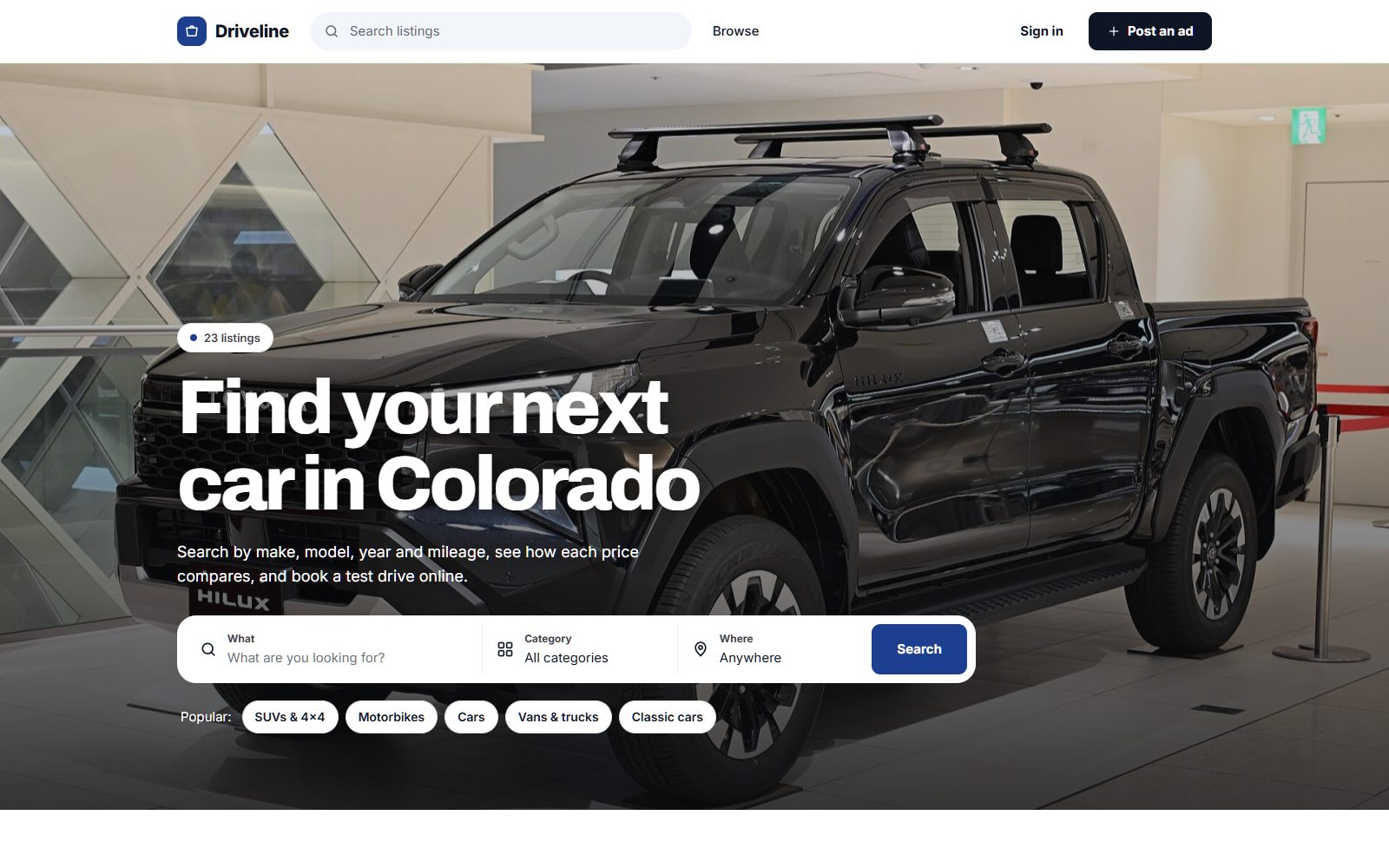
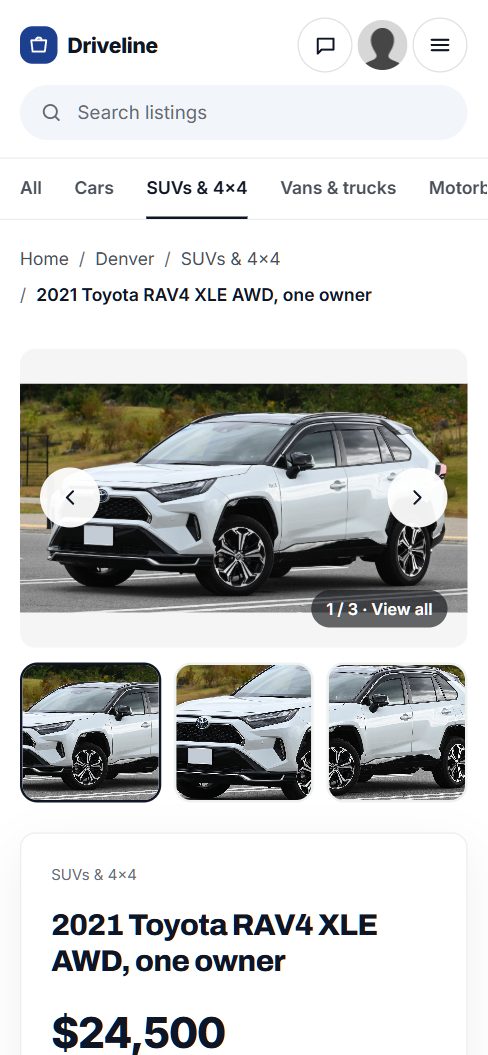
Serve buyers who need specs, not just pictures.
A truck or trailer is a working tool. The buyer is an owner-operator buying a first tractor, a small fleet replacing units, a farmer who needs a grain trailer, or a contractor looking for a dump truck. They care about engine model, transmission, axle ratio and service records far more than paint, and a general classifieds site gives them nothing to filter on.
Specialist national sites exist, such as TruckPaper and Commercial Truck Trader, and most of their listings come from dealers. Your opening is where they are thin:
- A region: a state or freight corridor where buyers want to inspect a truck in person instead of traveling hundreds of miles.
- A type of equipment: reefer trailers, livestock and horse trailers, lowboys and heavy haul, dump trucks, box trucks for local delivery, or tow trucks.
- A buyer type: new owner-operators, small fleets of one to ten trucks, or farms and ranches.
- Private and small-fleet sellers, who are poorly served by dealer-centered sites and sell through brokers, word of mouth or Facebook groups.
Look at where trucks change hands now: dealer lots, auction yards, truck stop bulletin boards, driver groups and forums, and fleets that sell their trade-ins direct to drivers.
Pick an equipment type or region you can talk about with authority. Truck buyers spot an outsider fast.
Split trucks from trailers and let the specs do the filtering.
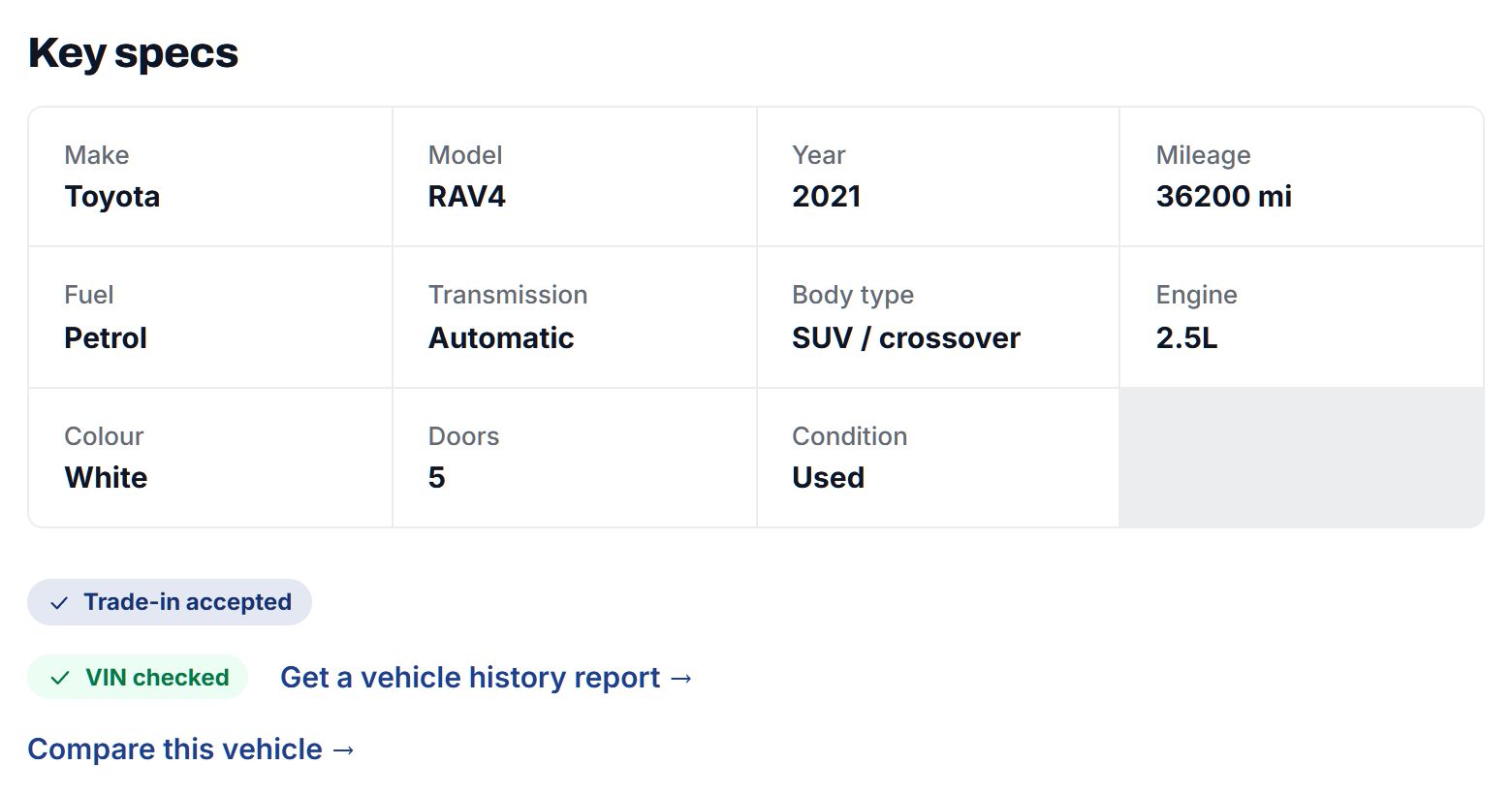
Trucks and trailers need different fields, so make them separate top-level categories with a few subcategories each. Then put the real detail into fields buyers can filter and compare side by side.
Trucks
- Make, model, year, mileage and price.
- Engine make and model (for example Cummins X15 or Detroit DD15), horsepower, and transmission (manual 10, 13 or 18 speed, or automated).
- Sleeper size or day cab, axle configuration, rear axle ratio, suspension (air ride or spring) and wheelbase.
- Emissions equipment, and whether the truck meets the rules where the buyer runs it.
Trailers
- Type, length, width, number of axles and suspension.
- Floor type, door type (swing or roll-up) and GVWR.
- For reefers, the refrigeration unit make and its hours.
Add a field for the date of the last annual inspection. Buyers ask for it on the first call, and a recent one says something about how the seller looks after equipment.
| Category | Example listings | Fields buyers filter on |
|---|---|---|
| Sleeper trucks | Long-haul tractors with mid or raised roof sleepers | Engine, horsepower, transmission, mileage, sleeper size |
| Day cabs | Regional and local tractors | Axle configuration, engine, mileage, fifth wheel |
| Vocational trucks | Dump trucks, roll-offs, tow trucks, mixers | Body type, GVWR, engine, axles, PTO |
| Box trucks and medium duty | Box trucks, flatbeds, stake beds | Box length, liftgate, GVWR, CDL required |
| Dry van and reefer trailers | 53 ft dry vans, reefers | Length, door type, reefer unit and hours, suspension |
| Flatbed and specialty trailers | Flatbeds, step decks, lowboys, livestock and grain trailers | Deck length, axles, capacity, ramps, tarp kit |
Make GVWR and CDL required filters on medium-duty trucks: many small businesses want a truck their drivers can run without a commercial license.
Charge dealers and fleets, and keep owner-operators free at first.
Trucks and trailers are high-value listings, and most of the supply comes from businesses: dealers, fleets, leasing companies and auction houses. That makes this one of the easier niches to charge in, once buyers are on the site.
- Dealer memberships are the core model. A used truck dealer lists dozens of units and is used to paying for listings on specialist sites. Price by inventory size.
- Pay to post works for trucks and big trailers sooner than in most niches, because someone selling a tractor worth tens of thousands of dollars expects a fee. Start free anyway, until buyers arrive.
- Featured listings help fleets that are clearing many identical units at once.
- Banner spaces sell to truck financing companies, insurance agents who cover owner-operators, repair shops, tire dealers and CDL schools.
- Auctions suit fleet disposals and equipment sold as-is, where several buyers will bid.
Keep small and private sellers, such as an owner-operator retiring with one truck, free for longer. Their trucks are the listings buyers hope to find below dealer prices, and they keep buyers checking your site.
| Model | Works when | Switch it on |
|---|---|---|
| Dealer memberships | Dealers get calls and messages from your buyers | Once you can report leads per dealer |
| Pay to post for trucks | Your site is a known place to sell in the region | After a few months of steady enquiries |
| Featured listings | Fleets sell many similar units at once | When category pages run to several pages |
| Banner spaces | Lenders, insurers and CDL schools want buyers | When you can show steady monthly traffic |
| Auctions with Buy now | Fleet disposals and as-is equipment | When a fleet asks to sell in bulk |
Fill the site with dealer, fleet and auction inventory.
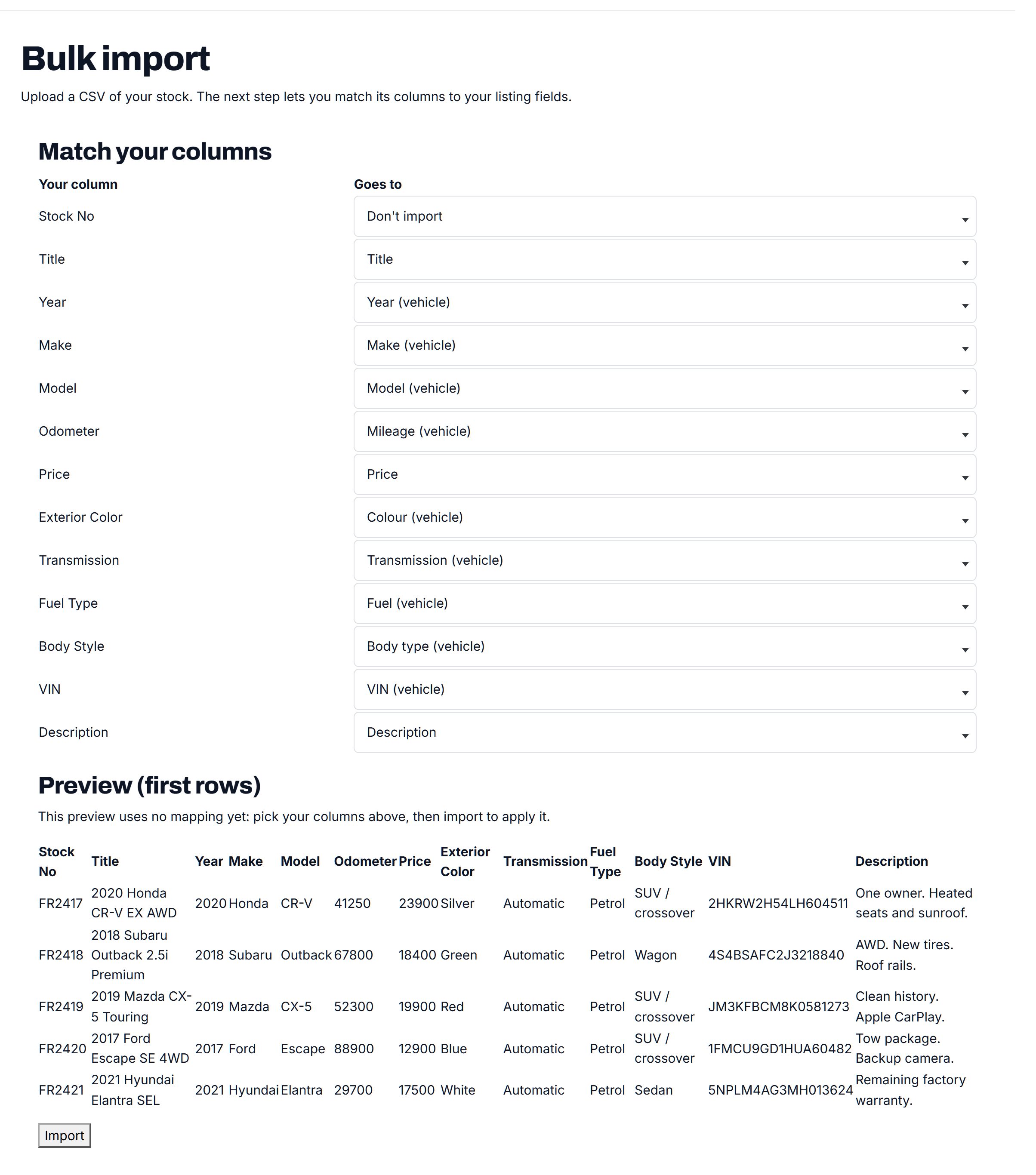
A single used truck dealer can give you 50 units in an afternoon, so dealers come first. Most keep their inventory in a spreadsheet or a dealer system that exports one, and a CSV import gets it onto your site with the specs in the right fields.
- Used truck and trailer dealers in your region: visit, offer free listings for the launch period, and bring in their stock.
- Fleets selling trade-ins: regional carriers replace trucks on a cycle and often sell older units direct to drivers. Ask the fleet manager or the maintenance shop.
- Leasing and rental companies: they sell off-lease tractors and trailers in batches.
- Owner-operators: driver groups on Facebook, trucker forums and truck stop boards are full of trucks for sale with a phone number and three photos.
- Farm and ranch sellers: grain trailers, livestock trailers and farm trucks, found through farm stores and livestock auctions.
- Trailer dealers and truck body builders: they take trade-ins they want to move quickly.
Help private sellers with photos and specs. A listing with photos of the engine data plate, the odometer and the tires gets far more serious enquiries than one with a single front shot.
Ask each dealer for a fresh export every week. Buyers who drive hours to see a truck sold last week will not come back.
Stop fake dealers, stolen trailers and title problems.
High prices and buyers spread across many states make trucking a favorite target for fraud. Know the patterns before they show up on your site.
- Fake dealers: copied photos of real inventory, a price well below market, a professional-looking website, and a demand for a wire transfer before the truck ships. The truck never arrives.
- Stolen trailers and equipment: trailers are easy to hook up and drive away, and some come back with new paint and missing VIN plates.
- Title and lien problems: a truck still under finance, an undisclosed salvage title, or a seller who is not the owner.
- Emissions tampering: "deleted" trucks with emissions equipment removed, which can be illegal to sell or run in many places.
What to do
- Require the VIN on every truck and trailer, and approve every listing while you are small.
- Verify dealers before they post in bulk: a phone call, a visit or a check of their business registration, then a verified seller badge.
- Decide whether you accept emissions-deleted trucks before the first one is posted, and check the rules where you operate.
- Publish a buyer guide: inspect in person or send an independent inspector, run the VIN, confirm there is no lien, and never wire money to a seller you have not verified.
Let buyers report listings, and act fast on reports of copied photos. One fake dealer left online for a week can cost a buyer a down payment and cost you your reputation with every driver group in the region.
Rank for the spec-heavy searches truck buyers type.
Truck buyers search by make, model, engine and spec, often with a state: "used Peterbilt 579 for sale", "Freightliner Cascadia day cab for sale Texas", "53 ft reefer trailer for sale", "used dump truck for sale by owner", "box truck for sale no CDL". Those searches are specific enough that a smaller site with the right page can rank.
Pages to build
- Make and model pages for the trucks most sold in your region, each with current listings.
- Spec pages: manual transmission trucks, trucks with a particular engine, trailers by length and type.
- Location pages by state or metro area.
- Guides for new owner-operators: what to check on a used semi, how to read a maintenance record, questions to ask about an engine overhaul, how to budget for a first truck.
- Price guides: what a five-year-old day cab or a used dry van sells for in your region, from your own data.
Put year, make, model, engine and location in every listing title, and use the specs in the description so the page answers the long searches. Owner-operator guides attract links from driver forums and blogs, which national dealer sites rarely get.
Launch in one region with dealers and a fleet on board.
Start in one state or freight region where you can sign up three to five dealers and at least one fleet selling trade-ins. Buyers want trucks they can inspect without a long trip, so local depth matters more than national reach.
Calendar
- Large trade shows such as the Mid-America Trucking Show in Louisville each spring bring dealers, fleets and owner-operators together. Walking the show floor is an efficient way to meet sellers.
- Fleets replace trucks at the end of a trade cycle, often around year end, so ask fleet managers when their next batch goes up for sale.
- Farm trucks and trailers move around harvest and in the quiet winter months.
Partners
CDL schools, truck financing companies, independent truck repair shops and truck stops all meet buyers. A banner, or a flyer at a truck stop fuel desk, reaches owner-operators directly.
Checklist
- Truck and trailer categories with engine, transmission, axle and length filters.
- At least 100 units from several dealers plus private and fleet sellers.
- Dealer verification, the VIN rule and the buyer guide published.
- Make, model and state pages for your region.
- A post in the main driver groups and forums for your region.
A worked example: Red River Rig Exchange, north Texas and southern Oklahoma.
Red River Rig Exchange is a made-up site, sketched here to show how a truck and trailer site can come together. It covers the border region of north Texas and southern Oklahoma, where long-haul carriers, oilfield service companies, grain farms and cattle operations all buy and sell heavy equipment, and where most private trucks still change hands through word of mouth and driver groups.
Who it serves
Buyers are owner-operators buying a first or second tractor, small fleets adding units, farmers and ranchers after grain and livestock trailers, and contractors looking for dump trucks. Sellers are three used truck dealers, a trailer dealer, a regional carrier that sells trade-ins direct to its own drivers first and then to the public, a leasing company clearing off-lease reefers, and retiring owner-operators.
Categories
- Trucks
- Sleeper tractors
- Day cabs
- Dump, vocational and medium duty
- Trailers
- Dry vans and reefers
- Flatbed and step deck
- Livestock and grain
- Parts, tires and equipment
How it started
The founder drove a truck for eight years and then worked the counter at a truck parts store, so she knew the dealers and the fleet maintenance managers by name. She set up engine, transmission, axle ratio, sleeper size and trailer length as filters, then asked each dealer for a spreadsheet of their used inventory. The carrier sent a list of twenty tractors it was replacing. A month of driver groups, truck stop flyers and a table at a regional farm show brought in private sellers, and the site opened with 140 units. Her first owner-operator guide, on what to check when buying a used sleeper with high miles, was shared in three driver groups in its first week and became the page that brought most new buyers.
How it makes money
Owner-operators and farmers selling one unit post free. Dealers pay a monthly membership based on inventory, which they agreed to after three months of lead reports, and the carrier pays for featured listings each time it releases a batch of trade-ins. Banner spaces go to an equipment lender, an insurance agent who writes policies for owner-operators and a CDL school. Livestock and grain trailers draw buyers from farm country every fall, and those listings stay free because they bring the farm audience the lender wants to reach.
The site never tried to compete with national dealer sites on volume. It won because buyers could inspect every truck within a few hours' drive, and because the founder spoke their language.
| Listing | Price | Key details |
|---|---|---|
| 2019 Freightliner Cascadia 126, 72-inch raised roof | $58,500 | DD15, 505 hp, DT12 automated, 512,000 miles, dealer |
| 2017 Peterbilt 389 day cab | $64,000 | Cummins X15, 18-speed manual, 3.55 ratio, owner-operator |
| 2020 Utility 3000R 53 ft reefer | $47,900 | Carrier unit, 9,800 hours, swing doors, leasing company |
| 2015 Kenworth T880 dump truck | $92,000 | Tri-axle, 16 ft bed, PACCAR MX-13, contractor |
| 2012 Wilson 24 ft aluminum livestock trailer | $21,500 | Gooseneck, two compartments, ranch owner |
The first 90 days of a truck and trailer site.
Truck buyers make big decisions slowly. An owner-operator may watch listings for months, compare dozens of trucks and talk to a lender before calling a seller. Your first ninety days are about getting enough of the right units on the site that those patient buyers start checking it every week, and about proving to dealers that the calls are real.
Plan your weeks around the people you need to meet in person: dealers, fleet maintenance managers, leasing companies and truck stop managers. Phone calls work for follow-up, but in this trade the first agreement usually comes from a handshake at the counter or the shop door.
Measure the right things. A truck site does not need thousands of visitors to be useful: twenty serious calls a month to a dealer selling tractors is a strong result. Count calls and messages per dealer and per unit from the first week, and keep a list of what buyers ask for that you cannot yet show them, such as manual transmissions or a particular engine.
If your region has a farm show or a trucking event inside these twelve weeks, move the outreach steps around it. One day at a busy booth can do the work of two weeks of cold calls.
| Weeks | Focus | Done when |
|---|---|---|
| 1-2 | Pick the region and equipment types, set truck and trailer fields separately | Test units filter by engine, transmission, axle and length |
| 3-4 | Visit used truck and trailer dealers and agree on weekly inventory exports | Three dealers imported with specs in the right fields |
| 5-6 | Approach fleets and leasing companies about trade-ins and off-lease units | One fleet or lessor has listed a batch |
| 7 | Publish the VIN rule, dealer verification steps and buyer guide | Every dealer verified and badged before bulk posting |
| 8-9 | Recruit owner-operators and farm sellers through driver groups, truck stops and farm stores | At least 100 units live, a fifth from private sellers |
| 10-11 | Write make, model, spec and state pages, plus a first owner-operator guide | Ten pages live, each listing current units |
| 12 | Send each dealer a lead report and propose memberships | Two dealers agree to pay from next month |
Building the site: custom, self-hosted or hosted.
A truck and trailer site has heavier data needs than most classifieds sites. Trucks and trailers need different field sets, buyers compare long spec lists side by side, dealers need bulk imports that update every week, and listings carry many photos: the engine data plate, the odometer, tires, frame and interior. Moderation matters too, because fake dealers target this trade.
Custom development fits only if you plan features no ready product offers, such as live inventory feeds from dealer management systems, financing applications or a spec database that fills in a truck's details from its VIN. Each is a serious project, and you will maintain it for as long as the site runs.
A self-hosted classifieds script or WordPress plugin keeps costs down at the start and gives you control. Test it with a real dealer export before choosing: many general tools struggle with dozens of numeric fields, separate fields per category or large photo sets. You also own the updates, the backups and the spam that arrives once the site ranks.
A hosted builder such as Yclas suits a founder whose strength is knowing the trade rather than running servers: custom fields shown as search filters, spreadsheet imports, verified seller badges and listing moderation are built in. Check that the fields your buyers ask about on the first call are all supported before you start, and test an import with one real dealer file.
Whichever you choose, the spec fields are the product. Design them with a dealer and an owner-operator before you build anything else.
| Route | Fits when | Watch out for |
|---|---|---|
| Custom development | You need dealer system feeds, VIN spec lookups or finance forms | Cost, time, and maintaining integrations |
| Self-hosted script or plugin | You want control and can manage a server | Handling many spec fields and large photo sets |
| Hosted classifieds builder | You want to spend your time with dealers and fleets | Confirm every spec field and import works first |
What a truck and trailer classifieds site costs to run.
The software is the smallest part of the bill. Most of the cost is your time in the first months: finding the first listings, answering questions and checking what gets posted.
Expect costs for VIN and lien checks if you offer them, travel to dealers and fleets, and possibly a booth at a regional truck show. If you plan to broker sales or hold deposits, check the licensing rules where you operate before you start.
| Cost | Typical range | On Yclas |
|---|---|---|
| Domain | $10 to $20 a year | Your own, with SSL included |
| Software and hosting | $0 to $100+ a month, plus plugins and updates | Starter $19 a month, Professional $99 |
| Design | $0 to $100 for a theme, or a designer | 109 looks included |
| Payment fees | About 3% per payment | Your Stripe or PayPal fees; Yclas takes nothing |
| Your time | 5 to 10 hours a week at the start | Finding listings, moderation, support |
Mistakes that sink truck and trailer sites.
- One field set for trucks and trailers. A reefer trailer has no engine and a day cab has no floor type. Mixing them leaves half the fields empty and every filter unreliable. Make trucks and trailers separate categories with their own fields from the start, and give vocational trucks a body type field so a roll-off is never filed next to a sleeper.
- Specs buried in the description. Buyers want to filter by engine, horsepower, transmission and ratio, not read paragraphs. If a dealer export puts specs into one text column, take the time to map them into proper fields before importing. It is tedious work the first time, but the mapping can be reused for every weekly update after that.
- Stale dealer inventory. A buyer who drives three hours to see a tractor that sold last week will tell every driver group in the region. Get weekly exports from every dealer and remove anything missing from the new file.
- Letting unverified dealers post in bulk. Fake dealers copy real inventory, set prices low and ask for wire transfers. Call or visit before any business posts more than a handful of units, and give badges only to dealers you have checked.
- No rule on emissions-deleted trucks. Deciding after the first complaint looks weak, and the rules on selling and running them can be strict. Write your policy before launch and check the rules where you operate.
- Ignoring the private and small-fleet sellers. Dealer stock fills pages, but the retiring owner-operator's well-kept truck is what buyers hope to find. Keep private posting free and help those sellers with photos and specs.
- Covering too many states at once. Trucks are bought after an inspection, often in person. A buyer in your region wants units within a day's drive, so build depth in one area before you widen. Widen along the freight corridors your buyers already drive, not to whichever state a dealer happens to call from.
- Speaking like an outsider. A guide that confuses a day cab with a sleeper, or a page that calls a lowboy a flatbed, loses credibility fast. Have an experienced driver or mechanic read your guides before you publish.
- Skipping the photo checklist. One photo of a shiny hood tells a buyer nothing. Ask for the engine data plate, the odometer, tires, the frame, the interior and any inspection sticker, and show an example listing that does it well.
- Hiding the price. Many dealers prefer "call for price", but owner-operators filter by budget and skip listings without one. Ask for a price on every unit, or at least a price range, and explain that priced units get more serious calls.
Truck and trailer terms you need to know.
Dealers and drivers will expect you to use these terms correctly.
| Term | What it means |
|---|---|
| Owner-operator | A driver who owns or leases their own truck and runs it as a business. |
| Day cab | A tractor with no sleeper, used for local and regional runs where the driver gets home each night. |
| Sleeper | The living compartment behind the cab, measured in inches and often described by roof height. |
| Tandem axle | Two rear drive axles, the most common setup on a highway tractor. |
| Rear axle ratio | The gear ratio of the drive axles, which affects fuel economy and pulling power. |
| GVWR | Gross vehicle weight rating: the maximum safe weight of the vehicle and its load. |
| CDL | Commercial driver's license, required in the US to drive heavier commercial vehicles. |
| Reefer | A refrigerated trailer with its own refrigeration unit, which records running hours. |
| Step deck | A flatbed trailer with a lower rear deck for taller loads. |
| Lowboy | A trailer with a very low deck between the axles, used for heavy equipment. |
| Glider kit | A new cab and chassis fitted with a rebuilt older engine and transmission. |
| Delete | A truck with emissions equipment removed, which can be illegal to sell or run in many places. |
| In-frame overhaul | A major engine rebuild done without removing the engine from the frame. |
| PTO | Power take-off, which drives hydraulic equipment such as a dump bed or a wet kit. |
The same steps for a truck and trailer classifieds site on Yclas.
- Describe your nicheThe setup wizard writes the categories, an About page and example listings from one sentence.
- Add fieldsSwitch on a field pack or add the fields your buyers filter on.
- Fill itImport dealer spreadsheets, invite sellers and post your own.
- Set the rulesChoose moderation, banned words and AI checks.
- Go liveChoose a plan, connect your domain, switch on paid listings when it is time.
Can a small site compete with TruckPaper and Commercial Truck Trader?
Not on national volume. It can win a region, an equipment type or private sellers, with better local depth, specs that match how buyers search, and guides for owner-operators.
Should I charge dealers from day one?
Most dealers are used to paying for listings, but they pay for leads. Give them a free launch period, report the enquiries they receive, then move them to a membership.
Do I need a license to run a truck classifieds site?
A site that only publishes listings, and never buys, sells or holds money for the trucks, rarely needs one. Brokering and taking deposits can change that, so check the rules where you operate.
Should I include heavy equipment like excavators?
Only if your buyers overlap. Dump trucks and lowboys sit naturally next to equipment, but long-haul tractors do not. Start with trucks and trailers and add equipment later if dealers ask.
How do I handle emissions-deleted trucks?
Decide your rule before the first one is posted. Rules on selling and running them vary and can be strict, so check the rules where you operate and write a clear posting policy.
Where do I find fleets selling trucks?
Ask regional carriers' fleet managers and maintenance shops, leasing companies and auction houses. Fleets replace trucks on a schedule and many prefer selling direct to drivers.
What is the biggest mistake new truck sites make?
Loading a dealer's stock once and never updating it. Sold trucks left online lose buyers' trust faster than an empty category does.
Should I list buses, motorhome chassis or construction equipment too?
Start narrower. Buses and heavy equipment have different buyers, and mixing them in early makes the site harder to explain to dealers. Add a category only when a seller you already work with asks for it.
How do I check that a truck dealer is real?
Call the business number from a source other than the listing, visit if you can, and check that the dealer's name and address match its business registration. Badge only dealers you have checked this way.
Do sellers need to show maintenance records?
You cannot force it, but you can add a field asking whether records are available and suggest buyers ask for them. Trucks with records sell faster, so sellers soon learn to mention them, and some will upload photos of the service history with the listing.
Can I help buyers with financing?
Linking buyers to an equipment lender through a banner is common. Arranging loans yourself or earning a fee on them can bring licensing duties, so check the rules where you operate before you go further.
How many photos should a truck listing have?
Far more than a car listing. Ask for at least the four sides, the engine and its data plate, the odometer, the tires, the interior and the sleeper, and allow as many photos as your setup comfortably supports. For trailers, add the floor, the doors, the suspension and the VIN plate, plus the reefer unit's hour meter where there is one.
Related pages.
The parts of Yclas this leans on.
You have the route. Now build your truck and trailer site.
Describe your site in a sentence and the setup wizard writes the categories, example listings and a look. Free for 15 days, no credit card.
Start my classifieds site
Photo credits
The screenshots show demo sites with made-up sellers. Their photos come from Wikimedia Commons, some cropped or with signs and plates blurred; these ones are under Creative Commons licences:
- Toyota Prius (XW60) Plug-in Hybrid IMG 9905, CC BY-SA 4.0
- Ford Mustang Mach-E GT IAA 2021 1X7A0176, CC BY-SA 4.0
- 1928 Alvis Front Wheel Drive (17355318404), CC BY 2.0
- Red Vespa scooter in front of Rocca Maggiore, Assisi, CC BY-SA 4.0
- Car alternator on a workbench surrounded by various auto parts in a garage setting, CC BY 2.0