
How to build an auto parts classifieds website where every part fits.
This guide covers how to build an auto parts classifieds website for used, salvage and new old stock parts: choosing the makes or region to focus on, the fitment fields that let buyers find the right part, how the site earns money, where the first 100 listings come from, how to keep stolen parts out, which searches to win, and how to launch.
Free for 15 days · No credit card · Plans from $19 a month
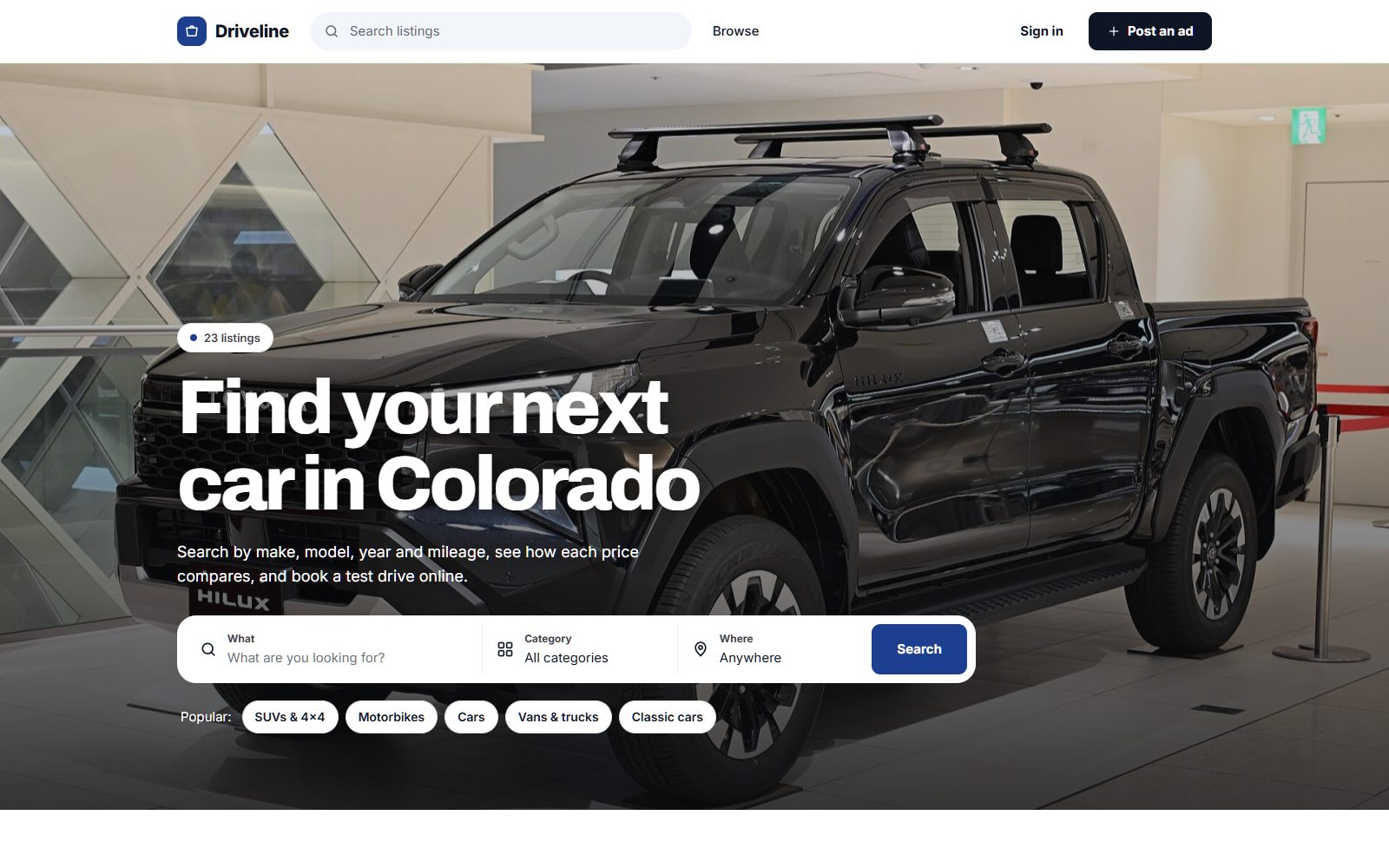
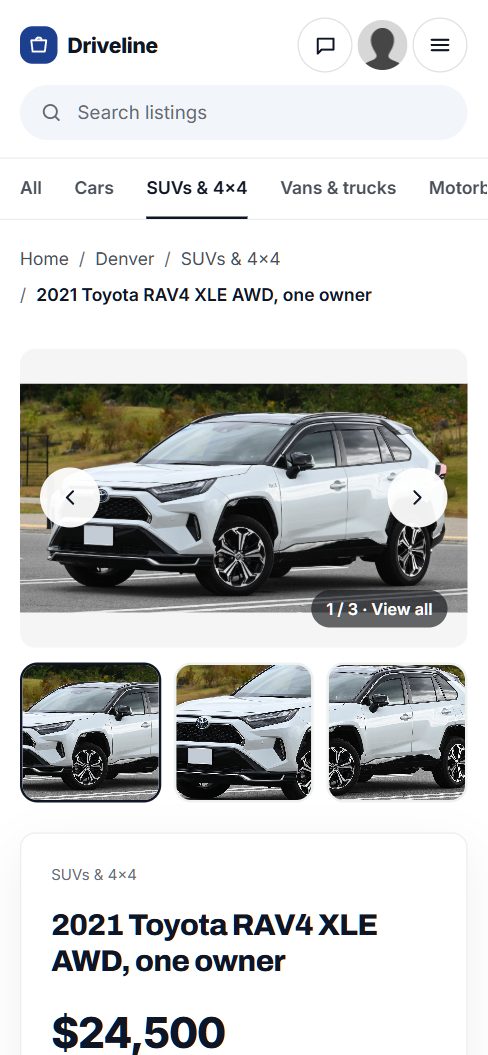
Choose the makes and buyers you will serve best.
Used parts are hard to buy on general sites. A search for a headlight returns hundreds of results for the wrong car, sellers leave out the year range, and nobody says whether the part came off the left or the right side. A parts site that answers "will this fit my car" wins the buyers that Craigslist, Facebook Marketplace and eBay leave scrolling.
Angles that work
- One make or group: Japanese imports, European cars, American pickups, Land Rovers, air-cooled Volkswagens.
- One kind of buyer: home mechanics keeping a daily driver running, project builders, small repair shops looking for cheaper used parts, or racers selling take-off parts.
- One region: engines, transmissions and doors are expensive to ship, so a local site where buyers collect from the yard is useful in itself.
- Cars being parted out: complete vehicles being dismantled, with the parts still available listed on them.
Today this trade happens in make-specific forums and their classifieds threads, Facebook groups for each model, swap meets, and phone calls to the local salvage yard. Yards often know exactly what they have on the shelf, but their stock is not searchable by the people who need it.
The question every parts buyer asks is "will it fit". Build the site around that answer.
Organize by system and filter by fitment.
Categories should follow the way a mechanic thinks about a car: engine, transmission, body, lighting, interior, wheels. Keep them to one or two levels. The real work is in fitment fields: make, model, a year range and the engine or trim the part fits. Ask for them on every listing and show them as filters.
- Part number: the OEM number is the most reliable way to match a part. Make it a text field and include it in search.
- Year from and year to as numbers, so a door that fits 2009 to 2013 shows up when someone filters for 2011.
- Side: driver or passenger, front or rear. Missing side information causes many wrong orders.
- Condition: new, new old stock, used, remanufactured, for repair.
- Core charge for alternators, starters, calipers and other rebuildable parts.
- Pickup or shipping, and whether the seller will freight heavy items.
For engines and transmissions, also ask for the mileage on the donor car and whether the unit was heard running, since those two answers decide most sales.
| Category | Example listings | Fields buyers filter on |
|---|---|---|
| Engines and transmissions | Complete engines, gearboxes, differentials | Make, model, year range, engine code, mileage on part, tested or untested |
| Body panels and glass | Doors, hoods, fenders, bumpers, windshields | Make, model, year range, side, paint code, condition |
| Lighting and electrical | Headlights, tail lights, ECUs, alternators | Part number, year range, side, core charge |
| Wheels and tires | Alloy wheels, winter tire sets | Bolt pattern, rim size, offset, tire size, tread depth |
| Interior | Seats, dashboards, trim, stereos | Make, model, color, material, condition |
| Vehicles for parts | Cars being dismantled, rolling shells | Make, model, year, VIN shown, parts still available |
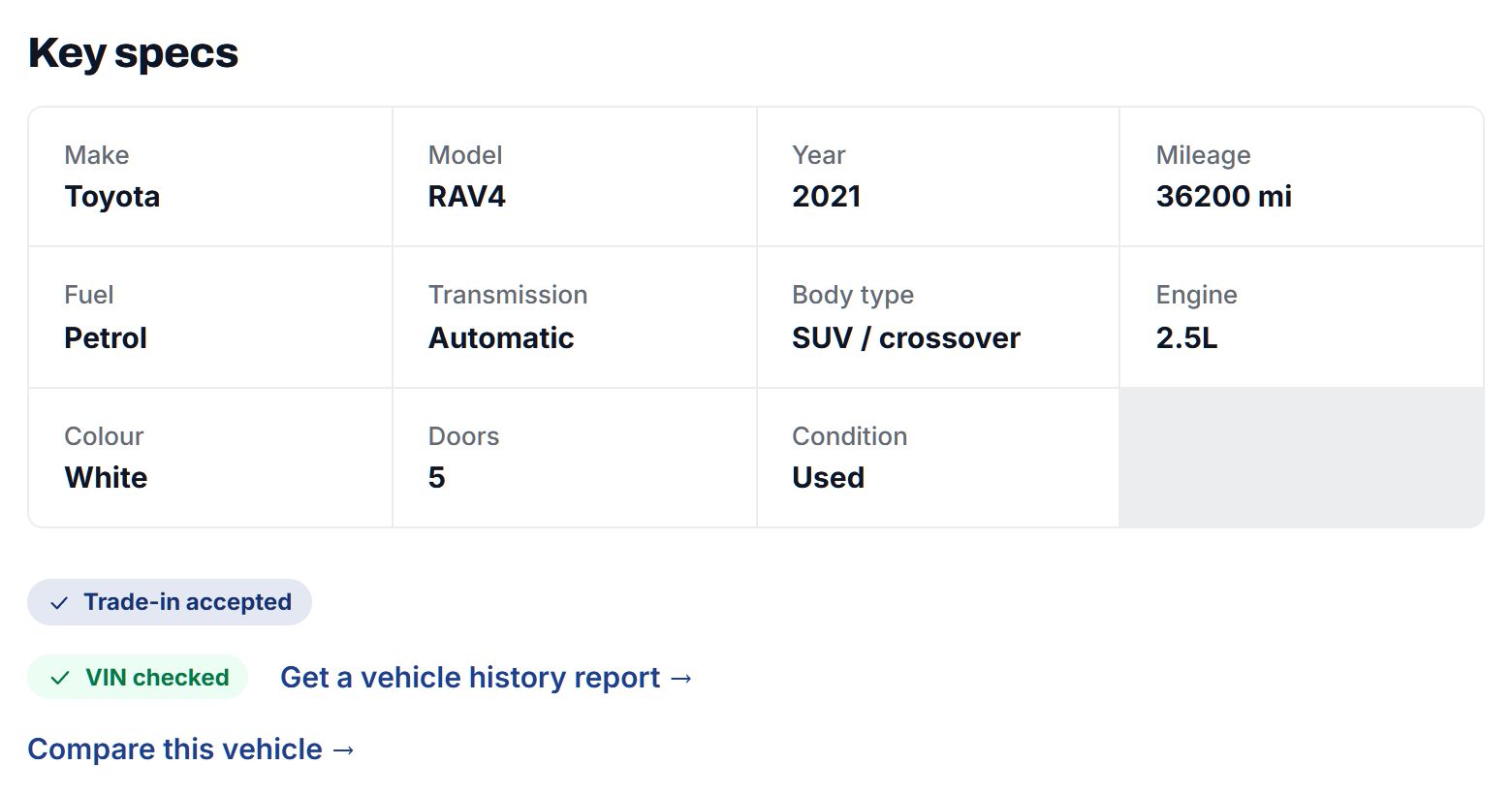
Yclas field packs set up cars in one click; add part number, side and core charge as your own fields on top.
Earn from yards and shops, keep private sellers free.
Most private parts listings are worth little to the seller: a set of floor mats, a used mirror. Charging them to post would empty the site. The money in auto parts sits with businesses that sell parts every day: salvage yards, auto recyclers, dismantlers, shops clearing old stock, and performance parts resellers.
Start with free posting for everyone. Once yards are getting messages, offer them a seller membership that covers a large inventory, a seller profile with their address and hours, and a verified badge. Featured listings work for higher-value items such as engines, transmissions and complete wheel sets, where one sale pays for the feature many times over. Bumps suit private sellers who move the same parts back to the top each weekend.
Banner spaces fit tow companies, mobile mechanics, paint and body shops, and tire shops in your area. Auctions can work for rare parts that collectors compete for, such as trim for limited models or discontinued factory wheels.
Count messages per yard. When a yard can see buyers calling because of your site, a membership is an easy sale.
| Model | Works when | Switch it on |
|---|---|---|
| Free posting | You need parts listed and yards willing to try | From day one |
| Memberships for yards and recyclers | A business lists dozens or hundreds of parts | Once yards report sales from the site |
| Featured listings | Engines, transmissions and wheel sets compete for attention | When popular makes have pages of results |
| Bumps | Private sellers relist the same items | Once categories move fast |
| Banner spaces | Local repair and tire shops want parts buyers | When you can show local visitor numbers |
| Auctions with bidding | Rare or discontinued parts draw several buyers | For collector and limited-run parts |
Get your first 100 parts from yards, dismantlers and project builders.
A parts site fills fastest from the businesses that hold thousands of parts. Two or three cooperative yards can give you more listings than months of private sellers.
- Salvage yards and auto recyclers. Many keep inventory in a spreadsheet or a yard system that can export a file. Import it as a CSV and their stock is searchable the same day.
- Independent dismantlers. People breaking a few cars a month in a rented unit often sell through Facebook groups and would welcome a site with fitment filters.
- Repair shops. They have take-off parts after upgrades, unused parts from cancelled jobs, and wheels and tires customers left behind.
- Project builders and racers. Anyone swapping an engine or upgrading suspension has the original parts to sell.
- Make clubs and forums. Ask the moderators whether members can link to listings, and offer a free category for the club's make.
- Swap meets. Walk the rows with cards that explain how to post, and photograph sellers' stock with their permission.
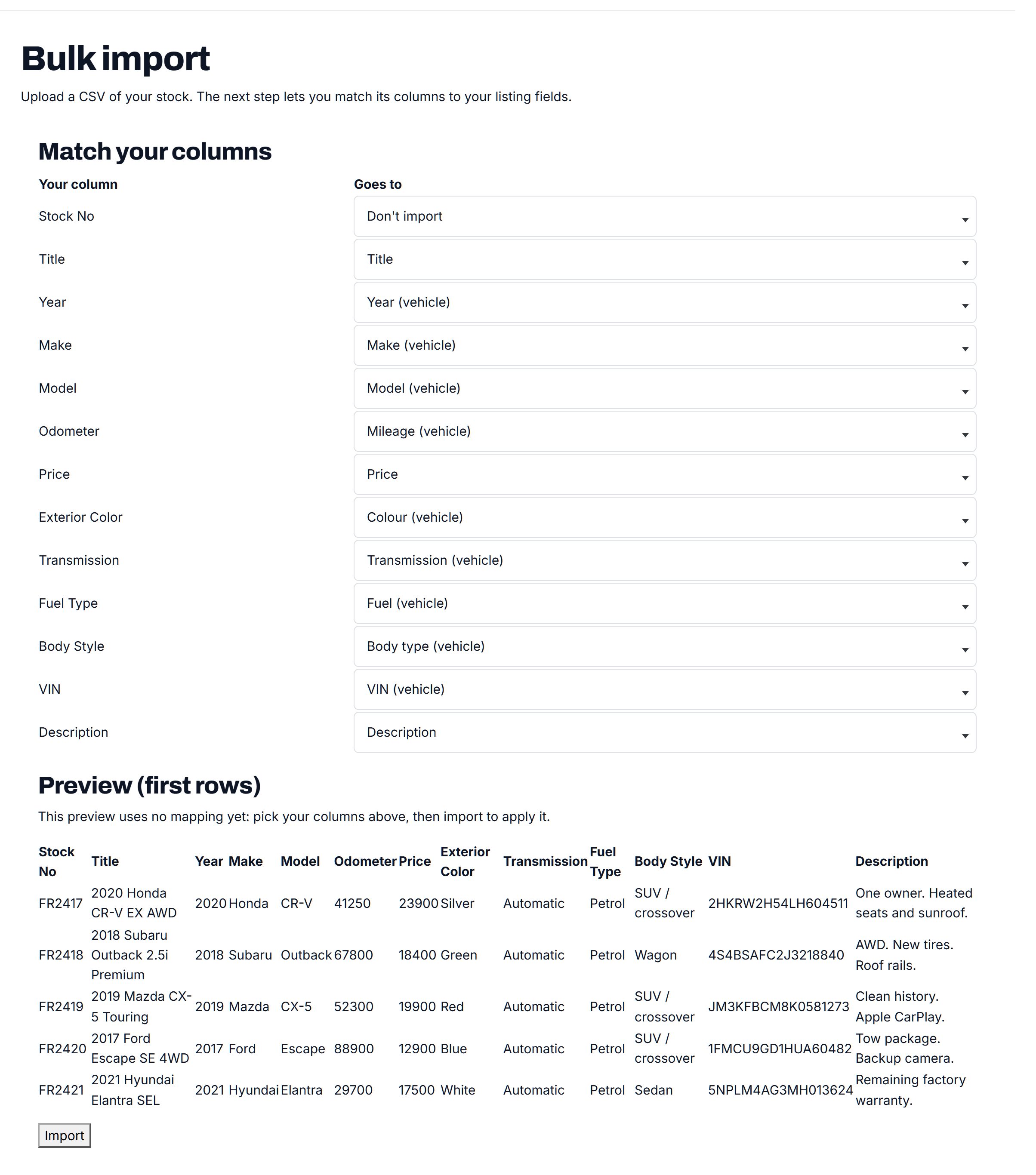
Posting parts one by one is slow, so show sellers the AI listing from a photo in Yclas: they photograph the part, AI fills in the title, description, category and price for them to check, and they add the fitment.
Keep stolen and unsafe parts off the site.
Parts sites have their own risks. Stolen parts are the biggest: catalytic converters, wheels and tires, headlights and airbags are taken from parked cars and resold quickly online. Many US states and other countries have introduced rules on who may sell used catalytic converters and what records they must keep, so check the rules where you operate before you allow them at all.
Rules to publish
- Decide your policy on catalytic converters, airbags and other safety parts. Many sites only allow them from verified businesses, or not at all.
- Ask for the part number and clear photos of labels and stamps on high-value parts.
- Refuse listings with ground-off numbers or removed labels, and ban phrases such as "no questions asked".
- Hold listings from new accounts for approval, and let AI hold suspicious ones for review.
Advice for buyers
Confirm fitment with the part number before paying, inspect at pickup, ask whether an engine was tested running, and be wary of a seller with a pile of identical new parts at a low price. Counterfeit parts, especially lights, filters and sensors, are common. For shipped parts, agree on returns for wrong fitment in messages before payment, and avoid sellers who push payment off the site with overpayment or courier stories.
Win the exact-fit searches.
Parts searches are long and precise, which makes them easier for a small site to rank for than broad car searches. People type "2012 Honda Civic driver side headlight", "used 5.3 engine for Silverado", "F-150 tailgate 2015 to 2017", "BMW E46 seats", or just a part number.
Pages to build
- Make and model pages that list every part available for that car, with a title like "Used parts for Toyota Tacoma 2005 to 2015".
- Location pages for your region: "used auto parts in Phoenix", "salvage yard parts near Columbus".
- Yard and seller profiles, since people search for a yard by name and area.
- Interchange guides: which years share the same door, which engines swap in, which wheels fit with which offset.
Put the part number in the listing title pattern, along with make, model and years, so searches that include the number find the listing. Sold parts can stay up, marked as sold, with similar parts still in stock shown next to them. An interchange guide written by someone who knows the cars collects links from forums for years.
A buyer who searches a part number is ready to buy. Make sure the number is in your titles.
Launch with a few yards and one make community.
Pick a launch area small enough that buyers will drive over to collect, and get two or three yards on board before anything else. Then add one community of enthusiasts, such as a model forum or a club, whose members will use the site and tell others when they find a part there.
Parts demand follows the year. Spring is project season, when garages open and builders look for the pieces they are missing. Fall brings wheel and winter tire sales in colder regions. Swap meet season runs from spring to fall, and the big car shows bring builders together in one place. Winter is when many projects are planned, so guides published in winter get read.
Launch checklist
- Fitment fields required: make, model, year range, and part number where one exists.
- At least 100 real parts, with two or more yards among the sellers.
- Your policy on catalytic converters, airbags and other restricted items, published.
- Saved searches with email alerts, so a buyer hears when the part they need is listed.
- Make and model pages with their own titles.
- A pickup and shipping page that explains how freight for heavy parts works.
A worked example: a local parts site for the Phoenix area.
To see how the pieces fit, picture Valley Fitment Parts Board, a made-up site serving the Phoenix metro area in Arizona. Heat is hard on rubber, plastics and batteries there, pickups and SUVs are everywhere, and buyers are used to driving across town to a yard. The site serves home mechanics keeping a daily driver on the road, small independent repair shops looking for used parts that save their customers money, and off-road builders hunting for axles and wheels.
Categories
- Trucks and SUVs
- Engines and transmissions
- Body, bed and glass
- Axles, suspension and wheels
- Cars
- Engines and transmissions
- Body and lighting
- Interior and electrical
- Vehicles being parted out
How it started
The founder spent years behind the counter at a salvage yard and answered the same phone call dozens of times a day: do you have a passenger mirror for a 2012 Tacoma? Most callers had already searched the general sites and found nothing they could trust to fit. He asked three yards for their inventory exports, cleaned up the year ranges and part numbers in a spreadsheet, and imported about 600 parts in the first week. He then asked two local truck groups whether he could post a weekly list of newly arrived pickups being dismantled, which became the most visited page on the site.
Every listing asks for make, model, year from, year to and side, and parts with a number on the label must show it. Engines and transmissions also need the donor mileage and a tested or untested answer, so buyers can compare like with like. Listings missing a year range are held until the seller adds one, which annoyed two sellers in the first month and has saved many wrong purchases since.
How it makes money
Private sellers post free and can pay a small fee to bump a listing back to the top. The three founding yards now pay a monthly membership that covers their whole stock, a seller profile with their address and hours, and a verified badge. Featured listings sell mainly for engines, transmissions and complete wheel and tire sets. A mobile mechanic, a tire shop and a towing company rent the banner spaces, since the people reading the site are the people who need them.
A list of cars arriving at the yard this week is a reason for builders to visit every Monday.
| Sample listing | Price | Key details |
|---|---|---|
| Driver side headlight, 2014 to 2015 Toyota Camry | $85 | OEM, part number shown, one mounting tab repaired, pickup in Mesa |
| 5.3 V8 engine from a 2011 Chevrolet Silverado | $1,450 | 128,000 miles on donor, heard running before removal, 30-day yard guarantee |
| Four 17-inch alloy wheels, 6x139.7 bolt pattern | $420 | Fits many Tacoma and 4Runner years, 265/70R17 tires with about half their tread |
| Alternator for 2006 to 2011 Honda Civic 1.8 | $65 plus $20 core charge | Bench tested, part number on label, local pickup or shipping |
| 2006 Ford F-150 4x4 being parted out | Priced per part | VIN shown, doors, bed, rear axle and seats still available |
Valley Fitment Parts Board and these listings are invented to show how fitment fields read on real parts.
Your first 90 days with a parts site.
A parts site lives or dies on two things in its first quarter: enough stock that a search usually finds something, and fitment data clean enough that buyers trust what they find. Both come from yards and dismantlers, so the first weeks belong to them. Private sellers and enthusiasts follow once the site already has the parts they were looking for.
Expect the cleanup of yard spreadsheets to take longer than the setup of the site. Inventory exports often mix year formats, abbreviate model names in several ways and leave out the side. Fix the first file carefully by hand, keeping a note of every correction you make, then send the yard a short template so later exports arrive in the shape your fields need.
Track two numbers every week: how many parts are live, and how many messages buyers send to sellers. If listings grow but messages do not, look at your categories, your titles and whether the part numbers show up in search. If messages grow faster than listings, go back to the yards, because buyers are arriving and you need more on the shelf.
| Weeks | Focus | Done when |
|---|---|---|
| 1-2 | Pick the area and makes, set up categories and fitment fields | Make, model, year from, year to and side are required, and part number is searchable |
| 3-4 | First yards and their inventory exports | Two yards have sent files, and their parts are cleaned up and live |
| 5-6 | Dismantlers and repair shops | Five smaller sellers are posting, and 300 or more parts are live |
| 7-8 | Restricted parts policy and safety page | Your rules on catalytic converters and airbags are published, with buyer advice on fitment and returns |
| 9 | First interchange guide and make pages | One interchange guide is live, and the three most common makes have their own pages |
| 10-11 | Clubs, forums and a swap meet | One make community links to the site, and you have handed out cards at a swap meet |
| 12 | Review and first membership offer | Each yard has seen its message count, and the busiest one has been offered a membership |
Decide how to build the parts site.
Auto parts put more strain on listing software than most niches. Yards hold thousands of items, stock changes daily, and every part needs fitment data that buyers can filter. Those needs should drive your choice of route.
Building it with developers fits a founder who wants a full fitment catalog, VIN decoding or live connections to yard inventory systems. Those features are serious projects on their own, and the catalog data often has to be licensed. It is the right route for a well-funded business with a clear plan, and a slow, expensive one for a founder still testing the idea.
Installing a classifieds script or WordPress plugin on your own server keeps costs down and gives you the code. Before you choose one, test it with a real yard file of a few hundred parts: check that it imports from a spreadsheet, filters a year range correctly and searches part numbers. Many scripts manage a hundred listings well and struggle with thousands. Ask how searches perform at 20,000 parts, and how you would remove the parts a yard sold since its last file.
A hosted builder such as Yclas handles the server, imports, custom fields and moderation, so you can spend your days at yards and swap meets instead of on updates. You are limited to the features the platform provides, which is usually fine for a classifieds model but not for a full catalog with automatic fitment lookups.
Many parts founders start hosted, prove that buyers come, and only then decide whether a custom catalog is worth paying for.
| Route | Fits when | Watch out for |
|---|---|---|
| Custom development | You need a full fitment catalog, VIN decoding or live yard system connections | Licensed catalog data, long build times and high cost before you know buyers will come |
| Script or plugin on your own server | You can run a server and want control over how imports work | Poor performance with thousands of parts, and range filters that do not handle year from and year to |
| Hosted builder | You want yard stock live quickly and your time spent on sellers | Fitment lives in your own fields, not a licensed catalog, so data quality depends on your cleanup |
What an auto parts classifieds site costs to run.
The software is the smallest part of the bill. Most of the cost is your time in the first months: finding the first listings, answering questions and checking what gets posted.
Parts sites have few niche costs, but freight is one: if you help yards ship engines and transmissions, get quotes from freight carriers before you promise anything. Budget for travel to yards and swap meets and for printed cards. If you plan to allow restricted parts such as catalytic converters, a short consultation with a lawyer costs far less than a problem later.
| Cost | Typical range | On Yclas |
|---|---|---|
| Domain | $10 to $20 a year | Your own, with SSL included |
| Software and hosting | $0 to $100+ a month, plus plugins and updates | Starter $19 a month, Professional $99 |
| Design | $0 to $100 for a theme, or a designer | 109 looks included |
| Payment fees | About 3% per payment | Your Stripe or PayPal fees; Yclas takes nothing |
| Your time | 5 to 10 hours a week at the start | Finding listings, moderation, support |
Mistakes that sink auto parts sites.
- Letting sellers type fitment as free text. One seller writes "fits 09-13", another "2009 thru 2013", a third leaves it out, and none of them appear in a filtered search. Use separate number fields for year from and year to, make them required, and fix the worst imported entries by hand before they go live. Clean fitment is the main thing a parts site offers that a general site does not.
- Leaving out the side. Mirrors, headlights, doors and control arms come in left and right versions, and a missing side is a leading cause of wrong purchases and angry messages. Make side a required dropdown in every category where it applies.
- Importing a yard once and never again. Yard stock moves daily, and a site full of parts that sold weeks ago teaches buyers not to trust any listing. Agree with each yard on a weekly export, and remove or mark as sold what is gone.
- Allowing catalytic converters without a policy. Converters attract thieves and, in many places, specific record-keeping rules. Decide before launch whether you allow them, from whom and with what proof, and check the rules where you operate.
- Going national before you are useful locally. Engines, doors and bumpers are heavy, and most buyers want to collect them. A site with 5,000 parts spread over the country helps fewer people than 1,500 parts in one metro area, where a buyer can see the part today and drive it home in the trunk.
- Hiding the part number. Buyers who search a number are the ones closest to buying. Put the OEM number in the listing title pattern and in a searchable field, and ask for a photo of the label.
- Saying nothing about returns. Wrong-fit parts are a normal part of this trade, and silence on returns leads to disputes you cannot settle. Ask sellers to state their return terms in each listing, and tell buyers to agree on them in writing before paying. Yards that offer a short exchange window on wrong-fit parts often win more business, so mention it on their profiles.
- Charging private sellers for low-value parts. Nobody pays to list a used floor mat. Keep private posting free, and charge the yards and dismantlers who sell every day. Their membership is easy to justify once they can count the calls your site sends them.
- Ignoring the parted-out vehicle. A car being dismantled is often the most useful listing on the site, because one page answers questions about dozens of parts. Give it its own category and ask for the VIN and a list of what is still on it. Update that list as parts sell, or the page turns into a source of wasted calls.
Parts trade terms to learn before launch.
Yard staff, mechanics and buyers will use these terms from your first week.
| Term | What it means |
|---|---|
| OEM | Original equipment manufacturer: a part made by or for the carmaker, as fitted at the factory. |
| Aftermarket | A part made by another company to replace or upgrade the original. |
| NOS | New old stock: an original part that was never fitted, often from a closed dealer's shelves. |
| Core charge | A refundable amount added to rebuildable parts, returned when the old unit comes back. |
| Remanufactured | A used part rebuilt to working order with worn components replaced. |
| Tested or untested | Whether an engine or transmission was seen running or shifting before it was pulled, which affects its price and any guarantee. |
| Interchange | The list of other makes, models and years that a given part also fits. |
| Donor vehicle | The car or truck a used part was removed from. |
| Parting out | Dismantling a whole vehicle and selling it piece by piece. |
| U-pull yard | A salvage yard where buyers bring tools and remove the parts themselves. |
| Take-off parts | Parts removed from a newer vehicle during an upgrade, often in good condition. |
| Bolt pattern | The number of wheel studs and the circle they sit on, written like 5x114.3. |
| Offset | How far a wheel's mounting face sits from its centerline, which affects fitment and clearance. |
| Salvage title | A title showing a vehicle was declared a total loss, common on cars being parted out. |
The same steps for an auto parts classifieds site on Yclas.
- Describe your nicheThe setup wizard writes the categories, an About page and example listings from one sentence.
- Add fieldsSwitch on a field pack or add the fields your buyers filter on.
- Fill itImport dealer spreadsheets, invite sellers and post your own.
- Set the rulesChoose moderation, banned words and AI checks.
- Go liveChoose a plan, connect your domain, switch on paid listings when it is time.
How much does it cost to start an auto parts classifieds website?
A parts site pays only a small monthly fee for hosted software and its domain. Most of the effort goes into visiting yards and importing their stock, which costs time and travel rather than money.
Can I allow catalytic converters and airbags?
Rules for selling used catalytic converters and airbags vary by state and country, and some places require records or licenses. Check the rules where you operate; many sites only allow them from verified businesses or ban them.
How do I get salvage yards to list?
Ask for their inventory export, import it for them and show them the messages it brings. Free posting at first removes the risk for them.
How do buyers know a part will fit?
Require make, model, year range and part number, and tell buyers to match the part number before paying. Interchange guides answer the common questions.
Can I compete with eBay for parts?
Not on volume. Compete on local pickup for heavy parts, better fitment filters for your makes, and yards a buyer can call and visit.
How does an auto parts site make money?
Memberships for yards and recyclers, featured listings for high-value parts, bumps, and banner spaces for local shops. Keep private posting free.
Should I list whole cars for parts?
Yes, a vehicle being dismantled is a useful listing because buyers ask for the parts they need. Use a separate category and ask for the VIN and the parts still available.
How often should yards update their stock on the site?
Weekly at least for busy yards, since parts sell every day. Agree on a fixed day for their export, and remove or mark as sold whatever has gone since the last file.
Should I allow new aftermarket parts as well as used?
Yes, if sellers mark them clearly as aftermarket and give the brand. Keep new performance parts in their own category so buyers looking for cheap used originals are not buried.
Do I need a licensed fitment catalog to start?
No. Year from, year to, make, model, side and part number cover most searches on a regional site. A licensed catalog makes sense later, once you know which makes and parts your buyers want. Many buyers type the part number straight into search, so that field matters more than any catalog in the early months.
Who handles returns when a part does not fit?
The seller and buyer, on the terms the seller states in the listing. Ask every seller to state those terms, and remind buyers to confirm the part number before they pay.
Is a local parts site or a national one easier to grow?
Local is easier to start, because heavy parts sell to people who can collect them. Once a few yards in one area are busy, small parts that ship well can carry the site further. Wheels, lights and electronics are good candidates for that second step.
Related pages.
The parts of Yclas this leans on.
You have the plan. Now build your auto parts site.
Describe your site in a sentence and the setup wizard writes the categories, example listings and a look. Free for 15 days, no credit card.
Start my classifieds site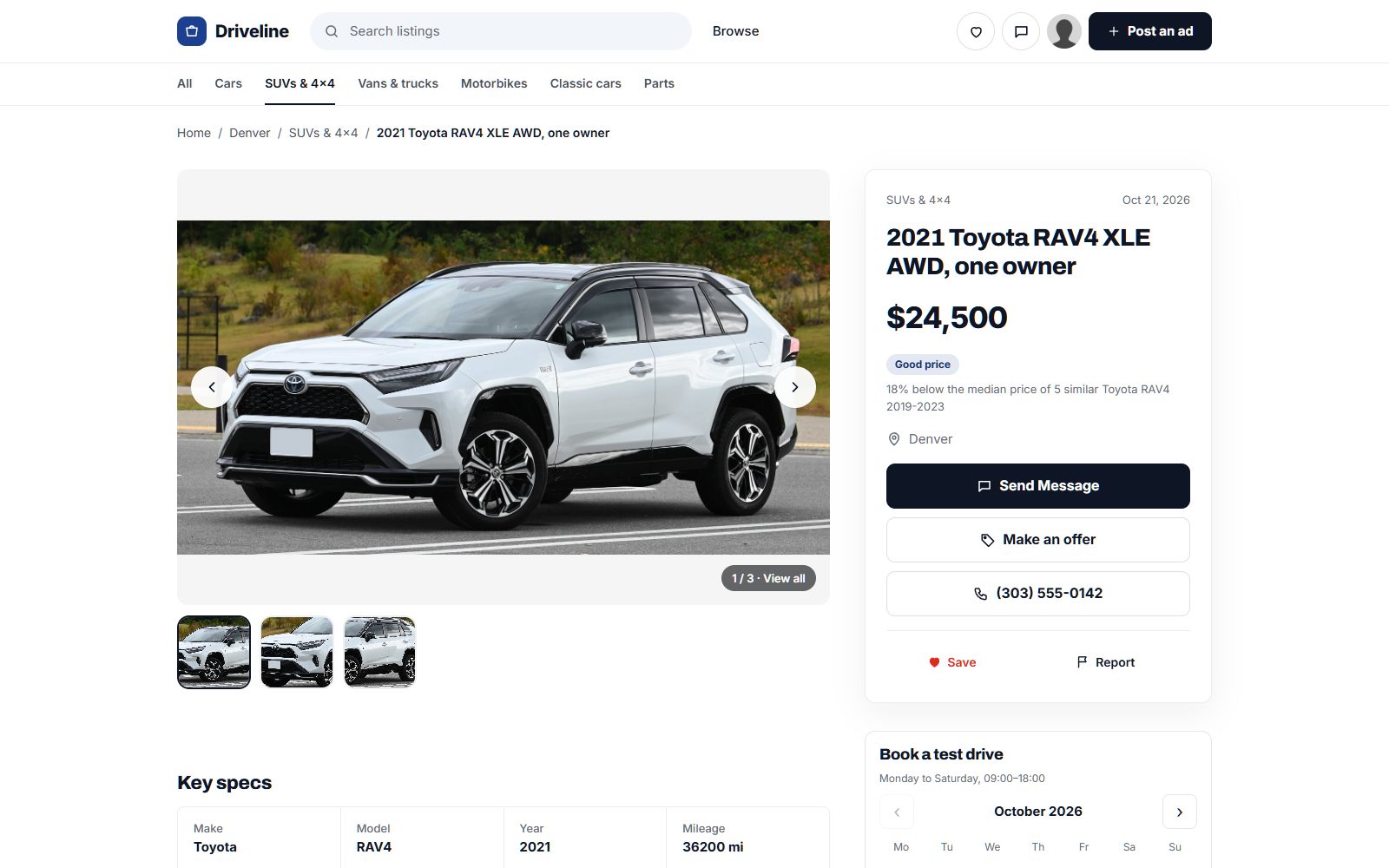
Photo credits
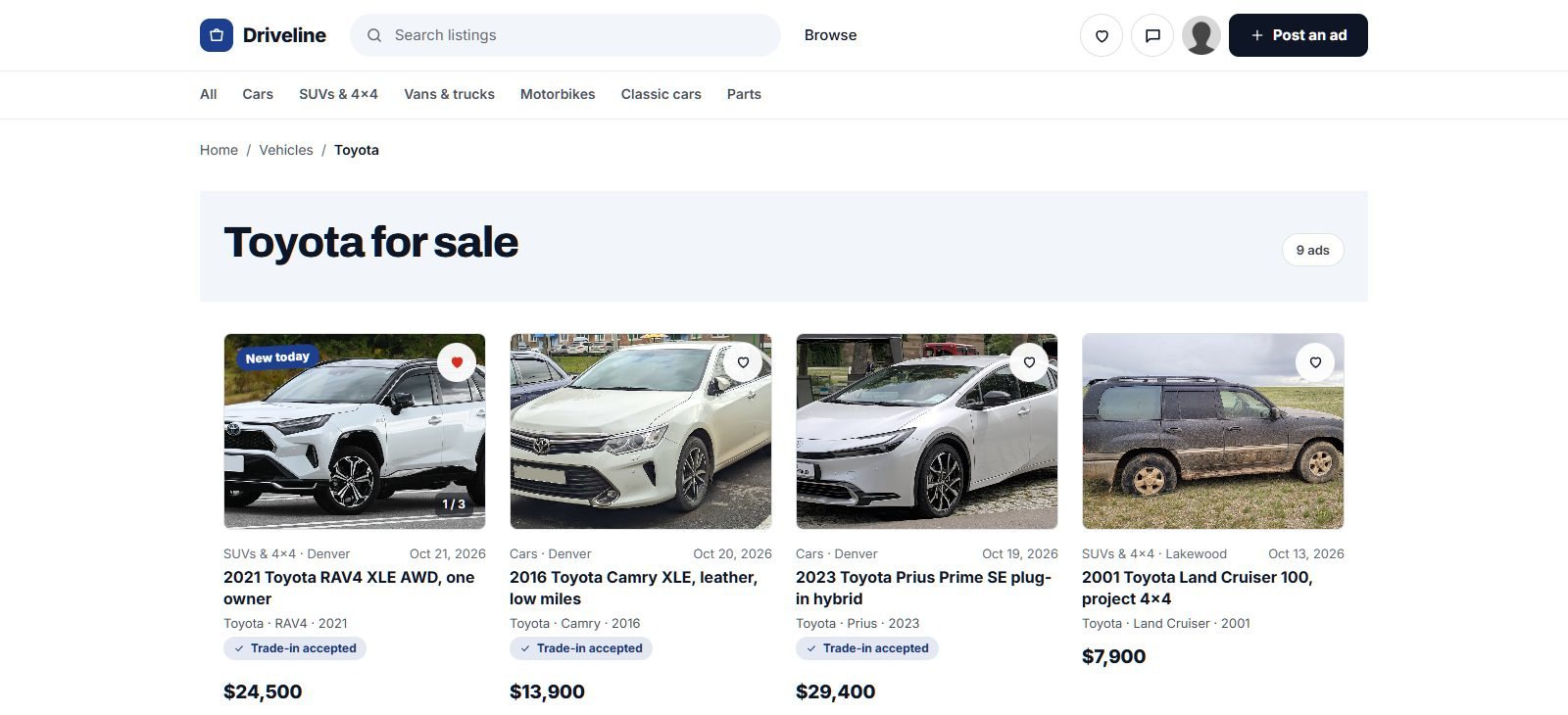
The screenshots show demo sites with made-up sellers. Their photos come from Wikimedia Commons, some cropped or with signs and plates blurred; these ones are under Creative Commons licences:
- Toyota Prius (XW60) Plug-in Hybrid IMG 9905, CC BY-SA 4.0
- Ford Mustang Mach-E GT IAA 2021 1X7A0176, CC BY-SA 4.0
- 1928 Alvis Front Wheel Drive (17355318404), CC BY 2.0
- Red Vespa scooter in front of Rocca Maggiore, Assisi, CC BY-SA 4.0
- Car alternator on a workbench surrounded by various auto parts in a garage setting, CC BY 2.0