
How to build a construction equipment classifieds website contractors rely on.
This guide covers how to build a construction equipment classifieds website for diggers, loaders and site machinery: picking the machines and region to focus on, the fields contractors filter on, how the site earns money from sales and rentals, where the first 100 machines come from, how to keep stolen equipment out, which searches to target, and how to launch.
Free for 15 days · No credit card · Plans from $19 a month
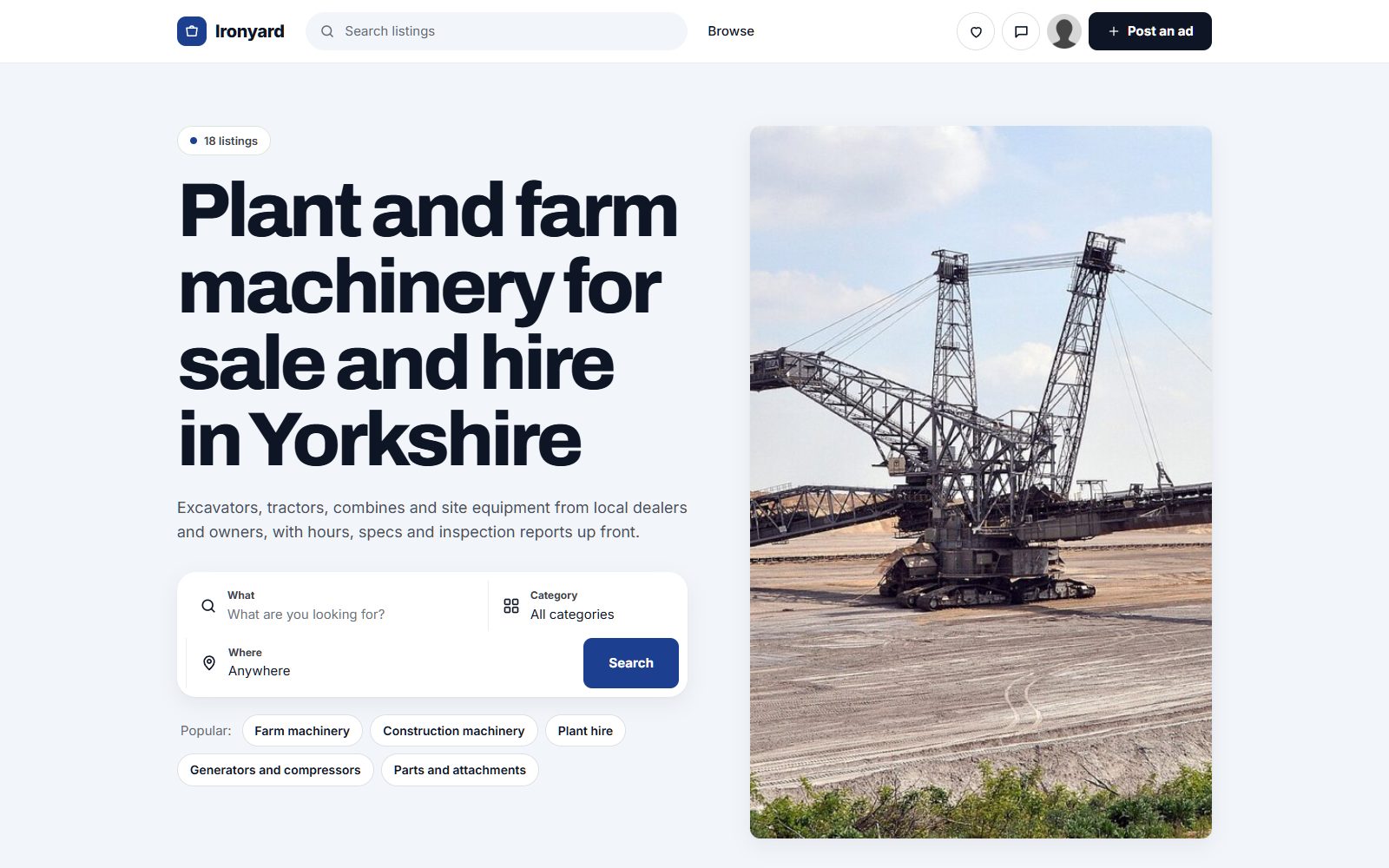
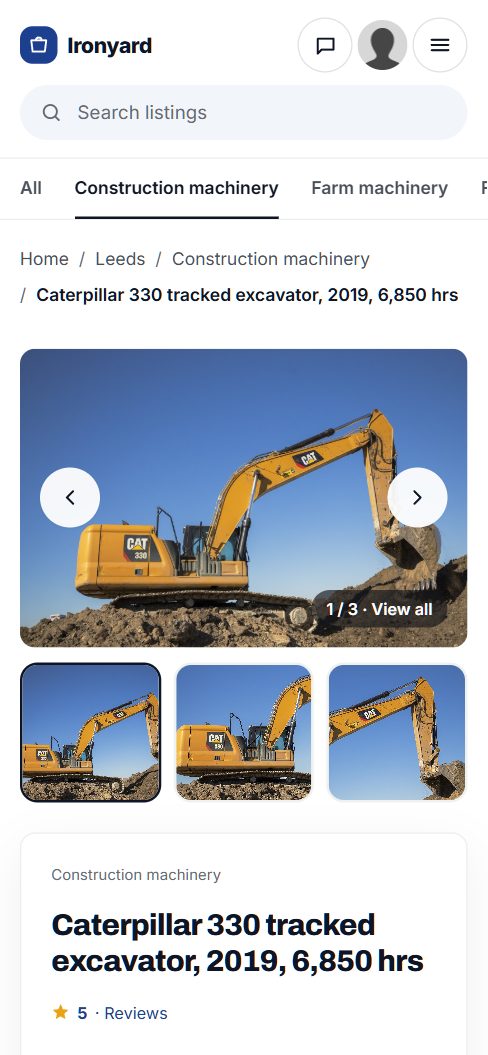
Choose the machines and contractors you will serve.
Contractors buy equipment to earn money with it, so they shop on numbers: hours, condition of the undercarriage, attachments included, and how soon the machine can be on site. National listing sites and auction houses carry huge volumes of heavy iron, which suits big fleets. Smaller contractors, landscapers and owner-operators looking for one mini excavator or skid steer nearby often end up on Craigslist or Facebook Marketplace, scrolling past everything else.
Angles to choose from
- Compact equipment: mini excavators, skid steers, compact track loaders and attachments, for landscapers and small builders.
- One region: moving a 20-ton excavator costs real money, so buyers prefer machines within a short lowboy trip.
- Sale and rental together: contractors who need a machine for one job, and owners whose machines stand idle between jobs.
- One trade: demolition, utilities, road building or tree work, each with its own machines and attachments.
Used equipment moves through dealers selling trade-ins, rental fleets selling older units, contractors downsizing, auction companies with regular sales, and word of mouth on job sites. Owner-operators often sell by calling around, and many machines never appear online at all.
The contractor who needs a mini excavator by Monday wants the ones within an hour's haul, not every machine in the country.
Categories by machine type, fields by hours and wear.
Contractors know what machine they want. Use machine types as categories, and add the fields that decide value and whether the machine suits the job.
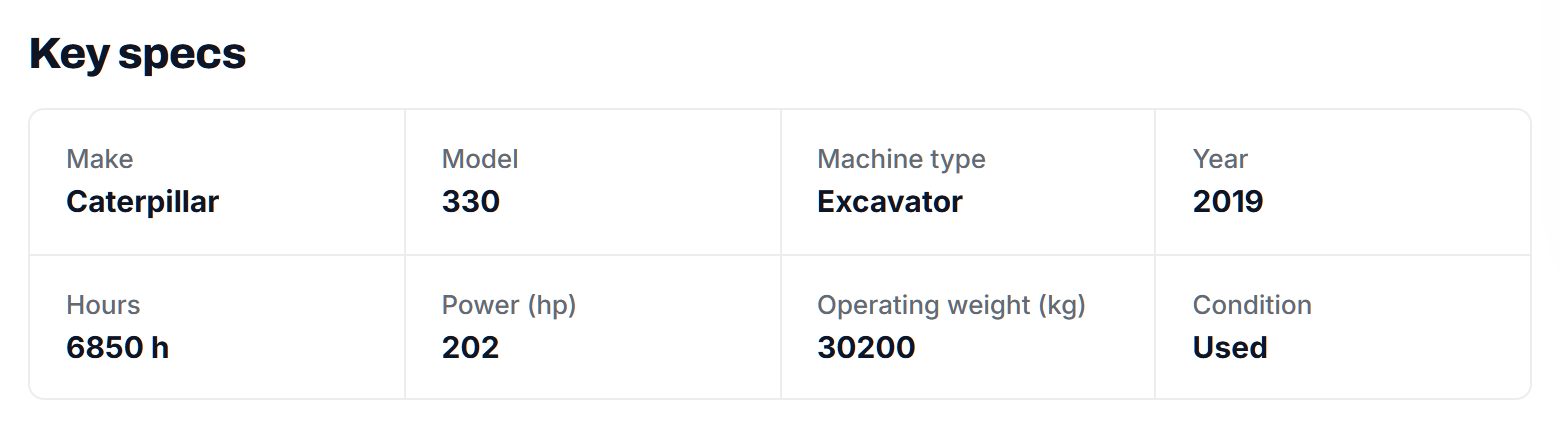
- Hours on the meter, as a number with a range filter.
- Operating weight, the way buyers size excavators and loaders.
- Undercarriage as percent remaining for tracked machines, or tire condition for wheeled ones.
- Auxiliary hydraulics and quick coupler, which decide which attachments will work.
- Cab: enclosed with heat and air, or open canopy.
- Attachments included as checkboxes: buckets, thumb, breaker, forks, auger, grapple.
- Emissions tier, which can matter for where a machine may be used.
- Sale or rent, with a price per day or week for rentals.
Ask for the serial number or PIN on every machine. Serious buyers check it, and asking for it puts off people selling stolen units. Add a field for service records too, since a machine with a documented maintenance history is easier to sell.
| Category | Example listings | Fields buyers filter on |
|---|---|---|
| Excavators | Mini, midi and full-size tracked and wheeled excavators | Make, model, year, hours, operating weight, undercarriage, thumb, coupler |
| Skid steers and track loaders | Skid steers, compact track loaders | Hours, rated operating capacity, high-flow hydraulics, cab, tracks or tires |
| Loaders and backhoes | Wheel loaders, backhoe loaders | Hours, bucket size, four-wheel drive, extendable stick, ride control |
| Dozers and graders | Crawler dozers, motor graders | Hours, blade type, undercarriage, ripper, GPS ready |
| Trucks and trailers | Dump trucks, lowboys, tag trailers | Mileage, axles, payload, license class needed |
| Lifts and telehandlers | Scissor lifts, boom lifts, telehandlers | Working height, lift capacity, fuel, rough terrain |
| Attachments | Buckets, breakers, augers, grapples | Fits machine size, coupler type, condition |
Yclas field packs set up equipment in one click; add operating weight, undercarriage and attachments on top.
Charge dealers and rental fleets, and add rentals when there is demand.
Construction equipment holds its value, and a single sale is worth thousands to the seller, so paid listings can work earlier here than on a general site. Still, start with free posting for private owners and small contractors, and earn the right to charge by sending them calls.
Dealers and rental companies selling off older units are the first paying sellers. Offer a membership with all their stock, a seller profile and a verified badge. Featured listings fit machines in busy categories such as mini excavators and skid steers. Pay to post can work in heavy categories, such as dozers and full-size excavators, once those pages have buyers.
Rentals are a second business. On Yclas, owners can list machines for rent with a booking calendar (on the Marketplace plan), prices per day or week and deposits, and buyers can pay on the site with Stripe while you keep a commission per sale. Auctions with bidding and Buy now suit contractors closing down or clearing a yard. Banner spaces fit lenders, insurers, haulers, repair shops and attachment makers.
An idle machine costs its owner money every week. A rental listing turns that into income, and into a reason to use your site.
| Model | Works when | Switch it on |
|---|---|---|
| Free listings for owners | You need machines and contractors who trust the site | From day one |
| Dealer and rental fleet memberships | Businesses sell many units a year | Once two or three dealers get regular calls |
| Featured listings | Compact machines compete in busy categories | When skid steer and mini excavator pages have daily visitors |
| Pay to post in heavy categories | Each dozer or large excavator is worth a lot | After those categories rank and get inquiries |
| Rentals booked and paid on the site | Owners have idle machines and contractors need short-term use | When you have both sides in one region |
| Banner spaces | Lenders, insurers and haulers want contractors | When you can show visitor numbers |
Get your first 100 machines from dealers, fleets and job sites.
Construction machines for sale tend to sit in yards rather than online. Go to the yards.
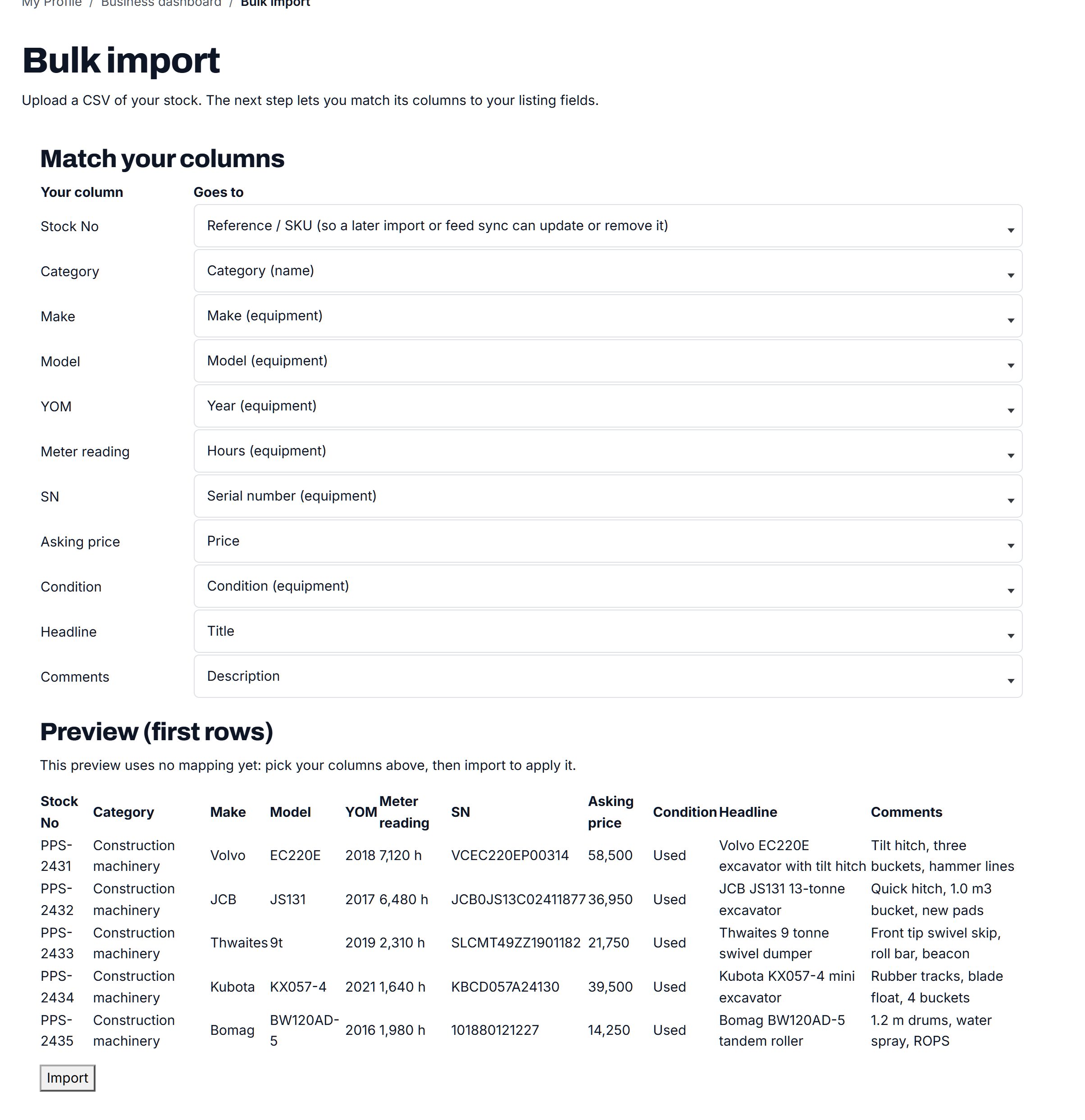
- Equipment dealers. Trade-ins and older demo units usually sit in a spreadsheet. Import it, and the dealer's whole used stock is live with hours and specs.
- Rental companies. Fleets sell off machines at set ages or hours. Ask when their next batch of retired units is due.
- Contractors and owner-operators. Many have a machine they rarely use, or one they have replaced. Ask at supply yards, quarries and fuel depots, where they all stop.
- Auction companies. Smaller regional auctioneers often want more bidders. List their upcoming sales and main lots.
- Repair shops. Independent heavy equipment mechanics know which customers are selling, and some have rebuilt machines of their own.
- Attachment makers and dealers. Buckets, thumbs and breakers fill a category fast and bring repeat visits.
Contractors post from their phone, often from a job site. A seller can take a photo and let AI fill in the title, description, category and price for them to check, then add the hours and weight before the listing goes live.
Keep stolen machines and fake bargains off the site.
Heavy equipment theft is a real problem: compact machines and trailers are easy to load and hard to trace, and stolen units are often sold far from where they were taken, sometimes with altered serial plates. Fake listings are the other risk: an excavator at half its value, photos taken from a dealer's site, and a seller who asks for a deposit or payment through an escrow or shipping company that does not exist.
Rules and checks
- Require the serial number or PIN on every machine and show it on the listing.
- Approve listings from new accounts, and look harder at low prices, sellers who say they are abroad, and requests to pay off the site.
- Call dealers and rental companies before you give them a verified seller badge.
- Use reports so contractors can flag a machine they recognize, and let AI hold suspicious listings for review.
Advice for buyers
Inspect the machine running, or pay an independent mechanic to do it. Check the serial number against the plate on the frame and with a dealer of that brand, run a lien search, and ask for maintenance records and, on bigger machines, an oil sample report. For rentals, agree on damage, fuel and transport in writing before the deposit. Lien searches, theft registers and emissions rules differ by country and state, so check the rules where you operate.
Rank for the machine, size and location searches.
Contractors search for machine type, size and place: "used mini excavator for sale near me", "Bobcat T770 for sale", "CAT 308 for sale", "skid steer rental Dallas", "used dump truck for sale in Ohio", "excavator thumb for sale". They also search for advice: "how many hours is too many on an excavator", "track loader vs skid steer".
Pages to build
- Machine type pages by size class: mini excavators, 20-ton excavators, compact track loaders.
- Make and model pages for the machines common in your area.
- Location pages for sale and for rental, such as "excavator rental in Austin", since rental searches are almost always local.
- Guides: a used excavator inspection checklist, how to judge undercarriage wear, which attachments fit which coupler.
Set title patterns that add year, make, model, hours and town to each listing. Keep sold machines online, marked as sold, and use them for a price guide page: what similar machines with similar hours have asked in your area.
Rental searches are local and frequent. Each city page you build for rentals can bring contractors every week.
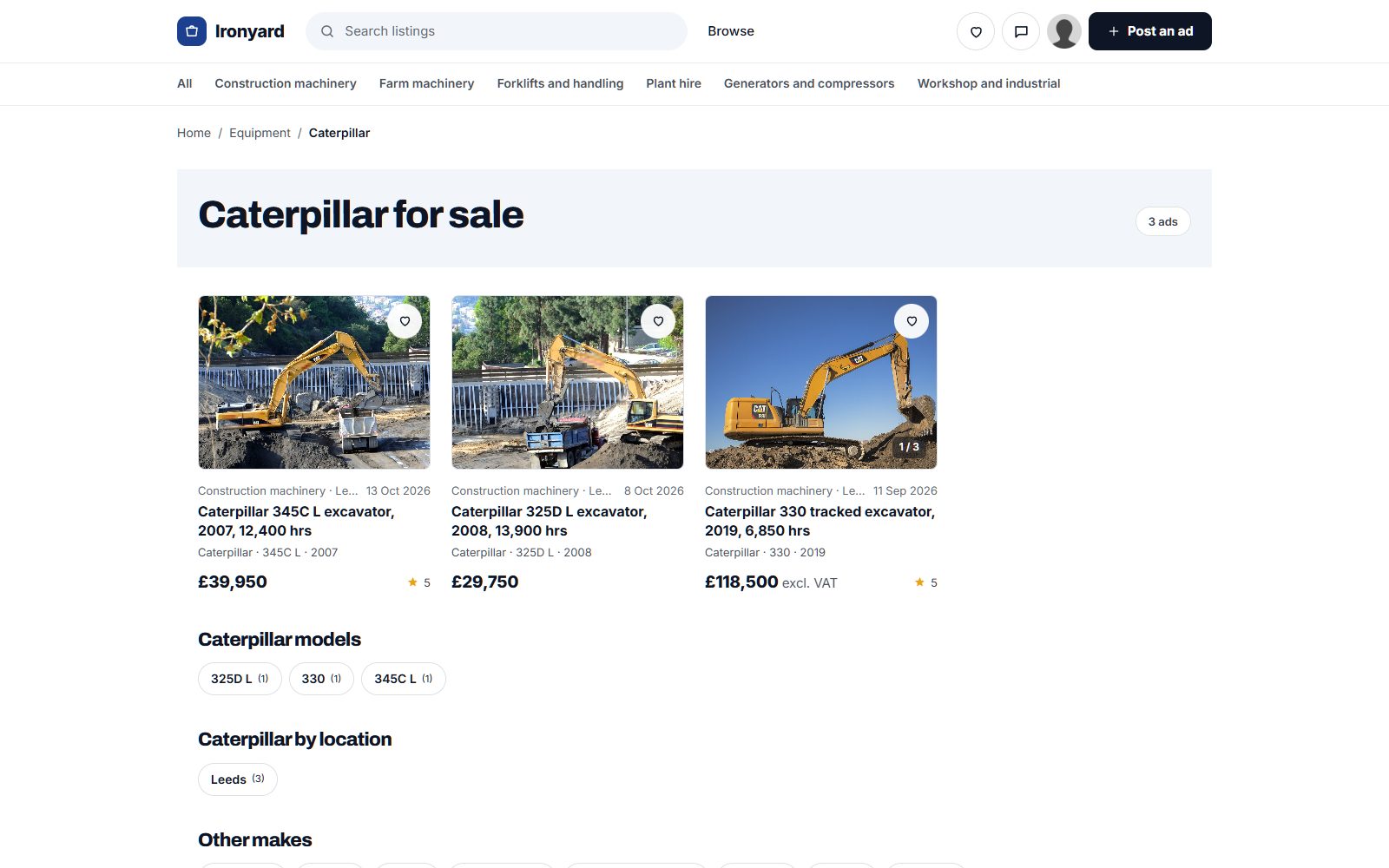
Launch in one metro area before the building season.
Start with one metro area or region with steady building work, and one or two machine types, often compact equipment. Get a dealer, a rental company and a handful of owner-operators listed before you tell contractors.
Construction has seasons. In colder regions winter is slow on site, so contractors sell machines they do not need and plan purchases for spring, and the weeks before spring are when buyers are most active. Year-end is another buying window for many businesses. Industry events help you meet dealers and fleets: regional equipment shows, contractor association meetings, and ConExpo-Con/Agg in Las Vegas, held every three years.
Launch checklist
- Hours, operating weight, serial number and sale or rent as fields on every machine.
- At least 100 real machines and attachments, with dealers and a rental fleet among the sellers.
- A safety page about stolen equipment, fake listings and inspections.
- A rental terms page that explains deposits, damage and transport, if you allow rentals.
- Machine type and city pages with their own titles.
- Saved searches with email alerts, so contractors hear when the right machine comes up.
A worked example: a compact equipment site for greater Houston.
Imagine Coastal Plain Compact Iron, a made-up site for the Houston area in Texas. The region builds all year, sprawls in every direction, and has thousands of landscapers, small site-work contractors, fence builders and owner-operators who run one or two compact machines. A 20-ton excavator is not their concern. They want a mini excavator, a compact track loader or the right attachment, close enough to collect on a tag trailer before Monday.
Categories
- Mini excavators
- Under 4 tons
- 4 to 10 tons
- Skid steers and compact track loaders
- Attachments
- Buckets, thumbs and couplers
- Augers, grapples, mulchers and breakers
- Trailers
- Machines for rent
How it started
The founder ran a small dirt-work company for years and was tired of hunting for used machines on general sites, where a skid steer listing rarely said how many hours were on it or whether it had high-flow hydraulics. He started by calling every contractor in his phone, asking who had a machine sitting idle or about to be replaced. Twenty-five machines came from those calls. A compact equipment dealer sent a spreadsheet of trade-ins, and a regional rental company agreed to list units it was retiring. Attachments filled up fastest: contractors had buckets, augers and grapples that no longer fit anything they owned. Within the first month, a landscaper sold a mulching head he had stored for two years, and told half the contractors he knew.
Hours, operating weight, serial number, coupler type and auxiliary hydraulics are required. A sale or rent dropdown tells buyers at a glance which is which: rental listings give a day and week price and a deposit, and sale listings give the asking price and the attachments included.
How it makes money
Owner-operators list free. The dealer and the rental company pay monthly memberships for their stock, profile pages and verified badges. Featured listings sell best on mini excavators and track loaders in late winter, when contractors buy ahead of the spring rush. Rentals run on the Marketplace plan: contractors book dates on a calendar, pay the daily or weekly price with a deposit through Stripe, and the site keeps a commission per booking. A hauling company and an equipment lender rent the banner spaces.
Attachments are cheap to list and fill a category fast, and they bring contractors back between machine purchases.
| Sample listing | Price | Key details |
|---|---|---|
| 2019 Kubota KX040-4 mini excavator | $48,000 | 2,350 hours, 4-ton class, hydraulic thumb, cab with heat and air |
| 2017 Bobcat T650 compact track loader | $39,500 | 3,800 hours, tracks at about 60 percent, enclosed cab, two buckets included |
| Takeuchi TB240 mini excavator for rent | $325 per day or $1,200 per week | 4-ton class, $1,000 deposit, delivery quoted by distance |
| 2021 tag trailer, 14,000-pound GVWR | $7,800 | Pintle hitch, fold-up ramps, recent brake service |
| Skid steer auger drive with 12-inch bit | $1,650 | Universal quick-attach mount, standard flow, light use |
Coastal Plain Compact Iron and these listings are invented for this guide, to show how sale and rental fields sit side by side.
Your first 90 days with a construction equipment site.
Contractors are busy, practical and quick to judge. In the first three months, show them a site with real machines nearby, honest hours and sellers who answer the phone. That means working the supply side hard: dealers, rental fleets and owner-operators first, then contractors looking to buy or rent.
If you plan to offer rentals, decide early whether they are part of your first quarter. Rentals need terms for deposits, damage, fuel and transport, and owners who are willing to let strangers run their machines. It can be wiser to launch with sales, prove that buyers come, and add rentals in the second quarter with the owners you already know.
In colder regions, use winter for sign-ups and setup, since contractors have time to talk and are planning purchases for spring. Where building runs all year, follow the local slow periods instead, such as the hottest weeks or the holidays. Count calls and messages per seller every week, and note which machine types get the most questions. They are the numbers that will later persuade a dealer or fleet to pay.
| Weeks | Focus | Done when |
|---|---|---|
| 1-2 | Pick the metro area and machine types, set up categories and fields | Hours, operating weight, serial number and sale or rent are required, and a test listing reads well on a phone |
| 3-4 | Dealers and their trade-in lists | Two dealers have sent spreadsheets, and their machines are live with specs |
| 5-6 | Rental fleets and owner-operators | One rental company is listing retired units, and 20 owner-operators have posted machines |
| 7-8 | Attachments and supply yard visits | An attachments category has 30 or more listings, and cards are on the counter at five supply yards |
| 9-10 | Safety page and inspection guides | Advice on stolen machines and fake listings is published, with a used excavator inspection checklist |
| 11 | Rental terms, if you offer rentals | A rental terms page covers deposits, damage, fuel and transport, and two owners have agreed to them |
| 12 | Review and first paid offer | 100 machines and attachments are live, and the busiest dealer has been offered a membership |
Compare the ways to build an equipment site.
A construction equipment site has two jobs that pull software in different directions: classifieds for machines that sell once, and, if you want them, rentals that come back again and again with dates, deposits and payment. Which route fits depends on whether rentals are part of your plan from the start.
Commissioning developers makes sense if you want features beyond listings and bookings, such as telematics data from machines, fleet utilization reports for rental companies, or delivery scheduling with haulers. Those are real products in their own right. They take time and a budget, and they are best built once you know what contractors in your region actually use.
Running a classifieds script or WordPress plugin on your own server works for sales listings at a low starting cost. Rentals are harder: many scripts have no booking calendar or deposit handling, and adding them through extra plugins can make the site fragile. Check filters for hours and operating weight, imports for dealer stock, and who will keep the server patched.
Starting on a hosted builder such as Yclas gives you listings, custom fields, imports and moderation without a server to run, and on the Marketplace plan adds rentals with a booking calendar, prices per day or week and deposits. You are limited to what the platform offers, so check that your rental terms and fields fit before you sign up owners.
Contractors will judge the site by how fast they find a machine nearby, not by how it was built. Whatever you choose, test the listing form from a phone on a job site before launch.
| Route | Fits when | Watch out for |
|---|---|---|
| Developers build it | You need telematics, fleet reports or delivery scheduling beyond listings and bookings | Large budget, long build, and features you may find contractors do not use |
| Script or plugin on your own server | You only plan sales listings and can manage hosting | Few options for rental calendars and deposits, and plugins that break each other on updates |
| Hosted builder | You want sales now and rentals soon, without running servers | Confirm rental terms, fields and imports fit your plan before signing up owners |
What a construction equipment classifieds site costs to run.
The software is the smallest part of the bill. Most of the cost is your time in the first months: finding the first listings, answering questions and checking what gets posted.
Niche costs here are travel to dealer and rental yards, booths at regional contractor shows, and printed material for supply yards. If you take rental bookings and payments on the site, ask an insurer and a lawyer about damage, deposits and liability before you start, since those costs depend on where you operate.
| Cost | Typical range | On Yclas |
|---|---|---|
| Domain | $10 to $20 a year | Your own, with SSL included |
| Software and hosting | $0 to $100+ a month, plus plugins and updates | Starter $19 a month, Professional $99 |
| Design | $0 to $100 for a theme, or a designer | 109 looks included |
| Payment fees | About 3% per payment | Your Stripe or PayPal fees; Yclas takes nothing |
| Your time | 5 to 10 hours a week at the start | Finding listings, moderation, support |
Mistakes that sink construction equipment sites.
- Accepting machines without serial numbers. A listing with no serial number or PIN cannot be checked for liens or theft, and it is the easiest kind for a thief to post. Require it on every machine and show it on the listing, so a contractor who lost a machine can recognize it and report it.
- Trying to cover every size of machine at once. Full-size dozers, cranes and mini excavators have different buyers, dealers and haulers. Pick compact equipment or one heavy segment and fill it before you add the next. A category with three machines in it tells a contractor to look elsewhere.
- Offering rentals without written terms. A rental with no agreed rules on damage, fuel, transport and deposits ends in a dispute you cannot settle. Publish rental terms before the first booking, and check insurance and the rules where you operate.
- Ignoring attachments. Buckets, thumbs, augers and grapples are cheap to list, sell often and bring contractors back every week. Give them their own categories with coupler type and machine size as filters, and ask whether each one needs standard or high-flow hydraulics.
- Leaving operating weight out of the fields. Contractors size machines by weight class, and a filter that only offers make and model makes them read every listing. Add weight as a number and show it in the title pattern, next to the hours and the town.
- Letting fake bargains stay up. An excavator at half its value with photos from a dealer's site is the scam every contractor has seen. Approve listings from new accounts, compare prices with similar machines, and act on reports within hours. Sellers who refuse a phone call or a viewing are the ones to look at first.
- Going national too early. Moving heavy machines costs real money, and rentals are almost always local. Win one metro area, with city pages for sale and rent, before you open another. Contractors in a new city will only stay if they find machines within an easy haul.
- Forgetting phones on job sites. Contractors post and search from a pickup truck or a cab, often with gloves on. Keep forms short, require only the fields that decide value, and check every page on a phone. Let sellers add photos straight from the camera, since most machines are photographed where they stand.
- Waiting for dealers to come to you. Dealers and rental fleets will not find a new site on their own. Visit their yards, import their trade-in lists for them, and show them the calls that follow. Once one dealer in a city is getting results, the others tend to ask how to join.
Equipment terms contractors will expect you to know.
Contractors, dealers and rental fleets use this vocabulary in nearly every listing.
| Term | What it means |
|---|---|
| Operating weight | The machine's weight ready to work, the main way excavators and loaders are sized. |
| Undercarriage | The tracks, rollers, idlers and sprockets of a tracked machine, often the costliest part to replace. |
| Auxiliary hydraulics | Extra hydraulic lines that power attachments such as breakers, augers and thumbs. |
| High-flow | A skid steer or track loader hydraulic system that delivers more oil flow for demanding attachments. |
| Quick coupler | A device that lets an operator change buckets and attachments without driving out pins by hand. |
| Thumb | A clamp on an excavator arm that works with the bucket to grab logs, rock and debris. |
| Rated operating capacity | The load a skid steer or track loader can lift safely, used to compare machines. |
| PIN | Product identification number, the serial number manufacturers stamp on a machine's frame. |
| Lowboy | A trailer with a low deck for hauling heavy machines such as dozers and large excavators. |
| Tag trailer | A bumper-pull trailer often used to tow compact equipment behind a pickup. |
| Emissions tier | The engine emissions standard a machine was built to, which can affect where it may be used. |
| Oil sample report | A lab analysis of engine or hydraulic oil that shows internal wear. |
| Retired fleet unit | A machine a rental company sells after a set age or number of hours. |
| Universal mount | The common skid steer attachment plate, which lets attachments fit many makes of machine. |
The same steps for a construction equipment classifieds site on Yclas.
- Describe your nicheThe setup wizard writes the categories, an About page and example listings from one sentence.
- Add fieldsSwitch on a field pack or add the fields your buyers filter on.
- Fill itImport dealer spreadsheets, invite sellers and post your own.
- Set the rulesChoose moderation, banned words and AI checks.
- Go liveChoose a plan, connect your domain, switch on paid listings when it is time.
How much does it cost to start a construction equipment classifieds website?
For a plant and machinery site, the monthly software and domain bill is small. Most of the work is visiting dealers, rental yards and contractors, which costs time and travel.
Can I offer rentals as well as sales?
Yes, on the Marketplace plan rentals can sit alongside sales with a booking calendar, prices per day or week, and deposits. Agree on terms for damage and transport, and check insurance and the rules where you operate first.
How do I compete with the big equipment sites and auctions?
Focus on one region and on compact machines and rentals, where buyers want something close by, and know your local dealers by name.
How do I get dealers and rental companies to list?
Import their used stock from a spreadsheet, pass on the calls it brings, and charge only after they see results.
How do I keep stolen equipment off the site?
Require serial numbers, approve new sellers' listings, verify dealers, act fast on reports, and tell buyers to check serial numbers and liens.
When should I start charging?
Once dealers get regular calls: memberships for dealers and fleets first, then featured listings and pay to post in heavy categories.
Do I need special insurance or licenses?
Running a listings site is not the same as renting or selling machines yourself, but if you handle rental payments or deposits, check insurance and the rules where you operate.
Should I focus on compact equipment or heavy machines?
Compact equipment is the easier start: more buyers, lower prices, cheaper transport and more private sellers. Heavy machines bring bigger sales but fewer buyers, and they compete with established national auctions. Many founders start compact and add larger machines once dealers in the area know them.
How do I handle damage disputes on rentals?
Publish rental terms before the first booking, ask owners to photograph the machine at handover and return, and take a deposit sized to the machine. Check insurance and the rules where you operate before offering rentals.
Should I list trucks and trailers too?
Yes, if your buyers need them to move the machines they buy. Keep them in their own category with axles, payload and the license class needed as fields. Haulers who move equipment are also good banner customers for that category.
Can rental companies sell their retired units through me?
Yes, and they are among the best early sellers. Fleets retire machines on a schedule, with service records, and often want a faster sale than an auction gives them.
Do I need to inspect machines before they are listed?
No, and you should not claim to. Require serial numbers and honest hours, verify the dealers and fleets you work with, and tell buyers to inspect or hire a mechanic before paying. A short inspection checklist on the site helps buyers who do not know what to look for.
Related pages.
The parts of Yclas this leans on.
You have the plan. Now build your construction equipment site.
Describe your site in a sentence and the setup wizard writes the categories, example listings and a look. Free for 15 days, no credit card.
Start my classifieds site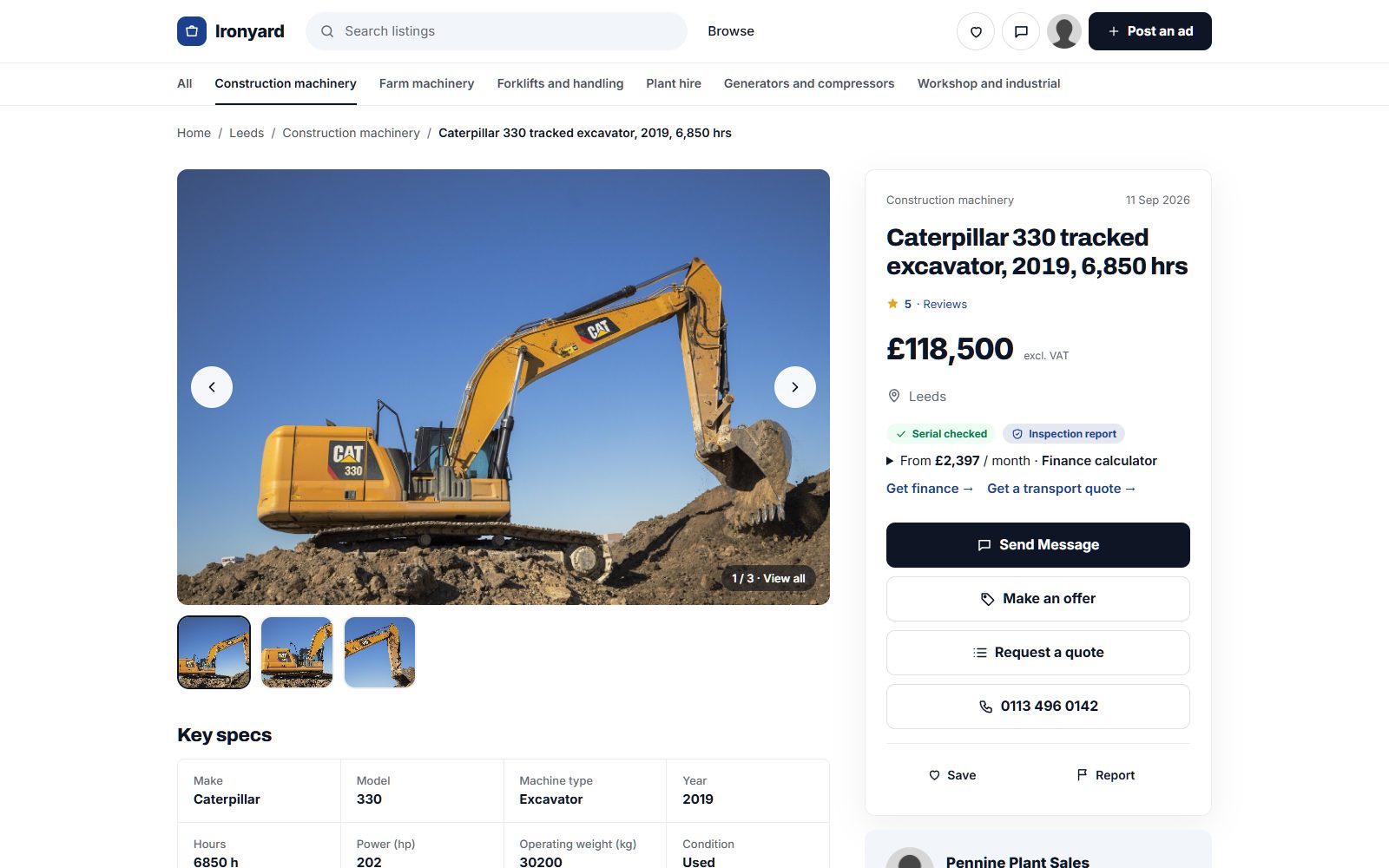
Photo credits
The screenshots show demo sites with made-up sellers. Their photos come from Wikimedia Commons, some cropped or with signs and plates blurred; these ones are under Creative Commons licences:
- Caterpillar 330 excavator on a pile of dirt by Matthew T Rader, CC BY-SA 4.0
- Excavator, Sany, 2021 Changsha International Construction Equipment Exhibition, Picture2 by Huangdan2060, CC BY 3.0
- JCB backhoe loader with hydraulic breaker, 2019 Szigetszentmiklós by Globetrotter19, CC BY-SA 3.0
- Polaris ATV Winch (53034864566) by Tony Webster, CC BY 2.0
- Round baler 3070 by Flominator, CC BY-SA 3.0
- Heavy equipment 2022 by Lowcarb23, CC BY-SA 4.0