
How to build a horse classifieds website that riders and breeders trust.
This guide covers how to build a horse classifieds website: choosing a region or discipline, the fields riders filter on, from height in hands to training level, how the site earns money, where the first horses come from, the scams and welfare questions you must handle, the searches to rank for, and a launch around the show and sale seasons.
Free for 15 days · No credit card · Plans from $19 a month
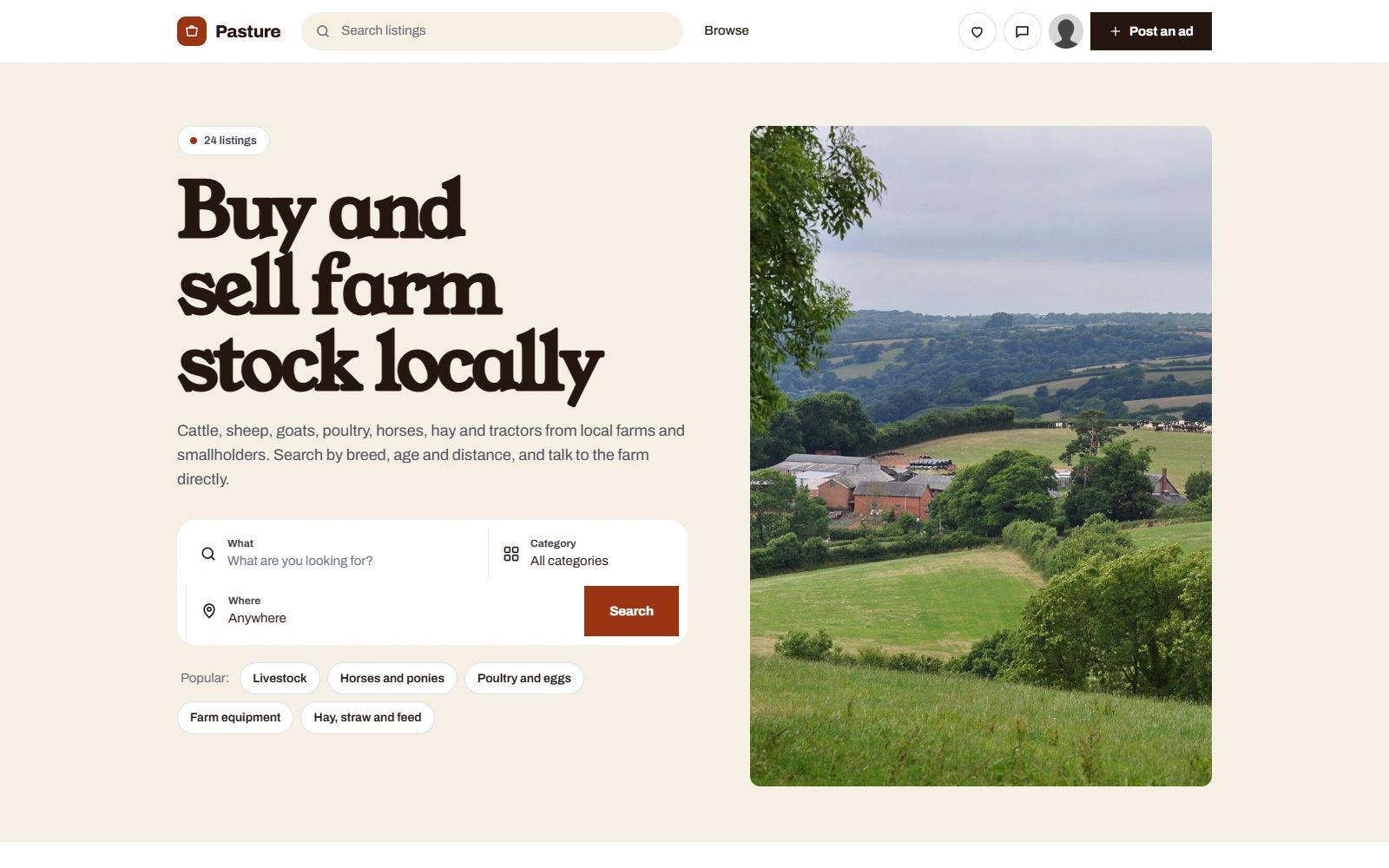
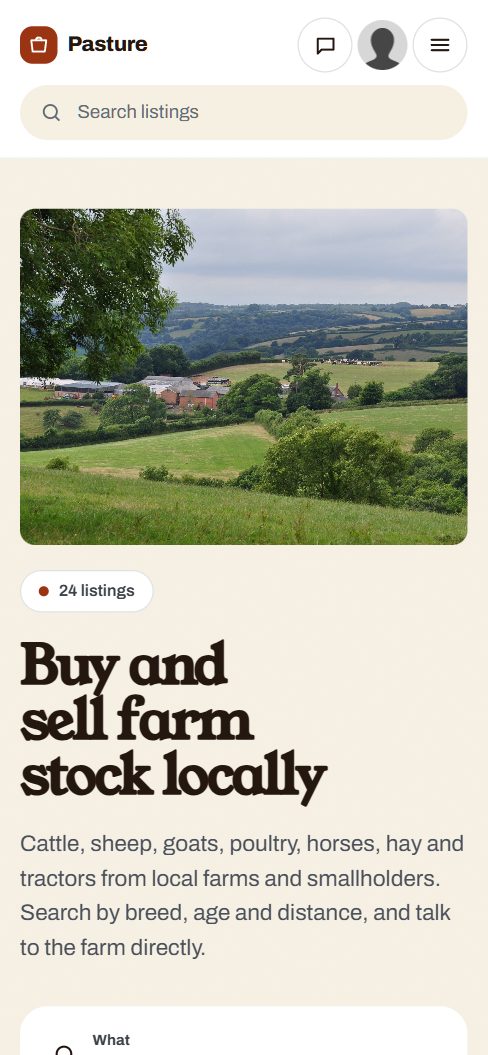
Choose a region or a discipline that riders already gather around.
Horses are bought by people with very precise needs. A parent wants a quiet pony for a ten-year-old; a dressage rider wants a schooled warmblood over 16 hands; a ranch wants a broke gelding that works cattle. General sites cannot filter on any of that, and many of them restrict or ban live animal listings, so horse sales end up scattered across groups, trainer networks and word of mouth.
Who the site is for
- Private owners selling or leasing a horse they have outgrown, or rehoming an older one.
- Trainers and sale barns with several horses in work at any time.
- Breeders selling foals, young stock and broodmares, and standing stallions at stud.
- Buyers, from first-time owners to competitors moving up a level.
Picking the angle
Most horse sites succeed with one of two angles. A regional site covers every kind of horse within trailering distance, since many buyers want to ride a horse more than once before buying. A discipline site covers one sport, such as eventing, reining, barrel racing or trail horses, across a wider area, because those buyers travel for the right horse.
Today these sales happen in breed and discipline groups on social media, on national horse sale sites, through trainers' contacts, at breed association sales and on notice boards at tack shops and feed stores. Note which ones feel crowded and hard to search: that is your opening.
Pick the angle you can reach in person: the shows you attend and the barns you know.
Describe each horse the way a rider asks about it.
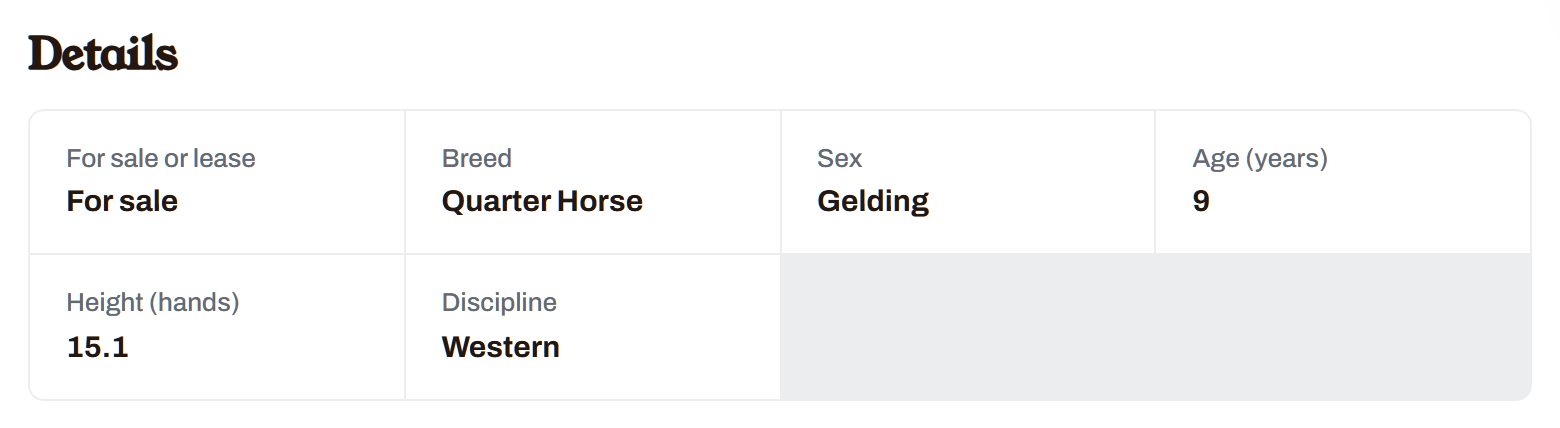
A horse listing lives or dies on its details. Keep the categories few and put the description into fields, so a buyer can ask for a gelding between 15.2 and 16.2 hands, under twelve years old, schooled in dressage, and see only those horses.
Fields for every horse
- Breed, with a dropdown of the breeds common in your area and an Other option.
- Sex: mare, gelding, stallion, colt or filly.
- Age or year foaled, and height in hands.
- Discipline and training level: green broke, started under saddle, schooling a given level, competing.
- Suitable for: beginner, intermediate, experienced rider, child.
- Registered and registry name, with papers available or not.
- Vet check welcome and video available, as checkboxes.
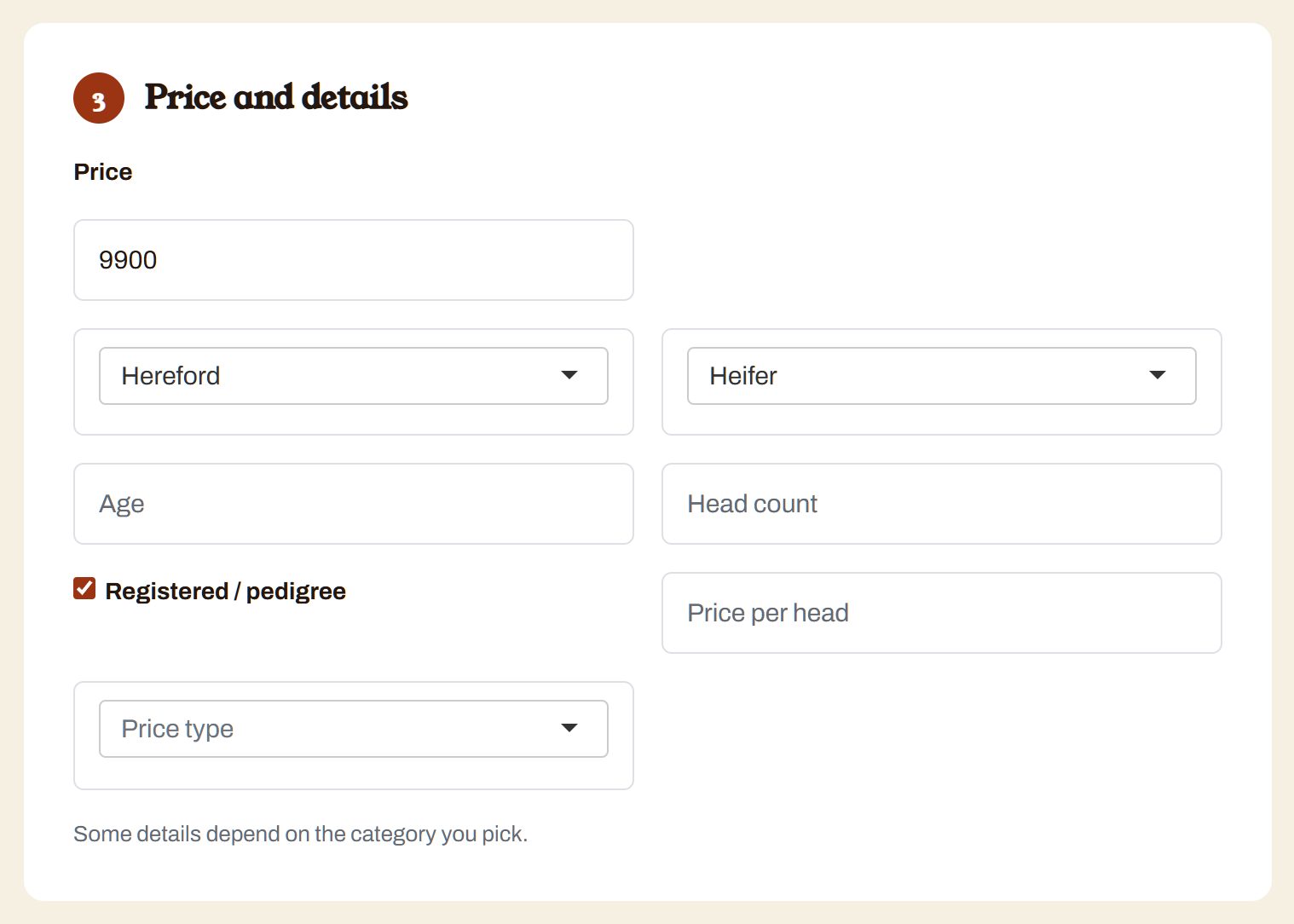
For leases, add lease type (full, half or on-site), monthly fee and the minimum term. For breeding listings, add stud fee, breeding method and booking season. On Yclas each of these can be a dropdown, number, checkbox or date, shown as a search filter.
| Category | Example listings | Fields buyers filter on |
|---|---|---|
| Sport horses | Hunters, jumpers, dressage and eventing horses | Height, age, level competed, breed, price range |
| Western and ranch horses | Reining, cutting, barrel and ranch geldings | Discipline, training level, breed, sex, age |
| Ponies and family horses | Lead-line ponies, kid-safe geldings, trail horses | Suitable for, height, age, temperament notes |
| Leases | Full leases, half leases, on-site leases | Lease type, monthly fee, term, location |
| Breeding | Stallions at stud, broodmares, foals and yearlings | Breed, stud fee, registration, foaling date |
| Tack and saddles | English and western saddles, bridles, blankets | Saddle type, seat size, tree width, condition |
| Trailers | Two-horse bumper pulls, goosenecks, living quarters | Horse capacity, hitch type, year, load type |
Saddles sell on seat size and tree width, so give tack its own fields rather than the horse fields.
Earn from trainers, breeders and the businesses around the barn.
Horses are valuable, which tempts founders to charge every seller from the start. Resist it while the site is new: private owners will simply stay in the groups they know. Free posting fills the site; the money comes from the sellers who list again and again and from the businesses every horse owner needs.
- Featured listings and bumps fit sale horses, where a seller paying board every month wants the horse seen fast.
- Memberships for trainers and sale barns give them a seller profile with all their horses, and suit anyone who lists every month.
- Paid posting in breeding fits stallion owners, who advertise every season and are used to paying for promotion.
- Banner spaces suit equine vets, farriers, feed stores, tack shops, boarding barns, trailer dealers and equine insurers.
Keep rehoming and retirement listings free for good. Charging for a horse that needs a soft landing works against the welfare standards you want the site to be known for.
Tack and trailers are a steady second earner: owners replace saddles as horses change, and trailer sales bring buyers who are not shopping for a horse that month.
| Model | Works when | Switch it on |
|---|---|---|
| Featured listings and bumps | Buyers browse sale horses every week | Once a few hundred horses are listed |
| Trainer and sale barn memberships | Barns list several horses at a time | When three or four barns post regularly |
| Pay to post stallions at stud | Stallion owners compete for mares | Before the breeding season starts |
| Banner spaces | Vets, farriers and feed stores want local owners | When you can show visitors per region |
| Featured tack and trailers | Owners upgrade gear between horses | When those categories have steady buyers |
Get the first horses from barns, breeders and show grounds.
The horse world is small and runs on reputation, so your first listings come through people, not ads.
Where to find sellers
- Trainers and sale barns. Each one usually has several horses for sale. Offer to post them all, with photos and video links they already have.
- Breeders with young stock to sell each year, found through breed associations and their sales.
- Boarding barns. Barn managers know which boarders are selling, leasing or retiring a horse, and many will put up a notice for you.
- Shows, clinics and rodeos. Hand out cards at the secretary's stand and in the warm-up area, where sellers and buyers meet.
- Pony Club, 4-H and riding schools, where families outgrow ponies every year.
- Tack shops and feed stores, whose notice boards are full of horses for sale.
Sellers often keep a list of horses in a spreadsheet, and listings can be imported from a CSV, so a sale barn can be fully online the same day. Ask for a recent conformation photo, a photo under saddle and a link to a video of the horse walking, trotting and cantering.
Ten well-described horses from a respected trainer do more for trust than a hundred thin listings.
Handle scams, misrepresentation and welfare before they find you.
Horse sales carry real money and real animals, and both attract problems. Set your rules early and publish them.
Scams and misrepresentation
- Fake horses. Stolen photos of a well-bred horse at a low price, with a seller who asks for a deposit plus transport before any visit. Tell buyers never to send money for a horse they or their agent have not seen.
- Hidden problems. Lameness, behavior issues or a horse sedated for the trial ride. Encourage buyers to get a pre-purchase exam by their own vet and to ride the horse more than once.
- Wrong age or papers. Ask sellers to state whether registration papers transfer with the horse.
Welfare and paperwork
Ban listings that show a horse in poor condition or that look like a quick sale to the lowest bidder for slaughter, and ask for recent photos. Many places require health papers when horses travel or change hands, such as an equine infectious anemia test in parts of the US or a horse passport in the UK and EU, and some regulate breeding or dealing. Ask sellers to state which documents they have, and check the rules where you operate before you write your posting rules.
Your tools
Approve every listing at first, give known trainers and breeders a verified seller badge, collect reviews after sales, and publish a buyer guide covering trial rides, vet checks, written sale or lease agreements and safe ways to pay.
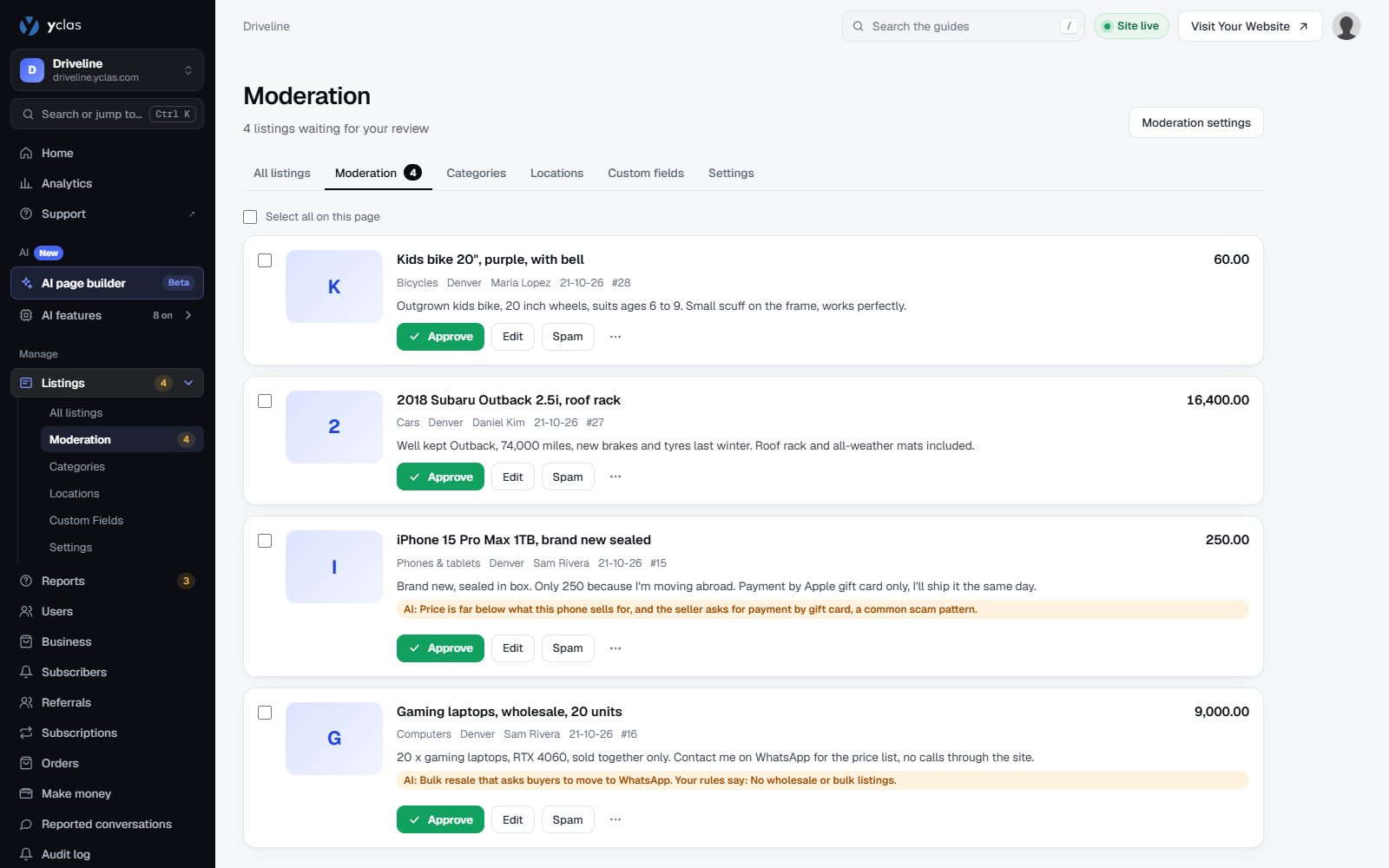
Rank for breed, discipline and place.
Horse buyers search with breed, use and place in the same sentence, and those searches make natural landing pages.
Searches to target
- "quarter horse for sale Texas"
- "beginner safe horse for sale near me"
- "dressage horse for sale"
- "pony for sale Ohio"
- "horse for lease near me"
- "used western saddle 16 inch"
- "gooseneck horse trailer for sale"
Pages to build
- Breed and state pages, such as Arabians in Arizona or Morgans in Vermont, built from your own listings.
- Discipline pages for each sport your riders compete in.
- Buying guides: buying your first horse, what a pre-purchase exam covers, questions to ask a seller, how a half lease works.
- Cost guides: what owning a horse costs in board, feed, farrier and vet visits, written with local barns and kept free of made-up figures.
Keep sold horses online for a while, marked as sold, with a link to similar horses. Searches for a specific horse's name often come back after the sale, and the page can send those visitors to horses still available.
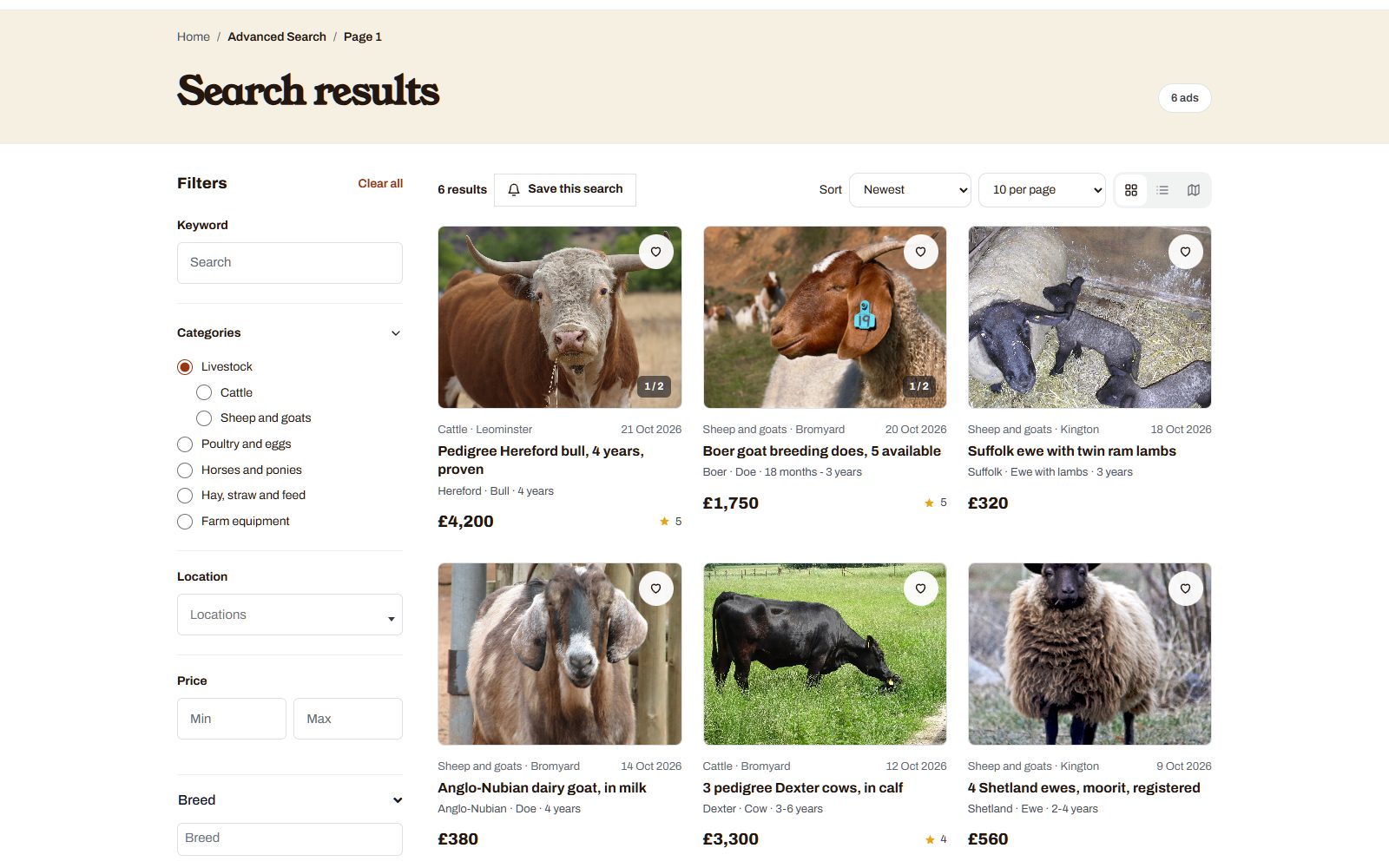
Launch in spring with one region's barns behind you.
Buying picks up in spring, when riders look for a horse before the show season, and again in late summer and fall, when some owners sell rather than pay for a winter of board and hay. Breeding listings matter most in the months before the breeding season. Plan your first push for late winter, so the site is full when spring buying starts.
Launch plan
- Choose one region or one discipline and sign up five trainers or sale barns.
- Import their horses and check every listing has height, age, discipline and a video link.
- Ask a respected local vet or farrier to write a short guide for buyers and take a banner later.
- Take cards and a tablet to two or three shows, and post listings for sellers on the spot.
- Share full categories, such as all the ponies in the region, in local horse groups.
Checklist
- Breed, sex, age, height, discipline and suitability as search filters.
- Posting rules covering welfare, recent photos and paperwork.
- A buyer guide on trials, vet checks, agreements and payment.
- Saved searches with email alerts for buyers waiting for the right horse.
- Your own domain, terms of use and a privacy policy, plus sample lease wording if you host leases.
A worked example: Valley Gait Horse Board, Shenandoah Valley.
Valley Gait Horse Board is invented for this guide; no such site exists. Imagine a hunter and eventing coach in Virginia's Shenandoah Valley who spent every spring answering the same request from students' parents: find us a safe, honest horse within an hour or two of the farm. The national sale sites showed her horses from four states away, and the local groups mixed sale horses with lost dogs, hay requests and barn drama. She wanted one place where a parent could filter to quiet ponies under 14.2 hands and see only those.
Who it serves
The board covers the valley and the Virginia hunt country to the east, an area where most buyers can trailer to a trial ride and back in a day. Its core audience is junior and amateur riders in hunters, eventing and foxhunting, with a smaller section for trail and family horses. Sellers are mostly private owners, a dozen trainers and three sale barns.
Categories at launch
- Horses for sale
- Hunters and jumpers
- Eventers
- Foxhunters and trail horses
- Ponies
- Leases
- Young stock and breeding
- Tack and trailers
How it started
The coach began with the horses she already knew. She asked six trainers she had shown against for their sale lists, imported them from a shared spreadsheet, and checked that every horse had height, age, level, a conformation photo and a video link. She then set up a folding table at two spring schooling shows with a tablet, posting horses for owners on the spot while they waited for their rides. Pony Club parents did the rest, passing the link around whenever a child outgrew a pony. By early summer the board carried around 120 horses, and the coach had a waiting list of trainers who wanted their barns on it before the fall sales.
How it makes money
Private sale and lease listings are free, and rehoming of retired horses stays free for good. Trainers and sale barns pay a monthly membership for a seller profile and a verified seller badge. Featured listings arrive in late winter, when sellers want a horse seen before spring shows. A local equine vet practice, a farrier and a tack shop pay for banner spaces in the categories their clients browse. Tack and trailers bring a smaller but steady stream of featured listings all year, from riders who are not shopping for a horse that month.
Its first fifty horses came from trainers the founder had competed against for years.
| Horse | Price | Key details |
|---|---|---|
| Bay Thoroughbred gelding, 9, 16.2 hands | $18,000 | Off-track, schooling Training level eventing, clean flatwork, vet check welcome |
| Grey Connemara pony mare, 12, 14.1 hands | $12,500 | Pony Club C-1 mount, hunts first flight, safe for an older child |
| Chestnut Quarter Horse gelding, 16, 15.1 hands | $6,500 | Trail and beginner lessons, good in traffic, easy keeper |
| Half lease, warmblood mare, 11, 16.3 hands | $450 per month | Three rides a week, on-site at a boarding barn, rider must take lessons |
| Close-contact saddle, 17 inch, medium tree | $1,100 | Used two seasons, flocking checked last fall, trial period possible |
The first 90 days on a horse site.
Horse buyers are patient but picky. Many will look at a site for weeks before calling about anything, and they judge it on whether the horses are described honestly and whether the people behind it are known in the barns. That makes the first three months more about relationships than about traffic.
The plan below assumes you start in late fall or early winter, so the site is full when riders start shopping before spring shows. If you start in summer, aim the same steps at the fall selling window, when owners decide whether to pay for another winter of board. Each row ends with something you can check, not a feeling that things are going well.
Throughout, keep a list of every trainer, barn manager and breeder you speak with and what they promised. Following up two weeks later, with their horses already posted, wins more sellers than the first call. A short note to each seller when their horse gets its first message does the same: it shows the site is working for them.
| Weeks | Focus | Done when |
|---|---|---|
| 1-2 | Pick region or discipline; set categories, breed list, height, age, training level and suitability fields | A test listing for a pony filters correctly by height, age and suitable for |
| 3-4 | Write posting rules on welfare, recent photos, video and paperwork | Rules and a buyer guide on trial rides and vet checks are published |
| 5-6 | Visit or call trainers, sale barns and breeders | Five sellers have sent horses and at least one has sent a spreadsheet |
| 7-8 | Post and import the first horses, checking each for height, level and video | Seventy-five horses are live with complete details |
| 9-10 | Attend a show, a clinic or a breed sale with cards and a tablet | Twenty listings posted at the event and a hundred cards handed out |
| 11-12 | Share full categories in riding groups and ask a vet or farrier to write a guide | Buyers send messages every week and one local business has asked about a banner |
Ways to build a horse site, and what horses demand of each.
A horse site has needs that a plain buy and sell board does not cover well. Buyers filter on height in hands, which has its own notation, on age ranges, on training level and on suitability, so you need dropdowns and number fields that work as filters. Sellers want to show video, which usually means a link to a video hosted elsewhere. Leases need their own fields, and trainers need a seller profile that lists every horse in their barn.
Hiring developers
A custom build can do anything, such as a pedigree tree or a search by sire. It also costs months and a steady developer bill, and most of what horse buyers need is ordinary classifieds work. It suits an established breed registry or sale company that already has the budget.
Running a script or plugin yourself
Self-hosted classifieds scripts and WordPress plugins are cheaper up front. You take on updates, backups, spam control and security, and you should test whether custom fields can filter by a range such as 15.2 to 16.2 hands before you commit, since many cannot.
A hosted builder
A hosted builder such as Yclas takes care of hosting and updates, and lets you set up the categories and filters described in this guide, import a sale barn's horses from a spreadsheet and verify trainers without writing code. It suits a founder whose real job is visiting barns and shows. You give up some freedom over unusual features in exchange, which matters less in this niche than finding the first forty horses quickly.
| Route | Fits when | Watch out for |
|---|---|---|
| Custom development | A registry, breed society or sale company needs pedigrees and its own records | Long build time and an ongoing developer cost |
| Self-hosted script or plugin | You have technical skills and time for upkeep | Height and age filters that only work as plain text, plus spam |
| Hosted builder | You want to launch before the spring buying season | Fewer options for features like pedigree charts |
What a horse classifieds site costs to run.
The software is the smallest part of the bill. Most of the cost is your time in the first months: finding the first listings, answering questions and checking what gets posted.
Budget for a domain, printed cards for shows, and possibly entry or vendor fees to set up at a show or sale. A few hours with a local lawyer to review your posting rules and sample lease wording is worth considering before you publish them.
| Cost | Typical range | On Yclas |
|---|---|---|
| Domain | $10 to $20 a year | Your own, with SSL included |
| Software and hosting | $0 to $100+ a month, plus plugins and updates | Starter $19 a month, Professional $99 |
| Design | $0 to $100 for a theme, or a designer | 109 looks included |
| Payment fees | About 3% per payment | Your Stripe or PayPal fees; Yclas takes nothing |
| Your time | 5 to 10 hours a week at the start | Finding listings, moderation, support |
Mistakes that cost a horse site its reputation.
- Listing horses with no video. Experienced buyers will not drive two hours to see a horse they have not watched move. Make a video link part of the posting form and nudge sellers whose listings have none, since those horses get far fewer serious messages.
- Accepting old or flattering photos. A photo from three years and two hundred pounds ago leads to angry buyers and a reputation for misleading ads. Ask for photos taken in the last couple of months, including a plain conformation shot on level ground.
- Mixing every discipline into one list. A reining buyer has no interest in a dressage schoolmaster, and a parent looking for a pony gives up scrolling past sport horses. Split categories by use and let suitability and training level do the rest.
- Staying silent on welfare. One listing of a thin horse priced for a quick sale can turn a whole region's riders against the site. Publish your welfare rules early, remove listings that break them, and say why.
- Letting a deposit scam run. Fake ads with stolen photos of a nice horse at a low price appear on every horse platform sooner or later. Approve listings while small, check for reused photos, and warn buyers never to send a deposit for a horse nobody has seen.
- Charging owners who rehome retired horses. Owners finding a soft landing for an old horse will remember being asked to pay, and so will their friends. Keep those listings free, and charge trainers and sale barns instead.
- Hiding the seller type. Buyers treat a private owner, a trainer selling on commission and a dealer differently, and they want to know which they are dealing with. Add a listed by field and show it on every horse, so nobody feels misled when they arrive at a sale barn expecting a family backyard.
- Ignoring leases. Many riders cannot buy yet but would lease tomorrow, and owners with a horse they cannot ride often prefer a lease to a sale. A leases category with its own fields brings visitors who turn into buyers later.
- Promising to settle disputes. Sale disputes over soundness or temperament can drag on for months. Make clear in your terms that the site is a listing service, and point buyers to pre-purchase exams and written sale agreements instead. You can still remove a seller who misdescribes horses, which protects the site without making you the judge of every sale.
Horse sale terms every founder should know.
Sellers and buyers write in this shorthand, so your fields, guides and moderation should understand it.
| Term | What it means |
|---|---|
| Hands | The unit used to measure a horse's height at the withers, where one hand is four inches and 15.2 means fifteen hands two inches. |
| Green broke | A horse that has been started under saddle but still needs an experienced rider and more training. |
| Schoolmaster | An experienced, well-trained horse that can teach a less experienced rider. |
| PPE | Pre-purchase exam, a vet examination done for the buyer before a sale. |
| Coggins | Common US name for the equine infectious anemia blood test, often required for travel or sale. |
| OTTB | Off-track Thoroughbred, a former racehorse being retrained for another discipline. |
| Gelding | A castrated male horse, often preferred by amateur riders for a steady temperament. |
| Conformation | The build and proportions of a horse, judged from a side photo on level ground. |
| Half lease | An arrangement where a rider pays part of a horse's costs in return for riding it on set days. |
| Sound | Free of lameness; listings often say whether a horse is sound for a given level of work. |
| Vices | Stable habits such as cribbing, weaving or kicking that buyers want disclosed. |
| Easy keeper | A horse that holds weight on modest feed, which keeps running costs down. |
| Standing at stud | A stallion available to breed mares, usually for a stud fee. |
| Tree width | The width of a saddle's frame, which must match the horse's back for a good fit. |
The same steps for a horse classifieds site on Yclas.
- Describe your nicheThe setup wizard writes the categories, an About page and example listings from one sentence.
- Add fieldsSwitch on a field pack or add the fields your buyers filter on.
- Fill itImport dealer spreadsheets, invite sellers and post your own.
- Set the rulesChoose moderation, banned words and AI checks.
- Go liveChoose a plan, connect your domain, switch on paid listings when it is time.
How much does it cost to start a horse classifieds site?
The site itself costs little to run on a hosted platform; most of the spend goes on a domain, printed cards and showing up at events. Your time with trainers and barns is the biggest cost.
Do I need a license to run a horse classifieds site?
You are a listing site, not a dealer, but rules on animal sales, advertising and health papers differ by place. Check the rules where you operate, and write posting rules that ask sellers to follow them.
How do I stop fake horse ads?
Approve every listing while you are small, ask for recent photos and video, verify trainers and breeders, and warn buyers never to pay a deposit for a horse nobody has seen.
Should I allow horses going to auction or for slaughter?
Many horse sites set clear welfare rules and refuse listings that look like low-bid sales for slaughter. Decide your position, write it into the posting rules and apply it the same way every time.
How do I compete with the big national horse sites?
Be better for one region or discipline: precise filters, well-described horses, known trainers and a buyer guide. Riders try a site that saves them a long drive to see the wrong horse.
Can I list leases as well as sales?
Yes, as their own category with lease type, monthly fee and term. Leases bring riders who are not ready to buy and often come back when they are.
When should I start charging trainers?
Once a few barns post regularly and their horses get inquiries, offer memberships with a seller profile and featured listings. Keep private and rehoming listings free.
Should I let sellers list horses without a price?
Many horse sellers prefer price on request, but buyers skip those listings. Ask for a price or a price range, such as a band of a few thousand dollars, so buyers can filter and sellers still have room to talk. Leases should always show the monthly fee.
What should a horse listing require before it goes live?
Height, age, sex, breed, discipline, training level and at least three recent photos, with a video link strongly encouraged. Listings without these details draw tire kickers and make the site look careless. For leases, add the lease type, the monthly fee and who pays for shoes and vet bills.
How do I check that a trainer or breeder is real?
Look for their barn, show results or breed association membership, call them, and ask other trainers you know. Give the verified seller badge only once you have spoken to them and seen where the horses are kept. Recheck badges once a year, since barns change hands and trainers move.
Should my horse site allow horses for sale out of state?
Yes, if your angle is a discipline that buyers travel for. For a regional site, allow them but make location a filter, and remind buyers that transport and health papers across state lines take planning. Discipline sites can treat the whole country as one market from the start.
How do I handle a buyer who says a horse was misrepresented?
Listen to both sides, ask the seller to answer, and remove sellers who misdescribe horses more than once. Make clear in your terms that the sale is between buyer and seller, and point buyers to pre-purchase exams and written agreements for next time. Keep a short written record of each complaint, so patterns stand out.
Related pages.
The parts of Yclas this leans on.
You have the plan. Now build your horse site.
Describe your site in a sentence and the setup wizard writes the categories, example listings and a look. Free for 15 days, no credit card.
Start my classifieds site
Photo credits
The screenshots show demo sites with made-up sellers. Their photos come from Wikimedia Commons, some cropped or with signs and plates blurred; these ones are under Creative Commons licences:
- Cattle Ranch (5451966167) by Alex Proimos from Sydney, Australia, CC BY 2.0
- Cattle in pasture, Alaska by L T Hunter, CC BY 2.0
- Dexter cattle PM16-2 by Pieter Delicaat, CC BY-SA 4.0
- Suffolk Ewe with twin lambs by J gareth p at English Wikipedia, CC BY-SA 3.0
- Sheep in a field in Alsager 02 by Dominic Nelson, CC BY-SA 4.0
- Shetland sheep moorit by Jean, CC BY 2.0
- Boer goat444 by Benjamint444, CC BY-SA 3.0
- Flock of Rhode Island Red, Easter Egger, and Barred Plymouth Rock Hens by HeatherLion, CC BY-SA 3.0
- Pekin duck in Buddha park lake, Eluru by iMahesh, CC BY-SA 4.0
- Quarter Horse(REFON)-cleaned by José Reynaldo da Fonseca, derivative work by Pitke, CC BY 2.5
- Haflinger 3607 by Flominator by Flominator, CC BY-SA 3.0
- Cheval (Gypsy horse) by Gzen92, CC BY-SA 4.0
- Harvest Straw Bales in Schleswig-Holstein by Jan van der Crabben (Photographer), CC BY-SA 2.0
- Trailer and Barn, South Hall Farm, Paglesham - geograph.org.uk - 8117991 by Roger Jones, CC BY-SA 2.0
- Mid Devon , Countryside ^ Farmland - geograph.org.uk - 1953042 by Lewis Clarke, CC BY-SA 2.0