
How to build a pet classifieds website that puts animal welfare first.
This guide covers how to build a pet classifieds website for rehoming and responsible breeders: the welfare stance to take first, the fields adopters filter on, how the site can earn money without rewarding bad breeding, where trustworthy listings come from, puppy scams and local sale rules, the searches to rank for, and a careful launch.
Free for 15 days · No credit card · Plans from $19 a month
Decide your welfare stance before you decide anything else.
A pet site is not a buy and sell site with animals in it. Every listing is a living animal going to a new home, and the site's reputation depends on how those animals are treated. Several large general sites ban animal sales or allow only rehoming with a small fee, which leaves families, rescues and breeders using scattered groups where scams and impulse buying are common. A site with clear standards fills that gap.
Who lists and who adopts
- Owners who need to rehome a pet because of a move, a new baby, allergies or a change in health.
- Rescues and shelters wanting more people to see their adoptable animals.
- Responsible breeders who health test parents, raise litters at home and take animals back if a home fails.
- Adopters and buyers who want a pet that suits their home and are willing to wait for the right one.
Picking the angle
Choose one of three angles. A rehoming site for one city or region, free for owners and rescues. A breed site for one breed or group, such as retrievers or sighthounds, run with breed clubs. Or a small pets site for rabbits, birds, guinea pigs or reptiles, where keepers trade across a wider area and specialist knowledge matters.
Whichever you choose, write down who may list and what you will refuse. That page becomes the base of your rules, your moderation and your marketing.
A pet site earns trust by the listings it turns away.
Ask for the details that protect the animal and the new home.
On a pet site, fields do two jobs. They help adopters filter for a pet that fits their home, and they make sellers state the facts that separate a cared-for animal from a risky one. Make the welfare fields required.
Required fields for dogs and cats
- Species, breed or mix, sex and age, with date of birth for young animals.
- Spayed or neutered, vaccinated and microchipped, as checkboxes.
- Listed by: owner rehoming, rescue or shelter, or breeder.
- Good with: children, dogs, cats, and whether the animal is house trained.
- Rehoming fee or price, so nothing is hidden.
Extra fields for breeders
- Breeder license or registration number, where one applies.
- Health tests done on the parents, and whether you can meet the mother.
- Date the litter will be ready to leave, so nobody lists animals too young to go.
Fields can be text, numbers, dropdowns, checkboxes or dates, required or optional, and shown as search filters, which lets an adopter look only at cats good with dogs within twenty miles.
| Category | Example listings | Fields adopters filter on |
|---|---|---|
| Dogs for rehoming | Adult dogs needing a new home, senior dogs | Breed or mix, age, size, good with children, dogs and cats |
| Cats for rehoming | Adult cats, bonded pairs, indoor-only cats | Age, indoor or outdoor, good with dogs, spayed or neutered |
| Puppies and kittens from breeders | Planned litters from health-tested parents | Breed, ready date, parents' health tests, license number |
| Rescue adoptions | Adoptable animals from shelters and rescues | Species, age, size, adoption area, home check needed |
| Small pets and birds | Rabbits, guinea pigs, budgies, parrots | Species, age, sex, cage or hutch included |
| Reptiles and fish | Bearded dragons, leopard geckos, aquarium fish | Species, age, enclosure included, care level |
| Pet supplies | Crates, cages, aquariums, grooming tables | Item type, size, condition, cleaned and ready |
Only list species that are legal to keep and sell where you operate, and refuse any animal you cannot confirm.
Earn money in ways that never reward careless breeding.
The way a pet site charges shapes who lists on it. If every featured spot goes to whoever breeds the most litters, the site ends up promoting volume breeders. Build the money model around the businesses that serve pet owners and around breeders who meet your standards.
- Keep rehoming and rescue listings free, always. They are the heart of the site and the reason families trust it.
- Charge breeders to post in the breeder categories once you have adopters. A fee also puts off scammers, who rarely pay to post fake puppies.
- Offer verified breeder memberships with a seller profile, a verified seller badge and reviews from past buyers, only after you have checked their details.
- Sell banner spaces to vets, groomers, trainers, boarding kennels, pet sitters, pet stores and pet insurers.
Avoid featured listings and bumps for individual puppies and kittens. Pushing young animals to the top for a fee encourages rushed sales. Use featured spots for rescues' long-stay animals instead, perhaps paid for by a sponsor.
Rehoming fees go from owner to adopter, not to you. Many owners ask a modest fee because it discourages people looking for free animals for bad reasons.
| Model | Works when | Switch it on |
|---|---|---|
| Pay to post in breeder categories | Adopters visit to find planned litters | Once breeder listings get regular inquiries |
| Verified breeder memberships | Breeders want to stand apart from scammers | When you have a way to check their details |
| Banner spaces | Vets, groomers and trainers want new pet owners | When you can show local visitor numbers |
| Sponsored rescue spotlights | Local businesses want to support adoptions | When rescues list regularly |
| Pet supplies extras | Owners sell crates, cages and aquariums | When the supplies category is busy |
Start with rescues, clubs and owners who need help rehoming.
The first listings on a pet site set its tone. Start with the sources you would be proud to show any visitor.
Where to find them
- Local rescues and foster networks. Many have more animals than visibility. Offer to post their adoptable animals for them and keep their own adoption process in place, with home checks and contracts.
- Shelters, which often welcome extra places to show long-stay animals.
- Breed clubs and national breed associations, many of which keep breeder lists and codes of ethics. Invite their breeders and ask the clubs to help you check them.
- Vets, groomers and trainers, who hear from clients who must rehome a pet and can hand out your card.
- Small-pet and bird clubs, reptile shows and aquarium societies, where keepers already trade animals and equipment.
Rescues often keep their animals in a spreadsheet, and listings can be imported from a CSV, so a whole rescue can go online in an afternoon. With Yclas, an owner rehoming a cat can also take a photo and let AI fill in the title, description, category and price for them to check, which keeps listings complete even when posting is emotional and rushed.
Ask every rehoming owner why the pet needs a new home: adopters want to know, and it filters out flipping.
Stop puppy scams and follow the sale rules where you operate.
Pet classifieds attract more scams and welfare problems than almost any other niche. Plan your defenses before the first listing goes live.
Scams to block
- Fake puppies and kittens. Stolen photos, low prices, a seller who cannot meet and asks for a deposit, then more money for transport, insurance or a crate. Ban shipping-only listings of young animals, and tell adopters never to pay for an animal they have not met.
- Flipping. Pets taken free from one listing and sold on. Suggest rehoming fees and ask rehoming owners to meet adopters in person.
- Volume breeding passed off as a family litter. Look for the same phone number across many breeds and frequent litters.
Rules to write
- No animals below a minimum age for leaving their mother, and a stated ready date for litters.
- Breeders state their license or registration number where one is required, and adopters can meet the mother.
- No species that are protected, restricted or need a permit, and no breeds restricted where you operate.
- Vaccination, microchip and health details shown on every listing.
Rules on breeder licensing, minimum sale ages, third-party sales, microchipping and online pet adverts differ widely between countries, states and cities, and some places restrict online animal sales altogether. Check the rules where you operate, ideally with a local lawyer or animal welfare body, before you launch.
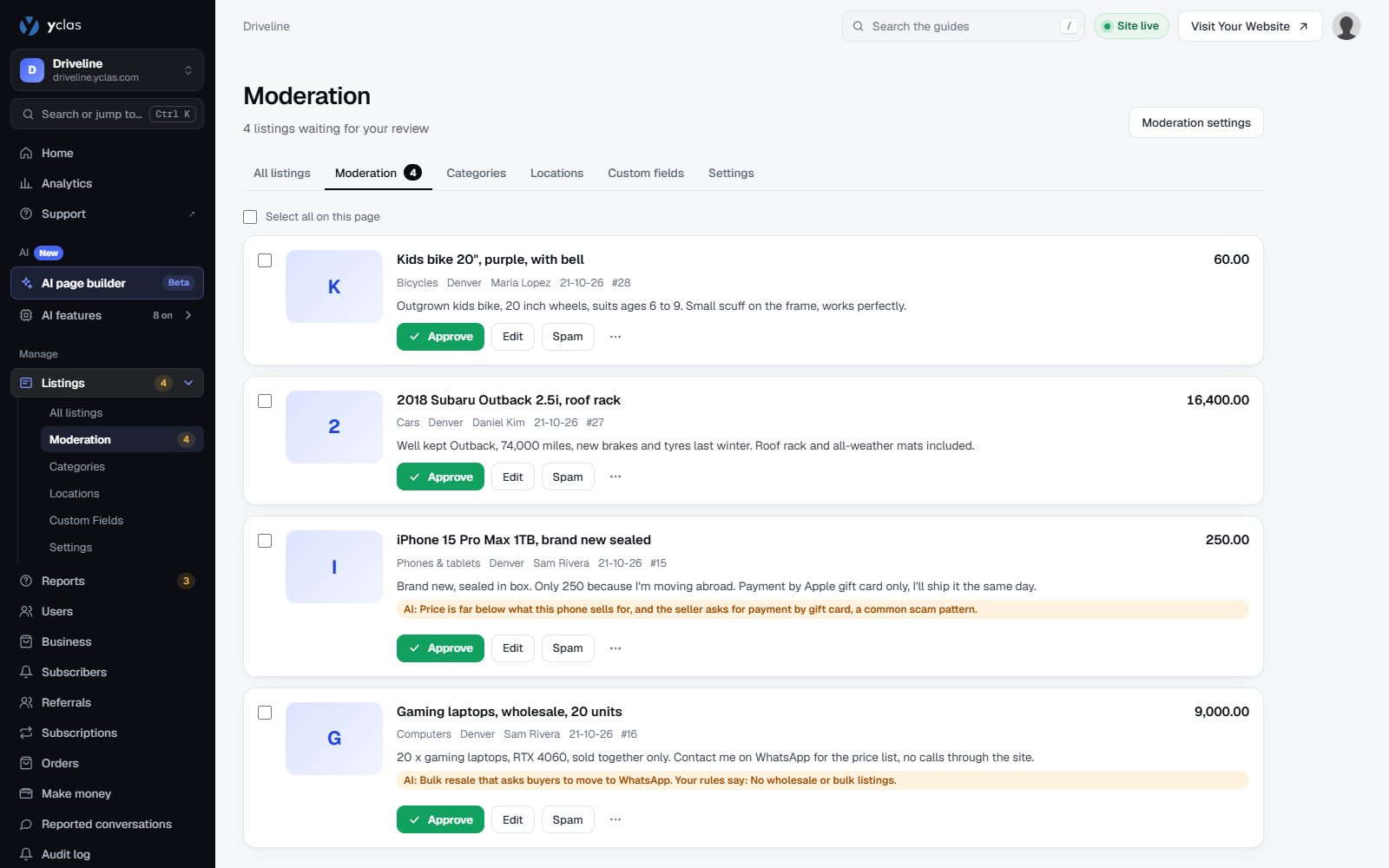
Approve every listing by hand, use banned words for scam phrases, and let AI hold suspicious listings for review.
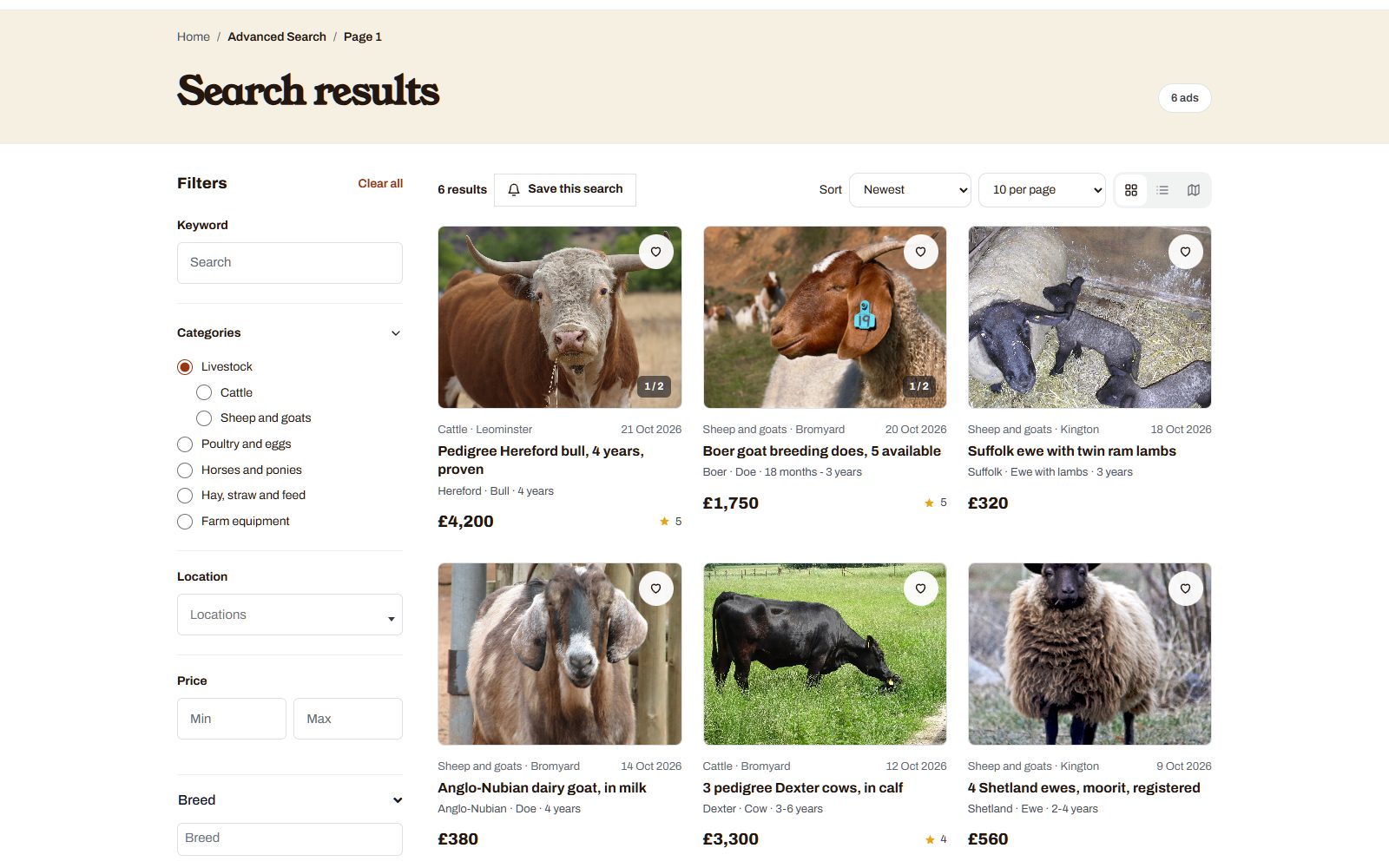
Rank for breed, rehoming and adoption searches.
People searching for a pet usually name a breed or a type of home they need and a place. Many also search for help rehoming, which is a chance to reach owners before they turn to a risky free giveaway.
Searches to target
- "rehome my dog Phoenix"
- "cats for adoption near me"
- "golden retriever puppies from health tested parents"
- "senior dog for adoption"
- "rabbits for rehoming"
- "how to rehome a cat responsibly"
- "how to spot a puppy scam"
Pages to build
- Breed and city pages showing rehoming and rescue listings first.
- A rehoming guide for owners: how to write a listing, why to ask a fee, how to meet adopters safely.
- Adopter guides: questions to ask a breeder, what health tests mean for a breed, what a rescue's home check involves.
- A scam guide with the warning signs of fake puppy and kitten adverts. Pages like this earn links from vets and rescues.
When an animal is adopted, mark the listing as rehomed and keep it online for a short while. Happy outcomes show visitors the site works and point them to animals still waiting.
Launch with rescues and clubs, not with a giveaway.
Launch slowly and with partners who share your standards. A pet site that grows fast with poor listings is hard to clean up later.
Timing
Rehoming needs rise in some seasons, such as after the winter holidays when gifted pets are given up and in moving season. Kitten season brings a surge of litters in the warmer months in many regions. Be ready with clear rules and capacity to moderate before those peaks.
Launch plan
- Sign up three to five local rescues and post or import their animals.
- Agree standards with one or two breed clubs and invite their breeders.
- Ask vets and groomers to display a card for owners who need to rehome.
- Publish your rehoming guide and scam guide before any advertising.
- Share the rescue categories in local pet groups, not single puppy listings.
Checklist
- Required welfare fields: age, vaccinations, microchip, spay or neuter, listed by.
- Posting rules, banned species list and minimum age rule published.
- Every listing approved by hand, with banned words for scam phrases.
- Verified seller badges only for breeders and rescues you have checked.
- Your own domain, terms and a privacy policy reviewed for your area.
A worked example: Sound Side Rehome, Puget Sound.
Sound Side Rehome is a fictional site invented for this guide, not a real organization. Imagine a veterinary technician in Tacoma who saw the same story every month: a client moving into an apartment that bans dogs, or a family with a new baby and an anxious cat, posting the pet as free to a good home in a neighborhood group. Some of those animals ended up with strangers who resold them within a week. She wanted a place where rehoming was slower, safer and visible to people who actually wanted to adopt.
Who it serves
The site covers the Puget Sound area from Everett to Olympia. Its first audience is owners who need to rehome an adult pet and the adopters looking for one. Local rescues and foster networks list their adoptable animals there too, and a small, carefully checked group of breeders can list planned litters in a separate section.
Categories at launch
- Rehoming
- Dogs
- Cats
- Rabbits and small pets
- Birds
- Rescue adoptions
- Planned litters from approved breeders
- Pet supplies
How it started
Before any advertising, the founder wrote two pages: who may list and what is refused, and a guide for owners on rehoming responsibly, with a suggested rehoming fee and advice on meeting adopters. She then signed up four foster-based rescues, whose animals she imported from their spreadsheets with photos, and kept their own applications and home checks in place. Vets and groomers she knew put a small card at the front desk for clients facing a hard decision. Every listing is read by a person before it goes live, and any that mention shipping a young animal are refused. In the first three months around 150 animals were listed, and the rescues reported more applications for their older dogs than they had seen from their own pages.
How it makes money
Rehoming and rescue listings are free and will stay free. Two breed clubs helped write standards for the breeder section, and approved breeders pay to post there and hold a verified seller badge. Banner spaces go to a vet practice, a training school, a pet sitter network and a pet insurer. A local pet store sponsors a featured spot for rescues' long-stay animals, which is the only featured placement on the site.
The site makes its money from businesses that serve pet owners, never from boosting individual puppies.
| Pet | Rehoming fee | Key details |
|---|---|---|
| Mabel, spayed mixed-breed dog, 6, 45 pounds | $100 | Microchipped, vaccinated, good with older children, no cats, owner moving abroad |
| Pepper and Sage, bonded cat pair, 3 | $75 for both | Indoor only, spayed, must go together, shy for the first week |
| Two neutered male rabbits, 2 | $40 with hutch | Litter trained, bonded, used to handling, owner developed allergies |
| Rescue adoption: senior beagle, 10 | Adoption fee set by rescue | Home check required, house trained, calm, on daily heart medication |
| Golden retriever litter, ready in 8 weeks | Price on application | Approved breeder, parents' hip and eye tests shared, meet the mother at home |
The first 90 days: standards before traffic.
On most classifieds sites, the first three months are about filling categories as fast as possible. On a pet site that instinct is dangerous. A few weeks of poorly checked listings can bring in scammers and volume breeders who are very hard to remove once they treat your site as a sales channel. The plan below spends the first month on rules and partners, and only then on reaching adopters.
Watch the calendar as well. In many regions the weeks after the winter holidays bring a rise in pets given up, and warmer months bring kitten season, when rescues are full and owners with unplanned litters look for homes. If your 90 days end just before one of those peaks, you will meet real demand with rules already in place.
Measure success by the quality of each listing and by adoptions, not by how many animals are posted. Ask rescues and owners to tell you when a pet goes to a new home, and keep a running count. Rescues will judge you by that number more than by your traffic.
| Weeks | Focus | Done when |
|---|---|---|
| 1-2 | Write who may list, banned species, minimum age and the breeder standards | The rules page and the refusal list are published |
| 3-4 | Set required welfare fields and the rehoming fee field; write the rehoming and scam guides | A test listing cannot be posted without microchip, vaccination and listed by |
| 5-6 | Sign up local rescues and foster networks and import their animals | Three rescues have live listings with their own adoption steps described |
| 7-8 | Agree breeder standards with a breed club and check the first breeders | Each approved breeder has been called, and their license or registration noted where one applies |
| 9-10 | Place cards with vets, groomers and trainers; share rescue categories in local pet groups | Ten clinics or businesses display a card and owners have started posting rehoming listings |
| 11-12 | Review every refused listing for patterns; agree the first banner and the rescue sponsor | Moderation notes are written up and one sponsor or banner is agreed |
Building the site: which route handles moderation best.
The technical needs of a pet site are modest. The moderation needs are not. Whatever route you choose, check that you can approve every listing before it is public, make welfare fields required, block scam phrases with banned words, give checked breeders and rescues a badge, and let visitors report a listing in one click. Required fields matter more here than in almost any other niche, because a missing microchip or age answer is often the first sign of a problem.
Developers and a custom build
A custom build lets you add things like links to a rescue's own application form or checks against a breeder register where one exists. It costs months of work and ongoing fees, and suits a large rescue or welfare charity with its own budget and staff.
A script or plugin on your own server
A self-hosted classifieds script or WordPress plugin can be set up cheaply, but you will be responsible for spam, security, updates and backups. Pet sites attract heavy spam from scam sellers, so test the moderation queue, required fields and spam protection before launch rather than after the first wave of fake puppies.
A hosted builder
A hosted builder such as Yclas lets you set required fields, approve every listing, use banned words and reCAPTCHA, and give verified badges, while hosting and updates are handled for you. That leaves your time for reading listings and talking to rescues, which is the real work of a pet site.
| Route | Fits when | Watch out for |
|---|---|---|
| Custom build | A welfare charity or large rescue wants links to its own adoption systems | Long build time and a budget that has to last for years |
| Self-hosted script or plugin | You have the skills to run a server and fight spam yourself | Weak moderation queues and spam from scam sellers |
| Hosted builder | You want to spend your time on moderation and partners | Fewer options for unusual integrations |
What a pet classifieds site costs to run.
The software is the smallest part of the bill. Most of the cost is your time in the first months: finding the first listings, answering questions and checking what gets posted.
Budget for legal advice on animal sale and advertising rules in your area, and for the time moderation takes, since every listing should be read by a person. Printed cards for vets, groomers and rescues are a small, useful cost.
| Cost | Typical range | On Yclas |
|---|---|---|
| Domain | $10 to $20 a year | Your own, with SSL included |
| Software and hosting | $0 to $100+ a month, plus plugins and updates | Starter $19 a month, Professional $99 |
| Design | $0 to $100 for a theme, or a designer | 109 looks included |
| Payment fees | About 3% per payment | Your Stripe or PayPal fees; Yclas takes nothing |
| Your time | 5 to 10 hours a week at the start | Finding listings, moderation, support |
Mistakes that turn a pet site into a problem.
- Opening the doors before writing the rules. If the first listings arrive before you have decided what you refuse, you will end up arguing case by case with every seller. Publish who may list, banned species, minimum ages and breeder standards before the first animal goes live.
- Allowing shipped puppies and kittens. Shipping-only listings of young animals are where most pet scams hide, usually with a story about a pet nanny, crate fees or insurance that keeps asking for more money. Even genuine ones encourage buying without meeting the animal. Refuse them, and tell adopters to meet the animal and, for litters, the mother.
- Selling boosts for individual litters. Paid featured spots for puppies reward whoever breeds the most. Keep featured placement for rescues' long-stay animals, sponsored by a local business, and earn from banners and breeder posting fees instead. Adopters notice which animals a site chooses to promote.
- Making welfare fields optional. An optional microchip or vaccination field will be left blank by exactly the sellers you most need to see. Make them required, and add a listed by field so adopters know whether they are dealing with an owner, a rescue or a breeder.
- Letting free to a good home listings through. Free pets attract people who resell them or worse. Suggest a modest rehoming fee, explain why in your guide, and ask owners to meet adopters in person, ideally at home so they can see where the pet will live.
- Trusting a breeder because they paid. A posting fee deters casual scammers but not organized ones. Check each breeder before the badge goes on: call them, ask about health tests, look for the same phone number across many breeds.
- Accepting any species someone asks about. Some reptiles, birds, primates and wild-caught animals are restricted or need permits in many places. Keep a written list of the species you accept and refuse everything else until you have checked the rules where you operate.
- Under-staffing moderation at peak times. Kitten season and the weeks after the winter holidays bring a rush of listings. If listings wait days for approval, owners go back to the groups. Plan extra moderation hours or a trusted volunteer for those weeks, and tell posters how long approval usually takes.
- Deleting adopted listings straight away. Rehomed pets marked as such show visitors that the site works. Keep them visible for a short while with a note, and link to animals still waiting.
Words you will meet running a pet site.
Rescues, breeders and adopters use these terms constantly, and your rules and fields should match them.
| Term | What it means |
|---|---|
| Rehoming | An owner placing their own pet directly with a new home, rather than through a shelter. |
| Rehoming fee | A modest amount the adopter pays the owner, used to discourage people seeking free animals to resell. |
| Foster-based rescue | A rescue that keeps animals in volunteers' homes rather than in a shelter building. |
| Home check | A visit or video call by a rescue to see where an animal will live before adoption. |
| Adoption contract | A written agreement that often requires the adopter to return the animal to the rescue if it does not work out. |
| Health testing | Screening of breeding animals for inherited conditions common in their breed. |
| Ready date | The date a litter will be old enough to leave its mother, stated on breeder listings. |
| Puppy mill | A common term for a large, profit-driven breeding operation with poor welfare standards. |
| Flipping | Getting a pet free or cheaply and quickly reselling it for profit. |
| Bonded pair | Two animals so attached to each other that they should be adopted together. |
| Long-stay animal | A rescue animal that has waited much longer than average for a home. |
| Microchip | A small implant under the skin with an ID number that links the pet to its owner's details. |
| Kitten season | The warmer months when many unplanned litters are born and rescues fill up. |
| Restricted species | Animals that need a permit, or may not be kept or sold at all, where you operate. |
The same steps for a pet classifieds site on Yclas.
- Describe your nicheThe setup wizard writes the categories, an About page and example listings from one sentence.
- Add fieldsSwitch on a field pack or add the fields your buyers filter on.
- Fill itImport dealer spreadsheets, invite sellers and post your own.
- Set the rulesChoose moderation, banned words and AI checks.
- Go liveChoose a plan, connect your domain, switch on paid listings when it is time.
Is it legal to run a pet classifieds site?
In many places, yes, but rules on breeder licensing, minimum sale ages, third-party sales and online animal adverts vary widely and some places restrict them. Check the rules where you operate with a local lawyer or animal welfare body before launch.
Should I allow rehoming fees?
Many rehoming sites allow a modest fee paid by the adopter to the owner, because it discourages people seeking free animals to sell on or misuse. Keep the fee visible on the listing.
How do I stop puppy scams?
Approve every listing, ban shipping-only sales of young animals, ask for photos with the mother and a breeder license number where one applies, and warn adopters never to pay before meeting the animal.
Should I let breeders list at all?
That is your call. Many sites allow only breeders who meet written standards, such as health testing and meeting the mother, and verify them before they can post.
How does a pet site make money without hurting welfare?
Keep rehoming and rescue listings free, charge verified breeders to post, and sell banner spaces to vets, groomers, trainers and pet insurers. Avoid paid boosts for individual puppies and kittens.
Where do the first listings come from?
Local rescues, shelters, breed clubs, and owners referred by vets, groomers and trainers. Rescues can often be imported from a spreadsheet in one go.
Can I list exotic pets?
Only species that are legal to keep and sell where you operate. Many places restrict or require permits for some reptiles, birds and mammals, so keep a written list of what you accept.
Should I let people give pets away for free?
Many responsible rehoming sites discourage it, since free pets can attract people who resell or misuse them. Suggest a modest rehoming fee paid to the owner, and explain the reason in your rehoming guide so owners understand it is not about profit.
How much moderation time will a pet site need?
More than most niches, because every listing should be read by a person before it goes live. Expect it to take a real part of each day at first, with peaks in kitten season and after the winter holidays, and plan for help at those times.
Can I list animals from outside my area?
For a rehoming site, keep it local so adopters can meet the animal before agreeing anything. A breed site run with clubs can cover a wider area, but still refuse listings that rely on shipping young animals unseen. Make location a required field so adopters can filter by distance.
What do I do when someone reports a listing?
Hide it while you check, contact the seller, and compare the photos and phone number with other listings. If the report holds up, remove the listing and the seller, and note the pattern so you catch the next one sooner.
Should rescues pay anything to list?
Most pet sites keep rescue listings free, since rescues bring trusted animals and goodwill. Some sites invite local businesses to sponsor rescue placements instead, so the rescues gain visibility at no cost. Ask rescues to keep their listings current and mark adopted animals promptly.
Related pages.
The parts of Yclas this leans on.
You have the plan. Now build a pet site that families can trust.
Describe your site in a sentence and the setup wizard writes the categories, example listings and a look. Free for 15 days, no credit card.
Start my classifieds site
Photo credits
The screenshots show demo sites with made-up sellers. Their photos come from Wikimedia Commons, some cropped or with signs and plates blurred; these ones are under Creative Commons licences:
- Cattle Ranch (5451966167) by Alex Proimos from Sydney, Australia, CC BY 2.0
- Cattle in pasture, Alaska by L T Hunter, CC BY 2.0
- Dexter cattle PM16-2 by Pieter Delicaat, CC BY-SA 4.0
- Suffolk Ewe with twin lambs by J gareth p at English Wikipedia, CC BY-SA 3.0
- Sheep in a field in Alsager 02 by Dominic Nelson, CC BY-SA 4.0
- Shetland sheep moorit by Jean, CC BY 2.0
- Boer goat444 by Benjamint444, CC BY-SA 3.0
- Flock of Rhode Island Red, Easter Egger, and Barred Plymouth Rock Hens by HeatherLion, CC BY-SA 3.0
- Pekin duck in Buddha park lake, Eluru by iMahesh, CC BY-SA 4.0
- Quarter Horse(REFON)-cleaned by José Reynaldo da Fonseca, derivative work by Pitke, CC BY 2.5
- Haflinger 3607 by Flominator by Flominator, CC BY-SA 3.0
- Cheval (Gypsy horse) by Gzen92, CC BY-SA 4.0
- Harvest Straw Bales in Schleswig-Holstein by Jan van der Crabben (Photographer), CC BY-SA 2.0
- Trailer and Barn, South Hall Farm, Paglesham - geograph.org.uk - 8117991 by Roger Jones, CC BY-SA 2.0
- Mid Devon , Countryside ^ Farmland - geograph.org.uk - 1953042 by Lewis Clarke, CC BY-SA 2.0