
How to build a rental listings website that renters trust and landlords use.
This guide is for founders who want to run a rental listings site for one city or region: rooms, apartments and houses to rent from landlords, property managers and tenants looking for a roommate. It covers the angle, the fields renters filter on, how rental sites make money, the first hundred rentals, rental scams and fair housing wording, search and launch.
Free for 15 days · No credit card · Plans from $19 a month
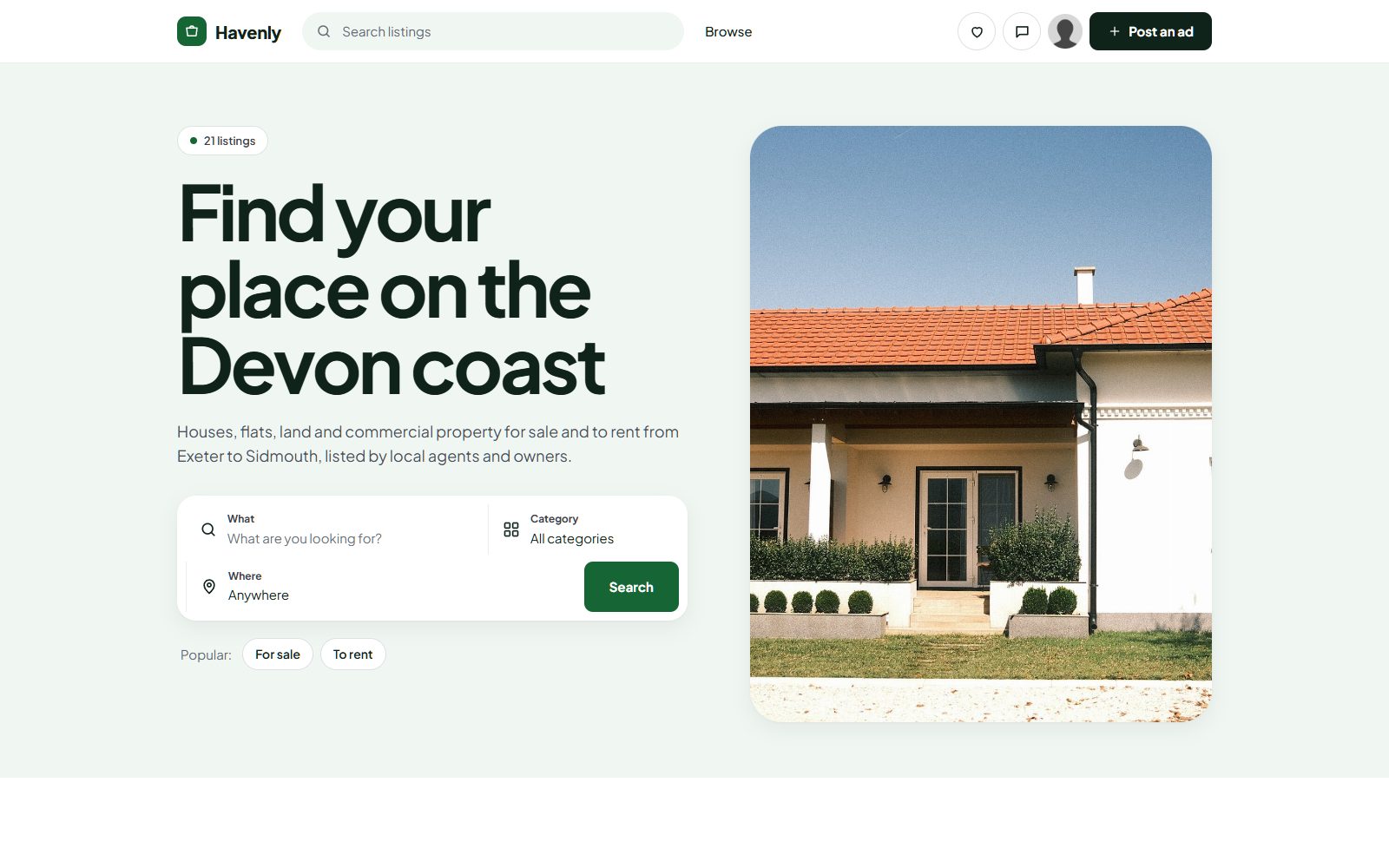
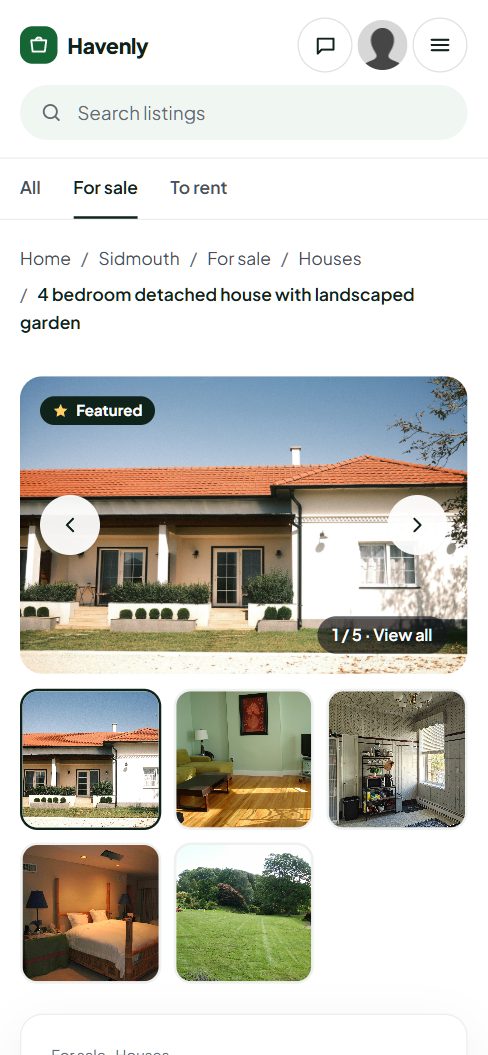
Serve one rental market the general sites leave messy.
Renters search under time pressure. They have a move-in date, a budget and a short list of neighborhoods, and they are tired of general sites where rentals sit next to used furniture, where half the ads are stale and some are scams. A rental site that covers one city well, with current listings and real filters, gives them a reason to come straight to you.
Pick your angle
- One city or metro area. All rental types, from rooms to whole houses. The most common choice and the easiest to explain.
- Rooms and roommates. Shared housing is badly served by apartment portals, which are built for property managers with whole units.
- Small landlords. Owners with one to ten units who find the large rental portals expensive or built for big companies.
- A renter group. Hospital staff on short contracts, seasonal workers in a resort town, or people relocating to an area for work.
Where rentals are advertised now
Look at Craigslist housing sections, Facebook Marketplace and city or neighborhood housing groups, property managers' own websites, "for rent" signs in windows, and bulletin boards at hospitals, employers and community centers. Read the comments in the groups: if renters keep asking "is this still available" and warning each other about scams, there is room for a cleaner site.
Renters return to the site where listings are current. Freshness is your main advantage over the general sites.
Ask for the details renters filter on before they ever send a message.
Most of the messages a landlord receives ask the same questions: is it still available, are pets allowed, are utilities included, how long is the lease. Turn each of those into a field, and both sides save time.
- Monthly rent as a required number, and a deposit field, so renters can budget for the move-in cost.
- Available from as a date. Renters filter on it more than on almost anything else.
- Lease length as a dropdown: month to month, 6 months, 12 months.
- Utilities included and furnished as checkboxes.
- Pets as a dropdown: no pets, cats, dogs, cats and dogs.
Keep categories to the type of place, and use locations for neighborhoods. A map on each listing matters a great deal, because renters judge the commute before they read the description. Keep fields about the home and the terms, not about who may apply: that wording is where fair housing problems start.
| Category | Example listings | Fields renters filter on |
|---|---|---|
| Rooms for rent | A room in a shared house, a room with a private bath | Rent, available from, utilities included, furnished, private bathroom |
| Apartments | Studios, one and two bedroom units | Rent, bedrooms, bathrooms, available from, lease length, laundry |
| Houses | Single-family homes, townhouses, duplexes | Rent, bedrooms, yard, garage, pets, lease length |
| Furnished and short term | Monthly furnished rentals, corporate housing | Rent per month, minimum stay, furnished, utilities included |
| Roommates wanted | Tenants looking for someone to share their place | Rent share, available from, move-in date, household size |
| Parking and storage | Garages, parking spaces, storage units | Rent, covered or open, access hours, size |
Make rent, available from and pets required: they answer the questions renters ask first.
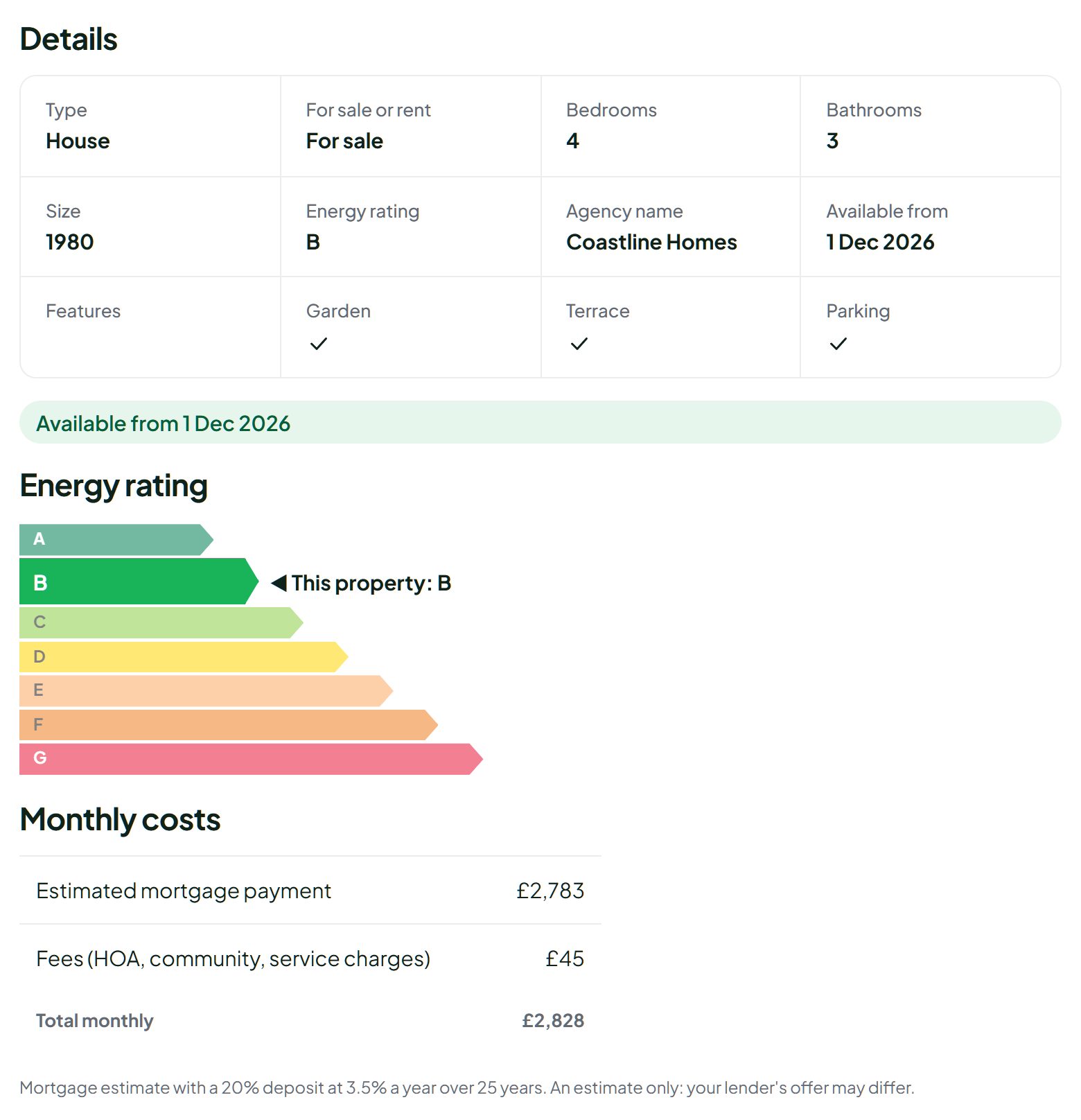
Charge the landlords who list often, and keep renters free.
Renters will not pay to search when the general sites are free, so the money comes from the people with places to fill. A vacant unit costs a landlord rent every month, which makes paying for faster results an easy decision once your site sends real inquiries.
Who pays and when
- Property managers have many units turning over every month. A membership that covers all their listings suits them, once you send them applicants.
- Small landlords list one unit a few times a year. A fee per listing in the apartments and houses categories works for them, after those categories have renters.
- Tenants with a room to fill rarely pay much. Keep rooms and roommates free longer, because they bring the most renters to the site.
- Local businesses such as moving companies, storage facilities, furniture rental and renters insurance agents buy banner space.
Bumps work especially well on a rental site, because renters sort by newest. A landlord who bumps a unit after a week moves it back in front of everyone searching that day.
| Model | Works when | Switch it on |
|---|---|---|
| Memberships for property managers | A manager lists several units every month | Once two or three managers post regularly |
| Pay to post apartments and houses | Landlords lose rent while a unit is empty | When those categories get steady inquiries |
| Bumps | Renters sort by newest and check daily | A few hundred active rentals |
| Featured listings | Popular neighborhoods have many units | When a neighborhood page has more than one screen of listings |
| Banner spaces | Movers and storage firms want people about to move | When you can show monthly visitors |
Get your first hundred rentals from the landlords already advertising.
Rental listings go stale fast: a good unit can rent within days. That means the first hundred are less important than a steady flow of new ones each week. Find the sources that keep producing.
Where to find them
- Small property managers. Firms managing a few dozen units post vacancies every month. Offer free listings, and import their current vacancies from a spreadsheet so they do not have to type anything.
- Landlords in local groups. Message the people posting rentals in city housing groups and on Craigslist, and offer to post the unit for them with their photos.
- Window and yard signs. Walk the neighborhoods you want to cover and call the numbers on "for rent" signs. These landlords often have no online listing at all.
- Tenants leaving. Renters looking for someone to take over a lease or fill a room are eager to post.
- Employers and hospitals. HR teams and housing offices keep lists of rooms for new staff and are glad to point people to one site.
Ask every landlord to mark a unit as rented as soon as it is taken, and set listings to expire after a few weeks so old ones fall off by themselves.
A rental site lives on new listings every week. Build the sources, not just the first batch.
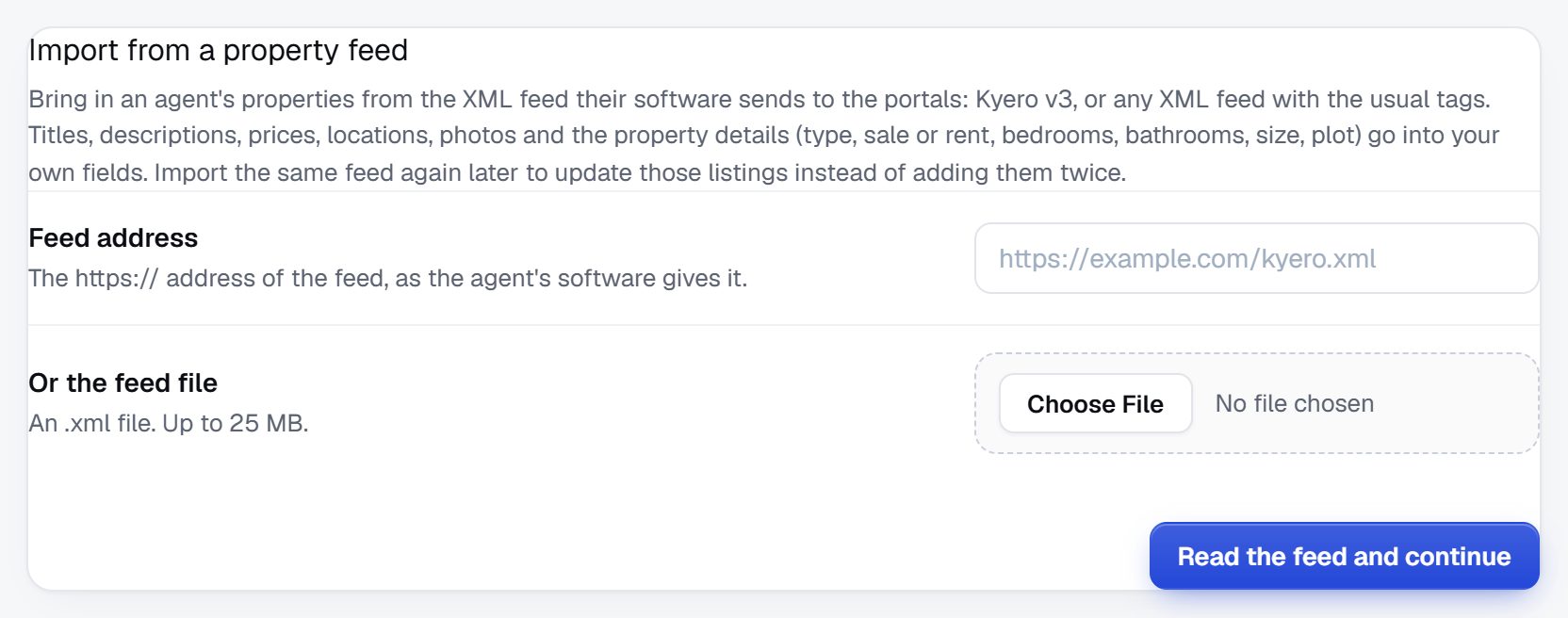
Stop rental scams and moderate wording that shuts renters out.
Rentals attract more scams than almost any other classifieds category, because renters are in a hurry and used to paying deposits.
Common rental scams
- The phantom rental. A real home's photos copied from a sale listing, a rent well below the area, and a "landlord" who is abroad and asks for a deposit before showing the place. Tell renters never to pay before seeing the inside and meeting the landlord or manager.
- Application fee farming. Fake ads that collect application fees from many renters for one unit.
- Payment by gift card, wire or crypto. Hold any listing or message that asks for these.
Approve every listing at first, use banned words for phrases scammers repeat, and let renters report listings. AI that holds suspicious listings for review catches many copied ads before they go live. Verified badges for property managers you have checked help renters know who is real.
Fair housing and discriminatory wording
Many countries and states have rules about how rentals may be advertised, and wording that states a preference about who may live in a home can break them. Check the rules where you operate, and write a short listing policy based on them. In practice, moderate ads that exclude people by race, religion, national origin, disability, family status or similar traits, and ask landlords to describe the home and the terms instead of the ideal tenant. Shared rooms may be treated differently in some places, so check that too rather than guessing.
Rank for the neighborhood and rental type renters type into Google.
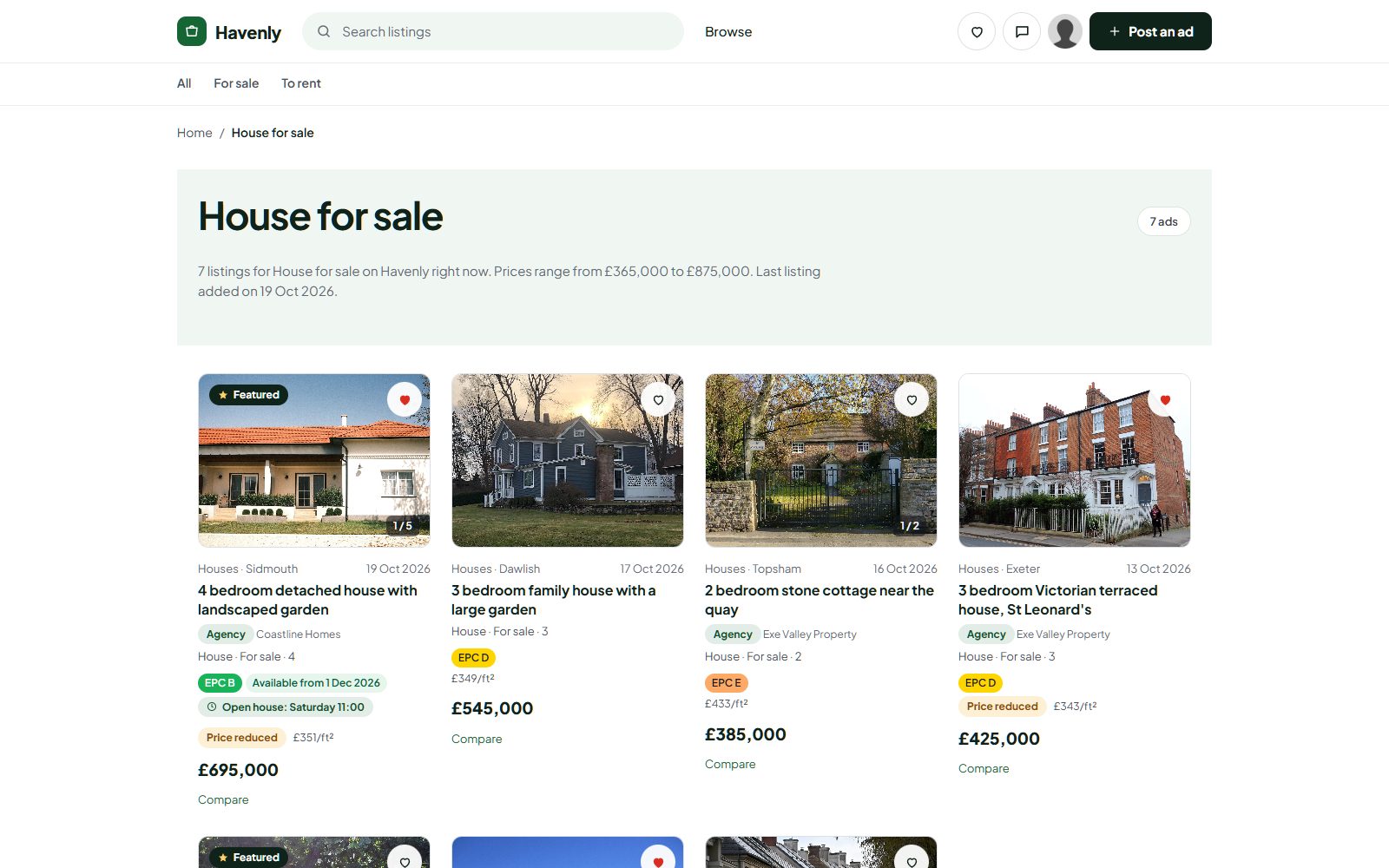
Rental searches are local and specific. Large rental portals rank for the city name, so a new site wins on neighborhoods, room rentals, pet-friendly searches and the smaller towns around the city.
Searches to target
- "rooms for rent in [neighborhood]" and "room for rent near [hospital or campus]"
- "pet friendly apartments [city]" and "apartments that allow dogs [town]"
- "furnished monthly rentals [city]"
- "houses for rent by owner [county]"
- "cheap apartments [town] under [amount]"
Pages to build
- A location page for each neighborhood with a short, factual description: transit, typical rental types, what is nearby.
- Pages for each rental type plus location, such as "rooms for rent in [neighborhood]".
- Title patterns that put the type, bedrooms and neighborhood first, so each listing reads like "2 bedroom apartment for rent in [neighborhood]".
Content ideas
- A renter's guide to avoiding scams in your city. It ranks, and it is worth sharing in every housing group.
- Neighborhood guides for newcomers, written with what renters care about: commute, noise, parking, groceries.
- A moving checklist and a guide to what a lease usually includes, written in general terms with a reminder to check local rules.
Rented listings can stay online for a short time marked as rented, then expire, so renters are never sent to a unit that is gone.
Launch before the busiest moving months, one neighborhood cluster at a time.
In many cities rentals peak in late spring and summer, when leases end and people move for jobs and school. Others are busiest at the start of the academic year or before a tourist season. Find the month when your area's housing groups are busiest, and launch a few weeks before it.
Launch plan
- Choose a cluster of neighborhoods that renters treat as one area.
- Sign up small property managers and post the landlords from local groups and signs, until every rental type has current listings.
- Publish your scam safety guide and listing policy.
- Post in neighborhood and city housing groups with a link to a filtered page, such as pet-friendly rentals or rooms under a set rent.
- Ask employers, hospitals and relocation offices to share the site with new staff.
- Repeat in the next cluster.
Partners
Moving companies, storage facilities, furniture rental stores and renters insurance agents all meet renters at the moment they move. They can share your site and are your first advertisers.
Checklist
- Your own domain with SSL.
- Rent, available from and pets required on every listing.
- Map on every listing.
- Listing expiry of a few weeks, with renewal.
- Listing policy on discriminatory wording, published and enforced.
- Saved searches with email alerts, so renters hear about new units the same day.
A worked example: Riverbend Rent Board in Spokane, Washington.
Riverbend Rent Board is an invented site used here to show how the pieces fit. It lists long-term rentals in Spokane, Washington, and the small towns within commuting distance, a market where many units belong to owners with a duplex or two rather than to large management companies.
Who it serves
On the renter side: hospital and university staff, young couples priced out of buying, and people moving in from the coast. On the landlord side: small owners who used to rely on a yard sign and a Craigslist post, a few local property managers, and tenants who need someone to take over a lease or fill a spare room.
Categories
- Apartments
- Studios and one bedroom
- Two bedrooms and more
- Houses and duplexes
- Rooms for rent
- Lease takeovers
- Garages and storage
Neighborhoods are locations, so a renter can open the South Hill page and see only units there, each pinned on a map.
How it started
The founder managed nine units of her own and was tired of answering the same questions in fifty messages per vacancy. She built the fields first: rent, deposit, available from, pets, lease length, utilities included. Then she called every number on "for rent" signs in three neighborhoods over a month and offered to post the units free. Two property managers she knew from a landlord association meeting sent spreadsheets of their vacancies. A post in a hospital staff group, linking to rentals within a short drive of the hospital, brought the first wave of renters. Within two months, landlords who had seen the hospital post were calling her before their units even came empty, asking to list ahead of the move-out date.
She checks every new landlord account before its first listing goes live, and the safety page is linked from every message thread. In the first winter she removed a handful of copied listings, each caught because the rent was far below the neighborhood.
How it makes money
Rooms and lease takeovers stay free, because they bring renters. Landlords pay a fee per listing in apartments and houses once those categories bring steady inquiries, managers pay a monthly membership, and bumps sell well in the busy summer months. A moving company and a storage facility rent the banner spaces.
| Listing | Rent | Key details |
|---|---|---|
| One bedroom in a fourplex, South Hill | $1,150 a month | Available Aug 1, 12-month lease, cats allowed, water and trash included |
| Three bedroom house with fenced yard | $1,875 a month | Available now, dogs allowed with deposit, garage, small landlord |
| Room in a shared house near the hospital | $650 a month | Furnished, utilities included, month to month, two housemates |
| Lease takeover, two bedroom apartment | $1,420 a month | Five months left, landlord approval needed, in-unit laundry |
| Single garage for storage | $110 a month | Alley access, no power, available Sept 1 |
The first 90 days: from a few vacancies to a weekly flow of new rentals.
A rental site is judged on freshness, so your first quarter is about building sources that keep producing, not one big batch. Renters who find three units that rented last week will not come back, and landlords who get no inquiries will not post a second time. That means two things must happen in parallel from the middle of the quarter: new units every week and renters who know where to find them.
Time your plan against the moving calendar. If your city peaks in summer, start these 12 weeks in early spring so you announce to renters just as leases begin to end. Track three numbers every week: new listings, active listings and inquiries sent. When new listings hold steady without you chasing them, the site is working, and you can begin to charge. Keep a short log of every scam attempt you catch, with the wording and photos used, because the same patterns return and the log makes your banned words and your safety page sharper each month.
| Weeks | Focus | Done when |
|---|---|---|
| 1-2 | Choose the neighborhood cluster, set up rental fields, expiry and the scam safety page | Rent, available from and pets are required and listings expire on their own |
| 3-4 | Call landlords from yard signs and local housing groups and post their units | 30 current rentals are live, each confirmed with the landlord |
| 5-6 | Sign up small property managers and import their vacancies | Two managers send new units every week without being asked |
| 7-8 | Write neighborhood pages and the renter's guide to scams | Each neighborhood has a page and the guide is linked from every listing |
| 9-10 | Announce in housing groups and to hospital and employer HR teams | Renters create saved searches and landlords report inquiries |
| 11 | Review stale listings and publish the listing policy | No active listing is older than its expiry date and the policy is linked from the posting form |
| 12 | Switch on bumps and pay to post in apartments and houses | The first paid bump or listing is sold and inquiries keep arriving at the same rate |
Ways to build a rental listings site, judged by what renters need.
Rental sites have a short list of hard requirements: required fields for rent, move-in date and pets, listings that expire on their own, a map, strong moderation against copied ads, and saved searches that alert renters the same day a unit appears. Whatever you choose has to do all of those from day one, because scams and stale ads arrive before your first paying landlord.
Developers and a custom build
Worth it if your idea depends on something unusual, such as a tenant screening flow or deep integration with property management software. Otherwise you spend months and most of your budget rebuilding search, accounts and moderation that already exist.
A self-hosted classifieds script or WordPress plugin
Cheaper to start, and you control the code. The catch is that you also own the security updates, the spam filters and the server when traffic peaks in moving season. Check how the script handles listing expiry and moderation queues before anything else, since those carry most of the daily work on a rental site. Ask too whether renters can save a search and get an email the same day, because in a tight market a unit can be gone by the weekend.
A hosted builder
A hosted builder such as Yclas comes with custom fields as search filters, listing approval, reports, maps and email alerts for saved searches. It suits a founder whose time should go to landlords and renters rather than servers. If you later want renters to book and pay a deposit online, that is a bigger step with its own rules, offered on the Marketplace plan.
| Route | Fits when | Watch out for |
|---|---|---|
| Custom build | Your model needs features no listing software has, such as tenant screening | Long build time and moderation tools you must design yourself |
| Self-hosted script or plugin | You can run a server and handle spam and updates | Weak expiry or approval tools, and traffic spikes in moving season |
| Hosted builder | Your advantage is local landlords and fresh listings | Confirm required fields, expiry, moderation and same-day alerts |
What a rental listings costs to run.
The software is the smallest part of the bill. Most of the cost is your time in the first months: finding the first listings, answering questions and checking what gets posted.
Budget for a lawyer or local housing advocate to review your listing policy on discriminatory wording, and for small ads in housing groups or campus and hospital newsletters at peak moving season. Moderation time is a real cost on rental sites, because scams arrive early.
| Cost | Typical range | On Yclas |
|---|---|---|
| Domain | $10 to $20 a year | Your own, with SSL included |
| Software and hosting | $0 to $100+ a month, plus plugins and updates | Starter $19 a month, Professional $99 |
| Design | $0 to $100 for a theme, or a designer | 109 looks included |
| Payment fees | About 3% per payment | Your Stripe or PayPal fees; Yclas takes nothing |
| Your time | 5 to 10 hours a week at the start | Finding listings, moderation, support |
Mistakes that empty a rental site of renters.
- Letting rented units stay up. Nothing drives renters away faster than calling about five units that are already taken. Set short expiry, remind landlords to mark units as rented, and remove anything a renter reports as gone. A short weekly email to active landlords asking which units are still free does more than any automated rule.
- Approving listings without looking. Phantom rentals with copied photos often arrive in the first weeks, when you most want volume. Approve every listing at first, compare suspicious photos with sale listings, and check rent against the neighborhood. One scam that costs a renter a deposit will be retold in every housing group you rely on.
- Charging renters. Renters can search many sites for free, so a fee to view contacts or apply sends them straight back. Charge the people who lose money every month a unit sits empty.
- Allowing tenant-preference wording. Ads describing the kind of person a landlord wants can break fair housing rules in many places. Publish a listing policy, check it against the rules where you operate, and edit or reject ads that state who may live there.
- Leaving out the move-in costs. Rent alone does not tell a renter whether they can afford the move. Ask for the deposit and whether utilities are included, so renters compare real totals and landlords get fewer wasted messages.
- Spreading across the whole metro area. A few units in every neighborhood means no neighborhood looks worth checking. Fill one cluster of neighborhoods that renters think of as one area, then expand. Renters choose areas first and units second, so depth in one area beats a thin layer across the city.
- Waiting for landlords to find you. Small landlords do not go looking for new sites. Call the numbers on signs, message people posting in housing groups, and offer to post the unit for them.
- Mixing in vacation rentals. Nightly rentals bring tourists, different rules in many cities, and a different kind of scam. Keep your site to monthly and longer rentals unless your area clearly needs both. A rental board that tries to serve tourists and long-term renters at once ends up serving neither well.
- Ignoring slow replies. If landlords never answer, renters decide the site is full of fake ads. Check reply rates and ask unresponsive landlords to remove listings they are not managing. Renters who get answers within a day tell their friends where they found their place.
Rental terms to know before you call your first landlord.
Landlords and renters use these terms constantly, and your fields should match them.
| Term | What it means |
|---|---|
| Security deposit | Money a renter pays at the start of a lease, held against damage or unpaid rent and returned under local rules. |
| Month to month | A rental with no fixed end date that either side can end with notice. |
| Lease takeover | A new tenant replaces the current one on an existing lease, usually with the landlord's approval. |
| Sublet | A tenant rents all or part of their place to someone else while staying on the lease. |
| Utilities included | Rent covers some or all of water, power, heat, gas, trash or internet, which listings should spell out. |
| Application fee | A charge some landlords make to process a rental application, limited or banned in some places. |
| Credit and background check | Screening a landlord runs on an applicant, usually with the applicant's written consent. |
| Cosigner | A person who agrees to pay the rent if the tenant does not, often a parent for a young renter. |
| Pet deposit or pet rent | An extra deposit or monthly charge for a renter with a pet, where local rules allow it. |
| Fair housing | Rules that ban discrimination against renters on protected grounds, including in how rentals are advertised. |
| Property manager | A company or person paid by owners to market units, screen tenants and handle repairs. |
| Vacancy | A unit with no tenant, which costs the owner rent for every day it stays empty. |
| Move-in costs | The total a renter pays to start a lease, often first month's rent plus deposit and fees. |
| Proration | Charging a partial month's rent when a lease starts or ends partway through a month. |
The same steps for a rental listings on Yclas.
- Describe your nicheThe setup wizard writes the categories, an About page and example listings from one sentence.
- Add fieldsSwitch on a field pack or add the fields your buyers filter on.
- Fill itImport dealer spreadsheets, invite sellers and post your own.
- Set the rulesChoose moderation, banned words and AI checks.
- Go liveChoose a plan, connect your domain, switch on paid listings when it is time.
Can a local rental site compete with the big apartment portals?
Yes, where the portals are weak: rooms and roommates, small landlords, smaller towns and specific renter groups. Renters use several sites, so you only need to be the best one for your area.
Am I responsible for what landlords write in their ads?
Rules on platform responsibility differ by country, so check them where you operate. Either way, publish a listing policy, moderate ads that exclude renters, and act on reports, which protects renters and your site.
How do I keep listings from going stale?
Set listings to expire after a few weeks, ask landlords to mark units as rented, and send renewal reminders. Renters stop coming back to a site where most units are already gone.
Should renters pay anything?
No. Renters can search free on many sites. Charge landlords and property managers, who lose money every month a unit is empty.
How do I spot rental scams before renters do?
Watch for rent far below the area, landlords who cannot show the property, requests for deposits before a viewing, and payment by wire, gift card or crypto. Approve listings at first and hold anything that matches.
Where do I find landlords when nobody knows my site?
In city housing groups, on Craigslist, on "for rent" signs and among small property managers. Offer to post their units for them, free, and send them every inquiry.
Should I include short-term vacation rentals?
Only if your area needs them and you are ready for the extra rules: many cities regulate short-term rentals. Starting with monthly and longer rentals keeps your site focused.
Should I let tenants post lease takeovers and sublets?
Yes, they are some of the most searched posts on local rental sites. Ask the poster to confirm the landlord allows it, and say so on the listing.
Do I need to check that landlords own the property?
You cannot check every one, but checking new landlord accounts before their first listing goes live stops most phantom rentals. Property managers you have met can get a verified badge.
Can I offer tenant screening or collect deposits on the site?
Screening and holding renters' money bring their own rules on consent, data and payments. Start as a listing site and check the rules where you operate before you add either.
How long should a rental listing stay up?
Two to four weeks suits most markets, with a renewal for units that have not rented. In a slow market you can make it longer, but never leave units up indefinitely.
What if a landlord refuses to put a price on the listing?
Make rent a required field. Renters filter by budget, and a unit without rent gets fewer serious inquiries, so landlords usually agree once you explain it. Allow a short note for extras such as parking or pet rent.
Related pages.
The parts of Yclas this leans on.
You have the plan. Now fill your city's rentals, one neighborhood at a time.
Describe your site in a sentence and the setup wizard writes the categories, example listings and a look. Free for 15 days, no credit card.
Start my classifieds site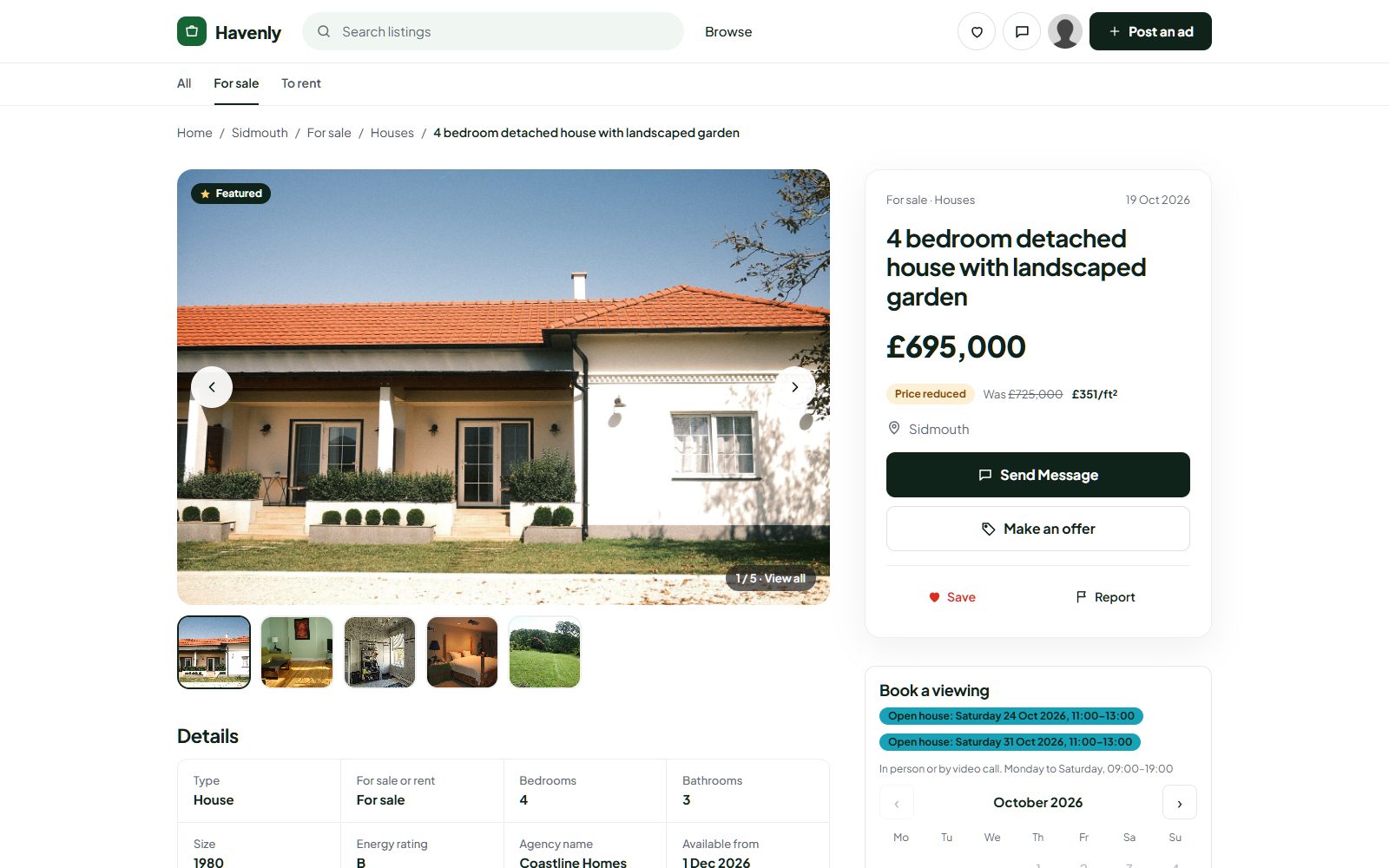
Photo credits
The screenshots show demo sites with made-up sellers. Their photos come from Wikimedia Commons, some cropped or with signs and plates blurred; these ones are under Creative Commons licences:
- Modern house exterior with red roof and landscaped garden under clear blue sky, CC BY 2.0
- Furnished apartment in Cambridge, December 2008, CC BY-SA 3.0
- Front lawn at Holehird - geograph.org.uk - 2046271, CC BY-SA 2.0
- Terraced houses on Walton Street - geograph.org.uk - 5233085, CC BY-SA 2.0
- Stone Cottage, Watnall, CC BY-SA 2.0
- View of the "Lost Dining Table and Chairs" in Eltham Palace - geograph.org.uk - 5797282, CC BY-SA 2.0
- Mountain's chalet in summer, CC BY-SA 4.0
- Monument, bench and flowers at Akureyri Botanical Gardens, CC BY 3.0
- Building plot - geograph.org.uk - 6532306, CC BY-SA 2.0
- Mid Devon , Countryside ^ Farmland - geograph.org.uk - 1953042, CC BY-SA 2.0
- Industrial unit on the Coppi Industrial Park - geograph.org.uk - 4974502, CC BY-SA 2.0
- Burnham Yacht Harbour Marina - geograph.org.uk - 7039536, CC BY-SA 2.0
- Office Chairs at Long Table conference, CC BY 2.0