
How to build an island classifieds website the whole island checks first.
This guide is for founders who want to run the buy and sell board for one island: cars that never leave it, boats, furniture, seasonal housing and jobs. It covers why an island is a natural classifieds market, the fields islanders filter on, how the site pays, where the first listings come from, scams aimed at newcomers, search and a launch built around the season.
Free for 15 days · No credit card · Plans from $19 a month
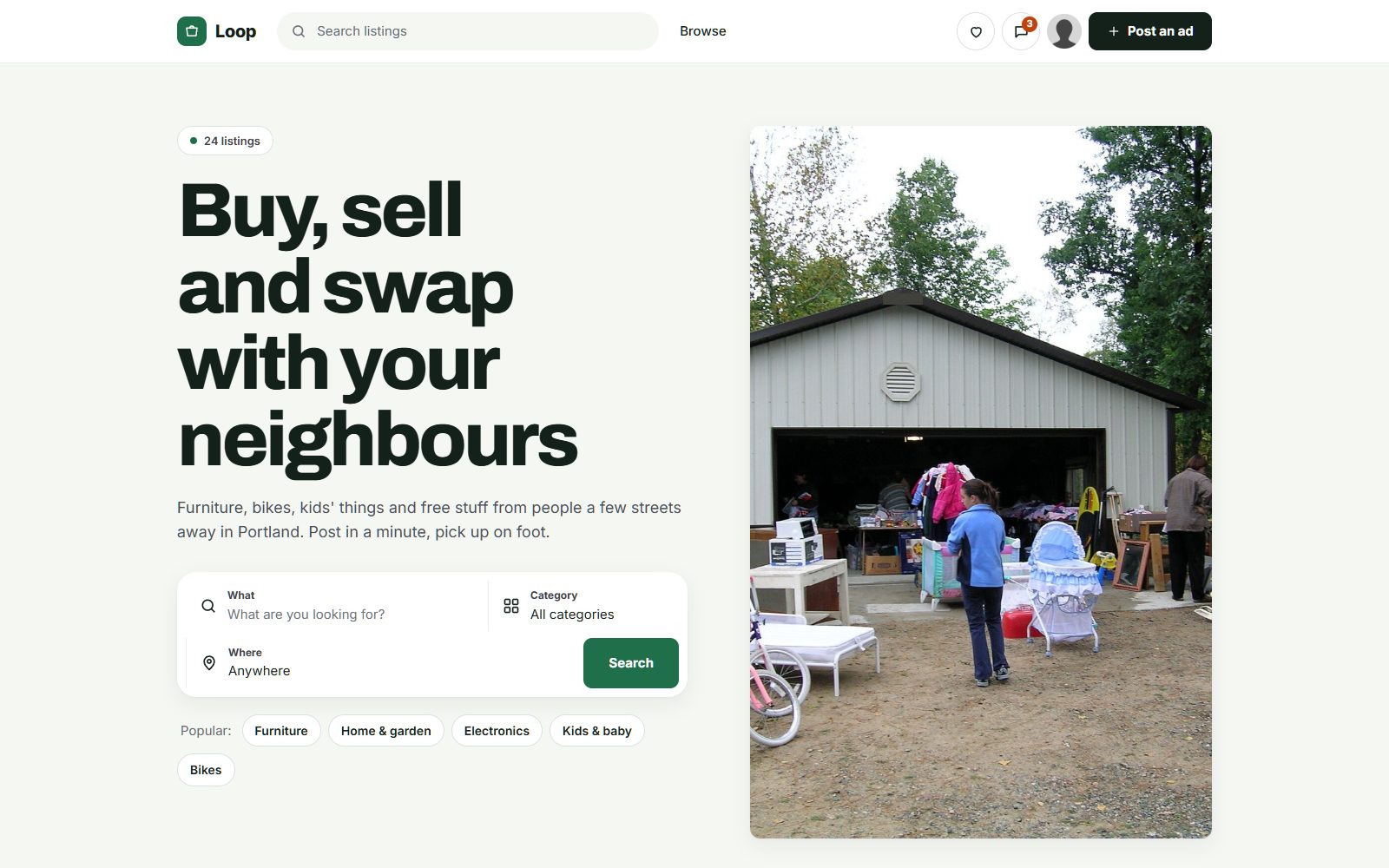
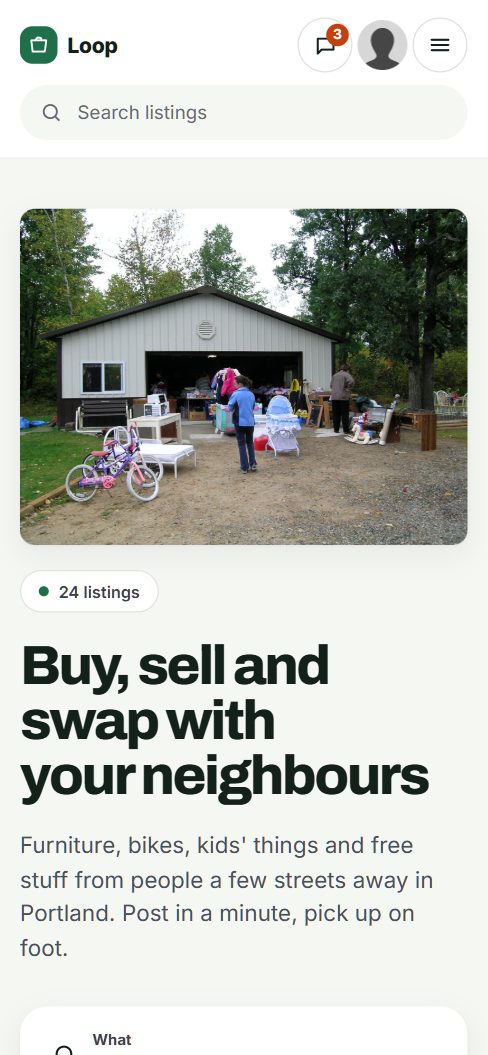
An island is a closed market, and that is why a local board works there.
On an island, almost everything arrives by ferry, barge or plane, and shipping a sofa or a car from the mainland can cost more than the thing itself. So used goods keep their value, and the same truck, kayak or washing machine may change hands five times in ten years. Buyers want to know what is already on the island, not what a seller three hundred miles away has.
The big general sites handle this badly. A search on a mainland marketplace mixes island listings with ones a ferry ride away, and a buyer has to work out which sellers are actually here.
Who uses it
- Year-round residents buying and selling cars, tools, furniture and boat gear.
- Seasonal residents who arrive in spring and sell up or store things in the fall.
- Seasonal workers who need a room, a bike or a cheap car for a few months.
- Local businesses: car lots, boat yards, rental agencies, contractors and employers hiring for the season.
Where the trade happens today
Most islands already have a swap group on Facebook, a notice board at the grocery store or post office, classified pages in the weekly paper, and sometimes a radio swap show. Those prove the demand. They also show the problems: posts scroll away in a day, nothing is searchable by price, and housing posts get buried under lost dog notices.
Pick one island, or one island group served by the same ferry, and be the place everyone on it checks before they ship something in.
Build categories around island life: vehicles, boats, housing and the season.
An island board covers more ground than a niche site, so keep categories broad and shallow, and add fields only where buyers really filter. The fields that matter on an island are the ones a mainland site never thinks about.
- Area of the island as a location: the town, the village, the north shore or the west end. Driving across some islands takes an hour, and the ferry side matters.
- Rust and salt exposure as a dropdown for vehicles: none visible, surface, structural. Salt air is hard on cars and buyers ask first.
- Island car as a checkbox: an older car sold for island driving only, often without a long road trip in its future.
- Available from and leaving island by as dates. Departing residents need to sell before a fixed ferry date, and buyers like knowing a deal has a deadline.
- Pickup only or can deliver, because few people have a truck.
Housing needs its own fields: lease length (year-round, summer season, winter rental), furnished, and whether the place is suitable for seasonal staff.
| Category | Example listings | Fields buyers filter on |
|---|---|---|
| Cars and trucks | Island cars, pickups, jeeps, golf carts, scooters | Year, mileage, rust, island car, area |
| Boats and marine | Skiffs, kayaks, moorings, outboards, trailers | Length, engine hours, mooring included, area |
| Housing | Year-round rentals, summer rooms, winter rentals, staff housing | Lease length, rent, furnished, bedrooms, available from |
| Jobs | Restaurant crews, boat yard help, housekeeping, contractors | Season, hours, housing offered, start date |
| Home and garden | Furniture, appliances, building materials, generators | Condition, pickup or delivery, price |
| Leaving the island | Whole-house sales, moving sales, storage clear-outs | Leaving island by, area, pickup times |
| Services | Handymen, boat care, house watching, moving help | Area served, season, licensed or not |
In Yclas, each of these fields can be a text, number, dropdown, checkbox or date, and each one shows up as a search filter.
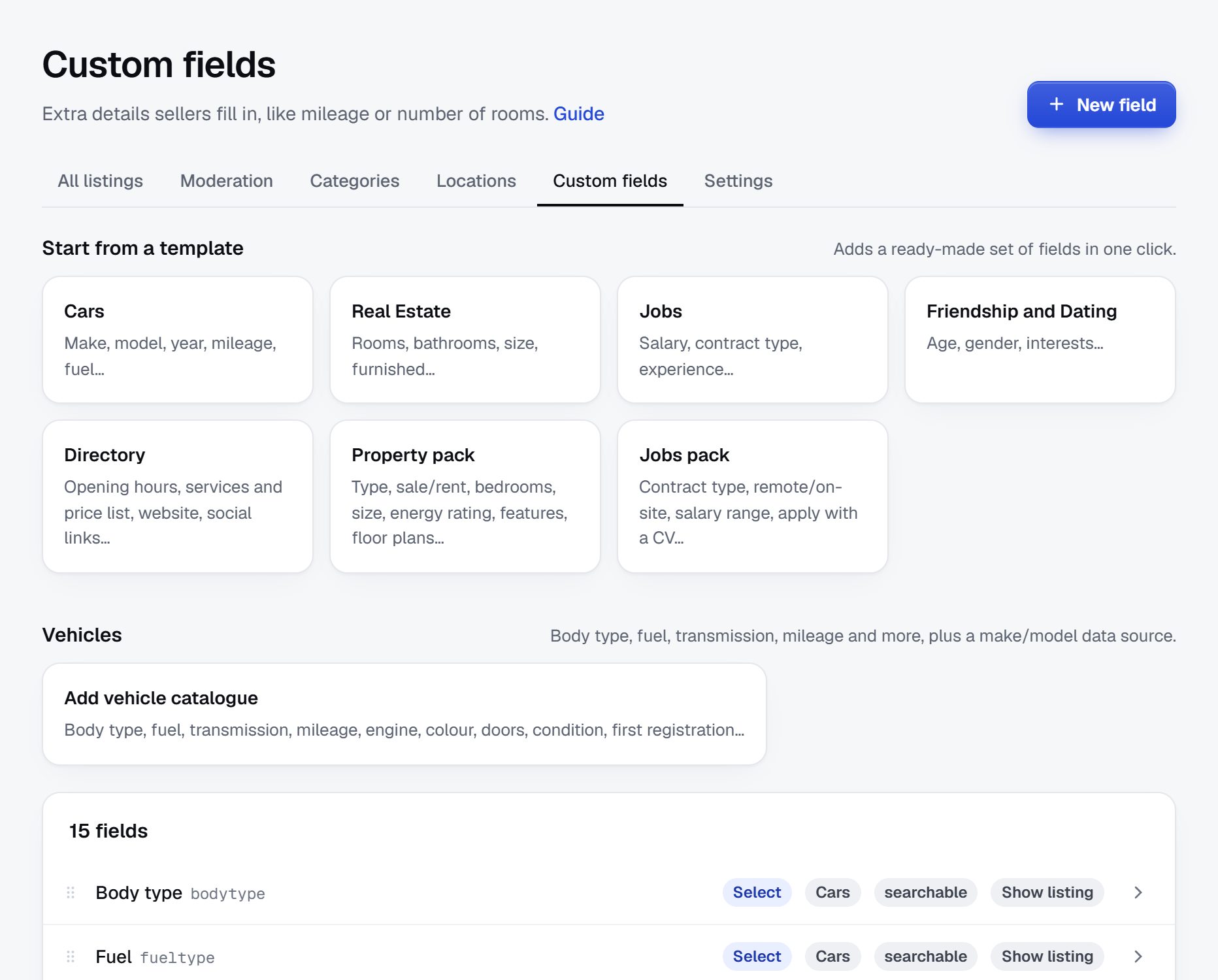
Let islanders post free, and charge the businesses that need the season.
An island board earns from a small number of businesses who need to reach every resident and every seasonal arrival. Private sellers posting a used bike or a dresser should stay free, because the site is only useful if everyone uses it.
The money is in two places: housing and jobs, where the island is short of both, and local advertising, where a business wants to be seen by the whole island. In spring, employers struggle to hire and fill staff housing, and a job post or a featured rental is worth paying for. Car lots, boat yards and property managers post often enough to pay for a membership.
Keep in mind that a small island has a small audience. Price for the island, not for a city, and talk to the businesses before you set prices: you will probably know most of them by name.
Switch on paid job posts just before hiring season, when employers feel the shortage most.
| Model | Works when | Switch it on |
|---|---|---|
| Pay to post in Jobs | Employers compete for seasonal staff | A few weeks before the season starts |
| Featured rentals and bumps | Housing is short and listings compete | Once housing gets steady visits |
| Memberships for car lots, boat yards and property managers | A business posts every week | When two or three post regularly |
| Banner spaces | Restaurants, hardware stores and ferry-side shops want every islander | Once you can show monthly visitors |
| Featured moving sales | Residents leave at the end of the season | In late summer and fall |
Fill the board from the island's swap groups, notice boards and car lots.
On an island you can reach almost every seller in person, which makes the first hundred listings easier than anywhere else. Work through the places that already carry island classifieds.
- The swap group. Message people who posted in the last month and offer to put their item on the site with photos and a price. Most say yes when you do the typing.
- Notice boards. The grocery store, the hardware store, the post office and the laundromat have cards with phone numbers. Call and ask permission to list them.
- Car lots and garages. One small dealer or mechanic selling used island cars can fill the vehicles category. Ask for their stock as a spreadsheet and import it.
- Boat yards and marinas. They know which boats and moorings are for sale and who is selling them.
- Property managers and employers. Before the season, they post housing and jobs anyway. Offer to post for them on the site.
- People leaving. A family moving off the island is ready to sell twenty things at once. Post them all as one seller.
Make posting quick on a phone. With AI listing from a photo, a seller photographs a dresser and Yclas fills in the title, description, category and price for them to check, which matters for older residents who will not type a long description.
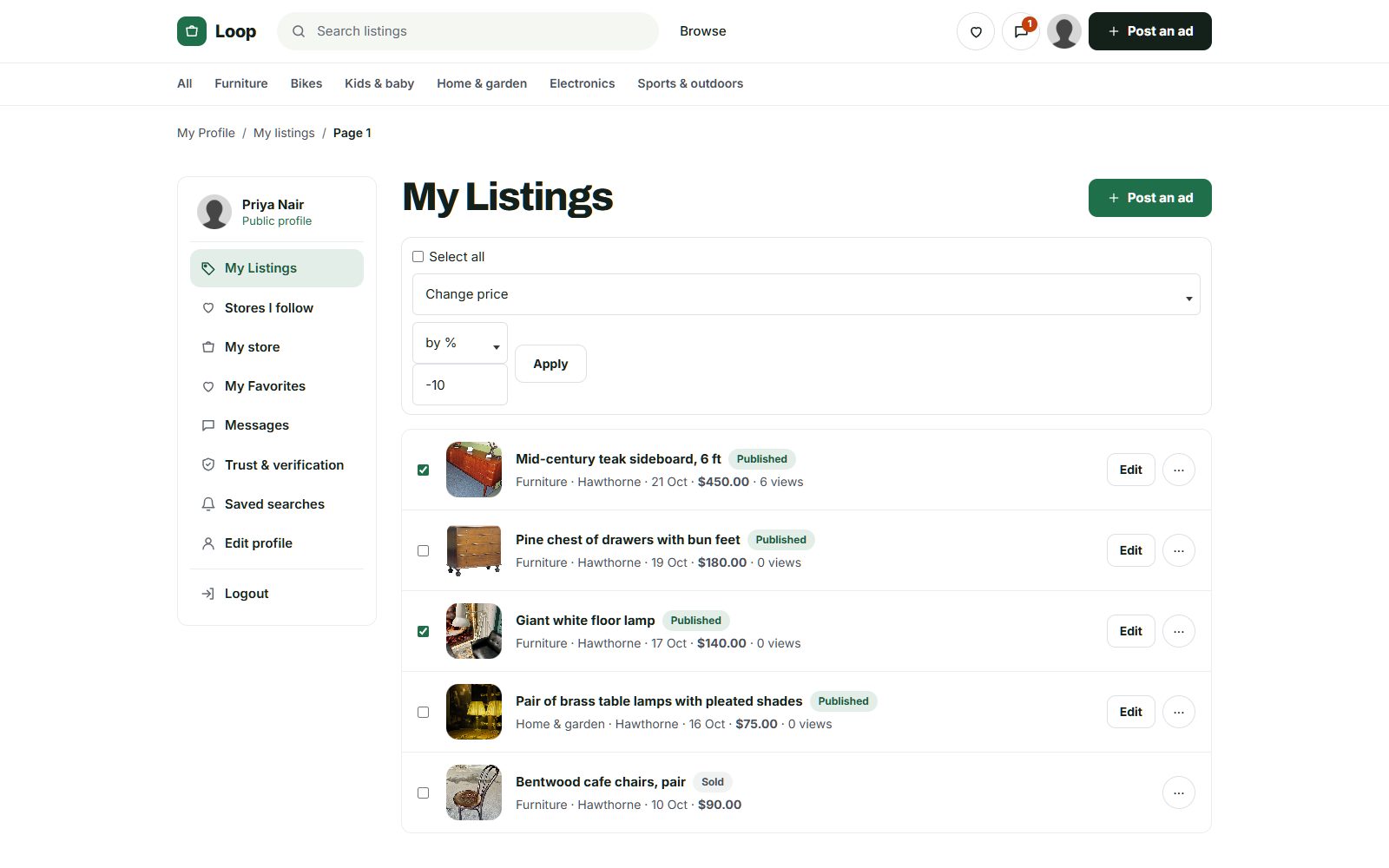
Protect seasonal arrivals from rental scams and off-island buyers from fake sellers.
Island markets have a particular weakness: many buyers are not on the island yet. A worker arriving for the season or a family moving in cannot view a room or a car in person, and scammers know it.
Scams to expect
- Fake rentals. A real-looking house, photos copied from a vacation rental, a low rent and a request for a deposit by wire or gift card before arrival. Housing is the most targeted category on any island board.
- Vehicles that do not exist. A cheap car with a story about the seller having left the island, and a request to pay for shipping first.
- Overpayment. A buyer from far away sends a check for more than the price and asks for the difference back.
Rules that keep it clean
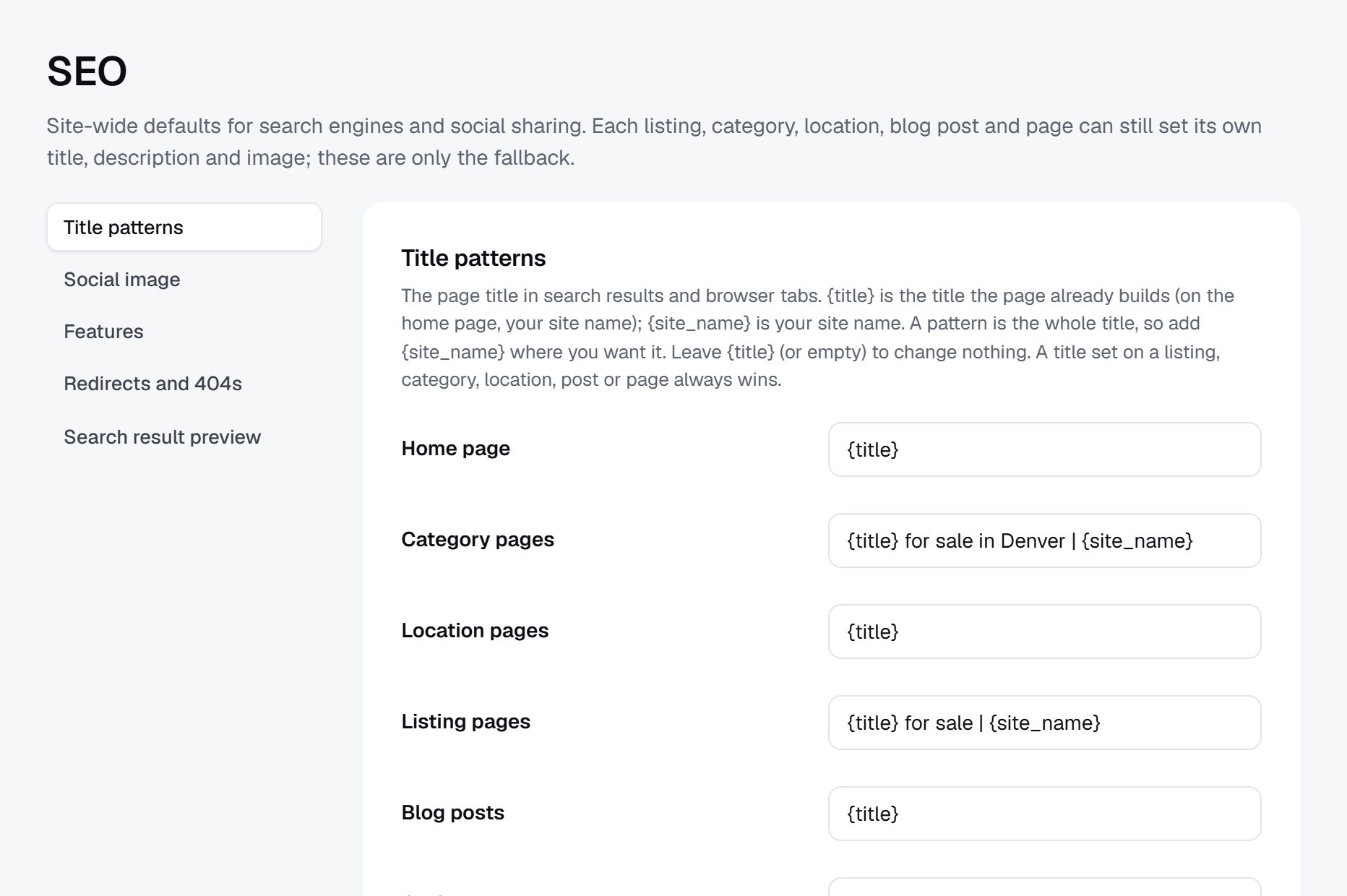
- Approve every listing in Housing and Jobs. You will often know whether the address or the employer is real.
- Ban requests for wire transfers, gift cards and payment before viewing in your posting rules.
- Give a verified badge to local businesses and landlords you have checked.
- Ask that rentals name the area and the lease length, and remove listings that hide both.
Write a short page for newcomers: never send a deposit for a place nobody has seen, ask a friend on the island to view it, and meet in a public place such as the ferry terminal or a store parking lot. Rental, employment and vehicle sale rules differ by state and territory, so check the rules where you operate before you write your own.
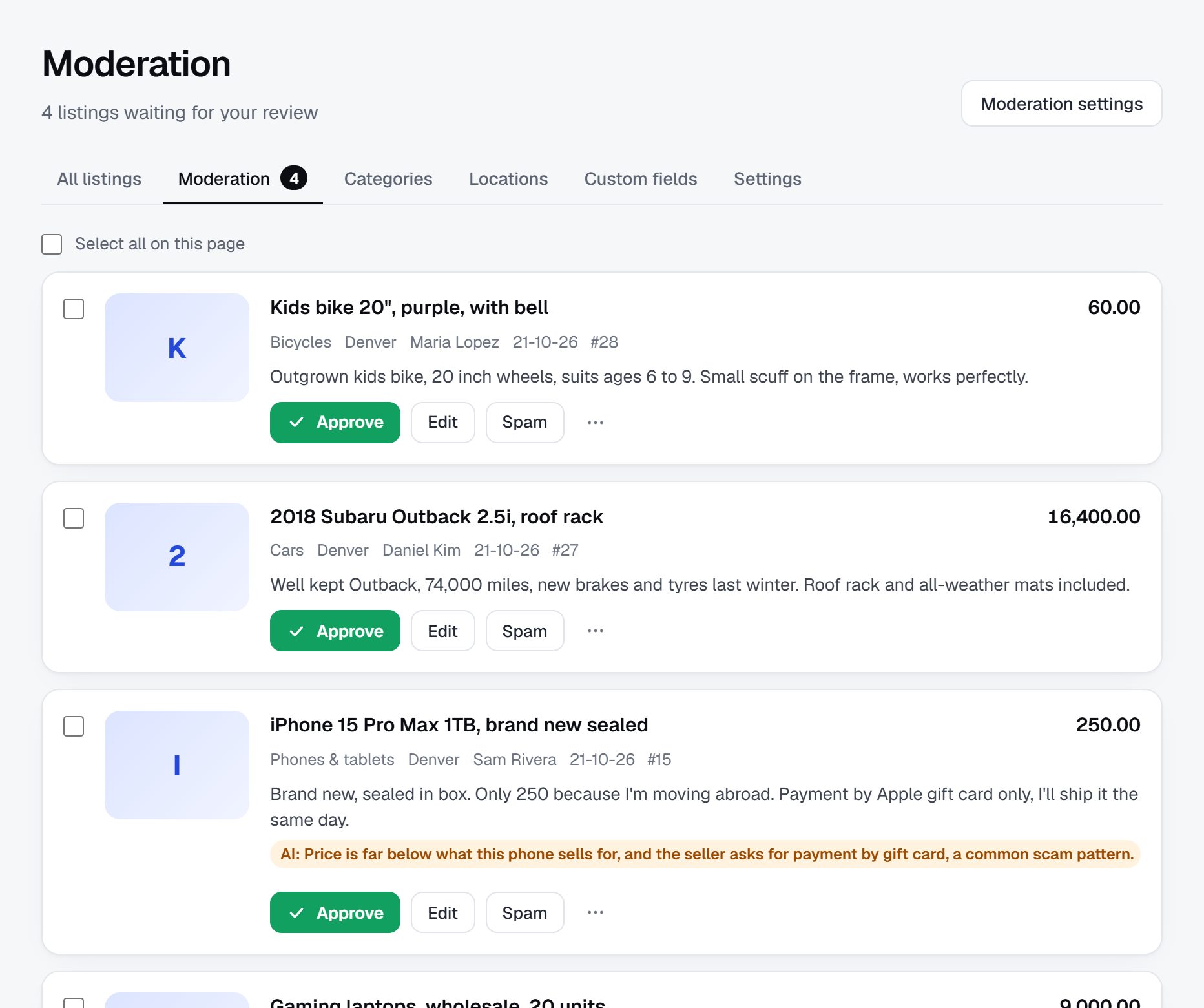
Rank for the island's name plus the thing people need when they arrive.
Islanders find the site by word of mouth. Newcomers and seasonal residents find it by search, often from the mainland months before they arrive. Their searches pair the island's name with a need.
- "Nantucket summer housing for workers"
- "used cars for sale St. Thomas"
- "golf cart for sale Ocracoke"
- "Martha's Vineyard year round rental"
- "jobs on Mackinac Island summer"
Pages to build
- Category pages for each part of the island, such as boats in the harbor town or rentals on the north shore, each with its own title.
- A moving to the island guide: what to bring, what to buy on the island, what costs too much to ship.
- A seasonal worker guide: when housing goes, typical lease lengths, how to avoid rental scams.
- An island car buying guide: what salt air does, what to check, what a mechanic looks for.
Keep sold car and boat listings online for a while marked as sold. On a small island they become the price history people look for when they ask what an older pickup is worth here.
Launch before the season turns, when everyone is buying or selling at once.
An island has two peaks a year. In spring, seasonal residents and workers arrive and need housing, bikes, cars and furniture. In late summer and fall, they leave and need to sell. Launch a few weeks before one of these turns, with listings already in place.
Partners worth asking
- The weekly paper or local radio, which may be glad to point classified readers to a searchable site.
- The chamber of commerce or business association, for employers and seasonal hiring.
- The ferry or barge office notice board, where everyone waits.
- The island's main swap group admin. Offer to work with them, not against them: many admins are tired of moderating housing scams.
Launch checklist
- Island areas set up as locations, so listings show where on the island they are.
- At least 100 real listings, with vehicles, housing and home goods all filled.
- Posting rules and a newcomer safety page linked from every housing and vehicle listing.
- A home page headline that names the island.
- Flyers with a QR code at the grocery store, hardware store and ferry terminal.
- A plan for the next season peak, with employers and property managers contacted in advance.
A worked example: Two Ferries Classifieds, San Juan Island, Washington.
Two Ferries Classifieds is an invented board for San Juan Island in Washington State, used here to show how the pieces of this guide fit together on one real island. It serves year-round residents in and around the harbor town, summer workers who come for the restaurants, inns and tour boats, and second-home owners who open their houses in June and close them in September. The neighboring islands are left out on purpose until this one works.
Categories
- Vehicles
- Island cars and trucks
- Scooters, mopeds and bikes
- Boats and marine
- Small boats and kayaks
- Moorings, slips and outboards
- Housing
- Year-round rentals
- Summer staff rooms
- Jobs
- Home and garden
- Leaving the island
How it started
The founder, a bookkeeper who had lived on the island for twelve years, was tired of seeing the swap group fill up every April with the same questions about rooms. She spent one March weekend copying what the hardware store notice board held, called the two people in town who sell used cars, and asked the harbor office who had boats or slips for sale. By the first busy ferry weekend of spring, the board carried a little over a hundred listings, most of them typed by her from phone calls and photos sent by text.
The swap group admin agreed to pin a post sending housing and job ads to the board, because it took a tiring moderation job off her hands. Within a season, islanders were checking the site before ordering anything heavy from the mainland, and the Leaving the island category became the busiest page every September.
How it makes money
Private sellers post free, all year. Restaurants, inns and tour operators pay to post in Jobs from March to June, when every one of them is hiring at once. Two property managers and the island's used car seller pay a yearly membership because they post every week. The hardware store and a coffee shop near the ferry landing each hold a banner. The income is modest: enough to pay for the site, the flyers and the founder's time one weekend a month, which is a realistic goal for a board on an island this size. Her next step is a second island served by the same ferry, but only once someone who lives there offers to help.
| Listing | Price | Key details |
|---|---|---|
| 2006 pickup, island car | $3,800 | Surface rust, 148,000 miles, no long trips planned, available now |
| 14 ft aluminum skiff with 20 hp outboard | $4,200 | Trailer included, about 300 engine hours, pickup at the harbor |
| Summer staff room in a shared house | $950 per month | June to September, furnished, ten minutes by bike to town |
| Whole-house leaving sale | From $5 per item | Leaving island by September 20, pickup on weekends only |
| 7,500 watt generator | $650 | Used two winters, north end, seller can deliver |
The first 90 days: from an empty board to the island's habit.
Three months is long enough to fill an island board and short enough to keep the work focused. Count back from the next season change: if the summer crowd arrives in late May, start in late February, so the board is full and known before the first workers start looking for rooms.
The order matters. Listings come before promotion, because islanders who visit an empty site once rarely come back. Housing rules come before housing ads, because the first fake rental on a small island is talked about at the post office for weeks. And businesses are approached in person, since on an island a handshake at the hardware store counter does more than any email.
Each step below has a plain test for when it is finished. If a step slips, push the launch date to the next season change rather than launching half full in the middle of summer, when everyone is too busy to try something new.
| Weeks | Focus | Done when |
|---|---|---|
| 1-2 | Set up island areas as locations, the categories, vehicle and housing fields, and the posting rules | A test listing in each category shows the right filters, and the rental rules page is written |
| 3-4 | Copy notice board cards and recent swap group posts onto the site with the sellers' permission | 50 real listings are live, with photos for most of them |
| 5-6 | Visit the car seller, the boat yard, the marina and two property managers | At least three businesses have posted stock or sent a spreadsheet to import |
| 7-8 | Write the newcomer safety page, the island car buying guide and the seasonal worker guide | All three pages are published and linked from housing and vehicle listings |
| 9-10 | Talk to employers about paid job posts and agree a start date with the swap group admin | Two employers have agreed to post, and the group has a pinned post ready |
| 11 | Put up flyers at the grocery store, hardware store, post office and ferry terminal | Flyers are up in at least five places, and 100 real listings are live |
| 12 | Launch, then check every new housing and job listing by hand | Every housing listing in the first week was reviewed within a day |
Three ways to build it, and what an island board really needs.
An island board has a short list of needs: locations by part of the island, a few vehicle and housing fields, a review queue for rentals and jobs, phone-friendly posting and a way to charge a handful of local businesses. What it rarely has is a technical team. Most island founders run the site alone, alongside a day job, and may spend part of the winter off the island.
Hiring developers to build it from scratch gives you exactly the board you picture, but the audience is small and the budget usually is too. A custom site also needs someone to fix it when it breaks, and on an island that person may be a ferry ride away.
Installing a classifieds script or a WordPress plugin on your own server costs less to start and gives you control. In return you handle updates, backups, spam and security patches yourself. That works if you enjoy the technical side and can patch a server from a laptop in the ferry line.
A hosted builder such as Yclas handles the server, updates and backups, and you set up categories, fields and moderation in a control panel. You give up some freedom over the code, which an island board rarely needs, and you can spend your hours meeting sellers instead of maintaining software.
Whichever route you choose, test it on a phone over a weak signal. Many islands have patchy coverage outside the main town, and a posting form that stalls there will lose the older residents you most need.
| Route | Fits when | Watch out for |
|---|---|---|
| Custom build with developers | You need features no off-the-shelf tool has and have the budget for ongoing work | The cost of every later change, and who fixes it in the off-season |
| Classifieds script or WordPress plugin you host | You are comfortable running a server and like control over the code | Updates, spam and backups become your job, even in the busy season |
| Hosted builder | You want to spend your time on sellers and moderation, not software | Less control over the code and dependence on the provider |
What an island classifieds site costs to run.
The software is the smallest part of the bill. Most of the cost is your time in the first months: finding the first listings, answering questions and checking what gets posted.
Island boards cost little to run beyond the software and a domain: the main extras are printed flyers and posters for island notice boards, an occasional ad in the local paper, and your time meeting businesses in person.
| Cost | Typical range | On Yclas |
|---|---|---|
| Domain | $10 to $20 a year | Your own, with SSL included |
| Software and hosting | $0 to $100+ a month, plus plugins and updates | Starter $19 a month, Professional $99 |
| Design | $0 to $100 for a theme, or a designer | 109 looks included |
| Payment fees | About 3% per payment | Your Stripe or PayPal fees; Yclas takes nothing |
| Your time | 5 to 10 hours a week at the start | Finding listings, moderation, support |
Mistakes that sink an island board.
- Adding the mainland port too early. The moment listings from the other side of the ferry crossing appear, buyers have to check every location again, which is the very problem you set out to solve. Stay on the island until it is full, and add a second island only if people already trade between them.
- Launching in the middle of summer. In July everyone is working double shifts and nobody tries a new website. Launch in the weeks before the season turns, when people are planning, packing or looking for a room.
- Leaving housing unmoderated. One fake rental that takes a seasonal worker's deposit can end the board's reputation on a small island, because everyone hears about it. Review every housing listing by hand, and remove anything you cannot place on a real road.
- Pricing for a city. A rate that is normal on a big metro site will look absurd to the island's café owner. Ask a few businesses what they spend on the weekly paper and the radio, and start below that. A low price that twenty businesses pay beats a fair price that two of them pay, and on an island word of a fair deal travels as fast as word of a bad one.
- Treating the swap group as the enemy. The group admin knows every regular seller and has the island's attention. Invite them in, offer them a role, and let the group keep the lost dogs and the ferry gossip while the board takes the sales.
- Going quiet in winter. If nothing happens on the board from November to March, people forget it by spring. Give winter its own life: firewood, snow tires, winter rentals, house watching and boat storage all trade in the off-season.
- Using mainland place names. Locations named after official districts nobody uses confuse buyers. Use the names islanders say out loud: the harbor, the north end, the road past the airport. Ask three longtime residents to read your location list before launch, and fix anything they hesitate over.
- Running it from somewhere else. An island board depends on faces. If you cannot pin up flyers, visit the boat yard and answer a seller who stops you at the post office, find a partner on the island who can.
- Allowing sellers who are not on the island. Mainland dealers who offer to ship a car over bring back the shipping-first scams you warned people about. Ask that items be on the island, and remove listings that are not.
Island terms a founder should know.
These words come up in island listings and conversations, and buyers expect you to understand them.
| Term | What it means |
|---|---|
| Island car | An older vehicle kept only for short island driving, often sold cheaply with known faults. |
| Off-island | Anything on the mainland or another island, as in buying a sofa off-island and paying to ship it. |
| Year-rounder | A resident who lives on the island through the winter, not only in the season. |
| Shoulder season | The weeks just before and after the busy season, when prices and crowds are lower. |
| Seasonal staff housing | Rooms or houses rented to workers for the season, often by the employer. |
| Winter rental | A vacation home rented cheaply from fall to late spring, before summer guests return. |
| Mooring | A fixed anchor and buoy in the harbor where a boat is kept, often sold or transferred separately. |
| Slip | A berth at a dock or marina, usually rented by the season. |
| Haul-out | Taking a boat out of the water for winter storage or repairs. |
| Barge | A freight boat that carries cars, building materials and heavy goods to islands without a car ferry. |
| Ferry reservation | A booked place for a vehicle on the ferry, which can be hard to get in summer. |
| House watching | A paid service that checks closed-up homes through the winter for leaks, storms and break-ins. |
| Salt air rust | Corrosion that builds faster on vehicles and metal kept near the sea. |
The same steps for an island classifieds site on Yclas.
- Describe your nicheThe setup wizard writes the categories, an About page and example listings from one sentence.
- Add fieldsSwitch on a field pack or add the fields your buyers filter on.
- Fill itImport dealer spreadsheets, invite sellers and post your own.
- Set the rulesChoose moderation, banned words and AI checks.
- Go liveChoose a plan, connect your domain, switch on paid listings when it is time.
Is an island big enough to support a classifieds site?
Often yes, because islanders trade used goods more than mainlanders do and a single board can carry vehicles, housing, jobs and services. A small island will not make a big income, but a busy board with local advertisers can cover its costs and more.
How do I compete with the island Facebook swap group?
Do what the group cannot: searchable listings, price and area filters, housing that does not scroll away, and a moderated job board. Many founders invite the group admin to help run the site.
What should I charge first?
Start with paid job posts before the season and featured housing listings, because island employers and landlords already compete for attention. Keep private sellers free.
How do I handle rental scams aimed at seasonal workers?
Approve every housing listing by hand, ask for the area and lease length, ban requests for payment before a viewing and publish a short safety page for newcomers. Remove anything you cannot place on the island.
Should I include nearby islands or the mainland port?
Include islands that share a ferry or a weekly paper if people trade between them. Leave the mainland out at first, since being only about the island is your reason to exist.
What do I need to know about job and rental listings legally?
Job ads and rental ads are covered by employment, housing and anti-discrimination rules that differ by state and territory. Check the rules where you operate and remove listings that break them.
What does it cost to start an island board?
Very little beyond your monthly hosting, a domain and a stack of flyers for island notice boards. Your biggest cost is time: visiting businesses and posting the first listings for sellers in person.
Can I run an island board if I live on the mainland?
It is possible, but much harder, because islanders trust faces they know and businesses expect to see you. If you are off the island for long stretches, find a partner there who can meet sellers and pin up flyers.
Should vacation rentals be allowed on the board?
Many islands have rules on short-term rentals, and some towns limit or license them. Decide whether you want them at all, and if you do, ask landlords to confirm they follow the local rules, then check the rules where you operate.
How much time does an island board take each week?
In the busy months, expect to spend some time every day reviewing housing and job listings. In winter, a few hours a week is often enough to keep it tidy and add seasonal content.
What do I do about items that are still on the mainland?
Most island boards only allow items that are already on the island, because shipping-first deals are where many scams start. A business that delivers from the mainland can buy a banner instead.
Should listings show exact addresses?
No. Ask sellers to name the area of the island and share the exact address in a private message once they trust the buyer. On a small island, a public address plus 'away until June' is an invitation to break in.
Related pages.
The parts of Yclas this leans on.
You know the island. Now give it one place to buy, sell and find a room.
Describe your site in a sentence and the setup wizard writes the categories, example listings and a look. Free for 15 days, no credit card.
Start my classifieds site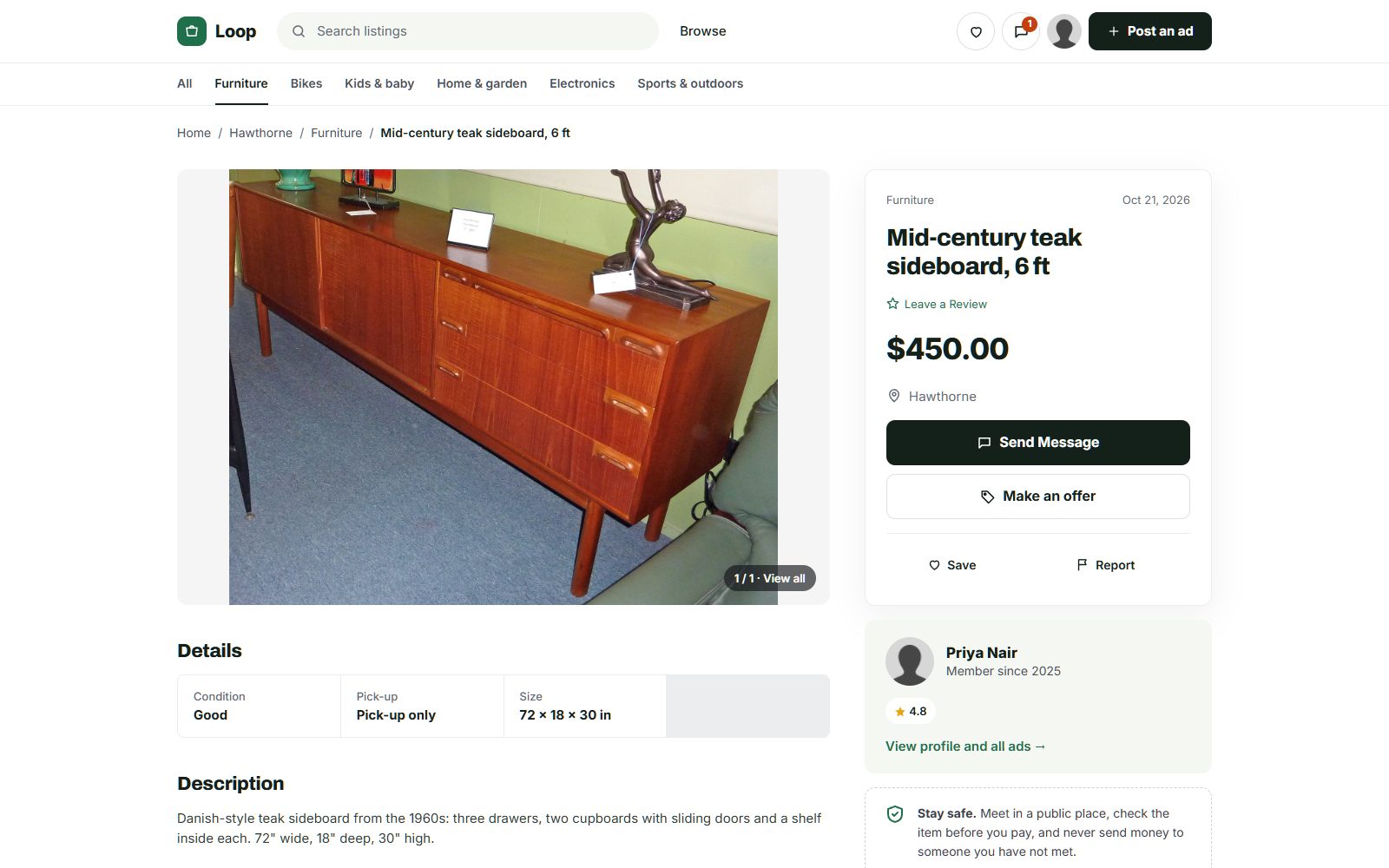
Photo credits
The screenshots show demo sites with made-up sellers. Their photos come from Wikimedia Commons, some cropped or with signs and plates blurred; these ones are under Creative Commons licences:
- McIntosh Teak Sideboard Circa 1960s, CC BY-SA 4.0
- Persian Rug Khorrasan 1, CC BY 2.0
- Fameg bentwood chairs of Poland 01, CC BY-SA 4.0
- View of the "Lost Dining Table and Chairs" in Eltham Palace - geograph.org.uk - 5797282, CC BY-SA 2.0
- Anglepoise Original 1227 Giant Floor Lamp, CC BY-SA 4.0
- Wooden Balance Bike for Kids oak frame with flame red tires, CC BY-SA 4.0
- Baby Crib (49935766018), CC BY 2.0
- Seth Thomas tambour mantel clock ca. 1930, CC BY-SA 4.0
- Rack of rock climbing gear at Horsethief Butte in a Mazamas class, CC BY 4.0
- Sideboard Teak 5 Door Rosando Furniture, CC BY-SA 4.0
- Teak 'Fresco' Sideboard by G Plan angled view, CC BY-SA 4.0