
How to build a yard sale classifieds website that people check every Friday night.
This guide covers building a yard sale site for one town or metro area: why a weekend calendar on a map beats scattered posts, the fields shoppers plan their route with, how a free site can earn from estate sale companies and local sponsors, finding the first sales, keeping home addresses and shoppers safe, the searches to rank for, and a spring launch.
Free for 15 days · No credit card · Plans from $19 a month
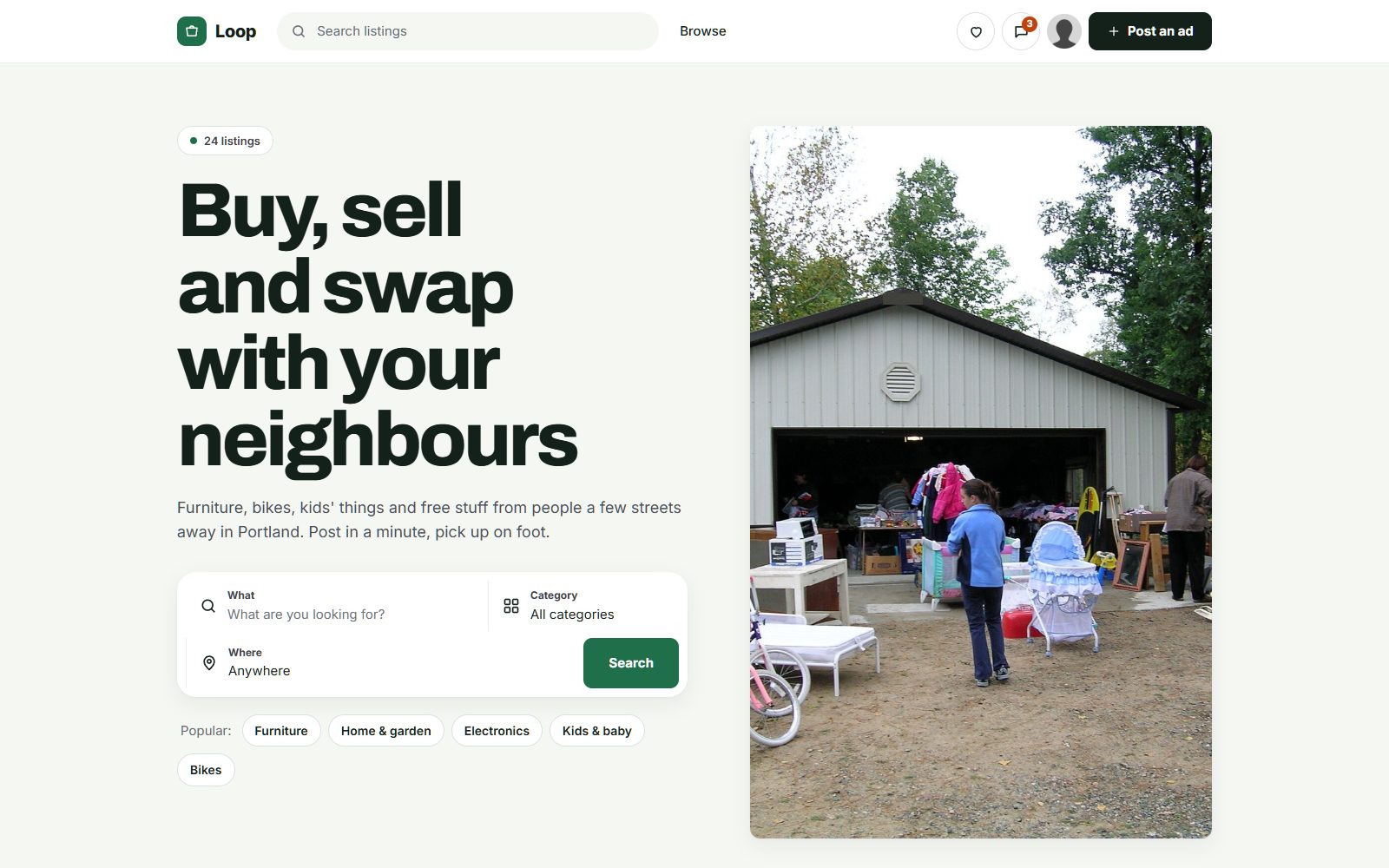
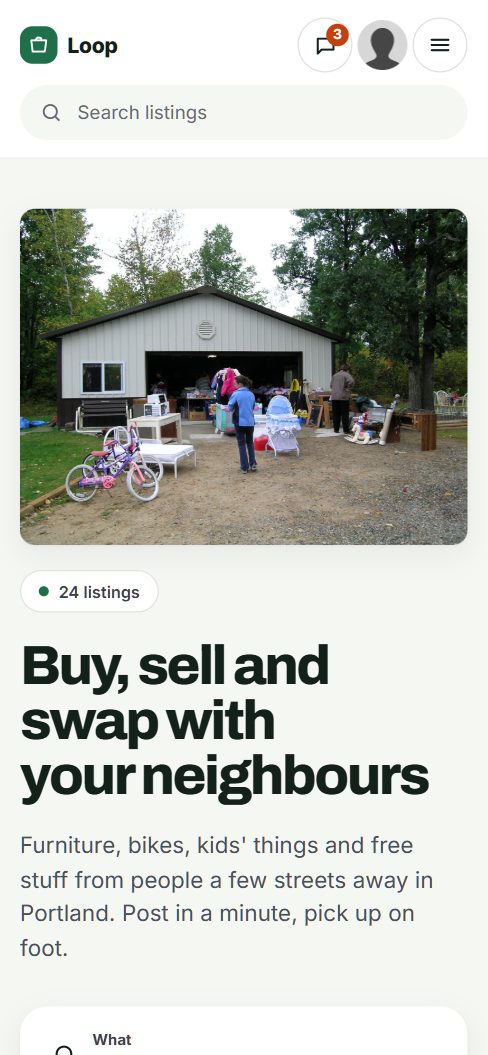
Build the weekend map that bargain hunters wish existed.
Yard sales, garage sales, moving sales and estate sales are some of the most local trades there are. A sale lasts a day or two, happens at one address, and its buyers drive a loop on Saturday morning. What they need is simple: every sale this weekend, on a map, with start times and a hint of what is on offer. What they get today is a mix of street signs, a newspaper listing, posts buried in a neighborhood group and a few national sites.
Who uses a yard sale site
- Households clearing out before a move, after a spring clean, or when children outgrow their things.
- Estate sale companies running one or two sales most weekends, and moving or downsizing services.
- Neighborhoods, churches, schools and clubs holding multi-family or fundraising sales.
- Shoppers: regular weekend bargain hunters, resellers looking for stock, collectors, and families furnishing a first home.
Picking the angle
Start with one town or a cluster of suburbs within a short drive, because nobody drives two hours to a yard sale. Decide early whether estate sales are part of the site: they bring regular, professional listers and the shoppers who follow them. Some founders focus on estate sales alone in a metro area, where serious shoppers plan whole weekends around them.
A yard sale listing is useless after Sunday. Build everything around this weekend.
Ask for the date, the hours and the address before anything else.
A yard sale listing is closer to an event than to an item for sale. Shoppers filter by when and where first, and by what is on offer second. Keep categories to the type of sale and use fields for the rest.
Fields shoppers use
- Sale dates: first day and last day, as date fields, so shoppers can filter for Saturday or Sunday.
- Start and end time, and whether early birds are welcome or not.
- Address shown on a map, plus the neighborhood name for people who know the area.
- What is for sale: checkboxes for furniture, tools, baby and kids, clothes, books and media, antiques and collectibles, kitchen, garden.
- Payment accepted: cash only, or cash and payment apps.
- Rain plan: held in the garage, or postponed.
Fields can be text, numbers, dropdowns, checkboxes or dates, required or optional, and shown as search filters, so a shopper can ask for every sale on Saturday with tools and antiques within ten miles.
| Category | Example listings | Fields shoppers filter on |
|---|---|---|
| Yard and garage sales | Single-family sales, spring clear-outs | Sale date, start time, items on offer, map |
| Multi-family and street sales | Cul-de-sac sales, neighborhood sale days | Number of households, date, area, parking |
| Estate sales | Full house contents run by a company | Dates, company, items on offer, numbers system |
| Moving sales | Everything must go before a move | Dates, furniture, appliances, price on bulk |
| Church, school and charity sales | Rummage sales, fundraiser sales | Organization, date, cause supported |
| Flea markets and swap meets | Recurring weekend markets | Day of week, indoor or outdoor, vendor spaces |
Make the sale date required, so shoppers can always pick out this weekend's sales.
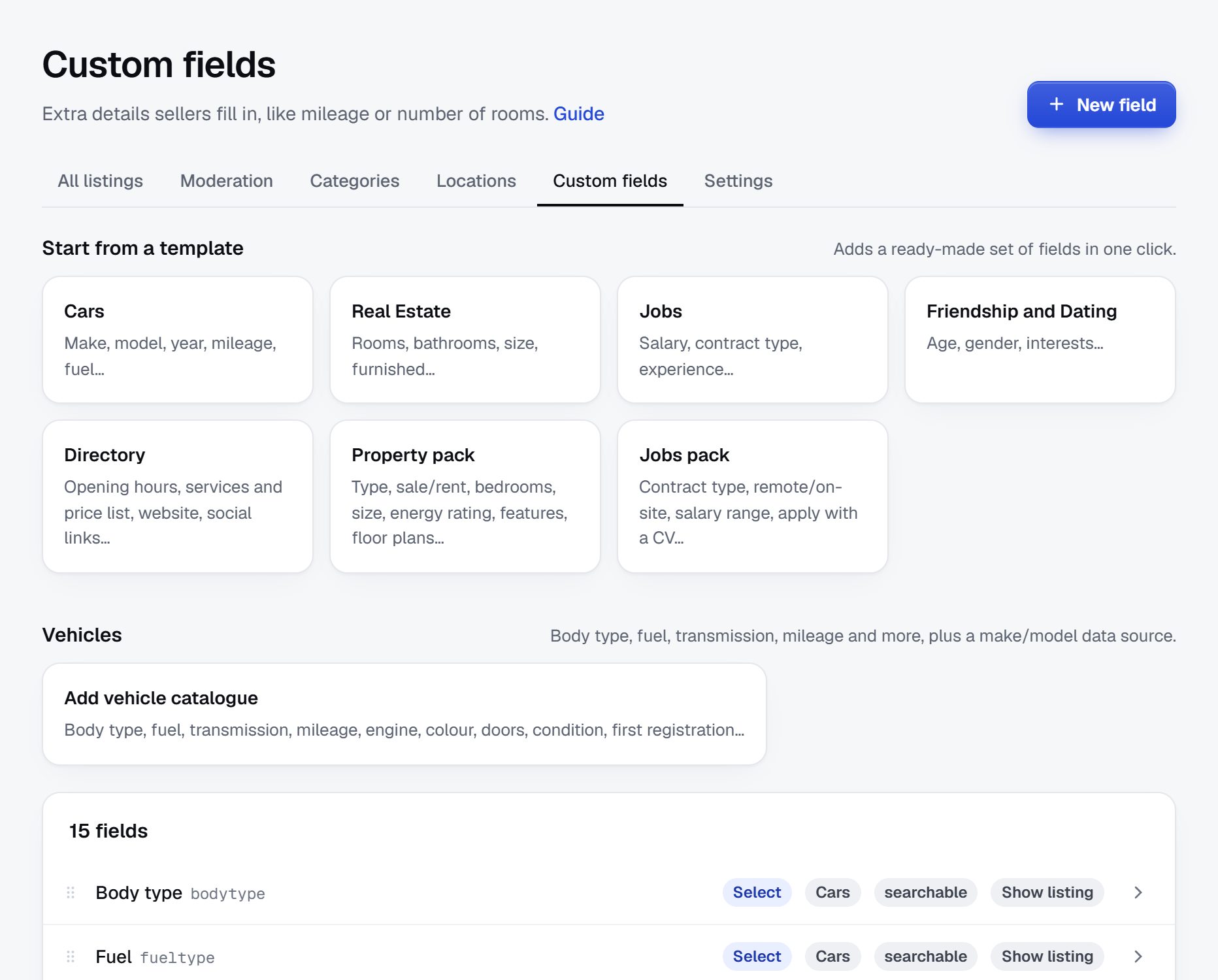
Keep household sales free and earn from the regular listers.
A family running one sale a year will not pay to list it, and they are the listings that make the site worth checking. Keep household, multi-family and charity sales free from launch and for as long as you can.
Money comes from the people who list every weekend and from the businesses that want weekend shoppers.
- Pay to post in the estate sale category. Estate sale companies earn a share of each sale and already pay to advertise. Once shoppers are on the site, a fee per sale is easy for them to accept.
- Memberships for estate sale and moving companies that run sales most weekends, with a seller profile, reviews and a verified seller badge.
- Featured listings that put a sale at the top of this weekend's list. Households may pay for a big moving sale; companies will pay for most of theirs.
- Banner spaces for movers, storage units, junk removal services, consignment shops, antique dealers and real estate agents, all of whom want people who are clearing out or moving.
A weekly email of the weekend's sales, sent through saved searches with email alerts, is what brings shoppers back, and a busy list is what makes paid features worth buying.
| Model | Works when | Switch it on |
|---|---|---|
| Pay to post estate sales | Estate sale shoppers use the site each weekend | Once companies see turnout from it |
| Memberships for estate sale companies | Companies list sales most weekends | When two or three list regularly |
| Featured weekend listings | This weekend's list runs past one screen | During spring and fall peaks |
| Banner spaces | Movers and storage firms want local movers | When you can show weekend visitor numbers |
| Sponsored community sale days | A town or neighborhood holds a sale day | Ahead of each organized sale day |
Collect the first sales from signs, groups and estate sale companies.
Yard sale listings turn over every week, so the first hundred are less of a hurdle than the next hundred. What matters is a full list every weekend from the first one.
Where sales come from
- Estate sale companies. Find every company working in your area and offer free listings for the first season. Each one brings a sale most weekends and photos that make the site look busy.
- Neighborhood and community groups where people announce sales. Message the posters and offer to put their sale on the map for them.
- Homeowners associations and neighborhood associations that organize annual sale days, which can bring dozens of households at once.
- Churches, schools and parent groups holding rummage sales to raise money.
- Street signs. Drive the main roads on a Friday, note the sales, and leave a card at the next one you visit.
- Real estate agents and moving companies, who know which clients are about to move.
For a household, posting must take a minute. With Yclas a seller can photograph a table of items and let AI fill in the title, description and category for them to check. Organizers of a neighborhood sale day can send a spreadsheet of addresses, and listings can be imported from a CSV.
Every Thursday, check that the coming weekend has enough sales. If not, go find them.
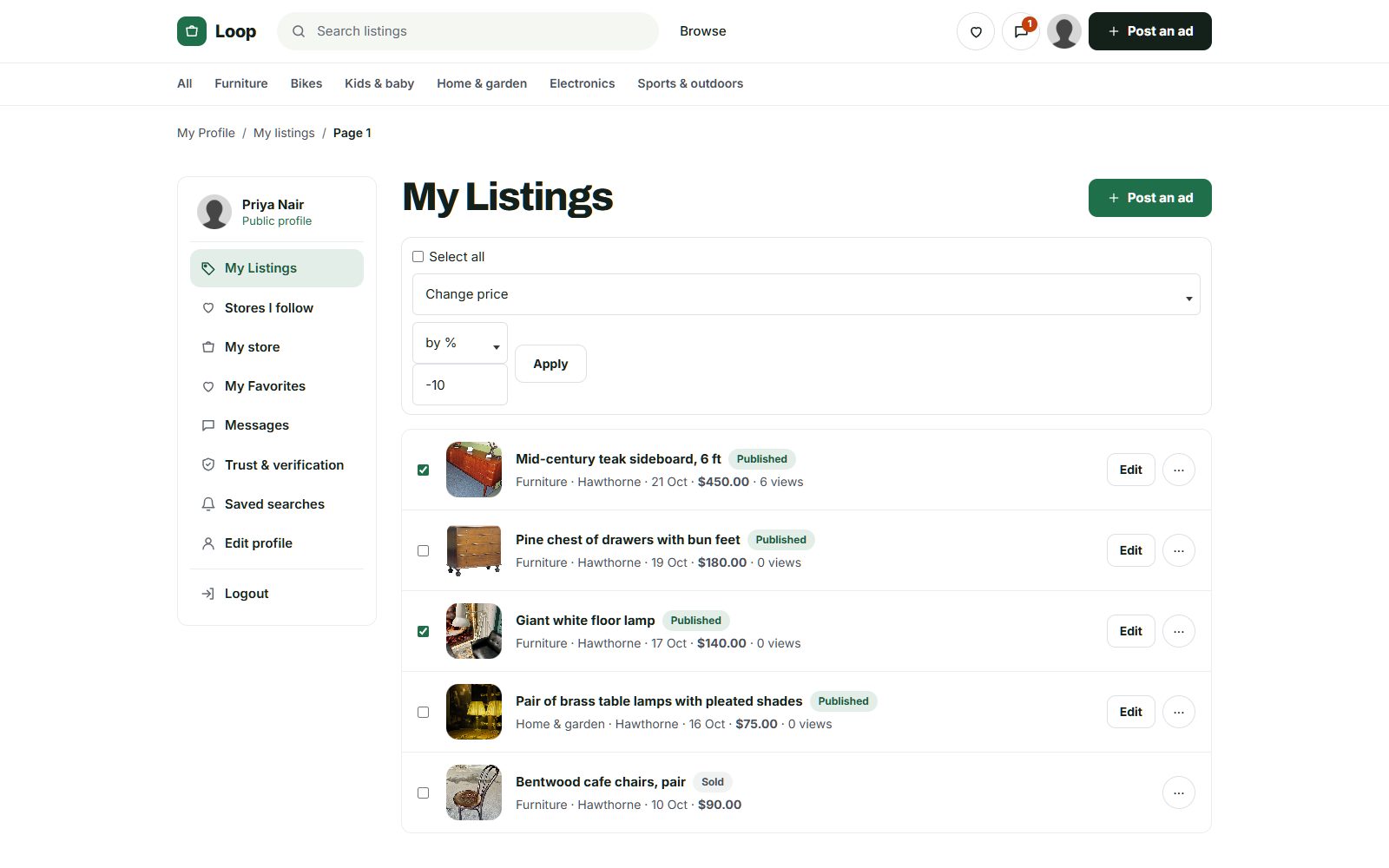
Protect sellers' homes and shoppers' safety.
A yard sale listing publishes a home address and invites strangers to it. Treat that seriously in your rules and in the advice you give sellers.
Risks to plan for
- Address exposure. Ask sellers to post only a few days before the sale, and not to mention that they are away, moving out of state, or that the house is empty.
- Theft during the sale: distraction thefts, cash boxes taken, people walking into the house. Advise sellers to keep cash on them, lock the house, and have two people on hand.
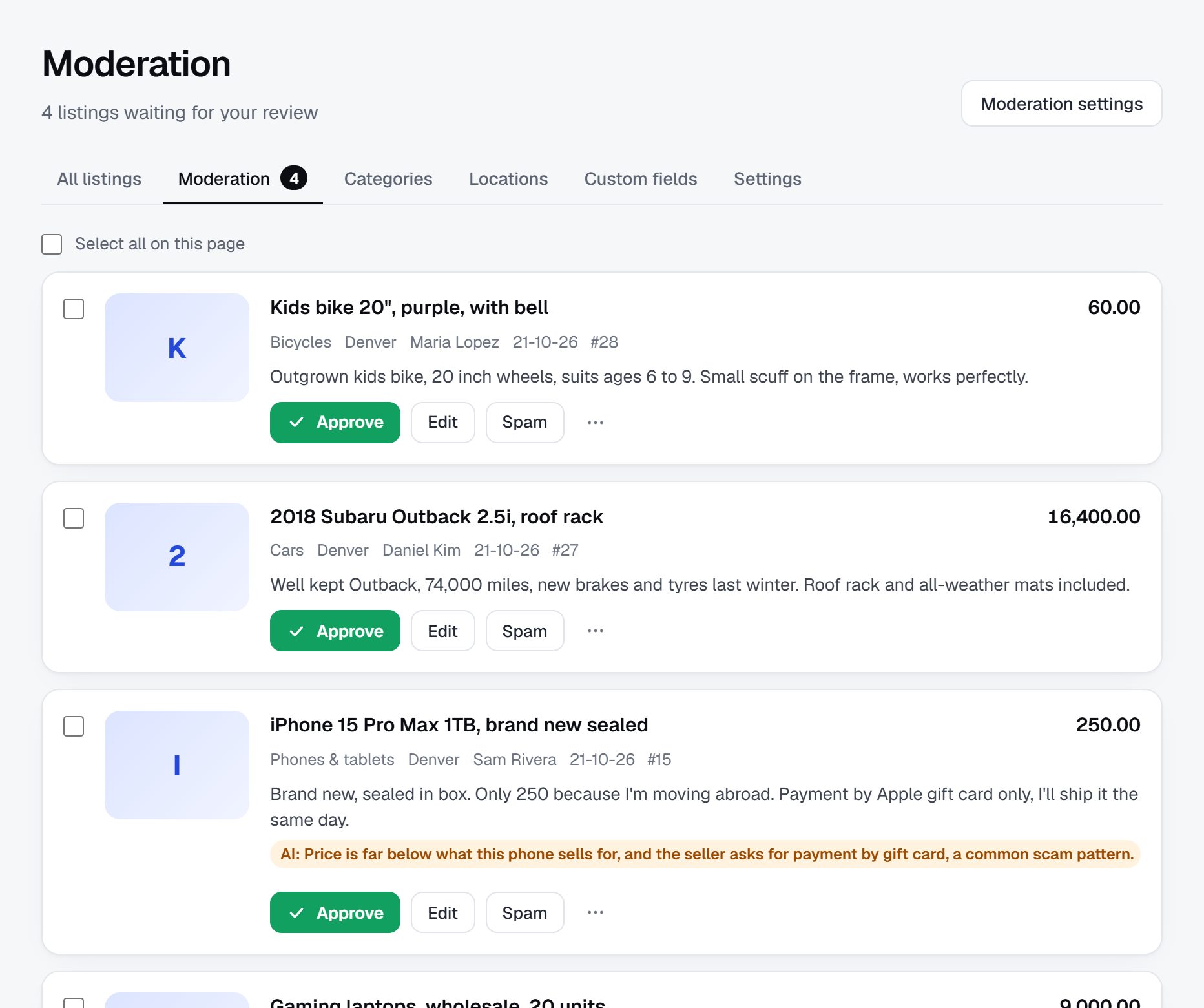
- Fake sales posted to send crowds to someone else's address as a prank or harassment. Approve every listing at first and let neighbors report false ones.
- Counterfeit bills and payment app scams where a buyer shows a fake confirmation screen.
- Recalled and unsafe items: cribs, car seats, baby gear and some toys. Publish a short note telling sellers to check recall lists before selling children's products.
Local rules
Many towns require a permit for yard sales, limit how many a household may hold each year, or restrict signs on poles and public land. Check the rules where you operate and add a short note for sellers, including where to get a permit if one is needed.
Banned words, reports and AI that holds suspicious listings for review keep out spam such as fake sales that are really ads for a store or a lead form.
Win the "yard sales this weekend" searches in your area.
Most yard sale searches happen on Thursday night, Friday night and early Saturday, and almost all include a place or "near me". Shoppers want the list for this weekend, so freshness matters more here than in almost any other niche.
Searches to target
- "yard sales this weekend near me"
- "garage sales [town] Saturday"
- "estate sales [city] this weekend"
- "community yard sale [neighborhood] 2027"
- "moving sale furniture [town]"
- "how to price items for a yard sale"
Pages to build
- A page per town and neighborhood, with this weekend's sales first and a map.
- An estate sales page for the metro area, since those shoppers search separately.
- A calendar of community sale days, published months ahead, which earns links from neighborhood associations.
- Seller guides: pricing items, setting up the driveway, what to do with leftovers.
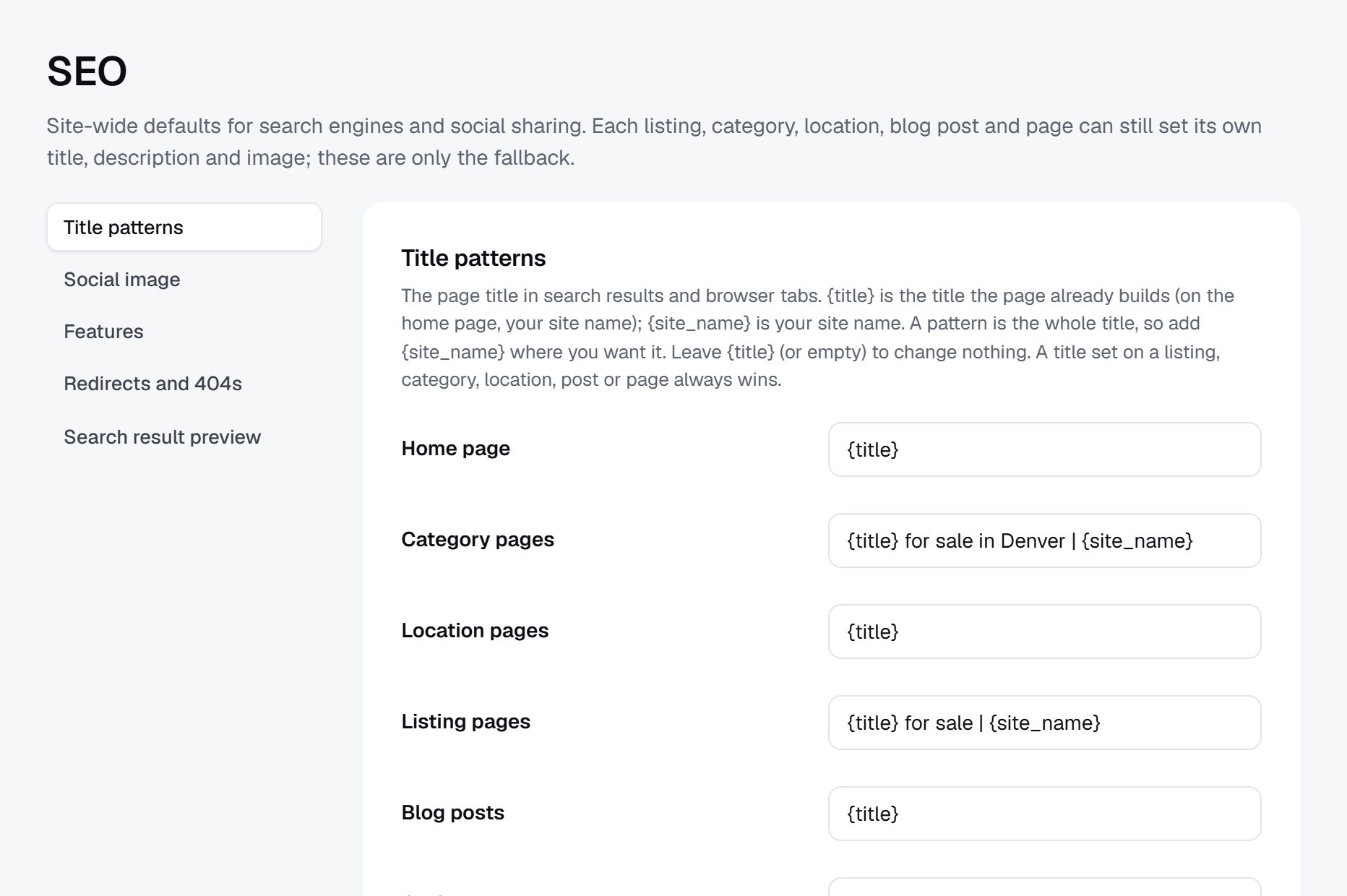
Set title patterns so each listing includes the sale type, town and date. After a sale ends, remove it or let it expire within days, so search engines find current sales rather than last month's.
Launch in spring, ahead of the first warm weekends.
Yard sale season in most of the US runs from spring to early fall, with a peak in late spring and a second wave in September. Launch a few weeks before the first warm weekends, when households are planning spring clean-outs.
Dates that matter
Look for annual town-wide or neighborhood sale days, long-distance yard sale routes along highways, end-of-semester move-outs near colleges, and Labor Day and Memorial Day weekends. Each one is a reason for shoppers to find your site.
Launch plan
- Sign up every estate sale company in the area with free listings for the season.
- Partner with one neighborhood association to list its annual sale day on your map.
- Post a weekend roundup in local groups every Friday, linking to the map.
- Leave cards at sales you visit and at thrift and consignment shops.
- Set up a saved search with email alerts for each town and ask shoppers to subscribe.
Checklist
- Sale date, times and map required on every listing.
- Seller safety tips and a recall note published.
- Local permit rules checked and summarized.
- Every listing approved at first.
- A Monday routine to remove or expire last weekend's sales.
A worked example: Tidewater Saturday Sales, Hampton Roads, Virginia.
Tidewater Saturday Sales is a fictional yard sale site for Hampton Roads in southeastern Virginia, a region of suburbs, military housing and older neighborhoods where families move often. Its founder is a part-time reseller who spent every Saturday morning driving between sales he had found in four different neighborhood groups and on street-corner signs, missing half of them. He built the weekend map he wanted for himself and opened it to everyone, starting with the cities on the south side of the water where he lived and knew the neighborhoods by name.
The categories
- Yard and garage sales
- Moving sales
- Military moves
- Downsizing and relocation
- Estate sales
- Community and neighborhood sales
- Street and subdivision sale days
- Church and school rummage sales
- Flea markets
Who it serves
Households post most of the sales, especially military families who move every few years and sell whatever will not fit the next house. Five estate sale companies list most weekends. Shoppers are a mix of resellers, antique hunters, young couples furnishing a first home, and families who make Saturday sales a weekly outing with coffee and a route planned the night before. Antique dealers from inland towns drive in for the estate sales, which tend to be the busiest listings every week. Resellers are the most loyal visitors of all: they check the map every Thursday and tell other resellers.
How it started
He launched in March with the estate sale companies, each offered free listings through the summer, and with one large subdivision that held an annual sale day in April. That sale day alone put dozens of addresses on the map, and its organizers shared the link with every household taking part. A Friday roundup posted in neighborhood groups brought the shoppers, and by May people were asking him to add their towns across the water. He did, one town at a time, only once he had found a few regular sellers in each.
How it makes money
Household and charity sales are free and will stay that way. From the second season, estate sale companies pay to post each sale, and three of them pay for memberships with a seller profile, reviews and a verified seller badge. A storage company and two moving firms buy banner spaces aimed at people who are clearing out, which fits a region where moving trucks are a common sight. Households running big moving sales sometimes pay to feature them on a busy weekend, especially in early summer when many military moves happen.
| Listing | Dates and hours | Key details |
|---|---|---|
| Multi-family cul-de-sac sale, six households | Saturday, 7 a.m. to 1 p.m. | Kids' clothes, tools, bikes, no early birds |
| Military moving sale | Friday and Saturday, 8 a.m. to 2 p.m. | Furniture, grill, patio set, priced to go |
| Estate sale, 1950s ranch house | Thursday to Saturday, 9 a.m. to 3 p.m. | Company run, numbers handed out at 8 a.m., mid-century furniture |
| Church rummage sale | Saturday, 8 a.m. to noon | Youth program fundraiser, bag sale after 11 |
| Garage sale, rain or shine | Sunday, 9 a.m. to 1 p.m. | Held in the garage, fishing gear and books, cash or payment apps |
Your first 90 days: from one spring weekend to a weekly habit.
A yard sale site has to prove itself one weekend at a time. Shoppers check on Thursday or Friday night, and if the map looks thin they go back to driving around. Start the first ninety days about a month before the first warm weekends, so the site is already full when the season opens.
Give every week the same shape. On Monday, clear last weekend's sales. From Tuesday to Thursday, find this weekend's. On Friday, send the roundup and post it in local groups. Count the sales on the map each weekend and the shoppers who sign up for alerts. If a weekend looks thin, spend Thursday finding sales rather than planning features. Signs on the main roads and posts in neighborhood groups usually turn up a dozen more within an hour.
By the end of the twelve weeks you want estate sale companies posting without reminders, at least one community sale day on the calendar, and shoppers who check the map on Friday night without being told. Note which towns and neighborhoods stay thin, because those are where you drive on Fridays next season, handing cards to anyone with a sign on the corner.
| Weeks | Focus | Done when |
|---|---|---|
| 1-2 | Sale types, required dates and hours, maps, seller safety tips | A test sale shows its dates, hours and a map pin, and the safety page is live |
| 3-4 | Sign up every estate sale company in the area | Each company has posted its next sale on free listings for the season |
| 5-6 | Find household sales in groups, on signs and through associations | The first warm weekend has at least 30 sales on the map |
| 7-8 | Start the Friday roundup and an alert for each town | The roundup has gone out three Fridays in a row and every town has its own alert |
| 9-10 | Book a community sale day with a neighborhood association | The date is on the calendar and organizers are collecting addresses |
| 11-12 | Sell the first banner space and fix the Monday cleanup routine | One mover or storage firm has signed and no past sale is listed on Monday night |
Three ways to build a yard sale site.
A yard sale site needs fewer features than most classifieds sites, but the ones it needs are unusual: a map that shows this weekend's sales, required date and time fields, sales that disappear after their last day, and a posting form simple enough for someone who has never listed anything online.
Building with developers makes sense if you want a route planner that orders sales by driving distance, or a shopper app to use from the car. Both are real work, and both need fixing and updating every season before the first warm weekend.
An events or classifieds plugin on your own server can work, since a yard sale is partly an event. Check how it handles maps, date filters and expiry, and remember that a busy Friday night is exactly when a self-hosted site tends to slow down or fill with spam, with nobody but you to fix it.
A hosted builder such as Yclas suits a founder who would rather spend Thursday finding sales than keeping a server running. Whichever builder you pick, look for date fields that work as filters, a map on every listing, and a way for last weekend's sales to leave without you deleting them by hand. Those three things decide whether the map is right on Saturday morning.
Whatever you choose, test it on a phone in a parked car. That is where most of your shoppers will use it, often with one hand and a coffee in the other. If the map is slow to load or the pins are too small to tap, nothing else about the site will matter.
| Route | Fits when | Watch out for |
|---|---|---|
| Custom build with developers | You want a route planner or a shopper app | Seasonal upkeep and costs before you have shoppers |
| Plugin on your own server | You already run a local site and have a web person | Maps, date filters and Friday-night traffic and spam |
| Hosted builder | You want to spend the week finding sales | Check date filters, maps and how past sales expire |
What a yard sale listings costs to run.
The software is the smallest part of the bill. Most of the cost is your time in the first months: finding the first listings, answering questions and checking what gets posted.
Costs are small: printed cards to leave at sales and shops, and perhaps a few yard signs advertising the site at community sale days. Check whether your town charges for sign permits before placing any.
| Cost | Typical range | On Yclas |
|---|---|---|
| Domain | $10 to $20 a year | Your own, with SSL included |
| Software and hosting | $0 to $100+ a month, plus plugins and updates | Starter $19 a month, Professional $99 |
| Design | $0 to $100 for a theme, or a designer | 109 looks included |
| Payment fees | About 3% per payment | Your Stripe or PayPal fees; Yclas takes nothing |
| Your time | 5 to 10 hours a week at the start | Finding listings, moderation, support |
Mistakes that leave a yard sale map empty on Saturday.
- Letting last weekend's sales linger. A shopper who drives to a sale that ended Sunday will not trust the map again. Expire or remove every sale after its last day, and check on Monday that nothing old is left. A short Monday routine takes minutes and protects the whole map.
- Making the date optional. A listing with no date cannot be filtered for this weekend, and that is the only filter most shoppers use. Require the first day, the last day and the start time on every sale.
- Charging households to list. A family selling baby clothes and a lawn mower will post in a free group instead, and their sales are what shoppers come for. Charge estate sale companies and businesses, not households, and say so plainly on the posting page so families never hesitate.
- Drawing the map too wide. A map of a whole state shows a few pins in every town and looks empty. Start with one metro area or a cluster of nearby towns, fill it every weekend, then grow. Shoppers want ten sales within twenty minutes, not two hundred across the state.
- Launching in the off season. A site that opens in November has little to show until spring, and early visitors do not return. Launch a few weeks before the first warm weekends, when households are already planning to clear out.
- Overlooking estate sale companies. They are the steadiest listers and bring serious shoppers who come back every week. Sign them up first, even if it costs you a season of free listings. Their photos of furniture and collectibles also make the whole site look worth visiting.
- Publishing addresses too early. A sale listed two weeks ahead tells strangers when a home will be busy, and sometimes when it will be empty. Ask sellers to post a few days before and to leave out travel or moving dates. The same advice belongs on your safety page, where every seller can read it before posting.
- No Friday reminder. Shoppers plan on Thursday and Friday nights, and if nothing reaches them they forget the site exists. Send a weekly roundup and alerts by town before every weekend, all season, at the same time each Friday so shoppers learn to expect it.
- A posting form built for desktops. Many sellers post from a phone between chores. Keep the form short, with a photo, the dates and the address, and leave everything else optional. A seller who gives up halfway through the form simply posts the sale in a neighborhood group instead.
Sale-day terms worth knowing.
Sellers, shoppers and estate sale companies use these words every weekend.
| Term | What it means |
|---|---|
| Early bird | A shopper who arrives before the advertised start time to get the best items. |
| Numbers system | An estate sale practice of handing out numbered tickets so shoppers enter in order of arrival. |
| Estate sale company | A business that prices and sells a home's contents for a share of the takings. |
| Multi-family sale | A sale where several households sell together at one address or on one street. |
| Rummage sale | A sale of donated items run by a church, school or club to raise money. |
| Bag sale | A late-day deal where shoppers fill a bag with anything for one set price. |
| Half-price day | The last day of an estate sale, when most items are marked down by half. |
| Curb alert | A post saying unsold items have been put out at the curb for anyone to take. |
| Reseller | Someone who buys at sales to sell again online, at a flea market or in a booth. |
| Picker | A buyer who hunts for antiques and collectibles to sell on to dealers or collectors. |
| Highway sale | A yard sale event running for many miles along one road, with sellers all along the route. |
| Sale permit | Permission some towns require before a household holds a yard sale. |
| As-is | Sold in its current condition, with no returns or guarantees. |
| Preview | Photos or a viewing some estate sale companies offer before a sale opens. |
The same steps for a yard sale listings on Yclas.
- Describe your nicheThe setup wizard writes the categories, an About page and example listings from one sentence.
- Add fieldsSwitch on a field pack or add the fields your buyers filter on.
- Fill itImport dealer spreadsheets, invite sellers and post your own.
- Set the rulesChoose moderation, banned words and AI checks.
- Go liveChoose a plan, connect your domain, switch on paid listings when it is time.
Is a yard sale site cheap to start?
Yes. Beyond the platform and a domain, expect to spend on printed cards and some Friday mornings driving around, not on advertising.
Do I need permission to publish home addresses?
The seller provides the address when they post, so they choose to share it. Ask them to post close to the sale date and advise them on what not to mention.
How can a free yard sale site make money?
Charge estate sale companies to post or offer them memberships, sell featured spots on busy weekends, and sell banner spaces to movers, storage units and junk removal firms.
Are yard sale permits my responsibility?
No, they are the seller's, but a short note on local permit rules helps sellers and builds trust. Check the rules where you operate and keep the note up to date.
What happens in winter?
Household sales slow down, but estate sales, moving sales and indoor flea markets continue. Use the quiet months to sign up companies and plan next spring's sale days.
How is this better than posting in a neighborhood group?
Shoppers can see every sale this weekend on one map, filter by what is on offer, and get an email alert, instead of scrolling past posts from three groups.
Should I allow online sales of single items?
Keep the focus on sales events. If people ask, a small general buy and sell category can sit alongside, but this weekend's sales should stay at the center.
Should shoppers be able to post wanted items?
A small wanted section can help, for example a reseller looking for old tools, but keep it apart from the sale map so this weekend's sales stay easy to find. Wanted posts also tell sellers what shoppers are hunting for, which helps them decide what to bring out of the garage.
Can sellers list single items from their sale?
Let them add photos of the best pieces to the sale listing. Separate item listings make sense only for large things such as furniture that may sell before the weekend. Otherwise the map fills with single lamps and chairs and the weekend sales get harder to spot.
What happens when rain cancels a sale?
Ask sellers to state a rain plan when they post and to edit the listing if plans change. A short note in the Friday roundup helps shoppers who planned a route, and a seller who moves the sale to next weekend can simply change the dates.
Do estate sale companies want reviews?
Good companies usually welcome them, since shoppers choose which sales to visit partly by company. Seller profiles with ratings let them build a name on your site, and a company with strong reviews has a reason to keep paying for its membership.
How far ahead should community sale days go on the calendar?
Months ahead, ideally right after the previous year's sale. Organizers need time to sign up households, and shoppers plan trips around big sale days, so a calendar published early earns visits and links from local groups.
Related pages.
The parts of Yclas this leans on.
You have the plan. Now put this weekend's sales on the map.
Describe your site in a sentence and the setup wizard writes the categories, example listings and a look. Free for 15 days, no credit card.
Start my classifieds site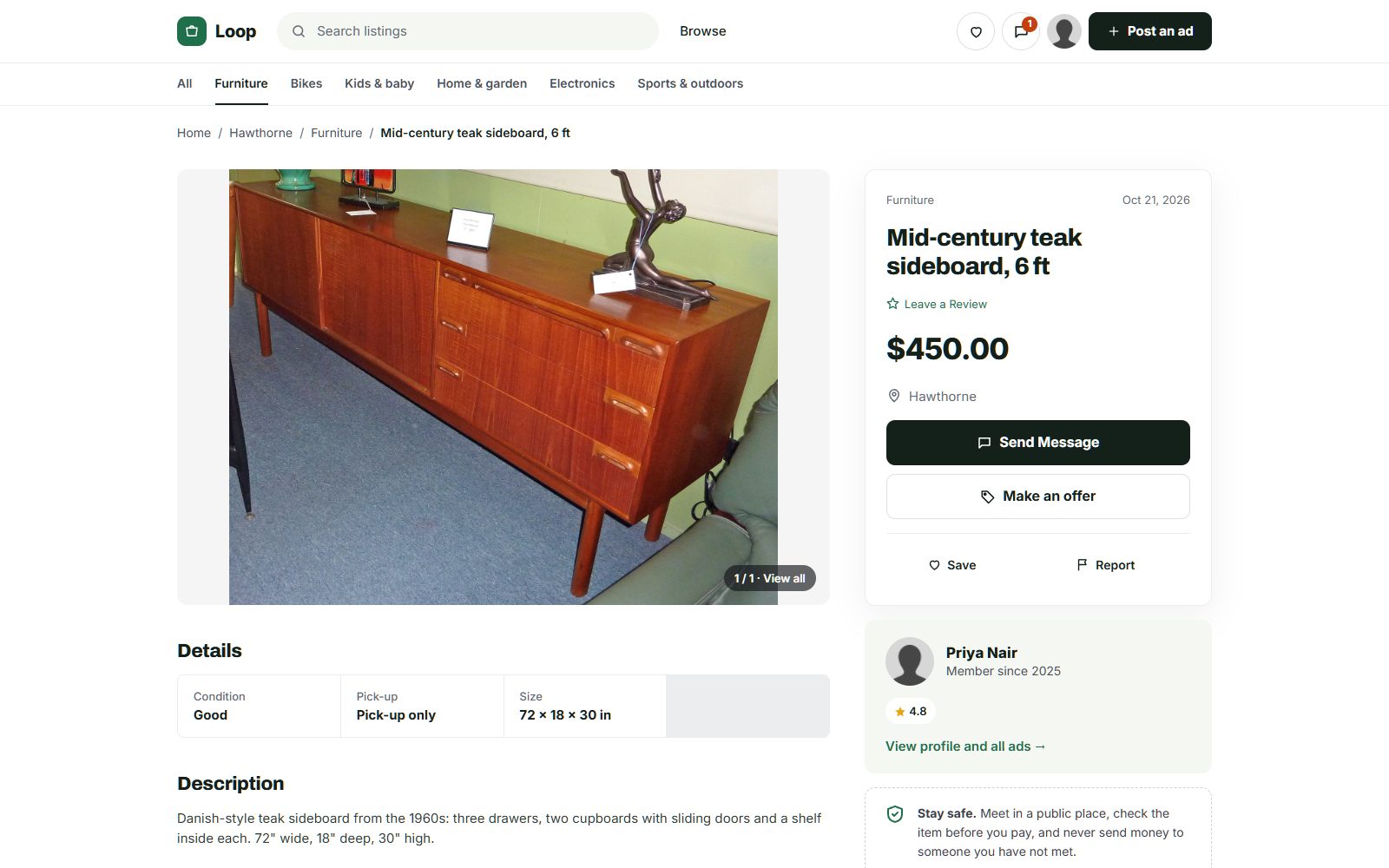
Photo credits
The screenshots show demo sites with made-up sellers. Their photos come from Wikimedia Commons, some cropped or with signs and plates blurred; these ones are under Creative Commons licences:
- McIntosh Teak Sideboard Circa 1960s, CC BY-SA 4.0
- Persian Rug Khorrasan 1, CC BY 2.0
- Fameg bentwood chairs of Poland 01, CC BY-SA 4.0
- View of the "Lost Dining Table and Chairs" in Eltham Palace - geograph.org.uk - 5797282, CC BY-SA 2.0
- Anglepoise Original 1227 Giant Floor Lamp, CC BY-SA 4.0
- Wooden Balance Bike for Kids oak frame with flame red tires, CC BY-SA 4.0
- Baby Crib (49935766018), CC BY 2.0
- Seth Thomas tambour mantel clock ca. 1930, CC BY-SA 4.0
- Rack of rock climbing gear at Horsethief Butte in a Mazamas class, CC BY 4.0
- Sideboard Teak 5 Door Rosando Furniture, CC BY-SA 4.0
- Teak 'Fresco' Sideboard by G Plan angled view, CC BY-SA 4.0