
How to build a musical instrument classifieds website that players trust.
This guide covers how to build a musical instrument classifieds website for guitars, amps, keys, drums, band instruments and studio gear: the scene and buyer to serve, the fields players filter on, how the site pays for itself, where the first listings come from, stolen and fake gear, the searches worth ranking for, and a launch timed to gigs and the school year.
Free for 15 days · No credit card · Plans from $19 a month
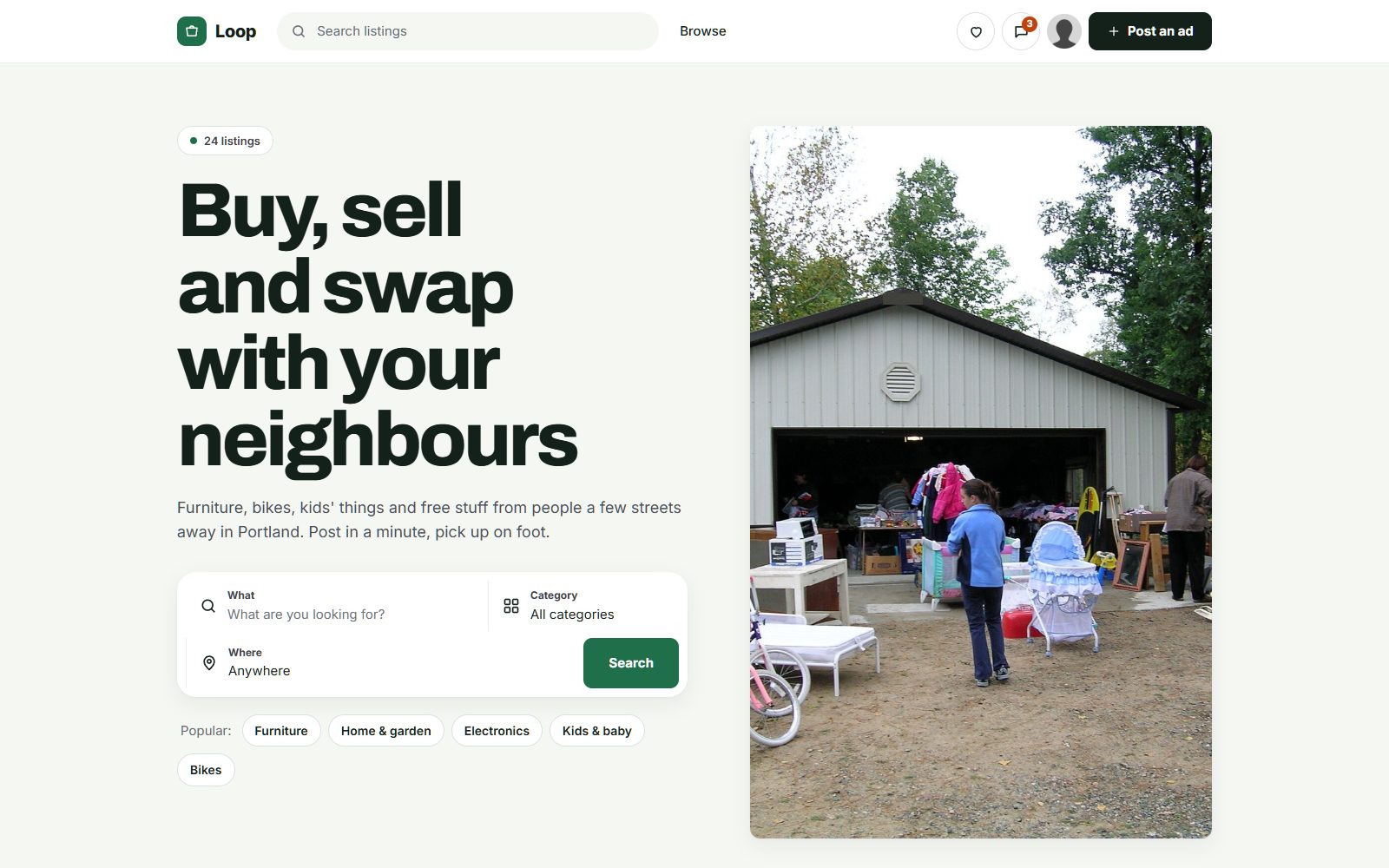
Serve one music scene, one family of instruments, or both.
Musicians buy and sell gear constantly. Guitarists trade pedals every few months, drummers swap cymbals, parents sell a 1/2 size violin the moment their child needs a 3/4, and studio owners sell interfaces when they upgrade. On a general site, a vintage tube amp sits between a lawnmower and a baby stroller, and nobody can filter for a left-handed guitar or a digital piano with 88 weighted keys.
Who uses the site
- Gigging and hobby players trading guitars, amps and pedals within driving distance, so they can play before they pay.
- Parents of music students buying and selling band and orchestra instruments as children grow or quit.
- Collectors looking for vintage guitars, older synths and classic drum kits.
- Home studio owners and DJs buying microphones, monitors, interfaces and controllers.
- Music shops and teachers with trade-ins, consignment stock and students who need affordable instruments.
Choosing the angle
Play-before-you-buy is the reason a local site works, so start with one city that has a real music scene. Then decide how wide to go. A site for guitars, basses and amps has the most turnover. A band and orchestra site serves school families and teachers. A piano site works because pianos are heavy, local and hard to sell anywhere else.
Today this trade happens in gear swap groups on Facebook, on Craigslist and Facebook Marketplace, on Reverb and eBay for shipped gear, in guitar forums, on music shop notice boards and at guitar shows and swap meets. Those are your first sellers.
Players want to plug in before they buy. A local site that lets them do that has an edge over any shipped marketplace.
Use categories players recognize and fields that match how they shop.
Musicians shop by brand, model and a few technical details that general sites never ask about. Keep categories to two levels and let fields do the sorting. A guitarist looking for a 7-string or a left-handed model should be able to tick one box instead of reading a hundred listings.
Fields that save the most messages
- Brand, model and year: a dropdown of common brands with an Other option keeps search clean, and year matters a great deal for vintage gear.
- Original or modified: replaced pickups, a refinished body or a repaired neck change the value of a guitar, so ask sellers to say so.
- Case or gig bag included: buyers ask this in almost every message.
- Size for orchestral strings and student instruments: full size, 3/4, 1/2 and smaller.
- Collection: pickup only, can ship, or needs movers, which is the field every piano listing needs.
Ask for a photo of the serial number or the label inside the body. It helps buyers check the year and helps you when a stolen instrument turns up.
| Category | Example listings | Fields buyers filter on |
|---|---|---|
| Guitars and basses | Electric, acoustic, classical and bass guitars | Brand, model, year, body type, number of strings, left-handed, original or modified |
| Amps and effects | Combo amps, heads, cabinets, pedals, pedalboards | Tube or solid state, wattage, speaker size, brand |
| Keys and pianos | Upright and grand pianos, digital pianos, synths, organs | Number of keys, weighted action, brand, height or length, movers needed |
| Drums and percussion | Acoustic kits, electronic kits, snares, cymbals | Number of pieces, shell sizes, hardware included, cymbal size |
| Band and orchestra | Violins, cellos, flutes, clarinets, trumpets, saxophones | Instrument size, student or professional, key, case included |
| Studio and DJ | Audio interfaces, microphones, monitors, controllers, mixers | Brand, connection type, channels, condition |
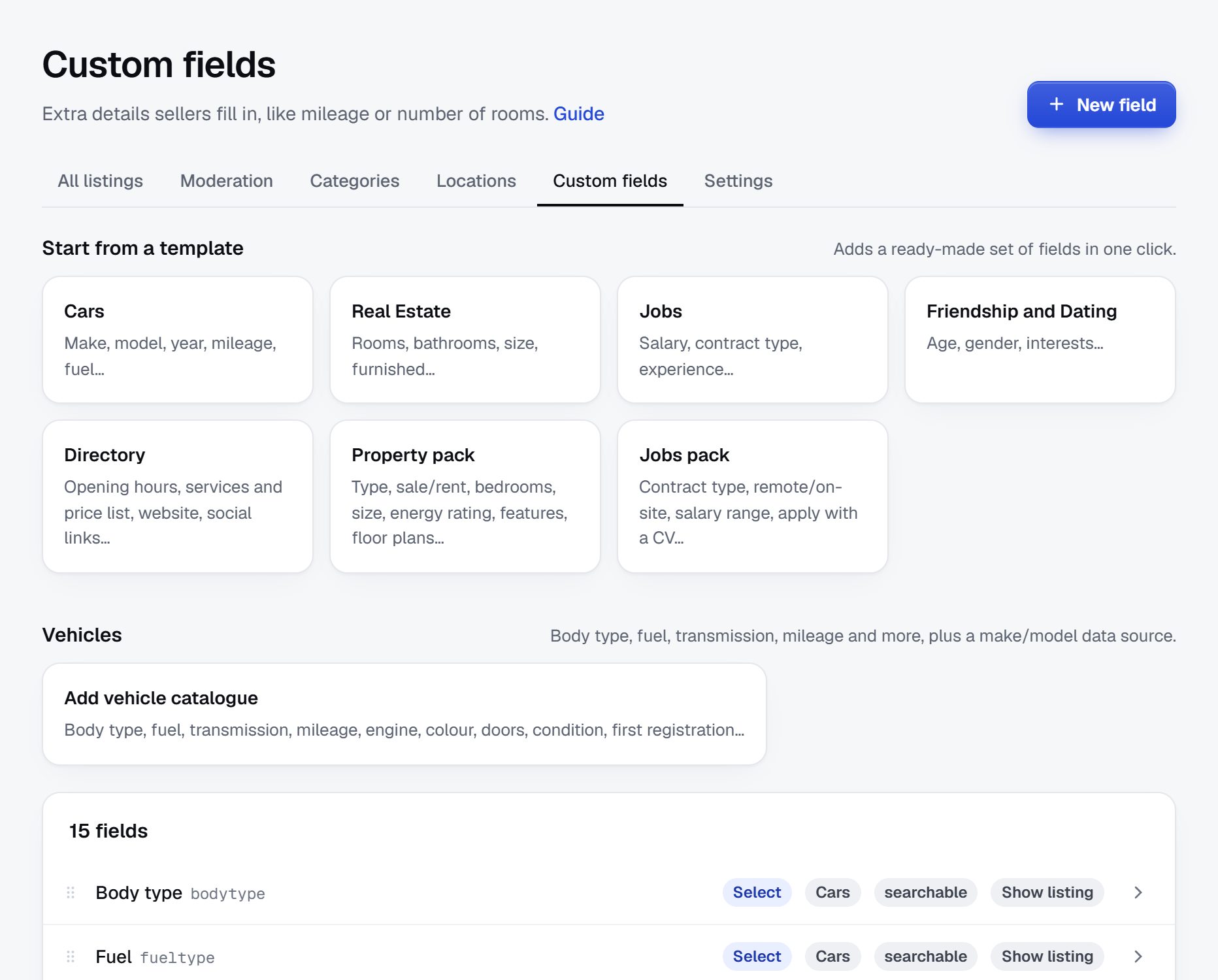
In Yclas, fields can be text, numbers, dropdowns, checkboxes or dates, required or optional, and each one can be a search filter.
Let players post for free and charge the shops and pros.
Keep posting free for individual players while you grow. A drummer selling a snare will simply post elsewhere if you ask for money before the site has buyers. The revenue in this niche comes from sellers who move a lot of gear and from the businesses that serve musicians.
- Featured listings and bumps suit vintage guitars, pianos and high-end amps, where the seller is happy to pay a little for a faster sale at the right price.
- Memberships for music shops fit stores with a steady flow of trade-ins and consignment pieces. They get a seller profile that works like a second shop window.
- Banner spaces suit the trade around the gear: guitar techs and luthiers, piano tuners and movers, rehearsal rooms, recording studios and music teachers.
- Auctions with bidding and Buy now can work for collectible guitars and vintage synths, where buyers compete for rare models.
Wait until there are buyers before switching any of this on. The holiday gift season and the start of the school year are the moments when sellers care most about standing out.
| Model | Works when | Switch it on |
|---|---|---|
| Featured listings and bumps | Players check new guitar and amp listings daily | A few hundred active listings |
| Music shop memberships | Two or three shops post their trade-ins every week | After shops have sold a few pieces through the site |
| Banner spaces | Teachers, techs and studios want local players | When you can show local visitor numbers |
| Pay to post in vintage | Rare guitars and synths draw collectors | Once the vintage category gets steady views |
| Auctions | Several buyers want the same rare piece | When collectors are regulars on the site |
Start with the shops, the teachers and the gear swap groups.
Musicians are easy to find, because they gather in the same places every week. The first 100 listings come from a few people with a lot of gear and many players with one piece to sell.
Where to find them
- Independent music shops. Most have used gear in the back and consignment pieces they would like to move faster. Offer to put their used stock online from the spreadsheet they already keep.
- Music teachers and school band directors. They know which families are selling outgrown violins and student saxophones every summer.
- Gear swap groups and guitar forums. Reply to players who post a pedal or a bass there and offer to copy it onto your site, photos included.
- Rehearsal studios and recording studios. Their regulars are always upgrading, and studios sell their own older gear too.
- Piano tuners and movers. They hear first when a family wants a piano gone before a move.
- Churches and schools replacing organs, pianos and sound systems.
Posting should take a minute. On Yclas a seller can take a photo of a guitar and let AI fill in the title, description, category and price for them to check, then add the serial photo and the details only they know.
A music shop that lists its used wall in full gives you more credibility than a hundred scattered pedals.
Watch for stolen gear, fakes and undisclosed repairs.
Musical instruments are portable, valuable and easy to resell, which makes them a target. Plan for these problems before the site is busy.
Common problems
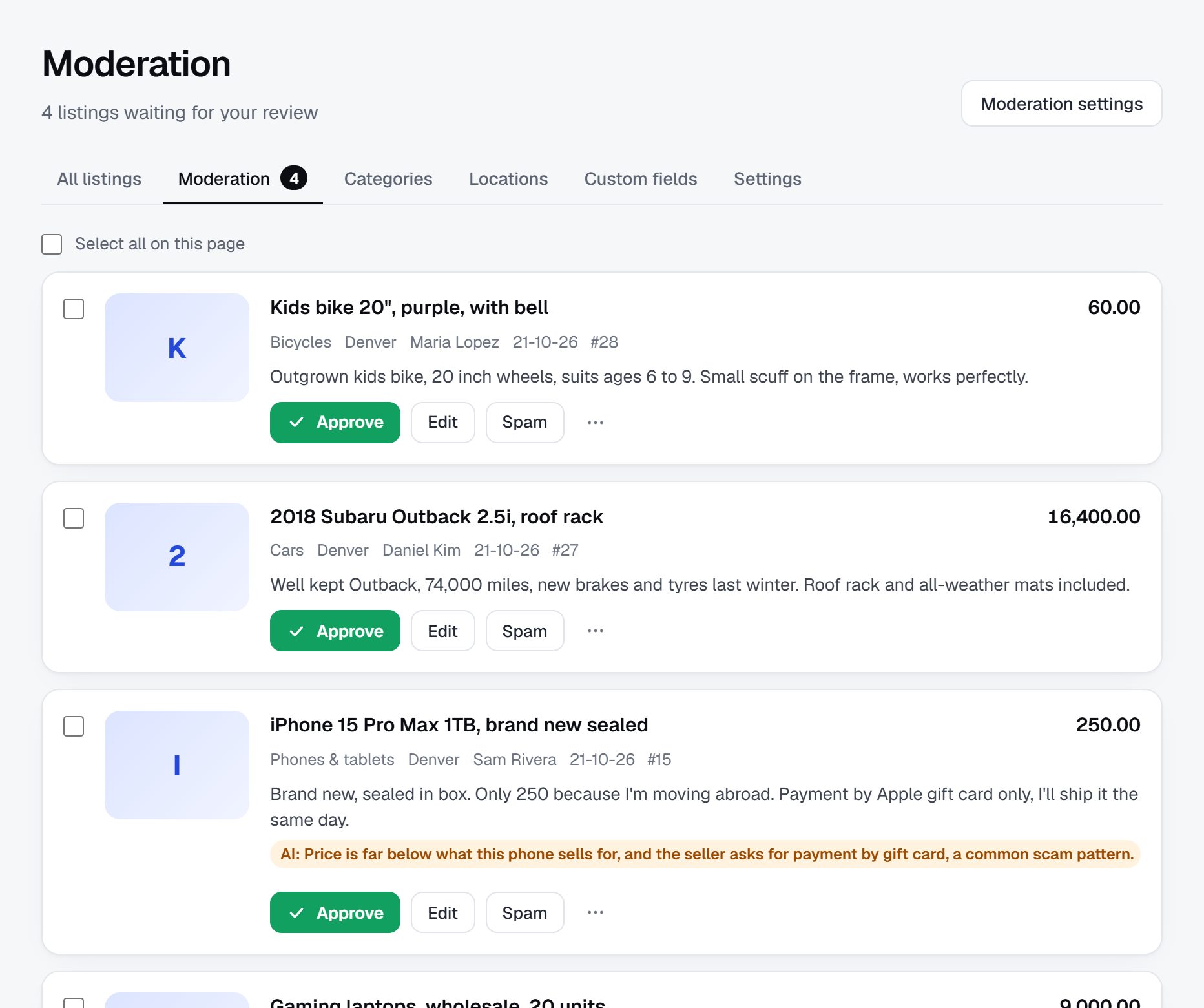
- Stolen instruments. Gear is stolen from tour vans, rehearsal rooms and homes, then listed quickly at a low price. Keep the serial number photo on file, point buyers to stolen gear registries, and act fast when someone reports a match.
- Counterfeit guitars. Copies of famous brands with real-looking logos and serial numbers are common. Prices far below the usual range are the first warning sign.
- Undisclosed work. A refinish, a broken and repaired headstock or replaced electronics can halve the value of a vintage instrument. Your rules should require sellers to state known repairs.
- Shipping and deposit scams. A seller far away asks for payment by wire or gift card and never ships. Advise buyers to meet, play the instrument and pay on the spot.
- Free pianos. Some cost more to move and repair than they are worth. Ask sellers to state when it was last tuned and whether it holds a tune.
Restricted materials
Some older instruments contain materials such as ivory keys, tortoiseshell or certain rosewoods, which wildlife trade rules restrict, especially across borders. Ask sellers to say what they know, and check the rules where you operate before allowing those listings.
Approve listings by hand at first, ban the phrases that come with shipping scams, and publish a short buyer guide: meet at a shop or a busy place, bring a cable and plug in, check the neck and the frets, and compare the serial with the model year.
Rank for model, size and city searches.
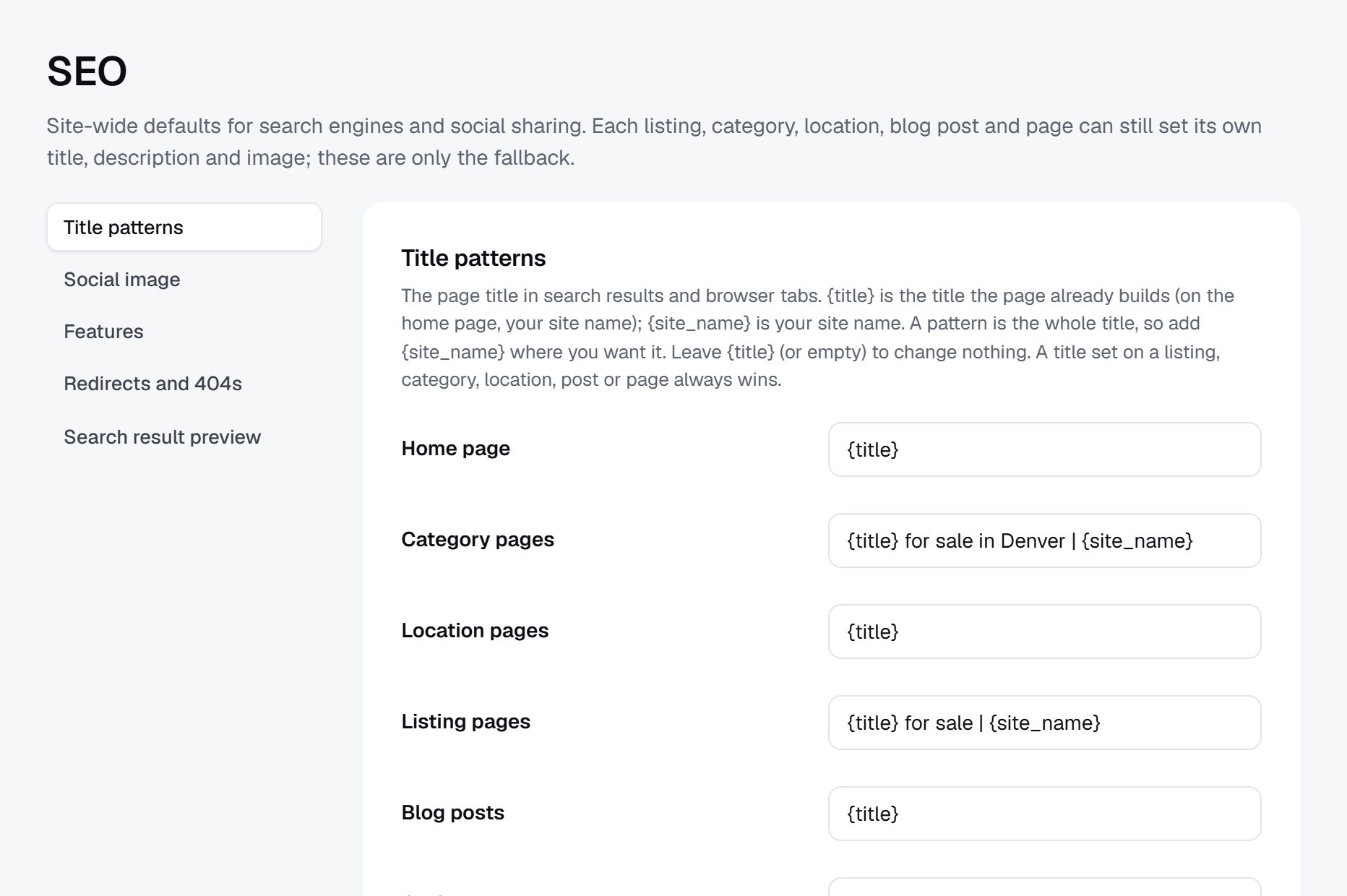
Musicians search with precise words: a brand and a model, a size, or a type of instrument plus a city. That suits a classifieds site, because every listing already carries those words.
Searches to target
- "used Fender Telecaster for sale"
- "left handed guitar for sale near me"
- "used upright piano Chicago"
- "3/4 violin for sale"
- "used electronic drum kit"
- "used student saxophone"
Pages to build
- Category and city pages for each main family of instruments: used guitars in one city, pianos in one state.
- Brand pages for the makers players ask for by name.
- Buying guides: how to check a used guitar's neck and frets, what to look at before buying an old upright piano, which violin size fits a child, student versus intermediate brass.
- Price guides from your own sold listings: what a used student flute or a common amp model goes for in your area.
Content ideas
A local guide to repair shops, teachers and rehearsal rooms brings visitors who are not buying today but will be. Short articles on dating a guitar by its serial number or on moving a piano safely earn links from forums and teachers.
Launch in one city before the school year and the holidays.
Two moments matter most. Late summer, when school band and orchestra programs start and families need instruments, and November and December, when people shop for gifts. Fill the site a few weeks before each one.
Launch plan
- Pick one city with an active scene and fill it: guitars, amps, keys, drums and band instruments, at least 100 listings.
- Sign up two or three music shops and put their used stock online for them.
- Ask teachers and band directors to send families your link when instruments are outgrown.
- Agree a referral with a piano mover and a guitar tech, so buyers have help after the sale.
- Hand out cards at open mic nights, guitar shows and swap meets, and post in local gear swap groups with a link to one full category.
Checklist
- Your own domain with SSL, and a home page that says which city and which instruments the site covers.
- Brand, model, size and original or modified fields working as filters.
- Posting rules covering stolen gear, repairs and restricted materials.
- A buyer guide on testing an instrument before paying.
- Saved searches with email alerts, so the player waiting for one particular amp hears about it first.
A worked example: a gear swap site for one music city.
To make the plan concrete, picture a fictional site called Bayou Backline Swap, serving greater New Orleans: the city itself, the suburbs on both sides of the river and the towns across the lake. Nothing about it is real, but every choice in it is one you will face.
Categories at launch
- Guitars and basses
- Electric
- Acoustic
- Bass
- Amps and pedals
- Brass and woodwinds
- Student
- Professional
- Keys and pianos
- Drums and percussion
Who it serves
The local twist is brass. The city has a long brass band tradition, so trumpets, trombones, sousaphones and saxophones get a category of their own instead of hiding under band instruments. Gigging players use the site to sell backline between tours, school families arrive every August looking for a student horn, and two repair benches use it to sell instruments they have overhauled.
How it started
The founder plays bass in a covers band and kept seeing the same amps change hands in a handful of group chats. She spent her first month visiting music shops and rehearsal rooms with a laptop, offering to photograph and list their used gear on the spot. One shop handed over a spreadsheet of forty consignment pieces, which filled the guitar and amp categories in a weekend. A middle school band director then shared the link with parents before the fall term, and the brass category went from empty to busy in three weeks.
How it makes money
Posting stays free for players. After the first year the site earns from three things. Both repair shops pay for a seller membership, because their overhauled horns sell faster with a profile and reviews. Sellers of pianos and vintage guitars buy featured placement, mostly in August and December. A banner space on the brass pages goes to a local brass repair tech, who also gets most of his new customers through the site. None of this was switched on until the site had several hundred live listings and players were checking it every day. The founder still answers every theft report personally, which is the main reason local players trust the site.
The listings below are invented, but they show the level of detail that keeps messages short and buyers confident.
| Listing | Price | Key details |
|---|---|---|
| Mexican-made Stratocaster, 2014, sunburst | $550 | All original, gig bag, serial photo, try it in Mid-City |
| Student trumpet with case | $240 | Valves recently cleaned, new mouthpiece, school year ready |
| 48-inch upright piano | $1,200 | Tuned last spring, ground floor, buyer arranges movers |
| 1970s five-piece drum kit | $900 | Original badges, rewrapped floor tom, no cymbals |
| Boutique overdrive pedal | $120 | True bypass, box and manual, local pickup only |
Your first 90 days, week by week.
Three months is enough to go from an empty site to one that local players check before they open a gear swap group. The order matters more than the speed. Fill the categories before you promote anything, because a guitarist who finds six listings on a first visit rarely comes back for a second.
Spend the early weeks on supply: shops, teachers and the players you already know. Only once guitars, amps and at least one family of band instruments look busy should you start handing out cards at gigs and posting in groups. Treat the school calendar as a fixed deadline if you start in spring or summer, and the holiday season as one if you start in the fall.
Keep notes as you go: which shop sent the most listings, which category got the most saved searches, which questions buyers asked in messages. Those notes decide what you add in month four, whether that is a vintage section, a piano movers list or a second neighborhood. Above all, note which sellers posted more than once: they are the people to ask for introductions to other players.
| Weeks | Focus | Done when |
|---|---|---|
| 1-2 | Categories, fields, posting rules and the buyer guide on testing gear | A test listing for a guitar, a piano and a trumpet each shows the right filters |
| 3-4 | Visit music shops and import their used and consignment stock | Two shops are live with their used wall online |
| 5-6 | Teachers, band directors and repair techs | Three teachers have agreed to send families the link |
| 7-8 | Copy offers into gear swap groups and invite those sellers | 100 live listings across at least four categories |
| 9-10 | Cards at open mics, jam nights and a guitar show or swap meet | Saved searches set up by at least 30 buyers |
| 11-12 | Review what sold, write the first price guide, plan the next category | One price guide published and the next instrument family chosen |
Three ways to build an instrument site.
Whatever you build with, an instrument site needs a few things a generic listing form lacks. Different categories need different fields: strings and handedness for guitars, size for violins, number of keys and movers for pianos. Sellers need to attach a serial number photo. Buyers need saved searches, because the right amp may appear once a year. And you need moderation tools strong enough to hold a burst of cheap high-end guitars from a new account.
Building it yourself with a developer gives you full control, for example a lookup that matches a serial number against the year a model was made. It also means paying for every feature twice: once to build it and again to maintain it as browsers and payment rules change.
Installing a classifieds script or a WordPress classifieds plugin on your own server costs less up front. Check that custom fields can differ by category and act as search filters, because many only offer one form for everything. You also take on hosting, backups, security updates and spam control.
A hosted builder such as Yclas covers fields per category, moderation and alerts out of the box, so your time goes into music shops and teachers rather than servers. The trade-off is that you work within what the platform offers, so list the features you cannot live without before choosing.
For most founders in this niche the hard part is the community, not the code, so pick the route that leaves you the most hours for shops, gigs and band directors.
| Route | Fits when | Watch out for |
|---|---|---|
| Custom build with developers | You need something unusual, such as serial lookups or a repair shop booking tool | Long build time and ongoing developer costs before any listing goes live |
| Script or WordPress plugin on your server | You are technical and want to host it yourself | One form for every category, spam, updates and backups left to you |
| Hosted builder | You want fields per instrument family and moderation ready on day one | Features limited to what the platform offers |
| Hosted builder with payment on the site | Shops want to ship gear to buyers in other states and take payment online | Checkout and commission come with the Marketplace plan; prove local demand first |
What a musical instrument classifieds site costs to run.
The software is the smallest part of the bill. Most of the cost is your time in the first months: finding the first listings, answering questions and checking what gets posted.
Beyond the platform and a domain, set aside money for cards and flyers at gigs, guitar shows and music shops, and for your own time visiting stores and teachers. If you plan to run vintage auctions, budget time to check listings for fakes and restricted materials.
| Cost | Typical range | On Yclas |
|---|---|---|
| Domain | $10 to $20 a year | Your own, with SSL included |
| Software and hosting | $0 to $100+ a month, plus plugins and updates | Starter $19 a month, Professional $99 |
| Design | $0 to $100 for a theme, or a designer | 109 looks included |
| Payment fees | About 3% per payment | Your Stripe or PayPal fees; Yclas takes nothing |
| Your time | 5 to 10 hours a week at the start | Finding listings, moderation, support |
Mistakes that sink instrument classifieds sites.
- Launching guitars only and calling it a music site. Guitar players have more places to sell than anyone else, so a guitar-only site competes where it is weakest. Add band and orchestra instruments and pianos early, since those families have far fewer good options and come back every school year.
- Using one listing form for every instrument. A trumpet seller asked for pickup type, or a piano seller asked for number of strings, gives up halfway. Set fields per category and keep each form short, with only brand, model and condition required everywhere.
- Ignoring the school calendar. Families buy student instruments in a few weeks before classes start and sell them in early summer. A site that is half empty in August misses the one moment parents look for it.
- Letting vintage claims go unchecked. A listing that says vintage, all original and pre-war with no photos of the serial, the electronics or the inside of the body invites fakes and disputes. Require those photos for anything sold as vintage.
- Promising to authenticate or appraise. If you say a guitar is genuine and it is not, the angry buyer comes to you. Tell buyers to have valuable instruments checked by a tech or luthier, and keep your role to rules and moderation.
- Treating free pianos like any other listing. A free upright that costs hundreds to move and will not hold a tune frustrates buyers. Ask for tuning history, floor and stairs, and point buyers to movers who handle pianos.
- Being slow on theft reports. Players share stolen gear alerts fast. If a reported instrument stays up for days, the local scene decides your site is where stolen gear goes. Take the listing down first, ask the seller for proof of ownership, and only restore it if the story checks out.
- Skipping the music shops. Some founders see shops as competition. In practice their used and consignment stock gives you depth and credibility, and their customers become your buyers. Offer to do the listing work for them in the first months.
- Promoting before there is anything to buy. Flyers at a guitar show bring a burst of visitors exactly once. If they find a dozen listings, they will not return. Promote after 100 listings, not before.
- Hiding the location until the buyer asks. Play-before-you-pay only works if a buyer can see at a glance that the amp is twenty minutes away, not two hours. Show the neighborhood or town on every listing and a map where sellers allow it, so players plan a trip to try three amps in one afternoon.
Terms an instrument site founder should know.
These words appear in listings and buyer messages every day, so you need to know what they mean before you write rules and fields.
| Term | What it means |
|---|---|
| Action | The height of the strings above the fretboard, which decides how easy a guitar is to play. |
| All original | Every part is the one the maker fitted, which matters most for the value of vintage gear. |
| Refret | Replacing worn frets, a normal repair on a well-played guitar that buyers want disclosed. |
| Headstock repair | A fixed break where the neck meets the headstock, which lowers the value even when it plays well. |
| Neck reset | A luthier job on older acoustic guitars that corrects the neck angle, often costly. |
| Player grade | Gear with wear or repairs that plays well but is priced below collector condition. |
| Partscaster | A guitar assembled from parts of different origins rather than built by one maker. |
| Relic | A finish aged on purpose to look worn, sometimes confused with genuine age. |
| True bypass | A pedal design that sends the signal straight through when the effect is off. |
| Backline | The amps, cabinets and drum kits used on stage, often sold in groups by touring players. |
| Outfit | A student instrument sold with its case, bow or mouthpiece and basic accessories. |
| Pitch raise | An extra tuning pass for a piano that has dropped far below standard pitch. |
| Weighted keys | Digital piano keys that imitate the feel of an acoustic action. |
| CITES | The international agreement that controls trade in protected species, including some woods and ivory. |
The same steps for a musical instrument classifieds site on Yclas.
- Describe your nicheThe setup wizard writes the categories, an About page and example listings from one sentence.
- Add fieldsSwitch on a field pack or add the fields your buyers filter on.
- Fill itImport dealer spreadsheets, invite sellers and post your own.
- Set the rulesChoose moderation, banned words and AI checks.
- Go liveChoose a plan, connect your domain, switch on paid listings when it is time.
What do I need to spend to launch an instrument classifieds site?
Very little money: a hosted platform, a domain, and some printed cards for shops and gigs. Most of the real cost is your time visiting music stores, teachers and studios to bring in the first sellers.
Can a local site compete with Reverb, eBay and Facebook Marketplace?
Yes, by being the place to find gear you can try in person nearby. Filters for brand, size, left-handed models and pianos that need movers give players a reason to check your site first.
How do I handle stolen instruments?
Ask for a photo of the serial number, keep it on file, and remove a listing quickly when an owner reports a match. Encourage buyers to check stolen gear registries before paying.
Are there legal issues with old instruments?
Some older instruments contain ivory, tortoiseshell or restricted rosewoods, and trading them can need permits, especially across borders. Check the rules where you operate before allowing those listings.
Where do the first sellers come from?
Independent music shops with trade-ins, families of music students, gear swap groups, rehearsal and recording studios, and piano tuners who know who is moving.
How does an instrument classifieds site make money?
Featured listings and bumps for pianos and vintage gear, memberships for music shops, and banner spaces for teachers, techs and studios. Switch them on once players visit every day.
Should I cover every instrument or only guitars?
Guitars and amps bring the most traffic, but band instruments and pianos are less served elsewhere. Start with the families your first city trades most, then add the rest.
Should I allow wanted ads from players looking for one particular piece?
Yes, as a separate category. A player hunting for a specific amp or a left-handed bass often knows someone who has one, and wanted ads give sellers a reason to post.
Can the site handle instrument rentals for students?
Rentals with a booking calendar, daily or weekly prices and deposits are available on the Marketplace plan. Many school families still prefer a shop rent-to-own program, so treat rentals as an extra, not the core.
What do I do when a buyer says an instrument was not as described?
Ask both sides for photos and the messages they exchanged, then remove sellers who hid repairs or faults. Your rules should say clearly that the deal is between buyer and seller and that testing before paying is their protection.
How can I help sellers price vintage gear without appraising it?
Publish price guides built from what actually sold on your site, and suggest sellers check recent sold prices elsewhere. Avoid giving a value yourself on a single instrument.
Do I have to deal with sales tax on gear sold through the site?
It depends on where you operate and whether payments pass through your site. Fees you charge for featured listings or memberships may also be taxable, so check the rules where you operate or ask an accountant.
Related pages.
The parts of Yclas this leans on.
You have the plan. Now build your musical instrument site.
Describe your site in a sentence and the setup wizard writes the categories, example listings and a look. Free for 15 days, no credit card.
Start my classifieds site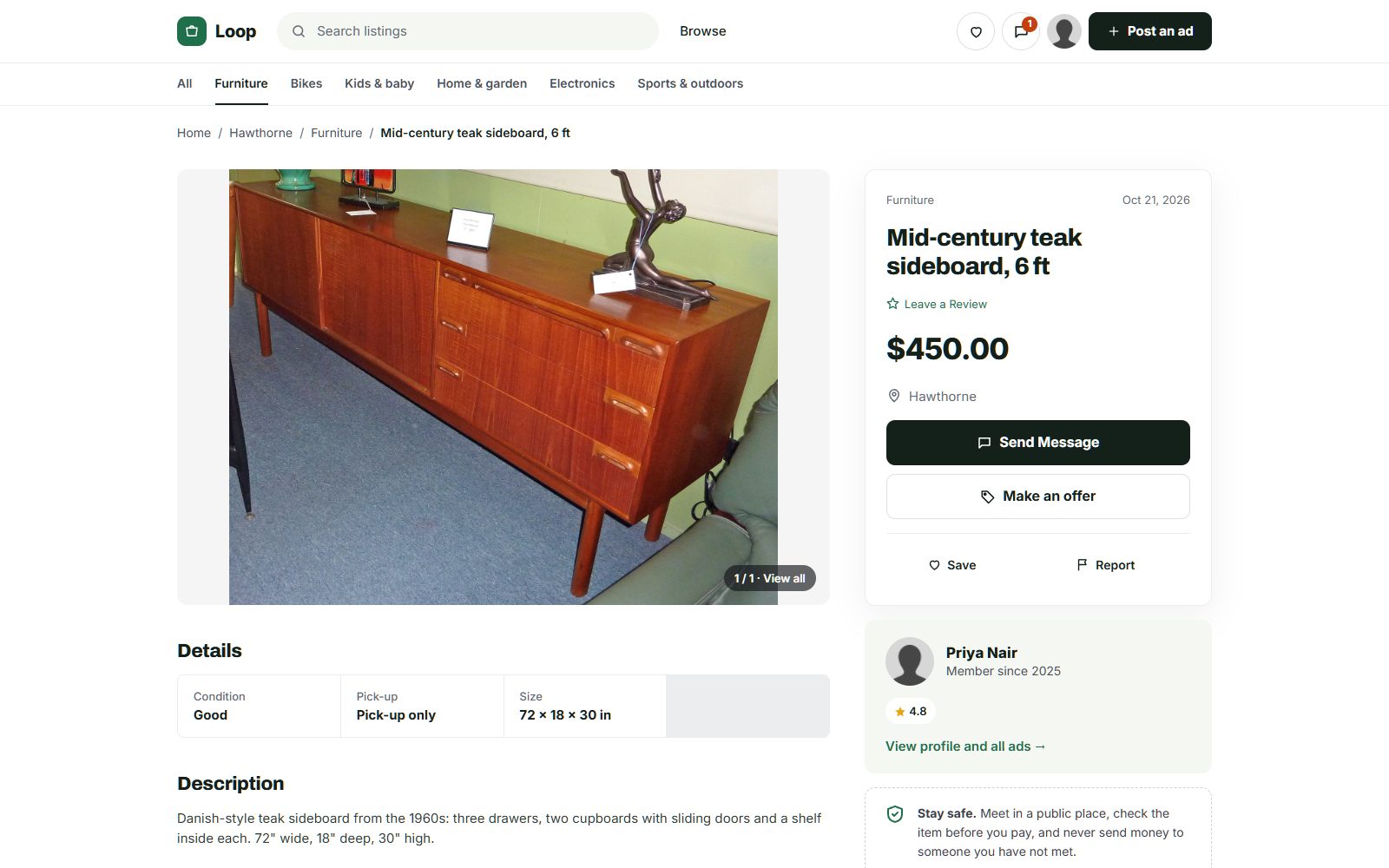
Photo credits
The screenshots show demo sites with made-up sellers. Their photos come from Wikimedia Commons, some cropped or with signs and plates blurred; these ones are under Creative Commons licences:
- McIntosh Teak Sideboard Circa 1960s, CC BY-SA 4.0
- Persian Rug Khorrasan 1, CC BY 2.0
- Fameg bentwood chairs of Poland 01, CC BY-SA 4.0
- View of the "Lost Dining Table and Chairs" in Eltham Palace - geograph.org.uk - 5797282, CC BY-SA 2.0
- Anglepoise Original 1227 Giant Floor Lamp, CC BY-SA 4.0
- Wooden Balance Bike for Kids oak frame with flame red tires, CC BY-SA 4.0
- Baby Crib (49935766018), CC BY 2.0
- Seth Thomas tambour mantel clock ca. 1930, CC BY-SA 4.0
- Rack of rock climbing gear at Horsethief Butte in a Mazamas class, CC BY 4.0
- Sideboard Teak 5 Door Rosando Furniture, CC BY-SA 4.0
- Teak 'Fresco' Sideboard by G Plan angled view, CC BY-SA 4.0