
How to build a sports equipment classifieds website that families and athletes come back to.
This guide covers how to build a sports equipment classifieds website for used bikes, skis, hockey gear, golf clubs and team sports kit: whether to cover one sport or many, the sizes and specs buyers filter on, how the site earns, where the first listings come from, safety and theft risks, the searches to rank for, and a launch timed to the seasons.
Free for 15 days · No credit card · Plans from $19 a month
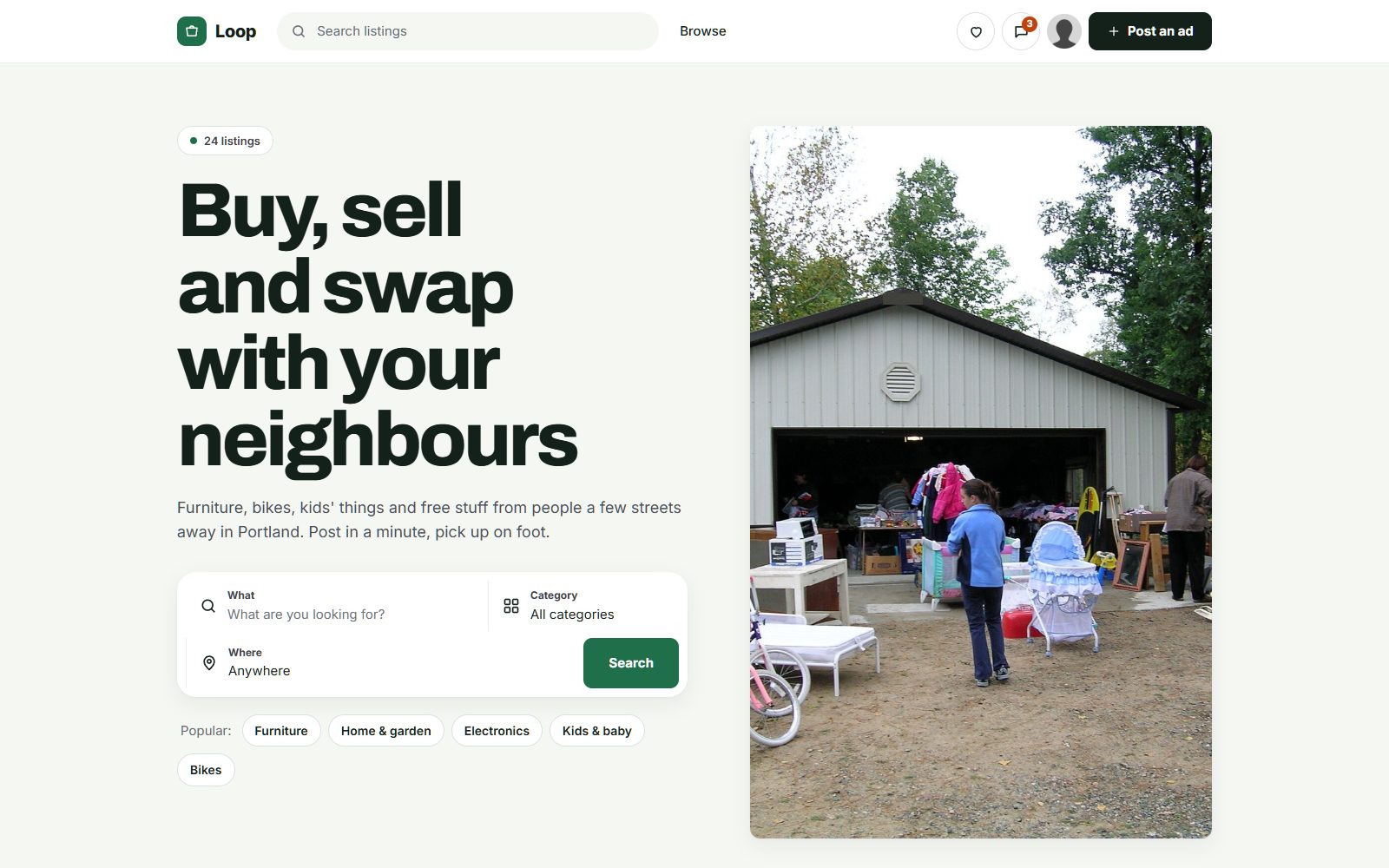
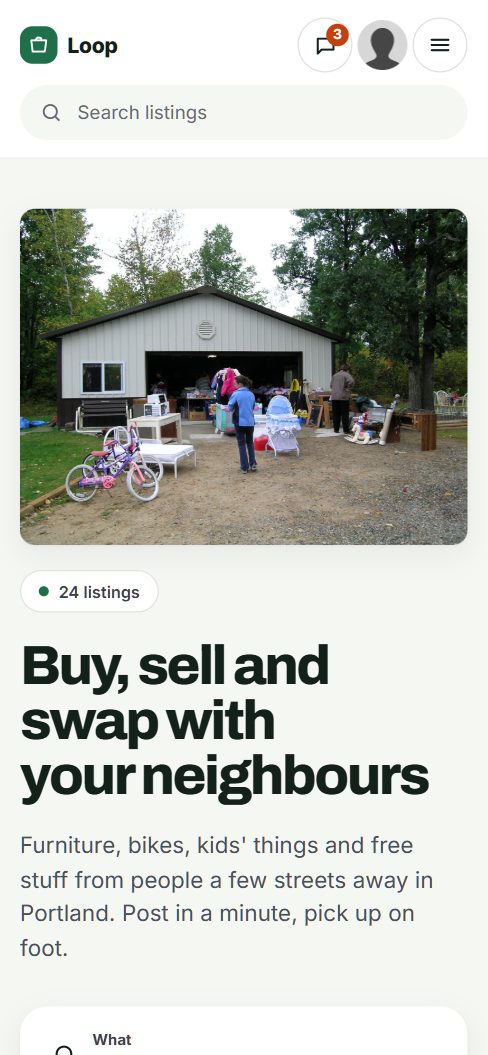
Decide between one sport done deeply or many sports in one town.
Sports gear has a built-in reason to be resold: children grow out of skates, cleats and ski boots every season or two, and adults upgrade a bike or a set of irons long before the old ones wear out. Most of it is bought on size and fit, and a general site cannot filter a pile of hockey skates by size or a list of skis by length.
Who uses the site
- Parents buying and selling outgrown kit every season, often for several children at once.
- Adult players and riders upgrading bikes, golf clubs, rackets and boards.
- Clubs and leagues clearing old team equipment or helping members pass gear on.
- Coaches and shops with demo gear, rental fleets and trade-ins to sell at the end of a season.
One sport or many
A single-sport site, such as hockey gear or cycling, can serve a whole state or region, because enthusiasts will drive further for the right bike or goalie pads. A multi-sport site works best in one town or county, where families want one place for everything their children play. Pick the one you can reach: if you know the hockey parents at the rink, start there and add sports later.
Today this trade happens at club swap days, on Facebook Marketplace and Craigslist, in parent groups for each league, on eBay for golf clubs and small items, in cycling and ski forums, and in the used corner of local sports shops.
Seasons drive everything in this niche. A site that is full a month before each season starts wins the families.
Let buyers filter by size, hand and level.
Sports buyers ask the same three questions in every sport: will it fit, is it the right hand or flex, and is it the right level for the player. Put those answers in fields and buyers will find gear without sending a single message.
Fields that matter across sports
- Size: skate size, boot size, frame size, ski or board length, glove size, youth or adult sizing.
- Hand or side: left or right for golf clubs, hockey sticks, baseball gloves and goalie gear.
- Level: kids, beginner, intermediate or advanced, so a parent does not buy a stiff race ski for a seven-year-old.
- Age of the gear: the year matters for helmets, ski bindings and bikes, both for safety and for value.
- Condition: like new, used, or needs work, plus a short note on wear.
Add a few fields per category rather than one long form for everything. A bike seller should never be asked about stick curve.
| Category | Example listings | Fields buyers filter on |
|---|---|---|
| Bikes | Road, mountain, gravel, kids' and electric bikes | Frame size, wheel size, brakes, suspension, battery range for e-bikes |
| Hockey and skating | Skates, sticks, pads, helmets, goalie gear | Skate size and width, stick flex and curve, hand, youth or senior |
| Ski and snowboard | Skis, boards, boots, bindings, kids' packages | Length, boot size, binding year, ability level |
| Golf | Full sets, drivers, irons, putters, push carts | Hand, shaft flex, loft, number of clubs, men's, women's or junior |
| Team and racket sports | Cleats, baseball gloves, bats, tennis and pickleball rackets | Size, hand, bat length and drop, grip size |
| Water and outdoor | Kayaks, paddleboards, wetsuits, camping gear | Length, weight, wetsuit size and thickness, transport |
In Yclas, fields can be text, numbers, dropdowns, checkboxes or dates, required or optional, and shown as search filters.
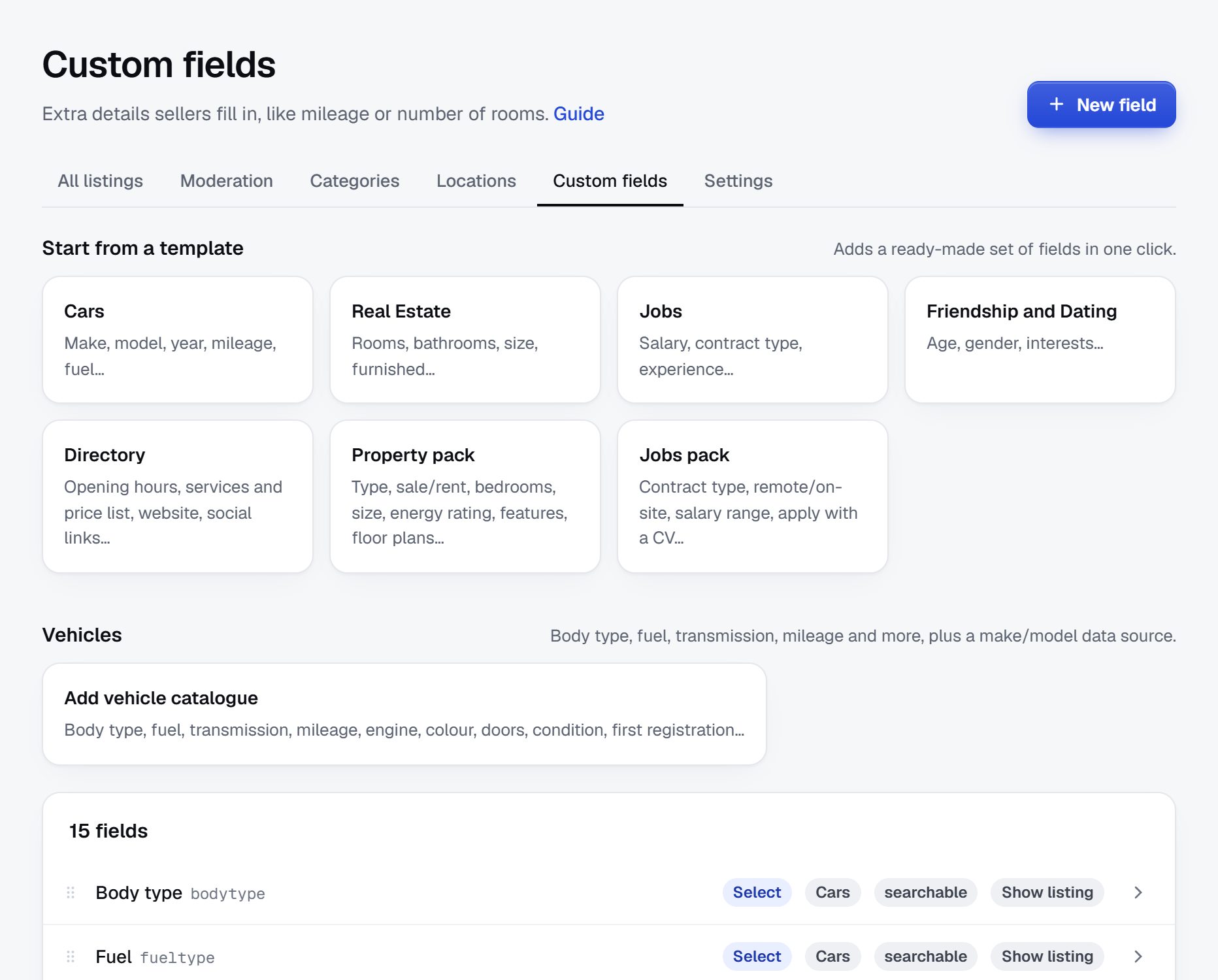
Earn from shops, clubs and the busy weeks before each season.
Most sellers here are parents clearing a closet, and they will not pay to post. Keep that free. The income comes from the businesses and organizations that have a reason to reach active families and players.
- Featured listings and bumps fit e-bikes, carbon road bikes, complete ski packages and golf sets, where a seller wants the sale done before the season moves on.
- Shop memberships suit sports stores and bike shops selling trade-ins, ex-rental fleets and demo gear every season.
- Banner spaces work for coaches, camps, leagues opening registration, ski tuning and bike repair shops.
- Pay to post in chosen categories can suit high-value gear such as e-bikes once buyers expect to find them on your site.
Clubs are partners more than customers. Many run equipment swaps to raise money, so offer them a category or a featured week for their swap instead of charging them. The families they bring are worth more than the fee.
| Model | Works when | Switch it on |
|---|---|---|
| Featured listings and bumps | Buyers are hunting in the weeks before a season | A few hundred active listings |
| Shop memberships | Stores sell trade-ins and rental fleets every season | When two or three shops post regularly |
| Banner spaces | Camps, coaches and leagues want local families | Before registration periods, once traffic is steady |
| Pay to post high-value gear | E-bikes and premium bikes sell on your site | When that category has regular buyers |
Find the first sellers at rinks, clubs and swap days.
Sports families are organized into teams, leagues and clubs, and each one is a ready-made list of sellers. Go to them rather than waiting for them to find you.
Where to find them
- Club and school swap days. Ski clubs, hockey associations and school sports programs often run equipment swaps. Offer to put every item online before the day so buyers can plan, and keep the leftovers listed afterwards.
- League parent groups. Every team has a parent chat where outgrown gear changes hands. Ask the team manager to share your link at the end of the season.
- Bike and ski shops. They sell ex-rental fleets and demo gear at the end of each season. Bring their stock in from a spreadsheet so they do not have to type it.
- Golf courses and driving ranges with trade-ins and lost-and-found clubs to clear.
- Gyms, camps and outdoor centers replacing kayaks, paddleboards or climbing gear.
Make the posting form quick for a parent with a bag of gear. With Yclas, a seller can take a photo and let AI fill in the title, description, category and price for them to check, so ten items take minutes instead of an evening.
One swap day listed online can give you more listings in a weekend than months of posting in groups.
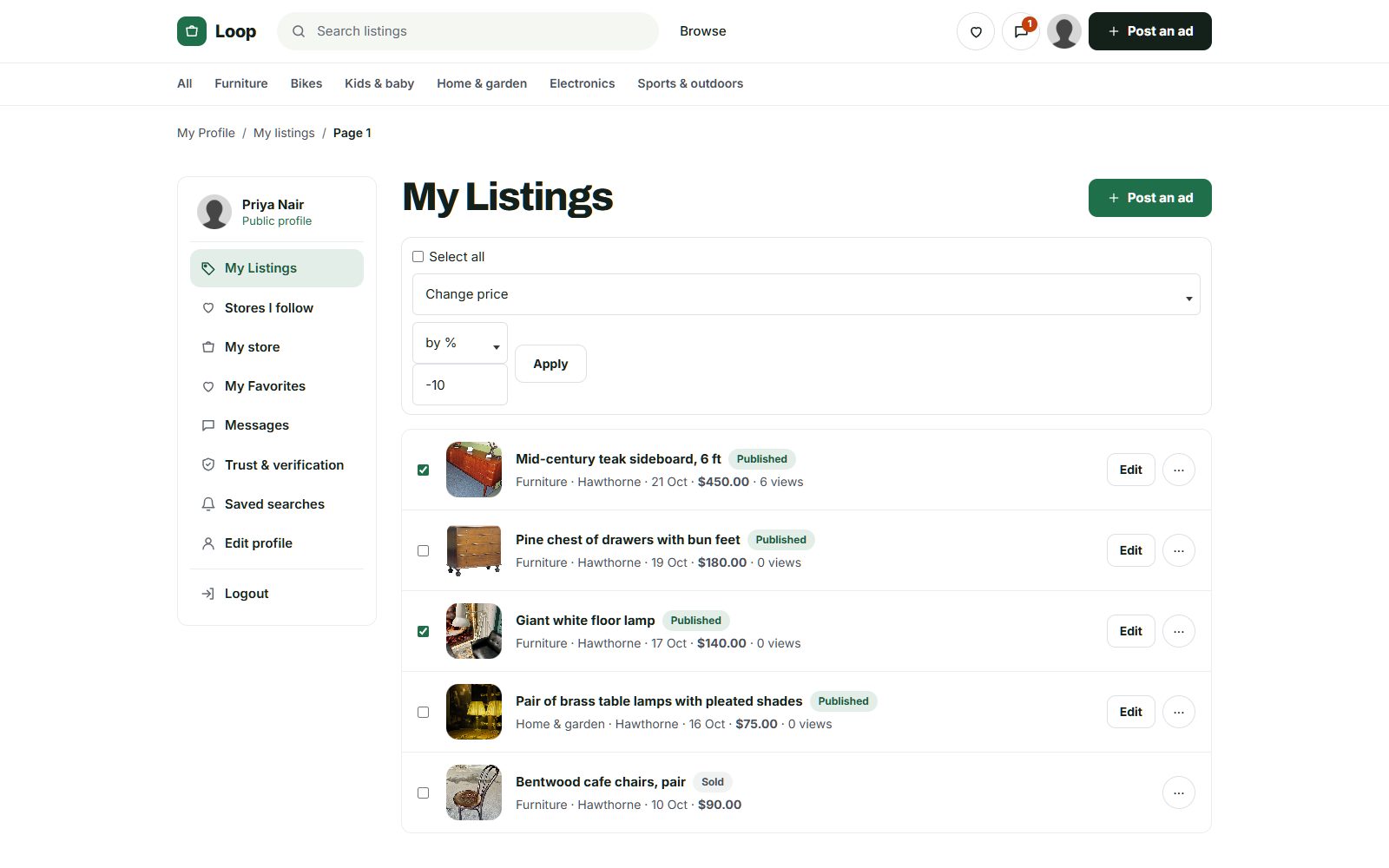
Handle stolen bikes, unsafe helmets and old bindings.
Most sports gear deals are low risk, but a few problems come up again and again, and some of them are about safety rather than money.
Common problems
- Stolen bikes. Bikes are among the most stolen items in any city and often reappear online days later. Ask sellers to add the frame serial number, encourage buyers to check it against bike registries, and remove listings quickly when an owner reports one.
- Crashed helmets. A helmet that has taken a hard impact may look fine and still offer less protection. Ask sellers to state whether a helmet has been in a crash, and warn buyers in your guide.
- Old ski bindings. Many ski shops will only adjust bindings that the maker still supports, so a cheap ski package may need new bindings. Ask sellers for the binding model and year.
- Worn safety gear. Hockey and football equipment protects against hard hits. Ask for honest photos of padding, straps and shells.
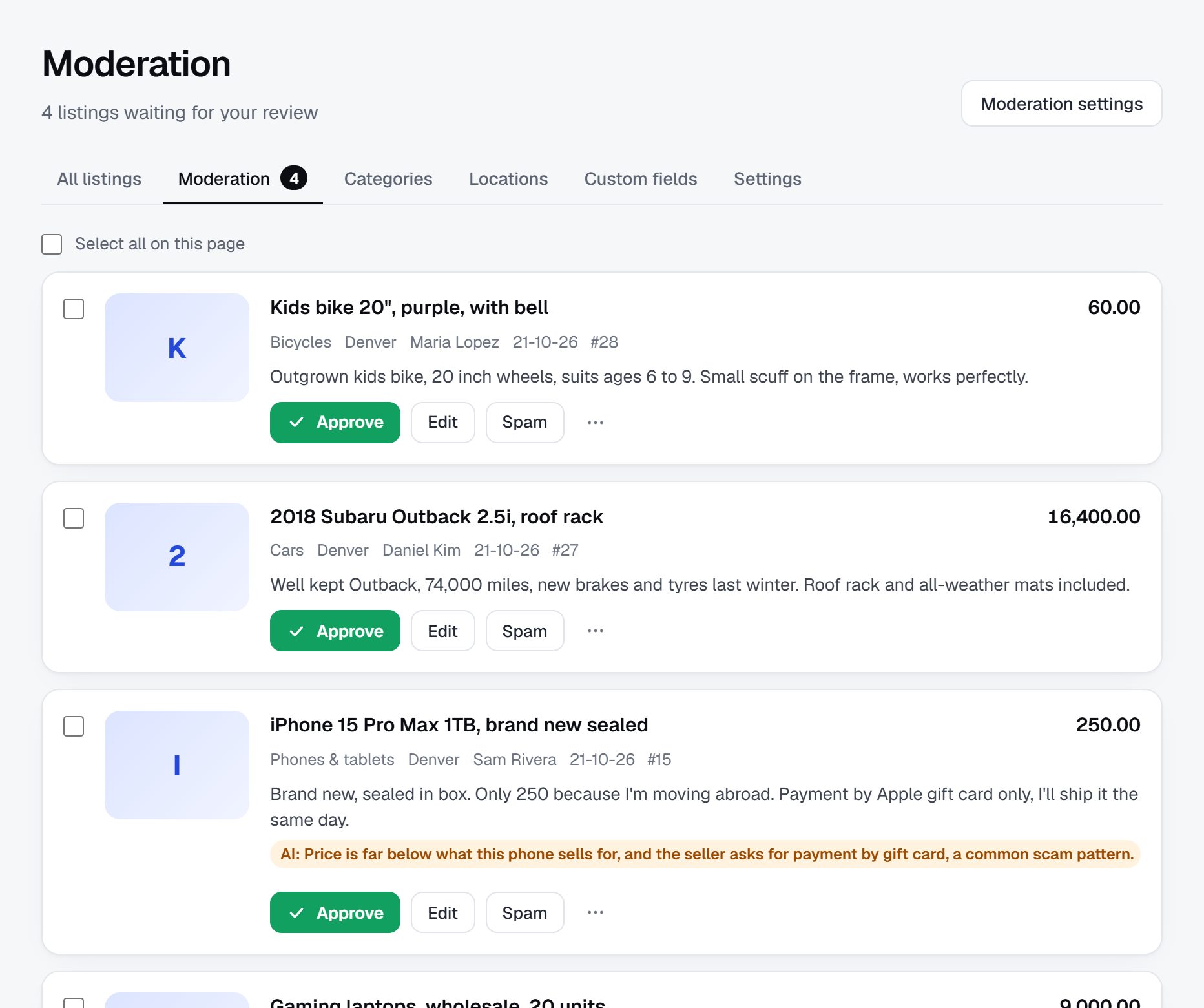
- Payment scams. A buyer who overpays and asks for a refund, or a seller who wants a deposit to hold a bike, are the usual tricks.
Rules to set
Review new listings by hand at first, require serial numbers for bikes above a price you choose, and ban phrases that come with deposit scams. Publish a short buyer guide: try skates and boots on, ride the bike, check the frame for cracks, and meet somewhere public. For product recalls and selling used safety equipment, check the rules where you operate.
Rank for searches that include a size or a level.
Sports gear searches carry sizes, levels and places, because buyers already know what fits. Pages that match those words rank well and convert, since the visitor arrives ready to buy.
Searches to target
- "used hockey skates size 5"
- "kids ski package used"
- "left handed golf clubs for sale"
- "used road bike 56cm"
- "used e-bike Minneapolis"
- "youth baseball glove used"
Pages to build
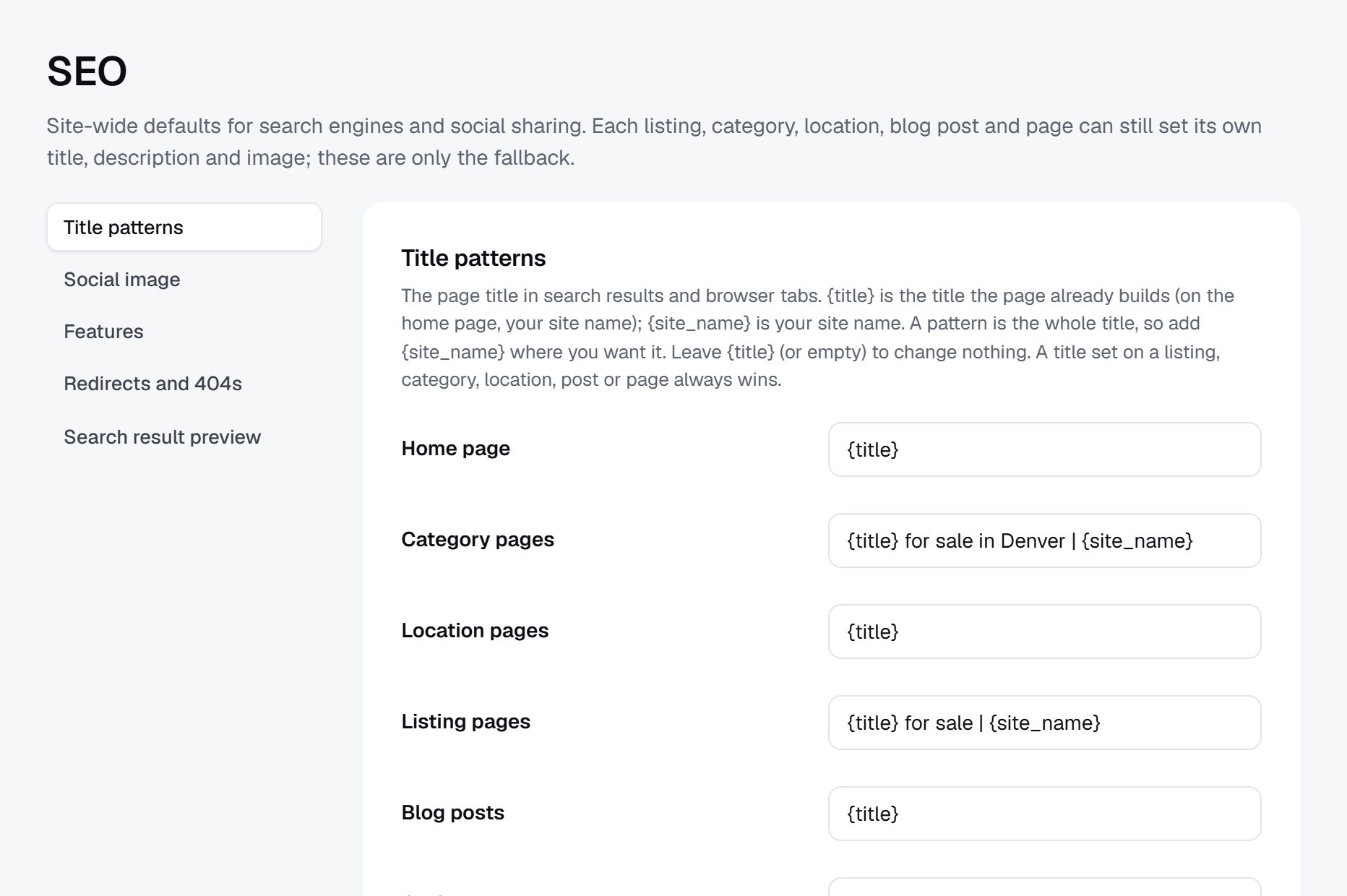
- Category and town pages for each sport, such as used bikes in one city or ski gear in one county.
- Size pages for the sizes that sell most, like youth hockey skates or junior golf sets.
- Sizing guides: what bike frame size fits a given height, how to size a child's skis, how much room to leave in skates for growth.
- Season pages: a fall ski swap page listing every swap day in the area, a spring bike page, a back-to-hockey page in late summer.
A calendar of local swap days and registration dates is the kind of page parents bookmark and share with their team, and it brings links from clubs.
Launch a month before the season your first sport depends on.
Every sport has a buying window. Bikes and golf sell in spring, team sports gear sells in late summer when registration opens, and ski and snowboard gear sells in October and November before the first snow. Launch a few weeks before the window for your first sport, and add the next sport before its own season.
Launch plan
- Choose one sport and one area, and get to 100 listings before the season starts.
- Partner with one club or association that runs a swap, and list its items online.
- Sign up a bike or ski shop to post its ex-rental and demo stock.
- Ask team managers to share your link in parent groups at the end of each season.
- Add a second sport with a different season, so the site stays busy all year.
Checklist
- Your own domain, with SSL and a home page that names the sport and the area.
- Size, hand and level fields working as filters in every category.
- Rules on serial numbers, crashed helmets and recalled products.
- A buyer guide on fitting and checking used gear.
- Saved searches with email alerts, so a parent waiting for size 4 skates gets told the day they appear.
A worked example: a two-season gear swap in a mountain valley.
Consider a made-up site, Wasatch Season Swap, covering the Salt Lake Valley in Utah from the northern suburbs down to Provo. It is fictional, but the shape is one that fits any area where winter sports and summer riding share the same families.
Categories at launch
- Ski and snowboard
- Skis and bindings
- Snowboards
- Boots
- Kids' packages
- Bikes
- Mountain
- Road and gravel
- Kids' bikes
- Hockey and skating
- Golf and team sports
- Camping and climbing
Who it serves
Most buyers are parents with two or three children who outgrow boots and bikes every year. The second group is adult riders and skiers selling last season's setup to buy a new one, and the third is two local shops that clear ex-rental skis in spring and demo bikes in the fall. Every listing carries a size, a level and, for bikes, a frame serial number.
How it started
The founder coached a youth ski team and watched the club's annual swap sell out in a morning while dozens of families missed it. He offered to put the whole swap online the week before, with photos, sizes and prices, and to keep unsold items listed afterwards. The swap brought more than two hundred listings in one weekend. He then asked the hockey association's team managers to share the link in their parent chats at the end of the season, and added bikes in April once the snow gear had cleared.
How it makes money
Families post for free, and clubs never pay, because the site lives on the parents they bring. Revenue comes from the two shops, which hold seller memberships so their ex-rental and demo stock sits under a profile with reviews, and from featured listings in October and April, when sellers want gear gone before prices drop. A ski tuning shop and a youth mountain bike camp rent banner spaces on the matching categories before their seasons. The founder switched these on only after the second swap, once he could show local visitor numbers. He also keeps a public calendar of every swap day in the valley, which the clubs share each fall and which brings new parents to the site without any paid promotion.
The sample listings below are fictional, but they show what a buyer needs to see to decide without sending a message.
| Listing | Price | Key details |
|---|---|---|
| Junior ski package, 130 cm | $160 | Bindings from 2021, boots size 22.5, ready for a shop check |
| Hardtail mountain bike, medium frame | $650 | 29-inch wheels, new brake pads, frame serial on file |
| Youth hockey skates, size 4 | $70 | One season of use, sharpened last month |
| Snowboard boots, men's 10 | $90 | Light wear, liners dry and clean, pickup in Sandy |
| Left-handed junior golf set | $120 | For ages 9 to 12, seven clubs and a stand bag |
The first 90 days, built around one season.
A sports gear site lives or dies by its first season, so count backwards from the start of the buying window for your first sport. If ski gear sells in October and November, your 90 days should start in August. If bikes sell in April, start in January.
The first half of the plan is about supply. Families will not post into an empty site, but clubs and shops will, because they have stock and a reason to move it. Get one swap and one shop live before you promote anything to parents. A coach or team manager who vouches for the site in a parent chat is worth more than any ad you could buy in these weeks, and make sure the size fields work in every category you open.
The second half is about habit. A parent who sets a saved search for size 5 skates and gets an email when a pair appears has a reason to come back every season. Measure your progress by saved searches and repeat sellers, not page views. Write down which sizes buyers searched for and found nothing, because those gaps tell you which teams and clubs to ask next. Then choose your second sport by looking at which wanted ads and searches you could not serve.
| Weeks | Focus | Done when |
|---|---|---|
| 1-2 | Categories per sport, size, hand and level fields, safety rules | A test listing in each category shows the right size filters |
| 3-4 | One club swap brought online, with photos and sizes | The club has agreed a date and sent its item list |
| 5-6 | Shops with ex-rental, demo and trade-in stock | Two shops have imported their end-of-season stock |
| 7-8 | Team managers and parent chats at the end of practices | 100 live listings with sizes filled in |
| 9-10 | The swap week itself and the leftover items | Unsold swap items stay listed and buyers can still find them |
| 11-12 | Size guides, swap calendar page, second sport chosen | 40 saved searches and a date set for the next sport's push |
Ways to build a sports gear site, and which suits this niche.
Sports gear asks more of a classifieds site than most niches, because every sport sizes things differently. Skates have their own scale, skis are measured in centimeters, bikes by frame size and wheel size, golf clubs by hand and shaft flex. The site needs separate fields per category, filters that work on numbers, saved searches by size, and a way to load a whole swap or a rental fleet at once instead of one listing at a time.
Hiring developers to build it makes sense only if you want something no platform has, such as a size calculator that suggests ski length from a child's height and weight. It is slow and costly, and you still need moderation, email alerts and spam control.
A classifieds script or a WordPress plugin on your own hosting is cheaper at the start. Test whether it can show different fields for bikes and for skates, and whether those fields become filters. Bulk import is often missing or limited, which matters when a club hands you two hundred items the week before its swap.
A hosted builder such as Yclas already has per-category fields, spreadsheet import and saved searches, which fits the swap-and-shop pattern of this niche. You give up some freedom in exchange for not running servers.
Whichever you choose, test it with a real swap list before launch day. If loading two hundred items takes a week, the route is wrong for a seasonal niche. Check too that a parent can set a saved search on a size and a category together, since that alert is what brings families back each year.
| Route | Fits when | Watch out for |
|---|---|---|
| Custom build | You want sizing tools or league features no platform offers | Months of work before the first season, and costs that never stop |
| Script or plugin on your own server | You can run hosting and want full control of the code | One form for all sports, weak import, security updates on you |
| Hosted builder | You need size fields per sport and bulk import for swaps now | You work within the platform's features |
| Club swap software plus a separate site | A club already uses a tool to run its swap day | Two systems to keep in sync and buyers split between them |
What a sports equipment classifieds site costs to run.
The software is the smallest part of the bill. Most of the cost is your time in the first months: finding the first listings, answering questions and checking what gets posted.
Apart from the platform and a domain, budget for printed flyers at rinks, fields and swap days, and possibly a table at a club swap. If you help run a swap event, agree with the club who handles money, unsold items and liability on the day.
| Cost | Typical range | On Yclas |
|---|---|---|
| Domain | $10 to $20 a year | Your own, with SSL included |
| Software and hosting | $0 to $100+ a month, plus plugins and updates | Starter $19 a month, Professional $99 |
| Design | $0 to $100 for a theme, or a designer | 109 looks included |
| Payment fees | About 3% per payment | Your Stripe or PayPal fees; Yclas takes nothing |
| Your time | 5 to 10 hours a week at the start | Finding listings, moderation, support |
Mistakes that kill a sports equipment site.
- Launching in the middle of the season. By the time the snow falls, families have already bought skis and boots. A site that opens in December has missed the window and must wait almost a year for the next one. Launch four to six weeks before the buying window starts.
- Leaving size out of the required fields. A listing for skates without a size gets ten messages and no sale. Make size required in every category where fit matters, and use numbers or dropdowns so buyers can filter.
- Covering six sports with ten listings each. A thin multi-sport site looks empty everywhere. Fill one sport properly, with every common size represented, then add the next one with a different season.
- Treating clubs as customers to bill. Clubs run swaps to raise money for their teams and have little to spare. Give them a free category and featured placement for their swap, and take your return in the families they bring.
- Letting season-old listings pile up. Gear that sold in October but still shows in March makes the site look abandoned. Expire listings after a few months and remind sellers to mark items sold. A short email asking whether the bike is still for sale clears out most of the dead listings on its own.
- Saying nothing about helmets and bindings. A crashed helmet or an old binding that no shop will adjust can hurt someone. Require sellers to state crash history and binding year, and say clearly in your guide that buyers should have bindings checked by a shop.
- Ignoring stolen bikes until a reporter calls. Bike theft is common, and a few stolen bikes on your site can damage its name fast. Ask for frame serial numbers on bikes above a set price and act on reports the same day.
- Making parents type out a bag of gear. A family clearing a garage has twenty items. If each one takes ten minutes, they post three and give up. Keep forms short and let them post from photos.
- Forgetting adults. Kids' gear brings families, but adult golfers, riders and skiers buy pricier items and pay for features. Give them categories and searches of their own from the start.
- Writing one sizing guide for every sport. A parent who reads that skates should leave room for growth may apply the same advice to ski boots, where a loose fit is a real problem. Write short, separate guides per sport, and link each one from the category it belongs to.
- Going quiet between seasons. If the site only wakes up in October, buyers forget it by the next fall. Pair sports with opposite seasons, such as skiing with cycling or hockey with golf, so there is always something to sell and a reason to visit.
Sports gear terms a founder will meet.
Buyers and sellers use these terms without explaining them, so learn them before you set up fields.
| Term | What it means |
|---|---|
| DIN setting | The release force set on a ski binding, which a shop adjusts to the skier's weight and ability. |
| Indemnified bindings | Binding models the maker still supports, which many ski shops will agree to adjust. |
| Mondopoint | The ski boot sizing system based on foot length in centimeters. |
| Junior, intermediate, senior | Hockey sizing bands for sticks and gear, from small children up to adults. |
| Stick flex | How much force bends a hockey stick, usually printed as a number on the shaft. |
| Curve or blade pattern | The shape of a hockey stick blade, which players choose by habit and position. |
| Shaft flex | How stiff a golf club shaft is, from ladies and senior through regular to stiff and extra stiff. |
| Bat drop | The length of a baseball bat in inches minus its weight in ounces, which leagues often limit. |
| Hardtail | A mountain bike with front suspension only, simpler and cheaper to maintain. |
| Full suspension | A mountain bike with suspension at both ends, whose shock and pivots buyers should check. |
| Ex-rental | Gear a shop rented out for one or more seasons and now sells, usually serviced but well used. |
| Demo gear | Equipment customers tried before buying new, often lightly used and sold at the end of a season. |
| Helmet recertification | An inspection and retest that some leagues require for used football helmets. |
| Frame size | The size of a bike frame, given in centimeters or as small, medium and large, matched to the rider's height. |
The same steps for a sports equipment classifieds site on Yclas.
- Describe your nicheThe setup wizard writes the categories, an About page and example listings from one sentence.
- Add fieldsSwitch on a field pack or add the fields your buyers filter on.
- Fill itImport dealer spreadsheets, invite sellers and post your own.
- Set the rulesChoose moderation, banned words and AI checks.
- Go liveChoose a plan, connect your domain, switch on paid listings when it is time.
Is it expensive to start a sports equipment classifieds site?
No. A hosted platform, a domain and a stack of flyers for rinks and clubs are enough to begin. What it takes most is time at swap days and with club organizers.
Should I start with one sport or many?
Start with the sport you know best and can reach, then add sports with a different season. That keeps listings flowing all year instead of in one burst.
Can I compete with Facebook Marketplace and Craigslist?
Yes, because they cannot filter by skate size, frame size, hand or level. A site where a parent finds the right size in seconds earns repeat visits every season.
How do I deal with stolen bikes?
Ask for frame serial numbers, point buyers to bike registries, and remove a listing quickly when an owner reports it. Keep reports and serials so you can help if police ask.
Is it safe to allow used helmets and safety gear?
Many sites allow them with a clear rule that sellers must disclose crashes and damage. Check the rules where you operate on recalls and used safety equipment, and warn buyers in your guide.
How do I get my first listings?
Work with clubs that run equipment swaps, ask team managers to share your link at the end of a season, and bring in ex-rental stock from local bike and ski shops.
How does a sports gear site make money?
Featured listings before each season, memberships for shops that sell trade-ins and rental fleets, and banner spaces for camps, coaches and repair shops.
Should listings expire at the end of a season?
Yes. Set listings to expire after a few months and email sellers before they do, so they can renew gear that is still for sale. A site full of last season's sold skates loses buyers fast.
Can I run a club's swap day online?
You can give the club its own category or a featured week, list every item before the day and keep leftovers online afterwards. Agree with the club who collects money and returns unsold gear, since the site only connects buyers and sellers.
How should I handle e-bikes?
Ask for battery age, range and charger included, plus the frame serial. Rules on e-bike classes and on shipping lithium batteries vary, so keep e-bikes to local pickup and check the rules where you operate.
Should I let parents post wanted ads by size?
Yes. A parent who posts that they need size 3 skates or a 24-inch bike often finds a seller who had not thought of listing. Give wanted ads the same size fields as regular listings.
Can I offer rentals of kayaks, skis or bikes?
Rentals with a booking calendar, prices per day or week and deposits are available on the Marketplace plan. They suit shops and outfitters more than families, so add them once those businesses are active on the site.
Related pages.
The parts of Yclas this leans on.
You have the plan. Now build your sports equipment site.
Describe your site in a sentence and the setup wizard writes the categories, example listings and a look. Free for 15 days, no credit card.
Start my classifieds site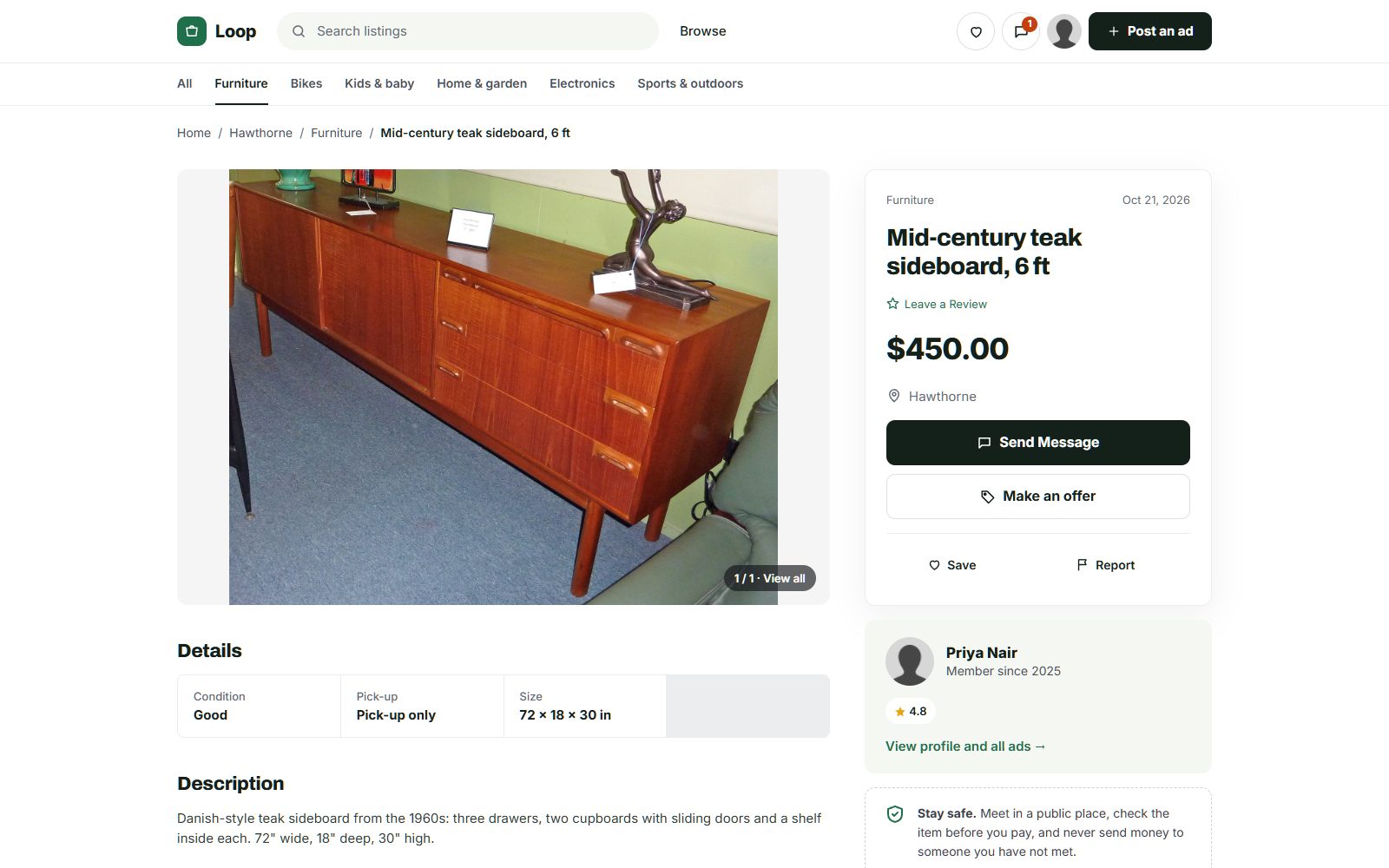
Photo credits
The screenshots show demo sites with made-up sellers. Their photos come from Wikimedia Commons, some cropped or with signs and plates blurred; these ones are under Creative Commons licences:
- McIntosh Teak Sideboard Circa 1960s, CC BY-SA 4.0
- Persian Rug Khorrasan 1, CC BY 2.0
- Fameg bentwood chairs of Poland 01, CC BY-SA 4.0
- View of the "Lost Dining Table and Chairs" in Eltham Palace - geograph.org.uk - 5797282, CC BY-SA 2.0
- Anglepoise Original 1227 Giant Floor Lamp, CC BY-SA 4.0
- Wooden Balance Bike for Kids oak frame with flame red tires, CC BY-SA 4.0
- Baby Crib (49935766018), CC BY 2.0
- Seth Thomas tambour mantel clock ca. 1930, CC BY-SA 4.0
- Rack of rock climbing gear at Horsethief Butte in a Mazamas class, CC BY 4.0
- Sideboard Teak 5 Door Rosando Furniture, CC BY-SA 4.0
- Teak 'Fresco' Sideboard by G Plan angled view, CC BY-SA 4.0