
How to build an antiques classifieds website that collectors and dealers trust.
This guide covers how to build an antiques classifieds website for furniture, ceramics, silver, clocks and collectibles: choosing a region or a specialty, the fields collectors filter on, how the site earns money, where the first dealers and pickers come from, fakes and provenance, the searches worth ranking for, and a launch planned around the fair calendar.
Free for 15 days · No credit card · Plans from $19 a month
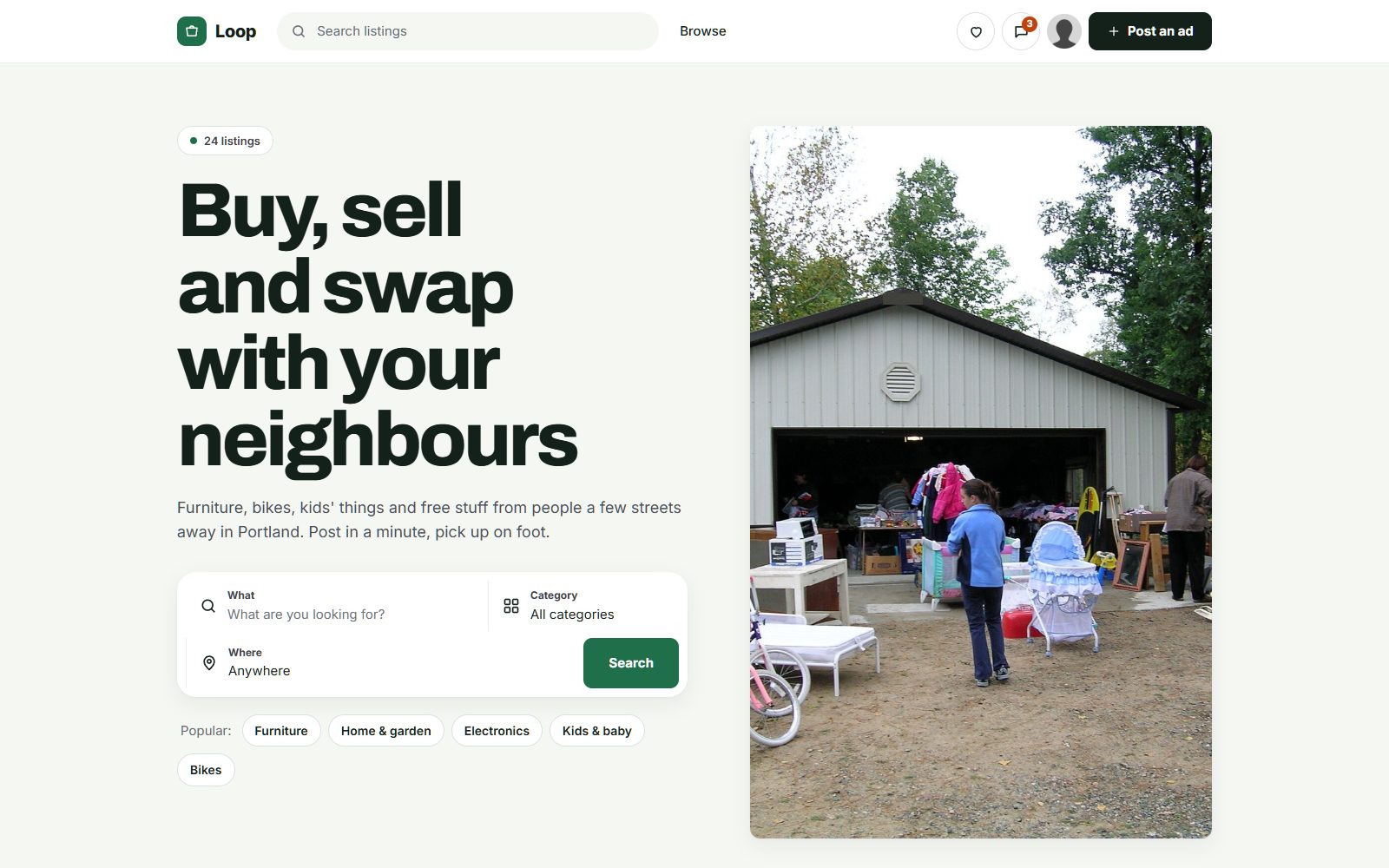
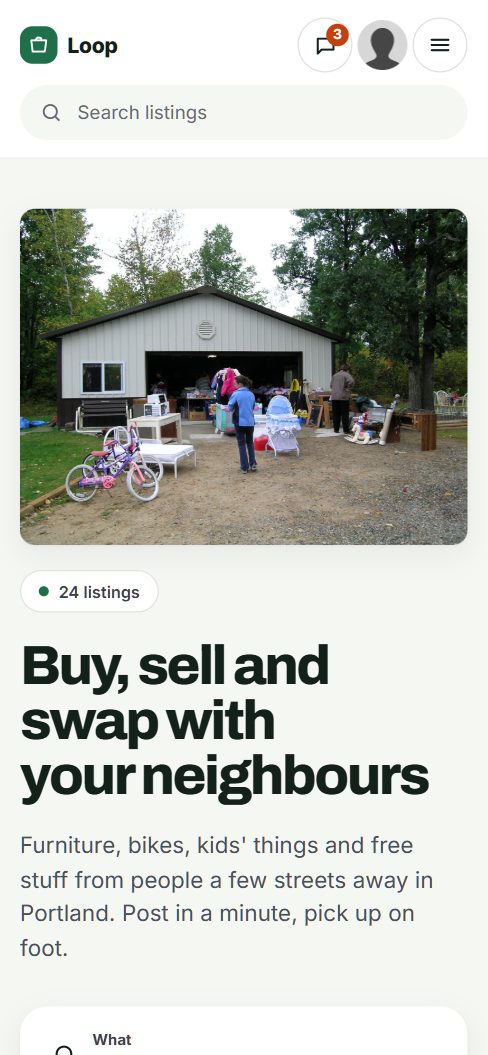
Pick a region or a specialty, because antiques buyers are specific.
Antiques buyers rarely browse for anything old. They want a Federal period chest, a piece of Roseville pottery, a Victorian mantel clock or a mid-century teak sideboard, and they know the makers, periods and marks. General sites list a Georgian silver teapot next to a plastic one, with no way to filter by period, maker or material, and sellers write vague titles such as "old vase".
Who uses the site
- Collectors who follow one category, often for decades, and want to hear the day a piece appears.
- Dealers and antique mall booth holders who need buyers between shows.
- Pickers and estate sale companies clearing whole houses, with a mix of fine pieces and everyday items.
- Families inheriting furniture and china they do not want, often unsure what it is worth.
- Decorators and designers looking for statement pieces for clients.
Choosing the angle
Two angles work. A regional site covers all antiques in one state or a group of counties, where heavy furniture can be collected by van. A specialty site covers one field nationally, such as antique clocks, art pottery, primitives or mid-century furniture, where small items ship and collectors travel. Pick the one where you know the dealers.
Today the trade happens at antique malls and co-ops, weekend fairs and flea markets, estate sales, auction houses, collector club meetings and forums, and on eBay, Etsy and Facebook groups. Each of those is where your first listings are.
Collectors return to the site that shows the pieces their usual sources do not.
Use the words collectors use: period, maker, material, marks.
Categories should follow the way dealers set out a fair: furniture, ceramics, silver, clocks, lighting, art, textiles, and so on. Keep them shallow and put period and style in fields, since a Victorian collector wants furniture and ceramics from that period alike.
Fields worth having on every listing
- Period or era: a dropdown such as Georgian, Victorian, Edwardian, Art Nouveau, Art Deco, mid-century.
- Maker or factory: free text, since the list of makers is endless.
- Marks and signatures: a checkbox for marked pieces, with a prompt to photograph the mark.
- Condition: mint, minor wear, restored, damaged, with a box for the details.
- Provenance: where the piece came from, if known, and any paperwork.
- Dimensions: height, width and depth, which decide whether a piece fits a room or a shipping box.
Ask sellers to say plainly if a piece is a reproduction or a later copy. A required dropdown with Original, Period style reproduction and Unsure keeps descriptions honest without accusing anyone.
| Category | Example listings | Fields collectors filter on |
|---|---|---|
| Furniture | Chests of drawers, dining sets, armoires, rocking chairs | Period, wood, style, dimensions, original finish or refinished |
| Ceramics and glass | Art pottery, porcelain figurines, stoneware crocks, Depression glass | Maker, pattern, marks, period, chips or repairs |
| Silver and metalware | Sterling flatware, tea sets, pewter, brass candlesticks | Sterling or plate, maker, hallmarks, weight, pattern |
| Clocks and watches | Mantel clocks, tall case clocks, pocket watches | Maker, movement type, running or not, period, original parts |
| Art and prints | Oil paintings, engravings, folk art, frames | Artist, medium, signed, size, framed |
| Lighting | Oil lamps, slag glass lamps, chandeliers | Period, material, electrified or original, shade included |
| Collectibles and smalls | Advertising signs, tins, toys, militaria, textiles | Type, brand, period, condition, original or reproduction |
A required Original or reproduction field does more for trust than any long rule page.
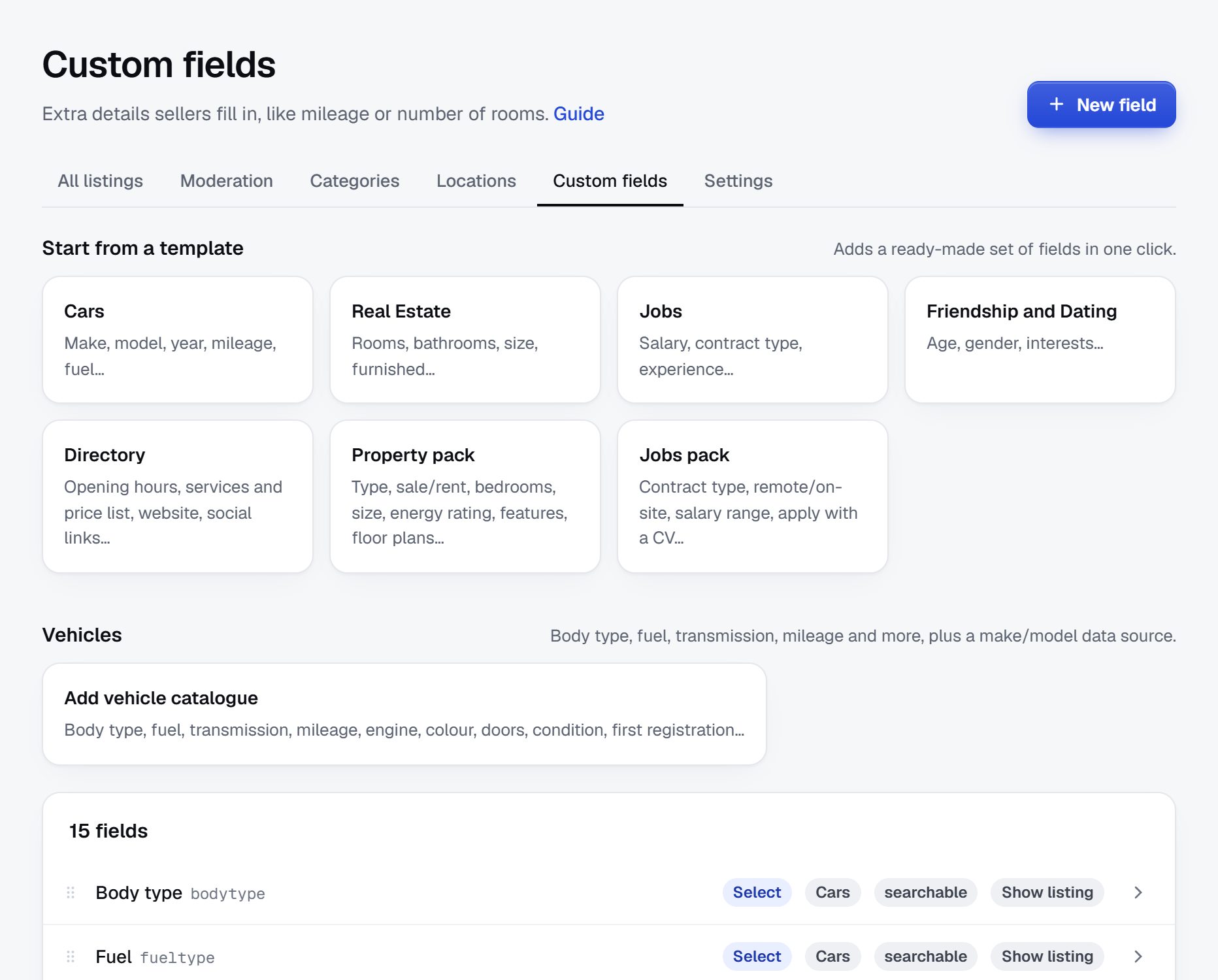
Charge dealers, keep private sellers free.
Antiques sites have a clear split between occasional private sellers and dealers who list every week. Keep posting free for private sellers so inherited pieces and estate finds fill the site, and earn from the dealers, auction houses and services around the trade.
- Dealer memberships give booth holders and small shops a seller profile that works like an online booth, with all their stock in one place.
- Featured listings suit pieces worth hundreds or thousands of dollars, where one sale pays for the feature many times.
- Auctions with bidding and Buy now fit collectibles where the price is hard to judge. Collectors already know how bidding works.
- Banner spaces fit restorers, furniture refinishers, appraisers, clock repairers, movers who handle antiques and regional fairs.
- Paid posting in chosen categories works for high-value categories such as fine furniture or art once buyers come for them.
Switch on dealer memberships once a dozen dealers post regularly, and add banners before the spring and fall fair seasons when fairs and restorers want visitors.
| Model | Works when | Switch it on |
|---|---|---|
| Free private posting | Estates and families bring fresh pieces | At launch |
| Dealer memberships | Booth holders want a shop on the site | When about a dozen dealers post regularly |
| Featured listings | High-value pieces need attention | After a few hundred listings |
| Auctions | Collectibles with uncertain prices | When collectors visit weekly |
| Banner spaces | Restorers, appraisers and fairs want reach | Before the spring and fall fair seasons |
Get the first listings from dealers and estate companies.
One dealer can bring fifty pieces, so the first 100 listings come from a handful of people who already sell antiques every week. Aim for a spread of categories and price points, so a visitor finds a fine piece and an affordable one on the first visit.
Where the first listings come from
- Antique mall booth holders: walk the aisles, talk to the mall manager and offer booth holders free featured listings for their first month.
- Estate sale companies: they have the pieces that did not sell at the weekend and need to clear the house.
- Pickers: they buy in volume and want quick sales between fairs.
- Collector clubs: clock, glass, pottery and toy clubs have members who trade duplicates.
- Regional auction houses: unsold lots and passed items can be relisted with you.
- Flea market and fair vendors: hand out cards on setup day, when they have time to talk.
Dealers often keep stock lists with descriptions and dimensions. With Yclas, listings can be imported from a spreadsheet (CSV), so a dealer's inventory goes online in one step. Then help each dealer add good photos of the marks, since collectors look at those first.
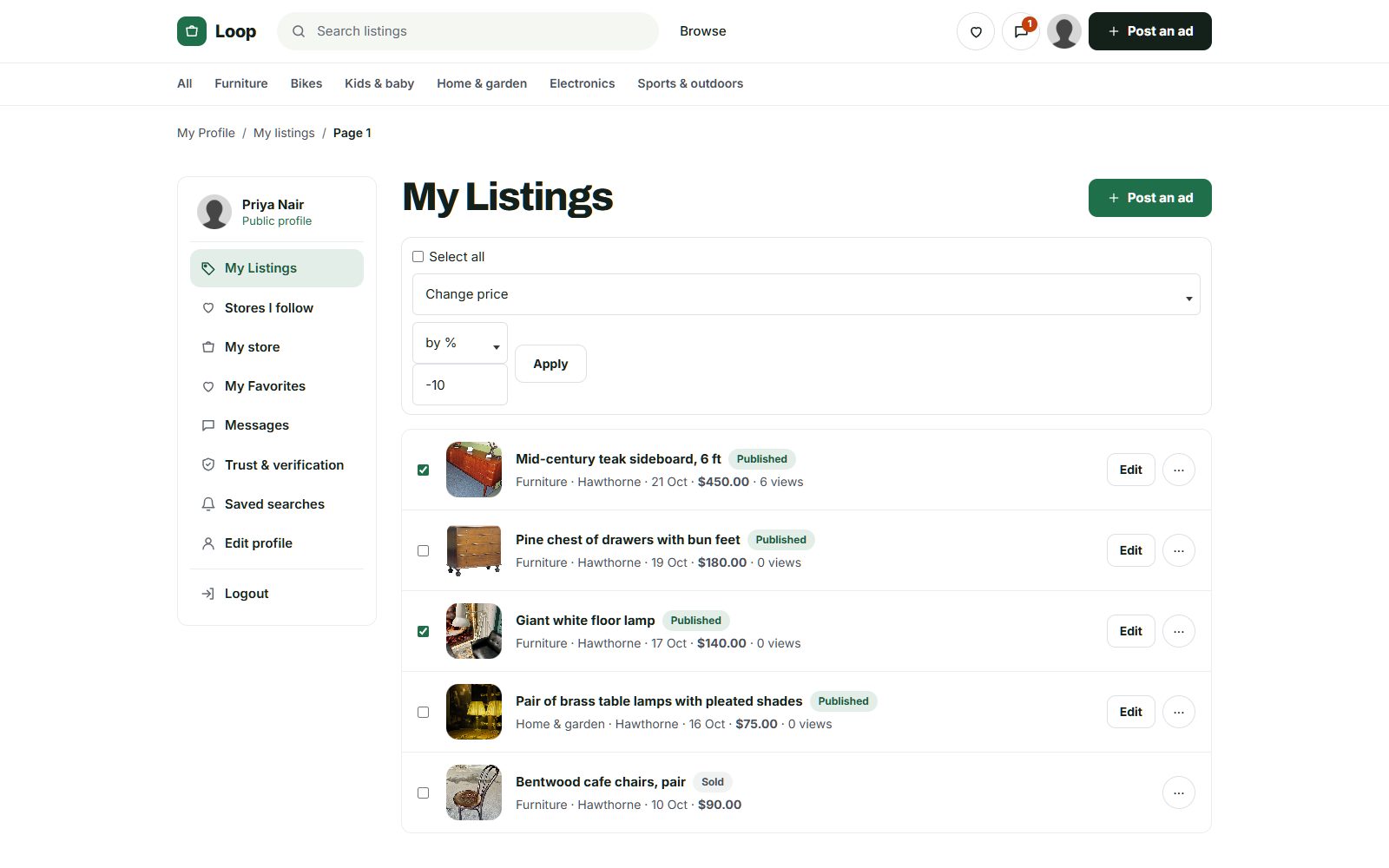
Handle fakes, provenance and restricted materials with clear rules.
The big risks in antiques are pieces that are not what they claim, and materials that cannot legally be sold. Collectors pay for authenticity, so the site's reputation rests on honest descriptions.
Common problems
- Reproductions sold as period pieces: cast iron banks, Depression glass, advertising signs and some porcelain are widely reproduced.
- Married pieces: furniture assembled from parts of different originals, sold as one piece.
- Fake marks: added hallmarks, signatures and factory stamps.
- Stolen goods: antiques taken in burglaries sometimes surface on classifieds.
- Restricted materials: ivory, tortoiseshell, some rare woods and items with feathers or other wildlife parts are regulated in many countries and states. Check the rules where you operate and ban what you cannot moderate.
Rules and moderation
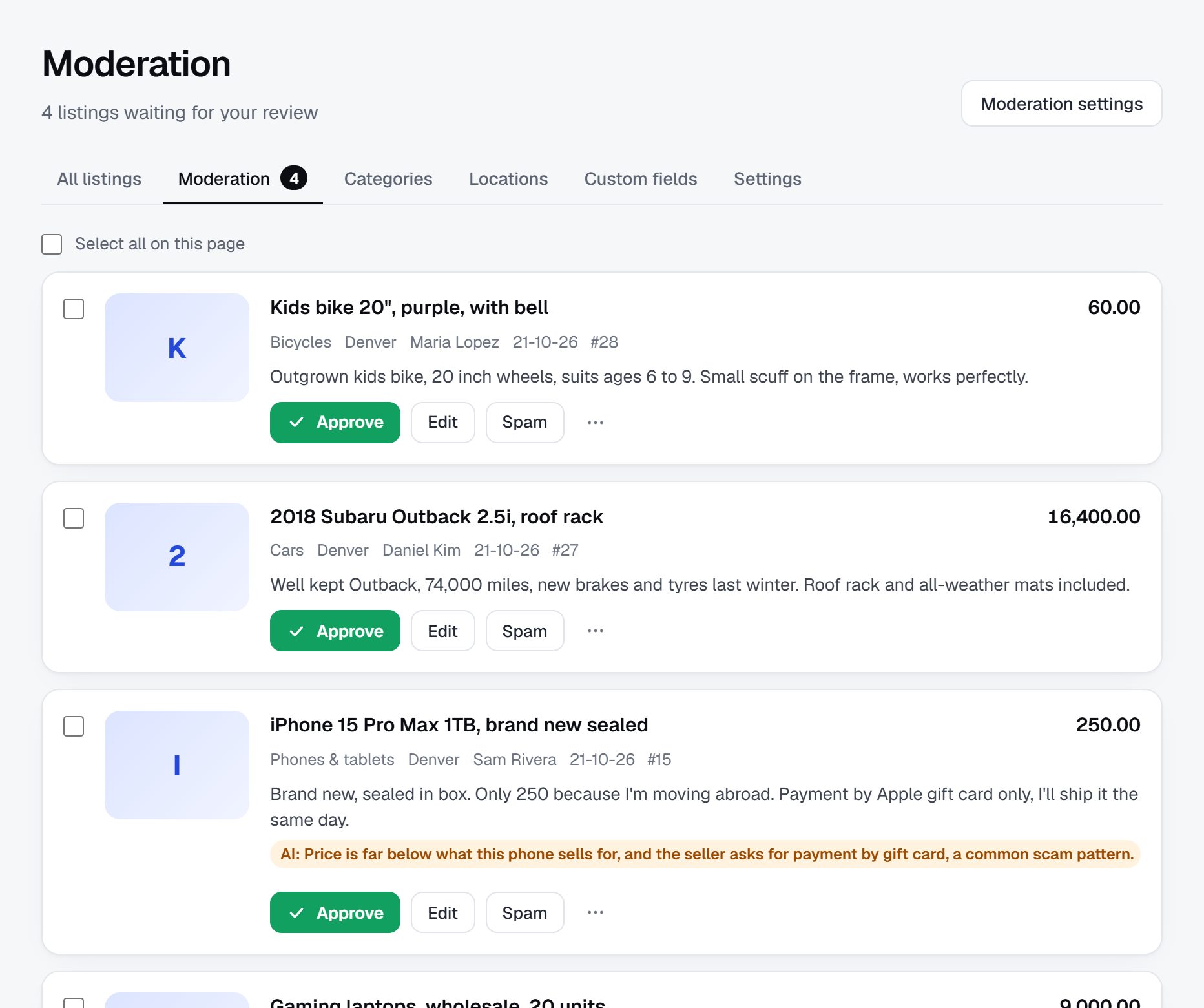
Require the Original or reproduction field, ask for photos of marks and any damage, and remove listings that claim an attribution the seller cannot support. Ask sellers to describe restoration plainly. Encourage buyers to ask for more photos, inspect in person when they can, and use an independent appraiser for valuable pieces. Ratings and reviews on seller profiles help collectors find dealers who describe honestly.
Ban ivory and other restricted materials in your rules unless you are sure what is allowed where you operate.
Rank for makers, periods and towns.
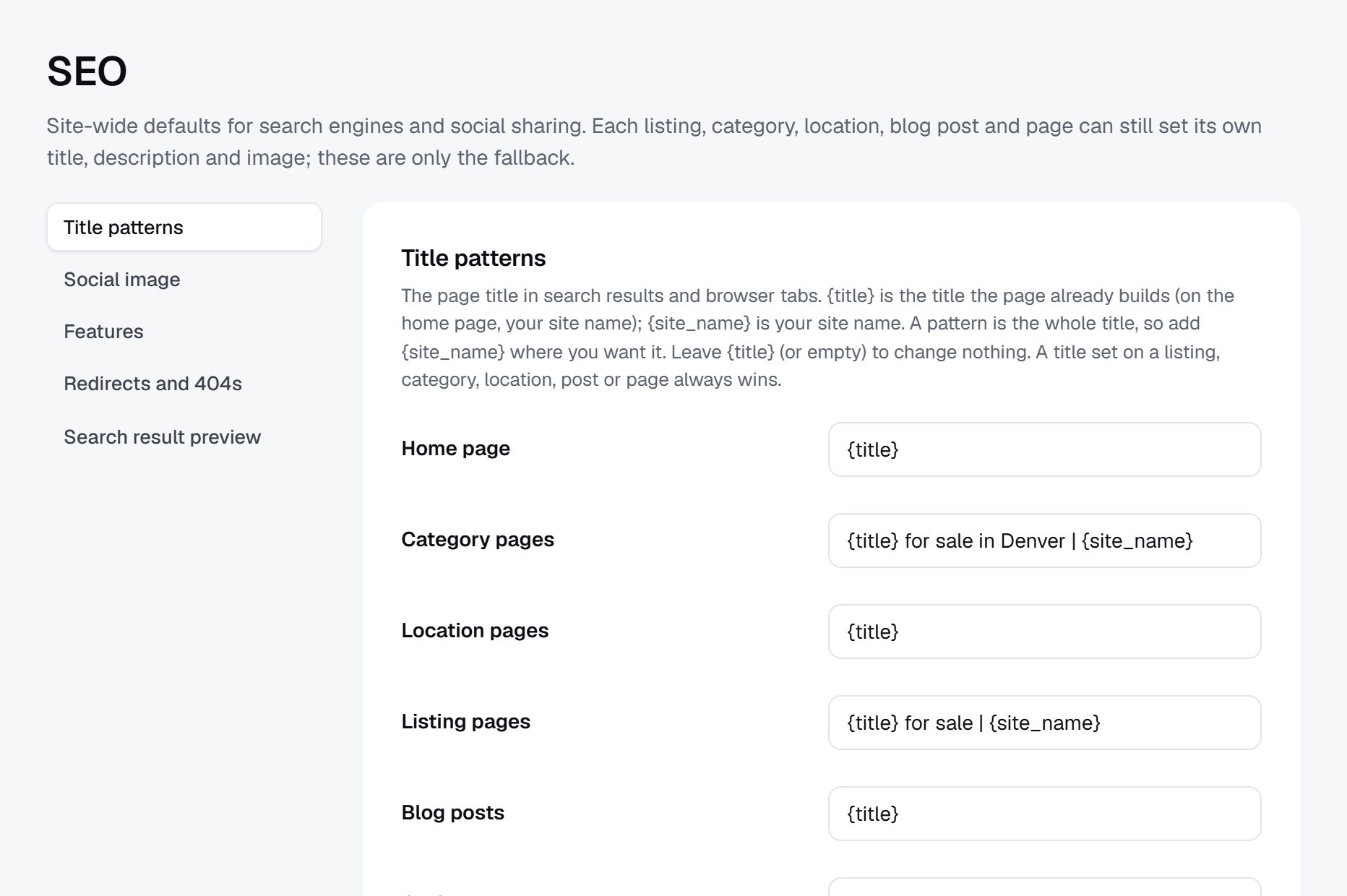
Antiques searches are detailed. People search by maker, pattern or period, and often by town when they want furniture they can collect. Those long searches are where a niche site can rank.
Searches to aim for
- "antique furniture for sale [city]" and "antique dresser near me"
- "Roseville pottery for sale" and "Fiesta ware lot"
- "antique mantel clock for sale" and "Seth Thomas clock"
- "how to tell if furniture is antique" and "how to identify sterling silver marks"
- "what is my antique worth" and "antique appraisal [city]"
Pages to build
Every category and every town you cover gets its own page. Add identification guides, which collectors search constantly: how to read hallmarks, how to date furniture by its joints and screws, how to spot reproduction cast iron, what Depression glass patterns exist. Price guides built from your own sold listings are useful, but keep them as ranges.
Content ideas
- A calendar of regional antique fairs, flea markets and auctions.
- Dealer profiles: who they are and what they collect.
- A guide for families: what to do with inherited furniture and china.
Launch around the fair calendar.
The antiques year is built around fairs, flea markets and estate season. Spring and fall bring the large outdoor shows, and estate sales run most weekends. Launch a few weeks before a big regional fair, so you can meet dealers there with the site already filled.
Partners worth having
- An antique mall or co-op that lets you put cards at the till and talk to booth holders.
- Estate sale companies with leftover stock after each sale.
- Collector clubs that can tell members about the site in their newsletter.
- Restorers and appraisers who meet people with pieces to sell.
Launch checklist
- Choose the region or the specialty, and the categories and fields.
- Write the rules: reproductions, restoration, restricted materials, stolen goods.
- Sign up five to ten dealers and import their stock.
- Seed 100 listings with good photos of marks and details.
- Turn on saved searches with email alerts, so collectors hear when a maker or pattern appears.
- Visit the next fair with cards and a phone showing real listings.
- After the first season, add the next region or a second specialty.
A worked example: a dealers' site in the Shenandoah Valley.
Limestone and Lowboy Exchange is an invented site, used here to show the plan at work. It covers antiques in the Shenandoah Valley of Virginia, from Winchester down to Staunton: an area with antique malls along the old valley highway, estate sales most weekends and a good deal of period furniture still sitting in farmhouses.
How it started
The founder rented a booth in a large antique mall for years and heard the same complaint every month. Buyers drove out from Washington and Richmond on weekends, but nothing told them what was in the booths before they set off. She asked twelve booth holders for their stock lists, imported them, and added a pickup and delivery note to every furniture listing. The first regular visitors were those weekend drivers, who began to plan their trips around pieces they had already seen online. She photographed the marks on the first fifty pieces herself, to show booth holders what a good listing looks like.
Who it serves
Collectors of Southern and valley-made furniture, decorators from the cities, dealers buying stock for their own shops, and local families clearing farmhouses after a death or a move. Smaller pieces such as stoneware and quilts draw buyers from much further away, since they ship well when packed properly.
Within its first year the site also became a place for dealers to buy from one another: several booth holders check new listings each morning, which keeps good pieces moving between shops in the valley.
Categories
- Furniture
- Case pieces: chests, cupboards, lowboys
- Tables and chairs
- Painted country pieces
- Stoneware and pottery
- Salt-glazed crocks and jugs
- Redware
- Textiles
- Quilts and coverlets
- Smalls
- Farm primitives, lighting, signs
Stoneware and redware got their own categories because local collectors hunt for them by potter and town, which a general Ceramics heading would bury.
How it makes money
Private sellers and families post for free. Booth holders pay for a dealer membership, which gives each of them a profile showing their booth's stock in one place. Featured listings are bought mostly for tall case clocks, signed stoneware and painted cupboards, where a single serious buyer covers the cost many times over. A furniture restorer, an appraiser and a mover who handles antiques rent banner spaces, and the two largest spring fairs take banners for the six weeks before their dates.
One firm rule came early: any piece described as made in the valley needs a reason, such as a signature, a family history or a known regional form, or else the word attributed in its title.
| Listing | Price | Key details |
|---|---|---|
| Walnut lowboy with one long drawer, about 1800 | $2,400 | Replaced brasses, old refinish, pickup or local delivery |
| Salt-glazed stoneware crock, 3 gallon | $450 | Cobalt flower decoration, stamped maker's mark, hairline at rim |
| Painted pie safe with punched tin panels | $900 | Old blue paint, one tin panel replaced, 52 in tall |
| Pieced cotton quilt, star pattern | $325 | Hand quilted, about 1900, light fading, ships folded |
| Thirty-hour tall case clock | $3,800 | Wooden works, painted dial, running, case refinished |
The first 90 days: dealers, rules and one big fair.
An antiques site earns trust slowly, so the first 90 days go into depth in one region or one specialty, a clear rule set on reproductions and restricted materials, and showing up where dealers already gather. Collectors judge a new site by the quality of its first pages: sharp photos of marks, honest notes on condition and restoration, and real dimensions.
Time the plan so week 12 falls just before a large regional fair or the start of the busy estate season. That gives you a full site to show dealers face to face, and a reason for collectors to look before they travel.
Keep a simple sheet of every dealer, picker and estate company you meet, what they sell, and whether they have posted yet. In this niche, polite follow-up is most of the work, and the sheet tells you who needs a second visit.
Expect slow replies. Many dealers check email once a week and prefer a phone call or a visit, and some will only post after they have seen a friend's pieces sell. Budget time for second and third visits rather than chasing more sign-ups.
Ten dealers who post every week are worth more than a hundred who signed up once.
| Weeks | Focus | Done when |
|---|---|---|
| 1-2 | Region or specialty, categories, period and maker fields, Original or reproduction dropdown | A test listing in each category asks for period, marks and dimensions |
| 3 | Rules on reproductions, married pieces, restoration, ivory and stolen goods | Rules are published and shown on the posting form |
| 4-5 | Visits to antique malls and estate sale companies to collect stock lists | Five dealers have sent lists with photos and dimensions |
| 6-7 | Import stock, tidy titles, add close-ups of marks and joints | 100 listings live, each with a mark or detail photo where one exists |
| 8-9 | Collector clubs, saved searches, first identification guide | Two clubs have mentioned the site and collectors are saving searches by maker |
| 10-11 | Fair calendar page, printed cards, first restorer and appraiser banners | The calendar covers six months and two service firms have agreed to banners |
| 12 | A table or walk-around at a regional fair, then a review of what sold | You leave with new dealer sign-ups and a shortlist for paid memberships |
Ways to build it, judged by what antiques listings need.
Antiques put unusual weight on the listing page itself. Collectors zoom in on marks, dovetails and wear, so the site needs many large photos per listing, long descriptions, fields for period, maker and dimensions, and a way for each dealer to keep a profile that works like a booth. Dealers also tend to arrive with stock lists, which makes bulk import matter more here than in most niches. Search has to cope with spelling too: collectors type maker names in several ways, and a site that only finds exact matches hides part of its stock.
A custom build with developers suits a founder with one specific idea, such as a provenance record that follows a piece from owner to owner. It is slow and expensive, and most of the budget goes into ordinary classifieds features that already exist elsewhere.
A classifieds script or a WordPress plugin on your own server can work for a technical founder. Look closely at how it handles a dozen photos per listing, how image storage grows over the years, and how it fights spam, and plan for updates and backups yourself. Ask other antiques site owners which script they chose and what broke as they grew. A shop plugin built for new goods often fits antiques badly, because every item here is one of a kind with no stock count.
A hosted builder such as Yclas takes servers and updates off your hands, which leaves time for the fairs and malls where antiques sites are really built. Whichever route you take, confirm the fields, the import and the dealer profiles you need before you commit.
| Route | Fits when | Watch out for |
|---|---|---|
| Custom build | Your idea needs something new, such as provenance records | High cost, a long build, and maintenance for as long as the site runs |
| Classifieds script on your own server | You are technical and want full control of photos and data | Image storage, spam and security updates are your job |
| WordPress plugin | You already run an antiques blog or dealer site on WordPress | Plugins made for new goods with stock counts fit one-off pieces poorly |
| Hosted builder | You would rather spend time with dealers than servers | Check field types, spreadsheet import and dealer profiles before you start |
What an antiques classifieds site costs to run.
The software is the smallest part of the bill. Most of the cost is your time in the first months: finding the first listings, answering questions and checking what gets posted.
Beyond the platform and a domain, budget for booth or table fees if you promote the site at fairs, and printed cards for antique malls. If you publish price guides, keep them as ranges from your own sold listings rather than buying price data.
| Cost | Typical range | On Yclas |
|---|---|---|
| Domain | $10 to $20 a year | Your own, with SSL included |
| Software and hosting | $0 to $100+ a month, plus plugins and updates | Starter $19 a month, Professional $99 |
| Design | $0 to $100 for a theme, or a designer | 109 looks included |
| Payment fees | About 3% per payment | Your Stripe or PayPal fees; Yclas takes nothing |
| Your time | 5 to 10 hours a week at the start | Finding listings, moderation, support |
Mistakes that cost an antiques site its collectors.
- Letting vague titles through. Old dresser and vintage vase tell a collector nothing, and search engines treat them the same way. Ask for maker, period, form and material in the title, and in the first months edit the worst ones yourself so the site sets a standard others copy. A short title guide on the posting form, with two good examples, does more than a long rule page.
- Allowing attributions without support. A listing that calls a later copy Chippendale or Tiffany damages every honest dealer on the site. Require a reason for any maker or period claim, and steer unsure sellers toward words such as style of or attributed.
- Skipping dimensions. Furniture that will not pass a doorway or a stair turn becomes a dispute and a wasted trip with a rented truck. Make height, width and depth required for furniture, clocks and lighting, and ask for weight on large case pieces so buyers know how many helpers to bring.
- Mixing modern decor with antiques and no filter. Serious collectors leave when a search for Federal furniture returns particleboard pieces from a big-box store. Use an era dropdown so a period search stays clean, and say in your rules what counts as antique and what counts as vintage.
- Ignoring restricted materials. Ivory inlay, tortoiseshell combs and some taxidermy turn up in estate clear-outs, and the rules on selling them are strict in many places. Ban what you cannot judge and take those listings down quickly. Write the ban in plain words on the posting form, so families clearing an estate know before they post rather than after.
- Chasing every collecting field at once. A site with three clocks, four quilts and two pieces of militaria feels empty to every kind of collector. Go deep in one region or specialty until its collectors visit weekly, then widen. A full category tells a collector the site is serious; a thin one tells them to come back later, and many never do.
- Waiting for dealers to find you. Many dealers are busy, set in their ways and wary of new websites. Visit their booths, offer to import their stock list, and show them their own pieces online within the week. Older dealers often prefer a phone call to an email, so keep their numbers and use them.
- Becoming the appraiser. Giving values on request makes you a party to every price argument. Refer sellers to independent appraisers, and keep any price guide to ranges drawn from sold listings. If a seller insists, explain that an independent appraisal also helps them sell, because buyers trust it more than the seller's own estimate.
- Promoting in the quiet weeks. Pushes that land between fair seasons reach few dealers and fewer collectors. Plan launches and campaigns for the weeks before the large spring and fall shows, when both sides are already thinking about buying.
Antiques terms every founder should know.
Words dealers and collectors use in listings, at fairs and in auction catalogs.
| Term | What it means |
|---|---|
| Provenance | The recorded history of a piece's ownership, from its maker to today. |
| Married piece | Furniture made by joining parts from two or more different originals. |
| Hallmark | Stamped marks on silver showing the metal standard and often the maker, town and year. |
| Patina | The surface wear and color that age gives to wood and metal, which collectors value. |
| Reproduction | A later copy made in the style of an earlier period, honest only when sold as one. |
| Attributed to | A cautious phrase meaning a piece is believed, but not proven, to be by a given maker. |
| Smalls | Dealer shorthand for small decorative items such as boxes, figurines and tins. |
| Case piece | Furniture built as a box with drawers or doors, such as a chest, desk or cupboard. |
| Primitives | Simple, often handmade household and farm items, mostly from the 1800s. |
| Old refinish | A finish applied long ago, which collectors prefer to a recent strip and refinish. |
| Picker | Someone who buys from houses, barns and sales in order to resell to dealers. |
| Period piece | An item made in the era its style comes from, not a later revival or copy. |
| Crazing | A web of fine cracks in a glaze, common on old pottery and porcelain. |
| Booth holder | A dealer who rents space in an antique mall or co-op, which sells the stock on their behalf. |
The same steps for an antiques classifieds site on Yclas.
- Describe your nicheThe setup wizard writes the categories, an About page and example listings from one sentence.
- Add fieldsSwitch on a field pack or add the fields your buyers filter on.
- Fill itImport dealer spreadsheets, invite sellers and post your own.
- Set the rulesChoose moderation, banned words and AI checks.
- Go liveChoose a plan, connect your domain, switch on paid listings when it is time.
What should I budget to launch an antiques classifieds site?
Mostly your time with dealers, plus small costs for cards, fair tables and a domain. Spending on ads makes sense only once dealers have filled the main categories.
Am I responsible if someone sells a fake?
Your rules should say sellers are responsible for their descriptions, and you should remove listings that are reported and shown to be misdescribed. Check the rules where you operate on platform liability.
Can people sell ivory or tortoiseshell on my site?
These materials are restricted or banned in many places, with complex exceptions. Unless you are sure of the rules where you operate, ban them in your posting rules.
How do I get dealers to list?
Visit antique malls, fairs and estate sales, and offer to import their stock list for them. A dealer who sees their pieces online in a day often brings others.
Should I run auctions or fixed prices?
Start with fixed prices and Make an offer, which dealers are used to. Add auctions for collectibles once collectors visit every week.
How do I compete with eBay and Etsy?
Focus on a region or a specialty they serve poorly: furniture that must be collected, or one collecting field with better filters and alerts.
Should I appraise pieces for sellers?
Not yourself. Point sellers to independent appraisers, which keeps the site neutral and avoids disputes over values.
Should I allow vintage and mid-century pieces, or only true antiques?
Most regional sites allow both, because mid-century furniture brings in younger buyers. Use an era field so collectors of older pieces can filter, and define antique and vintage in your rules.
How should sellers ship fragile pieces?
Leave shipping to the seller, but publish a short packing guide for ceramics, glass and clocks, and name local packing shops. For large furniture, list movers who handle antiques and ask sellers to state pickup or delivery terms.
What do I do when two collectors argue over whether a piece is genuine?
Do not rule on it yourself. Ask the seller for more photos of marks and construction, suggest an independent appraiser, and remove the listing only if its claim clearly cannot be supported.
Can estate sale companies list a whole sale on my site?
Yes, and it works well in the days before the sale. Let them import the best pieces from a spreadsheet with pickup dates noted, then mark items sold once the weekend is over. Buyers who saw a piece online often arrive early on the first morning to look for it.
Is a national specialty site harder than a regional one?
It is harder to fill, since you need collectors and dealers across the country, but small items ship and collectors travel for the right piece. Go regional if you know local dealers, and specialty if you know one collecting field and its clubs.
Related pages.
The parts of Yclas this leans on.
You have the plan. Now build the site collectors check first.
Describe your site in a sentence and the setup wizard writes the categories, example listings and a look. Free for 15 days, no credit card.
Start my classifieds site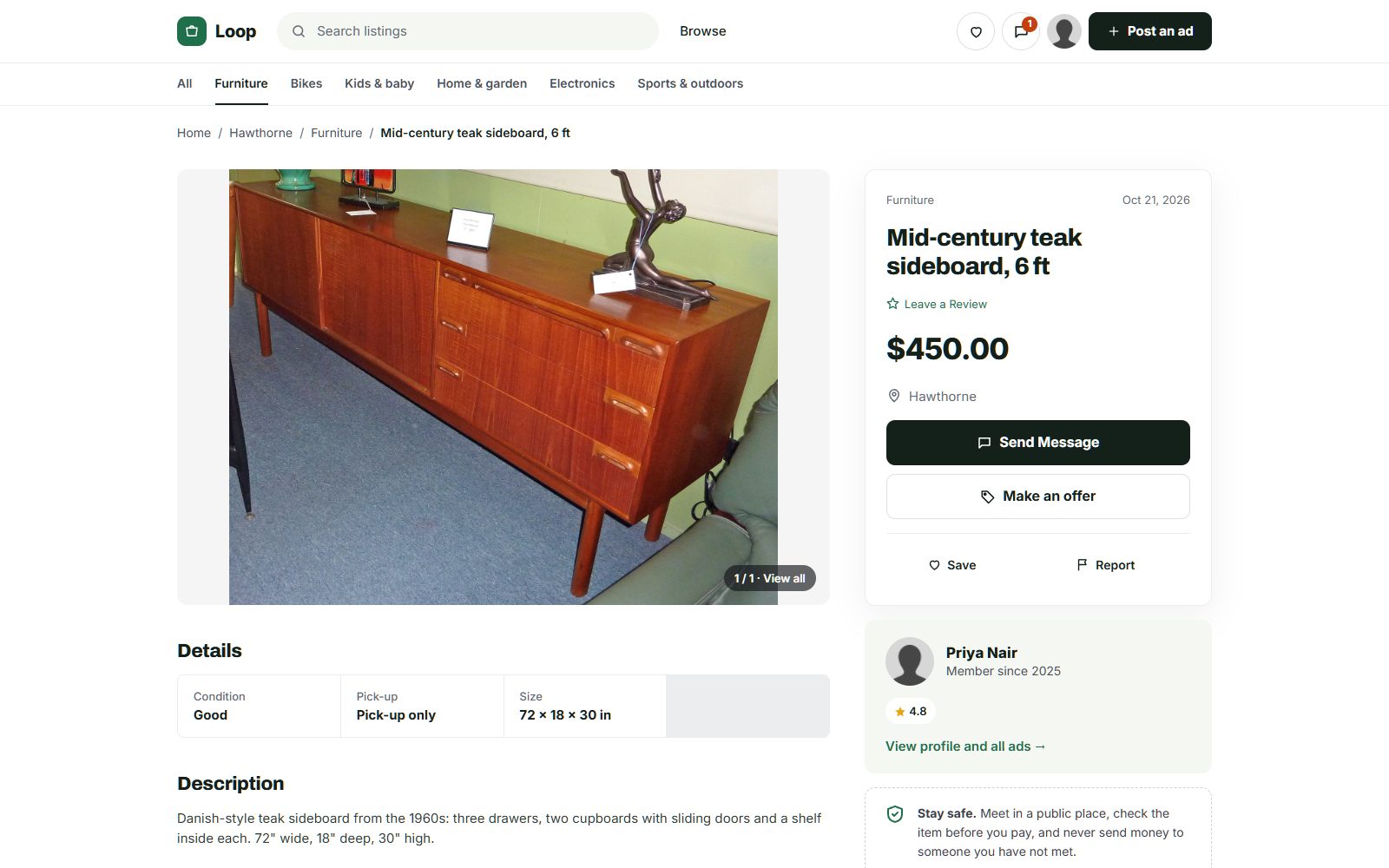
Photo credits
The screenshots show demo sites with made-up sellers. Their photos come from Wikimedia Commons, some cropped or with signs and plates blurred; these ones are under Creative Commons licences:
- McIntosh Teak Sideboard Circa 1960s, CC BY-SA 4.0
- Persian Rug Khorrasan 1, CC BY 2.0
- Fameg bentwood chairs of Poland 01, CC BY-SA 4.0
- View of the "Lost Dining Table and Chairs" in Eltham Palace - geograph.org.uk - 5797282, CC BY-SA 2.0
- Anglepoise Original 1227 Giant Floor Lamp, CC BY-SA 4.0
- Wooden Balance Bike for Kids oak frame with flame red tires, CC BY-SA 4.0
- Baby Crib (49935766018), CC BY 2.0
- Seth Thomas tambour mantel clock ca. 1930, CC BY-SA 4.0
- Rack of rock climbing gear at Horsethief Butte in a Mazamas class, CC BY 4.0
- Sideboard Teak 5 Door Rosando Furniture, CC BY-SA 4.0
- Teak 'Fresco' Sideboard by G Plan angled view, CC BY-SA 4.0