
How to build a tools classifieds website that tradespeople and DIYers trust.
This guide covers how to build a tools classifieds website for used power tools, hand tools and workshop machines: picking an area and a buyer, the fields people filter on such as battery platform and voltage, how the site makes money, where the first sellers come from, stolen tools and safety, the searches to rank for, and a launch plan.
Free for 15 days · No credit card · Plans from $19 a month
Pick an area and a buyer, because tools are bought by people who know them.
Tool buyers are specific. A carpenter wants a bare 18V impact driver for the battery platform they already own, a hobby woodworker wants a used cabinet saw within driving distance, and a mechanic is hunting for a socket set from a particular brand. General sites mix tools with everything else, and their search cannot tell a cordless drill from a corded one or one battery system from another.
Who uses the site
- Tradespeople: carpenters, electricians, plumbers and mechanics replacing or adding tools, and selling what they no longer use.
- DIYers and homeowners buying for one project and selling afterward.
- Hobby woodworkers and metalworkers setting up a shop, who buy table saws, planers, lathes and welders used.
- Retiring tradespeople and estates selling whole workshops.
- Small resellers who buy at auctions and pawn shops and sell on.
Choosing the angle
Pick one metro area or region, since heavy machines must be collected and many buyers want to test a tool before paying. Then decide your lean: trade tools for contractors, or workshop machines for woodworkers and hobbyists. Both work, but they need different categories and different first sellers.
Today the trade happens on Facebook Marketplace and Craigslist, eBay for small items, pawn shops, estate sales, equipment auctions, woodworking forums and clubs, and word of mouth on job sites.
Filters by battery platform and voltage are what general sites cannot offer tool buyers.
Use the specs tool buyers check first.
Categories should follow how tool shops arrange their aisles: cordless, corded, hand tools, workshop machines, outdoor power and so on. Keep the list short and put the details in fields, because a tool buyer filters by brand and power before anything else.
Fields that decide a tool sale
- Brand: a dropdown of the common tool brands plus Other.
- Power source: cordless, corded, pneumatic, gas, manual.
- Battery platform and voltage: for cordless tools, since a tool only fits batteries of its own system.
- Bare tool or kit: whether batteries, a charger and a case are included.
- Condition: new in box, lightly used, job site worn, for parts.
- Tested and working: a checkbox, with a note that a short video helps.
For workshop machines, add motor size, phase (single or three-phase) and weight. Three-phase machines from closing factories are common and cheap, but most homes cannot run them without a converter, and that one field saves wasted trips.
| Category | Example listings | Fields buyers filter on |
|---|---|---|
| Cordless tools | Drills, impact drivers, circular saws, multi-tools | Brand, battery platform, voltage, bare or kit, condition |
| Corded power tools | Miter saws, routers, angle grinders, demo hammers | Brand, tool type, amps or watts, condition, case included |
| Hand tools | Socket sets, wrenches, chisels, planes, tool chests | Brand, set size, metric or SAE, condition |
| Workshop machines | Table saws, band saws, jointers, lathes, drill presses | Motor size, phase, weight, table size, pickup only |
| Welding and metalwork | MIG and TIG welders, plasma cutters, anvils | Process, input voltage, amperage, accessories |
| Air tools and compressors | Compressors, nail guns, impact wrenches | Tank size, PSI, power source, fittings |
| Outdoor power | Chainsaws, pressure washers, generators | Power source, engine size or voltage, hours, condition |
Make battery platform a dropdown, so every cordless listing on one system shows up in one filter.
Free posting first, then charge resellers and the trade.
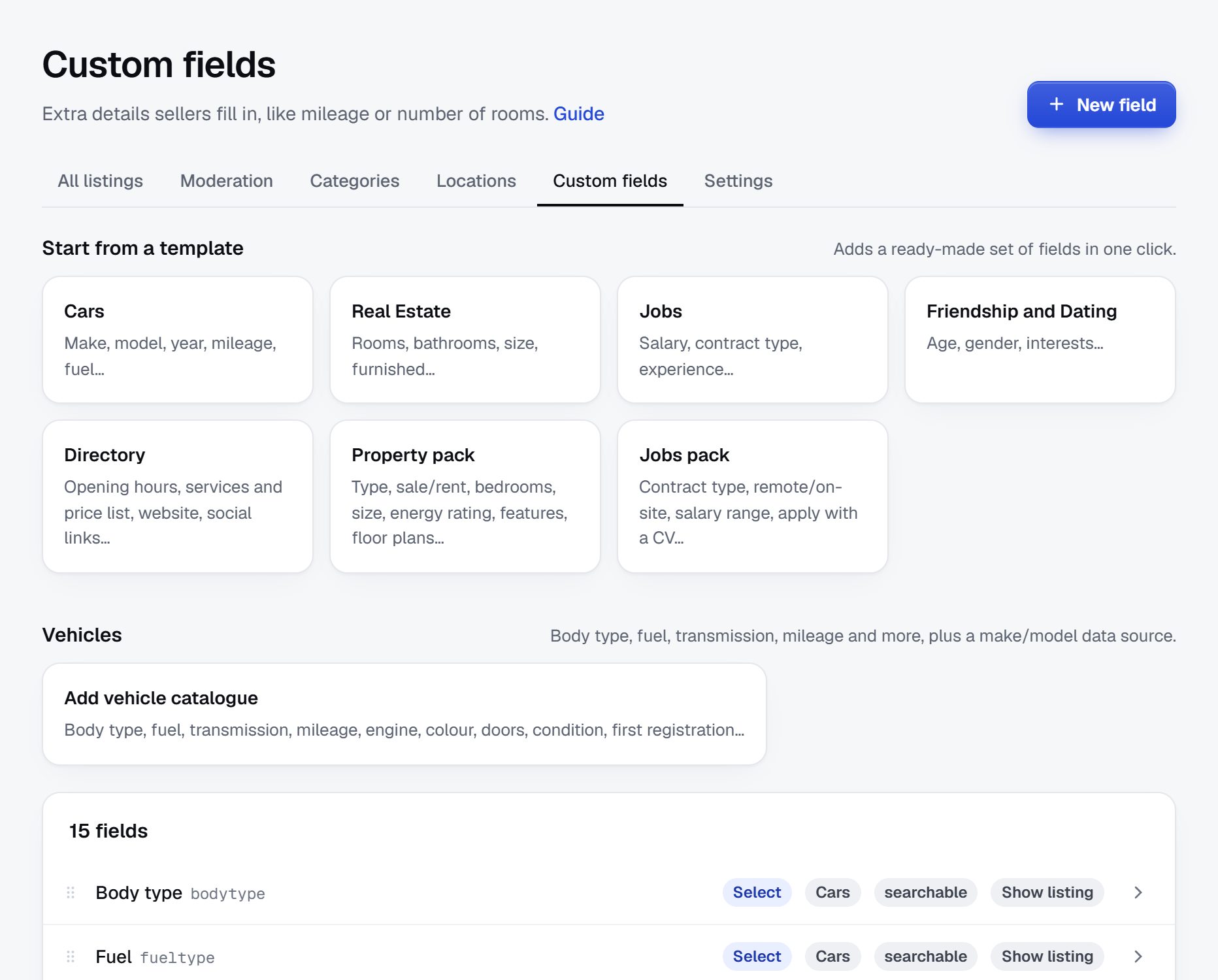
Most tool sellers are individuals clearing a garage or a van. Keep posting free so their listings fill the site, then add paid options for the people who sell tools for a living and the businesses that serve tradespeople.
- Featured listings and bumps fit expensive items such as a cabinet saw, a welder or a full kit of cordless tools.
- Seller memberships suit pawn shops, tool resellers and repair shops that post often and want a seller profile with all their stock.
- Paid posting in chosen categories works for workshop machines and whole-shop lots, where a seller expects a large sale.
- Auctions with bidding and Buy now help when a retiring tradesperson or an estate sells a full workshop and does not know what each piece is worth.
- Banner spaces fit tool repair shops, sharpening services, sawmills, lumberyards and trade schools.
Switch these on once local buyers check the site every week and good tools sell within days. Spring and the months before the holidays, when people take on projects and buy gifts, are good times to test featured listings.
| Model | Works when | Switch it on |
|---|---|---|
| Free private posting | Garages and vans full of spare tools | At launch |
| Featured listings and bumps | Machines and kits sell for hundreds of dollars | After a few hundred active listings |
| Seller memberships | Pawn shops and resellers post weekly | When resellers list regularly |
| Auctions | Whole workshops and estates are sold | When buyers visit weekly |
| Banner spaces | Repair shops and lumberyards want reach | Once local traffic is steady |
Start with the people who have too many tools.
Tool owners almost always have more than they use: duplicates, older batteries from a platform they left, a machine bought for one project. Your first 100 listings come from them and from the businesses that resell tools.
Where the first listings come from
- Pawn shops: they hold a lot of tools and want them gone. Offer to list their stock for free for a month.
- Tool repair shops: they have refurbished tools and unclaimed repairs.
- Woodworking and maker clubs: members upgrade machines and sell the old ones.
- Contractors and trade supply counters: leave cards where tradespeople pick up materials early in the morning.
- Estate sale companies: a retired tradesperson's garage can bring dozens of listings at once.
- Trade schools: graduating students sell and buy starter kits.
Help resellers post in bulk. With Yclas, listings can be imported from a spreadsheet (CSV), so a pawn shop's tool inventory goes online in one step. For individuals, AI listing from a photo lets the seller take a photo and AI fills in the title, description, category and price for them to check.
Keep stolen tools off the site, and make buyers test before paying.
Tool theft from vans, job sites and garages is common, and stolen tools are often resold quickly online. A tools site that ignores this will lose the trust of the tradespeople it most needs.
Rules worth having
- No tools without a believable story: be wary of many new tools of the same model at a low price, or brand-new kits with no receipts.
- Ask sellers to show the serial number in a photo for expensive tools, so an owner or the police can check it.
- Work with local police and trade groups: respond fast when someone reports their stolen tools on your site.
- Remove listings with ground-off serial numbers or engraved names that do not match the seller.
Other risks
- Counterfeit tools and batteries: fake branded batteries can be a fire risk. Advise buyers to buy batteries from known sellers, and ban unbranded replacements if you cannot judge them.
- Unsafe machines: missing guards on saws and grinders. Ask sellers to say if guards are missing.
- Payment scams: deposits for tools that do not exist, and fake payment screenshots.
Advise buyers to meet in daylight, test the tool on the spot, and check the serial number. Check the rules where you operate on reselling second-hand goods, since some places require records for certain dealers. Reports, moderation and seller ratings help catch problems early.
Answer stolen-tool reports the same day. Tradespeople talk, and they will remember.
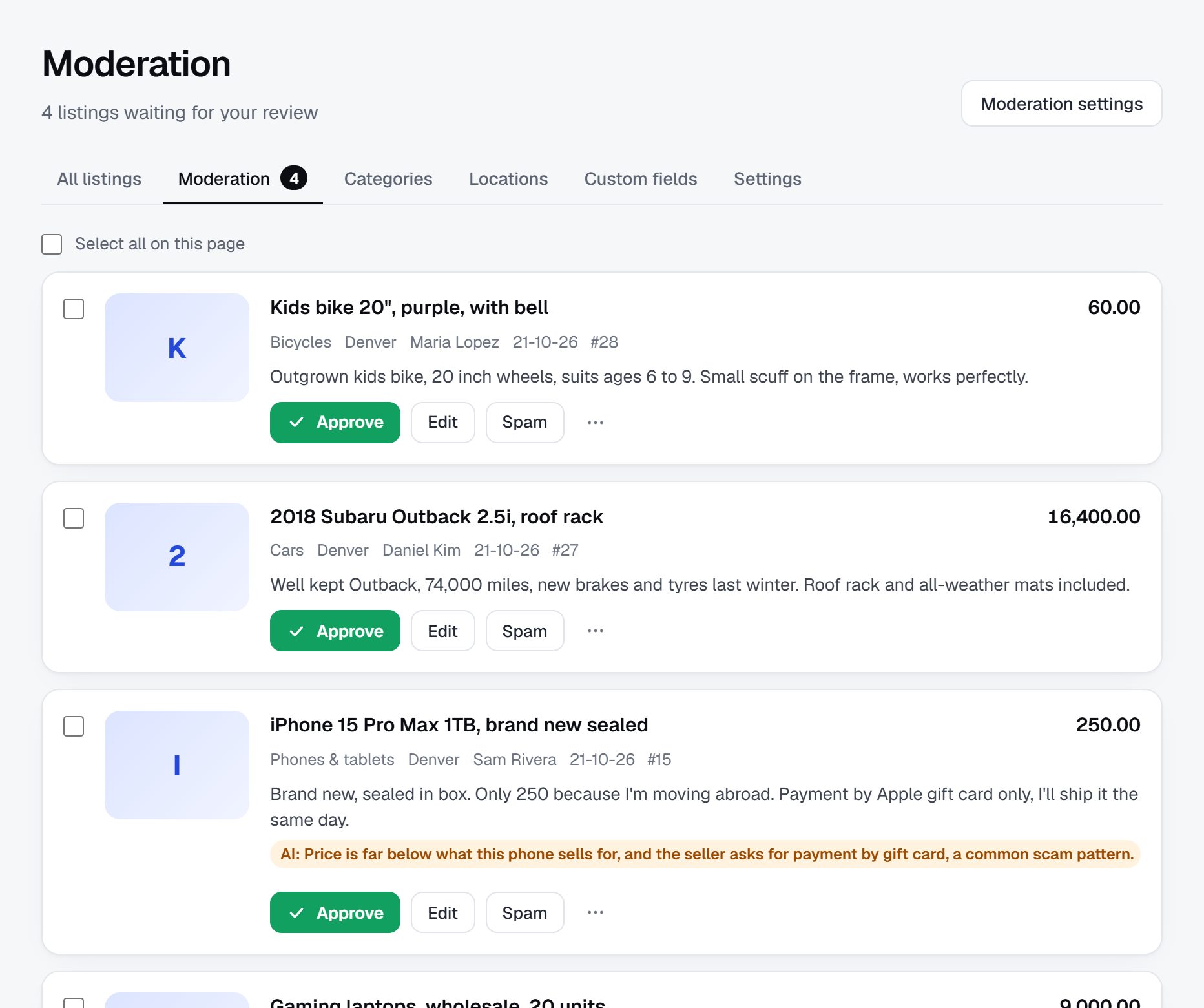
Rank for brand, model and town.
Tool buyers search with brand and model in mind, and often add a town because they want to collect today. Those searches are specific enough for a small site to rank.
Searches to aim for
- "used table saw for sale [city]" and "jointer for sale near me"
- "used 18V impact driver bare tool" and "cordless drill kit used"
- "MIG welder for sale used" and "air compressor 60 gallon used"
- "single phase vs three phase table saw" and "what to check when buying a used table saw"
- "sell my tools near me" and "sell a workshop full of tools"
Pages to build
Give every category and every town its own page. Add buying guides that tool buyers search for: what to check on a used miter saw, how to tell if a battery is worn, how to move a heavy machine, and how to run a three-phase machine at home. Price guides built from your own listings, shown as ranges, help sellers set realistic prices.
Content ideas
- A guide to battery platforms: which tools share batteries and which do not.
- A checklist for selling a whole workshop after retirement.
- Profiles of local repair and sharpening shops.
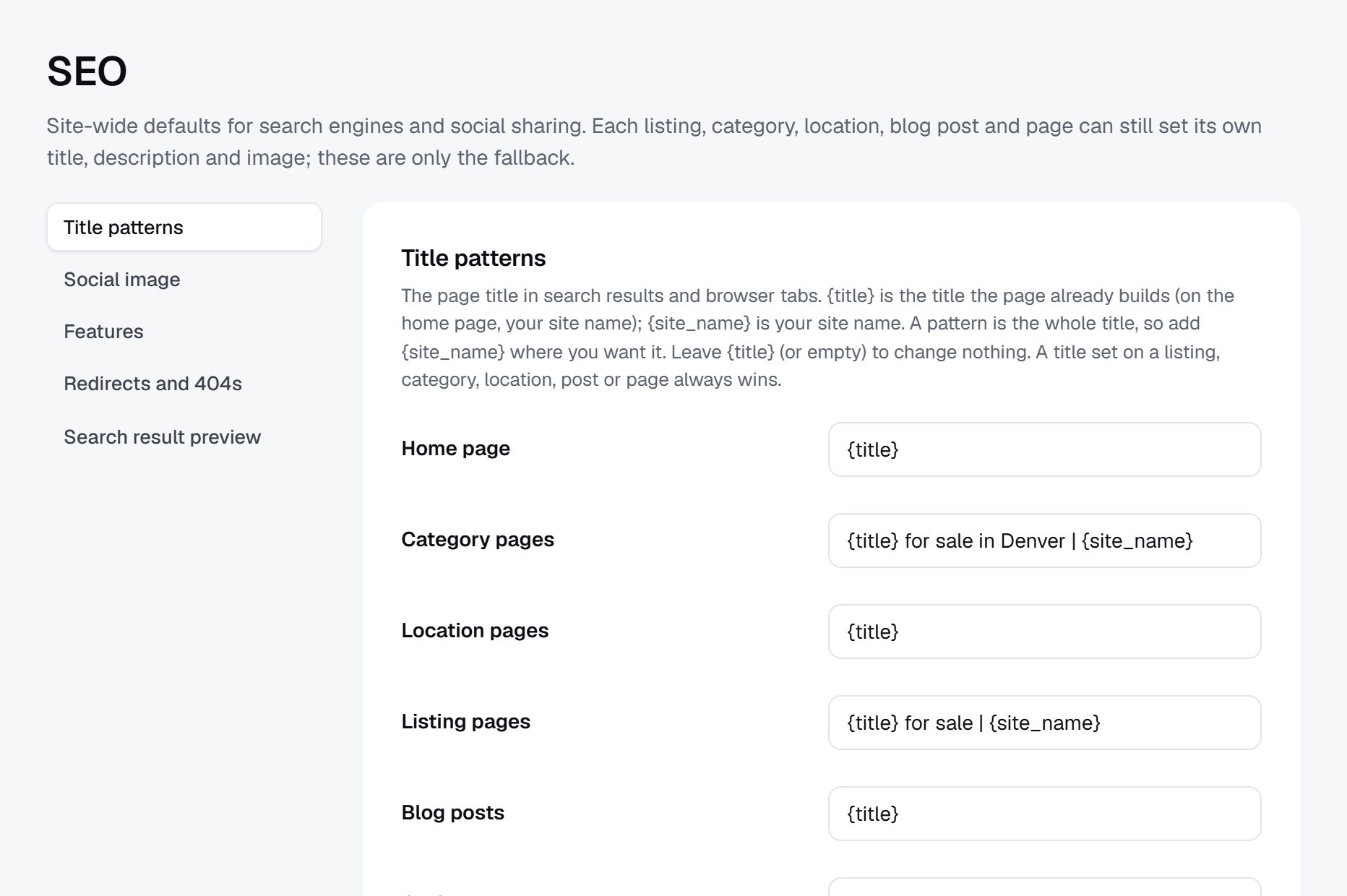
Launch in one area with the trade on board.
Pick a metro area where you can visit pawn shops, repair shops and trade counters in person. Spring is a good time to launch, when homeowners start projects and contractors get busy, and the fall works too, before workshop season and holiday gift buying.
Partners worth having
- A tool repair shop that refers customers with tools to sell.
- A woodworking club that shares the site with members.
- A trade school that tells graduating students where to buy starter kits.
- An estate sale company that lists workshops it clears.
Launch checklist
- Choose the area and lean: trade tools or workshop machines.
- Set up categories and the fields: brand, power source, battery platform, phase.
- Write the rules on stolen tools, serial numbers and batteries.
- Sign up two or three resellers and import their stock.
- Seed 100 listings, with machines and cordless tools both present.
- Leave cards at trade counters and post in local woodworking groups with permission.
- Turn on saved searches with email alerts, so a buyer hears when a specific machine is posted.
A worked example: a woodworkers' tool exchange around Pittsburgh.
Kerf and Clamp Exchange is a made-up example, not a real site. It covers used tools and workshop machines around Pittsburgh and the Monongahela Valley in Pennsylvania, an area with many retired tradespeople, old basement workshops and small machine shops that have closed over the years.
How it started
The founder, a cabinetmaker, bought and sold machines through a local woodworking club and kept seeing good table saws, jointers and lathes go for very little at estate sales, simply because nobody who wanted them knew they were there. He began by asking club members to list the machines they had replaced, then called two estate sale companies and offered to post the workshops they cleared. Most early buyers were hobby woodworkers setting up a garage shop on a budget. A few club members offered to help families sort and photograph a workshop before it was listed.
Who it serves
Hobby woodworkers and metalworkers first, then contractors looking for cordless tools and compressors, and families selling a parent's workshop. Pawn shops in the valley list tools every week, and a tool repair shop posts its refurbished stock. Trade school students buying their first kits turn up every spring.
Categories
- Workshop machines
- Table saws and band saws
- Jointers and planers
- Lathes and drill presses
- Power tools
- Cordless, filtered by battery platform
- Corded
- Hand tools
- Planes, chisels and saws
- Mechanics' tools
- Welding and metalwork
- Whole-shop lots
Whole-shop lots became a category after the first estate sold as one listing, with photos of every wall and bench. Buyers from neighboring states called about it, and families liked clearing everything in one go.
How it makes money
Private sellers post free. The pawn shops and the repair shop pay for seller memberships, and estate companies pay to post in the whole-shop category, where a single listing can be worth thousands. Featured listings sell mostly on cabinet saws and welders. A lumberyard, a saw sharpening service and a rigger who moves heavy machines rent banner spaces. Auctions with bidding and Buy now are switched on for whole-shop lots when a family has no idea what the contents are worth.
One rule was added after a reported theft: anyone listing several new-in-box cordless kits of the same model must show a receipt photo before the listings go live.
Every whole-shop listing also carries a short note on what it takes to move the heaviest machines, with the rigger's name, and those listings get far fewer calls from buyers who arrive without a trailer.
| Listing | Price | Key details |
|---|---|---|
| 10-inch cabinet saw, 3 HP | $1,600 | Single phase, 52-inch fence, ground floor garage, pickup only |
| 8-inch jointer with spiral cutterhead | $1,100 | 230V single phase, about 500 lb, rigger recommended |
| 18V cordless combo kit, four tools | $260 | Two batteries and charger, light job site wear, receipt shown |
| Wood lathe, 12 x 18 inch | $450 | Variable speed, faceplate and tool rest, chisels included |
| MIG welder, 140 amp | $300 | 120V input, flux core or gas, regulator included |
The first 90 days: rules first, then sellers, then the trade.
The first three months of a tools site are about trust with two groups that rarely overlap: tradespeople who want cordless gear quickly, and hobbyists who want heavy machines. Fill the side you chose in step one first, and let the other follow. The plan puts the stolen tools policy ahead of any public launch, because tradespeople will check how you handle theft before they post anything.
Start in late winter if you can, so the busy weeks fall in spring, when homeowners begin projects and contractors restock for the season. Use the review in week 12 to choose what to switch on next: memberships for the resellers who post the most, or auctions if estates keep arriving with whole workshops to sell.
Through the whole period, keep a running list of machines buyers ask for that the site does not have. Pawn shops and estate companies are glad to hear what is in demand.
In the first month, find out whom to contact at your local police department about stolen property, and ask how they want reports passed on. Knowing that before the first report arrives lets you act within hours rather than days.
Visit in person. Tool sellers trust a face at the counter far more than an ad.
| Weeks | Focus | Done when |
|---|---|---|
| 1-2 | Area and lean, categories, battery platform, voltage and phase fields | A cordless listing filters by platform and a machine listing by phase |
| 3 | Rules on stolen tools, serial number photos, batteries and missing guards | Rules are live and you know whom to call about a theft report |
| 4-5 | Pawn shops, repair shops and one estate sale company | Three resellers have sent stock lists and one workshop is ready to post |
| 6-7 | Import stock; seed listings from your network and a woodworking club | 100 listings live across cordless tools, hand tools and machines |
| 8-9 | Trade counters, trade schools, woodworking groups; saved searches on | Cards sit at five trade counters and buyers are saving searches by platform |
| 10-11 | Guides on buying a used table saw, battery platforms and moving heavy machines | Three guides are published and linked from their categories |
| 12 | Review sales and reports, then pick the first paid option | You know which sellers would pay for a membership and which categories sell fastest |
Ways to build a tools site, and which fits.
A tools site needs precise filters more than clever design. Buyers narrow by brand, battery platform, voltage and phase; sellers post from a garage or the cab of a truck; and resellers need to upload a whole inventory at once. You also need reporting and quick takedowns for stolen tools, plus room for several photos per listing so serial numbers and machine details can be shown. Heavy machines also need pickup details, such as floor level and access, which matter to buyers as much as the specs.
Hiring developers for a custom build makes sense only if you plan something unusual, such as a stolen tools register that every new listing is checked against. Expect a long build and ongoing costs, and know that the basics, such as listings, search and messages, will eat most of the budget before you reach the unusual part.
A classifieds script on your own server, or a WordPress plugin, can carry a tools site if someone on the team will keep it patched and fight spam. Check that dropdown fields work as search filters, because a battery platform filter is the main reason buyers will pick you over a general site.
A hosted builder such as Yclas suits a founder who would rather spend early mornings at trade counters than on server updates. Before choosing any hosted product, set up a test category with your real fields and post a few listings to see how it feels from a phone, and ask how it copes with a reseller uploading hundreds of tools at once.
| Route | Fits when | Watch out for |
|---|---|---|
| Custom build | You want a new feature, such as serial checks against a theft register | Cost and time; the basic features alone take months |
| Classifieds script on your own server | Someone on the team runs servers and wants full control | Spam, security updates, backups and photo storage are yours |
| WordPress plugin | You already run a woodworking blog or shop site | Filters by platform and phase may need custom work |
| Hosted builder | You want your time spent on sellers and the trade | Test your real fields and import with a reseller's list before you commit |
What a tools classifieds site costs to run.
The software is the smallest part of the bill. Most of the cost is your time in the first months: finding the first listings, answering questions and checking what gets posted.
Beyond the platform and a domain, the costs are printed cards for trade counters and pawn shops and some local ads. If you plan to handle stolen tool reports with police, set aside time for that rather than money.
| Cost | Typical range | On Yclas |
|---|---|---|
| Domain | $10 to $20 a year | Your own, with SSL included |
| Software and hosting | $0 to $100+ a month, plus plugins and updates | Starter $19 a month, Professional $99 |
| Design | $0 to $100 for a theme, or a designer | 109 looks included |
| Payment fees | About 3% per payment | Your Stripe or PayPal fees; Yclas takes nothing |
| Your time | 5 to 10 hours a week at the start | Finding listings, moderation, support |
Mistakes that lose a tools site the trade.
- Treating battery platform as free text. One seller types the brand's platform name, another writes 18V, a third writes 20V max, and the filter never puts them together. Use a dropdown of platforms and voltages, with Other for the rare cases. Review the list twice a year, since brands launch new platforms and drop old ones.
- Ignoring stolen tool reports. A tradesperson who finds their stolen kit on your site and hears nothing back will tell every crew they work with. Take reported listings down while you check, keep records, and answer the same day. Publish how you handle reports, so tradespeople know before they need it.
- Mixing trade gear and hobby machines with no clear lean. A contractor after a bare impact driver and a woodworker after a jointer want different things from the home page. Fill one side first, and add the other once it is busy. A home page that shows both equally looks thin for each.
- Leaving phase and weight off machine listings. A buyer who drives two hours for a three-phase planer they cannot run at home will not trust the site again. Make phase, voltage and weight required on workshop machines. A short note on phase converters, linked from the field, helps hobbyists judge whether a cheap three-phase machine is worth the trouble.
- Allowing unbranded replacement batteries. Cheap packs dressed up to look like a known brand can overheat, and a fire linked to your site is a heavy price. Ban unbranded or doubtful batteries if you cannot judge them, and explain why in a guide.
- Accepting machines with missing guards and no note. Saws, grinders and jointers without guards injure people. Ask sellers to state what is missing, and remove listings that hide it. A machine sold for restoration can still be listed, as long as the missing parts are named.
- Overlooking the whole-workshop seller. Retiring tradespeople and estates hold the best stock in your area and often have no idea where to sell it. Offer a simple process: a phone call, a visit, photos of every wall, and one listing or many. Families are often grieving and overwhelmed, so patience and a fair process matter more than speed.
- Spending on broad ads. General ads bring people looking for one cheap drill, once. Your regular buyers stand at trade counters, meet in woodworking clubs and read the same forums every week, so spend your time there. Sponsoring a club meeting or a sharpening day puts you in a room where nearly everyone is a likely user.
- Ignoring pickup for heavy machines. A 600-pound saw in a basement is only a sale if the buyer can get it out. Ask sellers to describe stairs, doors and floor level, and list local riggers and movers in a guide. Sellers will be glad too, since nobody wants a stranger stuck halfway up their basement stairs.
Tool terms your listings should use.
Trade terms and listing shorthand that tool buyers expect sellers to use correctly.
| Term | What it means |
|---|---|
| Bare tool | A cordless tool sold without batteries, charger or case. |
| Kit | A tool sold with batteries, a charger and usually a case. |
| Combo kit | Several cordless tools from one battery platform sold together with shared batteries. |
| Battery platform | A brand's family of cordless tools that all take the same batteries. |
| Brushless | A motor design without carbon brushes, usually more efficient and longer lasting. |
| Single-phase | The ordinary power supply in most homes, which most hobby machines run on. |
| Three-phase | Industrial power found in factories; such machines need a converter to run on home power. |
| Amp-hour (Ah) | A battery capacity rating: the higher the number, the longer the run time per charge. |
| Cabinet saw | A heavy table saw with an enclosed base and a large motor, built for long, accurate cuts. |
| Jobsite saw | A light, portable table saw designed to be carried between work sites. |
| Rigger | A specialist who moves heavy machinery safely, using dollies, skates and lifts. |
| PSI and CFM | Pressure and airflow ratings for compressors, which decide which air tools they can run. |
| For parts or repair | A tool that does not work, sold for its parts or for someone to fix. |
| SAE and metric | The two size systems for sockets and wrenches: inch sizes and millimeter sizes. |
The same steps for a tools classifieds site on Yclas.
- Describe your nicheThe setup wizard writes the categories, an About page and example listings from one sentence.
- Add fieldsSwitch on a field pack or add the fields your buyers filter on.
- Fill itImport dealer spreadsheets, invite sellers and post your own.
- Set the rulesChoose moderation, banned words and AI checks.
- Go liveChoose a plan, connect your domain, switch on paid listings when it is time.
How much money do I need to start a tools site?
Very little: hosting, a domain and some printed cards. The time spent visiting pawn shops, repair shops and clubs is the real cost.
What do I do if someone reports a stolen tool on my site?
Take the listing down while you check, keep the seller's details, and tell the owner to contact the police. Check the rules where you operate on sharing user data with police.
Do I need a license to run a site where people sell used tools?
Usually a classifieds site is not the seller, but some places regulate second-hand dealers. Check the rules where you operate before launch.
How do I get tradespeople to use the site?
Be where they already are: trade counters, repair shops, trade schools. Filters by battery platform and voltage give them a reason to come back.
How does a tools site make money?
Free posting first, then featured listings on machines and kits, memberships for resellers and pawn shops, and banners for repair shops and lumberyards.
Should I include outdoor power equipment and generators?
Yes, if your buyers are homeowners and contractors. They search for chainsaws and pressure washers in the same places as tools.
Can I compete with Facebook Marketplace for tools?
In one area, yes. Better filters, a clear stance on stolen tools and alerts for specific machines are things buyers will notice.
Should I allow new tools that are still in the box?
Yes, many are unwanted gifts or duplicates. Be careful when one seller lists several identical new kits at a low price, ask for a receipt photo in those cases, and remove listings that cannot show one. Honest sellers rarely mind, and it tells tradespeople you take theft seriously.
How do buyers move the heavy machines they buy?
Usually with friends, a trailer and a pallet jack, or with a rigger for the heaviest pieces. Publish a short guide on moving machines and list local riggers and movers who do this work.
Can contractors sell leftover materials such as lumber and fittings?
Many tools sites allow a materials category, since remodelers often finish jobs with surplus. Keep it apart from tools so filters stay clean, and decide whether to allow paint and solvents; most sites leave them out.
How should I handle sellers who want to trade rather than sell?
Allow trades, but ask for a price as well so buyers can filter. A trade or swap checkbox lets people who prefer swapping find each other.
Should tool rental businesses be allowed to post?
They can list used rental fleet when they replace it, which brings well-maintained tools. Renting tools out with a booking calendar and deposits is a different model, possible on the Marketplace plan, but start with sales.
Related pages.
The parts of Yclas this leans on.
You have the plan. Now build the local place to buy and sell tools.
Describe your site in a sentence and the setup wizard writes the categories, example listings and a look. Free for 15 days, no credit card.
Start my classifieds site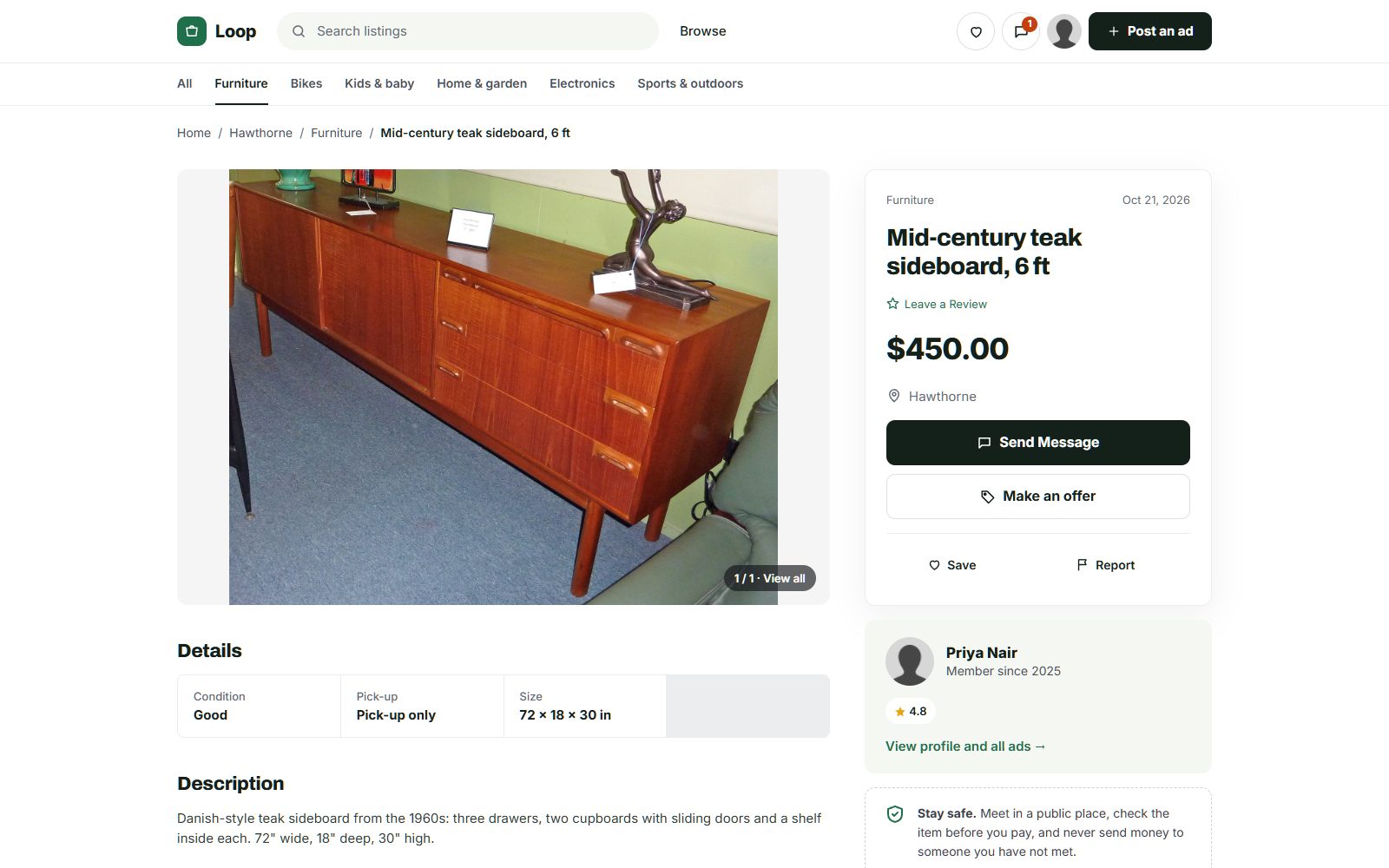
Photo credits
The screenshots show demo sites with made-up sellers. Their photos come from Wikimedia Commons, some cropped or with signs and plates blurred; these ones are under Creative Commons licences:
- McIntosh Teak Sideboard Circa 1960s, CC BY-SA 4.0
- Persian Rug Khorrasan 1, CC BY 2.0
- Fameg bentwood chairs of Poland 01, CC BY-SA 4.0
- View of the "Lost Dining Table and Chairs" in Eltham Palace - geograph.org.uk - 5797282, CC BY-SA 2.0
- Anglepoise Original 1227 Giant Floor Lamp, CC BY-SA 4.0
- Wooden Balance Bike for Kids oak frame with flame red tires, CC BY-SA 4.0
- Baby Crib (49935766018), CC BY 2.0
- Seth Thomas tambour mantel clock ca. 1930, CC BY-SA 4.0
- Rack of rock climbing gear at Horsethief Butte in a Mazamas class, CC BY 4.0
- Sideboard Teak 5 Door Rosando Furniture, CC BY-SA 4.0
- Teak 'Fresco' Sideboard by G Plan angled view, CC BY-SA 4.0