
How to build a car classifieds website that local buyers check first.
This guide covers what it takes to run a used car classifieds site: choosing an area or angle the big sites serve badly, the fields car buyers filter on, how dealers and private sellers pay, where your first 100 cars come from, how to keep out title scams and curbstoners, the searches to rank for, and a launch plan built around local dealers.
Free for 15 days · No credit card · Plans from $19 a month
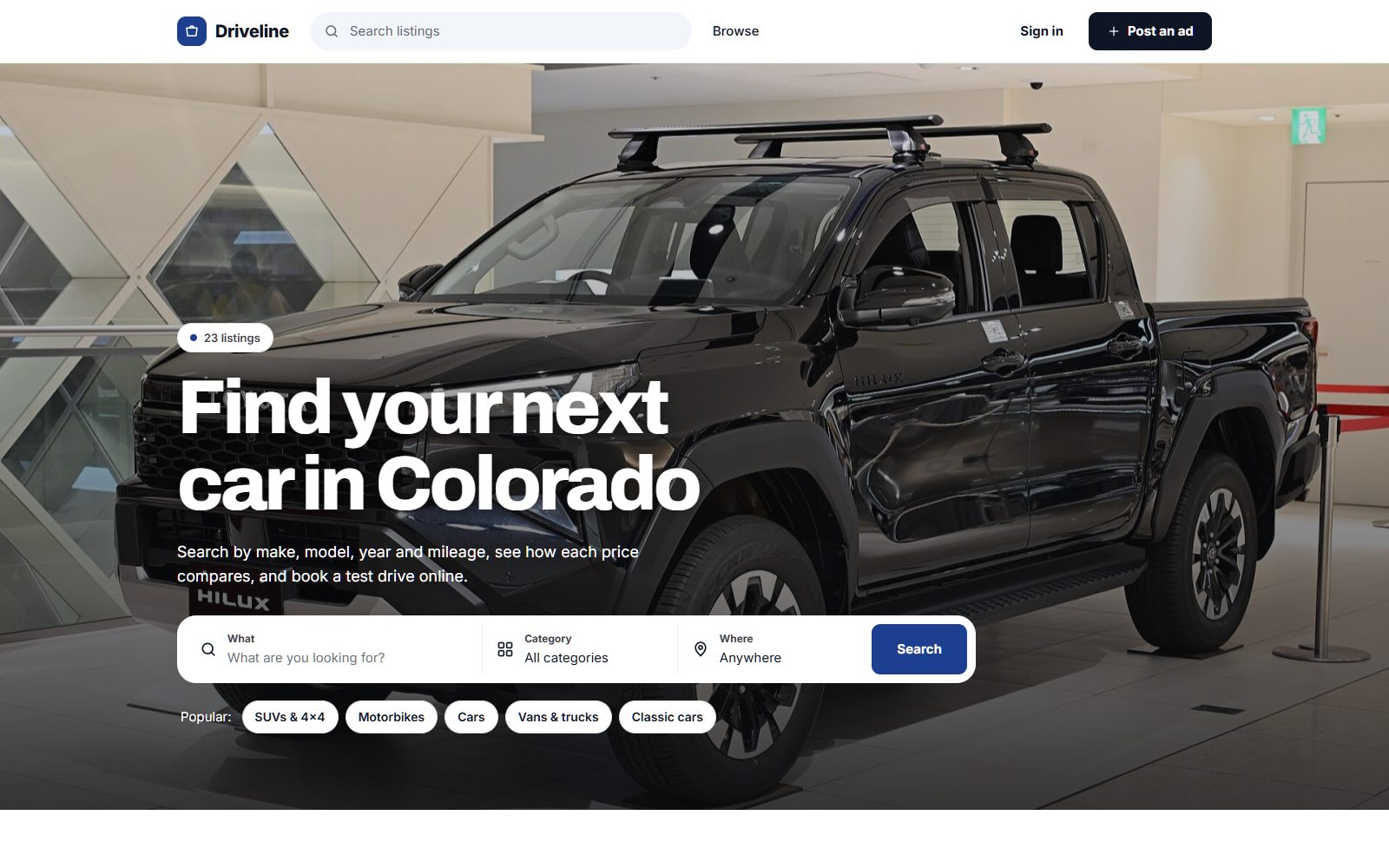
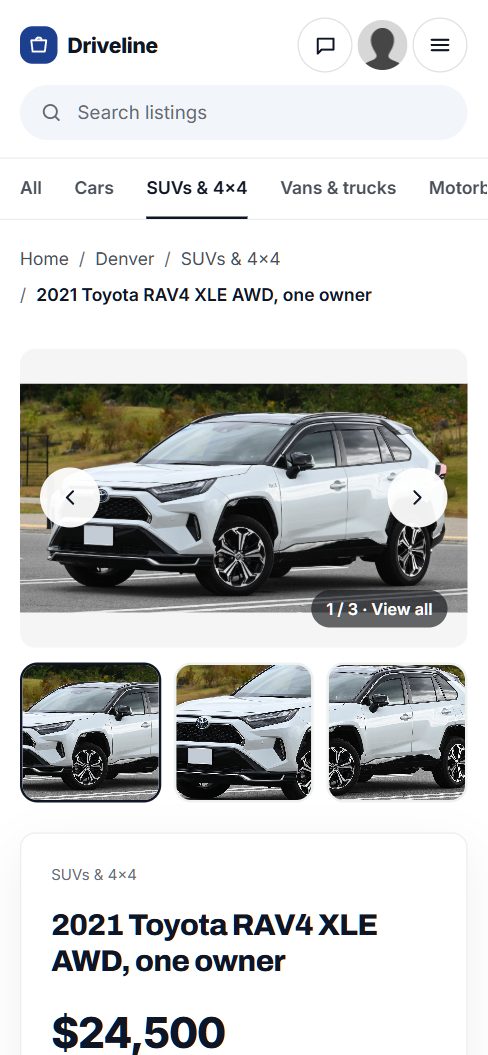
Pick a car market the big sites serve badly.
National car sites are good at one thing: huge volume from franchised and large independent dealers. They are weaker where the trade is local, specialized or mostly private: a rural county where everyone knows the three dealers, an island with its own prices, a city's Spanish-speaking buyers, or a type of vehicle that gets lost in general results.
Angles that work for car sites
- One area: a county, a metro area or a region where Facebook Marketplace and Craigslist are the default, with their scams and no filters that matter to car buyers.
- One buyer type: first cars under a set price for students and new drivers, work pickups for tradespeople, family minivans, or cars for buyers paying cash.
- One vehicle type: 4x4s and off-roaders, electric and hybrid cars, Japanese imports, or wheelchair-accessible vans.
- One language or community: buyers who would rather read listings and talk to sellers in their own language.
Before you choose, look at where cars change hands in that market today. Count the local buy-and-sell groups, the independent lots along the main road, the cars parked with a sign in the window, and the weekend car meets. If you can name twenty sellers you could reach this month, the angle is real.
A car site wins locally first. Being the obvious place for used cars in one county is worth more than being one more national site.
Keep categories by body type and put the detail in filters.
Car buyers rarely browse by category. They search by make, model, price and distance, then narrow by year and mileage. Keep categories few and broad, by body type or use, and spend your effort on the fields.
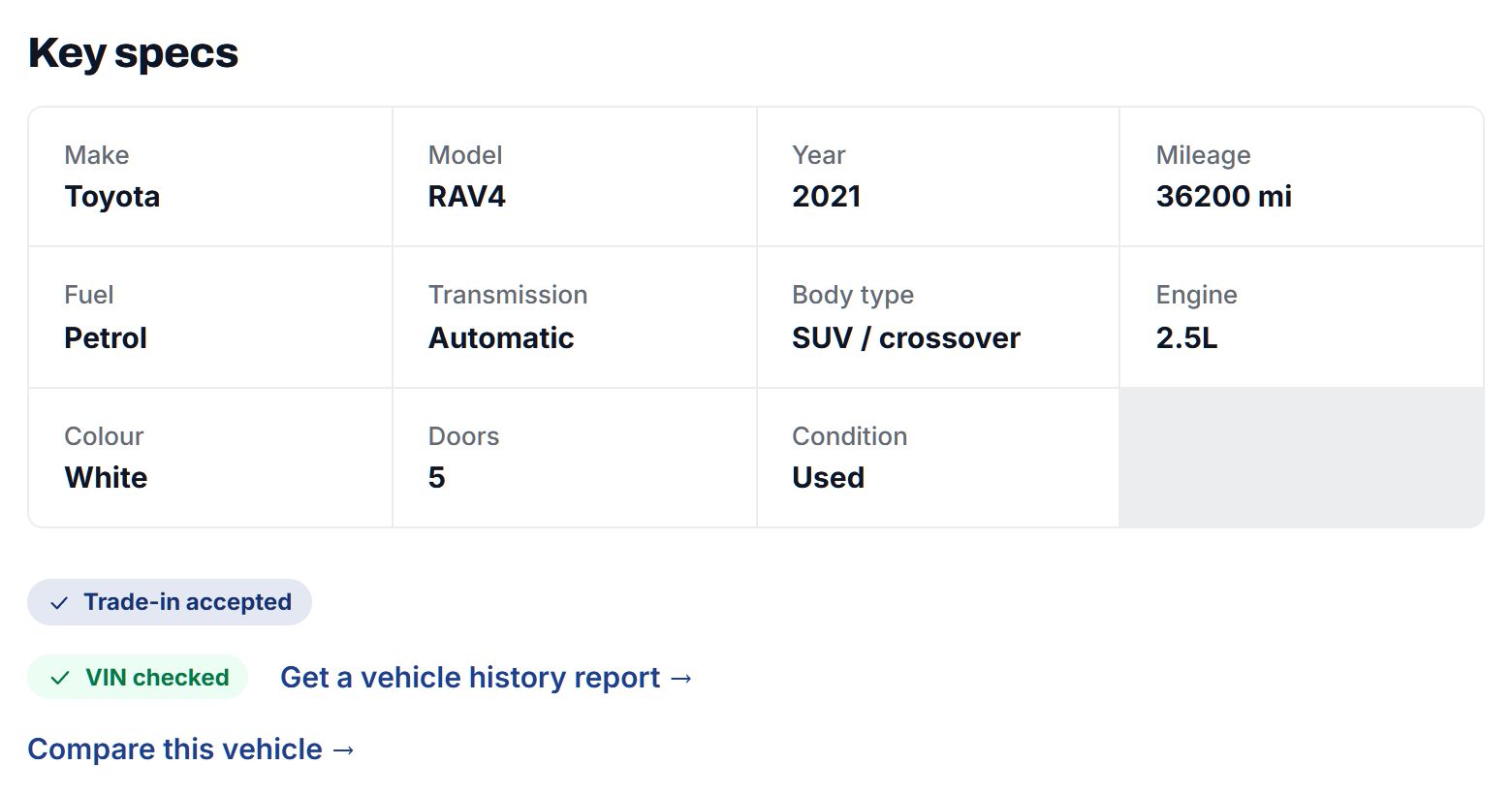
- Required on every car: make, model, year, mileage, price, transmission, fuel type and location. A listing without mileage gets skipped.
- Strongly recommended: VIN, title status (clean, rebuilt or salvage), number of owners, drivetrain and exterior color.
- Seller type: private or dealer, as a filter. Many buyers want only one or the other, and the field helps you spot dealers posing as private sellers.
Use dropdowns for make, fuel and transmission so buyers can filter cleanly; free text gives you "Chevy", "Chevrolet" and "chevrolet" as three different makes. Ask for the VIN as text and show it on the listing: honest sellers have no reason to hide it, and buyers can run their own history check before they call.
Parts and wheels deserve their own category with simpler fields, such as part type and the make and model it fits, so they do not clutter the car results.
| Category | Example listings | Fields buyers filter on |
|---|---|---|
| Sedans and hatchbacks | Commuter cars, first cars, compacts | Make, model, year, mileage, price, transmission |
| SUVs and crossovers | Family SUVs, seven-seaters, AWD crossovers | Drivetrain, seats, mileage, year, fuel type |
| Pickup trucks | Half-ton and heavy-duty pickups, work trucks | Cab style, bed length, 4x4, towing capacity, engine |
| Vans and minivans | Minivans, cargo vans, accessible vans | Seats, sliding doors, wheelchair ramp, mileage |
| Electric and hybrid | EVs, plug-in hybrids, hybrids | Range, battery health, charging port, year |
| Parts and wheels | Tires, rims, engines, body panels | Part type, fits make and model, condition |
In Yclas, fields can be text, numbers, dropdowns, checkboxes or dates, required or optional and shown as search filters, and the cars field pack sets up the usual car fields in one click.
Let private sellers post free and charge dealers once they get leads.
A car is one of the most valuable things most people ever sell, so car sites can charge more per listing than almost any other classifieds niche. The trap is charging before buyers arrive. A dealer will pay for leads, not for a spot on a site nobody visits.
The usual order
- Free for everyone while you build the first few hundred listings. Tell dealers their whole lot is free for the launch period and import it for them.
- Featured listings and bumps for private sellers, once a car can sit unseen on page three of a popular make.
- Dealer memberships, once dealers can see messages and calls coming from your site. Price them by the number of cars on the lot.
- Pay to post for private cars, only once you are the known place to sell in your area. Keep parts free.
- Banner spaces for businesses around car buying: mechanics who do pre-purchase inspections, detailers, insurance agents, tire shops and auto lenders.
Track how many messages each dealer's cars get each month from the start. That number is what you will show them when you ask them to pay, and it is the only argument most dealers listen to.
| Model | Works when | Switch it on |
|---|---|---|
| Featured listings and bumps | Buyers scroll past older cars in busy makes | A few hundred cars live |
| Dealer memberships | Dealers get messages and calls from your site | When you can show each dealer its lead count |
| Pay to post for private cars | Your site is the known place to sell locally | After the first strong selling season |
| Banner spaces | Mechanics, detailers and lenders want car buyers | When you can share monthly visitors |
| Auctions with Buy now | Project cars, classics and cars sold as-is | When sellers start asking for it |
Get the first 100 cars from dealers' lots and local groups.
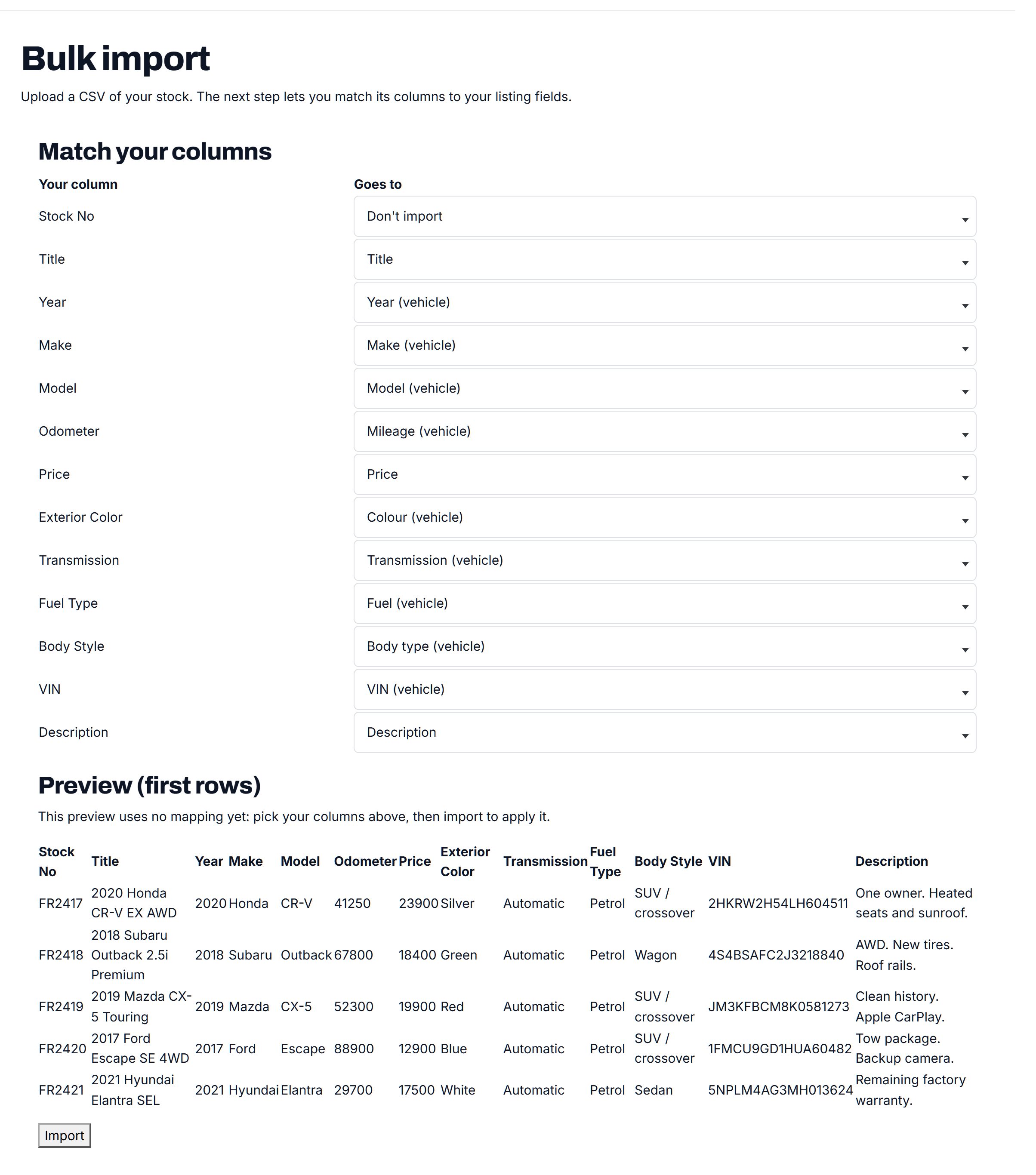
The fastest way to a full car site is the independent dealer. A small lot holds a few dozen cars, the owner already photographs them for other sites, and most keep their stock in a spreadsheet or a dealer management system that can export one.
- Independent dealers: visit in person, show them a category page, and offer to put their stock on the site for free. Two or three dealers can fill the site in a week.
- Budget and buy-here-pay-here lots: they sell to exactly the buyers who search by price and area.
- Private sellers in local groups: message people selling cars in the area's Facebook groups and on Craigslist, and offer to post the car for them with their photos.
- Car meets and cruise nights: enthusiasts sell cars, wheels and parts to each other constantly.
- Mechanics and body shops: they know which customers are selling, and often have cars for sale themselves.
- Fleet disposals: local businesses replacing vans, pickups or pool cars.
On Yclas, dealer stock comes in as a spreadsheet (CSV) import, so ask each dealer for an updated export every week and mark sold cars as sold. For private sellers, posting from a phone matters: a seller can photograph the car and let AI fill in the title, description, category and price for them to check.
Keep dealer stock current. A buyer who calls about a car sold last month will not trust the next listing.
Plan for the scams every car site attracts.
Used cars attract fraud because the amounts are large and buyers often pay in cash or by transfer. Expect these within months of launch:
- Too-cheap cars with a story: a seller who is overseas, deployed or moving, a car priced well below market, and a request to pay through a shipping company or an escrow service the seller picked. The car does not exist.
- Curbstoning: unlicensed dealers posing as private sellers, often selling cars with hidden problems. Watch for the same phone number or the same driveway in the photos of many "private" listings.
- Odometer rollback and title washing: flood-damaged or salvage cars re-titled to look clean, especially in the months after big storms.
- Fake buyers: a check for more than the asking price, followed by a request to refund the difference.
What to put in place
- Ask for the VIN on every car and reject listings that refuse to give it.
- Approve every listing at first, and hold any new account posting a late-model car far below the usual price.
- Give verified seller badges to dealers you have visited.
- Publish a buyer safety page: see the car in person, check the VIN against the title, run a vehicle history report, get a pre-purchase inspection, and never pay a deposit to someone you have not met.
Rules on dealer licensing, how many cars a private person may sell in a year, and what sellers must disclose differ by state and country, so check the rules where you operate before you write your posting rules.
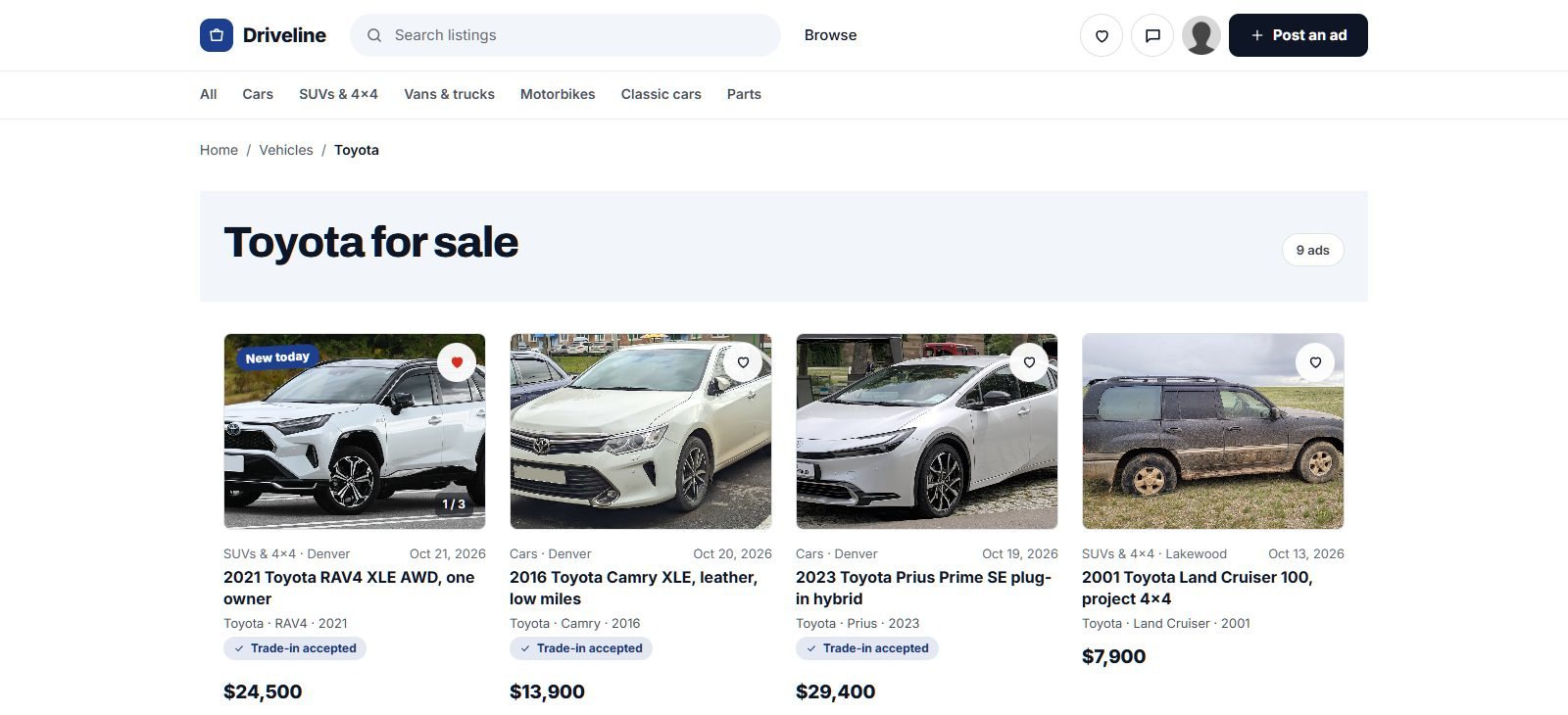
Rank for the make, model and town searches local buyers type.
Car searches are long and specific, and most include a place. People type "used Toyota Tacoma for sale in Boise", "cars under $5,000 near me", "cheap first car for teenager" or "best used SUV for families". National sites rank for the big terms. Your chance is the combinations: model plus town, budget plus area, body type plus county.
Pages to build
- Make and model pages for the models that sell most in your area, each listing the current cars.
- Location pages for every town you cover, with the cars for sale there.
- Budget pages: cars under a few set prices, which match how first-time and cash buyers search.
- Buying guides: how to check a used car before you buy, how to read a vehicle history report, what to bring to a test drive, and how title transfer works in your state.
- Price guides: what a ten-year-old pickup or a popular compact sells for locally, based on your own listings.
Every listing should carry the year, make, model and town in its title. Set the title pattern once and every new car gets it. Sold cars keep being searched for weeks after they go, so mark them sold and point to similar cars instead of deleting the page.
Launch in one area with the dealers already on board.
Launch in the area where you signed your first dealers, not everywhere at once. A buyer who searches your site and finds 150 cars within half an hour's drive comes back; one who finds 400 cars spread over three states does not.
Timing
In the US, used car buying picks up from February to April, when tax refunds arrive, and many dealers plan their marketing around it. Building in the fall and launching in January gives you time to fill the site before that rush. The end of each month and quarter is when dealers push to clear stock, a good moment to offer featured listings.
Partners
Mechanics who do pre-purchase inspections, local credit unions that make auto loans, and tag and title services meet car buyers every day and gain when used car sales go smoothly. Ask them to keep your flyer on the counter in exchange for a banner.
Checklist
- Three or more dealers on the site, plus private cars from local groups.
- Make, model, year, mileage, price and VIN fields live, with filters tested.
- Buyer safety page and posting rules published.
- Model and town pages for the area's best sellers.
- A post in each local buy-and-sell group, linking to a full category.
A worked example: Bluestem Car Exchange in the Flint Hills of Kansas.
Bluestem Car Exchange is a fictional site, used here to show how the pieces fit together. It covers five rural counties in the Flint Hills of Kansas, where the nearest big-city lots are an hour or more away and most used cars sell through two local Facebook groups, a handful of independent lots and signs in windshields along the highway.
Who it serves
The buyers are ranch families looking for a second pickup, parents shopping for a first car for a sixteen-year-old, and commuters who drive long gravel roads and want something with all-wheel drive. The sellers are four independent dealers, a buy-here-pay-here lot, two mechanics who flip cars on the side, and private owners.
Categories
- Cars
- Sedans and hatchbacks
- SUVs and crossovers
- Pickups and work trucks
- First cars under a set price
- Parts, tires and wheels
The "first cars" category is the founder's own idea. It overlaps with the others on purpose, because parents search that way and the local groups have no equivalent.
How it started
The founder, a former parts counter clerk, spent two weeks driving to each dealer with a laptop. Three agreed to send a spreadsheet of their stock every Monday. She posted her own pickup, then messaged twenty people selling cars in the local groups and offered to list them with their photos. A tire shop in the county seat let her pin a flyer by the register, and a mechanic sent over two customers who were trading up. The site opened with 130 vehicles, and she posted a link in each group the day a well-priced crew cab went up.
How it makes money
Private listings stay free. After the first tax refund season, dealers moved to a monthly membership priced by lot size, backed by a report of the messages each dealer's cars received. Two banner spaces went to a mechanic who does pre-purchase inspections and a local credit union, and private sellers can pay for a bump when their car slips off the first page. Featured spots on the first cars page sell out every August, before school starts.
Nothing about the model is unusual. What makes it work is that every listing is within an hour's drive and every buyer can filter by the fields that matter on gravel roads.
| Listing | Price | Key details |
|---|---|---|
| 2016 Ford F-150 XLT SuperCrew 4x4 | $19,800 | 142,000 miles, clean title, dealer, tow package |
| 2012 Honda Civic LX sedan | $6,400 | 118,000 miles, one owner, private seller, first car |
| 2018 Subaru Outback 2.5i | $15,900 | 97,000 miles, AWD, new tires, dealer |
| 2009 Chevrolet Silverado 2500HD | $12,500 | Rebuilt title disclosed, 6.0L gas, private seller |
| Set of four 17-inch steel wheels | $220 | Fits late-model Ford half-ton, good condition |
Your first 90 days, week by week.
The first three months of a car site decide whether dealers take you seriously. Dealers judge a new site on two things: whether it already looks busy, and whether it sends them any messages. Private sellers judge it on whether their car will be seen. Everything in the plan below serves one of those.
Work in one area the whole time. It is tempting to add the next county as soon as a dealer there calls, but a thin second area makes the first one look thin too. Expand only once your launch area returns a full page of results for the common searches, such as pickups, SUVs and cars under a set price.
Keep a simple log from the first day: listings added, listings sold, messages per dealer, and the searches people type on your site. By week twelve that log is your sales pitch to dealers and your list of the pages to write next.
If you start in the fall, week twelve lands just before the tax refund rush, which is the best possible moment to ask dealers for their first payment.
| Weeks | Focus | Done when |
|---|---|---|
| 1-2 | Pick the area, set categories and the make, model, year, mileage, price and VIN fields | A test listing shows every filter working |
| 3-4 | Visit independent dealers and agree on a weekly stock export | Three dealers have sent a spreadsheet and it imports cleanly |
| 5-6 | Add private cars from local groups and your own network | At least 100 live vehicles across the main body types |
| 7 | Publish the buyer safety page and posting rules, and test moderation | Every new listing is reviewed within a day |
| 8-9 | Open publicly with posts in local groups and flyers at mechanics | First messages reach dealers through the site |
| 10-11 | Write make, model and town pages for the best sellers in the area | Ten local pages live, each listing current cars |
| 12 | Send each dealer a report of their messages and sold cars | At least one dealer agrees to a paid membership |
Three ways to build a car site, and which one fits.
A car classifieds site needs more than a list of ads. It needs structured fields for make, model, year and mileage with clean filters, bulk imports of dealer stock that get updated weekly, sold status, moderation tools for scam listings, and pages that rank for model and town searches. How you get there depends on your budget and your plans.
Building it yourself with developers makes sense if you plan something unusual, such as a live connection to dealer management systems, instant valuations or financing applications inside the site. It costs the most and takes months, and you are responsible for security, hosting and every fix after launch.
Installing a classifieds script or a WordPress classifieds plugin on your own server gives you control and a lower starting cost. Check that it supports dependent make and model dropdowns, number filters for year and mileage, and CSV import, because many general plugins handle these poorly. You also take on updates, backups and spam.
A hosted builder such as Yclas fits a founder who wants to spend time with dealers rather than servers: custom fields shown as search filters, spreadsheet imports and listing moderation are already there, so the first weeks go into recruiting cars instead of configuring a server. The trade-off is that you work within what the platform offers, so list your must-have features and confirm each one before you start.
Whichever route you choose, the hard part of a car site is the same: getting dealers to send fresh stock every week and keeping scam listings off. No software does that for you, so budget your time for it first.
| Route | Fits when | Watch out for |
|---|---|---|
| Custom build with developers | You need dealer system feeds, valuations or finance forms | High cost, long build, ongoing maintenance and security |
| Script or WordPress plugin on your server | You want control and have some technical skill | Weak make and model filters, updates, backups and spam |
| Hosted classifieds builder | You want to launch fast and focus on dealers and sellers | Check each must-have feature before committing |
What a car classifieds site costs to run.
The software is the smallest part of the bill. Most of the cost is your time in the first months: finding the first listings, answering questions and checking what gets posted.
Beyond the site itself, budget for vehicle history reports if you want to show them on listings (providers charge per report or by subscription), a few hours a week of moderation, and printed material for dealer visits. If you plan to sell cars yourself or act as a broker, check the dealer licensing rules where you operate first.
| Cost | Typical range | On Yclas |
|---|---|---|
| Domain | $10 to $20 a year | Your own, with SSL included |
| Software and hosting | $0 to $100+ a month, plus plugins and updates | Starter $19 a month, Professional $99 |
| Design | $0 to $100 for a theme, or a designer | 109 looks included |
| Payment fees | About 3% per payment | Your Stripe or PayPal fees; Yclas takes nothing |
| Your time | 5 to 10 hours a week at the start | Finding listings, moderation, support |
Mistakes that sink car classifieds sites.
- Leaving sold cars live. Nothing loses a buyer faster than calling about a car that sold three weeks ago, and buyers tell each other which sites waste their time. Ask dealers for a weekly export, mark missing cars as sold, and send private sellers a reminder after thirty days asking if the car is still available.
- Free text for make and model. Buyers filter by make, and "Chevy", "Chevrolet" and "chevy silverado" split one make into three. Use make and model dropdowns from day one, with an "other" option for rare imports, because cleaning thousands of listings later is slow and your model pages will be wrong until you do.
- Launching statewide with a few hundred cars. Spread thin, every search returns cars two hours away, and the buyer goes back to the local group. Start with one county or metro area and widen only when local results fill a page.
- Making the VIN optional. Without it, buyers cannot run a history report and scammers face no friction. Require it on every car, and decline listings from sellers who refuse; honest private sellers rarely object once you explain why.
- Charging dealers before you can show leads. A dealer asked to pay for an empty site says no and remembers it the next time you call. Give a free period, count the messages each lot receives, and bring that number to the conversation.
- Ignoring curbstoners. Unlicensed dealers posing as private sellers flood local sites with cars that have hidden problems, and real dealers notice and leave. Watch for one phone number or one driveway across many listings, and ask those sellers to register as dealers or go.
- Photos that hide the car. Listings with one blurry front shot get skipped, and they make the whole category look neglected. Publish a photo checklist covering the four corners, the interior, the odometer and the tires, and help the first sellers follow it.
- Forgetting the phone. Most car buyers browse on a phone, often standing on a lot comparing prices with the car in front of them. Test every filter, gallery and listing page on a small screen before launch, and make the seller's phone number or message button easy to reach with one thumb.
- Writing no local content. Without model and town pages, your site depends on people already knowing its name. Write the pages that match how people in your area search, starting with the best-selling pickups and SUVs, and refresh them each quarter from your own listings.
Car listing terms every founder should know.
Buyers, sellers and dealers will use these terms with you from the first week.
| Term | What it means |
|---|---|
| VIN | The 17-character vehicle identification number that identifies one specific car. |
| Clean title | A title with no record of the car being declared a total loss. |
| Salvage title | A title branded after an insurer declared the car a total loss. |
| Rebuilt title | A salvage car that was repaired and passed the inspection required to return to the road. |
| Curbstoning | Selling cars for profit while posing as a private seller to avoid dealer rules. |
| Title washing | Moving a branded car through another state to get a title that hides its history. |
| Vehicle history report | A paid report on a VIN showing past accidents, title brands, owners and odometer readings. |
| Pre-purchase inspection | A check by an independent mechanic before the buyer pays. |
| As-is | Sold with no warranty, so the buyer accepts any faults found after the sale. |
| Buy-here-pay-here | A dealer that lends the money for the car itself instead of using a bank. |
| CPO | Certified pre-owned: a used car inspected and warrantied under a manufacturer's program. |
| Trim level | The version of a model, such as LX or XLT, which sets its features and price. |
| Drivetrain | Which wheels the engine drives: front, rear, all-wheel or four-wheel drive. |
| DMS | Dealer management system: the software a dealer uses for stock, sales and service. |
The same steps for a car classifieds site on Yclas.
- Describe your nicheThe setup wizard writes the categories, an About page and example listings from one sentence.
- Add fieldsSwitch on a field pack or add the fields your buyers filter on.
- Fill itImport dealer spreadsheets, invite sellers and post your own.
- Set the rulesChoose moderation, banned words and AI checks.
- Go liveChoose a plan, connect your domain, switch on paid listings when it is time.
Do I need a dealer license to run a car classifieds website?
Usually not, if you only publish listings and never buy, sell or take payment for the cars yourself. Rules differ by state and country, so check the rules where you operate, especially if you plan to broker sales or take deposits.
How do I compete with Autotrader, Cars.com and Facebook Marketplace?
Do not try to match their volume. Win one area or one type of buyer with better filters, current dealer stock, fewer scams and local guides the big sites will never write.
How do I get dealers to list on a new site?
Visit them, put their stock on the site for free and send them a monthly count of the messages their cars received. Dealers pay for leads they can see.
Should private sellers pay to list a car?
Not at first. Keep private listings free until your site is the known place to sell in your area, then charge for featured listings or a small fee per car.
How do I stop scam car listings?
Approve every listing while you are small, require a VIN, hold new accounts posting cars far below market, and publish a safety page telling buyers never to pay before seeing the car.
Should I show vehicle history reports on listings?
They build trust, but each report costs money. Start by showing the VIN so buyers can run their own, and consider paid reports once dealers pay you.
How many cars do I need before I launch?
Aim for at least 100 real cars in the area you launch in, spread across the main body types and price ranges, so most searches return something.
Should I show prices from valuation guides next to each car?
Not at first. Third-party values usually require a license and can annoy dealers. Your own price guides based on local listings are cheaper and more useful for your area.
Can I let buyers pay a deposit on the site?
Taking deposits on cars brings legal and refund questions that differ by state and country. Most local car sites stay out of the money and let buyers and sellers settle in person, so check the rules where you operate before changing that.
How often should dealer stock be updated?
Weekly at a minimum, and more often for busy lots. A car that sold on Tuesday and still shows on Saturday costs you the buyer's trust.
Should parts sellers and salvage yards be allowed?
Yes, in their own category with part type and fitment fields. Keep them out of the car results so a buyer searching for a sedan does not wade through engines.
How should I handle cars with rebuilt or salvage titles?
Allow them only with the title status shown in a required field and in the listing title. Some buyers want them at the right price, but none want to find out after the sale.
Related pages.
The parts of Yclas this leans on.
You have the plan. Now build your car site.
Describe your site in a sentence and the setup wizard writes the categories, example listings and a look. Free for 15 days, no credit card.
Start my classifieds site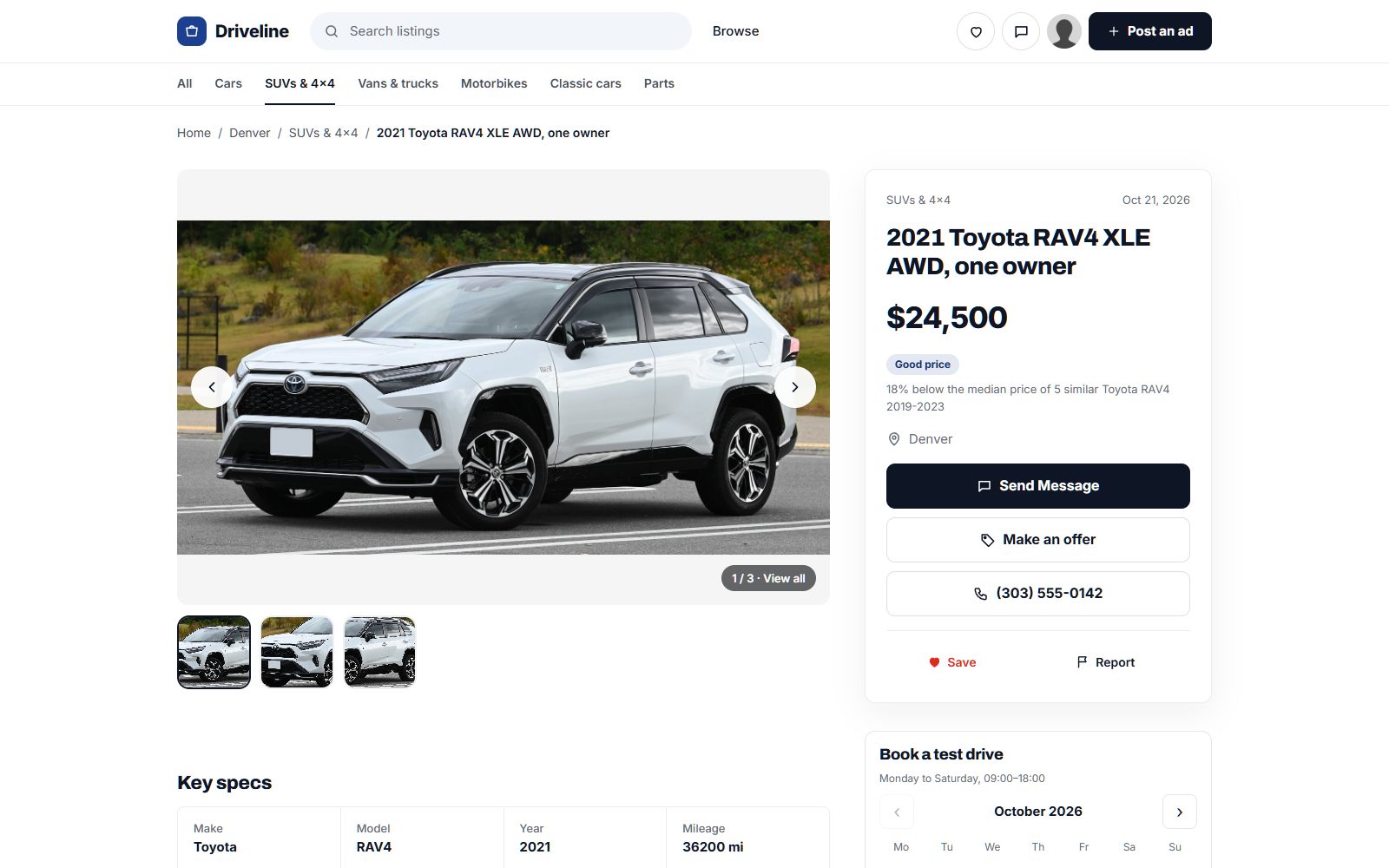
Photo credits
The screenshots show demo sites with made-up sellers. Their photos come from Wikimedia Commons, some cropped or with signs and plates blurred; these ones are under Creative Commons licences:
- Toyota Prius (XW60) Plug-in Hybrid IMG 9905, CC BY-SA 4.0
- Ford Mustang Mach-E GT IAA 2021 1X7A0176, CC BY-SA 4.0
- 1928 Alvis Front Wheel Drive (17355318404), CC BY 2.0
- Red Vespa scooter in front of Rocca Maggiore, Assisi, CC BY-SA 4.0
- Car alternator on a workbench surrounded by various auto parts in a garage setting, CC BY 2.0