
How to build an aircraft classifieds website that pilots and owners trust.
This guide covers how to build an aircraft classifieds website for planes, helicopters and parts: picking a corner of general aviation you can own, the fields pilots filter on, how the site earns money, where the first 100 aircraft come from, how to keep escrow scams out, which searches to target, and how to launch around the fly-in season.
Free for 15 days · No credit card · Plans from $19 a month
Pick a corner of general aviation you can own.
Aircraft buyers are few, careful and spread out. Someone shopping for a four-seat piston single may compare planes across several states and fly commercial to look at one. That makes a focused aircraft site useful: the big aviation listing sites and general sites like Craigslist or Facebook Marketplace carry everything from gliders to business jets, and the right plane is easy to miss among them.
Ways to narrow it
- By type: tailwheel and backcountry aircraft, homebuilts and experimentals, light sport, warbirds, helicopters, or one popular family such as the Cessna 170 to 182, Piper Cherokees or Beechcraft Bonanzas.
- By region: one country or a group of states where buyers can fly over for a pre-buy inspection in a day.
- By buyer: first-time owners and partnerships, flight schools replacing trainers, or owners selling shares in a co-owned plane.
- By part: used avionics, engines and airframe parts from shops and salvage yards.
Today these aircraft change hands through brokers, type club classifieds, hangar notice boards at the local airport, EAA chapter newsletters, Facebook groups for each model, and conversations at fly-ins. Each of those is a place to find sellers, and none of them lets a buyer filter by engine time.
An owner selling a Cherokee wants buyers who know Cherokees. Build the site those buyers bookmark.
Set up categories by aircraft type and fields by logbook facts.
Pilots judge an aircraft by its numbers before its photos: hours on the airframe, time on the engine since overhaul, the avionics panel and whether there is damage history. Keep categories to aircraft types and put those numbers into fields that work as filters. A listing without engine time gets skipped, so make the key ones required.
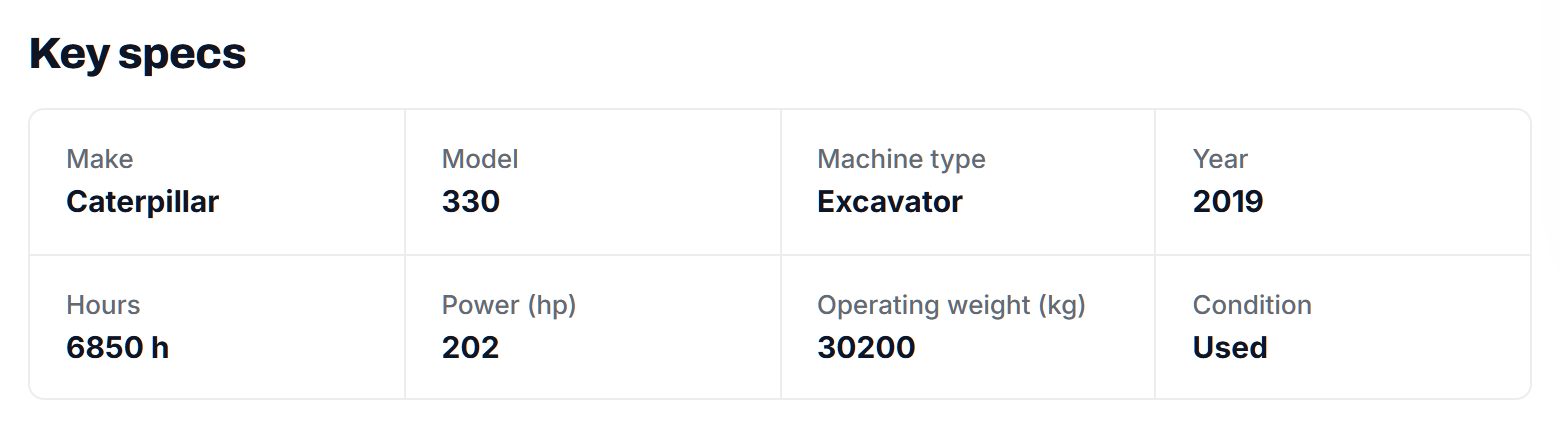
- Total time airframe (TTAF) and engine time since major overhaul (SMOH) are the first two things most buyers check, so use number fields that can be filtered by range.
- Avionics works best as checkboxes: ADS-B Out, GPS navigator, autopilot, glass panel, engine monitor.
- Damage history as a dropdown: no damage history, repaired damage, ask the seller.
- Registration as a text field, so buyers can look the aircraft up in the national registry.
Also add the annual inspection due date, useful load and number of seats. For parts, ask for the part number, the aircraft it fits and whether it comes with a serviceable tag or other paperwork.
| Category | Example listings | Fields buyers filter on |
|---|---|---|
| Single-engine piston | Cessna 172, Piper Cherokee, Beechcraft Bonanza | Make, model, year, TTAF, SMOH, avionics, annual due |
| Multi-engine piston | Piper Seneca, Beechcraft Baron | TTAF, time since overhaul per engine, de-ice, useful load |
| Turboprops and jets | King Air, Pilatus PC-12, light jets | Total time, engine program, cycles, seats, inspection status |
| Helicopters | Robinson R44, Bell 206 | Total time, time to overhaul, component times, floats |
| Experimental and light sport | Finished kit builds, light sport aircraft | Builder, completion year, engine type, hours, airworthiness category |
| Avionics and parts | Radios, autopilots, propellers, engines | Part number, fits aircraft, condition, paperwork included |
In Yclas, a field pack sets up equipment fields in one click, and you add aviation fields such as SMOH and annual due date as numbers, dropdowns, checkboxes or dates.
Charge where an aircraft listing is worth the most to the seller.
An aircraft is often the most expensive thing a private seller will ever list, and brokers sell several a year. That gives an aviation site more pricing room than most classifieds, but only once buyers are visiting. Keep private listings free while you build stock, and say so on the home page.
The first paying customers are usually brokers and dealers. They already pay for listings elsewhere and know what a lead is worth to them. Offer a membership that covers their whole inventory, with a profile page that shows their name and location. Featured listings come next: a private owner with an aircraft on the market for months will often pay to sit at the top of the category.
Banner spaces suit the businesses around ownership: aviation insurance brokers, aircraft lenders, avionics shops, maintenance shops doing pre-buy inspections and flight schools. Keep parts listings free or cheap for a long time, since they bring repeat visits from owners who are not shopping for a plane.
One broker with fifteen aircraft is worth more to a new site than a hundred one-off sellers.
| Model | Works when | Switch it on |
|---|---|---|
| Free private listings | You need stock and sellers who trust you | From day one |
| Broker and dealer memberships | Brokers post several aircraft a month | Once two or three brokers list regularly |
| Featured listings | Buyers browse categories with dozens of aircraft | When the main categories have steady traffic |
| Pay to post in aircraft categories | A sale is worth a lot to the seller | After the site ranks for model searches; keep parts free |
| Banner spaces | Insurers, lenders and shops want owners' attention | When you can show monthly visitors |
| Auctions with bidding and Buy now | Estates or shops need to clear parts or project aircraft | For parts and projects first, whole aircraft later |
Find your first 100 aircraft at airports, clubs and brokers.
Aircraft for sale are rarely hidden. They sit in hangars with a sign in the window, on airport notice boards and on brokers' own websites. Your job is to collect them in one place.
- Brokers and dealers. Most keep a spreadsheet of their inventory. Ask for it, import it, and send them the links. A single broker can fill a category.
- Type clubs and owner associations. Members often sell to other members. Offer the club a free section or a featured slot for members.
- Local airports. Walk the hangar rows and the FBO, note the for-sale signs, ask the owners whether you can list their aircraft, and post them with their permission.
- Maintenance and avionics shops. They know which customers are selling, and they have used parts and removed avionics on their shelves.
- Flying clubs and partnerships. Shares in co-owned aircraft are a listing type the big sites handle poorly.
- EAA chapters and homebuilders. Builders sell finished kits, partial projects and engines.
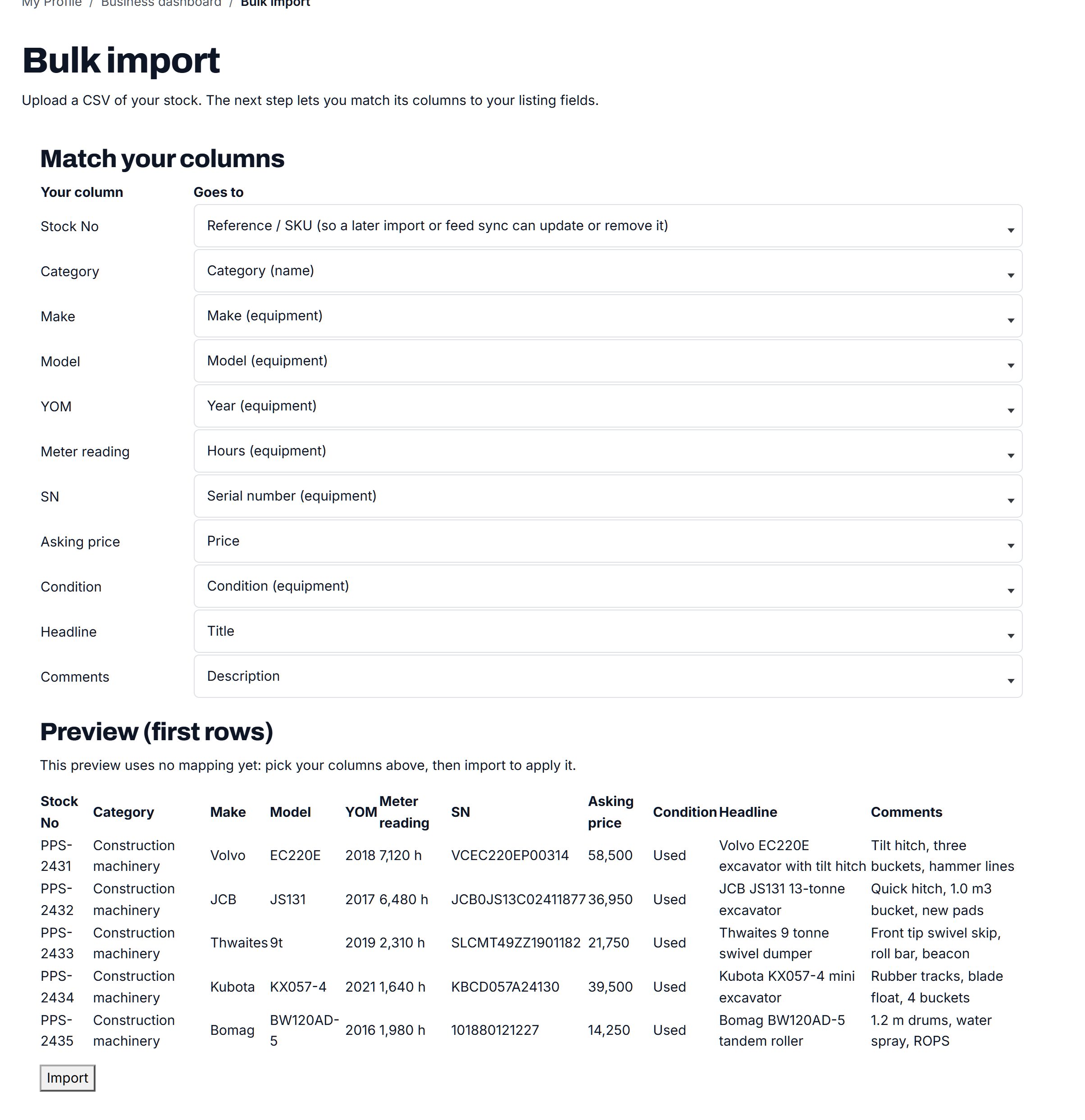
Listings can be imported from a spreadsheet (CSV), so broker inventory goes live without retyping. Before you post anything, ask every seller for the logbook numbers your required fields need: an aircraft without them looks like it is hiding something.
Keep escrow scams and stolen photos off the site.
Aircraft attract a well-known kind of fraud: a listing for a clean plane at a price well below market, photos copied from a real sale, and a seller who is abroad and wants a deposit or payment through an escrow company the buyer has never heard of. The escrow site is fake and the plane is not for sale. These listings show up on aviation marketplaces sooner or later.
Rules and checks
- Approve every listing at first, and look harder at new accounts, prices far below similar aircraft and contact details that push buyers off the site.
- Ask for the registration and check that it matches the aircraft in the photos. A seller who will not give it is a warning sign.
- Verify brokers and shops with a phone call and give them a verified seller badge, so buyers know which sellers you have checked.
- Ban words used in the scams you see, such as the names of fake escrow services, and let AI hold suspicious listings for review.
Advice for buyers
Publish a short safety page: see the aircraft and its logbooks in person, check the registry and a title search before paying, hire an independent mechanic for a pre-buy inspection, and never wire money to a seller or escrow service you have not checked yourself. Ownership transfer, registration and airworthiness rules differ by country, so check the rules where you operate and point buyers to their aviation authority.
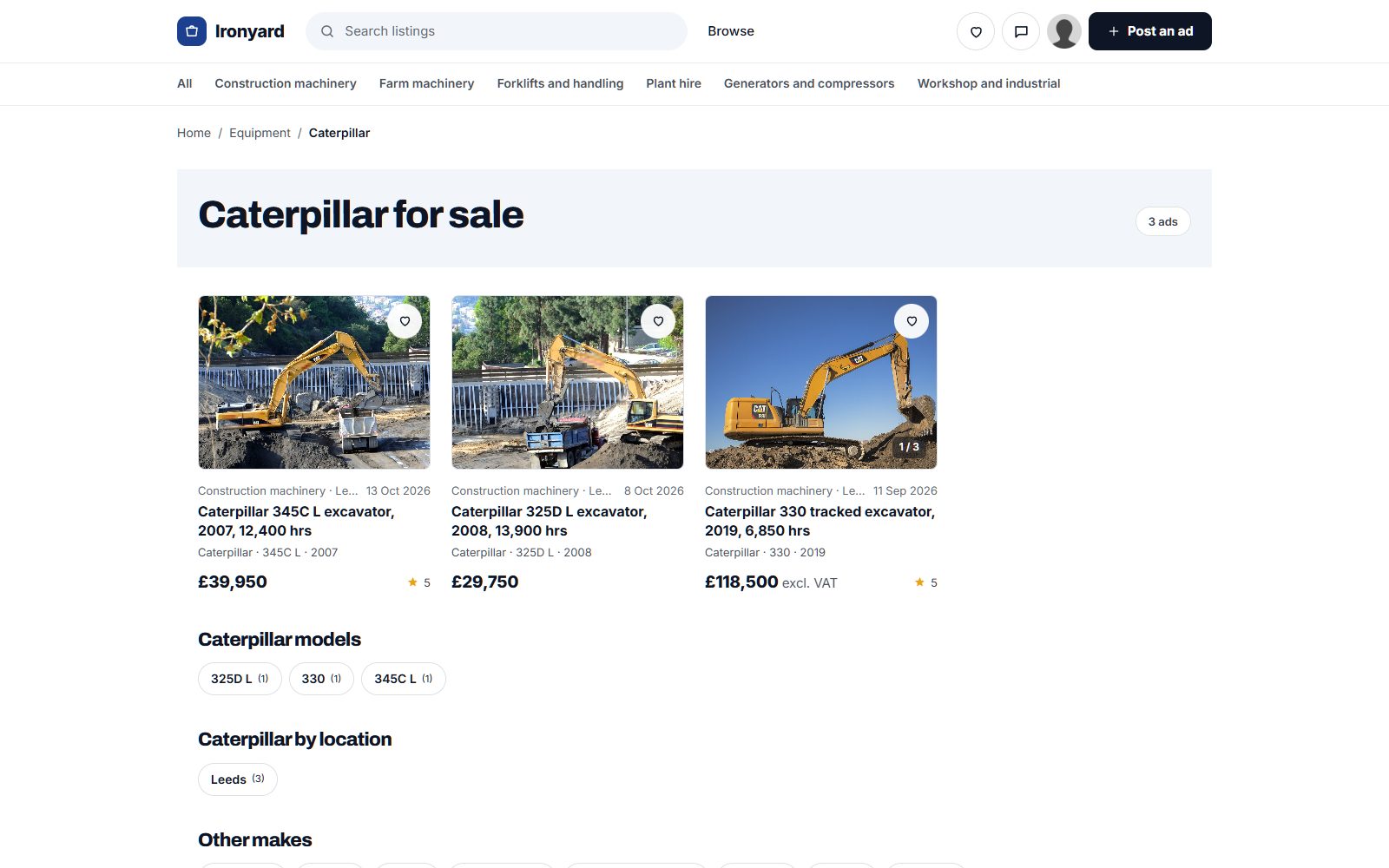
Rank for the model searches pilots make.
Aircraft buyers search by model, often with a year or a feature: "Cessna 182 for sale", "used Piper Arrow", "tailwheel aircraft for sale in Texas", "Robinson R44 for sale", "RV-7 for sale". Parts searches are more exact: "used Garmin GNS 430", "O-360 engine for sale", "Cessna 172 cowling".
Pages to build
- Model pages: one category or filtered page per popular model, with its own title and a short intro on what to look for.
- Location pages for states or regions, since many buyers want a plane they can fly home in a day.
- Buying guides per model: known inspection points, common upgrades, what owners say about useful load.
- Explainers for first-time owners: what SMOH means, what an annual inspection covers, how a pre-buy works, what co-ownership involves.
Set title patterns so every listing gets a title like "2004 Cirrus SR22, 1,150 SMOH, for sale in Arizona" without the seller writing it. Keep sold listings online, marked as sold, for a few months: aircraft pages pick up links from forums and type clubs, and those links keep their value.
A clear guide to reading aircraft logbooks will bring more first-time buyers than any banner.
Launch through one region and the fly-in calendar.
Start with one region or one aircraft family and make it feel complete before you go wider. A site with 60 Cherokees and Cessna singles in three neighboring states is more useful than 60 aircraft scattered across a continent.
Aviation has a calendar. Spring brings owners back after winter maintenance and annual inspections, and many decide to sell before the flying season. Spring and summer are fly-in season, with large events such as Sun 'n Fun in Florida and EAA AirVenture in Oshkosh in late July, plus many local pancake breakfasts and airport open days. Bring printed cards that point to your listing pages, talk to owners on the flight line, and ask to pin a notice at FBOs and flight schools.
Launch checklist
- Required fields for TTAF, SMOH, avionics, damage history and registration.
- At least 100 real listings, with brokers and parts sellers among them.
- A safety page about escrow scams and pre-buy inspections.
- Model and region pages with their own titles.
- Saved searches with email alerts, so buyers hear the day a matching aircraft is listed.
- Two or three partners: a type club, a maintenance shop, an insurance broker.
A worked example: a tailwheel aircraft site for the northern Rockies.
Here is how the advice above could come together on one site. Big Sky Taildragger Trader is a made-up example covering Montana, Idaho and Wyoming, a region of grass strips, backcountry airstrips and long distances between airports. It serves pilots who fly tailwheel aircraft into short, rough fields, plus the owners, mechanics and instructors who keep those aircraft flying.
Categories
- Tailwheel aircraft
- Cubs and Cub-style kits
- Cessna 170, 180 and 185
- Aeronca, Champion and Luscombe
- Backcountry upgrades
- Tundra tires, gear and skis
- STOL kits and propellers
- Shares and partnerships
- Avionics and parts
How it started
The founder is a tailwheel instructor who kept hearing the same question from students who had just earned their endorsement: where do I find a Cessna 170 that has never been ground looped? She began with a spreadsheet of 40 aircraft gathered from two brokers she knew, three type club members and the for-sale signs at five airports within a morning's flight. She imported that sheet, wrote a guide to buying a first taildragger, and shared the link in two backcountry flying groups she already belonged to. Within weeks, buyers were sending more questions than she had aircraft to show them, which told her the angle was right and that supply was the thing to work on.
Every listing on the site has the same required fields: TTAF, SMOH, tire size, ADS-B status and the month the annual is due. A text field asks for the airstrips the aircraft has been flown into, which backcountry buyers read closely because it says a lot about how the gear has been treated.
How it makes money
Private owners post free. Two brokers who specialize in Cubs and Cessna 180s pay a monthly membership that covers their inventory and gives them a verified badge. Owners pay for a featured listing in March and April, when buyers shop for the summer. A backcountry flying course and an aviation insurance broker each rent a banner space on the tailwheel pages. Parts and upgrades stay free to list, because the owner who comes for a set of tundra tires in May is likely to come back when the airplane itself goes on the market.
A narrow site in a region with its own kind of flying can feel complete with fewer than 100 aircraft.
| Sample listing | Asking price | Key details |
|---|---|---|
| 1953 Cessna 170B | $74,000 | 3,150 TTAF, 420 SMOH, 8.50 tires, ADS-B Out, annual due in June |
| 1946 Piper J-3 Cub | $52,500 | C-85 engine, fabric recovered in 2016, no electrical system, hangared near Boise |
| 1978 Cessna 180K | $185,000 | 4,800 TTAF, 900 SMOH, STOL kit, 29-inch tundra tires, GPS and autopilot |
| One-third share in an Aviat Husky A-1B | $68,000 for the share | Based in Missoula, two other partners, fixed costs split three ways, flying time scheduled between partners |
| Used Garmin GTX 345 transponder | $3,900 | ADS-B In and Out, removed in a panel upgrade, serviceable tag and tray included |
Big Sky Taildragger Trader and these listings are fictional, written to show how the fields work together.
Your first 90 days with an aircraft site.
The first three months decide whether brokers and owners take a new aviation site seriously. Aim to end the quarter with one region or aircraft family well covered, a few brokers posting on their own, and buyers who come back to check for new arrivals. Most of the work happens away from the keyboard: phone calls to brokers, walks along hangar rows, and conversations with type clubs and mechanics. Setting up the site itself takes days, not weeks.
Your season changes the order. If your 90 days start in winter, put more effort into brokers, buying guides and parts, since few owners are at the airport in January. If they start in spring, put airport visits first: that is when for-sale signs go up and owners come out of their annual inspections deciding whether to keep flying or sell. Keep a simple log of every seller you contact, what they own and when to call back.
Measure each week by the messages exchanged between buyers and sellers rather than by page views. An aircraft site is working when owners tell you a serious buyer found them through it.
| Weeks | Focus | Done when |
|---|---|---|
| 1-2 | Choose the region or aircraft family, set up categories and the required logbook fields | TTAF, SMOH, avionics, damage history and registration are required, and a test listing reads well on a phone |
| 3-4 | Brokers and type clubs | Two brokers have sent inventory spreadsheets, and one type club has agreed to mention the site to members |
| 5-6 | Airport and hangar visits | You have walked five airports, and at least 40 aircraft and parts are live with their owners' permission |
| 7-8 | Safety page and first buying guides | The escrow scam warning and two model buying guides are published and linked from every listing |
| 9-10 | Buyers and saved searches | Buyers are setting up email alerts, and the site has been shared in the model groups you belong to |
| 11 | Pricing pages and sold listings | Sold aircraft are marked as sold rather than deleted, and one model page shows recent asking prices |
| 12 | Review and first paid offer | 100 aircraft and parts are live, and one broker has been offered a membership based on the messages they received |
Choose how to build the site.
There are three common ways to put an aircraft classifieds site online. The right one depends on how much of your time should go into software rather than into hangars, brokers and type clubs.
Custom development means hiring developers to build exactly what you describe. It makes sense if your idea needs something no listings software does, such as pulling registry records automatically or matching buyers with pre-buy mechanics. It is the slowest and costliest route, and the maintenance and security updates continue for as long as the site runs.
A classifieds script or WordPress plugin on your own server costs less to start. Check that it supports number fields with range filters for TTAF and SMOH, checkboxes for avionics, and spreadsheet import for broker inventory, because many generic scripts handle little beyond a title, a price and free text. You will also look after the server, updates, backups and spam yourself.
A hosted builder such as Yclas gives you categories, custom fields, moderation and paid extras without a server to manage, which keeps your week free for airports and brokers. The trade-off is that you work within what the platform offers, so confirm that the fields and imports your aviation listings need are there before you commit.
Whichever route you take, pilots will judge the site on its filters and the quality of its listings. None of them will ask what it runs on.
| Route | Fits when | Watch out for |
|---|---|---|
| Custom development | You need something listings software does not do, such as automatic registry lookups | Long build time, high cost, and maintenance you fund for the life of the site |
| Script or WordPress plugin on your server | You or a partner can run a server and want full control of the code | Weak range filters and imports, plus updates, backups and spam control to handle yourself |
| Hosted builder | You want your time spent on brokers, clubs and airports | Check that custom fields, CSV import and moderation suit aviation listings before you start |
What an aircraft classifieds site costs to run.
The software is the smallest part of the bill. Most of the cost is your time in the first months: finding the first listings, answering questions and checking what gets posted.
Aviation-specific costs are mostly travel: visiting airports, hangars and fly-ins to meet owners and brokers. Exhibit space at the large fly-ins costs far more than a table at a local airport day, so start local. If you offer registry or title searches to buyers, budget for the provider's fee per search.
| Cost | Typical range | On Yclas |
|---|---|---|
| Domain | $10 to $20 a year | Your own, with SSL included |
| Software and hosting | $0 to $100+ a month, plus plugins and updates | Starter $19 a month, Professional $99 |
| Design | $0 to $100 for a theme, or a designer | 109 looks included |
| Payment fees | About 3% per payment | Your Stripe or PayPal fees; Yclas takes nothing |
| Your time | 5 to 10 hours a week at the start | Finding listings, moderation, support |
Mistakes that sink aircraft listing sites.
- Treating logbook numbers as optional. An aircraft listed without TTAF, SMOH or the annual due date gets passed over by experienced buyers, and the gaps make the seller look evasive. Make the core numbers required, and help owners who are unsure find them in their logbooks or ask their mechanic, who usually has the figures from the last annual.
- Covering every kind of aircraft from the first day. A site with two jets, one glider and a handful of Cessnas feels empty in every category it has. Fill one aircraft family or one region first, so the buyer who arrives finds a real choice.
- Letting escrow scams through while the site is small. One fake Bonanza at half price, reported on a type club forum, can mark a new site as unsafe for years. Approve every listing at first, check the registration against the photos, and answer every report the same day, since a quick response is what buyers remember.
- Seeing brokers as competitors. Brokers hold the most stock and have the most reason to pay for results. Treat them as your first customers: import their inventory and pass on every message it brings.
- Deleting aircraft the day they sell. Sold listings are what buyers use to judge asking prices, and they keep the links that forums and clubs gave them. Mark them as sold and leave them up for a few months.
- Writing only for pilots who already own. First-time buyers ask the most questions and read the most pages. If your guides assume they know what an annual covers or how a partnership splits costs, they will find their answers on another site, and buy there too.
- Offering to hold deposits or negotiate deals. Handling the money or acting between buyer and seller can make you look like a broker, with the rules and risks that come with that role. Let buyers and sellers deal directly, and check the rules where you operate before you change that.
- Charging private owners too early. An owner with one Cherokee will not pay to list on a site that has never sold one. Charge brokers and featured listings first, and keep private posting free until buyers visit every day.
- Accepting listings without the photos that matter. Aviation buyers want to see the panel, the logbooks, the engine and any corrosion, not just a sunset picture on the ramp. Publish a photo checklist and ask for it on every aircraft. Listings with logbook pages and a clear panel shot get more serious questions, and fewer calls from people who are only curious.
Aircraft listing terms every founder should know.
These terms come up in almost every aircraft listing and buyer question.
| Term | What it means |
|---|---|
| TTAF | Total time airframe: the hours the airframe has flown since it was built. |
| SMOH | Hours on the engine since its last major overhaul. |
| TBO | Time between overhauls, the number of hours the engine maker recommends before an overhaul. |
| Annual | The yearly inspection most private aircraft need to keep flying legally, done by a qualified mechanic. |
| Pre-buy inspection | An inspection by a mechanic the buyer chooses, carried out before the sale is agreed. |
| ADS-B Out | Equipment that broadcasts the aircraft's position, required in much controlled airspace in the US and some other countries. |
| Damage history | The record of any accident or repair after damage, usually found in the logbooks. |
| Useful load | The weight of people, fuel and baggage an aircraft can carry, its maximum weight minus its empty weight. |
| Experimental amateur-built | An aircraft built by its owner, often from a kit, and certified in a different category from factory aircraft. |
| Light sport aircraft | A category of small two-seat aircraft that, in the US, can be flown with a sport pilot certificate. |
| Serviceable tag | Paperwork showing a part was inspected or overhauled and is fit to install. |
| Logbooks | The airframe, engine and propeller records that document an aircraft's maintenance history. |
| Tailwheel | An aircraft with its third wheel under the tail rather than the nose, also called a taildragger. |
| Partnership share | Part ownership of an aircraft, where co-owners split the costs and the flying time. |
The same steps for an aircraft classifieds site on Yclas.
- Describe your nicheThe setup wizard writes the categories, an About page and example listings from one sentence.
- Add fieldsSwitch on a field pack or add the fields your buyers filter on.
- Fill itImport dealer spreadsheets, invite sellers and post your own.
- Set the rulesChoose moderation, banned words and AI checks.
- Go liveChoose a plan, connect your domain, switch on paid listings when it is time.
How much does it cost to start an aircraft classifieds website?
Software and a domain for an aviation listings site are a minor monthly expense. The larger costs are time and travel to airports, shops and fly-ins to meet brokers and owners.
Do I need a license to run an aircraft listings site?
A site where owners and brokers post their own aircraft is not the same as brokering aircraft yourself. If you plan to negotiate sales or hold money for buyers and sellers, check the rules where you operate first.
How do I compete with the big aviation listing sites?
Do not try to match their volume. Win one region, one aircraft family or one kind of buyer with better filters, faster answers and sellers you have checked.
How do I get my first aircraft sellers?
Start with brokers' inventory spreadsheets, type clubs and the for-sale signs at your local airports. Offer to post for them and send each seller the link to their listing.
Should I allow parts and avionics, or only whole aircraft?
Allow parts. They bring owners back every week, and an owner who buys a radio from you today may sell the whole plane on your site later.
How do I stop escrow scams?
Approve listings, check registrations against the photos, verify brokers, and publish a safety page that tells buyers never to pay an escrow service the seller picked.
When should I start charging?
When the main categories have steady visitors and brokers get messages through the site. Start with broker memberships and featured listings, and keep private listings free until then.
Should I accept aircraft located in other countries?
Only if your buyers can realistically buy them. Bringing an aircraft across a border involves registration changes, inspections and paperwork that differ by country, so a regional site usually does better listing aircraft buyers can fly home.
Are partnership shares worth a category of their own?
Yes. Shares suit first-time owners and are poorly served elsewhere. Ask for the share size, the home airport, how costs are split and how flying time is scheduled between partners.
Do I need to be a pilot to run an aircraft site?
It helps but is not required. What matters is learning the language of logbooks and pre-buys, and having a few pilots or mechanics you can ask when a listing looks wrong.
How do I keep old listings from piling up?
Ask sellers to confirm their listing every month or two, and mark as sold any that go unanswered. Aircraft that sold long ago waste buyers' calls and quietly erode trust in the rest of the site.
Should helicopters and turbine aircraft share the site with light singles?
If your angle is light general aviation, keep them in one small category or leave them out at first. Their buyers and brokers move in different circles, and a few of them can make the site look unfocused.
Related pages.
The parts of Yclas this leans on.
You have the plan. Now build your aircraft site.
Describe your site in a sentence and the setup wizard writes the categories, example listings and a look. Free for 15 days, no credit card.
Start my classifieds site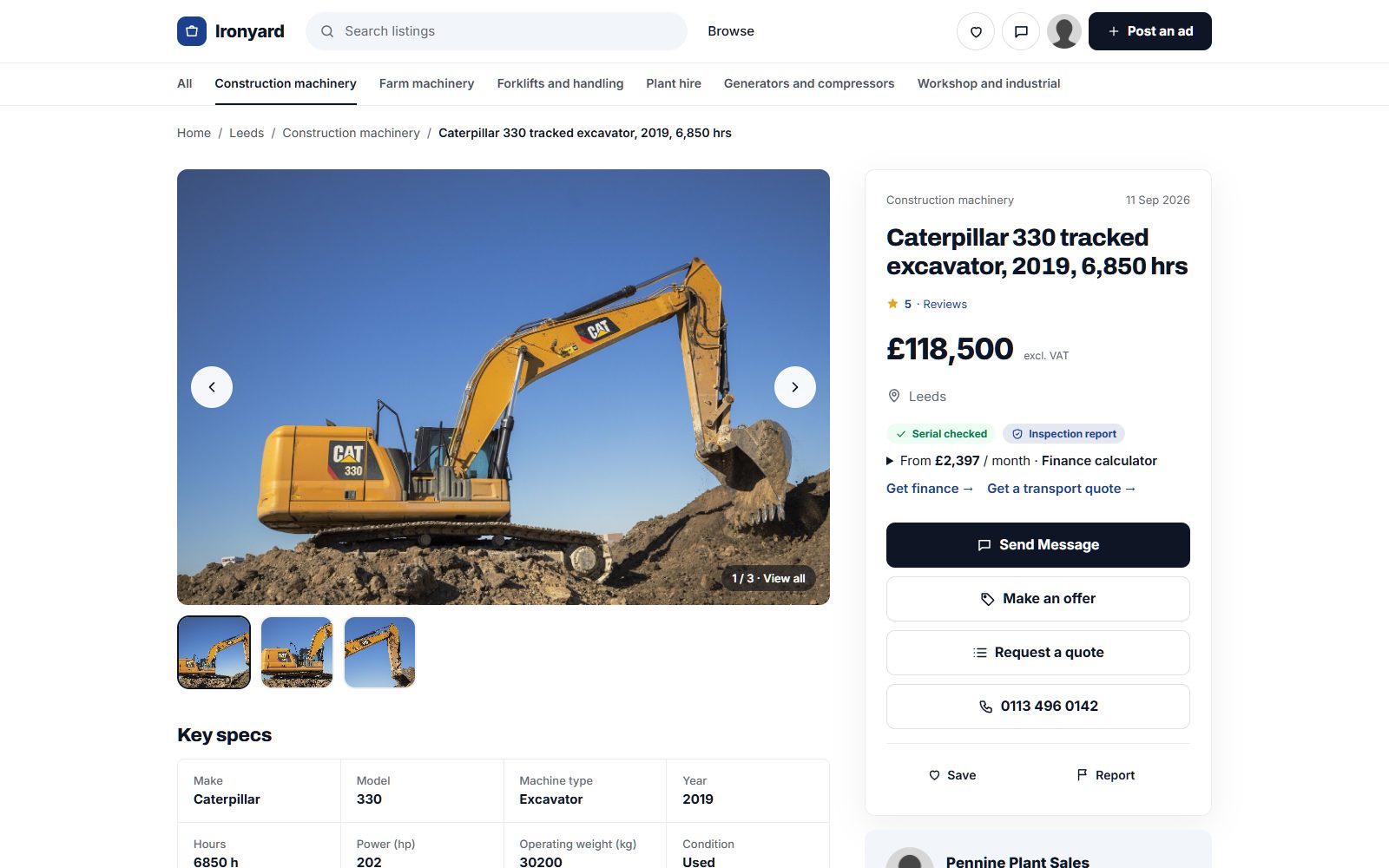
Photo credits
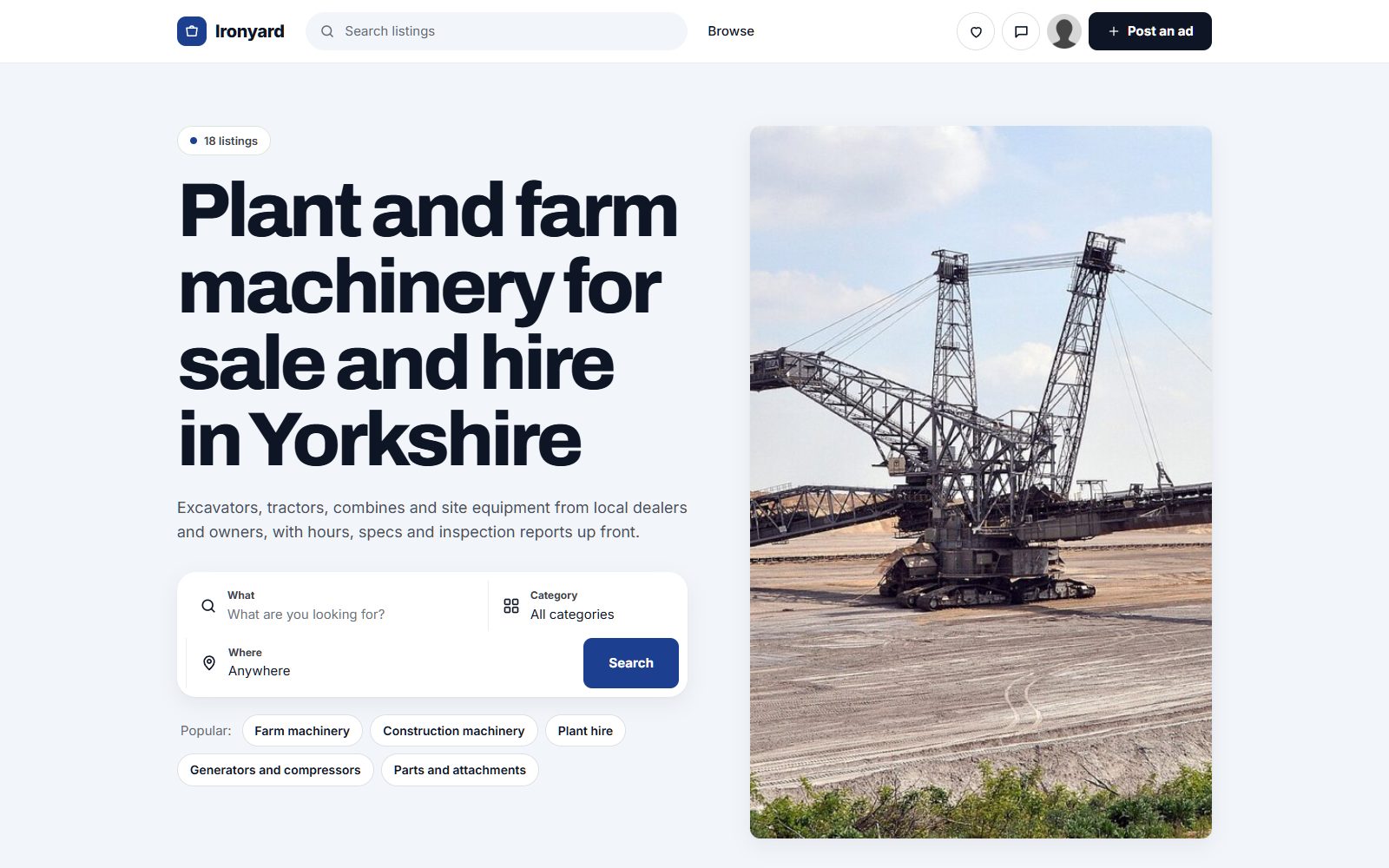
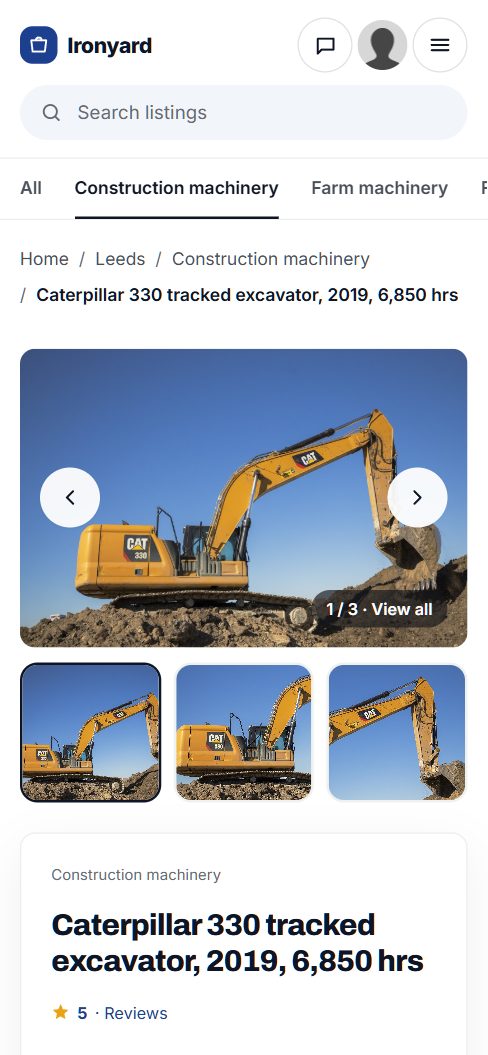
The screenshots show demo sites with made-up sellers. Their photos come from Wikimedia Commons, some cropped or with signs and plates blurred; these ones are under Creative Commons licences:
- Caterpillar 330 excavator on a pile of dirt by Matthew T Rader, CC BY-SA 4.0
- Excavator, Sany, 2021 Changsha International Construction Equipment Exhibition, Picture2 by Huangdan2060, CC BY 3.0
- JCB backhoe loader with hydraulic breaker, 2019 Szigetszentmiklós by Globetrotter19, CC BY-SA 3.0
- Polaris ATV Winch (53034864566) by Tony Webster, CC BY 2.0
- Round baler 3070 by Flominator, CC BY-SA 3.0
- Heavy equipment 2022 by Lowcarb23, CC BY-SA 4.0