
How to build a restaurant equipment classifieds website kitchens rely on.
This guide covers running a classifieds site for used commercial kitchen equipment: ovens, ranges, refrigeration, ice machines, dishwashers and whole kitchens from closing restaurants. It explains how to choose your area, the fields chefs and owners filter on, how the site earns money, where the first 100 listings come from, the risks to manage, the searches to rank for, and the launch.
Free for 15 days · No credit card · Plans from $19 a month
Connect restaurants that are closing or upgrading with those that are opening.
Restaurants open and close all the time, and every closure leaves a kitchen full of equipment that someone else needs. New owners want to save on fit-out costs, and established kitchens want a backup fryer or a second walk-in without paying new prices. The trade is constant, but it is scattered.
On general sites, a six-burner range is listed next to home stoves, with no mention of gas type, width or whether it has a standing pilot. A commercial buyer needs to know the voltage and phase of a combi oven before they even call, because a three-phase unit is useless in a building without three-phase power. A focused site asks those questions up front.
Pick your angle
- One metro area: heavy equipment is collected, not shipped, so a city-wide site is a strong start.
- Whole kitchens and closures: listings for complete restaurants being cleared out, which attract buyers fitting out a new place.
- One segment: pizza and bakery equipment, bar and brewery gear, or refrigeration only.
Where the trade happens today
Used equipment moves through restaurant auction houses, used equipment dealers with warehouses, liquidators who clear closed premises, Facebook groups for local chefs and owners, and word of mouth among refrigeration technicians. Spend time at a few auctions: you will meet the dealers who become your first sellers.
The buyer's first question is whether it will run in their kitchen. Answer it on every listing.
Organize by kitchen station and filter on power, fuel and size.
Group categories the way a kitchen is laid out: cooking, refrigeration, warewashing, food prep, bar and storage. Keep it to one or two levels. The details that decide a purchase belong in fields.
The three questions every buyer asks are fuel or power, size, and condition. For gas equipment that means natural gas or propane. For electric equipment it means voltage and single or three phase. Width matters because the unit has to fit under an existing hood or in a gap on the line. Condition should be a dropdown (working, tested and serviced, needs repair, for parts) rather than free text, so buyers can filter out broken gear.
Add a checkbox for listed for commercial use where sellers can confirm the unit carries a commercial safety or sanitation listing, since many inspectors expect it. With Yclas custom fields each of these can be a dropdown, number or checkbox, required or optional, and shown as a search filter.
| Category | Example listings | Fields buyers filter on |
|---|---|---|
| Cooking | Ranges, fryers, griddles, convection and combi ovens, pizza ovens | Brand, fuel (natural gas, propane, electric), width, voltage and phase, condition |
| Refrigeration | Reach-in coolers, prep tables, walk-ins, freezers | Doors, cubic feet, refrigerant, self-contained or remote, condition |
| Ice and beverage | Ice machines, beer coolers, espresso machines | Output per day, cooling type (air or water), voltage, condition |
| Warewashing | Door-type and undercounter dishwashers, sinks | High or low temperature, racks per hour, voltage, condition |
| Food prep | Mixers, slicers, food processors, prep tables | Capacity in quarts, attachments included, voltage, condition |
| Whole kitchens | Complete restaurant clear-outs, hood systems | Location, pickup deadline, items included, sold as one lot or separately |
Voltage and phase are worth making required for every electric item: a wrong guess means the unit cannot be used.
Charge the dealers and liquidators who post every week.
Two kinds of sellers use a site like this. One-off sellers are restaurant owners clearing out a closed kitchen or replacing a single unit. Repeat sellers are used equipment dealers, liquidators and auction houses with new stock every week. Keep posting free for the first group, and build your income around the second.
Dealer memberships are the natural fit: a monthly fee for unlimited listings and a profile page with their warehouse address and opening hours. Featured listings work for whole-kitchen clear-outs, which have a pickup deadline and need attention fast. Auctions suit liquidators who would rather sell a lot quickly than wait for the best price.
Banner spaces suit businesses that serve kitchens: refrigeration technicians, hood cleaning companies, equipment repair shops, installers and food suppliers. They pay to reach restaurant owners who are opening or fitting out. Wait until you can show steady visitor numbers in your area before you sell those spaces, so the first advertisers renew.
| Model | Works when | Switch it on |
|---|---|---|
| Dealer and liquidator memberships | Several dealers post stock every week | After two or three dealers list regularly |
| Featured listings | Whole-kitchen clear-outs need buyers before a pickup date | When the site gets daily visitors from local restaurants |
| Pay to post in high-value categories | Walk-ins, combi ovens and hood systems are worth a lot to the seller | When those categories already get messages |
| Banner spaces | Repair, installation and hood cleaning firms want restaurant owners | When you can show monthly visitor numbers |
| Auctions | Liquidators want a fast, fair price for a whole lot | Once you have enough buyers to bid on each lot |
Get the first 100 listings from dealers, liquidators and closures.
Restaurant equipment is one of the easier niches to fill, because dealers hold large inventories and every closure creates dozens of listings at once.
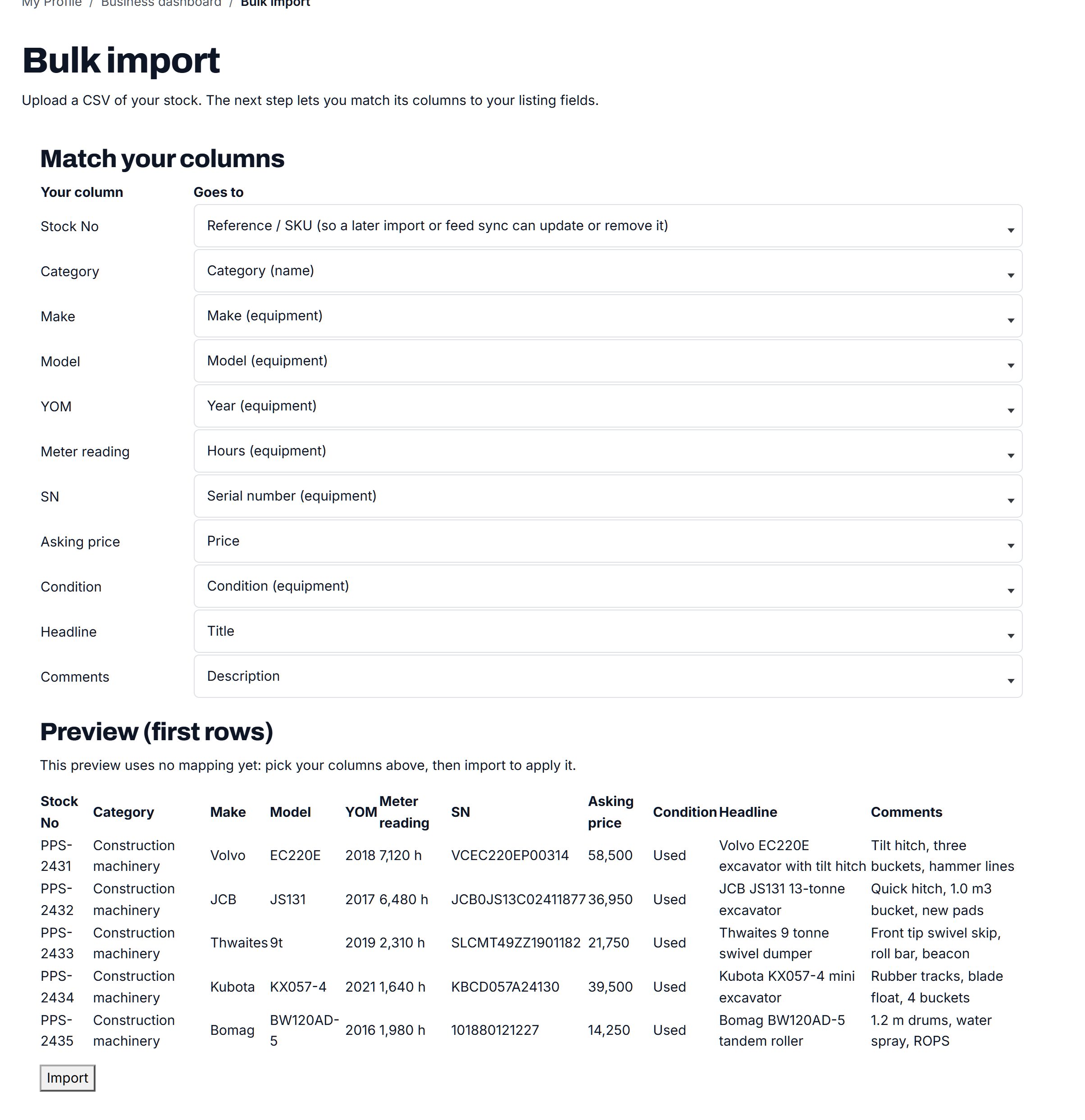
- Used equipment dealers. Most cities have a few dealers with warehouses full of refurbished gear. Many keep stock in a spreadsheet. Import it for them and send them the buyer messages it brings.
- Liquidators and auction houses. They clear closed restaurants and need buyers quickly. Offer to post their lots before each sale.
- Refrigeration and repair technicians. Techs replace units every week and know which owners have working equipment to sell. Ask them to pass on your site and to post refurbished units themselves.
- Restaurant brokers and landlords. When a restaurant changes hands, the equipment often has to go. Brokers and commercial landlords know first.
- Local chef and owner groups. Contact members who posted equipment in the last month and offer to list it with full specs.
Photos should show the data plate. It gives the model number, voltage and gas type, and saves buyers a lot of questions. With Yclas a seller can take a photo and let AI write the title, description, category and price for them to check.
One restaurant closure can put fifty listings on your site in a day. Make liquidators your first call.
Protect buyers from broken units, leased gear and pickup scams.
Commercial kitchen equipment is heavy, expensive and often sold in a hurry when a restaurant closes. That creates a few specific risks.
Risks typical of this niche
- Leased or financed equipment. Ice machines, dishwashers and espresso machines are often leased, and some kitchen equipment is used as loan security. A seller may list something they do not own outright.
- Units sold as working that are not. Refrigeration that has been off for months may have compressor or refrigerant problems that only show after installation.
- Equipment taken from premises without permission. After a closure, the landlord or a lender may have a claim on what is left.
- Deposit scams. Fake listings with photos lifted from dealer sites, asking for payment before a viewing or for "freight" arranged by the seller.
Rules and moderation
- Ask sellers to confirm the item is owned, not leased, and state its condition from a fixed list.
- Approve every listing while the site is small, and hold listings priced far below similar ones.
- Remove listings that insist on payment before viewing.
Advice for buyers
Publish a short guide: check the data plate matches what your kitchen supports, see refrigeration running and holding temperature, ask how long it has been out of service, budget for a technician to install it, and confirm the seller has the right to sell it. Gas, electrical and hood work is regulated, so check the rules where you operate and use licensed installers.
Rank for brand, model and city, the way chefs search.
Restaurant equipment buyers search with brand and model names, often with "used" and their city. Many search from the kitchen with a broken unit and need a replacement this week.
- "used commercial refrigerator for sale near me"
- "used Hobart mixer 20 quart"
- "used pizza oven for sale"
- "restaurant equipment liquidation Chicago"
- "used ice machine for restaurant"
Pages to build
- Category plus city pages: used ovens, refrigeration and ice machines in each city you cover.
- Brand pages: True, Hobart, Vulcan, Rational, Hoshizaki, Manitowoc, Turbo Chef and others that buyers search for by name.
- Buying guides: what to check on a used walk-in, gas versus electric fryers, air-cooled versus water-cooled ice machines.
- Price guides: typical used prices for common units in your area, drawn from your own listings.
Content ideas
Publish a checklist for opening a restaurant on a used equipment budget, a guide to reading data plates, and a page explaining voltage and phase in plain terms. Short case studies of a kitchen fitted out from the site do well with local restaurant groups and earn links that a list of listings never will.
Launch in one city, with dealers and liquidators on board first.
Restaurant equipment trades all year, but there are patterns. Restaurant openings cluster before busy seasons, many closures happen after the slow months early in the year, and summer brings demand for refrigeration and ice machines when old units fail in the heat. Launch in time to catch one of those waves.
First community
Pick one metro area with a busy restaurant scene and at least two or three used equipment dealers. A single city keeps pickups realistic and lets you meet sellers in person.
Partners
- Used equipment dealers and liquidators, for stock.
- Restaurant associations and culinary schools, for buyers opening new places.
- Refrigeration and repair technicians, for referrals and refurbished units.
- Commercial real estate brokers who handle restaurant spaces.
Launch checklist
- Categories by kitchen station, with required fuel, voltage and condition fields.
- A whole kitchens category for closures, with pickup deadlines.
- At least 100 real listings from your launch city.
- Brand pages for the most searched makes.
- A buyer guide and posting rules linked from every listing.
- Your own domain with SSL and a headline that names the city.
Line up the dealers before you announce the site to restaurant owners.
A worked example: a used kitchen equipment site for one metro area.
Consider Lakeline Kitchen Surplus, a fictional classifieds site for used commercial kitchen equipment in Milwaukee and southeastern Wisconsin. Its founder spent ten years as a refrigeration technician. Owners kept asking him where to find a used walk-in or a replacement ice machine, and he kept sending them to the same two warehouses or to an auction three weeks away. He built the site so those owners had somewhere to look on the day the old unit died.
Categories
- Cooking
- Ranges and ovens
- Fryers and griddles
- Refrigeration
- Reach-ins and prep tables
- Walk-ins
- Ice machines
- Warewashing
- Food prep
- Whole kitchens and closures
Who it serves
Buyers are owners opening a first restaurant on a tight budget, established kitchens replacing one failed unit, and caterers and food trucks looking for smaller pieces. Sellers are two used equipment dealers, a liquidator who clears closed restaurants, a few technicians who refurbish units on the side, and owners selling off a closed kitchen. Most buyers live within an hour of the city, which keeps pickups simple and lets them see refrigeration running before they hand over money.
How it started
He launched in February, when the restaurants that struggled through the holidays tend to close. The liquidator gave him the first whole-kitchen listing, a closed diner with a pickup deadline, and it filled the cooking and refrigeration categories in a single afternoon. The two dealers sent spreadsheets, which he imported with their data plate photos.
His rule was that every electric item had to state voltage and phase, and every gas item had to state natural gas or propane. Buyers stopped calling to ask, and dealers noticed that the questions they did get were from people ready to buy. He also asked for a photo of every data plate, which let him spot the occasional listing whose plate did not match the description before it went live.
How it makes money
Owners selling one unit post free. Dealers and the liquidator pay a monthly membership, and closures are sold as featured listings, since they have days rather than weeks to clear. Banner spaces went to a hood cleaning company and a repair shop. In the second year he began running timed auctions for the liquidator's larger lots, once enough regular buyers were watching the site to make bidding worthwhile. Technicians who refurbish units on the side pay nothing yet, because their listings are the ones buyers trust most.
| Listing | Price | Key details |
|---|---|---|
| 36-inch six-burner range with standard oven | $1,450 | Natural gas, tested, all pilots light, pickup at loading dock |
| Two-door reach-in refrigerator | $1,900 | 115V, holding 36°F, new door gaskets fitted |
| Air-cooled ice machine with bin, about 400 lb per day | $2,300 | 208-230V single phase, descaled last month |
| 20-quart planetary mixer | $1,700 | 115V, bowl, hook, whip and paddle included |
| Whole kitchen from a closed diner | $18,000 or best offer | Hood with suppression, two fryers, griddle, walk-in panels, everything out by the 30th |
The first 90 days: stock first, buyers second.
In this niche supply is easier than demand. Dealers and liquidators have warehouses of equipment, but restaurant owners only look for a site when something breaks or a new place is being fitted out. The first 90 days should get the stock in place and then put the site in front of owners at those moments.
Start by fixing the structure: kitchen-station categories, required fuel, voltage and phase, and a condition list instead of free text. Then sign the businesses that hold stock, beginning with whoever clears closed restaurants, since one closure fills several categories at once. Only after that, go after the buyers, through the people restaurant owners already call: technicians, associations, culinary schools and commercial real estate brokers.
Watch how many messages each category gets, not just how many listings it holds. Refrigeration and ice machines usually draw urgent buyers, and they will tell you which dealers to sign next. If one station stays quiet after week eight, ask the technicians on your list what owners are struggling to find, and go after that stock.
| Weeks | Focus | Done when |
|---|---|---|
| 1-2 | Map the local trade: dealers, liquidators, auction houses, technicians | A list of the dealers and liquidators within an hour's drive, with a contact at each |
| 3-4 | Build station categories and required fuel, voltage, phase and condition fields | Twenty test items filter correctly by fuel type and by single or three phase |
| 5-6 | Sign the first liquidator and post a whole-kitchen closure | One closure live with a pickup deadline and every item listed |
| 7-8 | Import dealer inventories with data plate photos | Two dealers live and at least 100 items on the site |
| 9-10 | Reach technicians, the restaurant association and culinary schools | Three technicians referring owners and one association mention published |
| 11 | Publish brand pages and a used walk-in buying guide | Pages live for the ten most listed brands |
| 12 | Offer dealer memberships and featured closures | At least one dealer on a paid membership and one featured closure sold |
Three ways to build it, and what a kitchen equipment site needs.
A used restaurant equipment site lives on structured data. Each station needs its own fields: refrigerant and door count for a reach-in, racks per hour for a dishwasher, BTU and fuel for a range. Dealers hold hundreds of items and need bulk imports that keep photos attached. Closures need a lot listing with a deadline, and liquidators may want auctions. The route you choose should handle all of that without months of work.
A custom build by developers is justified if you want something unusual, such as reading the model number off a data plate photo and filling in specs from a database you maintain. Most founders do not need that on day one, and a custom site is expensive to change once dealers start asking for features.
A self-hosted classifieds script or a WordPress plugin costs little up front and gives you full control. You will be the one handling server updates, backups, spam and performance when a dealer uploads 300 photos at once. Before choosing one, confirm it supports different fields per category, bulk import and auctions, or plan to add them yourself.
A hosted builder such as Yclas gives you category fields, search filters, spreadsheet imports, featured listings and auctions without running a server. You trade away some control over the code. For a founder whose time is better spent walking dealer warehouses and meeting liquidators, that is usually the right trade. Whichever route you pick, test it with one real dealer file before launch.
| Route | Fits when | Watch out for |
|---|---|---|
| Custom build | You want data plate reading, spec databases or dealer system feeds | High cost, slow launch and dependence on the developers for every change |
| Classifieds script on your own server | You can run a server and want the code in your hands | Missing per-category fields or auctions, plus security and backups |
| WordPress and a classifieds plugin | You already run a restaurant industry blog on WordPress | Slow search with thousands of items and plugins that clash after updates |
| Hosted builder | You want station fields, imports and auctions ready from launch | Less freedom to change how the site works underneath |
What a restaurant equipment classifieds site costs to run.
The software is the smallest part of the bill. Most of the cost is your time in the first months: finding the first listings, answering questions and checking what gets posted.
Expect to spend time and some money at restaurant equipment auctions and association events to meet dealers. If you plan to run auctions for liquidators, budget for the time it takes to photograph and describe each lot, or ask the liquidator to do it.
| Cost | Typical range | On Yclas |
|---|---|---|
| Domain | $10 to $20 a year | Your own, with SSL included |
| Software and hosting | $0 to $100+ a month, plus plugins and updates | Starter $19 a month, Professional $99 |
| Design | $0 to $100 for a theme, or a designer | 109 looks included |
| Payment fees | About 3% per payment | Your Stripe or PayPal fees; Yclas takes nothing |
| Your time | 5 to 10 hours a week at the start | Finding listings, moderation, support |
Mistakes that hold back a restaurant equipment site.
- Leaving voltage and phase optional. A three-phase combi oven is scrap to a kitchen without three-phase power, and the buyer only finds out after hauling it home. Make voltage and phase required on every electric item, and fuel type on every gas item.
- Free-text condition. Every seller calls their unit good. A fixed list, such as tested and working, serviced, needs repair or for parts, lets buyers filter out broken gear and gives you something to enforce when a buyer complains.
- Building a deep category tree. Separate categories for every brand and every oven type leave most of them empty. Chefs browse by station and filter by brand, so keep two levels at most. A buyer who clicks into an empty brand category rarely clicks a second time.
- Chasing restaurant owners before dealers. Owners sell one item at a time and only when they have to. Dealers and liquidators can put hundreds of items on the site in a week. Sign them first, then announce the site, so the first owners who visit find the reach-in or fryer they came for.
- Promising easy shipping. A walk-in or a six-burner range is heavy, awkward and often needs a forklift or a dock. Make pickup location required, ask whether the item is on a dock or needs removing, and let small items like slicers be marked as shippable.
- Letting closure listings outlive the pickup date. A whole-kitchen listing still showing a week after the building was cleared wastes buyers' time and makes the site look neglected. Ask liquidators for a deadline and expire those listings on it.
- Ignoring leased and financed gear. Ice machines, dishwashers and espresso machines are often leased. If you never ask about ownership, a buyer will eventually get a call from the leasing company. Ask sellers to confirm they own each item.
- Saying nothing about installation. Gas, electrical and hood work is regulated and usually needs a licensed installer. A buyer who connects a used range themselves and has a problem will remember where they bought it. Put installer advice in your buyer guide, and keep a list of local refrigeration and gas technicians buyers can call.
- Hiding the data plate. Without a photo of the plate, buyers cannot check model, voltage or gas type, and every listing turns into a phone call. Ask for that photo on every powered item.
- Pricing banners before you have proof. Hood cleaners and repair shops will pay to reach restaurant owners, but only once you can show how many owners visit. Selling a banner too early at a guessed price leads to a non-renewal and an advertiser who tells others the site did not work.
Commercial kitchen terms a founder should know.
Dealers, technicians and chefs will use these words in listings and messages, so your fields and guides should match them.
| Term | What it means |
|---|---|
| Data plate | The label on a unit giving brand, model, serial number, voltage, phase, amperage or gas type. |
| Single phase and three phase | Two types of electrical supply; many large commercial units need three phase, which not every building has. |
| 208V, 230V and 115V | Common voltages for commercial equipment in the US; a unit must match the supply where it will be installed. |
| NEMA plug | The standard plug shape that tells a buyer which outlet the unit needs. |
| BTU | British thermal units, the heat output rating used for gas ranges, fryers and ovens. |
| Natural gas or propane | The two gas supplies; some units can be converted between them with the right kit and a qualified installer. |
| Reach-in | An upright refrigerator or freezer with doors, used on or near the line. |
| Walk-in | A room-sized cooler or freezer built from insulated panels with a separate refrigeration system. |
| Self-contained or remote condenser | Whether the refrigeration unit sits on the cabinet itself or is mounted elsewhere, often on the roof. |
| Standing pilot | A small gas flame that stays lit on older ranges and fryers, as opposed to electronic ignition. |
| High-temp and low-temp dishwasher | Dishwashers that sanitize with very hot rinse water or with chemicals at lower temperatures. |
| Commercial safety listing | A mark from a recognized testing body showing the unit was certified for commercial use, which many inspectors look for. |
| Type I hood | An exhaust hood with grease filters and fire suppression, required over grease-producing equipment in many places. |
| As-is | Sold in its current condition, with no promise that it works and no return. |
The same steps for a restaurant equipment classifieds site on Yclas.
- Describe your nicheThe setup wizard writes the categories, an About page and example listings from one sentence.
- Add fieldsSwitch on a field pack or add the fields your buyers filter on.
- Fill itImport dealer spreadsheets, invite sellers and post your own.
- Set the rulesChoose moderation, banned words and AI checks.
- Go liveChoose a plan, connect your domain, switch on paid listings when it is time.
Do I need a license to run a restaurant equipment classifieds site?
Usually not, because you list equipment that others sell and do not handle the goods. If you start buying, refurbishing or brokering equipment yourself, check the rules where you operate.
How do I stop leased equipment being sold on my site?
Ask sellers to confirm they own each item, remind buyers to ask for proof of ownership on expensive units, and remove listings reported as leased or under a lender's claim.
Who should I ask first for used kitchen equipment?
Used equipment dealers, liquidators and auction houses hold the most stock. Refrigeration technicians and restaurant brokers point you to owners with equipment to sell.
Should I allow shipping, or only local pickup?
Allow both, but make pickup location required. Most heavy equipment is collected, while small items like slicers and espresso machines can ship.
How does a restaurant equipment site make money?
Memberships for dealers and liquidators who post weekly, featured listings for whole-kitchen clear-outs, and banner spaces for repair and installation businesses.
Can I compete with eBay and Craigslist?
Yes, locally. Buyers of heavy equipment want it nearby, with voltage, fuel and condition stated, and general sites do not ask for those details.
Should I run auctions for closed restaurants?
It can work for liquidators who want a fast sale of a whole lot. Start with fixed-price listings and add auctions once enough buyers visit to make bidding worthwhile.
Should I allow new and scratch-and-dent equipment?
Yes, with their own condition values. Scratch-and-dent units from dealers sell well, but buyers searching for used bargains should be able to filter them out. Ask dealers to describe the damage and say whether the warranty still applies.
What should happen to a closure listing after the pickup date?
Set an expiry date on whole-kitchen listings that matches the liquidator's deadline, and remind the seller to mark sold items as they go so buyers do not chase gear that has already left.
Do I need to inspect the equipment myself?
No, and you should not suggest you have. Ask sellers for clear condition statements and data plate photos, and advise buyers to have a technician look at anything expensive before they pay. Your role is to set the rules and act on reports, not to vouch for each unit.
Should I let sellers list smallwares like pans and plates?
Add a single smallwares category once the main stations are full. It brings a lot of small listings, so keep it separate so it does not bury the heavy equipment. Bulk lots, such as a full set of hotel pans, work better than single items here.
How do I handle questions about converting gas units?
Add a field where sellers can say whether a conversion kit is included, and tell buyers that any conversion should be done by a qualified installer under the rules where they operate.
Related pages.
The parts of Yclas this leans on.
You have the plan. Now build your restaurant equipment site.
Describe your site in a sentence and the setup wizard writes the categories, example listings and a look. Free for 15 days, no credit card.
Start my classifieds site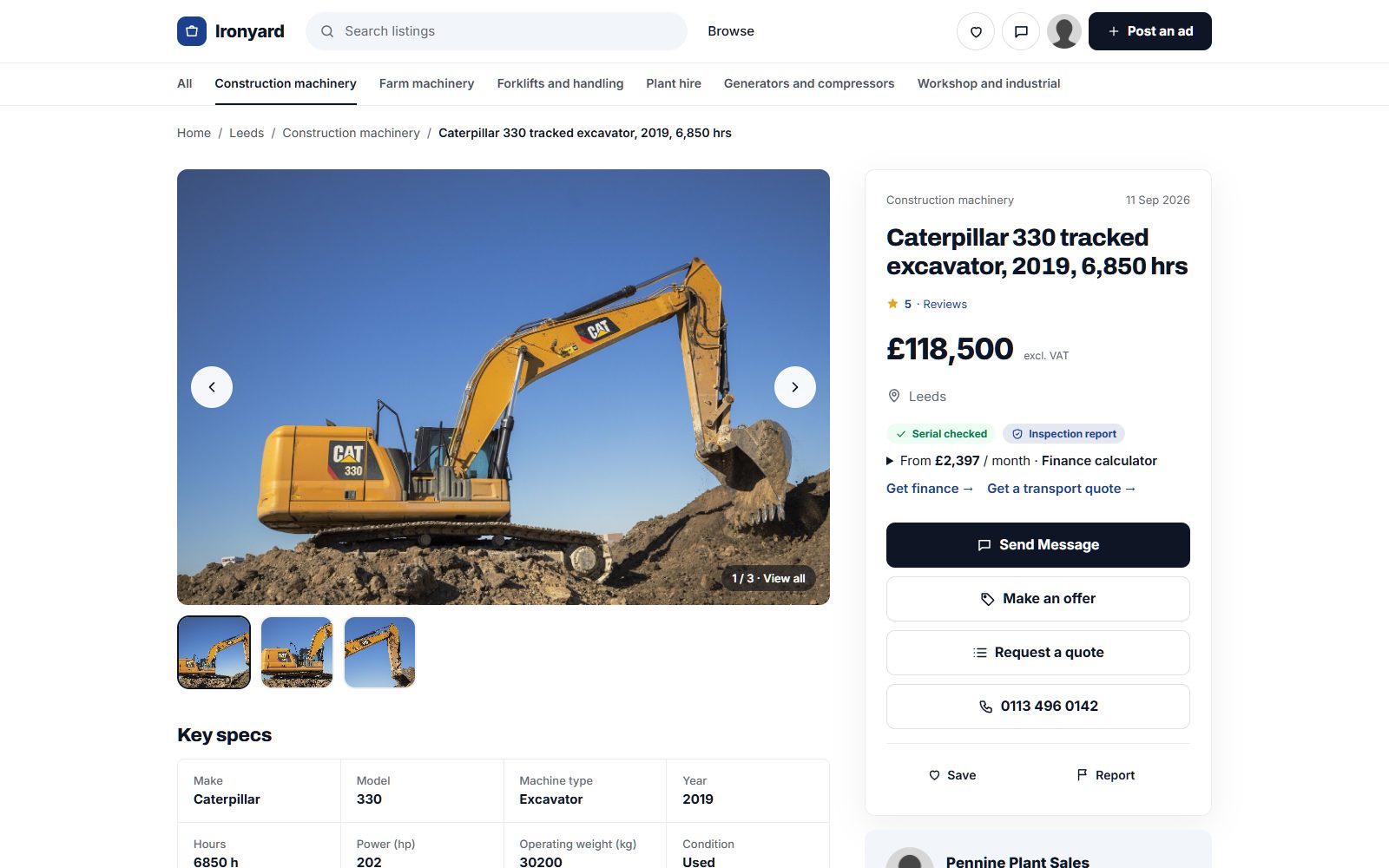
Photo credits
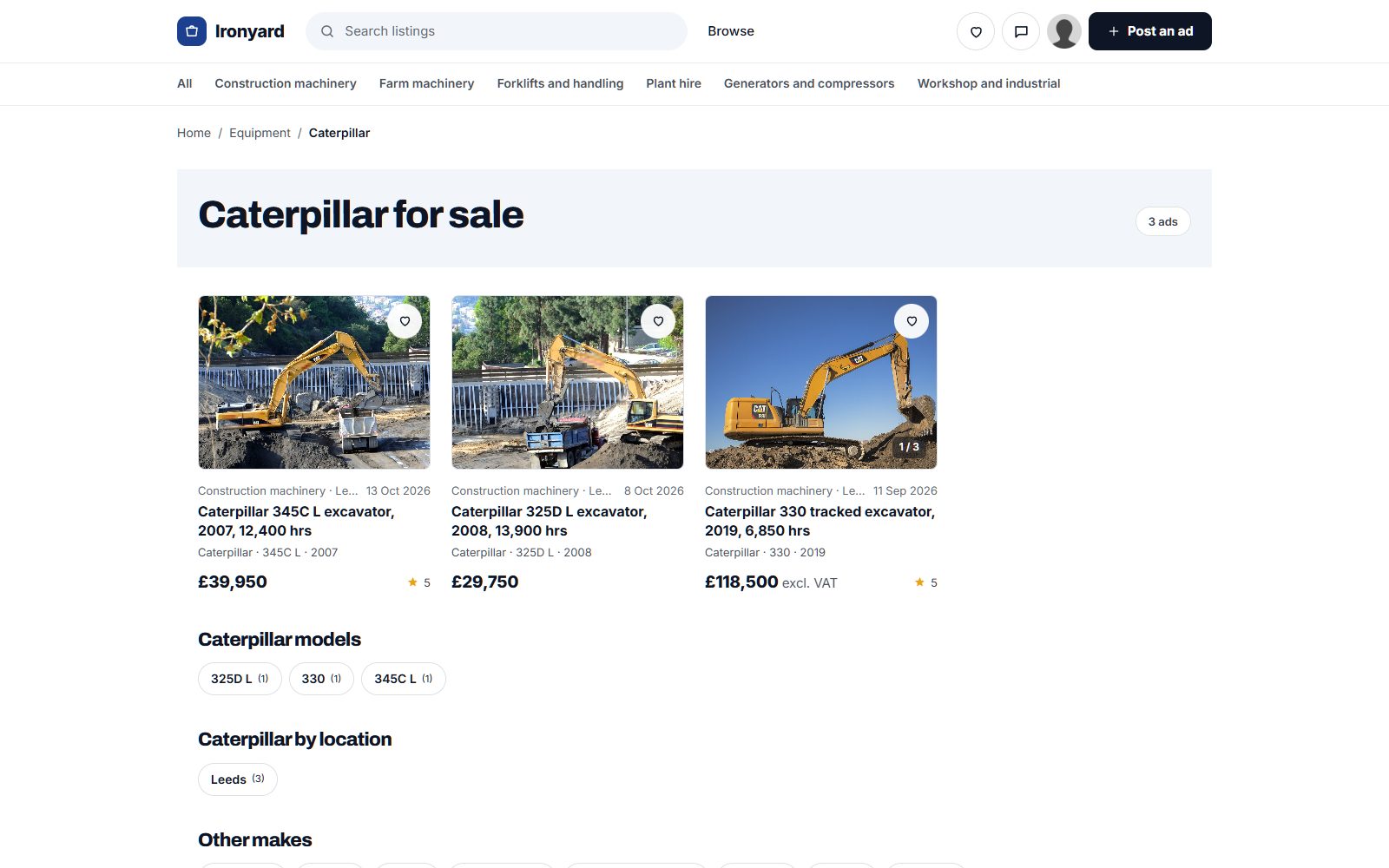
The screenshots show demo sites with made-up sellers. Their photos come from Wikimedia Commons, some cropped or with signs and plates blurred; these ones are under Creative Commons licences:
- Caterpillar 330 excavator on a pile of dirt by Matthew T Rader, CC BY-SA 4.0
- Excavator, Sany, 2021 Changsha International Construction Equipment Exhibition, Picture2 by Huangdan2060, CC BY 3.0
- JCB backhoe loader with hydraulic breaker, 2019 Szigetszentmiklós by Globetrotter19, CC BY-SA 3.0
- Polaris ATV Winch (53034864566) by Tony Webster, CC BY 2.0
- Round baler 3070 by Flominator, CC BY-SA 3.0
- Heavy equipment 2022 by Lowcarb23, CC BY-SA 4.0