
How to build an industrial machinery classifieds website plant buyers trust.
This guide covers running a classifieds site for used machine tools, presses, fabrication equipment and plant: CNC machining centers, lathes, press brakes, compressors and whole production lines. It explains how to choose a sector or region, the specs buyers filter on, how the site earns money, where the first 100 machines come from, rigging and fraud risks, the searches to rank for, and the launch.
Free for 15 days · No credit card · Plans from $19 a month
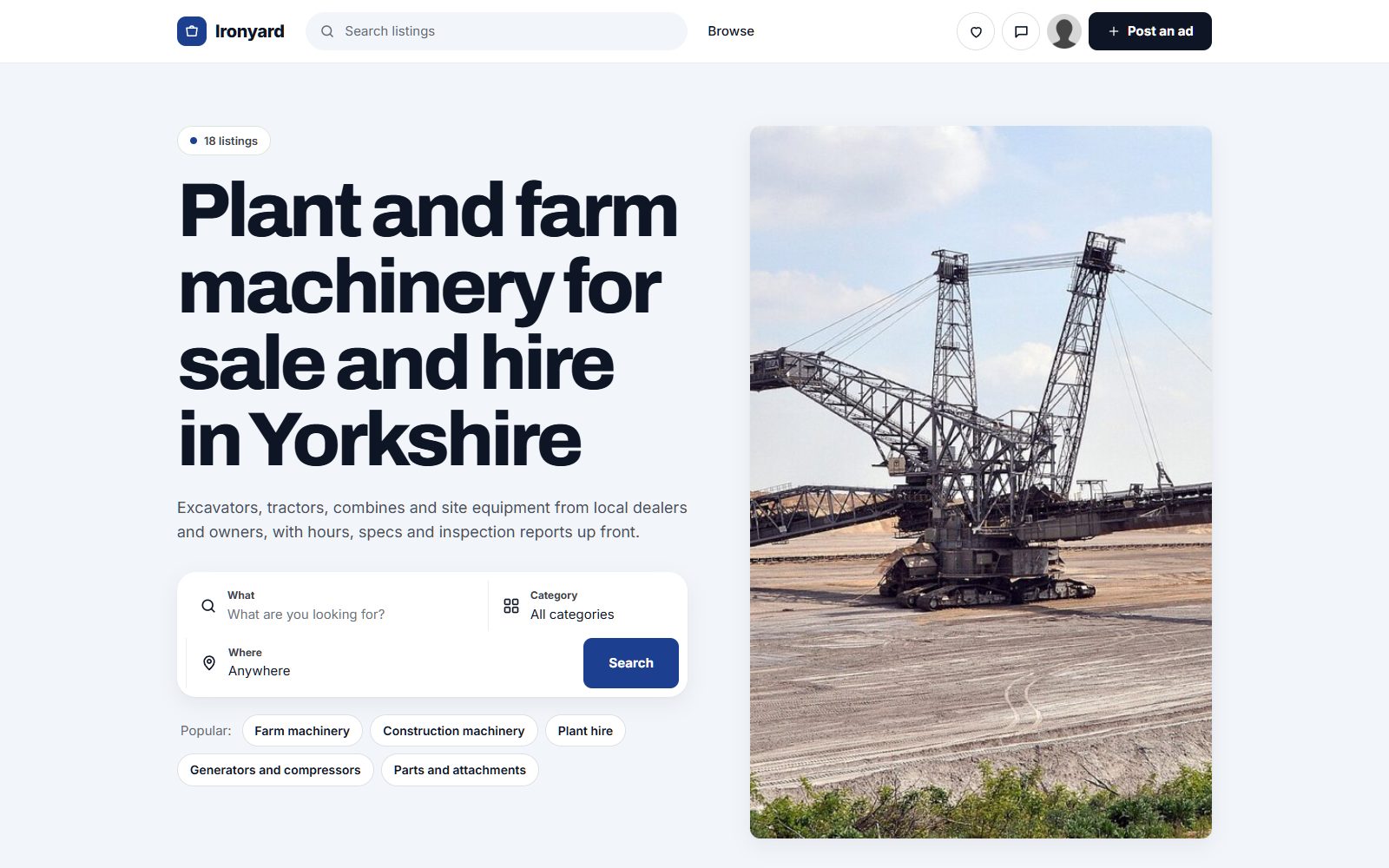
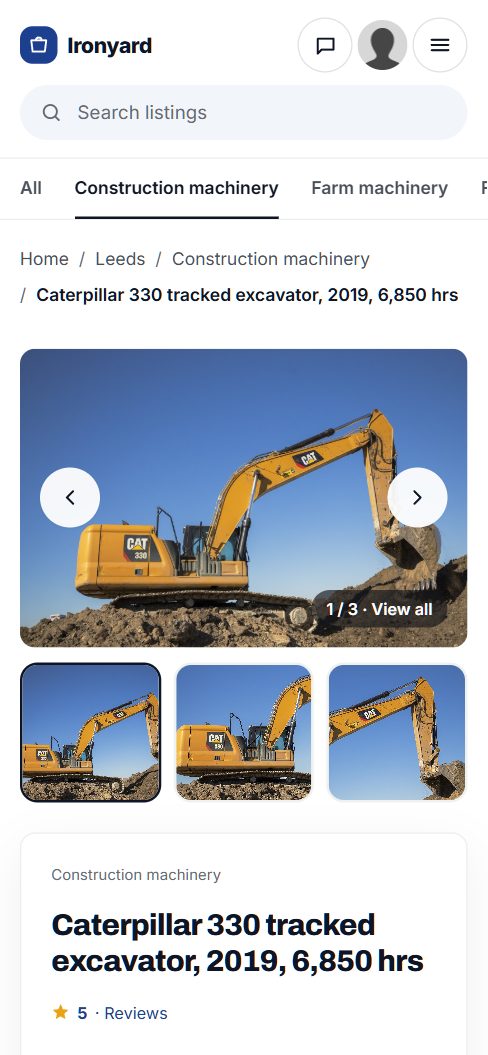
Serve the machine shops and plants that buy used rather than new.
Used industrial machinery is a steady trade. Job shops add a second CNC machine when work picks up, fabricators replace a press brake, and plants sell surplus equipment when a product line ends or a factory closes. New machines can take months to arrive, while a good used one can be running in a few weeks.
The trade is dominated by machinery dealers and auction companies, and general marketplaces barely touch it. A buyer looking for a vertical machining center needs to filter by table size, travels, spindle taper and control, and a general site has none of those fields. A focused site gives buyers those filters and gives smaller dealers and plants a place to list without paying auction fees.
Pick your angle
- Metalworking: CNC mills and lathes, manual machines, grinders, EDM and fabrication equipment, the largest part of the used market.
- One sector: woodworking machinery, plastics and injection molding, packaging, or food processing equipment.
- One region: an industrial area where buyers want to inspect a machine under power before rigging it out.
Where the trade happens today
Machines move through used machinery dealers, online and live auctions of closing plants, brokers who never hold stock, trade shows, and private networks of shop owners. Read auction catalogs for a month to see which machines come up and who buys them.
Shop owners buy machines they can see running. Start close to where the machines are.
Use machine type as the category and put the specs in filters.
Buyers in this niche think in machine types and specifications. A category tells them what the machine is; the fields tell them whether it fits the job, the floor and the power supply.
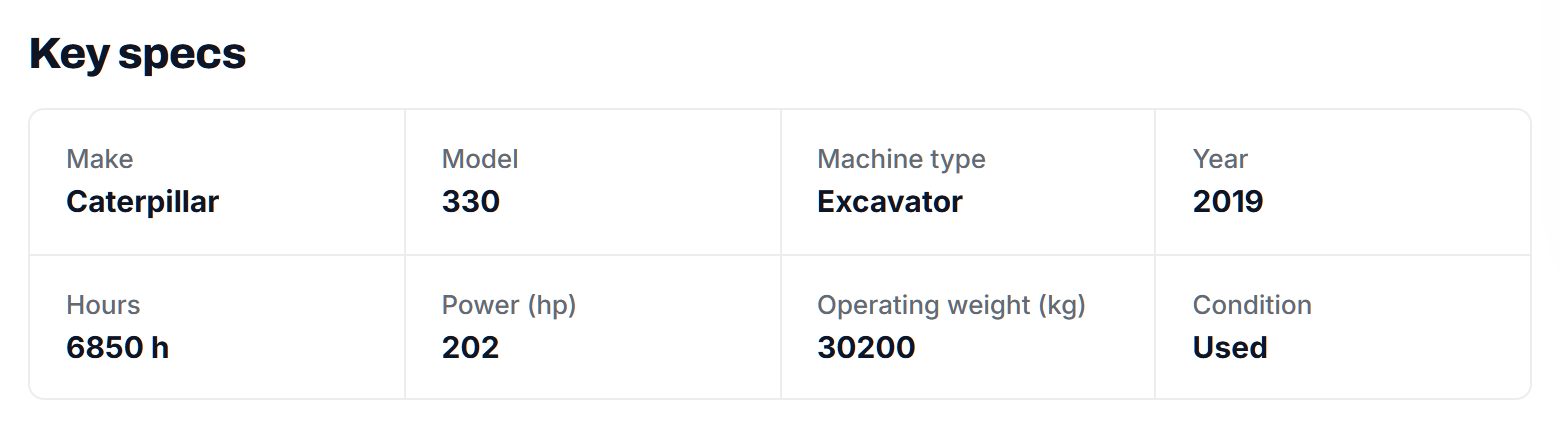
Every metal-cutting listing should give the control make and model, year, and either spindle hours or power-on hours if the control shows them. Travels, table size and spindle taper decide what parts a machine can make. For presses and press brakes, tonnage and bed length come first. For anything electric, ask for voltage and phase, since plants run on different supplies and a phase converter or transformer adds cost.
Add an under power checkbox for machines that can be seen running, and a location and rigging field: whether the machine is on a loading dock, needs rigging out, or is already crated. Buyers price rigging into every offer. With Yclas custom fields each of these can be a number, dropdown, checkbox or text field, required or optional, and shown as a search filter. The equipment field pack sets up the common ones in one click.
| Category | Example listings | Fields buyers filter on |
|---|---|---|
| CNC machining centers | Vertical and horizontal machining centers, 5-axis mills | Make, year, control, X/Y/Z travels, table size, spindle taper, spindle hours |
| CNC lathes and turning | CNC lathes, Swiss-type, turn-mill centers | Make, year, control, swing, max turning length, bar capacity, live tooling |
| Fabrication | Press brakes, shears, plasma and laser cutters, ironworkers | Tonnage or power, bed length, sheet size, control, year |
| Presses | Mechanical, hydraulic and servo presses | Tonnage, bed size, stroke, strokes per minute, year |
| Manual machines | Knee mills, engine lathes, surface grinders, drill presses | Make, table or swing size, digital readout, voltage and phase |
| Plant and support | Air compressors, forklifts, overhead cranes, dust collectors | Capacity, power, hours, year, location |
Make the control, year and location required: those three decide whether a buyer reads any further.
Earn from machinery dealers and plants selling surplus.
Industrial machinery listings are worth a lot to the seller, often thousands or tens of thousands of dollars per machine. That changes the usual advice. Private sellers here are mostly businesses: shops selling a machine they replaced, plants clearing surplus. Even so, keep posting free while you build the buyer audience, then charge once machines are drawing inquiries.
Dealer memberships are the core income. Used machinery dealers carry dozens or hundreds of machines and already pay for listings elsewhere. A monthly membership with unlimited listings, a seller profile and a verified badge fits how they buy advertising.
Auctions with bidding and Buy now suit plant closures and surplus sales, where the seller wants the floor cleared by a date. Banner spaces fit riggers, tooling suppliers, machine repair and retrofit shops, and equipment financing firms. Sell them once you can show a steady flow of buyers.
Do not hold deposits or payments for machine sales yourself unless you have taken advice: a listing site that only charges for visibility carries far less risk than one in the middle of a large transaction.
| Model | Works when | Switch it on |
|---|---|---|
| Dealer memberships | Dealers list many machines and want steady inquiries | After a few dealers list their full stock |
| Pay to post per machine | One machine is worth thousands to the seller | When machine categories already get inquiries |
| Featured listings | Sellers want a machine seen before a move or closure date | When buyers browse the site every week |
| Auctions | Plants want surplus cleared by a deadline | When enough buyers visit to bid on each lot |
| Banner spaces | Riggers, tooling suppliers and lenders want shop owners | When you can show steady traffic from machine shops |
Get the first 100 machines from dealers, brokers and plant closures.
One machinery dealer can fill a site's first 100 listings on their own. That makes dealers the first call, but not the only one.
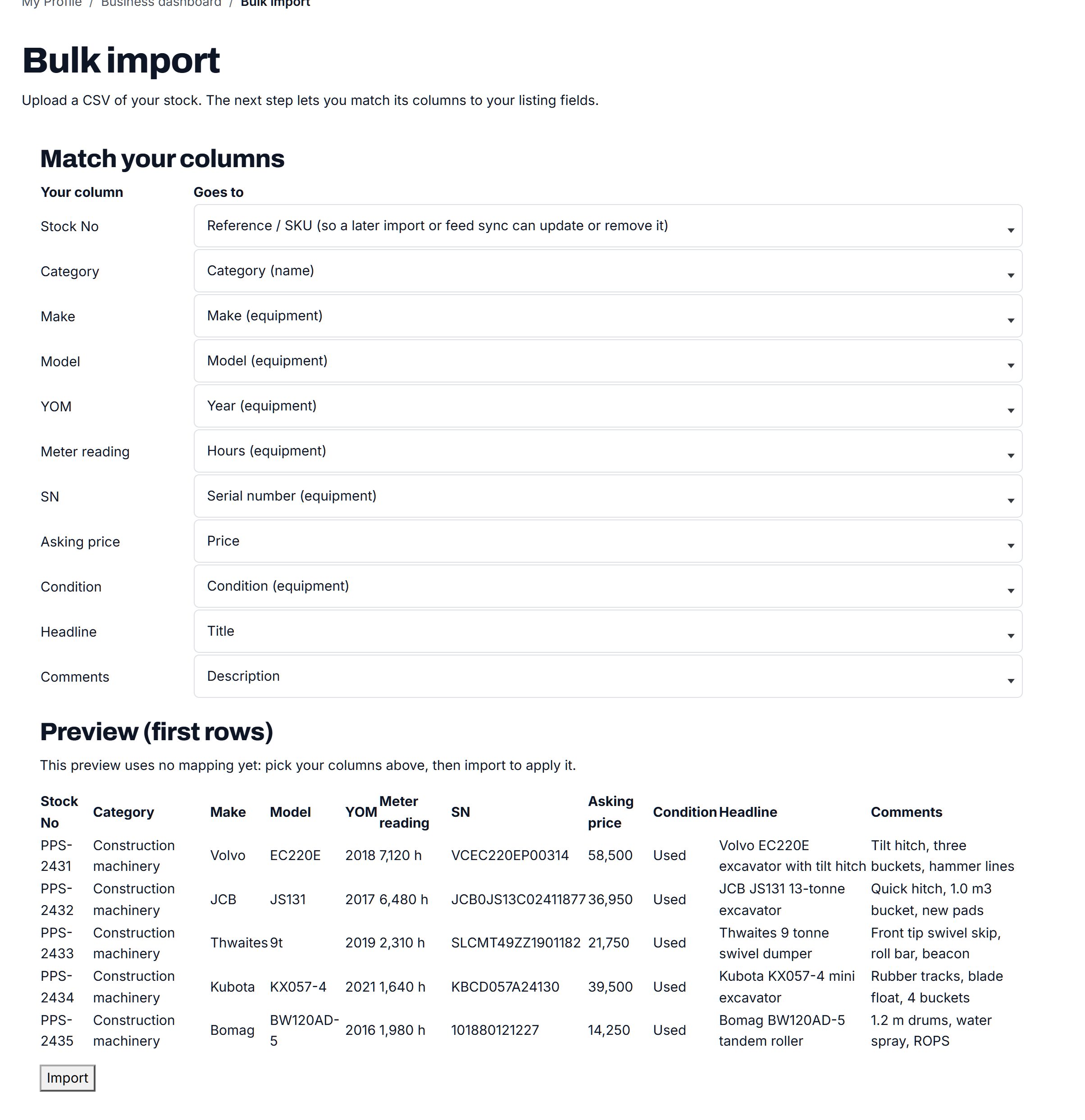
- Used machinery dealers. Most keep their inventory in a spreadsheet or dealer system and can export it. Import the file for them, with photos, specs and location, and send them the inquiries that follow.
- Brokers. Machinery brokers list machines on behalf of shops and plants without owning them. They want as many buyers as possible and will list on a new site if it costs them nothing.
- Plant closures and surplus sales. Watch local business news for closures and contact the plant manager or the asset recovery firm handling the sale.
- Shops replacing machines. Machine tool distributors take trade-ins when they sell new machines. Ask them where the trade-ins go.
- Trade associations and manufacturing groups. Regional manufacturing associations, tooling and machining associations and maker groups reach shop owners directly.
Ask every seller for a photo of the control screen and the machine's data plate. Professional buyers read the plate before they read the description.
Bring in two or three dealers with full inventories before you invite a single buyer.
Guard against fake dealers, hidden faults and rigging disputes.
Industrial machines are high-value, heavy and often sold sight unseen across long distances. That attracts fraud and creates disputes after the sale.
Risks typical of this niche
- Fake dealer listings. Photos copied from real dealer or auction sites, a price well below market, and a seller who asks for a wire transfer before inspection. This is the most common scam in used machinery.
- Hidden faults. Spindle damage, crashed axes, worn ways or failing electronics that only show under power.
- Liens and ownership. Machines are often financed or used as loan security, and a plant in trouble may not have the right to sell them.
- Rigging and removal disputes. Who pays to disconnect, rig and load a machine, and who is liable if it is damaged on the way out.
Rules and moderation
- Verify dealers and brokers before they get a badge: business address, phone and a check that the stock is theirs to sell.
- Approve every listing at first, and hold listings priced far below similar machines.
- Require location and an under power yes or no on every machine.
- Remove any listing that asks for payment before inspection.
Advice for buyers
Publish a buyer guide: inspect under power or pay a technician to do it, check the serial on the data plate, ask for a lien search on expensive machines, agree rigging and loading terms in writing, and never wire money to a seller you have not verified. Safety rules for guarding and operating older machines vary, so check the rules where you operate before putting a used machine into service.

Rank for machine type, make, control and model number.
Machinery buyers search precisely. They often type the make and model, sometimes with the control, and add "used" or "for sale".
- "used Haas VF-2 for sale"
- "used CNC lathe for sale near me"
- "used press brake 100 ton"
- "used Bridgeport mill for sale"
- "used rotary screw air compressor"
Pages to build
- Machine type pages: vertical machining centers, CNC lathes, press brakes, presses, grinders.
- Make pages for the builders buyers search by name in your sector, such as Haas, Mazak, Okuma, DMG Mori, Doosan, Amada and Trumpf.
- Region pages for industrial areas, since many buyers want to inspect before they buy.
- Buying guides: how to inspect a used machining center, what spindle hours mean, choosing between a newer control and a lower price.
Content ideas
Write a rigging and moving checklist, a guide to phase converters and power supplies for older machines, and price guides by machine type drawn from your own listings. Explain the common control generations for the brands you cover. These pages answer the questions shop owners ask before they buy and earn links from machining forums and trade groups.
Launch in one industrial region with dealers already on board.
Machinery trades all year, but buying is tied to the business cycle and the calendar. Many shops buy equipment before the end of their tax year, and plant closures and consolidations often clear stock in the first months of the year. Trade shows for machining, fabrication and woodworking bring buyers and dealers together every year or two.
First community
Pick one industrial region with a mix of job shops, a few used machinery dealers and at least one active manufacturing association. Buyers there can inspect machines in person, which builds trust in the site early.
Partners
- Used machinery dealers and brokers, for stock.
- Riggers and machinery movers, who see every machine that changes hands.
- Machine repair, rebuild and retrofit shops, for inspections and referrals.
- Manufacturing associations, community colleges with machining programs and maker spaces.
Launch checklist
- Machine type categories with required control, year, location and voltage.
- Dealer profiles with verified badges for businesses that pass your checks.
- At least 100 real machines, imported from dealer inventories.
- Make pages for the builders most listed in your region.
- A buyer guide on inspection, rigging and payment, linked from every listing.
- Your own domain with SSL and a headline that names the region or sector.
Be at the next regional trade show with a site full of machines to show.
A worked example: a used machine tool site for an old manufacturing belt.
Suppose Rivergate Machine Exchange is a fictional classifieds site for used machine tools and fabrication equipment in northeast Ohio and western Pennsylvania. Its founder spent fifteen years as a rigger, moving machines out of shops that were closing or upgrading. He watched good machines go to scrap because the auction date came before a local buyer heard about them, and he knew which shop owners would have paid for them. Most of those buyers learned about a sale only after the machine had been cut up or shipped out of state.
Categories
- Metal cutting
- Machining centers
- CNC lathes
- Manual mills and lathes
- Fabrication
- Press brakes and shears
- Laser and plasma cutting
- Presses
- Plant equipment
- Compressors, forklifts and cranes
- Tooling and workholding
Who it serves
Buyers are job shops adding capacity, fabricators replacing a worn press brake, maintenance departments looking for a backup compressor, and a few community colleges equipping training labs. Sellers are three regional dealers, two brokers, plants selling surplus after a product line ends, and shop owners retiring without a successor. Nearly all of them are within a half day's drive, so buyers can see a machine cut metal before they book a rigger.
How it started
He began with the dealers he already moved machines for. Each exported their inventory, and he spent two weekends cleaning the files: one dealer wrote travels in inches, another in millimeters, and both had controls listed three different ways. After the import, every machine had a control, a year, voltage, an under power answer and a location with rigging notes.
His launch came a month before a regional fabrication trade show. He walked the floor with a tablet showing machines within an hour's drive, and that afternoon two plant managers asked him to list their surplus. A third called a week later, after a colleague forwarded him a listing.
How it makes money
Shops selling a single machine post free. Dealers and brokers pay a monthly membership with a verified badge, which matters in a trade full of fake dealer listings. Plant closures run as timed auctions with Buy now prices. Banner spaces went to a tooling supplier and a machine retrofit shop. He also refers rigging jobs to former colleagues, which earns goodwill rather than fees. The site never holds deposits or payments: buyers and sellers settle directly.
Clean specs and honest rigging notes did more to win buyers than any advertising.
| Listing | Price | Key details |
|---|---|---|
| 2017 vertical machining center, 40-taper | $58,000 | 30 x 16 x 20 inch travels, about 9,800 spindle hours, under power, sits on a dock |
| 2008 CNC lathe with bar feeder | $41,000 | 10-inch chuck, 2.6-inch bar capacity, needs rigging out of a basement bay |
| 2012 hydraulic press brake, 110 ton by 10 feet | $36,000 | CNC back gauge, tooling included, 480V three phase |
| Knee mill with two-axis digital readout | $4,800 | 9 x 49 inch table, power feed, 230V three phase |
| 25 hp rotary screw air compressor | $6,500 | About 18,000 hours, dryer included, 460V |
The first 90 days: dealer data first, then the shops.
One dealer can fill a machinery site, so the first quarter is mostly about getting inventory in and getting it right. Dealer files are messy: travels in different units, controls named different ways, locations missing. Time spent cleaning them pays back every time a buyer filters by spindle taper or voltage and finds what they need.
The early weeks set the categories and the required fields. The middle weeks bring in dealers and brokers, verified before they get a badge. Only after that should you go after buyers, through the places shop owners already look: manufacturing associations, riggers, retrofit shops and trade shows.
Keep an eye on one number above the rest: the share of machines with a control, year, location and under power answer. Buyers skip listings that leave those out, and they will judge the whole site by the first few they open. If that share slips as you add sellers, fix the import before you add more. Share inquiry counts with each dealer every month, too: it is the easiest way to keep them updating their stock.
| Weeks | Focus | Done when |
|---|---|---|
| 1-2 | Choose the sector and region; list dealers, brokers, riggers and associations | A list of the dealers and brokers within two hours' drive, with a contact at each |
| 3-4 | Set machine type categories and required control, year, voltage, location and under power fields | Test machines filter correctly by spindle taper, tonnage and voltage |
| 5-6 | Verify the first dealers and clean their inventory files | Two dealers verified and their files mapped to your fields |
| 7-8 | Import dealer and broker stock with data plate and control photos | 100 machines live, each with the required fields filled in |
| 9-10 | Contact plants with surplus and machine tool distributors with trade-ins | At least one plant surplus sale and one distributor listing on the site |
| 11 | Publish make pages, machine type pages and a used machining center inspection guide | Pages live for the most listed makes and every machine type |
| 12 | Attend a regional trade show or association meeting | New dealers or plants signed up from the event, and first inquiry counts shared with each dealer |
Three ways to build it, weighed against what machinery buyers need.
A machinery site is a spec database with listings on top. Each machine type needs its own fields, often a dozen of them, and buyers filter on numbers such as travels, tonnage and bar capacity. Dealers want to load hundreds of machines from a file and update them weekly. Plant closures call for auctions with a deadline. Verification of dealers matters more than in most niches, because fake dealer listings are the main fraud in this trade.
A platform built by developers fits when you want something specific, such as importing directly from dealer inventory systems on a schedule, or matching buyers' wanted lists to new machines. That can come later. Built first, it takes months and costs a great deal before you know whether dealers will even commit.
A classifieds script or WordPress plugin on your own server is cheap and flexible if you are comfortable running servers. Watch the details: per-category numeric fields that become range filters, bulk import with photos, and auctions are not standard everywhere. You also carry the security, backups and spam.
A hosted builder such as Yclas brings custom fields with an equipment field pack, spreadsheet imports, verified seller badges and auctions with Buy now, and keeps the hosting off your plate. You lose some control over the underlying code. If your edge is knowing dealers, riggers and plant managers, that is usually where your hours belong. Whatever you choose, load one real dealer file during the trial and check that a search for a 40-taper machine under 10,000 spindle hours returns the right results.
| Route | Fits when | Watch out for |
|---|---|---|
| Platform built by developers | You need scheduled dealer system feeds or wanted-list matching | A long, costly build before you know dealers will commit |
| Classifieds script on your own server | You can run servers and want full code control | Numeric range filters, bulk photo import and auctions may be missing |
| WordPress with a classifieds plugin | You already publish a machining blog or newsletter on WordPress | Slow searches across many spec fields and plugin conflicts |
| Hosted builder | You want spec fields, imports, badges and auctions ready at launch | Limited access to the code behind the pages |
What an industrial machinery classifieds site costs to run.
The software is the smallest part of the bill. Most of the cost is your time in the first months: finding the first listings, answering questions and checking what gets posted.
Budget for a stand or a visit at a regional machining or fabrication trade show, and for time spent cleaning up dealer inventory files before import. If you offer lien searches or inspection referrals, those are paid to the provider per check or per visit.
| Cost | Typical range | On Yclas |
|---|---|---|
| Domain | $10 to $20 a year | Your own, with SSL included |
| Software and hosting | $0 to $100+ a month, plus plugins and updates | Starter $19 a month, Professional $99 |
| Design | $0 to $100 for a theme, or a designer | 109 looks included |
| Payment fees | About 3% per payment | Your Stripe or PayPal fees; Yclas takes nothing |
| Your time | 5 to 10 hours a week at the start | Finding listings, moderation, support |
Mistakes that sink an industrial machinery classifieds site.
- Leaving the control and year optional. The control decides what a machine can run, how easy it is to program and whether parts are still available. A buyer who cannot see it will not call. Require the control make and model, and the year, on every CNC machine, plus a photo of the control screen.
- Importing dealer files without cleaning them. Mixed units, controls written three ways and missing locations break your filters. A buyer searching for a 40-taper machine misses half of them. Map every file to your fields before it goes live, and send the dealer a list of what was missing so the next file comes in cleaner.
- Letting fake dealers in. Copied photos, prices well below market and a request for a wire transfer are the classic pattern. One buyer losing money this way can end the site's reputation in a regional trade where everyone talks. Verify every dealer before they get a badge.
- Ignoring where the machine sits. A machine on a dock and one in a basement bay with a narrow door are different purchases, because the rigging cost differs. Ask for location and rigging notes on every listing so buyers can price the move. A short note such as forklift access, dock height or crane needed saves a round of phone calls.
- Allowing price on request everywhere. Many dealers prefer to hide prices. If most listings say call for price, buyers cannot compare and stop browsing. Allow it sparingly, or require at least a price range.
- Covering a whole country from day one. Many buyers want to see a machine under power before they commit to rigging and freight. A national site with a few machines in each state helps nobody. Start where the machines are and expand from there, one industrial area at a time.
- Holding deposits or payments. Sitting in the middle of a large transaction without advice exposes you to risks a listing site does not otherwise carry. Let buyers and sellers settle directly, and charge for visibility instead.
- Charging dealers before inquiries arrive. Dealers already pay for listings elsewhere and will judge you on inquiries. Run free until they can see messages coming in, then offer memberships with the numbers in hand.
- Treating tooling as an afterthought. Tool holders, vises and chucks post more often than machines and bring shop owners back every week. Give them a category from launch, and let dealers bundle tooling with the machine it fits.
Machinery terms a founder should know.
Dealers and shop owners write listings in this vocabulary, and your fields should follow it.
| Term | What it means |
|---|---|
| VMC and HMC | Vertical and horizontal machining centers, CNC mills whose spindle points down or sideways. |
| Control | The CNC computer that runs the machine; its make, model and age affect value and parts support. |
| Spindle taper | The tool holder standard a spindle takes, such as 40-taper or 50-taper, which sets tooling cost and cutting power. |
| Travels | How far a machine's axes move, usually given as X, Y and Z, which limits the size of part it can cut. |
| Spindle hours | Hours the spindle has actually run, a better wear measure than power-on hours. |
| Swing | The largest diameter a lathe can turn over its bed. |
| Bar capacity | The largest bar stock a lathe can feed through its spindle. |
| Live tooling | Driven tools on a lathe turret that can mill and drill while the part is in the chuck. |
| Tonnage | The force a press or press brake can apply, the first number buyers look for. |
| Under power | The machine is connected and can be run for an inspection before sale. |
| Rigging | Disconnecting, moving and loading a heavy machine, usually done by a specialist crew. |
| Phase converter | Equipment that creates three-phase power from a single-phase supply for shops without it. |
| DRO | Digital readout, the display that shows axis positions on manual mills and lathes. |
| As-is, where-is | Sold in current condition at its current location, with the buyer responsible for removal. |
The same steps for an industrial machinery classifieds site on Yclas.
- Describe your nicheThe setup wizard writes the categories, an About page and example listings from one sentence.
- Add fieldsSwitch on a field pack or add the fields your buyers filter on.
- Fill itImport dealer spreadsheets, invite sellers and post your own.
- Set the rulesChoose moderation, banned words and AI checks.
- Go liveChoose a plan, connect your domain, switch on paid listings when it is time.
Do I need a license to run an industrial machinery classifieds site?
Usually not, if you only list machines that others sell. If you start brokering, holding deposits or running auctions for sellers, check the rules where you operate.
How do I compete with the big machinery auction sites?
Focus on one region or sector, give buyers the filters they need, and give smaller dealers and plants a cheaper way to reach local buyers than auction fees.
Where do the first machines come from?
Used machinery dealers and brokers first, since they hold most of the stock. Then plant closures, asset recovery firms and machine tool distributors with trade-ins.
How do I stop fake dealer scams?
Verify dealers before giving them a badge, approve listings while the site is small, hold listings priced far below market, and tell buyers never to wire money before inspecting.
Should I charge private sellers?
Keep posting free while the site grows. Once machine categories get regular inquiries, a per-machine posting fee is reasonable given what each machine is worth.
Should I run auctions for plant closures?
Auctions suit sellers who must clear a floor by a date. Start with fixed-price listings and add auctions once you have enough regular buyers to bid.
Who handles rigging and shipping?
The buyer and seller arrange it between them. Ask sellers to state where the machine sits and whether it needs rigging, and keep a list of local riggers buyers can contact.
Should I allow buyers and sellers from other countries?
You can, but exporting machinery can involve export controls on some machine types, customs paperwork and freight. Many sites start domestic and add cross-border listings after taking advice. Ask sellers to say whether they will sell abroad at all.
How should I handle listings without a price?
Allow a small share of them, mainly for whole lines and plant packages. For single machines, ask dealers for a price or at least a range, since buyers compare on price first.
Should I offer inspection services?
Rather than inspecting machines yourself, keep a list of independent technicians and retrofit shops buyers can hire. That keeps you out of disputes about what an inspection should have found.
What about older machines without modern guarding?
List them, but ask sellers to state what guarding is fitted and remind buyers that safety rules for operating older machines vary, so they should check the rules where they operate.
Should I list complete production lines?
Yes, as a separate category with a lot listing and a removal deadline. Lines draw fewer buyers, but each one is a large sale, and they bring plant managers to the site who often have single machines to sell later.
Related pages.
The parts of Yclas this leans on.
You have the plan. Now build your industrial machinery site.
Describe your site in a sentence and the setup wizard writes the categories, example listings and a look. Free for 15 days, no credit card.
Start my classifieds site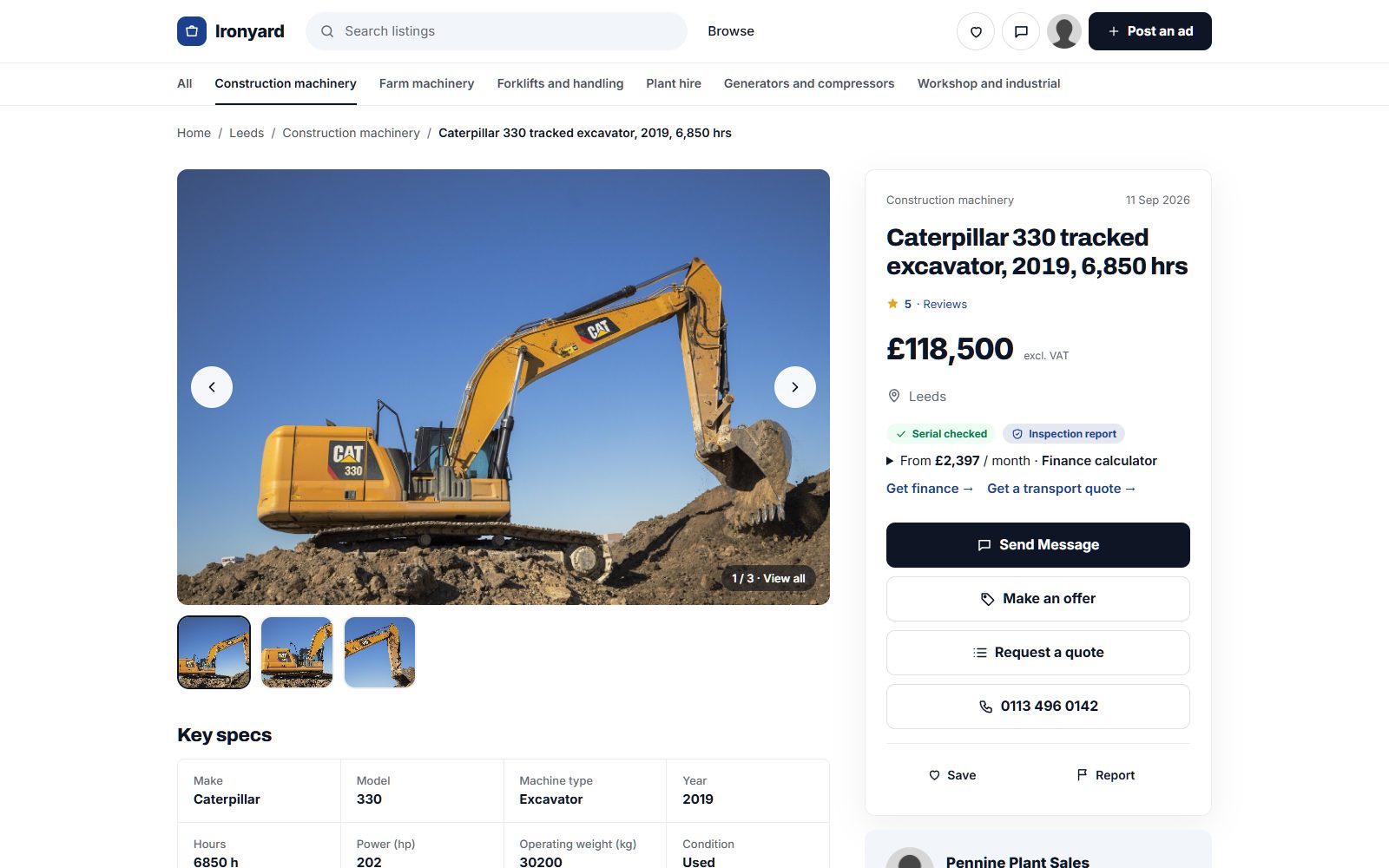
Photo credits
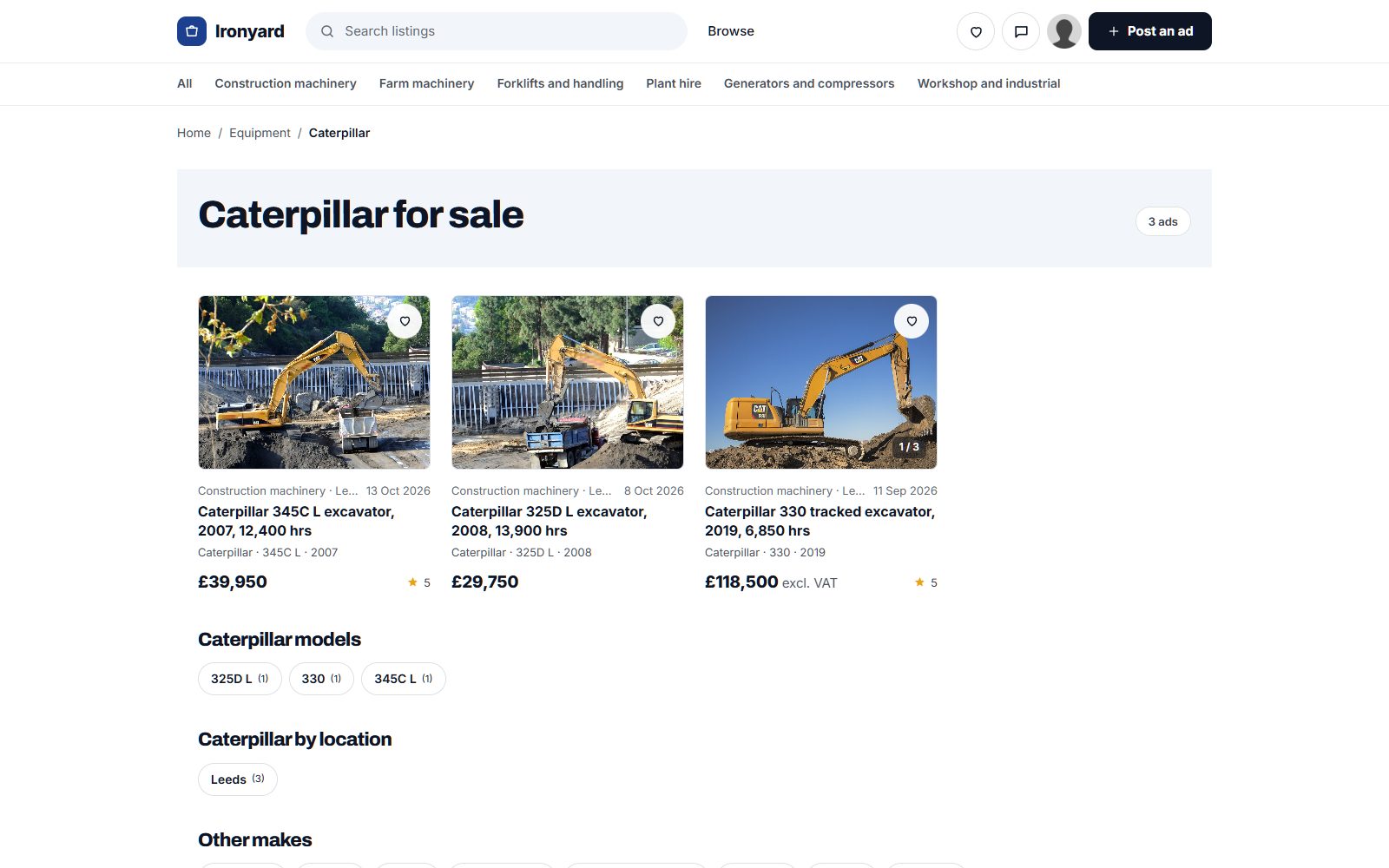
The screenshots show demo sites with made-up sellers. Their photos come from Wikimedia Commons, some cropped or with signs and plates blurred; these ones are under Creative Commons licences:
- Caterpillar 330 excavator on a pile of dirt by Matthew T Rader, CC BY-SA 4.0
- Excavator, Sany, 2021 Changsha International Construction Equipment Exhibition, Picture2 by Huangdan2060, CC BY 3.0
- JCB backhoe loader with hydraulic breaker, 2019 Szigetszentmiklós by Globetrotter19, CC BY-SA 3.0
- Polaris ATV Winch (53034864566) by Tony Webster, CC BY 2.0
- Round baler 3070 by Flominator, CC BY-SA 3.0
- Heavy equipment 2022 by Lowcarb23, CC BY-SA 4.0