
How to build a gym equipment classifieds website that lifters and gym owners trust.
This guide covers how to build a gym equipment classifieds website for used fitness machines, racks, plates and cardio gear: the angle to pick, the fields buyers filter on, how the site earns money, where the first listings come from, freight and condition risks, the searches worth ranking for, and a launch timed to the fitness calendar.
Free for 15 days · No credit card · Plans from $19 a month
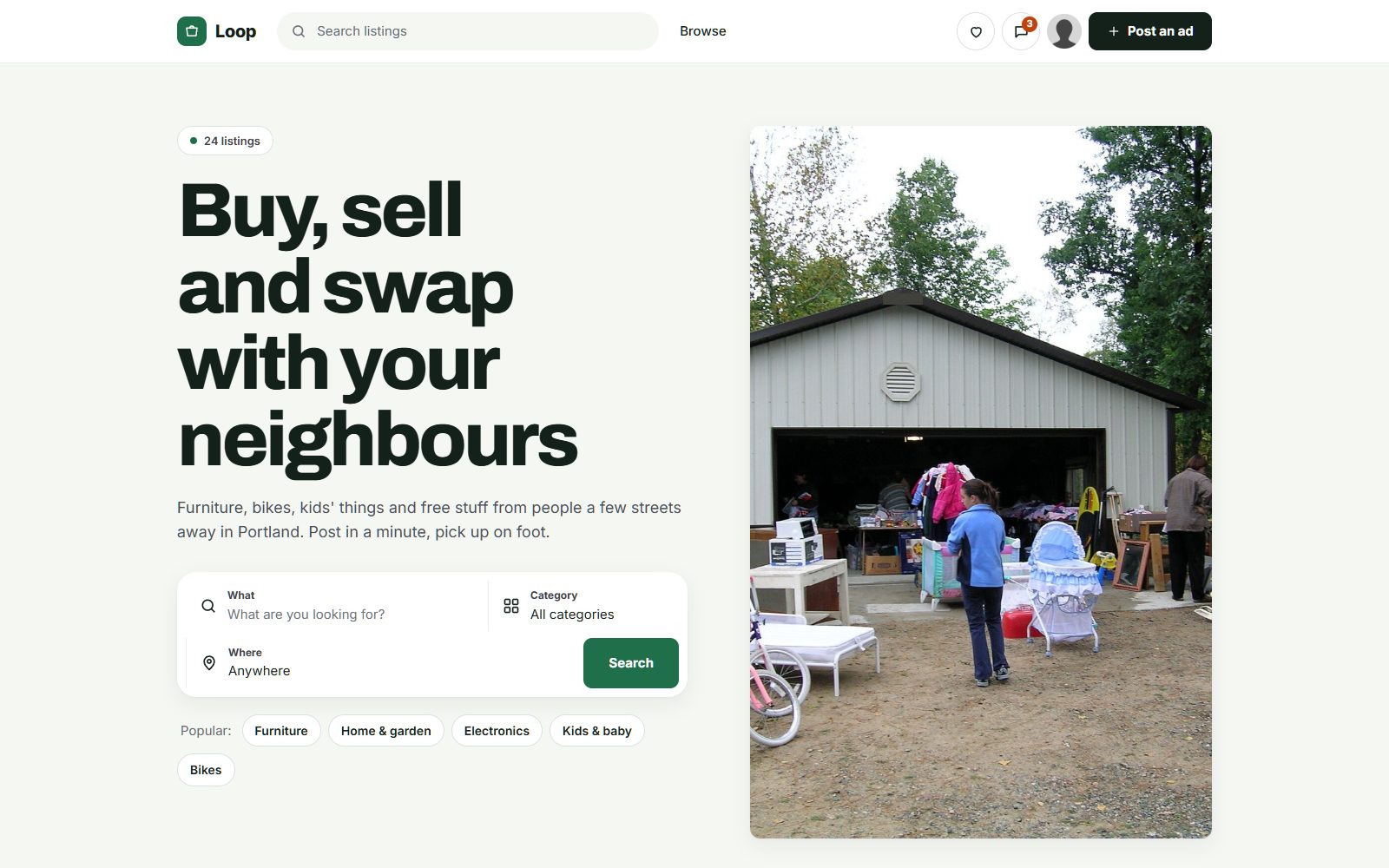
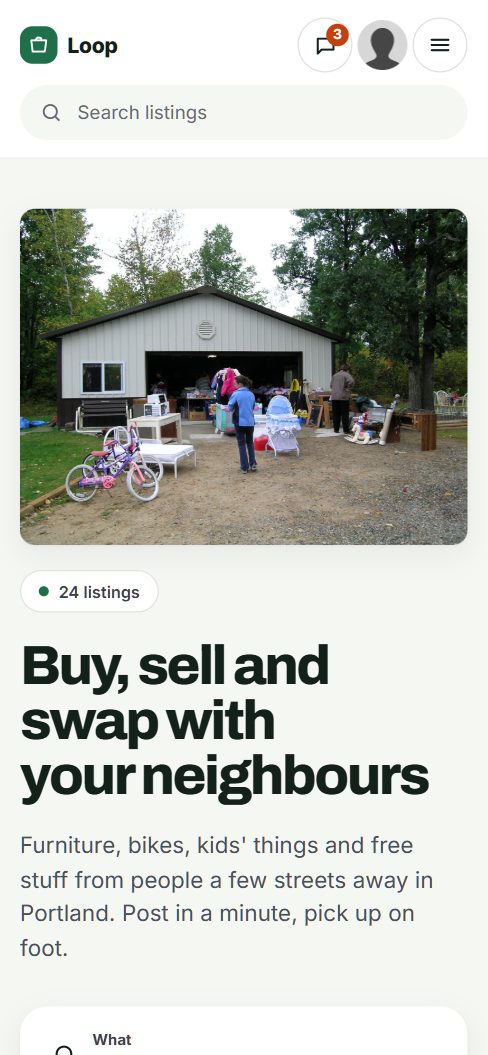
Pick an area and a buyer, because heavy equipment sells locally.
Used gym equipment is heavy, bulky and expensive new, which makes it a good fit for a local classifieds site. A commercial treadmill or a plate-loaded leg press can weigh several hundred pounds, so most buyers want something they can collect within a couple of hours' drive. General sites list it next to sofas and phones, with no way to filter by brand, weight stack or whether a machine is commercial grade.
Who uses the site
- Home gym buyers looking for a power rack, adjustable dumbbells, a rower or a spin bike at a fraction of the new price.
- Garage gym builders who know exactly what they want: a specific bar, bumper plates by weight, a rack that takes their attachments.
- Gym, studio and CrossFit box owners opening, refitting or closing, who buy and sell whole fleets at once.
- Refurbishers and resellers who buy closing-down stock, service it and sell it on.
Choosing the angle
Choose the area first, since freight decides most deals: one metro area or one state. Then decide whether you lean toward home buyers or commercial fit-outs. A site for studios and boxes needs bulk lots and delivery options; a home gym site needs more small items and simple photos.
Today this trade happens in local garage gym groups, on Facebook Marketplace and Craigslist, on eBay for smaller items, in home gym forums and subreddits, and through liquidators who clear gyms that close. Each of those is a place to find your first sellers.
A full local site beats a thin national one: a 400-pound machine only sells to someone who can pick it up.
Set up categories lifters recognize and fields that answer the first questions.
Name categories the way lifters talk and keep them shallow. Buyers of strength gear filter on weight and dimensions; buyers of cardio filter on brand, condition and whether it runs on household power. Ask only for the fields that decide a sale, since sellers often post from a garage floor on a phone.
Fields worth having in every category
- Brand and model: buyers search by name, so a dropdown of common brands with an Other option keeps search results clean.
- Commercial or home grade: commercial units are built for heavy daily use and hold their value longer.
- Condition: working, needs service, or for parts.
- Collection: pickup only, seller can help load, or delivery available.
- Dimensions and weight: will it fit through the door, down the basement stairs, into a pickup bed.
For cardio machines, add a power field. Some commercial treadmills need a dedicated circuit or a higher voltage outlet than most homes have, and that one field saves a lot of wasted trips and returned machines.
| Category | Example listings | Fields buyers filter on |
|---|---|---|
| Racks and rigs | Power racks, squat stands, half racks, wall-mounted rigs | Height, footprint, upright size, hole spacing, attachments included |
| Barbells and plates | Olympic bars, bumper plates, iron plates, collars | Bar weight, sleeve diameter, total weight, plate type, set or single |
| Dumbbells and kettlebells | Fixed sets, adjustable dumbbells, kettlebells, storage racks | Weight range, increments, pairs or singles, rack included |
| Cardio | Treadmills, rowers, spin bikes, ellipticals, air bikes | Brand, model, year, hours or miles, power needs, grade |
| Machines | Leg press, cable crossover, lat pulldown, Smith machine | Weight stack, footprint, disassembly needed, grade |
| Benches and flooring | Flat and adjustable benches, rubber flooring, mirrors | Adjustment positions, size, quantity, condition |
| Whole gym lots | Studio clear-outs, box closures, hotel gym refits | Number of items, pickup deadline, one lot or split |
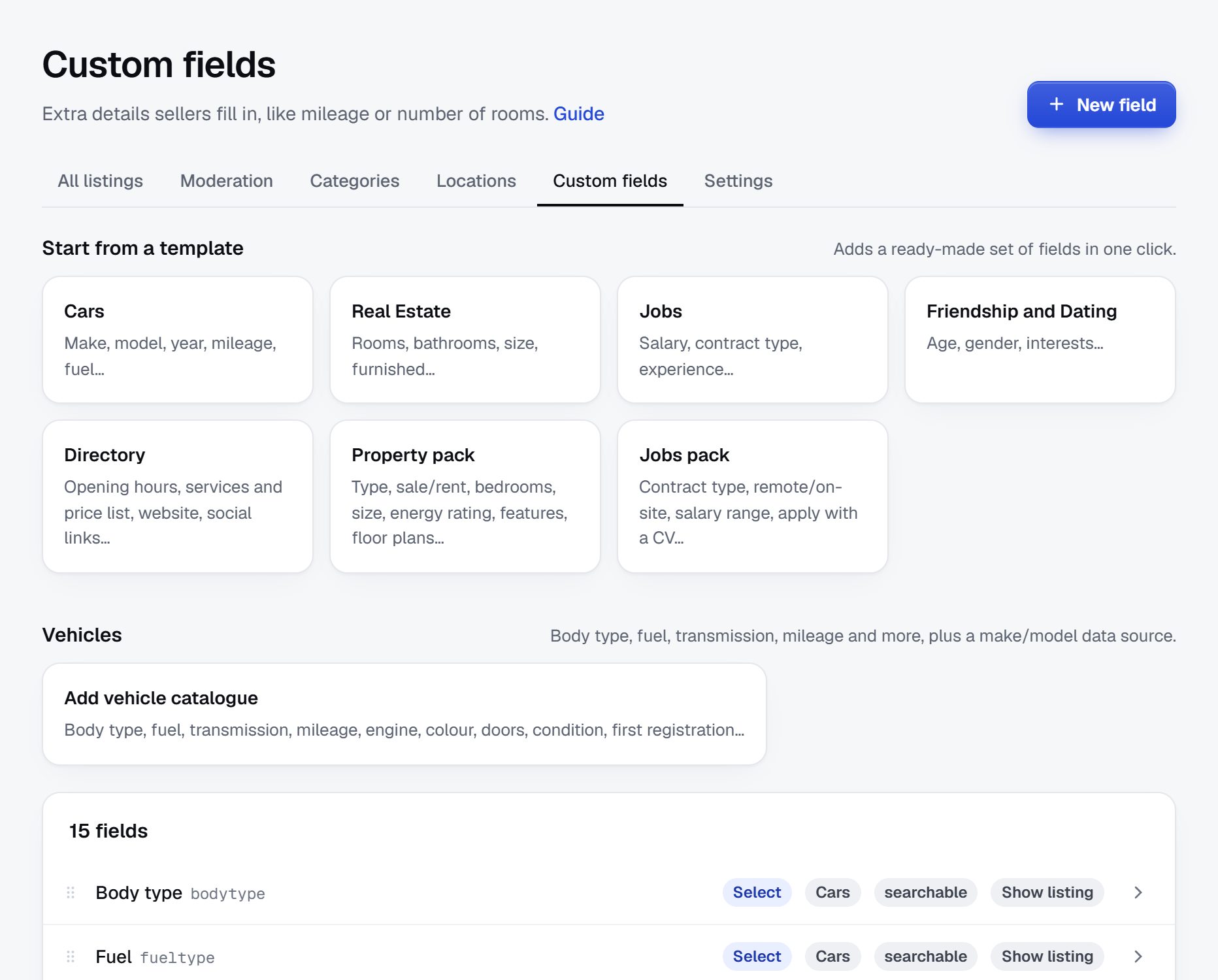
In Yclas, fields can be text, numbers, dropdowns, checkboxes or dates, each one shown as a search filter.
Keep private posting free and charge the sellers who list often.
Keep posting free for private sellers at the start. Someone clearing a garage gym before a move has no reason to pay to reach an audience that does not exist yet. The money in this niche comes later, from the sellers who list often and from the businesses that want to reach people setting up a gym.
- Featured listings and bumps suit high-value cardio and machines, where the seller wants a quick sale before a move or a lease ends.
- Paid posting for commercial lots fits gym closures and refits, where one listing can be worth thousands of dollars to the seller.
- Memberships for resellers suit refurbishers and liquidators who post dozens of pieces a month and want a seller profile that works like a shop.
- Banner spaces fit the businesses around the trade: equipment movers, treadmill repair technicians, flooring installers and personal trainers.
Timing matters. Demand for home equipment rises in January with New Year resolutions, and many gyms refit in the quieter summer months. Switch on paid extras just before a busy season, when sellers feel the competition for attention.
| Model | Works when | Switch it on |
|---|---|---|
| Featured listings and bumps | Buyers check cardio and machines every day | A few hundred active listings |
| Pay to post commercial lots | Gyms and hotels sell whole fleets | After a few closures have sold through the site |
| Reseller memberships | Refurbishers post every week | When two or three resellers post regularly |
| Banner spaces | Movers, repair shops and trainers want local buyers | Once local visitor numbers are worth showing |
| Referral deals with movers | Buyers keep asking how to move heavy items | When delivery questions fill your messages |
Find the sellers with whole rooms of equipment first.
The first 100 listings in this niche come from a few sellers with a lot of stock, plus the steady flow of people selling a single piece.
Where to find them
- Gyms that are closing or refitting. Watch local business news and call independent gyms, yoga and spin studios and CrossFit boxes. A single refit can fill your machines category.
- Refurbishers and liquidators. They usually keep stock lists in a spreadsheet, so you can import it as listings for them in one go.
- Garage gym groups and home gym forums. Message the people already selling there and offer to post their listing with their photos.
- Hotels, apartment buildings, schools and offices that replace their fitness rooms every few years and need the old units gone by a date.
- Personal trainers and physical therapy clinics upgrading their smaller equipment.
Make posting quick. With Yclas, a seller standing next to a rower can take a photo and let AI fill in the title, description, category and price for them to check. Ask for one extra photo of the brand label or serial plate, because it answers half the questions buyers would otherwise send.
One gym closure listed in full is worth more than fifty single dumbbells: start with the big sellers.
Plan for freight scams, worn machines and heavy pickups.
Gym equipment draws fewer outright scams than pets or cars, but it has its own problems, and most of them come from weight, wear and freight.
Common problems
- Freight scams. A cheap commercial treadmill "in another state", where the seller asks for a deposit plus shipping by wire transfer or gift card, then disappears. Advise buyers to see the item and pay on collection.
- Worn machines sold as working. Treadmill motors, belts and decks wear out. Ask sellers to state hours or miles where the console shows them and to describe known faults.
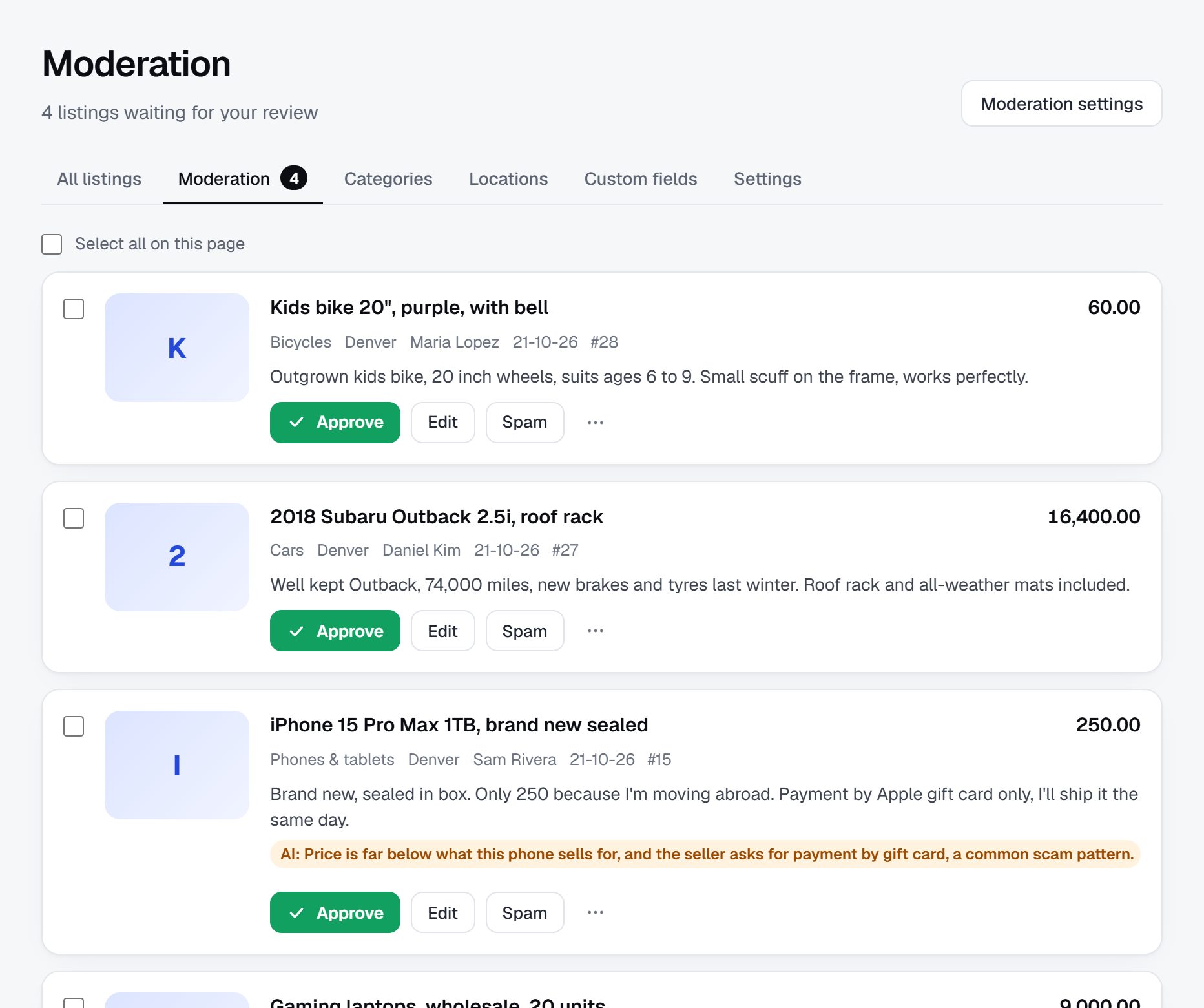
- Recalled products. Some treadmills and exercise bikes have been recalled for safety reasons. Ask sellers to check recall notices for their model, and remove listings for recalled units that have not been repaired.
- Injuries during pickup. Moving a machine down stairs is the riskiest part of the deal. Tell buyers to bring help, straps and a vehicle that fits.
Rules to set
Approve every listing while the site is small, ban the phrases that come with freight scams, and ask commercial sellers to verify their business so they can show a verified seller badge. Write a short buyer guide: watch cardio machines running at speed, check cables and pulleys for fraying, look at the welds on racks, and collect from the seller's address in daylight. For consumer rules and the resale of recalled products, check the rules where you operate.
Rank for brand, item and place searches.
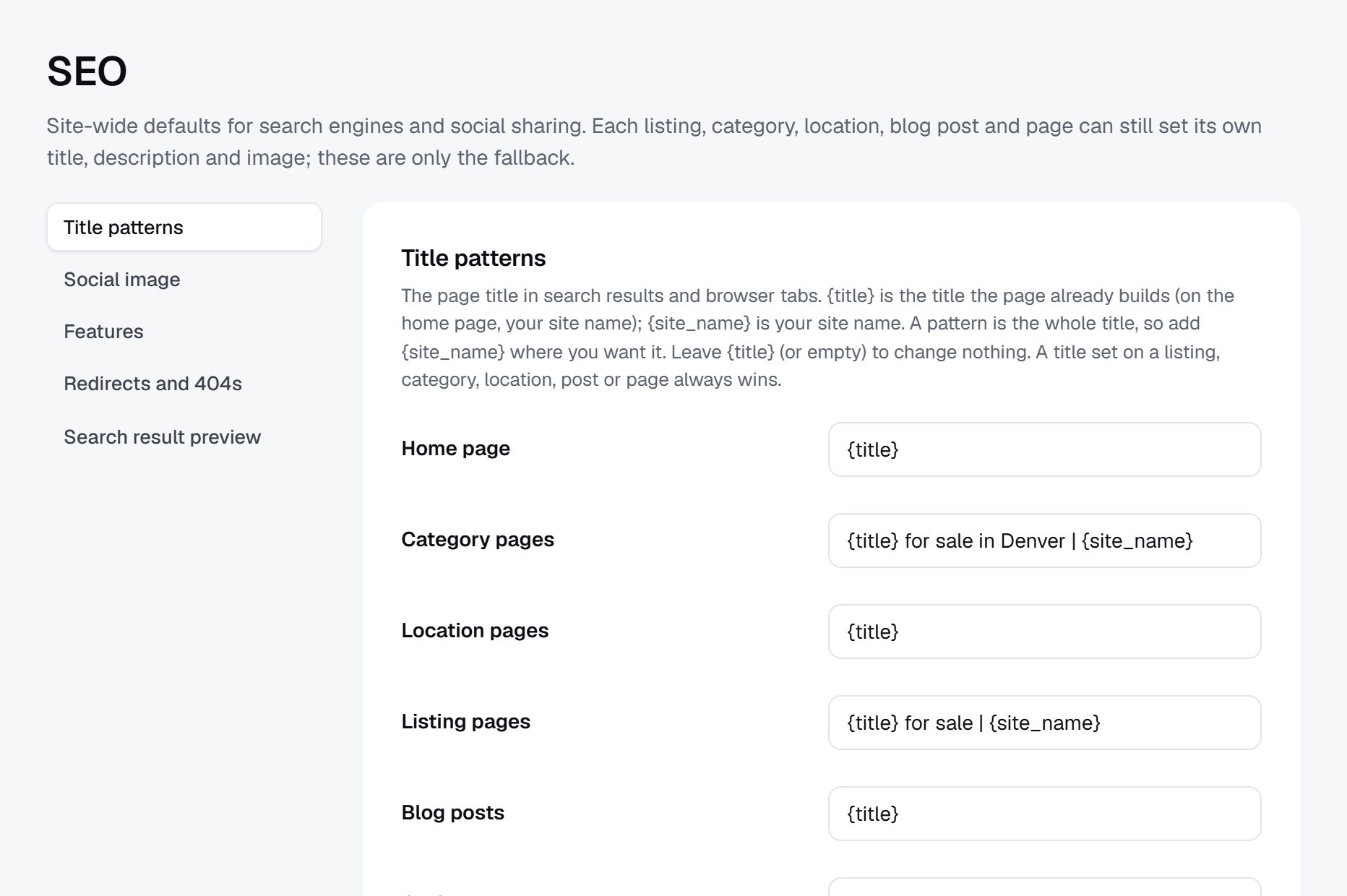
Gym equipment searches are specific and local, which suits a classifieds site. People search for a brand and model, an item plus the word used, or an item plus a place.
Searches to target
- "used commercial treadmill for sale near me"
- "used Concept2 rower"
- "power rack for sale Denver"
- "used gym equipment Texas"
- "used bumper plates"
- "gym closing equipment sale"
Pages to build
- Category and location pages: used treadmills in one city, racks in one state. Each one answers a real search.
- Brand pages for the brands buyers ask for by name, showing every current listing of that brand.
- Price guides: what a used commercial treadmill, a rower or a set of bumper plates usually goes for on your site, updated from your own sold listings.
- Buying guides: how to check a used treadmill, commercial versus home grade, what to measure before buying a rack, how to move heavy equipment safely.
Mark sold listings as sold and keep them online for a while. A page that shows a machine has sold still answers the next person's search and points them to similar listings.
Fill one city before the January rush.
Time the launch to the fitness calendar. Late December and January bring the most home gym buyers, so the site should be full by mid-December. Spring and summer are when many gyms refit and sell old fleets, which makes them a good time to sign up commercial sellers.
Launch plan
- Pick one metro area and fill it: at least 100 listings across racks, cardio and machines.
- Sign up two or three refurbishers or liquidators and import their stock.
- Agree a referral with a local equipment mover or treadmill technician, so buyers have an answer to "how do I get it home".
- Post in garage gym groups with a link to a full category, not the home page.
- Ask the gym owners you know to tell members whenever they sell old equipment.
Checklist
- Your own domain with SSL and a headline that names the area.
- Brand, condition, grade and collection fields as search filters.
- Posting rules, a buyer safety guide and a page on moving heavy equipment.
- Saved searches with email alerts, so a buyer waiting for a particular rower hears first.
- Notifications tested: new message, listing approved, listing expiring.
A worked example: Front Range Rack and Rower, Denver metro.
Front Range Rack and Rower is a fictional site, made up to show how the pieces in this guide fit together. Picture a former box coach in Denver who kept getting texts from friends asking whether she knew anyone selling a rower, a sled or a set of bumpers. She noticed the same three or four garage gym groups recycling the same questions, and that nobody could search them by weight or brand.
Who it serves
The site covers the Denver metro area, from Fort Collins down to Colorado Springs, a stretch most buyers will drive with a borrowed truck. It serves garage gym builders first, then small studios and boxes. Hotel and apartment fitness rooms became a steady source of commercial cardio once property managers learned the site would take a whole room in one go.
Categories at launch
- Strength
- Racks and rigs
- Barbells and plates
- Dumbbells and kettlebells
- Benches
- Cardio
- Rowers and ski ergs
- Air bikes and spin bikes
- Treadmills
- Commercial lots
- Flooring and storage
How it started
The founder spent her first month on the phone. She reached two refurbishers in Aurora and Lakewood, imported their stock lists from spreadsheets, and posted for a CrossFit box that was moving to a smaller unit. That one box gave her forty listings in a weekend: rowers, a rig, sleds, wall balls and a pile of plates. She then posted a link to the full rowers category in the local garage gym groups, not to the home page, and the first buyers arrived asking for more. By the end of the second month the site had close to 300 live listings, almost all of them from sellers she had spoken to in person or by phone.
How it makes money
Private posting stayed free. After about four months the site switched on featured listings and bumps for cardio over a set price, a monthly membership for the two refurbishers and a liquidator, and paid posting in Commercial lots. Two banner spaces went to a heavy item mover and a treadmill repair technician, both of whom had been answering buyers' questions in the groups anyway. The mover also gets a line on every listing page in the cardio and machines categories, since those are the items buyers cannot carry home in a hatchback. The founder sets the price of each extra by looking at what a seller would lose by waiting another two weeks for a sale.
The site grew from one box move and two refurbishers, not from advertising.
| Listing | Price | Key details |
|---|---|---|
| Concept2 rower, model D with PM5 monitor | $750 | About 1.2 million meters, pickup in Littleton, seller helps load |
| Power rack, 3x3 uprights, 90 inches tall | $520 | 1-inch holes, J-cups and spotter arms included, already taken apart |
| Bumper plate set, 260 pounds | $480 | Pairs of 10, 15, 25, 35 and 45, light wear, no bar |
| Commercial treadmill, 2016 | $1,400 | Needs a 20-amp circuit, 2,300 hours, buyer arranges freight |
| Studio clear-out, 18 pieces | $6,900 | Rig, 6 air bikes, 4 rowers, sleds, flooring, gone by May 31 |
Your first 90 days, week by week.
The first three months decide whether the site feels full or empty when a buyer lands on it from a group post. In gym equipment, the order matters: stock from a few big sellers comes before marketing, because a buyer who finds three treadmills and no racks will not come back. Spend the first weeks on categories and fields, then on the sellers with the most pieces, and only then on buyers.
Plan around the fitness calendar. If your 90 days end in December, the January wave of home buyers is your reward. If they end in early summer, focus your outreach on the gyms, hotels and apartment buildings that refit while membership is quiet. Each row below has a concrete finish line, so you know when to move on rather than polishing the same task for a month.
Keep a simple tally as you go: live listings per category, sellers with more than five pieces, and buyer messages per week. Those three numbers tell you which row needs another week before you move on.
| Weeks | Focus | Done when |
|---|---|---|
| 1-2 | Choose the metro area, set categories, brand dropdown, grade, power and collection fields | A test treadmill listing shows every filter correctly on a phone |
| 3-4 | Call refurbishers, liquidators and two independent gyms | Two sellers have agreed to send stock lists |
| 5-6 | Import stock and post for the first gym clear-out | At least 100 live listings across strength, cardio and machines |
| 7-8 | Write the buyer guide, the moving guide and posting rules against freight scams | Buyer guide, moving guide and rules are published and linked from each category |
| 9-10 | Post full categories in garage gym groups and home gym forums | Fifty buyers have sent a message or saved a search |
| 11-12 | Agree a referral with a mover and decide on the first paid extras | One partner is signed and featured listings are ready to switch on |
Three ways to build the site, and which suits gym equipment.
Gym equipment classifieds need a few things more than a generic buy and sell board: number fields for weight and dimensions that work as range filters, a brand dropdown, a way for refurbishers to bulk upload stock, saved searches for buyers waiting on one model, and decent photo handling, because buyers zoom in on welds, belts and upholstery.
Building it yourself
Hiring developers to build from scratch gives you exactly the search you want, such as filtering racks by hole spacing and ceiling height together. It also means months of work before the first listing, plus ongoing costs for hosting, security and fixes. It makes sense if the site is part of a larger business, such as a refurbishing company with its own warehouse and delivery fleet.
Installing a script or plugin
A classifieds script or WordPress plugin on your own server is cheaper to start. You will still handle updates, backups, spam and server load yourself, and many plugins treat custom fields as plain text, which breaks range filters for weight and price. Check that before committing, and test how the plugin copes when a refurbisher uploads two hundred listings with five photos each.
Using a hosted builder
A hosted builder such as Yclas handles hosting, updates and security, and lets you set up categories, custom fields as search filters, CSV import and paid extras without code. It fits a founder whose time should go to calling gyms, not maintaining a server. The trade-off is less control over unusual features, such as a custom freight quote calculator, which most founders in this niche can live without by partnering with a local mover instead.
| Route | Fits when | Watch out for |
|---|---|---|
| Custom build with developers | The site is part of a refurbishing or delivery business with its own budget | Months before launch and an ongoing developer bill |
| Script or WordPress plugin on your server | You already run a server and enjoy maintaining it yourself | Text-only fields that cannot filter by weight, plus spam and updates |
| Hosted builder | You want to launch in weeks and spend your time signing up sellers | Less freedom for features the platform does not offer |
What a gym equipment classifieds site costs to run.
The software is the smallest part of the bill. Most of the cost is your time in the first months: finding the first listings, answering questions and checking what gets posted.
Beyond the platform and a domain, budget for some local advertising before January and for your own time calling gyms, refurbishers and liquidators. If you promote a moving partner, agree in writing who is responsible for damage or injury during delivery.
| Cost | Typical range | On Yclas |
|---|---|---|
| Domain | $10 to $20 a year | Your own, with SSL included |
| Software and hosting | $0 to $100+ a month, plus plugins and updates | Starter $19 a month, Professional $99 |
| Design | $0 to $100 for a theme, or a designer | 109 looks included |
| Payment fees | About 3% per payment | Your Stripe or PayPal fees; Yclas takes nothing |
| Your time | 5 to 10 hours a week at the start | Finding listings, moderation, support |
Mistakes that sink gym equipment sites.
- Covering a whole country on day one. A national site with eight listings per state looks empty to everyone who visits it. Heavy gear sells within a drive, so fill one metro area until a buyer finds something worth messaging about on every visit, then open the next city with the same playbook.
- Treating weight as text. If total plate weight, dumbbell range or machine footprint are free text, buyers cannot filter by them, and the site becomes a slower version of the groups it was meant to replace. Make them number fields with a clear unit so range searches work, and show the unit beside the field.
- Ignoring power requirements. A buyer who hauls a commercial treadmill home and then finds it needs a dedicated circuit will blame the site, not the seller. Ask for voltage and circuit needs on every motorized cardio listing, and explain why in the buying guide.
- Letting freight scams sit for a day. One fake listing for a cheap commercial rig shipped from another state can cost a buyer hundreds of dollars and cost you your name in a close-knit lifting community. Approve listings while the site is small, ban the phrases those scams use, and remove repeat offenders at once.
- Courting single dumbbells instead of whole gyms. Small items are easy to get but do little to make the site feel full. An afternoon spent on one studio closure or hotel refit can fill three categories in a weekend and bring photos far better than a garage snapshot.
- Forgetting the brand plate photo. Without a photo of the label or serial plate, buyers ask the same three questions on every listing, and sellers soon stop answering them. Ask for that photo in the posting form, right after the main photo.
- Charging private sellers too early. Someone emptying a garage before a move will post on a free general site instead. Keep private posting free until you have steady buyers, and charge refurbishers, liquidators and commercial lots first, since they gain the most from each sale.
- Launching in February. Arriving after the January rush means waiting most of a year for the next wave of home buyers. Have listings in place by mid-December, or launch in spring and aim your outreach at commercial refits instead.
- Skipping the safety guide for pickups. The riskiest moment in a gym equipment sale is carrying a machine down a flight of stairs. A short page on straps, dollies, taking machines apart and bringing a second person shows buyers you have thought about them, and it ranks for searches too.
Terms to know before you talk to sellers.
These are the words buyers and sellers will use in listings and messages, so your fields and guides should use them too.
| Term | What it means |
|---|---|
| Commercial grade | Equipment built for daily use in a gym, usually heavier and longer-lasting than home models. |
| Hole spacing | The distance between the adjustment holes on a rack's uprights, which affects how finely you can set J-cups. |
| Westside spacing | Closer hole spacing through the bench press zone, prized by lifters who want precise settings. |
| Upright size | The tube size of a rack, such as 2x3 or 3x3 inches, which decides which attachments fit. |
| Bumper plates | Rubber-coated plates of the same diameter that can be dropped from overhead. |
| Olympic bar | A 7-foot barbell, usually 20 kilograms or 45 pounds, with sleeves that take 2-inch plates. |
| Weight stack | The column of plates inside a selectorized machine, chosen with a pin. |
| Plate-loaded | A machine loaded with free plates rather than a built-in stack. |
| Selectorized | A machine with its own weight stack, where the user moves a pin to change the load. |
| Deck and belt | The running surface of a treadmill; both wear and are common replacement parts. |
| Dedicated circuit | An electrical circuit used by one appliance, which many commercial treadmills require. |
| Rig | A large frame with pull-up bars and attachment points, often bolted to a wall or floor in a box. |
| Box | Common name for a CrossFit-style gym, often a warehouse space with rigs and open floor. |
| Liquidator | A business that buys the contents of closing gyms and resells them, often in lots. |
The same steps for a gym equipment classifieds site on Yclas.
- Describe your nicheThe setup wizard writes the categories, an About page and example listings from one sentence.
- Add fieldsSwitch on a field pack or add the fields your buyers filter on.
- Fill itImport dealer spreadsheets, invite sellers and post your own.
- Set the rulesChoose moderation, banned words and AI checks.
- Go liveChoose a plan, connect your domain, switch on paid listings when it is time.
How much does it cost to start a gym equipment classifieds site?
Little beyond a hosted platform, a domain and a small budget for local ads. The main cost is the time spent signing up refurbishers and gyms that are clearing equipment.
Can a local site compete with Facebook Marketplace and Craigslist?
Yes, if it is the best place for gym equipment in one area. Filters by brand, grade, weight and power needs, plus a full stock of racks and cardio, give buyers a reason to look there first.
Should I offer delivery myself?
Not at first. Partner with a local mover or equipment technician, and let sellers say whether they can help load or deliver.
How do I handle recalled treadmills or bikes?
Ask sellers to check recall notices for their model, put it in the posting rules, and remove listings for recalled units that have not been repaired. Check the rules where you operate on reselling recalled products.
Who are the first sellers on a gym equipment site?
Gyms that are closing or refitting, refurbishers, liquidators, hotels and apartment buildings replacing their fitness rooms, and members of local garage gym groups.
When should a gym equipment site start charging?
Once you have a few hundred active listings and steady buyers, add featured listings and bumps, then paid posting for commercial lots and memberships for resellers.
Should I cover the whole country from day one?
Start with one metro area or state. Heavy equipment rarely sells beyond driving distance, so a full local site does better than a thin national one.
Should I let sellers list equipment that needs repair?
Yes, in a clearly marked condition such as needs service or for parts. Tinkerers and refurbishers buy broken treadmills and machines for parts, and an honest condition field keeps those listings from disappointing home buyers. Ask sellers to say what is wrong if they know, such as a slipping belt or an error code.
What photos should I require for gym equipment?
Ask for one photo of the whole item, one of the brand label or serial plate, and one of any wear, such as a frayed cable or a torn seat. For cardio, a photo of the console switched on helps buyers judge hours and faults.
How should I handle sellers who only offer freight shipping?
Treat shipping-only listings from far away with care, since that is where most freight scams sit. Let established refurbishers ship, and ask private sellers to offer pickup or delivery within the area. A local pickup rule also keeps the site true to its area.
Do I need insurance to run a gym equipment site?
As a listing site you are not moving or selling the equipment, but if you promote a moving partner or host pickup days, ask an insurance broker what cover makes sense. Check the rules where you operate.
Can my site also list new equipment from dealers?
Yes, as long as listings say new or used clearly. Local dealers can bring clearance and floor models, but keep the site's focus on used gear so private sellers do not feel crowded out.
Related pages.
The parts of Yclas this leans on.
You have the plan. Now build your gym equipment site.
Describe your site in a sentence and the setup wizard writes the categories, example listings and a look. Free for 15 days, no credit card.
Start my classifieds site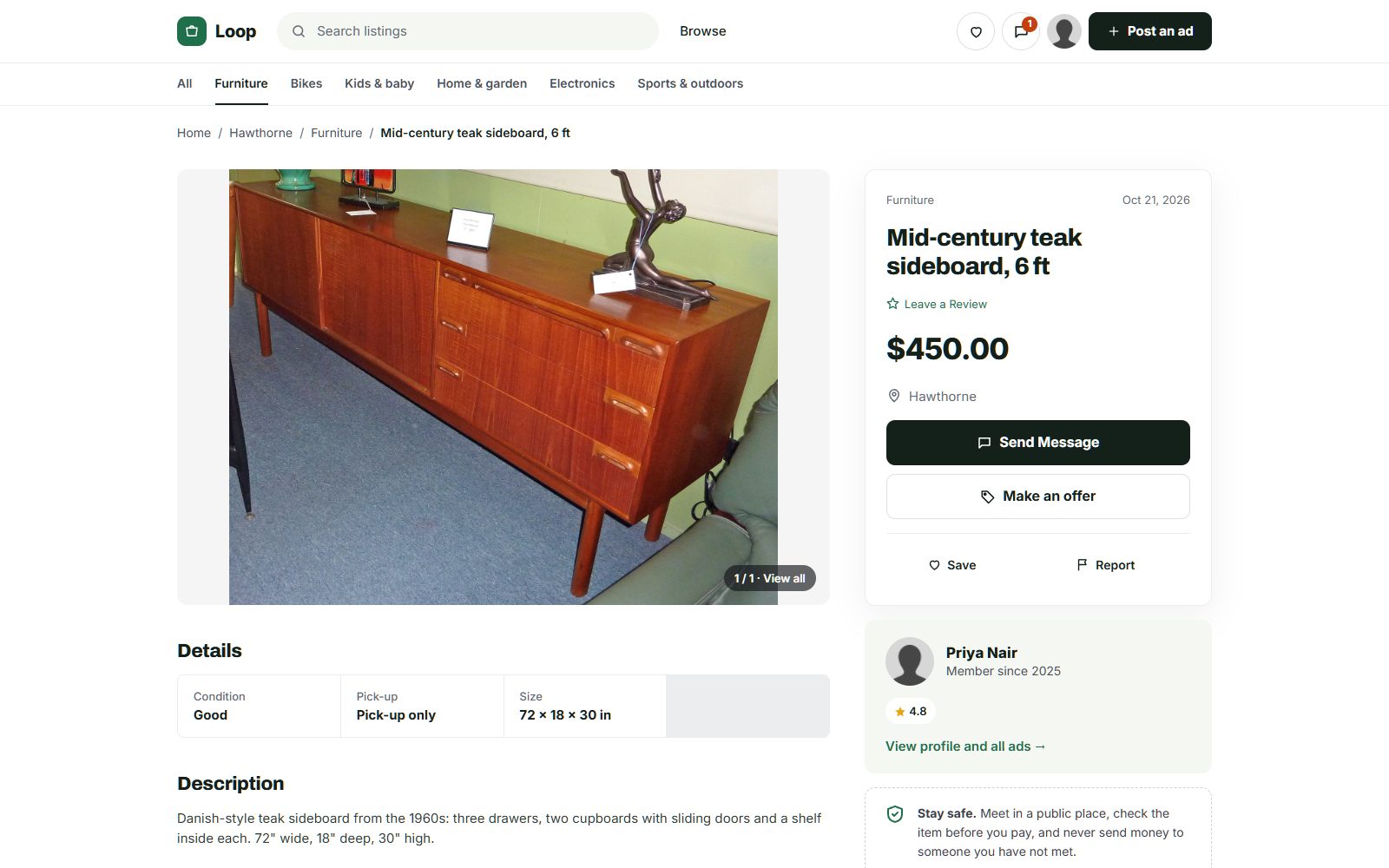
Photo credits
The screenshots show demo sites with made-up sellers. Their photos come from Wikimedia Commons, some cropped or with signs and plates blurred; these ones are under Creative Commons licences:
- McIntosh Teak Sideboard Circa 1960s, CC BY-SA 4.0
- Persian Rug Khorrasan 1, CC BY 2.0
- Fameg bentwood chairs of Poland 01, CC BY-SA 4.0
- View of the "Lost Dining Table and Chairs" in Eltham Palace - geograph.org.uk - 5797282, CC BY-SA 2.0
- Anglepoise Original 1227 Giant Floor Lamp, CC BY-SA 4.0
- Wooden Balance Bike for Kids oak frame with flame red tires, CC BY-SA 4.0
- Baby Crib (49935766018), CC BY 2.0
- Seth Thomas tambour mantel clock ca. 1930, CC BY-SA 4.0
- Rack of rock climbing gear at Horsethief Butte in a Mazamas class, CC BY 4.0
- Sideboard Teak 5 Door Rosando Furniture, CC BY-SA 4.0
- Teak 'Fresco' Sideboard by G Plan angled view, CC BY-SA 4.0