
How to build a military base classifieds website for families on the move.
This guide is for founders who want to run an independent buy and sell board for the community around one military base: families arriving and leaving, single service members, spouses with home businesses and the local shops that serve them. It covers the niche, fields, money, first listings, scams and OPSEC care, search and a launch timed to moving season.
Free for 15 days · No credit card · Plans from $19 a month
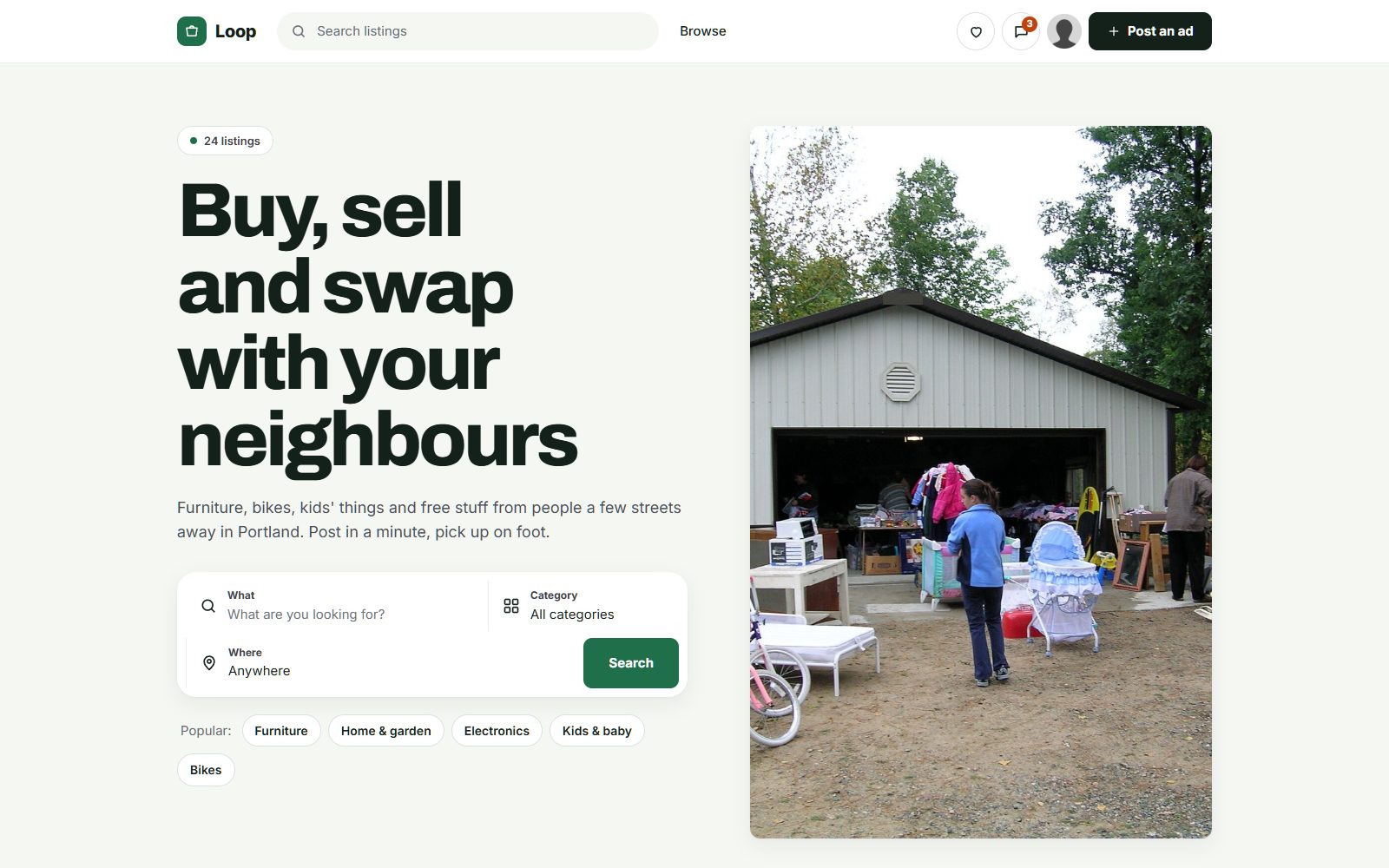
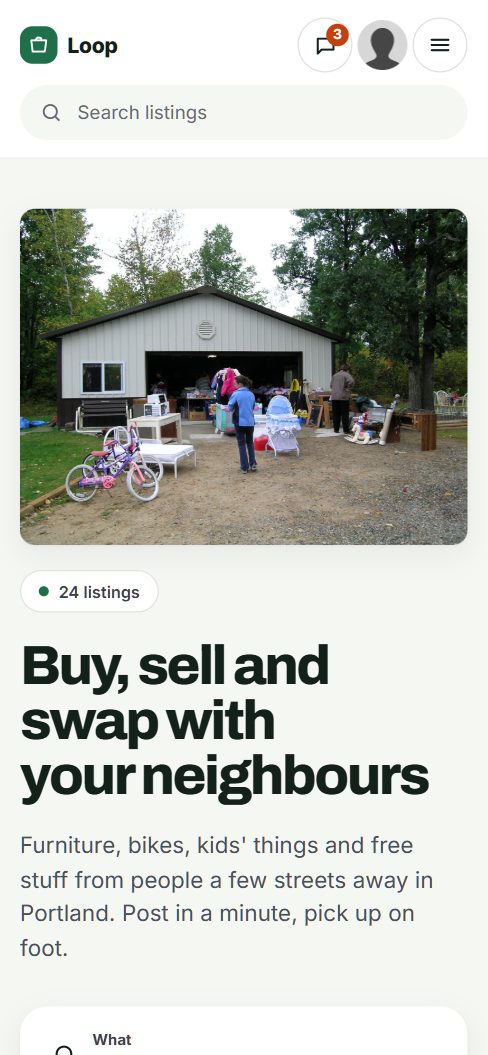
A base community moves every few years, and every move is a sale.
Military families relocate often, and each move comes with a weight allowance, a report date and a long list of things that will not fit, will not work at the next duty station, or are cheaper to sell than to ship. The family arriving in their place needs much of the same. That steady churn of PCS moves, permanent changes of station, makes the area around a base one of the most active used goods markets for its size.
An independent site run for that community can do something general marketplaces do not: it understands report dates, on-base and off-base pickup, overseas voltage and the time pressure of a move.
Run it as an independent community site. Never suggest that the military, the base or any government body runs or endorses it.
Who uses it
- Families arriving and leaving, selling furniture, appliances, kids gear and cars on a deadline.
- Single service members looking for a room, a car or a roommate off base.
- Military spouses with home businesses: baking, photography, childcare, pet sitting.
- Local businesses near the gate: movers, storage, auto shops, realtors and landlords.
Where the trade happens today
Base yard sale groups on Facebook, spouse group chats, the notice boards at the commissary or post office, thrift shops run by volunteer spouse clubs, and lineups of cars with for sale signs at the edge of town. The groups are busy but chaotic, and a family arriving from overseas cannot search them by date or size.
Build fields around move dates, pickup access and what works at the next station.
A base board's fields should answer the questions every buyer asks in the comments of a yard sale post: when can I pick it up, where, and will it work for me.
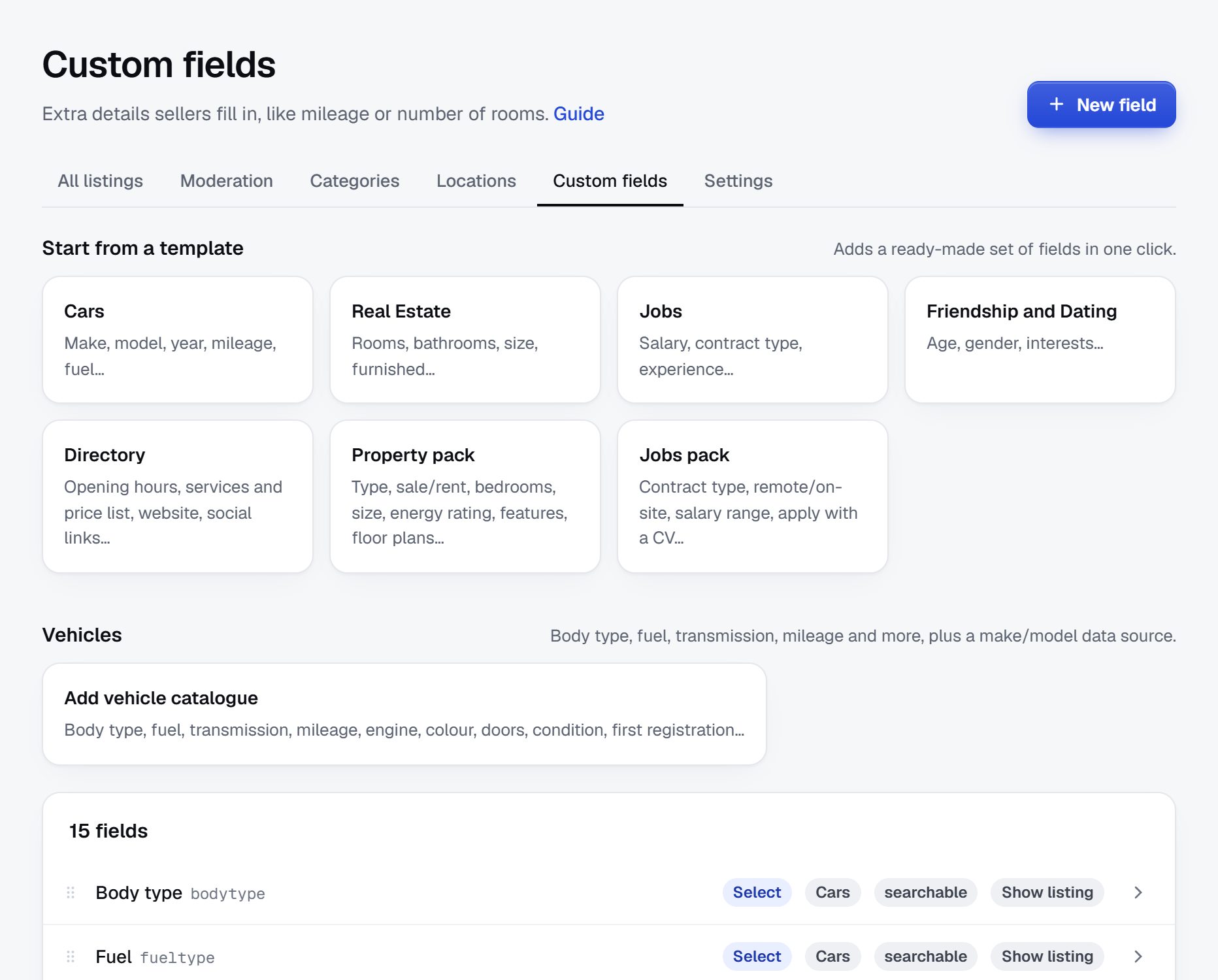
- Available until as a date. Sellers have a pack-out date, and buyers can pick the listings that must go this week.
- Pickup as a dropdown: on base, off base, or either. Not every buyer can get through the gate, so this matters.
- Voltage as a dropdown for appliances and electronics: 110V, 220V or dual. At overseas bases, families buy and sell transformers and local-voltage appliances constantly.
- Vehicle spec for overseas bases: US spec or local spec, and whether it can be shipped home. Rules on selling and exporting cars differ by country.
- Fits base housing as a checkbox for furniture and large appliances.
Use neighborhoods around the base and the base itself as locations. A family searching from the next duty station wants to see what is near the house they are moving into.
| Category | Example listings | Fields buyers filter on |
|---|---|---|
| PCS sales | Whole-house sales, moving bundles, garage sales | Available until, pickup, area |
| Vehicles | Cars, trucks, motorcycles, second cars for spouses | Year, mileage, vehicle spec, available until |
| Furniture and appliances | Couches, washers, dryers, transformers, wardrobes | Voltage, fits base housing, pickup |
| Kids and baby | Car seats, cribs, strollers, school uniforms | Age range, condition, pickup |
| Housing and roommates | Off-base rentals, rooms, roommate wanted | Rent, bedrooms, distance to gate, pets allowed |
| Spouse businesses and services | Childcare, pet sitting, baking, cleaning, photography | Service, area, hours |
Keep families free and charge the businesses that serve the base.
Families on a move have little time and many costs. Posting should stay free for them. The money in a base community comes from the businesses that depend on the constant arrivals and departures.
Realtors, landlords and property managers near the base compete for every arriving family, and many already pay for listings elsewhere. Movers, storage units, car dealers, auto shops and cleaning companies want to be seen in the weeks before a move. Spouse businesses are a quieter source: a membership that lets a home baker or photographer keep several listings up and appear as a featured seller.
Keep the advertising honest. Banner spaces should be clearly marked as ads, and you should turn down any advertiser who wants to look official or affiliated with the base. The same goes for lenders and car dealers whose offers you would not recommend to a young family.
Sell to the businesses that profit from moving season, a few weeks before it starts.
| Model | Works when | Switch it on |
|---|---|---|
| Pay to post in Housing | Landlords and realtors compete for arriving families | Before the summer moving season |
| Banner spaces | Movers, storage, auto shops and dealers want families | Once you can show monthly visitors |
| Featured listings and bumps | Sellers with a pack-out date want a quick sale | When PCS sales crowd the home page |
| Memberships for spouse businesses | Home businesses post every month | When several post regularly |
| Memberships for dealers and realtors | A business posts every week | Once two or three post regularly |
Start with families who are leaving, because they have the most to sell.
A family with orders in hand will sell twenty or thirty things in a month. Find a handful of them and the site fills itself.
- Base yard sale groups. Message members who posted recently and offer to put their whole PCS sale on the site, with photos and an available-until date.
- Spouse groups and clubs. Ask permission before posting in their channels. Many will share a link if the site is free for families and keeps scammers out.
- Thrift shops run by volunteers. They know what families are selling and may welcome a place for large items they cannot take.
- Spouse-run businesses. A home baker, a photographer or a dog walker posts every week, and their customers come to see.
- Local dealers, movers and realtors. A car lot near the gate can fill the vehicles category with a spreadsheet import, and realtors fill housing.
Before you approach any official organization on base, such as a family support center or an exchange, ask what their rules allow. Some may not be able to promote a private site at all, and that is fine: the families themselves are your channel.
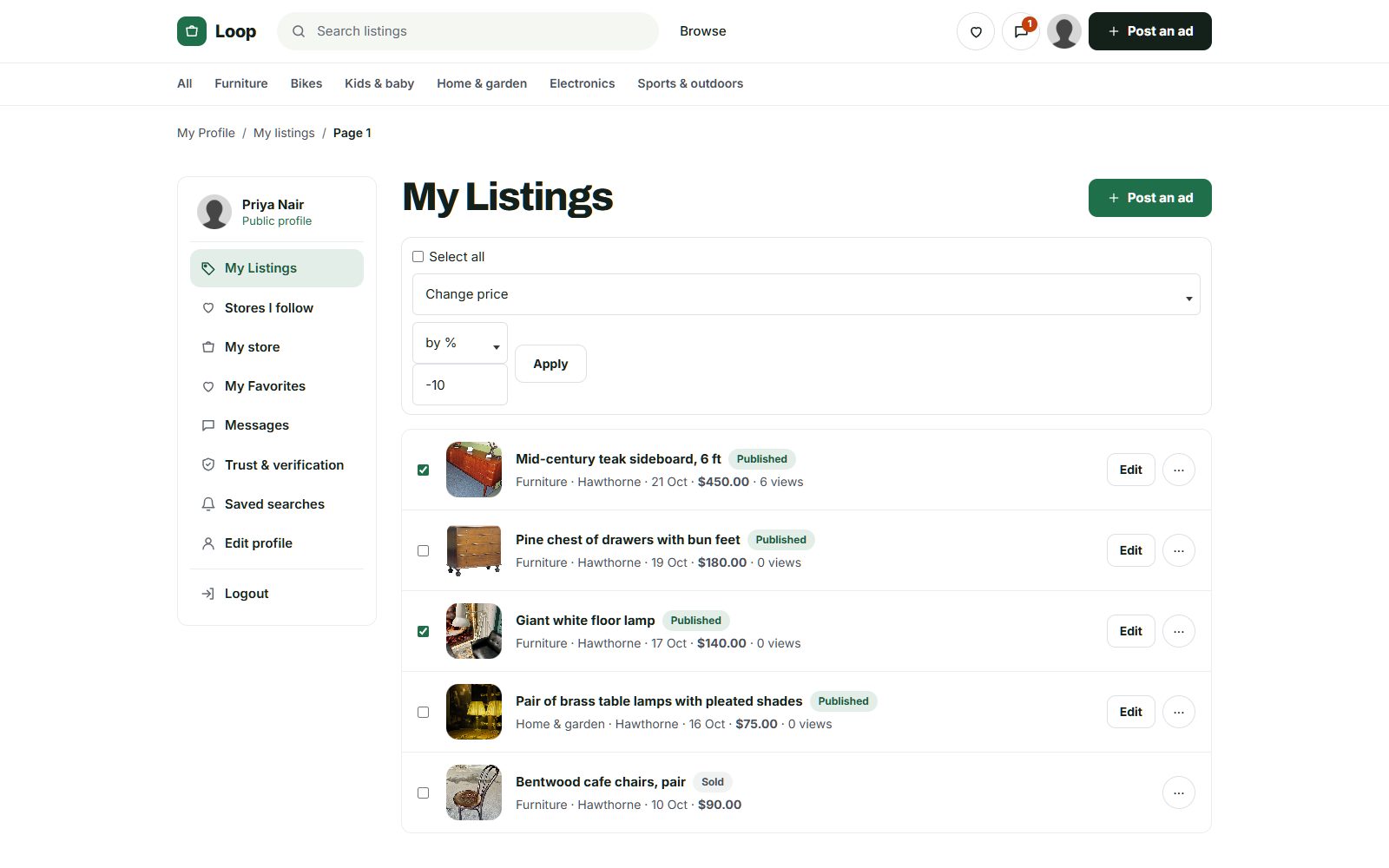
Posting on a phone in the middle of packing has to be quick. On Yclas, a seller takes a photo and AI fills in the title, description, category and price for them to check.
Watch for deployed-seller scams and keep operational details off the site.
Military communities are targeted by scams that borrow the language of service, and an open board can leak details that should stay private. Plan for both.
Scams to expect
- The deployed seller. A car or a puppy at a low price, from someone who says they are deployed and will ship it after payment. The story is used often because it explains why the seller cannot meet.
- Fake rentals for arriving families. A house near the base, a landlord who is overseas, a deposit requested before anyone can view it. Families moving from far away are the target.
- Pressure on deadline sellers. Fake buyers who send a check for more than the price and ask for the rest back, betting a family about to move will not wait for it to clear.
OPSEC-style care
Ask members not to post unit names, deployment or return dates, ship or aircraft movements, training schedules, or that a spouse is away and the family is home alone. Ask sellers to keep IDs, badges, orders and gate passes out of photos. Write this into your posting rules, and remove or edit listings that break it. Report anything that looks like someone collecting information to the appropriate channel, not in public.
Moderation
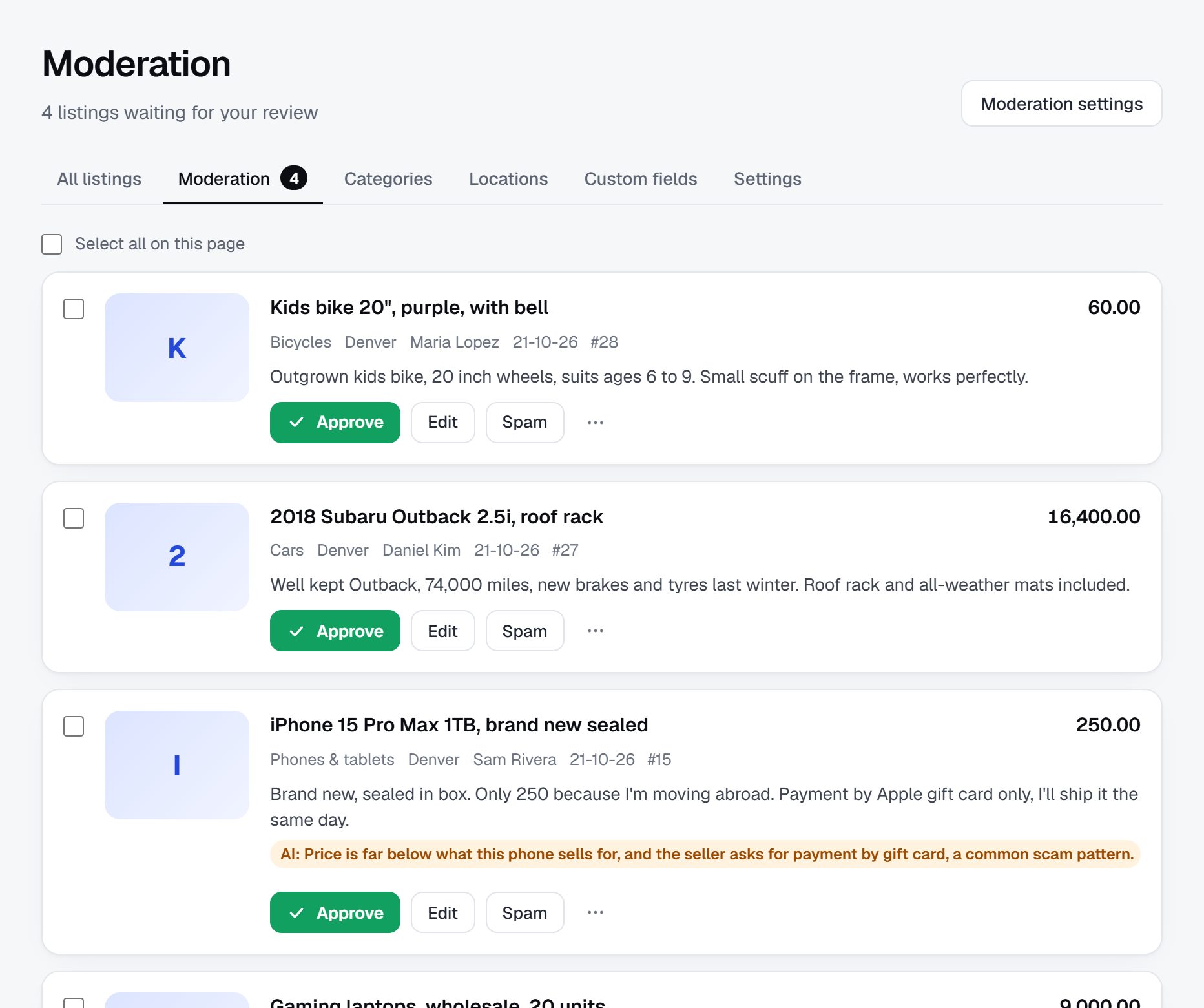
- Approve every listing in Housing, Vehicles and Pets.
- Give a verified seller badge to members and businesses you have checked.
- Recommend meeting in public places off base, such as a store parking lot, unless both sides have base access.
Rules on selling uniforms and insignia, firearms, and vehicles at overseas bases vary. Ban what is unclear, and check the rules where you operate.
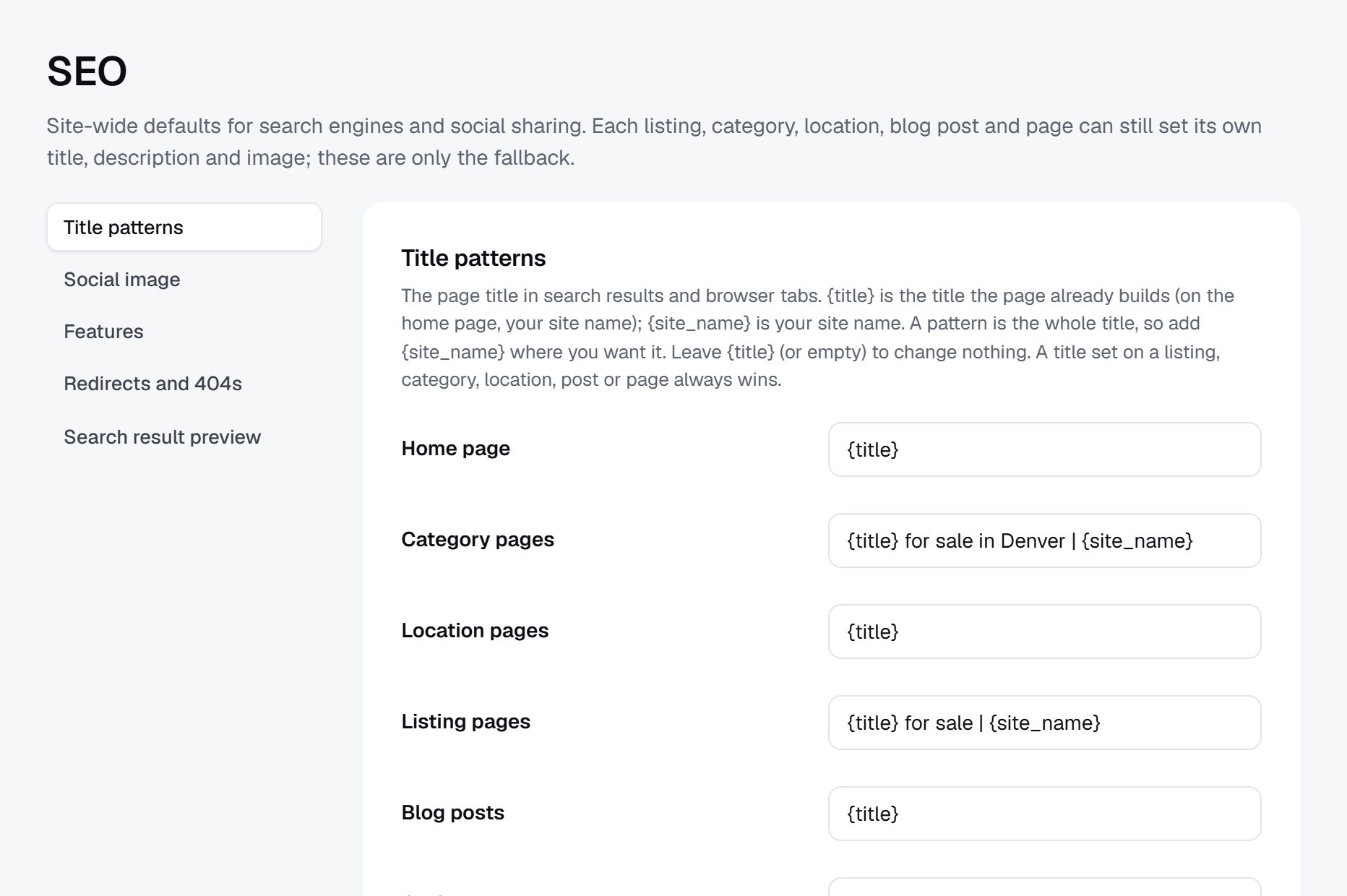
Rank for the base name and the town at the gate, during moving season.
Families start searching weeks before they arrive, usually with the base name or the nearest town plus what they need. Some use the military shorthand, some do not, so cover both.
- "PCS sale near Camp Lejeune"
- "furniture for sale Jacksonville NC"
- "used cars Okinawa"
- "220V transformer for sale Ramstein"
- "rooms for rent near the base gate"
Pages to build
- Location pages for the neighborhoods around the base, so a family can see what is for sale near the house they rented.
- A PCS selling guide: what to sell, what to ship, how to price before a pack-out date.
- An arriving family guide: what to buy locally, what works with base housing, what to check on a used car.
- For an overseas base, a guide to voltage, transformers and appliances people buy and sell.
- A rental scam warning page written for families moving from far away.
Write the base name as a place, not as a brand: "classifieds near" a base, never words that sound like an official base service.
Launch before the summer moving season, when most families move.
In the US, military moves bunch up in the summer months, when families try to move between school years. That is the busiest time on any base board. Launch in spring, so the site is full of listings and known in spouse groups by the time orders come through.
Partners worth asking
- Admins of the base yard sale and spouse groups. Offer them a moderated site that takes housing and car scams off their hands.
- Volunteer-run thrift shops and spouse clubs, where their rules allow.
- Local movers, storage units and realtors, who see families every week.
- The local paper in the town at the gate.
Launch checklist
- A home page and About page that say clearly the site is independent and not affiliated with the military or the base.
- Neighborhoods around the base, and the base itself, set up as locations.
- At least 100 real listings from families who are moving.
- Posting rules with the OPSEC guidance, the banned items list and meeting advice.
- A scam warning page linked from every housing and vehicle listing.
- No military insignia, seals or official-looking logos anywhere on the site.
A worked example: Gate Two Trading Post, Fayetteville, North Carolina.
Gate Two Trading Post is an invented board for the community around a large Army installation near Fayetteville, North Carolina, used here to show what a base board looks like once it is running. It serves families arriving and leaving on orders, single soldiers renting off post, spouses with home businesses, and the movers, landlords and car lots along the roads to the gates. The About page says in its first line that the site is independent and has no connection to the Army or the installation.
Categories
- PCS sales
- Whole-house sales
- Moving bundles
- Vehicles
- Furniture and appliances
- Kids and baby
- Housing and roommates
- Off-post rentals
- Rooms and roommates
- Spouse businesses and services
How it started
The founder is a military spouse who had moved four times in nine years and sold the contents of three houses through yard sale groups, answering the same question about pickup times dozens of times each move. Her family's next orders gave her three years in one place, so she set up the board in January and spent February asking families with summer orders whether she could post their sales for them. Each of those families brought fifteen to forty listings, with an available-until date and on or off post pickup.
She asked admins of two large yard sale groups to help moderate, and both agreed once they saw the scam warning page and the posting rules about unit details and travel dates. One of them now reviews housing listings in the evenings, when most families post. By the time the summer moving season peaked, the board was the place newcomers checked before buying a washer or a second car.
How it makes money
Families never pay. Two property management companies and a realtor pay to post in Housing. A local moving company and a storage business share the banner space from April to August. Spouses with home businesses, a baker, a photographer and a dog groomer among them, pay a small yearly membership to keep several listings up. The founder turned down a car title loan company and an advertiser who wanted to use a military-style crest. She has already written a handover document, because she knows her family will get orders again. It lists the moderators, the advertisers she accepts and refuses, and the months when families sell most.
| Listing | Price | Key details |
|---|---|---|
| Whole-house PCS sale | From $10 per item | Available until July 12, off-post pickup, beds, couch and grill |
| 2014 sedan, spouse's second car | $7,900 | 112,000 miles, clean title, available until June 30 |
| Washer and dryer set | $350 | Fits standard housing hookups, pickup on post or off post |
| Crib and toddler bed | $90 | Seller checked recall lists, off-post pickup in the evenings |
| Room for rent near the gate | $650 per month | Ten minutes to the gate, furnished, month to month |
The first 90 days: ready before the summer orders land.
On a base board, the calendar is set by orders. Most US families move in the summer, and many get their orders in late winter or spring. A good 90-day plan starts in February or March and ends just as the first moving trucks arrive.
The early weeks are about rules and trust. A base board that leaks a deployment date or carries a fake rental in its first month will be talked about in every spouse group on the installation, and not kindly. So the OPSEC rules, the scam page and the independence statement go up before any listing does.
The middle weeks are about families with orders: they are the stock. The last weeks bring in the businesses and the spouse groups. If you are a military family yourself, plan the handover now too, because the person who launches a base board is often the one who leaves first.
Keep in mind that orders change. A family that planned to sell in June may get a new date in April, or have its move delayed until fall. Build the plan around the season, not around any one family, and keep a few extra sellers in reserve.
| Weeks | Focus | Done when |
|---|---|---|
| 1-2 | Set up neighborhoods and on or off post pickup, the available-until and voltage fields, and the independence statement | The About page and footer say the site is independent, and a test listing filters by pickup |
| 3-4 | Write the posting rules with OPSEC guidance, the banned items list and the rental scam page | All three pages are published and linked from Housing and Vehicles |
| 5-6 | Find families with summer orders through yard sale and spouse groups | Five families have whole-house sales on the site |
| 7-8 | Meet movers, storage units, realtors and a car lot near the gate | Three businesses are posting, and one has booked a banner for the season |
| 9-10 | Invite spouse business owners and ask two group admins to help moderate | Ten spouse businesses have profiles, and two moderators have accounts |
| 11 | Publish the PCS selling guide and the arriving family guide | Both guides are live, and 100 real listings are on the site |
| 12 | Launch in the spouse groups and review every housing and vehicle listing | No housing or vehicle listing waited more than a day for review |
Three ways to build a base board, for a founder who may move too.
A base board has two needs that shape the choice of tools. It must be run from anywhere, because the founder may be the next family with orders. And it must be careful with information, because the community it serves has more reasons than most to keep details private.
A custom build by developers lets you design every rule, field and warning exactly as you want. It also leaves you paying for every change and responsible for the security of a site that holds military families' messages and phone numbers. That is a heavy load for a volunteer or a spouse with a home business.
A classifieds script or WordPress plugin on your own server costs less up front and gives you control. You take on server updates, backups, spam and the security patches, which tend to be needed in the middle of your own move.
A hosted builder keeps the server and the updates off your plate, so the site can be run from a laptop in temporary lodging three states away. You set up fields such as pickup and available-until, approve listings and add co-admins from a control panel, and handing over means adding the next admin. The cost is that the code is not yours to change, which matters little for a board whose value is in its rules and its people.
Whichever route you take, decide early who can see what. Keep personal phone numbers private by default, let buyers contact sellers through on-site messages, and keep admin access to a small, trusted group. Remove admins who move away and no longer moderate, and review the list each moving season.
| Route | Fits when | Watch out for |
|---|---|---|
| Custom build with developers | You have funding and a long-term team in one place | Security of members' data, and the cost of every change |
| Script or WordPress plugin on your own server | You or a co-founder can run and patch a server | Updates and backups slipping during your own PCS |
| Hosted builder | You need to run the site from wherever orders send you | Less control over the code and the provider's own limits |
What a military base classifieds site costs to run.
The software is the smallest part of the bill. Most of the cost is your time in the first months: finding the first listings, answering questions and checking what gets posted.
A base board needs little beyond the software and a domain. Expect to spend on flyers for off-base notice boards and perhaps a small ad in the local paper; avoid buying anything with military branding, which you should not use anyway.
| Cost | Typical range | On Yclas |
|---|---|---|
| Domain | $10 to $20 a year | Your own, with SSL included |
| Software and hosting | $0 to $100+ a month, plus plugins and updates | Starter $19 a month, Professional $99 |
| Design | $0 to $100 for a theme, or a designer | 109 looks included |
| Payment fees | About 3% per payment | Your Stripe or PayPal fees; Yclas takes nothing |
| Your time | 5 to 10 hours a week at the start | Finding listings, moderation, support |
Mistakes that cost a base board its community.
- Launching in July. By midsummer most families have already sold or shipped what they own. Launch in the spring, when orders arrive and families start planning their sales.
- Running it alone while your own orders are coming. Many base boards die when the founder moves. Bring in a co-admin from a family with a longer time left at the installation, and write down how the site runs before you need to.
- Accepting advertisers that prey on young troops. High-interest lenders, title loan shops and dealers with aggressive financing pay well and cost you the families' trust. Keep a short list of advertiser types you refuse, and stick to it.
- Leaving OPSEC slips up for hours. A post saying a husband is deployed until March and the house is empty is a risk to that family. Review new listings promptly, edit or remove anything that names units, dates or movements, and explain the rule kindly to the seller.
- Ignoring pickup access. A buyer without base access cannot collect a dresser from on-post housing. Make on or off post pickup a required field, and suggest public meeting spots for sellers who live inside the gate.
- Letting pet rehoming run without rules. Moves, especially overseas, leave many pets behind, and rehoming posts attract both scammers and people who resell animals. Approve pet listings by hand, ask for a rehoming fee rather than a sale price if that suits your community, and point families to local shelters and rescue groups.
- Treating every installation the same. A board near a stateside base trades second cars and furniture. Near an overseas base it trades transformers, local-spec cars and items tied to host country rules. Build categories and guides for the base you actually serve.
- Competing with the spouse groups. They have the families' attention and the admins know who is trustworthy. Offer to take the sales and housing load off them, and give their admins a moderator role.
- Choosing a name that sounds official. A domain or logo that reads like a base program confuses families and can bring a polite but firm request to change it, after you have printed the flyers. Pick a name tied to the town or the neighborhood, and say plainly on every page that the site is independent.
- Forgetting the families who are arriving. Most boards talk to sellers and forget that the buyer may still be at the last duty station. Write for them too: a page on what to buy locally, which neighborhoods are near which gate, and how to view a rental from far away.
Military terms a base board founder should know.
Families use this shorthand in listings and messages, and a founder who knows it writes better rules and guides.
| Term | What it means |
|---|---|
| PCS | A permanent change of station: a move to a new duty station, usually with the whole family. |
| Duty station | The base or location where a service member is assigned to work. |
| Orders | The official paperwork assigning a service member to a new duty station, with a date to report. |
| RNLTD | Report no later than date: the last day the service member can arrive at the new station. |
| Pack-out | The day movers pack and load a family's household goods for shipment. |
| Weight allowance | The maximum weight of household goods the government will move, which varies by rank and family size. |
| PPM | A personally procured move, where the family moves its own goods and is reimbursed, once called a DITY move. |
| CONUS and OCONUS | Inside or outside the continental United States, which changes what a move involves. |
| POV | A privately owned vehicle, such as a family car that may or may not be shipped on an overseas move. |
| BAH | Basic allowance for housing, the payment toward rent or a mortgage for families living off base. |
| Sponsor | A service member at the new station assigned to help an arriving family settle in. |
| Commissary and exchange | The on-base grocery store and the on-base department store, open to those with base privileges. |
| OPSEC | Operational security: keeping details such as units, schedules and movements from being shared publicly. |
The same steps for a military base classifieds site on Yclas.
- Describe your nicheThe setup wizard writes the categories, an About page and example listings from one sentence.
- Add fieldsSwitch on a field pack or add the fields your buyers filter on.
- Fill itImport dealer spreadsheets, invite sellers and post your own.
- Set the rulesChoose moderation, banned words and AI checks.
- Go liveChoose a plan, connect your domain, switch on paid listings when it is time.
Can I use the base name on my site?
You can usually describe where you are, such as classifieds near a base, but do not use official seals, insignia or wording that suggests the site is run or endorsed by the military. Rules on names and insignia vary, so check the rules where you operate.
What does it cost to get started?
Hosting and a domain, a stack of flyers and a few weeks of your time with families who are moving. You do not need an office or staff while the site is young.
How do I compete with the base yard sale Facebook groups?
Give families what the groups lack: searchable listings with available-until dates, pickup filters, moderated housing and scam warnings. Invite group admins to help moderate.
How should I handle OPSEC concerns?
Put clear rules in your posting guidelines: no unit details, deployment dates, schedules or photos of IDs and orders. Approve listings in sensitive categories and remove anything that breaks the rules.
Who pays for a base classifieds site?
Realtors, landlords, movers, storage firms and auto businesses near the base pay for featured listings, paid housing posts and banners. Families post free.
Can I sell ads to companies that target service members?
Be selective. Turn down advertisers who look official, push high-interest loans or make offers you would not recommend to a family, since the site's trust is its main asset.
Should I cover an overseas base?
It can work well, because overseas families trade voltage-specific appliances and cars between themselves. Rules on car sales, imports and private trade differ by host country, so check them first.
What happens to the site if my family gets orders?
If you can run it online, you may keep it going from your next station, but the local face of the site will fade. Bring in a co-admin who will be at the installation longer, and write down your rules, advertisers and seasonal plan.
Do I need to verify that sellers are military families?
Not usually, since many good sellers are civilians in town. Verify businesses and frequent sellers you know, review housing and vehicles by hand, and let buyers see who has a verified badge.
Can people sell things bought tax-free at the exchange?
Rules differ by country and by base, and at some overseas bases selling tax-free goods to people without base privileges is restricted. Check the rules where you operate, and ban categories you cannot police.
Should the board serve one branch or every branch?
Serve everyone near the installation. Many areas have families from more than one branch, plus contractors and retirees, and all of them buy and sell the same things. Use plain words in categories, and explain the shorthand in a short guide for civilians and new spouses.
How do I handle listings for uniforms and gear?
Some items are fine to resell and others are restricted or need care, such as insignia and items marked as government property. Keep the category small, ban anything unclear and check the rules where you operate.
Related pages.
The parts of Yclas this leans on.
You know the moving season. Build the board families check before every PCS.
Describe your site in a sentence and the setup wizard writes the categories, example listings and a look. Free for 15 days, no credit card.
Start my classifieds site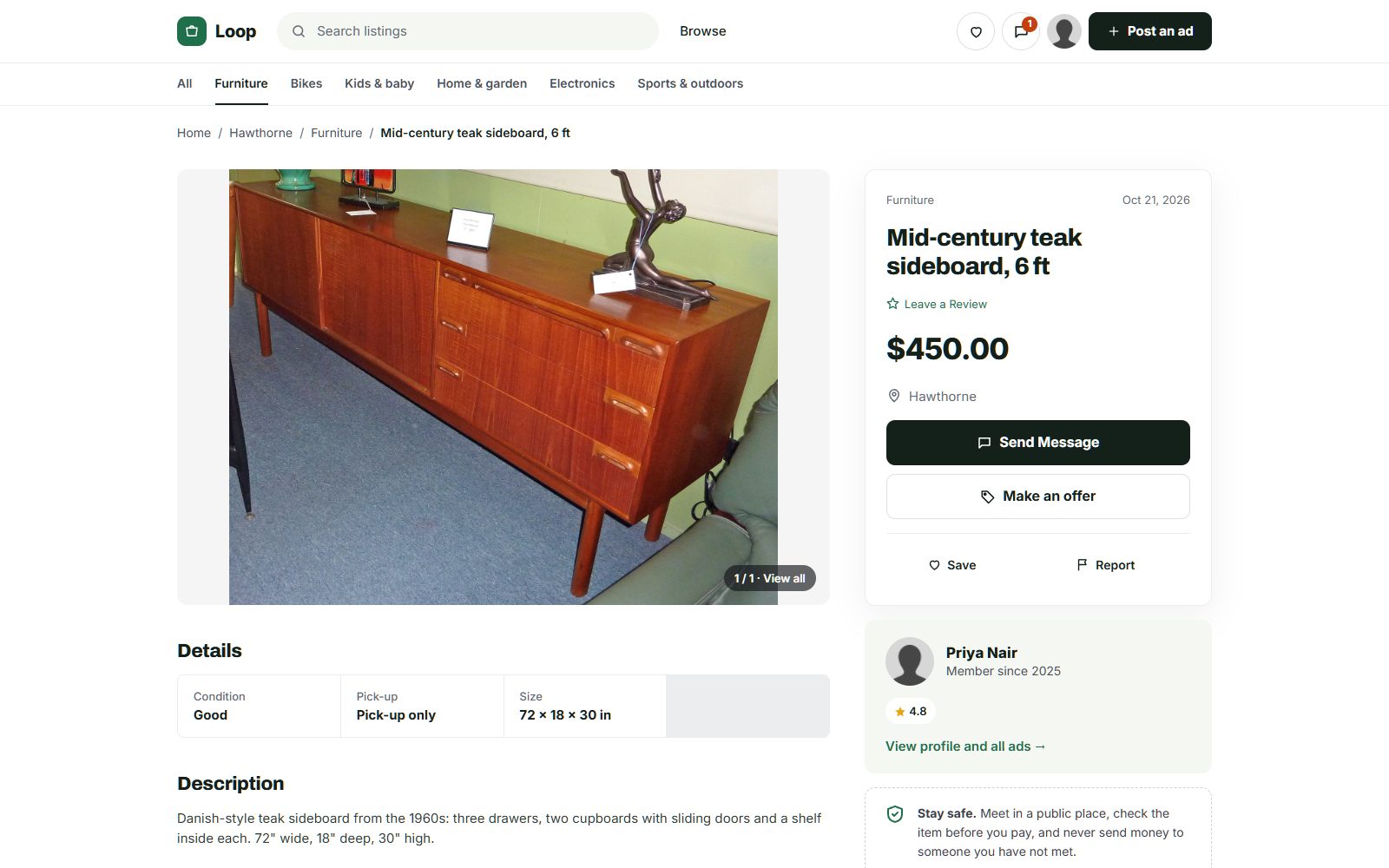
Photo credits
The screenshots show demo sites with made-up sellers. Their photos come from Wikimedia Commons, some cropped or with signs and plates blurred; these ones are under Creative Commons licences:
- McIntosh Teak Sideboard Circa 1960s, CC BY-SA 4.0
- Persian Rug Khorrasan 1, CC BY 2.0
- Fameg bentwood chairs of Poland 01, CC BY-SA 4.0
- View of the "Lost Dining Table and Chairs" in Eltham Palace - geograph.org.uk - 5797282, CC BY-SA 2.0
- Anglepoise Original 1227 Giant Floor Lamp, CC BY-SA 4.0
- Wooden Balance Bike for Kids oak frame with flame red tires, CC BY-SA 4.0
- Baby Crib (49935766018), CC BY 2.0
- Seth Thomas tambour mantel clock ca. 1930, CC BY-SA 4.0
- Rack of rock climbing gear at Horsethief Butte in a Mazamas class, CC BY 4.0
- Sideboard Teak 5 Door Rosando Furniture, CC BY-SA 4.0
- Teak 'Fresco' Sideboard by G Plan angled view, CC BY-SA 4.0