
How to build a local job classifieds website that employers and job seekers both come back to.
This guide covers how to build a job classifieds website for one town or region: the local hiring gap to fill, the fields job seekers filter on, charging employers rather than applicants, finding the first hundred openings, keeping job ads fair and free of scams, the searches to rank for, and a launch timed to hiring seasons.
Free for 15 days · No credit card · Plans from $19 a month
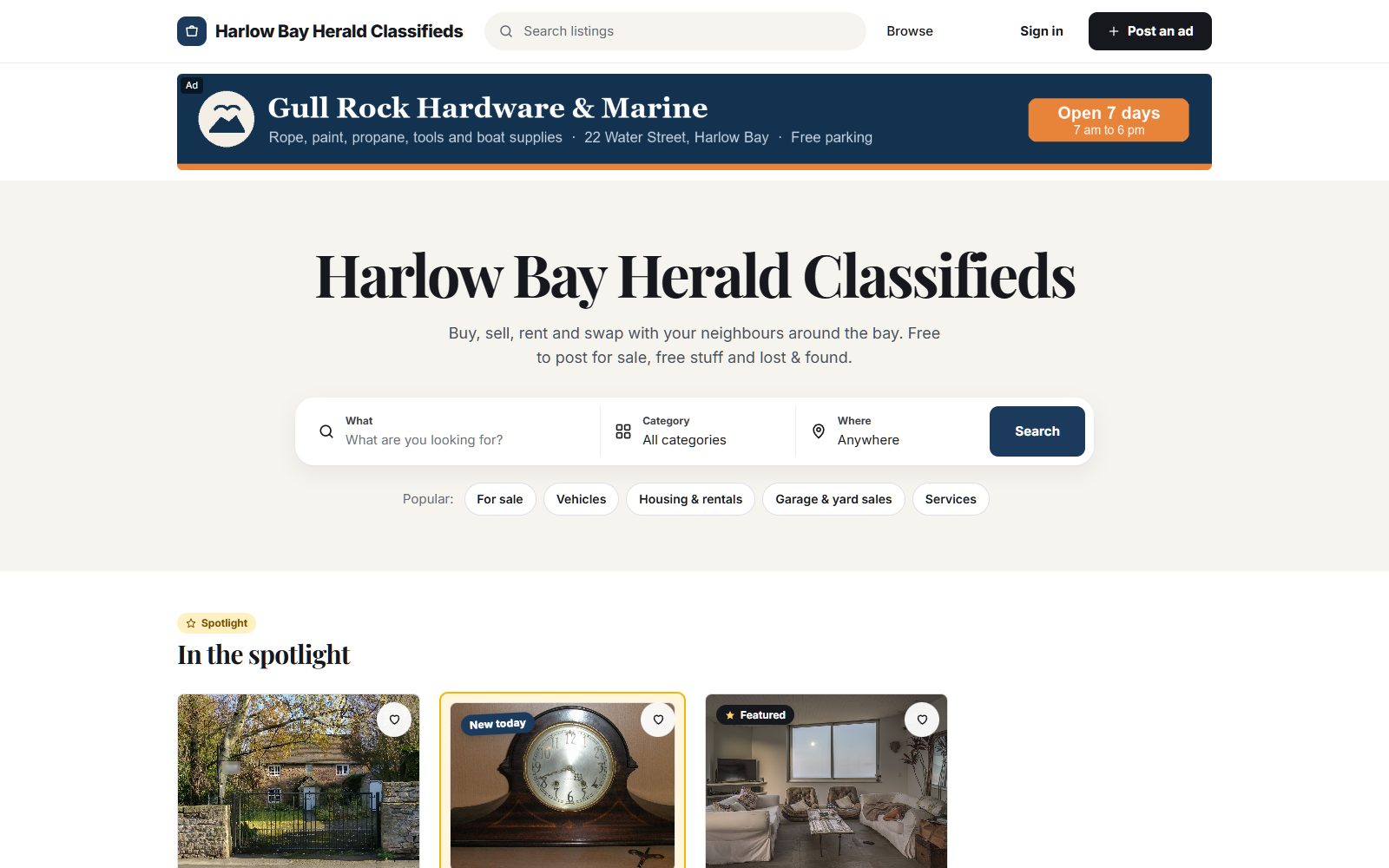
Serve the local hiring the big job boards handle badly.
National job boards are built for employers who hire at scale and for candidates willing to move or work remotely. A dental practice needing a receptionist, a farm hiring for harvest, or a restaurant short of a line cook often gets hundreds of applicants from far away and few from down the road. Local job seekers, meanwhile, scroll past national listings to find work they can reach in twenty minutes.
Who posts and who searches
- Small employers: shops, restaurants, clinics, trades, farms, care homes, schools and town offices.
- Local staffing agencies with steady openings across many employers.
- Job seekers who want work close to home: parents returning to work, students, retirees wanting part-time hours, people without a car.
Picking the angle
Choose one angle you can own. A town or county job board covering every kind of work. A trade board for one field in a wider region, such as hospitality, construction trades, trucking or healthcare support roles. Or a seasonal board for resort towns, farms and holiday retail, where the same employers hire every year.
Find where hiring happens now: window signs, a chamber of commerce newsletter, a community Facebook group where owners post "we're hiring", the local paper's employment section, and word of mouth. Each of those is a list of your first employers.
Promise job seekers one thing the big boards cannot: every job on the site is within reach of home.
Let job seekers filter by schedule, pay and distance.
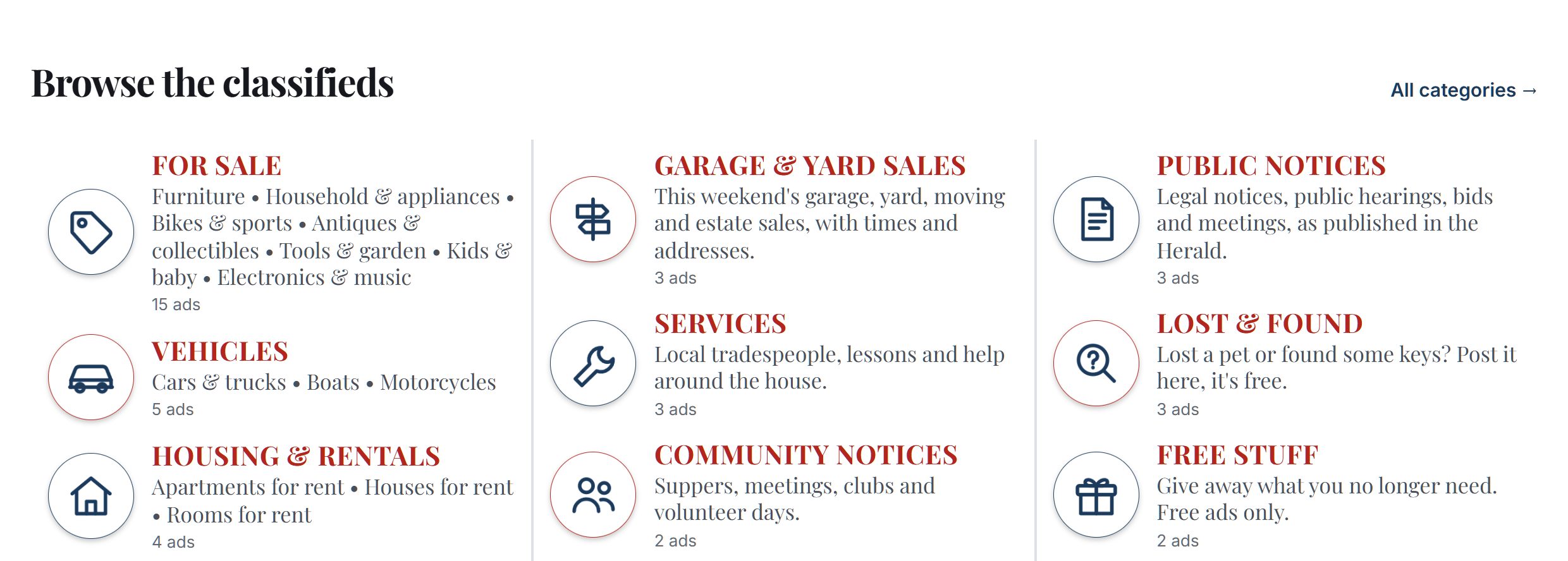
Job categories should follow how people describe work, not formal occupation codes. A cook searches for "kitchen jobs", not food preparation workers. Keep categories broad and put the real decision points in fields.
Fields that matter most
- Job type: full-time, part-time, seasonal, temporary, contract.
- Schedule: days, evenings, nights, weekends, flexible.
- Pay as a number range with a unit: per hour, per year, per shift. Ads with pay get more replies, and some places require pay ranges in job ads.
- Town and work setting: on site, hybrid or remote.
- Experience needed, and whether training is provided.
- Licenses or certificates the role really needs, such as a commercial driver's license or a food handler card.
- How to apply and a closing date.
Make pay, job type and town required. Optional fields tend to be skipped, and those three are what job seekers filter on first. Ask employers for a closing date too, so you know when to take a job down.
| Category | Example jobs | Fields job seekers filter on |
|---|---|---|
| Restaurants and hospitality | Line cook, server, housekeeper, front desk | Schedule, pay per hour, tips, town |
| Retail and customer service | Cashier, stock associate, call center agent | Job type, schedule, pay range, weekends |
| Trades and construction | Electrician's helper, carpenter, HVAC technician | Experience, license needed, pay, tools provided |
| Healthcare and care | Medical receptionist, caregiver, dental assistant | Certificate needed, shifts, pay, town |
| Driving and warehouse | Delivery driver, forklift operator, CDL driver | License class, schedule, pay, home daily |
| Office and admin | Bookkeeper, office manager, school secretary | Job type, experience, hybrid or on site |
| Seasonal and part-time | Harvest crew, lifeguard, holiday retail | Start date, end date, hours per week, housing |
Keep a pay field on every job; listings that hide pay are the ones job seekers skip.
Charge employers, never job seekers.
Job sites are one of the few classifieds niches where charging to post works early, because a hire is worth a lot to an employer. Even so, a board with three jobs on it cannot sell anything. Start free for employers for the first months, show them the applicants they get, then switch on paid posting.
- Pay to post in the jobs categories is the standard model. Keep it simple: one price per job for a set number of days.
- Featured listings and bumps help an urgent opening rise to the top of its category.
- Employer memberships suit staffing agencies, care groups and hotel chains that post several openings a month.
- Banner spaces fit training providers, community colleges, driving schools and staffing agencies.
Never charge job seekers to apply, or to see the full details of a job. It drives them away and is the pattern scam boards use. Keep the job seeker side free and simple.
Consider keeping some posts free permanently: nonprofits, volunteer roles and town jobs bring goodwill and traffic, and they make the board look complete.
| Model | Works when | Switch it on |
|---|---|---|
| Pay to post a job | Employers get applicants from the site | After a free launch period of a few months |
| Featured jobs and bumps | Categories have more jobs than fit on one page | When busy categories fill up |
| Employer memberships | Agencies and chains post often | Once two or three post every month |
| Banner spaces | Training providers want job seekers' attention | When you can show visitor numbers |
| Free posting for nonprofits and town jobs | You want goodwill and a fuller board | From launch, and keep it |
Find openings on shop windows, in chamber newsletters and in groups.
The first hundred jobs are already advertised somewhere in your area, just not in one place. Collect them, ask permission, and post them.
Where to find employers
- Hiring signs in shop and restaurant windows. Walk the main street, photograph them, and ask each owner if you may post the job free.
- The chamber of commerce and business associations, which can mention the board in their newsletter and to new members.
- Local Facebook groups where owners post openings. Message them directly and offer to list the job for them.
- Staffing agencies with dozens of local openings. One agency can fill several categories.
- Town halls, school districts, libraries and hospitals, which publish openings on their own sites and welcome another place to show them.
- Workforce centers, community colleges and adult education programs, which want local jobs to send people to.
Agencies and larger employers often keep openings in a spreadsheet, and listings can be imported from a CSV. Saved searches with email alerts bring job seekers back each time a new job in their category appears, which gives employers applicants from the first week.
Remove filled and expired jobs quickly. Stale openings cost a job board more trust than an empty category.
Screen job ads for unfair wording and for scams.
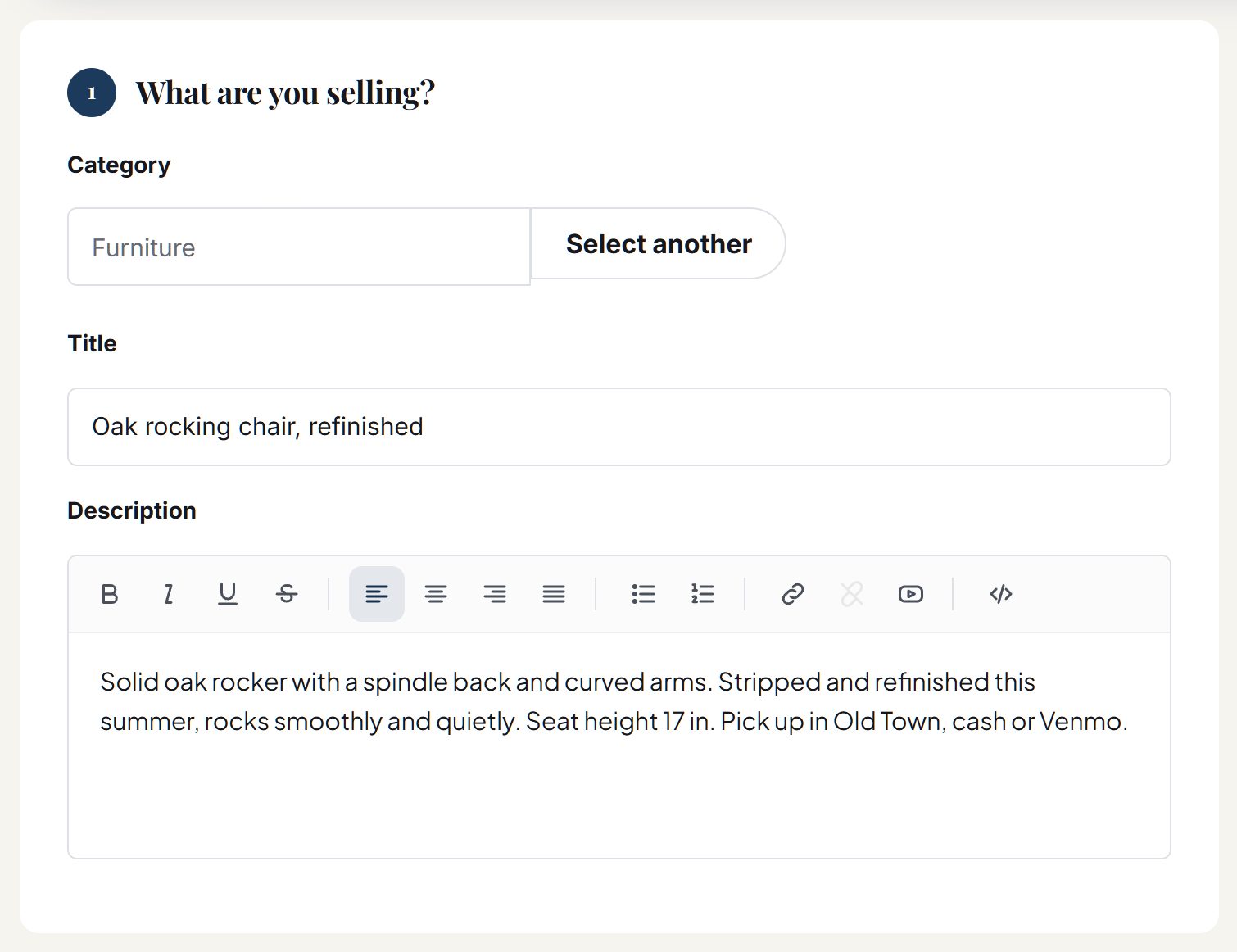
Job ads carry two risks other classifieds do not: unfair wording that shuts people out, and scams aimed at people who need work. Approve every job by hand at first, and publish clear rules for employers.
Fair wording
Most places have laws against discrimination in hiring, and job ads are covered. Write your posting rules so ads describe the job and its real requirements, not the person the employer imagines. Hold for review any ad that mentions age, sex, religion, race, nationality, family status, pregnancy, disability or similar traits as a preference, phrases such as "young and energetic" or "recent graduates only", and ask the employer to reword it. Rules differ between countries and states, so check the rules where you operate, and when in doubt, ask the employer to change the wording.
Scams to block
- Fake check and reshipping jobs: "package handler" or "payment processor" roles that move stolen goods or money.
- Upfront fees for training, equipment, background checks or a starter kit.
- Identity harvesting: ads that ask for a Social Security number, bank details or ID before any interview.
- Vague work-from-home ads with high pay for little work, and recruitment for pyramid schemes.
Use banned words for phrases such as "wire" and "starter kit", reCAPTCHA, job seeker reports, and AI that holds suspicious listings for review. Verified badges help job seekers spot employers you have checked. Publish a short safety page: never pay to get a job, never share bank details before an offer.
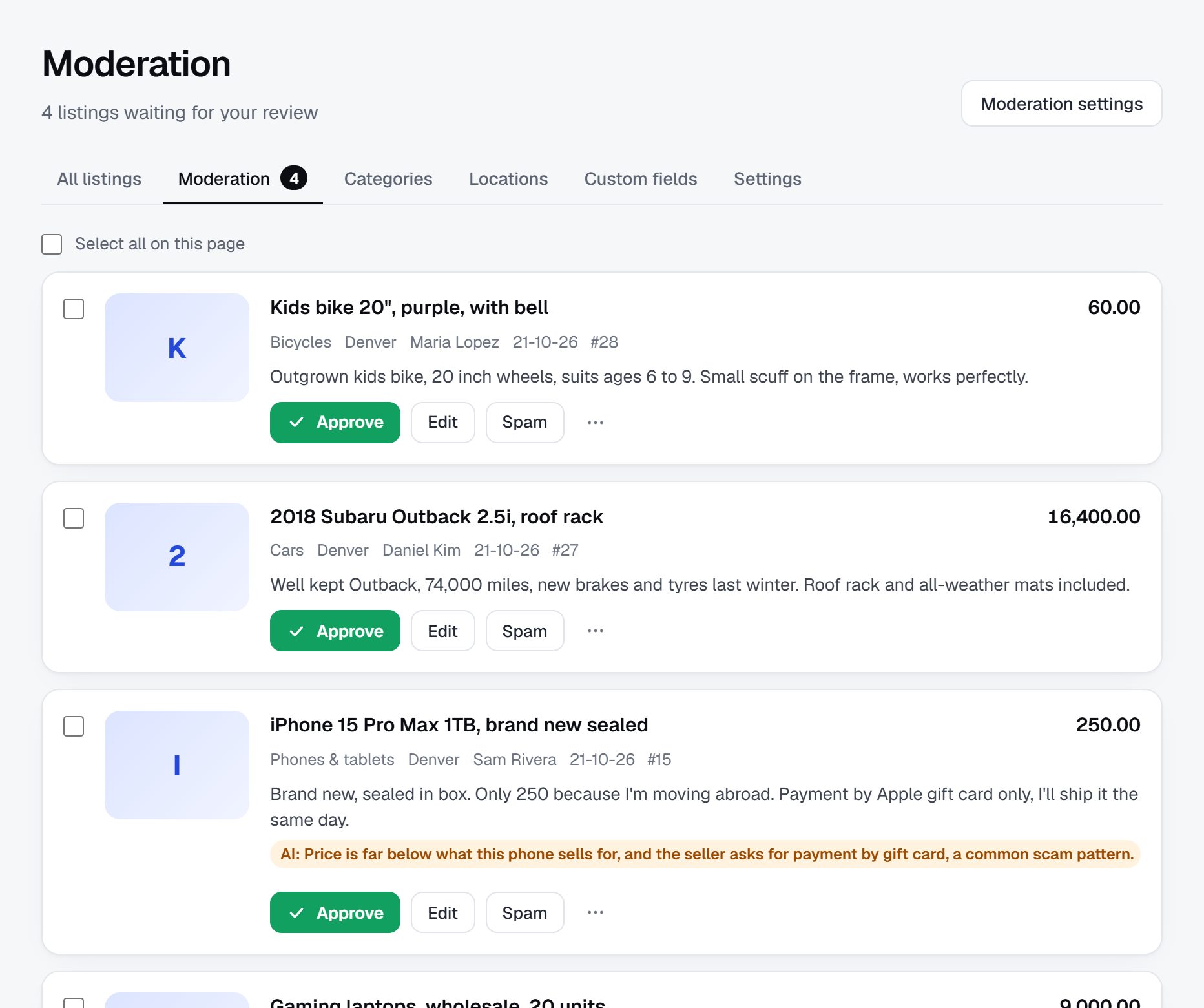
Rank for "jobs near me" searches in your town.
Job seekers search by job title and place, often on a phone, often with "hiring" or "near me". Clear titles with the role and the town, and pay shown on every ad, help a listing match those searches.
Searches to target
- "part time jobs in [town]"
- "restaurants hiring near me"
- "CDL driver jobs [county] home daily"
- "summer jobs for teens [town]"
- "weekend jobs [town]"
- "dental assistant jobs [town]"
Pages to build
- A page per category and town, such as warehouse jobs in one county.
- Job type pages for part-time, seasonal and weekend work.
- A local pay guide showing typical pay ranges for common roles, built from the ads on your site.
- Guides for job seekers: writing a first resume, what a food handler card is and where to get one, how to spot a job scam.
Set title patterns once so every job reads as job title, employer and town. When a job closes, mark it filled and remove it after a short time so search engines do not keep sending people to dead openings.
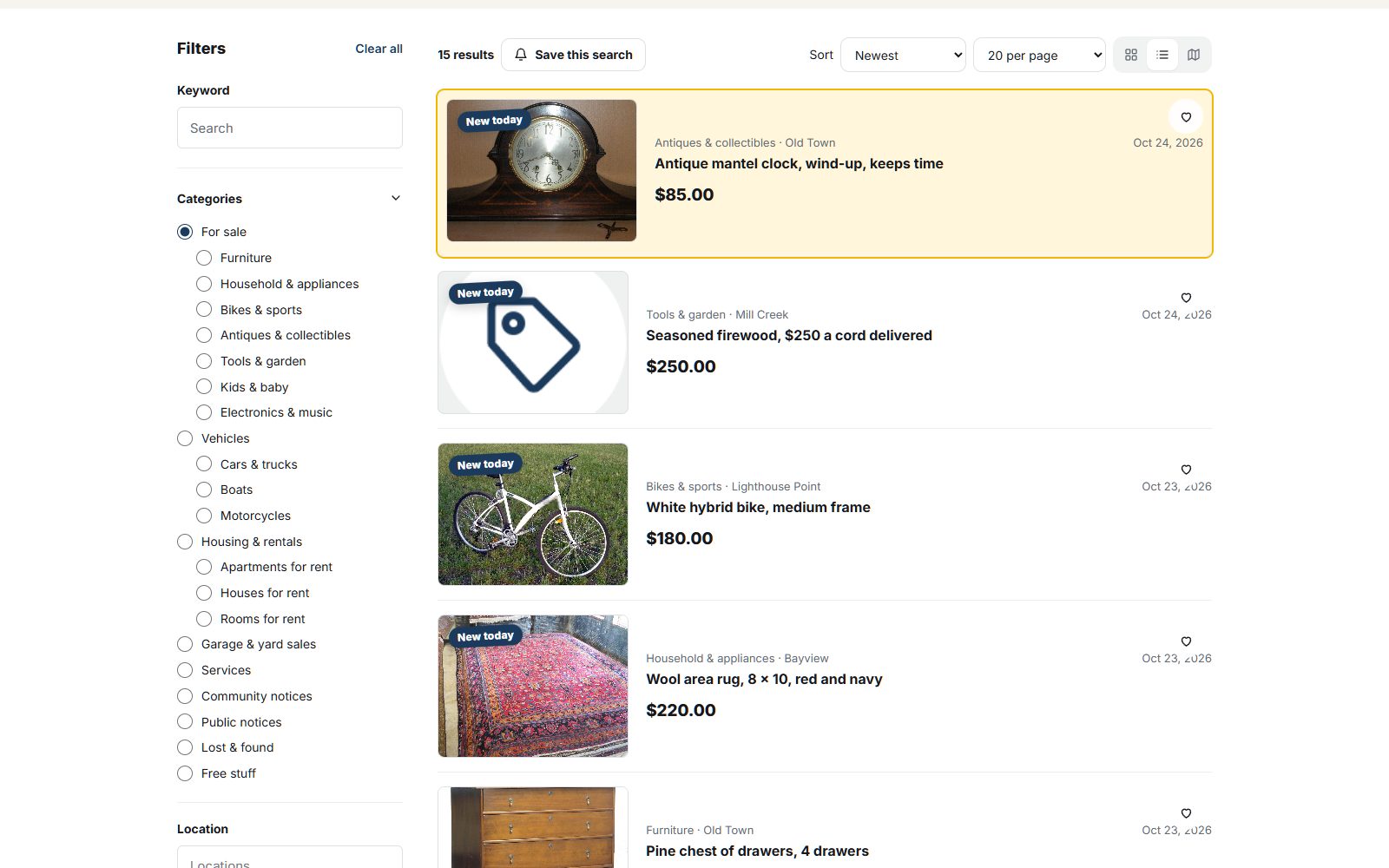
Launch before the big local hiring seasons.
Hiring has a rhythm in most towns. Launch a few weeks before a peak so employers see results when they need staff most.
Seasons that matter
Summer jobs open in spring for students, lifeguards, camps and tourism. Harvest work follows the local crops. Holiday retail and warehouse hiring starts in early fall. School districts hire for the new year over the summer. Pick the peak your area depends on.
Launch plan
- Post 50 to 100 real openings, with permission, from windows, groups and agencies.
- Sign up the chamber of commerce to mention the board to members.
- Ask workforce centers, libraries and high school counselors to share it with job seekers.
- Host or join a local job fair and post every employer's openings that week.
- Share a weekly "new jobs this week" post in local groups.
Checklist
- Required fields: job type, pay, town.
- Posting rules covering fair wording and banned requests.
- Every job approved before it goes live.
- Closing dates on every job and a routine to remove filled ones.
- Safety page for job seekers linked from every listing.
A worked example: Seneca Shore Jobs, the Finger Lakes region of New York.
Seneca Shore Jobs is a fictional local job board for the Finger Lakes region of upstate New York, an area of wineries, farms, small manufacturers, a regional hospital and summer tourism. Its founder had managed a lakeside hotel for years and was tired of posting front desk openings on national boards, then hearing mostly from applicants three states away. She started the board for employers within about forty minutes' drive of the lake, and promised job seekers that every opening on it would be within that distance.
The categories
- Hospitality and tourism
- Hotels and inns
- Restaurants and tasting rooms
- Farm and vineyard
- Harvest and seasonal crews
- Year-round farm work
- Healthcare and care
- Manufacturing and warehouse
- Trades and maintenance
- Office, schools and public sector
Who it serves
On one side are employers who hire a few people at a time: wineries, family farms, the hospital, two nursing homes, contractors, school districts and town offices. On the other are local job seekers: college students home for the summer, parents looking for work during school hours, retirees who want a few shifts a week, and people without a car who need a job on a bus route or within walking distance. Many check the board on a phone, usually in the evening after work or school.
How it started
In February she walked the main streets of four towns, photographed every hiring sign, and asked each owner whether she could list the job free. The county workforce center and the chamber of commerce mentioned the board in their newsletters, and a high school counselor shared it with seniors looking for summer work. By the time tasting rooms began spring hiring, new openings arrived every week, and a weekly email of new jobs went to everyone with a saved search. Two harvest employers told her their whole picking crew had come from the board, and she used that story in every sales call that followed.
How it makes money
Employers posted free through the first summer while she collected stories of people hired through the board. In the fall she switched on pay to post in every category except nonprofits and public jobs, which stay free. A staffing agency and the hospital bought memberships because they post every month, wineries feature their harvest openings in late summer, and a community college pays for a banner promoting its evening certificate courses to job seekers. Volunteer fire departments and the county library post free openings, which keeps the board looking complete in the quiet winter months.
| Job | Pay | Key details |
|---|---|---|
| Tasting room associate, weekends | $17 to $19 per hour plus tips | Seasonal, May to October, wine training provided |
| Vineyard harvest crew | $18 per hour | Late August to October, early starts, ride from town available |
| Certified nursing assistant, nights | $21 to $24 per hour | State certification required, three 12-hour shifts a week |
| Maintenance technician, food plant | $55,000 to $62,000 per year | Full-time, day shift, electrical experience preferred |
| School bus driver, part-time | $23 per hour | CDL with school bus endorsement, paid training offered |
Your first 90 days: from window signs to a board employers pay for.
A local job board lives or dies on whether employers get applicants in their first month, so the first ninety days are about filling the board with real openings and sending job seekers to them. Charging comes later. Start the plan about three months before your area's busiest hiring season, so the last weeks land when employers need people most.
Keep a simple weekly log: new jobs posted, jobs filled, and which employers say they hired someone through the site. Those stories, more than visitor counts, convince the next employer to post and, later, to pay. Remove filled jobs every week from the start, because a habit set early is easier than a cleanup later.
One founder working part-time can run this plan, but it helps to split the week: most days on employers, one day on the job seeker side, where libraries, counselors and workforce centers do much of the spreading for you. Ask each of them what kinds of jobs their visitors ask about most, and go looking for exactly those employers next.
An employer who hires once through your board will post again. Find that first hire fast.
| Weeks | Focus | Done when |
|---|---|---|
| 1-2 | Categories, required fields, posting rules on fair wording and fees | Pay, job type and town are required, and the rules page is published |
| 3-4 | Collect openings from window signs, local groups and public employers | 50 live jobs, each posted with the employer's permission |
| 5-6 | Reach job seekers through workforce centers, libraries and schools | Flyers are up in at least five places and saved-search alerts work |
| 7-8 | Sign up staffing agencies and the chamber of commerce | One agency posts its local openings and the chamber has mentioned the board |
| 9-10 | Gather hiring stories and clear filled jobs weekly | Three employers confirm they hired through the board |
| 11-12 | Announce paid posting, keeping nonprofit and public jobs free | Prices are published and employers have a month's notice |
Three ways to build a job board, and what to check in each.
A job board looks simple, but it needs things a general classifieds tool may not do well: required pay and job type fields, closing dates that take jobs down on time, employer accounts that post several openings, paid posting per job, and alerts that send new jobs to job seekers by email. Test each route against that list before you compare anything else. A board where jobs never expire and pay is optional will look busy for a month and then lose job seekers for good.
Building it with developers is worth it only if you plan features no ready-made product has, such as applicant tracking for employers or a feed of your jobs into other job sites. For a single town, it usually costs more than the board will earn for years, and it delays the part that matters: talking to employers. If you later outgrow a ready-made product, you will know exactly which features to build.
Installing a job board script or WordPress plugin on your own server gives you full control and a wide choice of themes. Expect to spend time on spam, updates and plugin conflicts, and check that expiry dates and paid postings work without buying several add-ons.
A hosted builder such as Yclas fits a founder who wants to spend time with employers rather than with servers: categories, fields, moderation, paid posting and alerts are set up rather than built. With any builder, confirm that pay can be a required field that also works as a search filter, since that one filter does more for job seekers than any design choice.
| Route | Fits when | Watch out for |
|---|---|---|
| Custom build with developers | You plan applicant tracking or job feeds no product offers | High cost for one town, and you maintain it alone |
| Job board script or plugin | You have a web person and want full control of the code | Spam, updates, and paid add-ons for expiry or paid posting |
| Hosted builder | You want to spend your time on employers, not servers | Check pay can be a required filter and jobs expire on time |
What a local job classifieds site costs to run.
The software is the smallest part of the bill. Most of the cost is your time in the first months: finding the first listings, answering questions and checking what gets posted.
Plan for the time it takes to read every job ad before it goes live, and for printed cards or posters at workforce centers, libraries and colleges. A short review of your posting rules by a local employment lawyer is worth the cost.
| Cost | Typical range | On Yclas |
|---|---|---|
| Domain | $10 to $20 a year | Your own, with SSL included |
| Software and hosting | $0 to $100+ a month, plus plugins and updates | Starter $19 a month, Professional $99 |
| Design | $0 to $100 for a theme, or a designer | 109 looks included |
| Payment fees | About 3% per payment | Your Stripe or PayPal fees; Yclas takes nothing |
| Your time | 5 to 10 hours a week at the start | Finding listings, moderation, support |
Mistakes that empty a local job board.
- Letting employers skip the pay. Job seekers open the ads that show pay and pass over the rest, so employers who hide it get fewer replies and blame the board. Make a pay range required, and explain on the posting page that ads with pay get more applicants. Where pay ranges are required by law, the field also keeps employers on the right side of it.
- Charging before employers have seen applicants. A board with a dozen jobs cannot ask for money, and an early price list scares off the small employers you need most. Run free for a hiring season, collect stories of people hired, then charge. Give employers at least a month's notice before prices start.
- Leaving filled jobs online. A job seeker who applies to three positions that were filled a month ago stops trusting every listing. Ask for a closing date, remind employers to mark jobs filled, and clear old ones every week.
- Copying jobs without asking. Lifting openings from other sites without permission annoys employers, sends applicants to stale ads, and can bring complaints. Ask first; most small employers are glad of a free listing and the conversation starts a relationship.
- Covering too wide an area. A board for a whole state has a few jobs in each town and looks empty everywhere. Cover one county or commuting area well, then add neighboring towns as employers ask. Job seekers judge a board by whether it has jobs they can reach, not by how many jobs it has in total.
- Letting a scam through in the first weeks. One reshipping or fee-for-training ad that reaches a job seeker can end the board's local reputation before it has one. Approve every job by hand until you know your employers, and look up any you do not recognize before approving their ad.
- Forgetting that job seekers use phones. Many local job seekers search during a break or on the bus. Keep applying short: an email address, a phone number or on-site messages rather than a long form to download and print.
- Launching in a slow month. Opening when nobody is hiring leaves employers with nothing to post and job seekers with nothing to find. Time the launch, and every push after it, to your area's hiring peaks, such as spring for summer work and early fall for holiday retail.
- Publishing discriminatory wording. An ad asking for young, energetic staff can expose the employer and embarrass the board. Hold such ads, ask for rewording that describes the job instead of the person, and check the rules where you operate.
Hiring terms a job board founder should know.
Employers, agencies and job seekers use these words, and your posting rules may need several of them.
| Term | What it means |
|---|---|
| Pay transparency law | A rule in some places that requires job ads to show a pay range. |
| Equal opportunity employer | A statement that an employer does not discriminate in hiring on protected grounds. |
| Staffing agency | A firm that recruits workers and places them with client employers, often on temporary assignments. |
| Temp-to-hire | A role that starts as a temporary agency placement and may become permanent. |
| Per diem | Work paid by the day or shift with no fixed schedule, common in healthcare. |
| Exempt and non-exempt | US terms for whether a role is excluded from overtime pay rules or entitled to overtime. |
| CDL | Commercial driver's license, needed in the US to drive heavy trucks and buses. |
| Endorsement | An extra qualification on a driver's license, such as for passengers or school buses. |
| Closing date | The last day an employer accepts applications for a job. |
| Requisition | An employer's internal approval to fill a position, often with its own number. |
| Job feed | A file of job ads that one site sends to another to publish automatically. |
| Applicant tracking system | Software employers use to collect, sort and reply to applications. |
| Seasonal worker | Someone hired for a set period, such as the summer tourist season or a harvest. |
| Work authorization | Proof that a person may legally work in a country, which employers check before hiring. |
| Shift differential | Extra pay per hour for working nights, weekends or other less popular shifts. |
The same steps for a local job classifieds site on Yclas.
- Describe your nicheThe setup wizard writes the categories, an About page and example listings from one sentence.
- Add fieldsSwitch on a field pack or add the fields your buyers filter on.
- Fill itImport dealer spreadsheets, invite sellers and post your own.
- Set the rulesChoose moderation, banned words and AI checks.
- Go liveChoose a plan, connect your domain, switch on paid listings when it is time.
How much do I need to start a local job board?
Very little cash: the platform, a domain and some printed flyers. Most of the investment is your time collecting the first openings and checking each ad.
Is it legal to run a job board?
Generally yes, but hiring discrimination laws cover job ads, and some places have rules on pay ranges or recruitment. Check the rules where you operate and have your posting rules reviewed locally.
Should I charge employers from day one?
Usually not. Give employers a free period so they see applicants arrive, then charge per job. Keep nonprofit and town jobs free if you can.
Can I post jobs I found elsewhere?
Ask the employer first. A short message offering a free listing is usually welcome, and it starts a relationship you can later charge for.
How do I stop job scams?
Approve every ad, ban upfront fees and requests for bank details before an offer, and warn job seekers never to pay for a job.
How can a small board compete with Indeed?
Stay local and complete. Job seekers who want work nearby will use the board that shows every opening in their town, including small employers the national sites miss.
Should job seekers post resumes?
It is optional. A simple "looking for work" category can help, but keep personal details out of public view and let employers make contact through on-site messages.
Should applicants apply on my site or on the employer's own page?
Both work. Small employers often prefer on-site messages or an email address, while larger ones want applicants sent to their own application page. Let each employer choose when they post, and show the method clearly on every ad so nobody applies the wrong way.
How long should a job ad stay up?
Ask employers for a closing date and use about 30 days when they have none. Ask them to mark the job filled as soon as they hire, and clear old ads every week. An employer can always repost if the right person has not applied.
Can I list remote jobs?
Hybrid roles with local employers fit well. National remote jobs weaken the promise of work near home, so keep them out or in one small category. A board that is useful to someone looking for work nearby beats one that is a little useful to everyone.
Do I need to check employers before they post?
Check new employers before their first ad goes live, for example by matching the business name to its website or phone number. Verified badges then show job seekers which employers you have checked, and a reported ad from a verified employer is easier to sort out with one phone call.
What about volunteer roles and internships?
Volunteer roles fit well in a free category. For internships, ask employers to say whether they are paid, and check the rules where you operate on unpaid work. Schools and colleges often look for local internships to send students to, so they can be a source of both sides.
Related pages.
The parts of Yclas this leans on.
You have the plan. Now help your town hire locally.
Describe your site in a sentence and the setup wizard writes the categories, example listings and a look. Free for 15 days, no credit card.
Start my classifieds site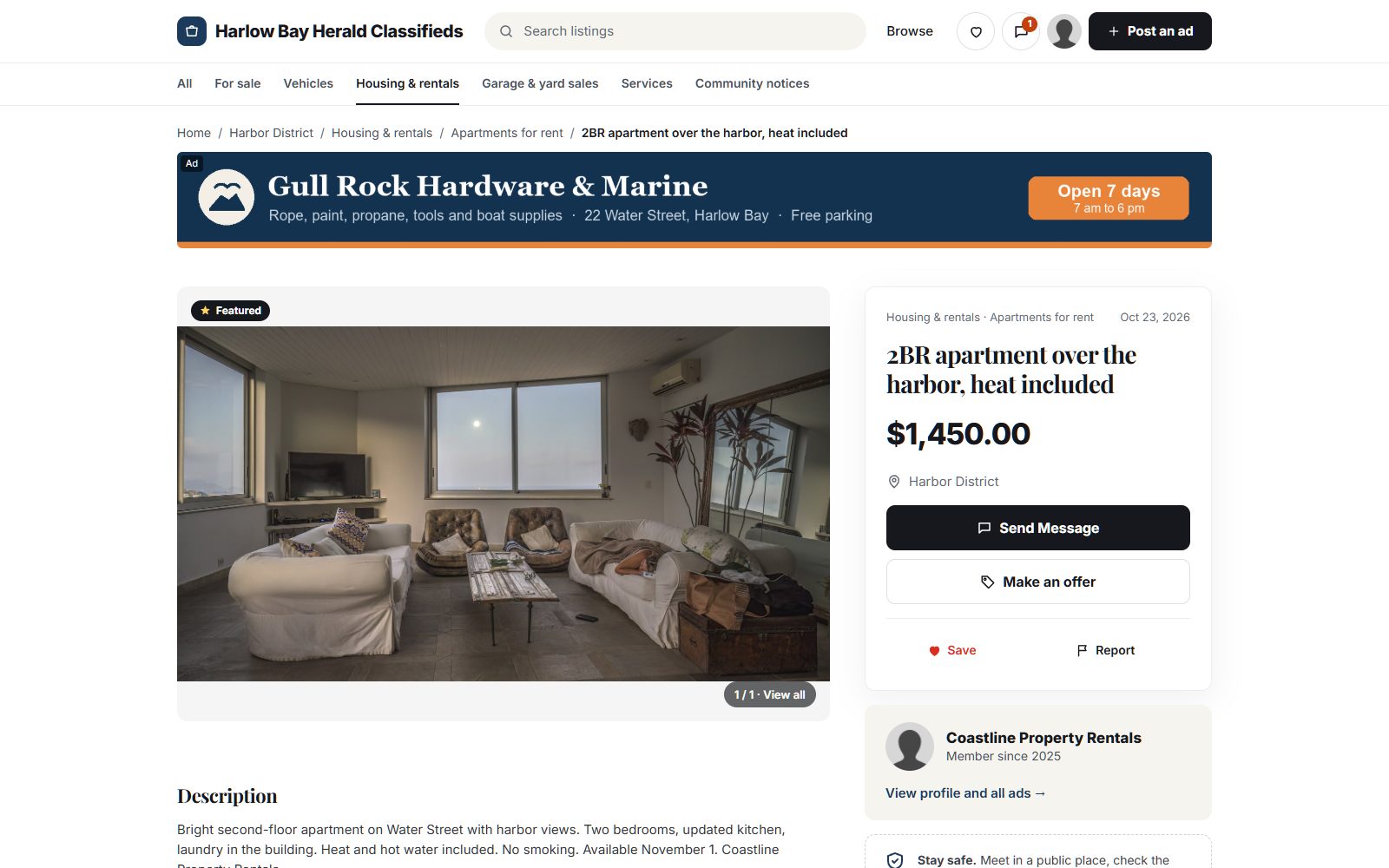
Photo credits
The screenshots show demo sites with made-up sellers. Their photos come from Wikimedia Commons, some cropped or with signs and plates blurred; these ones are under Creative Commons licences: