
How to build a bicycle classifieds website where riders find the right size and the right groupset.
This guide covers building a used bike site for one city, region or riding style: why riders want more than a general marketplace, the fields that matter (frame size, wheel size, groupset, brakes, motor), how bike shops and clubs pay for visibility, where the first hundred bikes come from, stolen bikes and damaged carbon, the searches to rank for, and a spring launch.
Free for 15 days · No credit card · Plans from $19 a month
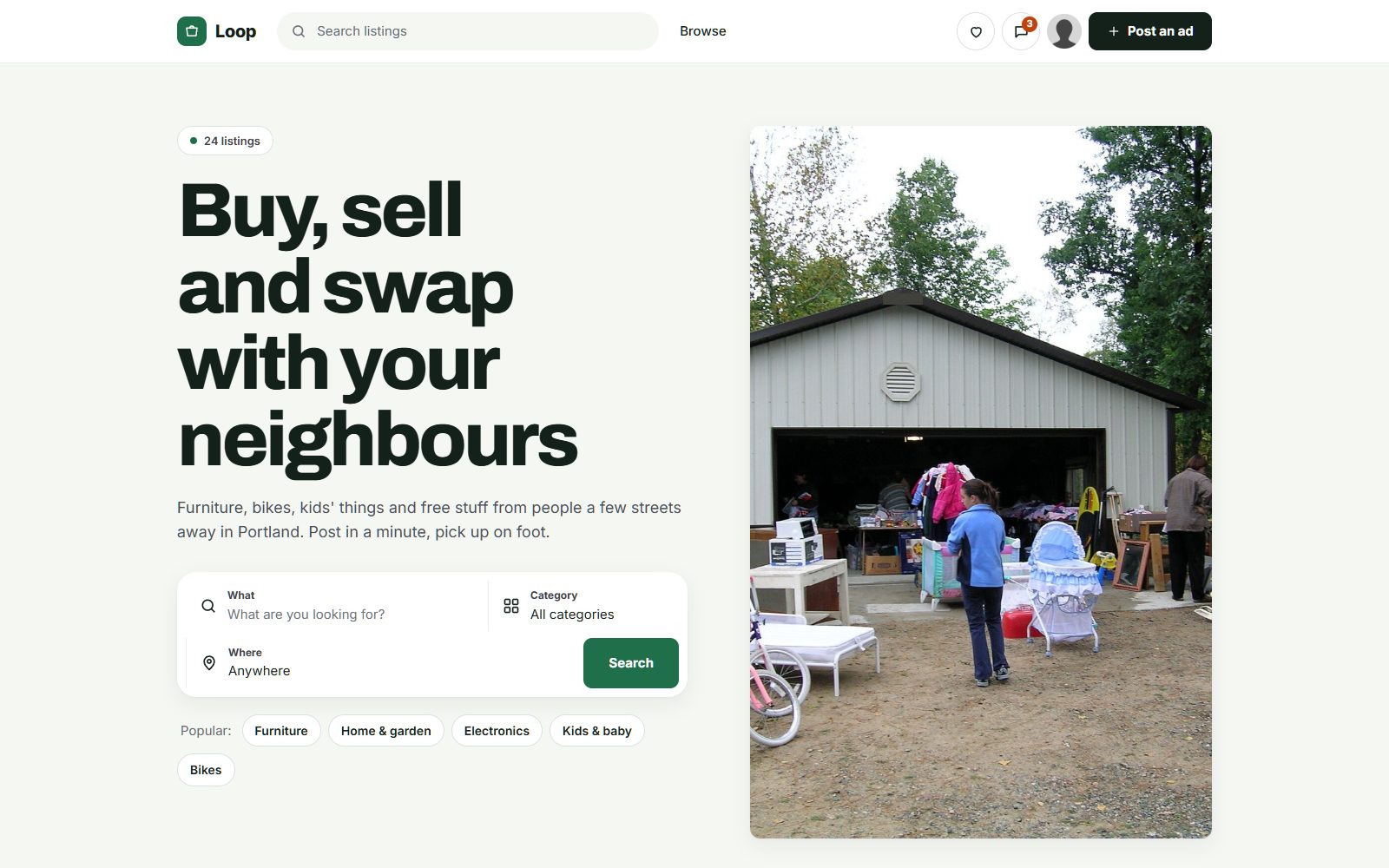
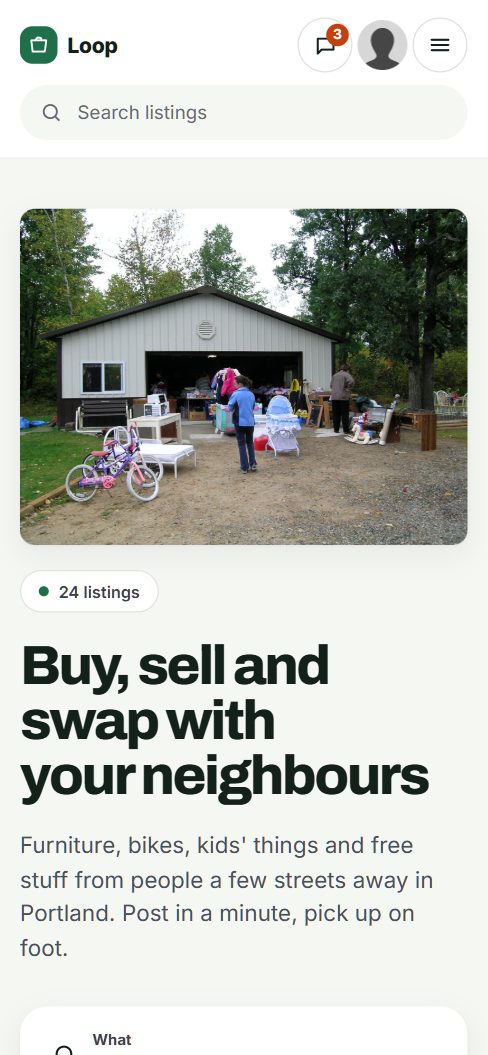
Serve riders who know exactly which bike they want.
Used bikes sell everywhere, but general sites treat a carbon road bike and a kids' bike the same way: a title, a price and a few photos. Riders shopping for a used bike need to know whether it fits them, what components it has, and whether it was stolen. On a general site they ask the same questions in every message and still get vague answers.
Who buys and sells
- Enthusiasts upgrading every few years and selling the old bike to fund the new one.
- Commuters and new riders looking for a reliable, affordable bike, and lately for a used e-bike.
- Families handing kids' bikes down as children grow, often every year or two.
- Bike shops selling trade-ins, ex-rental and ex-demo bikes.
- Racers and club riders selling wheels, frames and parts.
Picking the angle
Choose a city or region with a cycling scene: a mountain bike town near trails, a college town, a commuter city with bike lanes. Or choose a riding style across a wider area, such as gravel and road, mountain bikes, e-bikes, or vintage steel frames, where buyers will drive further for the right bike.
The trade today happens in local cycling groups, club email lists and forum classifieds, at seasonal bike swaps, on shop notice boards, and on general sites. Each one is a source of sellers.
A bike that does not fit is the wrong bike at any price. Make size the first thing every listing shows.
Ask for size, groupset and brakes on every bike.
Keep categories to riding style and put the detail into fields. Cyclists filter hard: a rider who needs a 56 cm frame with hydraulic disc brakes will skip everything else.
Fields that matter
- Frame size as the manufacturer states it (cm for road and gravel, S, M, L, XL for mountain bikes), plus a rider height range.
- Wheel size: 700c, 650b, 29, 27.5, 26, 24, 20 and smaller for kids' bikes.
- Frame material: carbon, aluminum, steel, titanium.
- Groupset as a dropdown of common Shimano, SRAM and Campagnolo lines, and the number of gears.
- Brakes: rim, mechanical disc, hydraulic disc.
- Suspension travel in mm for mountain bikes.
- For e-bikes: motor position, battery capacity in Wh, and the e-bike class where classes apply.
- Serial number, recorded for every bike even if not shown publicly.
Fields can be text, numbers, dropdowns, checkboxes or dates, required or optional, and shown as search filters. Require frame size, wheel size and brakes; make the rest optional so posting a kids' bike stays quick.
| Category | Example listings | Fields riders filter on |
|---|---|---|
| Road and gravel | Endurance road bikes, gravel bikes, race bikes | Frame size, groupset, frame material, brakes |
| Mountain bikes | Hardtails, trail and enduro full suspension | Frame size, wheel size, travel, brakes |
| E-bikes | Commuter e-bikes, e-MTBs, cargo e-bikes | Motor position, battery Wh, class, frame size |
| City and hybrid | Commuters, step-through bikes, folding bikes | Frame size, gears, racks and fenders included |
| Kids' bikes | Balance bikes, 16 and 20 inch bikes | Wheel size, age range, brakes |
| Vintage and classic | Steel road bikes, classic touring bikes | Frame size, maker, era, original parts |
| Frames, wheels and parts | Wheelsets, groupsets, suspension forks | Part type, wheel size, axle standard, condition |
Ask for the serial number on every bike so stolen bikes can be checked before they go live.
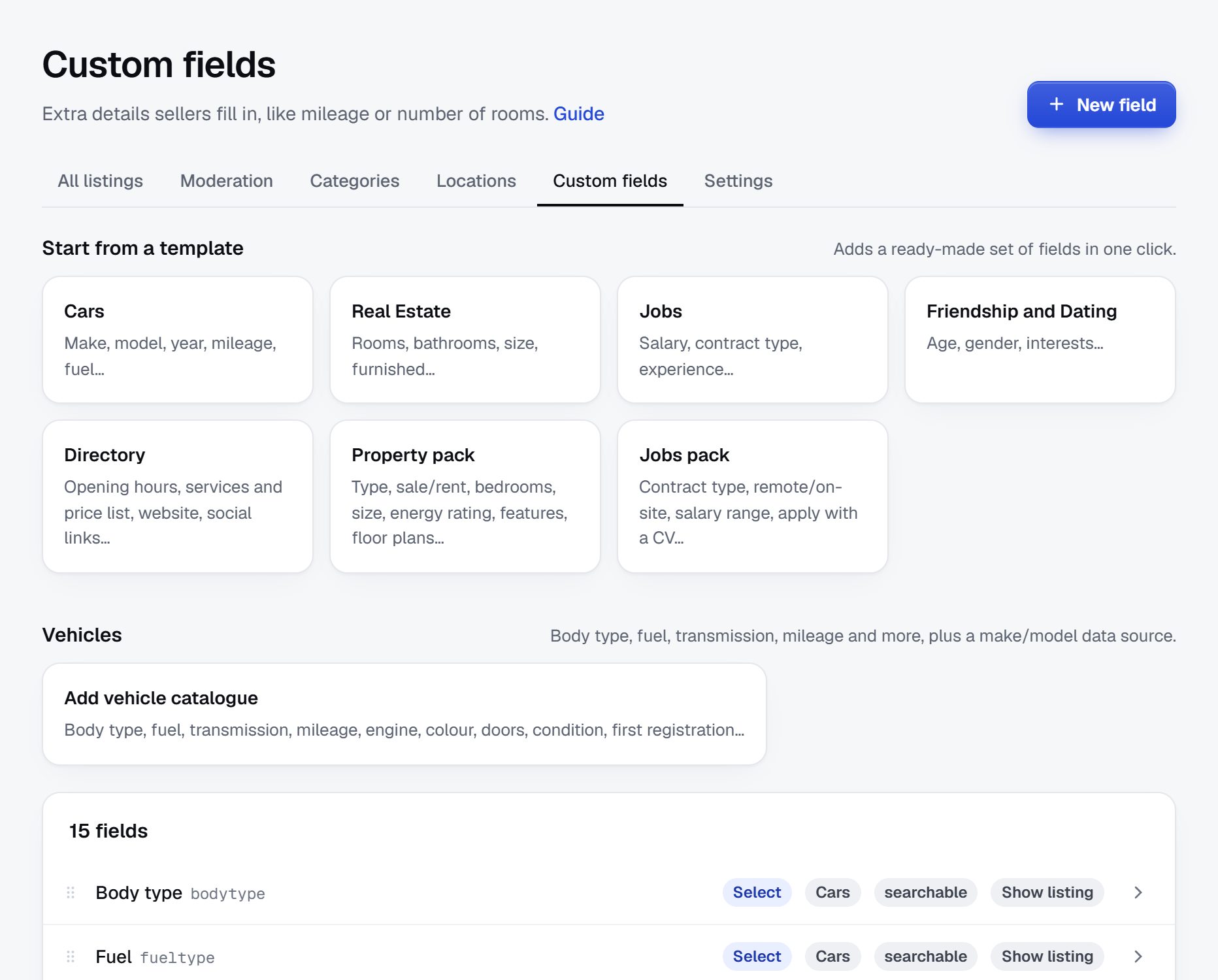
Earn from bike shops and busy spring weekends.
Private sellers are the core of a used bike site, and most will not pay to list a bike worth a few hundred dollars. Keep private posting free at first and build money around shops, brands and the spring rush.
- Featured listings and bumps work well for higher-value bikes, where a seller would happily pay a little to sell a carbon road bike or an e-MTB faster.
- Shop memberships for bike shops selling trade-ins and ex-demo bikes, with a seller profile, ratings and reviews, and a verified seller badge.
- Pay to post in the e-bike category, once it has buyers. E-bikes carry high prices and often come from shops and rental fleets clearing stock.
- Banner spaces for bike fitters, repair shops, mobile mechanics, cycling clothing stores, event organizers and bike storage.
On the Marketplace plan, buyers can pay on the site with Stripe and the owner keeps a commission per sale, with shipping per seller. That suits parts, wheels and frames that ship easily; complete bikes usually sell locally for cash after a test ride.
Auctions with bidding and Buy now can add interest to rare vintage frames, but most riders prefer a fixed price and a test ride.
| Model | Works when | Switch it on |
|---|---|---|
| Featured listings and bumps | Spring brings many bikes in each category | Once a category has a few dozen bikes |
| Bike shop memberships | Shops have trade-ins and ex-demo stock | When two or three shops list regularly |
| Pay to post e-bikes | E-bike buyers visit the site | When e-bike listings get steady messages |
| Banner spaces | Fitters, mechanics and events want local riders | When you can show visitor numbers |
| Commission on parts sales | Wheels, groupsets and frames ship to buyers | On the Marketplace plan, with checkout |
Find the first bikes at swaps, clubs and bike shop back rooms.
Most enthusiasts own more than one bike, and many have one they keep meaning to sell. The first hundred listings are in their garages and in local shops.
Where bikes come from
- Bike shops with trade-ins, ex-rental and ex-demo bikes. Offer to post their used stock for free in the first season.
- Cycling clubs and race teams. Members upgrade every year; ask clubs to share the site in their newsletter and group chat.
- Bike swaps and swap meets, often run by clubs or schools in spring. Bring cards and offer to list unsold bikes afterwards.
- Trail associations and mountain bike groups, whose members buy and sell full suspension bikes constantly.
- Community bike shops and co-ops that refurbish donated bikes and need to sell them.
- Rental fleets and tour operators that sell off bikes at the end of each season.
- Parents through school groups, for kids' bikes that are outgrown every year.
Shops often keep stock in a spreadsheet, and listings can be imported from a CSV. With Yclas a private seller can take a photo of the bike and let AI fill in the title, description, category and price for them to check, then add frame size and groupset.
Ask every seller for a side-on photo, a drivetrain photo and the serial number. Listings with all three sell faster.
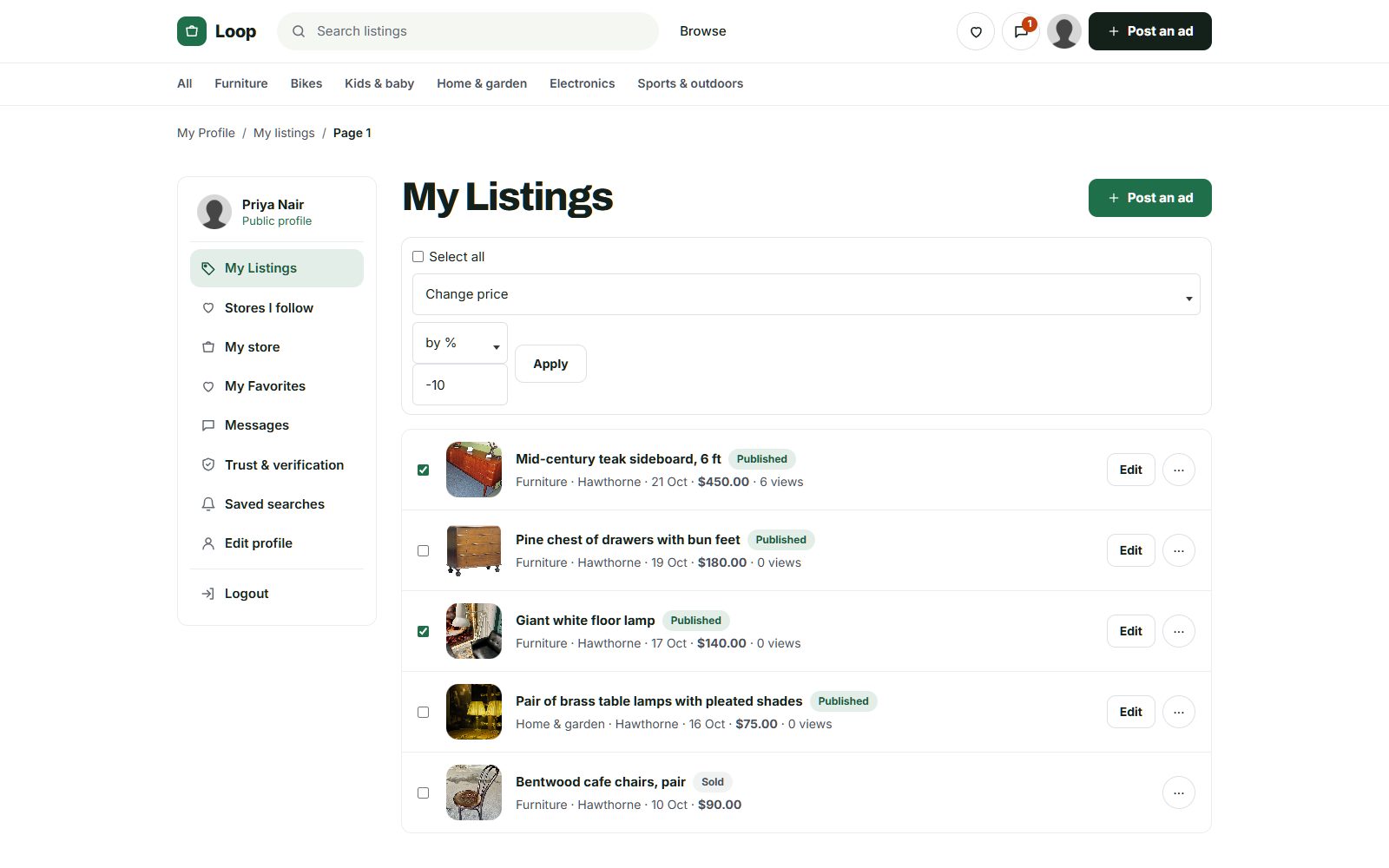
Keep stolen bikes out and warn buyers about hidden damage.
Bike theft is common, and stolen bikes are often resold online within days. A bike site that ignores this becomes a place to sell stolen goods. Make stolen bike checks part of your rules from day one.
Stolen bikes
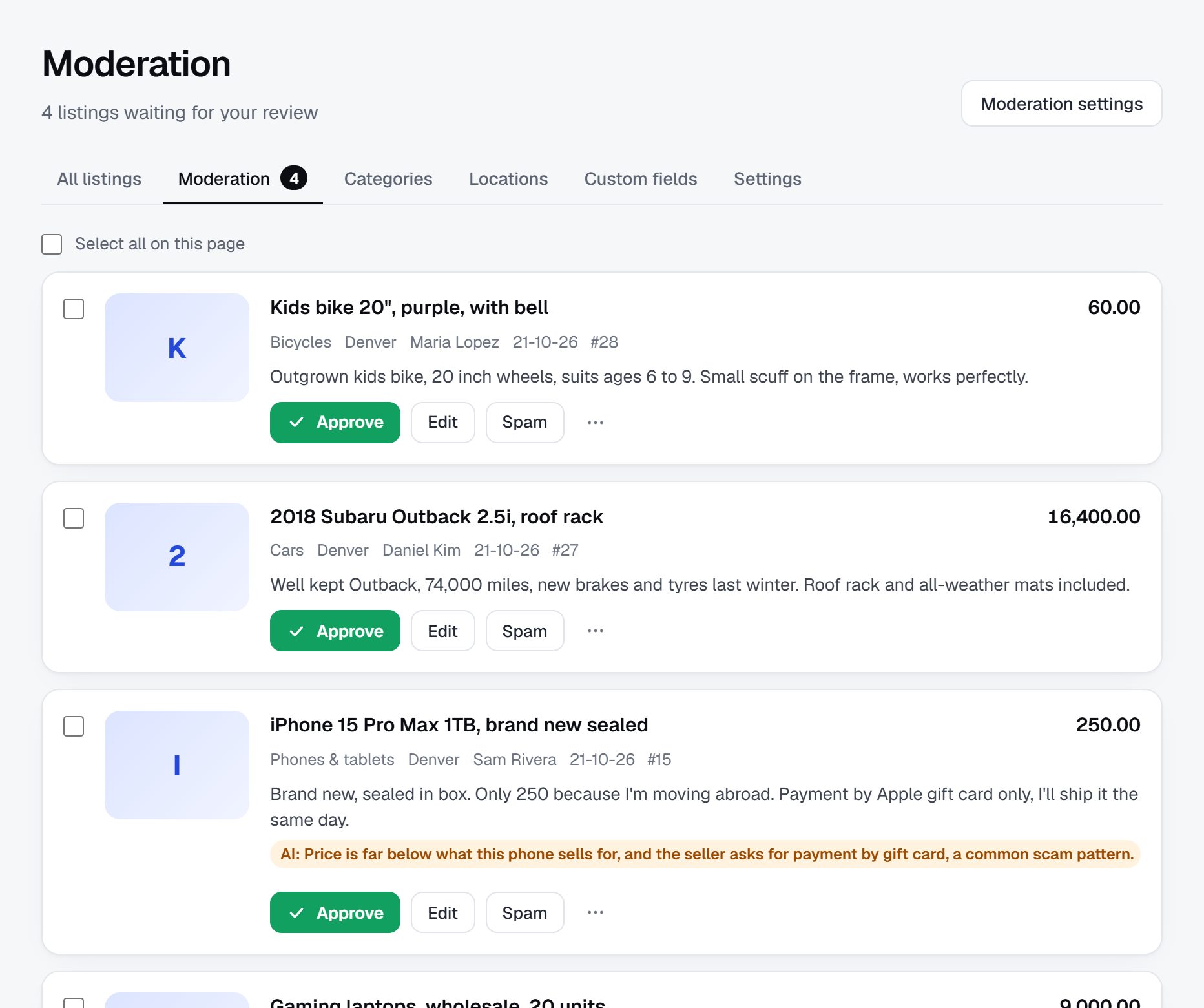
- Require a serial number, usually stamped under the bottom bracket, and check it against public stolen bike registries such as Bike Index before approving the listing.
- Watch for warning signs: very low prices for high-end bikes, sellers who do not know the frame size, scratched-off serial numbers, many bikes from one seller with no shop behind them.
- Tell buyers to check the serial number themselves and to ask for a receipt on expensive bikes.
Damage and fakes
- Carbon frames can be cracked in ways that are hard to see. Advise buyers to inspect closely or ask a shop to check before paying for a carbon bike.
- Counterfeit carbon frames copying well-known brands are sold online. Be wary of new frames priced far below retail.
- E-bike batteries that are damaged, swapped or not original can be a fire risk. Ask sellers to state the battery's age and whether it is the original.
Rules to check
E-bike classes, speed limits and where each class can ride differ between states and countries. Check the rules where you operate and ask sellers to state the class accurately.
Approve every listing at first, use reCAPTCHA and reports, and let AI hold suspicious listings for review. Recommend meeting in daylight at a bike shop or busy place, with a test ride and the seller's ID held while the buyer rides.
Rank for model, size and city searches.
Cyclists search with precise terms: model names, sizes, wheel sizes and groupsets, often with a city. Those long searches are hard for general sites to answer well and easy for a site with the right fields.
Searches to target
- "used road bike 56cm [city]"
- "used full suspension mountain bike for sale [region]"
- "used e-bike [city]"
- "kids bike 20 inch used"
- "what size bike do I need for my height"
- "how to check if a used bike is stolen"
Pages to build
- Category and city pages, such as used gravel bikes in one metro area.
- A size guide linking rider height to frame sizes, with links to bikes in each size.
- A used bike buying checklist: frame cracks, chain wear, wheel true, brake pads, suspension service history.
- A used e-bike guide on batteries, motors and classes.
- A price guide built from sold listings by bike type and age.
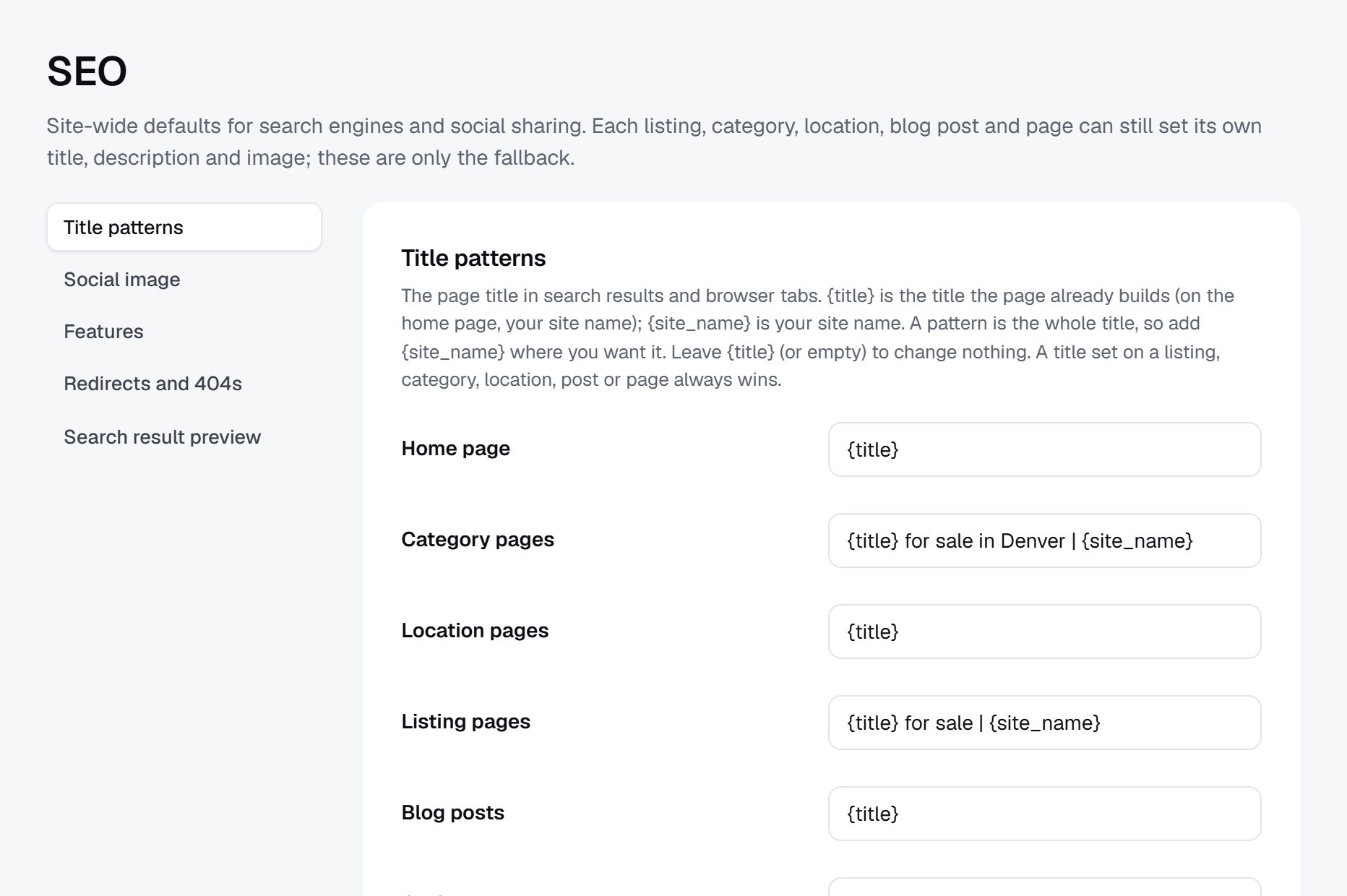
Set title patterns so every listing shows the make, model, size and city. Search engines reward pages that answer one rider's exact question, and the checklist and size guide earn links from clubs and shops.
Launch in early spring, before the first big rides.
Bike sales follow the weather. In much of North America and Europe, buying peaks from early spring through early summer, when riders get back out and families buy kids' bikes. A second wave comes at the end of summer as students arrive and racers sell off bikes after the season.
Events that matter
Spring bike swaps, local races and gran fondos, trail days, bike-to-work days and the start of the college year all bring riders together. Each one is a place to hand out cards and recruit sellers.
Launch plan
- List 100 bikes from shops, club members and your own garage before going public.
- Sign two or three shops to list their used stock free for the first season.
- Ask clubs and trail associations to share the site with members.
- Run a stand at the spring bike swap and offer to list unsold bikes.
- Publish the size guide and stolen bike checklist before the launch announcement.
Checklist
- Required fields: frame size, wheel size, brakes, serial number.
- Stolen bike check in your approval routine.
- Safety advice for test rides published.
- E-bike rules for your area checked.
- Every listing approved at first.
A worked example: Front Range Wheel Trader, Colorado.
Front Range Wheel Trader is a fictional used bike site for the cities along Colorado's Front Range, from Fort Collins south through Boulder and Denver to Colorado Springs. The area has mountain bike trails within a short drive, a big gravel and road scene, a growing number of e-bike commuters and several universities. The founder, a mechanic at a small shop, kept meeting customers who had bought a used bike online that turned out to be the wrong size, missing parts, or worse, reported stolen a week later.
The categories
- Mountain
- Hardtail
- Full suspension
- Road and gravel
- E-bikes
- Commuter and cargo
- E-MTB
- City and kids
- Frames, wheels and parts
Who it serves
Sellers are club riders upgrading, students leaving at the end of the academic year, families handing down kids' bikes, and four shops with trade-ins and ex-rental fleets. Buyers range from new riders after a first trail bike to racers hunting a particular frame size, and many are newcomers to the area who arrived without a bike and want one before summer. A good share of the messages ask about fit, which is why the site leads with size on every listing. Kids' bikes move fastest of all, often within a weekend, because parents in the same school groups pass the link around.
How it started
He began with his own shop's trade-ins and those of two friendly shops, imported from their stock spreadsheets, then took a stand at a spring bike swap run by a local club and offered to list any bike that did not sell. Every listing needed a frame size, wheel size, brakes and serial number, and he checked each serial against a stolen bike registry before approving it. Riders noticed the size filters and the stolen bike checks, and club newsletters started linking to the site before the first big group rides of the season. A trail association asked for a banner promoting its volunteer trail days, which he gave free in return for a link from its newsletter.
How it makes money
Private listings are free. Shops pay for memberships with a seller profile, reviews and a verified seller badge, which helps them move ex-rental fleets each fall. Featured listings sell best in March and April, especially for full suspension bikes and e-bikes, and a bike fitter and a mobile mechanic buy banner spaces. Parts and wheels, which ship easily, may later move to checkout on the Marketplace plan, with a commission on each sale.
| Listing | Price | Key details |
|---|---|---|
| Aluminum hardtail, size M, 29 inch wheels | $650 | 12-speed, hydraulic disc brakes, new tires |
| Carbon gravel bike, 54 cm | $1,900 | 2x11 groupset, 700c wheels, shop inspection receipt |
| Commuter e-bike, class 1, rear rack | $1,400 | 500 Wh battery, two years old, original charger |
| Kids' 20 inch bike, 7-speed | $120 | Rim brakes, fits ages about 6 to 9, outgrown |
| Steel touring frame, 58 cm, 1980s | $300 | Frame and fork only, original paint, threaded headset |
Your first 90 days: from shop trade-ins to a full spring market.
Used bikes sell in waves, so the first ninety days should end just as spring riding begins. Count back twelve weeks from your area's first warm weekends and start there. That gives you the quiet winter months to sign shops and clubs, when owners have time to talk and riders are already planning next season's bike.
The goal is not traffic but a site where a rider can filter for their size and find several real bikes. Set the approval routine early: check the serial number, the frame size and the photos on every listing, and send back any that lack them. Keep a list of riders who ask for sizes or models you do not have yet, since those tell you which sellers to chase next.
By week twelve you want shops listing every week, a club or two promoting the site, and enough bikes in common sizes that a visitor finds something worth a test ride. If medium and large frames are thin, ask shops for their trade-ins in those sizes first, because they are what most adult riders need. A few dozen bikes in the sizes people actually ride beat a hundred listings that are mostly kids' bikes and parts.
| Weeks | Focus | Done when |
|---|---|---|
| 1-2 | Categories, required size, wheel, brake and serial fields, stolen bike routine | A test listing cannot be posted without a frame size and serial number |
| 3-4 | Sign two or three shops and import their used stock | Shop trade-ins are live with sizes and serials checked |
| 5-6 | Reach clubs, race teams and trail associations | Two clubs have shared the site in a newsletter or group chat |
| 7-8 | Publish the size guide and used bike checklist | Both guides are live and linked from every category page |
| 9-10 | Attend a spring bike swap or trail day | Unsold swap bikes are listed and cards are handed out |
| 11 | Switch on featured listings and shop memberships | One shop has a membership and the first featured listings have sold |
| 12 | Review which sizes, styles and price ranges are missing | A list of wanted sizes and models goes to shops and clubs for the spring push |
Three ways to build a bike site, and what riders need from each.
A used bike site lives on its filters. Riders search by frame size, wheel size, brakes and groupset, so whichever route you take must let you add those as proper fields, not as words buried in a description. You also need a place to record serial numbers, accounts for shops, and moderation that can hold a suspicious listing before anyone sees it.
Building with developers makes sense if you want a deep component database, for example dropdowns that know every groupset and fork model, or automatic stolen bike checks against a registry. That is real engineering, and component lines change every season, so the work never quite ends.
A classifieds script or WordPress plugin on your own server can carry custom fields, but quality varies a lot. Check whether fields become search filters, whether numbers like travel and battery capacity can be searched as ranges, and who will handle updates and spam during the spring rush, when the site matters most.
A hosted builder such as Yclas fits a rider or shop owner who would rather spend time at swaps and trail days than on servers, with custom fields shown as search filters and listings imported from shop spreadsheets. It also leaves the stolen bike checks to you, which is how it should be: they need a person who knows bikes.
Whichever route you take, try posting a bike as a seller on a phone, because many sellers list from the garage with the bike leaning against the wall beside them.
| Route | Fits when | Watch out for |
|---|---|---|
| Custom build with developers | You want a component database or automatic registry checks | Ongoing work as component lines change each season |
| Script or plugin on your own server | You have a web person and want full control | Fields that do not become filters, spring traffic and spam |
| Hosted builder | You want filters and shop imports without running a server | Check that size, wheel and brake fields can be required |
What a bicycle classifieds site costs to run.
The software is the smallest part of the bill. Most of the cost is your time in the first months: finding the first listings, answering questions and checking what gets posted.
Costs are low: a stand fee at bike swaps, printed cards for shops and clubs, and the time to check serial numbers against stolen bike registries. If you run a shop-only membership, you may also want a basic workshop inspection checklist to offer partner shops.
| Cost | Typical range | On Yclas |
|---|---|---|
| Domain | $10 to $20 a year | Your own, with SSL included |
| Software and hosting | $0 to $100+ a month, plus plugins and updates | Starter $19 a month, Professional $99 |
| Design | $0 to $100 for a theme, or a designer | 109 looks included |
| Payment fees | About 3% per payment | Your Stripe or PayPal fees; Yclas takes nothing |
| Your time | 5 to 10 hours a week at the start | Finding listings, moderation, support |
Mistakes that stall a used bike site.
- Not requiring frame size. Riders filter by size first, and a listing without it gets skipped or answered with the same question again and again. Make frame size and wheel size required, and add a rider height range for buyers who do not know their size.
- Skipping serial number checks. One stolen bike sold through the site, and the local cycling community will hear about it within days. Check every serial against a registry before approval, and refuse bikes with ground-off numbers. Say on the posting page that every serial is checked; that line alone puts off many thieves.
- Splitting categories too finely. Dividing mountain bikes into cross-country, trail, enduro and downhill leaves each with a handful of bikes and makes the site look empty. Keep categories broad and let travel and wheel size do the filtering.
- Ignoring kids' bikes. They are small money, but they bring families back every year or two as children grow, and those parents later buy their own bikes. Give kids' bikes a simple form with wheel size and age range.
- Launching in late fall. Sellers hold bikes over winter and buyers wait for spring, so a fall launch shows a thin site to the few people who visit. Use winter to sign shops and clubs, list their stock quietly, and open publicly for the spring rush.
- Treating e-bikes like any other bike. Battery age, capacity and class decide their value and their safety. Ask for all three, ask whether the battery and charger are original, and check the rules where you operate on classes and where each may ride.
- Accepting blurry or single photos. Buyers want a side-on photo, the drivetrain, the cockpit and any damage. Ask for several, and send back listings that only show the bike leaning on a fence from across the yard.
- Competing with shops instead of working with them. Shops have trade-ins, credibility and riders through their doors every day. Offer them memberships and a home for used stock rather than trying to undercut them. A shop that lists its trade-ins with you will also send its customers to sell their old bikes on your site.
- Allowing listings with no price. A listing that only says make an offer wastes riders' time and attracts lowball messages. Ask for an asking price on every complete bike, and let buyers make an offer from there. A price also lets you build the price guide that riders search for.
Bike terms buyers and sellers use.
These words appear in almost every used bike listing, and your fields should use them correctly.
| Term | What it means |
|---|---|
| Groupset | The set of gears, shifters, brakes and cranks fitted to a bike, usually from one maker. |
| Drivetrain | The parts that move the bike: chain, cassette, chainrings, cranks and derailleurs. |
| Hardtail | A mountain bike with front suspension only. |
| Full suspension | A bike with suspension at both the front and the rear. |
| Travel | How far a fork or shock can compress, given in millimeters. |
| 700c | The standard wheel size on road, gravel and many hybrid bikes. |
| 29er | A mountain bike with 29 inch wheels. |
| Bottom bracket | The bearing where the cranks turn at the bottom of the frame, and where serial numbers are often stamped. |
| Hydraulic disc brakes | Brakes that use fluid to press pads against a disc at the wheel hub. |
| Stack and reach | Two frame measurements riders compare to judge fit more precisely than a size label. |
| Wh | Watt-hours, the measure of an e-bike battery's capacity. |
| E-bike class | A category used in many US states that sets an e-bike's top assisted speed and whether it has a throttle. |
| NOS | New old stock: parts that were never used but are no longer made. |
| Ex-demo | A bike a shop or brand used for test rides and now sells at a discount. |
The same steps for a bicycle classifieds site on Yclas.
- Describe your nicheThe setup wizard writes the categories, an About page and example listings from one sentence.
- Add fieldsSwitch on a field pack or add the fields your buyers filter on.
- Fill itImport dealer spreadsheets, invite sellers and post your own.
- Set the rulesChoose moderation, banned words and AI checks.
- Go liveChoose a plan, connect your domain, switch on paid listings when it is time.
How much money do I need to launch a used bike site?
Not much beyond the platform and a domain: a stand at a spring swap, cards for shops and clubs, and your own time listing the first bikes.
How do I stop stolen bikes being sold?
Require a serial number, check it against public stolen bike registries before approving, and watch for underpriced high-end bikes from sellers who know little about them.
Will bike shops list on a classifieds site?
Many have trade-ins and ex-demo bikes they need to move. Offer free listings for the first season, then a shop membership once they see buyers.
Should I allow e-bikes?
Yes, they are a growing part of the used market, but ask for battery age and capacity and the e-bike class, and check the rules where you operate.
Can buyers pay on the site?
On the Marketplace plan buyers can pay with Stripe and you keep a commission, which suits parts and wheels that ship. Complete bikes usually sell locally after a test ride.
How do I compete with Facebook Marketplace?
Offer what it cannot: filters for frame size, wheel size and groupset, stolen bike checks, and a community of local riders and shops.
Should I focus on one type of bike?
If your area has a strong scene for one style, such as mountain biking or gravel, starting there helps. A city site covering all bikes works if you can reach clubs and shops.
Should I accept bikes from sellers outside my area?
If the site serves one city, keep complete bikes local, since buyers want a test ride before paying. Parts and wheels can come from further away because they ship easily, and rare vintage frames may justify a longer drive.
How do I help buyers choose the right size?
Publish a size guide that links rider height to frame sizes, ask sellers for the height range the bike suits, and encourage stack and reach figures on higher-end bikes. Partner shops that offer a quick fit check give nervous buyers one more reason to go ahead.
Do I need to inspect bikes myself?
No. Ask for clear photos and honest condition, and suggest that buyers have a shop check carbon frames or high-value bikes before paying. Partner shops may offer a used bike inspection for a fee.
Can I add bike rentals or guided tours?
Keep the site to sales at first. Rentals with a booking calendar, daily or weekly prices and deposits are possible on the Marketplace plan, but they are a different business with different insurance and rules.
What should I do if a listed bike turns out to be stolen?
Remove the listing at once, keep the seller's details and messages, and point the owner to the police. Then look at what your checks missed and add it to the approval routine.
Related pages.
The parts of Yclas this leans on.
You have the plan. Now help riders find their next bike.
Describe your site in a sentence and the setup wizard writes the categories, example listings and a look. Free for 15 days, no credit card.
Start my classifieds site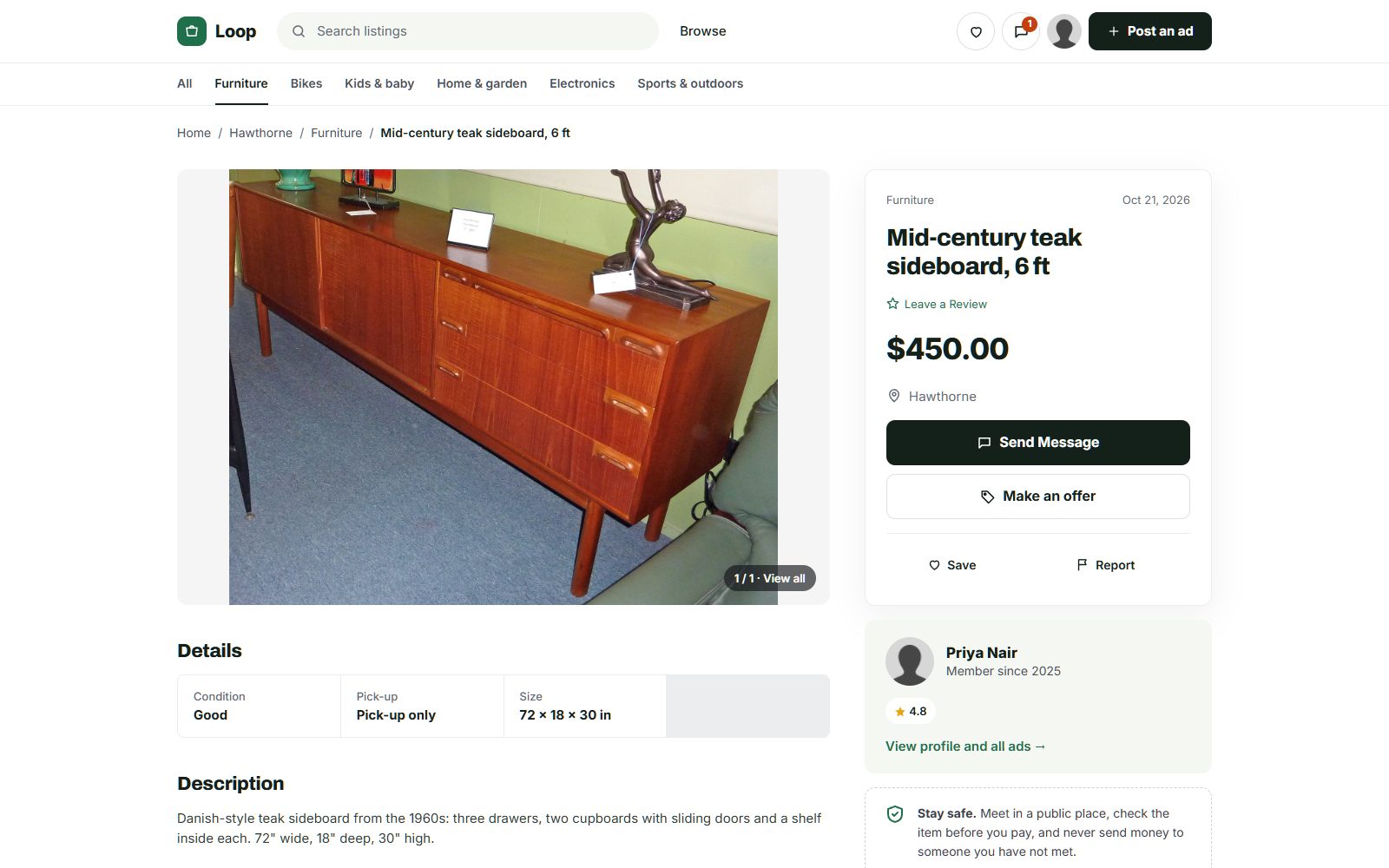
Photo credits
The screenshots show demo sites with made-up sellers. Their photos come from Wikimedia Commons, some cropped or with signs and plates blurred; these ones are under Creative Commons licences:
- McIntosh Teak Sideboard Circa 1960s, CC BY-SA 4.0
- Persian Rug Khorrasan 1, CC BY 2.0
- Fameg bentwood chairs of Poland 01, CC BY-SA 4.0
- View of the "Lost Dining Table and Chairs" in Eltham Palace - geograph.org.uk - 5797282, CC BY-SA 2.0
- Anglepoise Original 1227 Giant Floor Lamp, CC BY-SA 4.0
- Wooden Balance Bike for Kids oak frame with flame red tires, CC BY-SA 4.0
- Baby Crib (49935766018), CC BY 2.0
- Seth Thomas tambour mantel clock ca. 1930, CC BY-SA 4.0
- Rack of rock climbing gear at Horsethief Butte in a Mazamas class, CC BY 4.0
- Sideboard Teak 5 Door Rosando Furniture, CC BY-SA 4.0
- Teak 'Fresco' Sideboard by G Plan angled view, CC BY-SA 4.0