
How to build a camera gear classifieds website that photographers trust with their kit.
This guide covers how to build a camera gear classifieds website for bodies, lenses, lighting, drones and video gear: the photographers to serve, the mount and condition fields buyers filter on, how the site earns, where the first listings come from, the fraud and condition risks specific to cameras, the searches to rank for, and a launch timed to the photography calendar.
Free for 15 days · No credit card · Plans from $19 a month
Serve photographers who buy by mount, condition and trust.
Photographers sell gear for predictable reasons: a new body comes out, they switch systems from DSLR to mirrorless, they change genre, or the wedding season ends and they rethink their kit. A lens is only useful if it fits the buyer's mount, and its value depends on details like haze, fungus and shutter count that a general site never asks about.
Who uses the site
- Working photographers and videographers selling one system to buy another, often a whole bag at once.
- Enthusiasts buying a first prime lens, a second body or a better tripod.
- Students and beginners looking for an affordable starter kit.
- Film shooters and collectors hunting older film cameras and manual lenses.
- Camera shops and rental houses selling trade-ins and retired rental stock.
Choosing the angle
Camera gear ships well, so you can cover a whole country or region. Still, a local core helps: many buyers want to test a lens on their own body before paying hundreds of dollars. Pick a city with plenty of working photographers and expand by shipping later. You can also narrow by sub-niche: film photography, video and cinema gear, or one camera system.
Today this trade happens in photography groups on Facebook, on eBay and the used sections of large camera retailers, in forum buy-and-sell threads, at camera fairs and through local camera clubs.
The mount is the first filter in this niche. Get it right and buyers stop scrolling past gear they cannot use.
Make mount, format and condition the filters buyers see first.
A lens listing without the mount is useless, and a body listing without the shutter count gets the same question twenty times. Keep categories simple and put the technical detail into fields.
Fields that answer the first questions
- Mount: a dropdown with the main systems, such as Canon RF and EF, Nikon Z and F, Sony E, Fujifilm X, Micro Four Thirds and L-Mount, plus Other.
- Sensor format: full frame, APS-C, Micro Four Thirds, medium format, or film type.
- Shutter count for digital bodies: a number field, so buyers can search for low counts.
- Optical condition: clean, light dust, haze, fungus or scratches. These are the faults that make a lens worth much less.
- What is included: caps, hood, battery, charger, original box and receipt.
- Warranty: under maker's warranty or not, and whether it was bought locally or imported.
Ask for a photo of the front and rear glass in good light. It answers most condition questions before anyone has to ask.
| Category | Example listings | Fields buyers filter on |
|---|---|---|
| Camera bodies | Mirrorless, DSLR and medium format bodies | Mount, sensor format, shutter count, megapixels, condition |
| Lenses | Primes, zooms, macro and telephoto lenses | Mount, focal length, maximum aperture, stabilization, optical condition |
| Film cameras | 35mm SLRs, rangefinders, medium format, instant cameras | Film format, mount, light meter working, last service |
| Lighting | Speedlights, strobes, LED panels, modifiers, stands | Power, battery or mains, flash system compatibility |
| Video and drones | Cinema cameras, gimbals, monitors, drones | Recording format, mount, flight time, registration status |
| Bags and support | Tripods, heads, camera bags, straps | Maximum load, height, size, material |
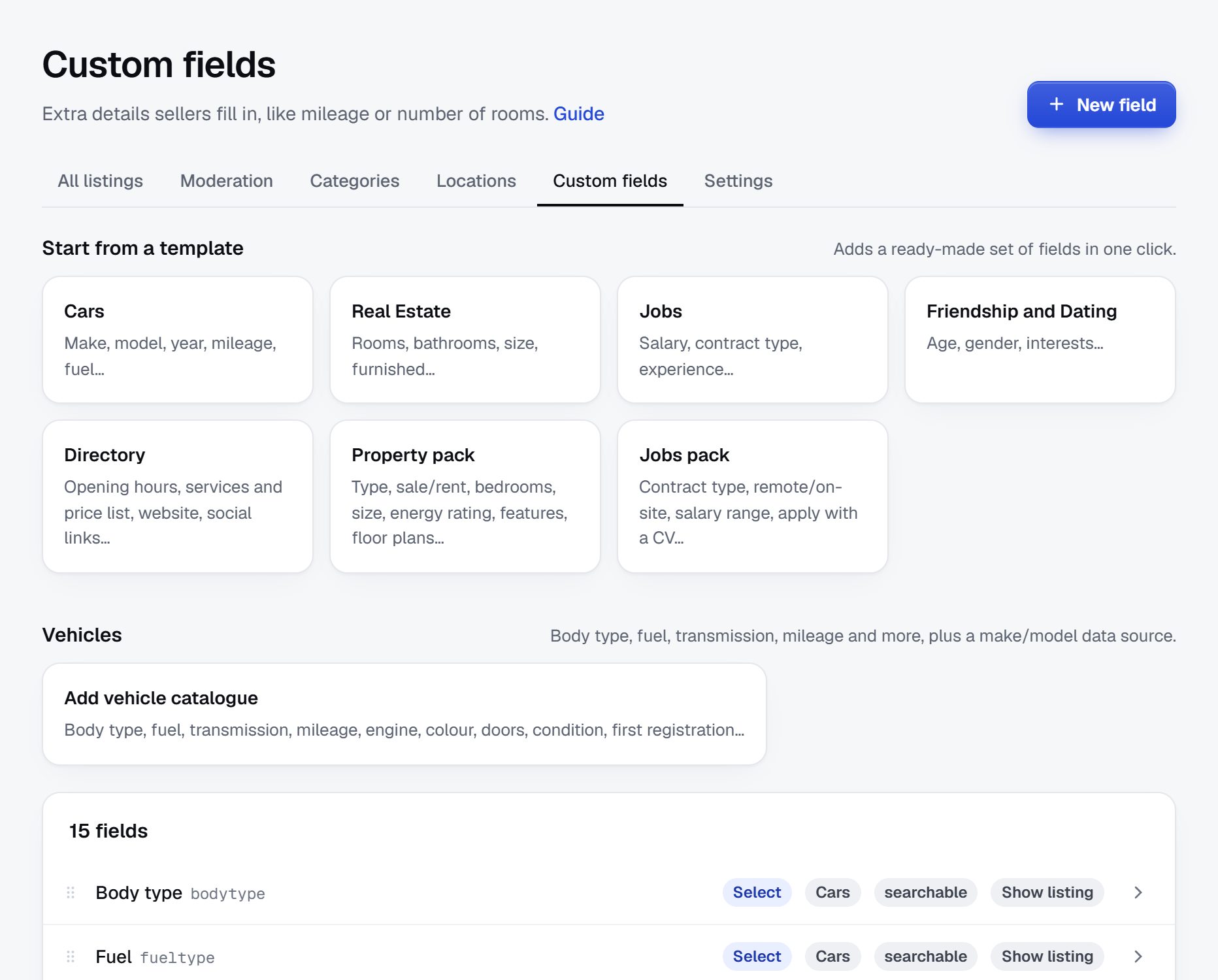
In Yclas, fields can be text, numbers, dropdowns, checkboxes or dates, required or optional, and each can be shown as a search filter.
Charge the dealers and pros, not the hobbyist selling one lens.
Posting stays free at the start. Photographers have plenty of places to sell, and a fee before you have buyers sends them back to those places. Once the site is busy, camera gear supports several kinds of revenue, because the items are valuable and the sellers include businesses.
- Featured listings and bumps for bodies and fast lenses, where the gap between a quick sale and a slow one is real money.
- Memberships for camera shops and rental houses that sell trade-ins and retired rental gear every month.
- Banner spaces for camera repair and sensor cleaning services, photo labs, print shops and photography workshops.
- Auctions with bidding and Buy now for collectible film cameras and rare lenses.
If shipped sales grow, buyers can pay on the site with Stripe and you keep a commission on each sale on the Marketplace plan. That suits camera gear well, since buyers far away are nervous about paying a stranger directly. Rentals of lenses and bodies with deposits are also on the Marketplace plan, if local photographers would rather rent than buy.
| Model | Works when | Switch it on |
|---|---|---|
| Featured listings and bumps | Buyers check new bodies and lenses every day | A few hundred active listings |
| Shop and rental house memberships | Dealers list trade-ins and retired fleets monthly | When two or three dealers post regularly |
| Banner spaces | Repair, labs and workshops want local photographers | When local traffic is worth showing |
| Auctions | Collectors compete for rare film cameras and lenses | Once the film category has regular bidders |
| Commission on sales | Buyers and sellers are in different cities | Marketplace plan, when shipped sales are common |
Find photographers who are switching systems.
The best early sellers are photographers in the middle of a change. Someone moving from one system to another sells a body, three or four lenses and a flash at once, which fills a category in a single afternoon.
Where to find them
- Camera clubs and photo walks. Members upgrade often and know who is selling. Offer a talk on buying used gear in exchange for a mention.
- Wedding and event photographers. Many review their kit after the busy season and sell backup bodies and lenses they no longer use.
- Camera shops. Trade-ins sit on shelves because few people visit the store. Put their used stock online from the list they already keep.
- Rental houses. They retire lenses and bodies on a schedule and need a place to sell them.
- Photography schools and colleges. Students buy starter kits at the start of the year and sell them when they upgrade or finish.
- Film photography groups and labs, where older cameras and lenses change hands all the time.
Speed matters when someone is selling a full bag. With Yclas a seller can take a photo and let AI fill in the title, description, category and price for them to check, then add the mount, shutter count and condition.
One photographer switching systems can bring ten good listings. Look for them before anyone else.
Plan for stolen and rented gear, hidden faults and imports.
Camera gear is small, valuable and easy to resell, so it attracts fraud. Most of it falls into a few patterns you can plan for.
Common problems
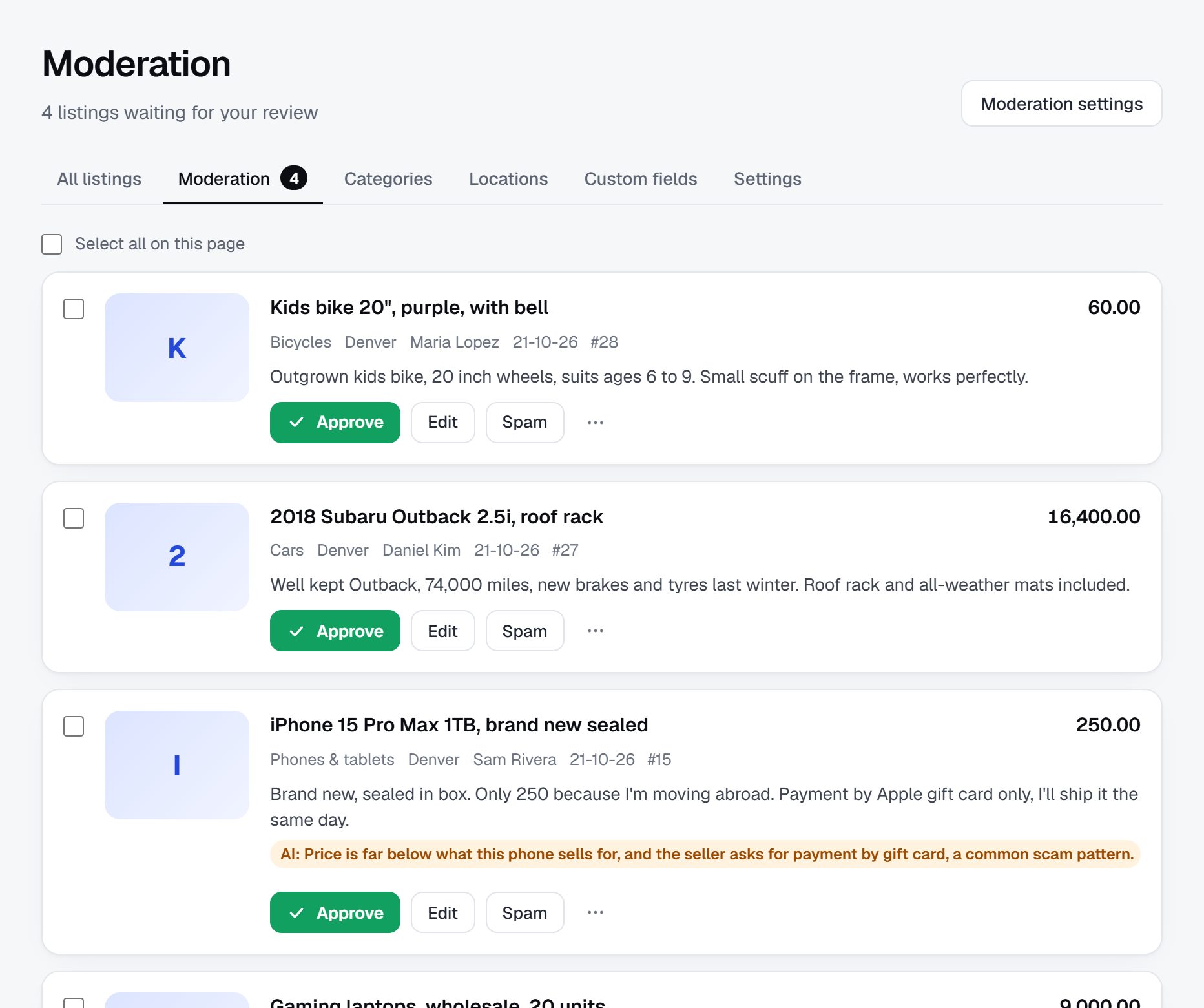
- Stolen gear. Cameras are stolen from cars, homes and events and listed quickly. Ask for the serial number, point buyers to stolen camera registries, and act fast on reports.
- Rental fraud. Thieves rent expensive gear under a false identity and resell it. If several near-new bodies of the same model appear from one new seller, hold them for review.
- Hidden optical faults. Fungus, haze, separation and decentered lenses do not always show in photos. Your rules should ask sellers to disclose known faults, and your guide should tell buyers to test the lens on their own body.
- Imported gear. Gear bought abroad may not be covered by the local warranty. Ask sellers to say where it was bought.
- Fake batteries and accessories sold as originals.
- Shipping scams: payment by wire or gift card for gear that never arrives, or a buyer who claims the parcel was empty.
Rules to set
Approve new sellers by hand, give verified seller badges to shops and well-known photographers, and ban phrases linked to wire payment scams. For drones, ask sellers to say whether the drone is registered, and check the rules where you operate on drone sales and transfers.
Rank for model, mount and lens searches.
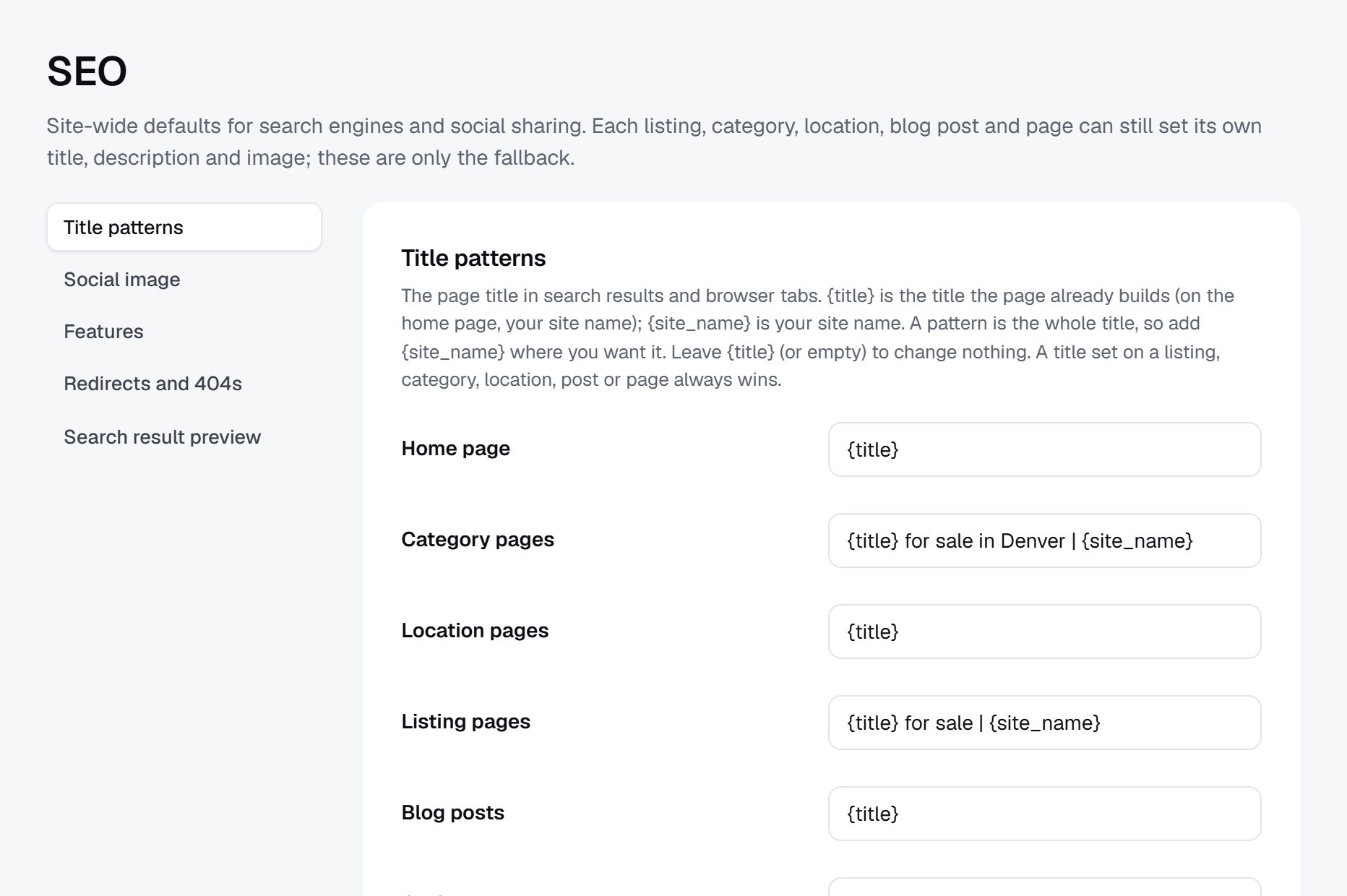
Photographers search for exact models and exact lenses, often with the word used and a place. Those searches are a good fit for listing pages and for mount pages that gather everything compatible.
Searches to target
- "used Sony A7 III for sale"
- "used Canon RF 24-70 f2.8"
- "Fujifilm X mount lenses used"
- "35mm film camera for sale"
- "used camera gear Seattle"
- "how to check shutter count"
Pages to build
- Mount pages that list every lens and body for one system, which matches how buyers think.
- Category and city pages for buyers who want to test before paying.
- Buying guides: how to check a used lens for fungus and haze, what shutter count means for a used body, which older lenses adapt well to mirrorless cameras.
- Price guides built from your own sold listings for the most traded bodies and lenses.
Content ideas
New camera launches send owners of the previous model online to sell. A page on what to expect for the outgoing model, published on launch day, catches both sellers and bargain hunters.
Launch in one photography scene, then open shipping.
Photography has its own calendar. Wedding photographers rethink their kit in the quiet months after the season. Big camera launches bring a wave of used bodies within weeks. The holidays bring beginners looking for a first camera, and the start of the school year brings photography students.
Launch plan
- Pick one city and fill bodies, lenses and lighting with at least 100 listings before announcing the site.
- Sign up a camera shop and a rental house and import their used stock.
- Give a short talk at a camera club on buying used gear safely.
- Reach wedding and event photographers in the slow season with an offer to list their spare kit for them.
- Open shipped sales once local buyers trust the site.
Checklist
- Your own domain, with SSL and a headline that names the city or system.
- Mount, format, shutter count and optical condition fields as filters.
- Rules on serial numbers, faults, imports and drones.
- A buyer guide on testing bodies and lenses before paying.
- Saved searches with email alerts, so a buyer waiting for one lens gets the listing the day it is posted.
A worked example: a used camera exchange around one sound.
Take an invented site, Puget Sound Glass Exchange, serving Seattle, Tacoma, Everett and the towns around them. It does not exist, but its choices show how the advice in this guide fits together in a real region with plenty of working photographers, a strong film scene and a lot of rain-soaked outdoor shooters upgrading their weather-sealed kit.
Categories at launch
- Camera bodies
- Mirrorless
- DSLR
- Lenses
- Sony E
- Canon RF and EF
- Nikon Z and F
- Fujifilm X
- Other mounts
- Film cameras and lenses
- Lighting and support
- Video and drones
Lenses are split by mount at the second level because that is how every buyer starts. A photographer with a Fujifilm body never needs to see a Canon lens.
Who it serves
Wedding and portrait photographers sell backup bodies and spare lenses in the winter, after the busy season. Outdoor and wildlife shooters trade long telephoto lenses. A large group of film photographers buys and sells older 35mm and medium format cameras, and two university photography programs bring a wave of students every fall looking for a first body and a fast prime.
How it started
The founder shoots weddings and kept being asked by colleagues where to sell a full system when switching brands. He began by listing his own old kit and that of three friends, photographing every lens against a light to show the glass. A camera shop with a cabinet of trade-ins sent him its stock list, and a local film lab agreed to pin his card at the counter. Within two months the site had more than 150 listings, a third of them film gear. The early buyers were mostly photographers he already knew, and their reviews gave strangers a reason to trust the first sellers.
How it makes money
Private sellers post for free. The camera shop and a rental house that retires lenses every quarter pay for seller memberships with verified badges. Featured listings sell mostly in January and February, when wedding photographers clear their bags. A sensor cleaning and repair service rents the banner space on the bodies category, and a few collectible film cameras each year go to auction with bidding and Buy now. Payment on the site stays off for now: nearly every sale is local, and buyers prefer to test a lens on their own body before handing over money.
The listings below are made up, but they show the details that let a buyer decide without a long exchange of messages.
| Listing | Price | Key details |
|---|---|---|
| Sony A7 III, body only | $1,050 | About 31,000 shutter count, two batteries, bought in the US |
| Canon RF 24-70mm f/2.8 | $1,400 | Clean glass, hood and caps, receipt, test it in Ballard |
| Nikon FM2 with 50mm f/1.8 | $380 | Meter works, light seals replaced, light brassing on edges |
| Fujifilm XF 35mm f/2 | $260 | No haze or fungus, small mark on the hood |
| Two-light strobe kit with stands | $300 | Mains powered, softboxes and trigger included |
The first 90 days for a camera gear site.
Ninety days is enough to build a site photographers in your city check before they post anywhere else, if you spend the time in the right order. The first month is about the structure and the first sellers: mounts, condition fields, rules on serial numbers, and one or two businesses with real stock. The second month is about photographers who are switching systems or clearing gear after a busy season, because each of them can fill a category alone. The third month is about the community: clubs, schools, film groups and a first useful guide that people share.
Do not open shipping or national promotion inside these 90 days. Local buyers who meet sellers, test lenses on their own bodies and leave reviews are what make distant buyers trust the site later. Track reviews and repeat sellers as closely as listing counts. If a new camera body is announced during these weeks, drop everything else for a few days and prepare a page for owners of the outgoing model, since that is when they decide where to sell.
At the end of week twelve, look at which mounts have the deepest stock and which saved searches go unanswered. That tells you whether to add a second city, open shipping, or chase a sub-niche such as film or video gear.
| Weeks | Focus | Done when |
|---|---|---|
| 1-2 | Mount dropdown, shutter count and optical condition fields, rules | A body, a lens and a film camera each list with the right fields |
| 3-4 | A camera shop and a rental house with trade-ins and retired stock | Both have their used stock live with verified badges |
| 5-6 | Photographers switching systems and wedding shooters after the season | Five full bags listed, at least 100 live listings |
| 7-8 | Camera clubs, photo walks and a talk on buying used gear safely | One club talk given and the link shared in its group |
| 9-10 | Film labs, film groups and photography schools | Film category has 30 listings and a school has shared the link |
| 11-12 | First buying guide, review requests, next step chosen | Lens checking guide live, 20 reviews left, shipping decision made |
Building it yourself, with a script, or on a hosted builder.
A camera gear site needs some specific things from whatever software runs it. The mount has to be a required dropdown so lenses and bodies line up. Shutter count and focal length should be number fields buyers can filter by range. Sellers need to upload several sharp photos, including the front and rear glass. Shops and rental houses need verified profiles. And if shipped sales grow, you will want buyers to pay on the site rather than send money to a stranger in another state.
Commissioning a custom build lets you add things like a compatibility check that warns a buyer when a lens will not fit their body, or an import from a shop's point of sale system. It takes months and leaves you paying developers for every change after launch.
Running a classifieds script or a WordPress plugin on your own server gives you control at a lower start-up cost. Before committing, check that fields can differ between bodies, lenses and lighting, that number fields filter by range, and that the image upload handles large files without breaking. You also own the backups, the updates and the spam.
A hosted builder such as Yclas already handles per-category fields, verified seller badges and moderation, and adds payment on the site on the Marketplace plan when you are ready. The limits are the platform's limits, so make sure the fields above fit before you start.
In this niche, trust is the product, so pick the route that gives you the moderation and seller tools first and the clever features later. A lens checker nobody trusts is worth less than a seller badge everyone understands.
| Route | Fits when | Watch out for |
|---|---|---|
| Custom build | You want a lens compatibility checker or a shop stock feed | High cost, slow launch, and moderation tools you must build too |
| Script or WordPress plugin | You can manage a server and want to own the code | Weak per-category fields, large image uploads, spam and updates |
| Hosted builder | You want mount fields, verified sellers and moderation ready now | You are limited to the platform's features |
| Hosted builder with checkout | Most sales ship between cities and buyers want to pay on the site | Needs the Marketplace plan; build local trust before switching on |
What a camera gear classifieds site costs to run.
The software is the smallest part of the bill. Most of the cost is your time in the first months: finding the first listings, answering questions and checking what gets posted.
Besides the platform and a domain, plan for some travel to camera clubs, fairs and shops, and for time checking new sellers when expensive bodies appear. If you offer shipped sales with payment on the site, allow for payment processing fees and the time it takes to handle disputes.
| Cost | Typical range | On Yclas |
|---|---|---|
| Domain | $10 to $20 a year | Your own, with SSL included |
| Software and hosting | $0 to $100+ a month, plus plugins and updates | Starter $19 a month, Professional $99 |
| Design | $0 to $100 for a theme, or a designer | 109 looks included |
| Payment fees | About 3% per payment | Your Stripe or PayPal fees; Yclas takes nothing |
| Your time | 5 to 10 hours a week at the start | Finding listings, moderation, support |
Mistakes that sink camera gear classifieds.
- Making the mount optional. A lens listing without a mount wastes every buyer's time and fills your inbox with the same question. Make it a required dropdown on every lens and body, with Other for adapted and older systems, and use the same list in the search filters.
- Accepting maker product photos. A clean picture from the brand's website says nothing about haze, scratches or a dented filter thread. Require real photos of the item, including the front and rear glass, and remove listings that use catalog images.
- Missing the signs of rental fraud. A new account listing three near-new bodies of the same model at below the usual price is a classic pattern. Hold those listings, ask for receipts, and talk to local rental houses so they can warn you about stolen kit.
- Opening nationwide on day one. A national site with fifty listings looks empty to everyone. Fill one city where buyers can test gear in person, collect reviews, then widen the area once sellers are known.
- Saying nothing about imported gear. A buyer who later finds the body has no local warranty feels misled. Ask every seller where the item was bought, and show it on the listing.
- Treating shutter count as free text. If one seller writes 30k and another writes about thirty thousand, nobody can filter. Use a number field and explain in a short guide how to find the count.
- Charging per listing too early. Photographers have plenty of free places to sell a lens. Keep private posting free until buyers come to you first, and earn from shops, rental houses and featured placement.
- Leaving film shooters out. Film photographers are a loyal, active group that general sites serve poorly. A film category with fields for format, meter and light seals gives them a reason to choose you.
- Promising to inspect or verify condition. Once you say a lens is clean, you own the dispute when it is not. Keep your role to rules, badges and moderation, and tell buyers to test the gear on their own camera before paying.
- Ignoring the launch calendar of the big brands. When a maker announces a new body, owners of the previous model rush to sell within weeks. A site that has no page ready for that model, and no saved searches for it, lets that wave pass to the big auction sites. Follow announcements and prepare model pages in advance.
- Hiding sellers behind usernames only. Buyers handing over a thousand dollars want to know who they are meeting. Encourage full seller profiles, ask for reviews after each sale, and give verified badges to shops and well-known local photographers.
Camera trade terms you will see every day.
These terms come up in nearly every listing and question, so your fields and rules should use them correctly.
| Term | What it means |
|---|---|
| Mount | The connection between body and lens, which must match or need an adapter. |
| Shutter count | The number of photos a body has taken, a rough guide to wear on the shutter. |
| Haze | A cloudy film inside a lens that lowers contrast and is often costly to clean. |
| Fungus | Mold growing on or between lens elements, which can spread and etch the glass. |
| Separation | Glue between cemented lens elements breaking down, seen as a rainbow or milky patch. |
| Decentered lens | A lens whose elements are slightly misaligned, so one side of the frame is softer. |
| Gray market | Gear imported outside the maker's official channel, often without a local warranty. |
| Crop factor | How much a smaller sensor narrows the field of view compared with full frame. |
| Body only | A camera sold without a lens, which buyers should not confuse with a kit. |
| Kit lens | The basic zoom sold bundled with a body, usually worth less on its own. |
| Light seals | Foam strips in film cameras that keep light out and wear out with age. |
| CLA | Clean, lubricate and adjust: a full service for an older film camera or lens. |
| Hot shoe | The mount on top of a camera for flashes, triggers and microphones. |
| Remote ID | A broadcast identification that drones must send in some countries, including the US. |
The same steps for a camera gear classifieds site on Yclas.
- Describe your nicheThe setup wizard writes the categories, an About page and example listings from one sentence.
- Add fieldsSwitch on a field pack or add the fields your buyers filter on.
- Fill itImport dealer spreadsheets, invite sellers and post your own.
- Set the rulesChoose moderation, banned words and AI checks.
- Go liveChoose a plan, connect your domain, switch on paid listings when it is time.
How much money do I need to start a camera gear classifieds site?
Not much: a hosted platform, a domain, and a little for travel to clubs and camera fairs. The main investment is time spent bringing in shops, rental houses and photographers who are switching systems.
Can a small site compete with eBay and big retailers' used sections?
It can, by offering local testing, mount filters and sellers people can meet. Buyers spending real money like to see the lens on their own camera first.
How do I stop stolen camera gear being sold?
Ask for serial numbers, hold bursts of near-new gear from new sellers for review, and remove listings fast when an owner reports a theft. Point buyers to stolen camera registries.
Should I allow shipped sales?
Start local, then allow shipping once sellers have profiles and reviews. Paying on the site with a commission per sale is available on the Marketplace plan and protects distant buyers better than direct payment.
Are there rules for selling drones?
In many places drones must be registered, and the rules for transferring one vary. Check the rules where you operate and ask sellers to state the registration status.
Where do my first sellers come from?
Camera clubs, wedding photographers after their busy season, camera shops with trade-ins, rental houses retiring gear, and photography students.
How does a camera gear site make money?
Featured listings and bumps for bodies and lenses, memberships for shops and rental houses, banner spaces for repair and labs, and auctions for collectible film cameras.
Should I allow trades as well as sales?
Yes, with a simple field for open to trades and the mount the seller wants. Photographers switching systems often prefer swapping a lens for one that fits their new body, and trades keep them on your site. Ask both sides to describe the condition of what they offer as carefully as they would for a sale.
Should sellers include sample images taken with the lens?
Encourage it, especially for expensive lenses. A full-size sample of a plain scene shows sharpness and flaws better than any description, though buyers should still test the lens themselves.
Should I list repair and sensor cleaning services as well as gear?
A small services area or banner spaces work well for repair shops, sensor cleaning and photo labs. Buyers contact them through on-site messages, and their presence makes the site feel like the local hub. Keep them out of the gear categories so listings stay easy to browse.
How do I serve film shooters without the site feeling like two sites?
Keep film in its own top-level category with its own fields, but let the mount dropdown cover both, since many older manual lenses adapt to mirrorless bodies. Film buyers and digital buyers then meet in the lens pages.
What is the best time of year to approach wedding photographers?
The quiet months after their busy season, often late fall and winter in many regions. That is when they review their bag and decide what to sell before the next round of bookings. A short, friendly message offering to list their spare bodies and lenses for them usually gets a better reply than a general announcement.
Related pages.
The parts of Yclas this leans on.
You have the plan. Now build your camera gear site.
Describe your site in a sentence and the setup wizard writes the categories, example listings and a look. Free for 15 days, no credit card.
Start my classifieds site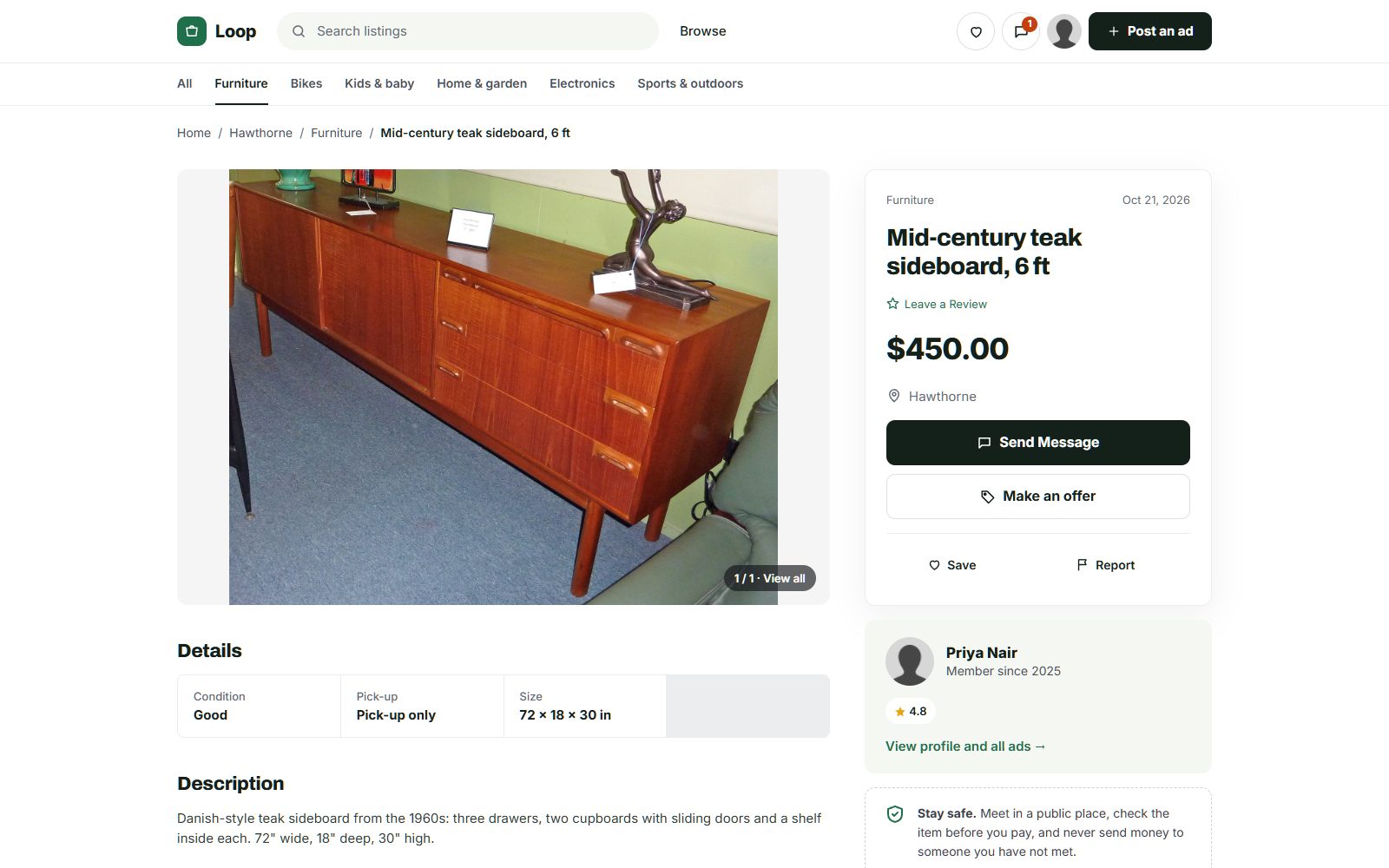
Photo credits
The screenshots show demo sites with made-up sellers. Their photos come from Wikimedia Commons, some cropped or with signs and plates blurred; these ones are under Creative Commons licences:
- McIntosh Teak Sideboard Circa 1960s, CC BY-SA 4.0
- Persian Rug Khorrasan 1, CC BY 2.0
- Fameg bentwood chairs of Poland 01, CC BY-SA 4.0
- View of the "Lost Dining Table and Chairs" in Eltham Palace - geograph.org.uk - 5797282, CC BY-SA 2.0
- Anglepoise Original 1227 Giant Floor Lamp, CC BY-SA 4.0
- Wooden Balance Bike for Kids oak frame with flame red tires, CC BY-SA 4.0
- Baby Crib (49935766018), CC BY 2.0
- Seth Thomas tambour mantel clock ca. 1930, CC BY-SA 4.0
- Rack of rock climbing gear at Horsethief Butte in a Mazamas class, CC BY 4.0
- Sideboard Teak 5 Door Rosando Furniture, CC BY-SA 4.0
- Teak 'Fresco' Sideboard by G Plan angled view, CC BY-SA 4.0