
How to build a baby and kids classifieds website that parents trust.
This guide shows how to build a baby and kids classifieds website where parents pass on strollers, cribs, clothes and toys: choosing an area and an angle, the categories and filters parents use, how the site earns money, where the first listings come from, handling safety and recalls on used gear, the searches to rank for, and a launch plan.
Free for 15 days · No credit card · Plans from $19 a month
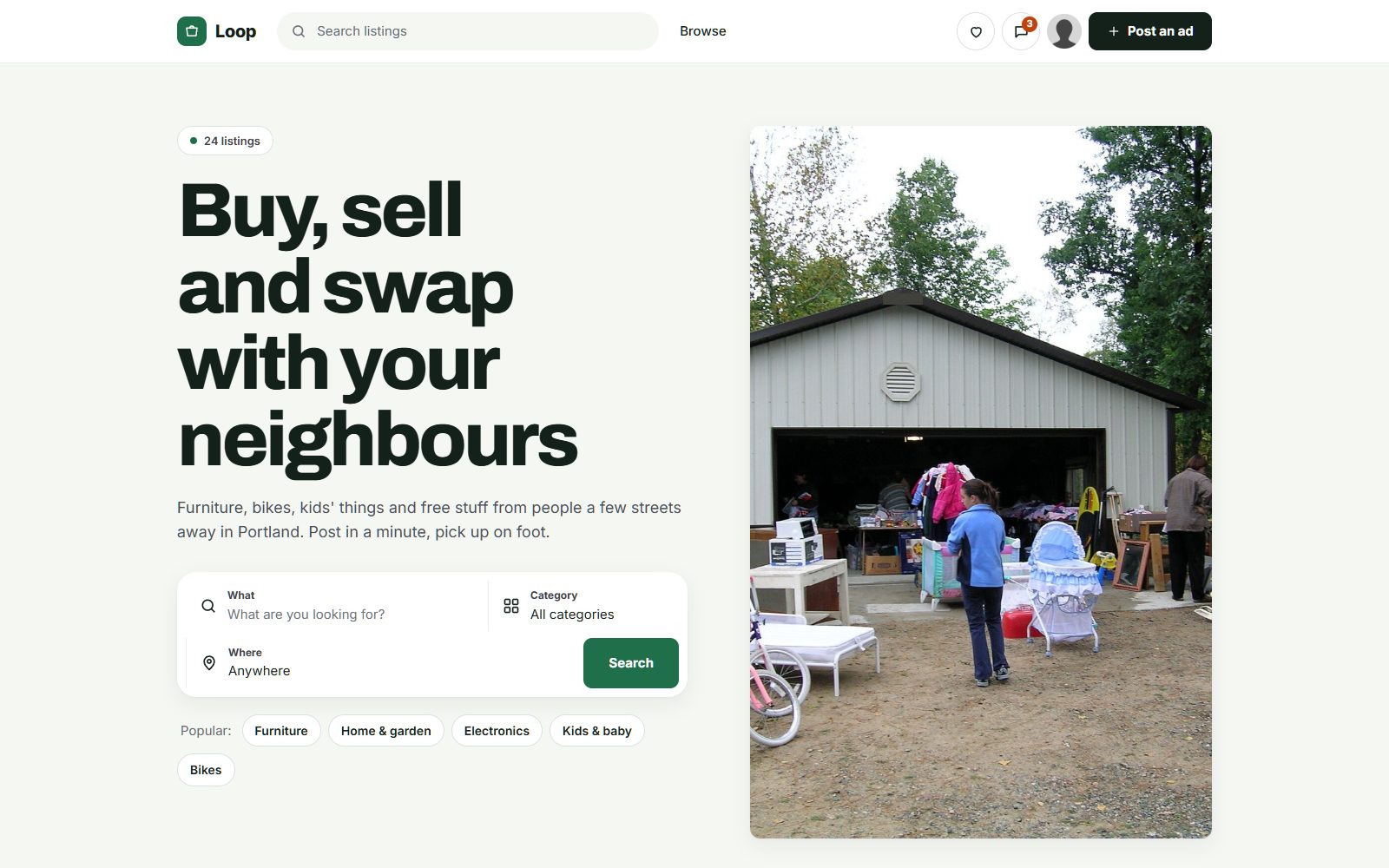
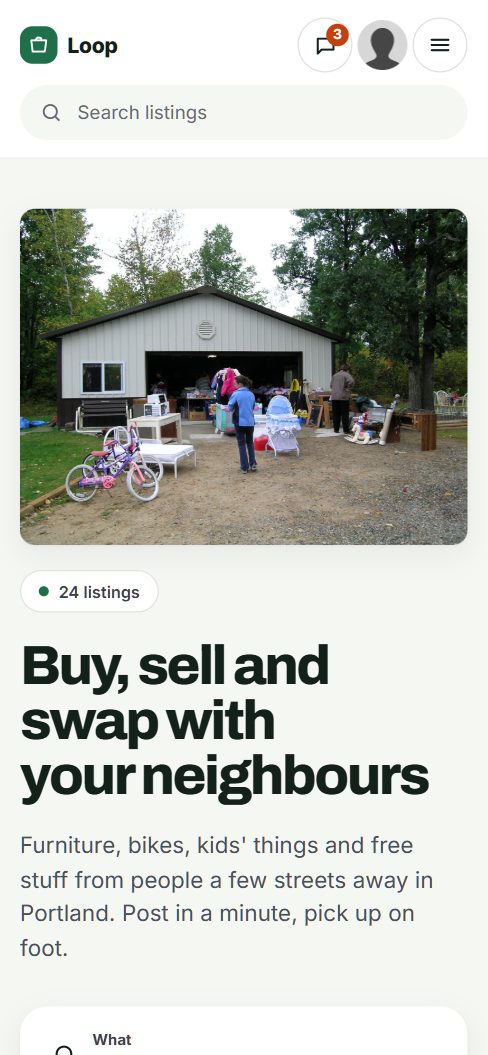
Start with one town, because parents trade with parents nearby.
Children outgrow almost everything within months, so every family is both a buyer and a seller of baby and kids gear. A stroller, a bassinet or a box of size 2T clothes has plenty of life left when the child moves on. Most of these items are cheap to buy used and awkward to ship, which makes the trade local: a parent wants to collect a high chair across town on a Saturday, not wait for a parcel.
Who uses the site
- Expecting parents furnishing a nursery on a budget, often months before the due date.
- Parents of toddlers and school kids clearing outgrown clothes, bikes and toys to make room.
- Grandparents who want a travel crib, a high chair and a spare car seat for visits.
- Small sellers: resale shops, home-based sellers of bundles, and makers of handmade clothes and toys.
Choosing the angle
Pick one town or metro area first. Then decide the scope: newborn to five years is a tight, busy niche, while newborn to teens adds bikes, sports gear and school uniforms. Some founders build around a school district or a group of schools, where uniform and sports kit swaps are steady every term.
Today this trade happens in local mom and parent groups on Facebook, on Facebook Marketplace and Craigslist, at seasonal consignment sales held in churches and fairgrounds, in kids' resale shops, and at school and daycare swap tables. A general site shows a crib next to car parts, with no filter for age or size, and that is the gap you fill.
Parents search by their child's age and size first, so build the site around that.
Sort by age and size, then by what the item is.
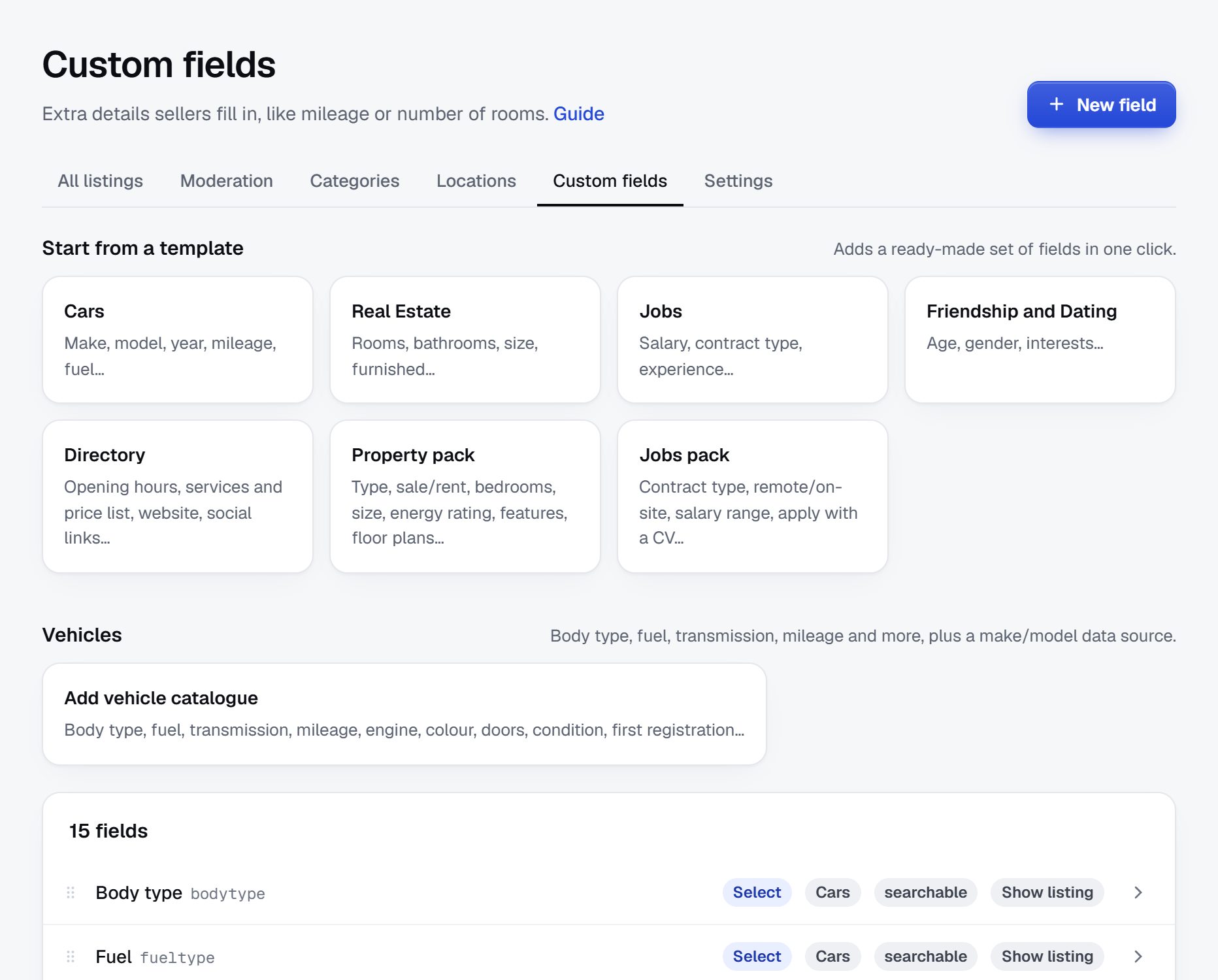
Keep categories shallow and named the way parents talk: Strollers, not Wheeled Transport. Age and size are the filters that matter most, because a parent with an 18-month-old ignores everything else. Use the same age ranges on every category so a parent can set the filter once.
Fields worth having everywhere
- Age range: a dropdown such as 0-3 months, 3-6 months, 6-12 months, 1-2 years, and so on.
- Condition: new with tags, like new, gently used, well loved.
- Smoke-free and pet-free home: two checkboxes many parents look for, especially for clothes and bedding.
- Pickup area: a neighborhood or ZIP, so parents can see how far they would drive.
For gear, add brand and model and year of manufacture. The year matters because many car seats carry an expiry date set by the maker, and because recalls are announced by model and production date. Asking for it on the form makes sellers look at the label before they post.
| Category | Example listings | Fields parents filter on |
|---|---|---|
| Strollers and carriers | Full-size strollers, jogging strollers, travel systems, baby carriers | Brand, model, type, year made, fold size, condition |
| Nursery furniture | Cribs, bassinets, changing tables, gliders, dressers | Type, convertible or not, year made, assembly needed, color |
| Feeding | High chairs, breast pumps, bottle sets, booster seats | Type, brand, age range, condition, sealed or opened |
| Clothes and shoes | Bundles by size, snowsuits, party outfits, school uniforms | Size, gender or neutral, season, bundle or single, brand |
| Toys and books | Play kitchens, ride-ons, puzzles, board books, LEGO | Age range, type, complete or missing pieces, battery powered |
| Bikes and outdoor | Balance bikes, kids' bikes, scooters, swing sets | Wheel size, age range, condition, helmet included |
| Car seats | Infant seats, convertible seats, boosters | Type, weight range, year made, expiry date, accident history |
Age range and size work best as dropdowns, so the same choices appear on every listing.
Keep posting free for parents and charge the sellers who trade often.
Parents selling a used bouncer for a small amount will not pay to post, and every free listing makes the site more useful to the next parent. Keep private posting free from the start, and look for money from the people who sell regularly and the businesses that want to reach young families.
- Featured listings and bumps work for higher-value items: a travel system, a convertible crib or a premium stroller, where a parent wants a quick sale before a move.
- Seller memberships suit resale shops and home-based sellers who post clothing bundles and toys every week and want a profile that works like a small shop.
- Banner spaces fit local businesses that serve families: kids' resale shops, photographers, swim schools, daycares, party venues and children's dentists.
- Paid posting in chosen categories can work later for categories with business sellers, such as handmade clothes or party rentals.
Consignment sale season is a good moment to test banners, since families are already planning their spring and fall buying. Switch paid extras on only once parents return each week and listings sell within days.
The parents are your stock. The money comes from the businesses that want to reach them.
| Model | Works when | Switch it on |
|---|---|---|
| Free private posting | From day one, to fill every age range | At launch |
| Featured listings and bumps | Strollers, cribs and gear sell within days | After a few hundred active listings |
| Seller memberships | Resale shops and bundle sellers post weekly | When a handful of sellers post every week |
| Banner spaces | Local family businesses want reach | When local traffic is steady, often before consignment season |
| Paid posting in business categories | Makers and party rental firms list regularly | Once those categories have regular sellers |
Find the first listings where parents already swap.
The first 100 listings decide whether a visiting parent sees a real local market or an empty shelf. Spread them across age ranges, so a parent with a newborn and a parent with a six-year-old both find something on the first visit.
Where the first listings come from
- Local parent groups: ask the admins of Facebook mom groups and neighborhood parent groups if you can share the site, and offer to feature their members' first posts.
- Consignment sale organizers: seasonal sales leave unsold items that consignors would gladly list before or after the event.
- Kids' resale shops: they have stock they cannot fit on the shop floor, and can post it in bulk.
- Daycares, preschools and school parent associations: uniform swaps, lost and found clear-outs and fundraising sales.
- Prenatal classes and new parent meetups: expecting parents are the buyers, and the parents who came before them are the sellers.
- Your own network: friends with a garage full of outgrown gear are often your first ten sellers.
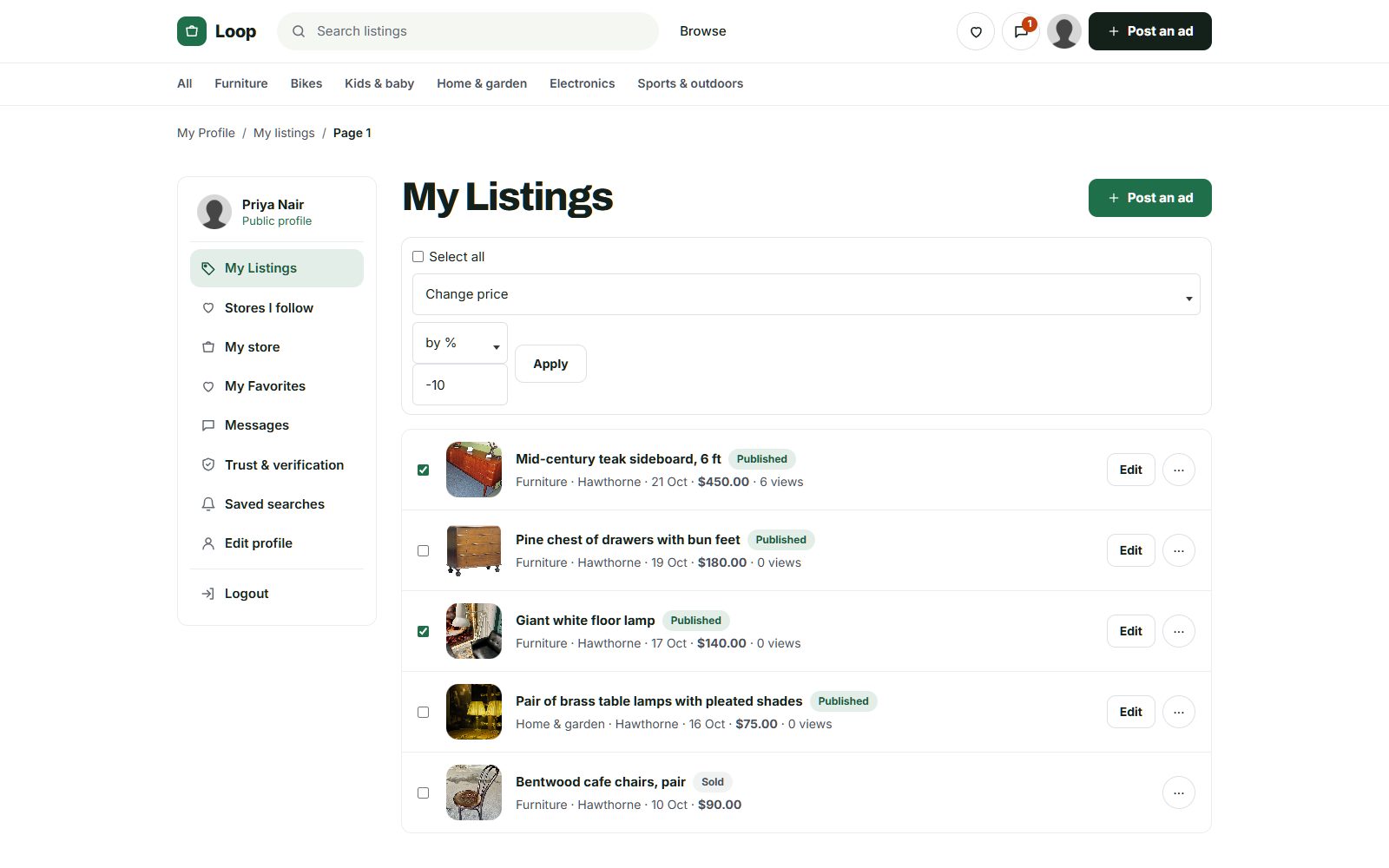
Make posting fast. A parent with a baby on one arm needs to list from a phone in a minute. With AI listing from a photo in Yclas, the seller takes a photo and AI fills in the title, description, category and price for them to check. For a resale shop with a stock list, import the listings from a spreadsheet (CSV) instead of typing them one by one.
Take safety and recalls seriously, because the buyers are parents.
Most baby and kids items are harmless to resell, but a few carry real safety risk. Used cribs, car seats, infant sleep products and some toys can be recalled, can fall short of current safety standards, or can be damaged in ways a buyer cannot see. Write clear rules and show them on the posting form.
Rules worth having
- Sellers must check that the item has not been recalled, using the official recall lists for their country, and must not post recalled items.
- Car seats: ask for the year of manufacture and the expiry date, and ask sellers to state whether the seat has been in a crash. Many safety groups advise against buying a used seat whose history is unknown, so tell buyers that.
- Cribs and sleep products: older designs, such as drop-side cribs, may no longer meet current standards. Ask sellers to include the model and date label in a photo.
- Toys: missing parts, loose small parts and old paint can be a hazard for young children.
Safety standards and the rules on reselling children's products differ by country and state, so check the rules where you operate and link your posting rules to the official recall service.
Scams and safety
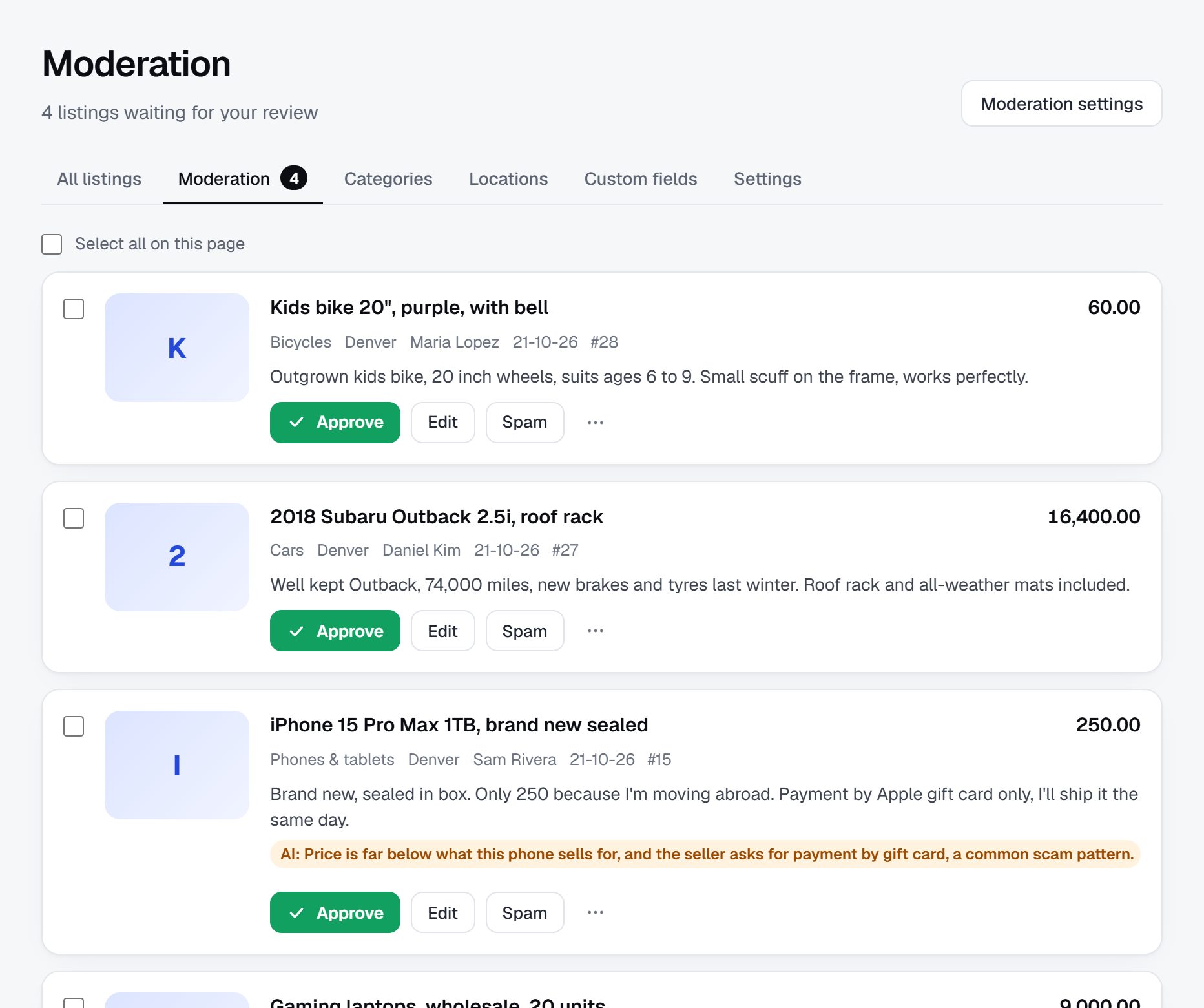
The usual scams appear here too: fake sellers asking for a deposit on a popular stroller, overpayment checks, and stolen photos. Advise buyers to meet in a public place, inspect gear before paying, and never pay a deposit to someone they have not met. In Yclas, moderation can approve every listing, block banned words, use reCAPTCHA and reports, and let AI hold suspicious listings for review.
A short safety page with recall advice builds more trust with parents than any badge.
Rank for the age, size and town that parents type.
Parents search with an item, a size or age, and a place. They often search months before they need something, which gives your pages time to be found.
Searches to aim for
- "used stroller for sale near me" and "used double stroller [city]"
- "baby clothes bundle 0-3 months" and "boys clothes lot size 4T"
- "second hand crib [city]" and "convertible crib used"
- "kids bike 16 inch used" and "balance bike for sale [city]"
- "is it safe to buy a used car seat" and "how long are car seats good for"
Pages to build
Every category gets its own page, and so does every town or neighborhood you cover, so "strollers in [town]" has a home. Add buying guides that answer the questions parents worry about: what to check on a used stroller, how to look up a recall, what a crib needs to meet current standards, how to clean secondhand toys, and which gear is worth buying new. Keep the safety pages general, and point readers to the official recall and safety sources.
Content ideas
- A newborn checklist that marks which items are fine to buy used.
- A guide to children's clothing sizes by age, with the brands that run small or large.
- A seasonal calendar of local consignment sales and school swap events.
Launch in one town before a consignment season.
Pick a town or metro area where you know the parent groups and can reach the schools. Plan the launch a few weeks before the spring or fall consignment season, or before back-to-school in late summer, when parents are already sorting and buying.
Partners worth having
- Admins of local parent groups who can share the site with members.
- A kids' resale shop that lists its overflow stock.
- Prenatal class teachers and doulas who meet expecting parents every week.
- School parent associations that run uniform swaps.
Launch checklist
- Set up categories, age ranges and size fields, and a posting form that asks for year made on gear.
- Publish the safety page: recalls, car seat advice, meeting safely.
- Seed 100 listings across all age ranges with your network and one resale shop.
- Post in parent groups with the admin's permission, with a few real listings as examples.
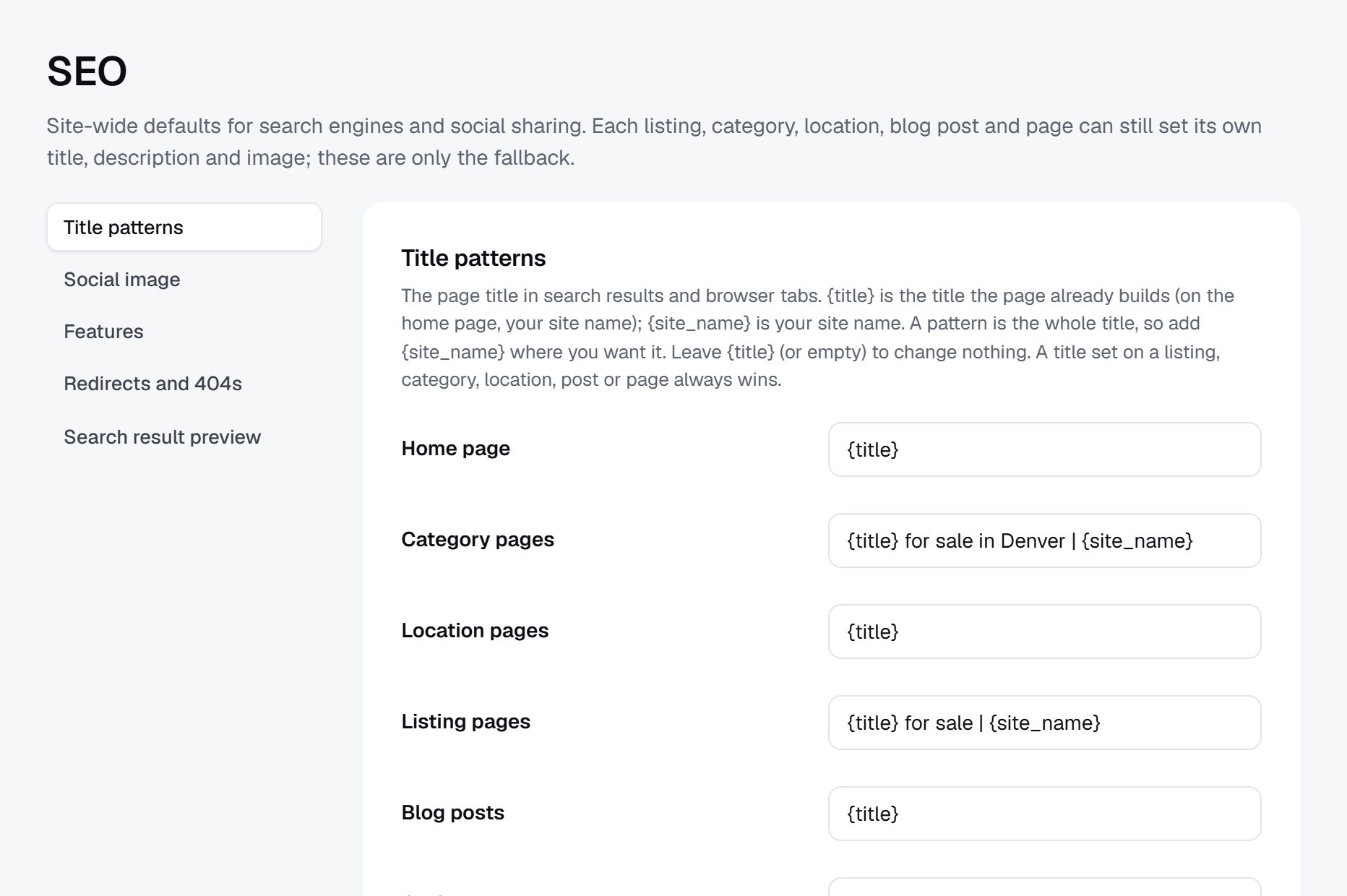
- Turn on saved searches with email alerts, so a parent looking for a specific stroller hears when one is posted.
- After the first season, add a second town or the next age range.
Saved searches matter here: the parent who wants one specific stroller comes back when it appears.
A worked example: a parent-run swap site in south Puget Sound.
Bramble and Bib Swap is a made-up site, invented for this guide and set in Tacoma and the towns of south Puget Sound, Washington. It shows how the steps above fit together for one founder in one area.
How it started
The founder, a parent of two, ran the gear table at a twice-yearly church consignment sale. Every season she watched good strollers and cribs go home unsold, because the sale lasted one weekend and then the doors closed. She opened the site a month before the fall sale, asked the consignors to post their leftover items there afterward, and slipped a card with a QR code into every bag that went home.
Who it serves
Expecting parents and families with children up to about eight, in Tacoma, Lakewood, Puyallup and Olympia. Grandparents turned out to be a steady group of buyers, mostly for travel cribs and high chairs kept for visits. Two kids' resale shops and a handful of home-based bundle sellers post every week, and a few local makers list knitted hats and quilts.
Categories
- Gear
- Strollers and carriers
- Car seats, with the expiry date required
- High chairs and boosters
- Nursery
- Cribs and bassinets
- Dressers and changing tables
- Clothes
- Bundles by size
- Rain gear and outerwear
- School uniforms
- Play
- Toys and puzzles
- Bikes and scooters
Rain gear got a category of its own because Puget Sound parents buy rain suits and boots in a new size every fall, and those listings rarely last more than a day or two.
How it makes money
Posting is free for parents, and that never changed. The two resale shops pay for seller memberships, which give them a profile that reads like a small shop window. Featured listings sell mostly on travel systems and double strollers in late summer, when families with a second baby on the way look for an upgrade. A swim school, a children's dentist and the consignment sale itself rent banner spaces, and the sale's banner runs only in the four weeks before each event. The founder takes no cut of sales: the income comes from businesses that want to reach local families.
Car seats were the hardest decision. She kept the category but made the expiry date and a crash history question required, and asked a volunteer from a local car seat check event to read the advice page before it went live.
| Listing | Price | Key details |
|---|---|---|
| Single jogging stroller, made 2021 | $140 | Like new, rain cover included, pickup in Lakewood |
| Convertible crib with mattress | $120 | Made 2020, model label photographed, fixed sides |
| Girls' clothes bundle, size 2T, 30 pieces | $35 | Fall and winter, smoke-free and pet-free home |
| Infant car seat with base | $60 | Made 2023, expiry date on label, no crash history, manual included |
| 16-inch kids' bike with helmet | $55 | Training wheels removed, new tires, pickup in Puyallup |
The first 90 days: fill every age range before the season starts.
A baby and kids site lives or dies by whether a parent finds something in their child's age range on the first visit. So the first 90 days are about three things: filling every age band in one area, getting the safety rules written before the gear arrives, and being visible in the weeks before a consignment season or back-to-school. Hold off on paid ads until the listings are there to back them up.
The plan below assumes you start about twelve weeks before a spring or fall sale season. If you start at another time of year, keep the order and move the dates. Each row has a plain test for when it is finished, so you know when to move on instead of polishing the design while parents wait.
Write down where every early listing came from as well: a parent group, a shop, a friend, a sale consignor. By week six that note tells you which source to push harder and which to drop.
Count listings per age range every week. The emptiest range is your next job.
| Weeks | Focus | Done when |
|---|---|---|
| 1-2 | Categories, age and size dropdowns, year made and expiry fields on gear | A test listing in each category shows the right filters |
| 3 | Safety page: recalls, car seat advice, breast pump rule, meeting safely | The page is published and the posting form points to it |
| 4-5 | Seed listings from friends, neighbors and one kids' resale shop | 100 live listings, with at least ten in every age range |
| 6-7 | Parent group admins, prenatal classes, daycare noticeboards | Three group admins have shared the site and flyers are up in five places |
| 8-9 | Saved searches with alerts; first guides on used strollers and recall lookups | Parents have started saving searches and the two guides are published |
| 10-11 | Consignment sale partnership and cards in take-home bags | The organizer agrees to point unsold items to the site |
| 12 | Review what sold and what sat; first banner talks with family businesses | You have a list of slow categories and two businesses ready to advertise |
Three ways to build it, and what a parents' site needs from each.
There are three common ways to put a baby and kids site online, and the habits of parents point toward some of them. Parents post from phones, often with one hand, so the posting form has to be short and work well on a small screen. The site needs age and size dropdowns that work as filters, required fields for car seat expiry dates, moderation that can catch recalled items, and email alerts for the parent waiting on one particular stroller. None of that is unusual, but all of it has to work on the first day.
Building it yourself with developers gives full control, for example a custom size chart or a recall lookup by model. A custom build takes months, though, and every later change is another bill. It makes sense only if your idea depends on something existing software does not do.
Putting a classifieds script or a WordPress plugin on a server you rent is cheaper at the start. You then own the updates, security, spam filtering and backups, and sites for parents attract plenty of spam. Before you choose one, confirm that custom fields can be used as search filters.
A hosted builder such as Yclas takes the hosting and software updates off your plate, so your hours go to parent groups and resale shops instead of servers. The trade-off is that you work within what the platform offers, so test your age and size fields on it first.
| Route | Fits when | Watch out for |
|---|---|---|
| Custom build with developers | You need something new, such as a live recall check by model | Months of build time, and every later change costs more |
| Classifieds script on your own server | You or a partner can run a server and apply updates | Spam, security patches and backups are yours to handle |
| WordPress classifieds plugin | You already run a parenting blog on WordPress | Plugin conflicts, slower search as listings grow, uneven mobile posting |
| Hosted builder | You want your time spent on parent groups, not servers | You work within its features; test age and size filters first |
What a baby and kids classifieds site costs to run.
The software is the smallest part of the bill. Most of the cost is your time in the first months: finding the first listings, answering questions and checking what gets posted.
Beyond the platform and a domain, the main costs are local ads timed to consignment season and printed flyers for daycares and prenatal classes. Some founders also pay for a short legal review of their safety and recall rules before launch.
| Cost | Typical range | On Yclas |
|---|---|---|
| Domain | $10 to $20 a year | Your own, with SSL included |
| Software and hosting | $0 to $100+ a month, plus plugins and updates | Starter $19 a month, Professional $99 |
| Design | $0 to $100 for a theme, or a designer | 109 looks included |
| Payment fees | About 3% per payment | Your Stripe or PayPal fees; Yclas takes nothing |
| Your time | 5 to 10 hours a week at the start | Finding listings, moderation, support |
Mistakes that empty a baby and kids site.
- Launching with gaps in the age ranges. A parent of a newborn who finds only size 5 clothes leaves and rarely comes back. Seed every range, from 0-3 months to the oldest age you cover, before you announce the site, even if that means asking friends to post one bundle each.
- Letting sellers skip the year made on gear. Without it, nobody can check a car seat's expiry or match a crib against a recall notice. Make the field required on car seats, cribs, strollers and sleep products, and send back listings that leave it blank.
- Treating recalls as the buyer's problem. One recalled sleeper or crib that hurts a child will follow the site for years. Link the official recall service from the posting form, remove recalled models as soon as they are reported, and tell your users you do it.
- Using free text for sizes. Sellers will type 2T, 2 years, 24m and toddler 2 for the same thing, and the filter will miss most of them. Use one dropdown of sizes and ages across every clothing category, and stick to it.
- Posting in parent groups without asking the admin. Many mom groups ban promotion, and a deleted post can turn a useful admin against you. Ask first, offer the group something of value, such as a calendar of local swaps and sales, and let the admin do the sharing.
- Charging parents to post. A parent selling a bundle for a few dollars will simply go back to a free group. Keep private posting free and earn from resale shops, featured gear and local family businesses. If you need income early, a single banner from a swim school or a daycare is an easier start than any posting fee.
- Ignoring the family calendar. Demand rises before back-to-school, before spring and fall consignment sales, and in the weeks before the holidays for toys and bikes. A big push in a quiet month wastes effort, so plan your promotion around those dates.
- Allowing deposit requests before viewing. Scammers ask parents for a deposit to hold a popular stroller and then vanish. Add a rule against deposits before viewing, show it next to the contact button, and act on reports within hours. Advise buyers to pay at pickup, in person, once they have checked the item.
- Covering too wide an area too early. Parents will not drive an hour for a bouncer, and a site stretched across a whole state looks empty in every town. Fill one metro area until parents find nearby items on every visit, then add the next.
Terms parents and resale sellers use.
The shorthand and product words parents use in listings, so your categories and rules speak the same language.
| Term | What it means |
|---|---|
| NWT | New with tags: never worn, with the original tags still attached. |
| NWOT | New without tags: unworn, but the tags have been removed. |
| EUC | Excellent used condition, with no visible wear, stains or damage. |
| GUC | Good used condition, with light wear that does not affect use. |
| Bundle or lot | Several items sold together, usually clothes of one size and season. |
| Travel system | A stroller sold with a matching infant car seat that clicks onto its frame. |
| Convertible crib | A crib that converts into a toddler bed and sometimes a full-size bed. |
| Drop-side crib | An older crib design with a side that slides down, which current US crib standards no longer allow. |
| Expiry date | The date after which a car seat maker says the seat should no longer be used, shown on a label or the shell. |
| Recall | An official notice that a product is unsafe, usually with a repair, refund or replacement from the maker. |
| Consignment sale | A seasonal event where families leave items to be sold and receive a share of the price. |
| 2T, 3T, 4T | US toddler clothing sizes, cut for a child of that age in years with room for a diaper. |
| LATCH | The US system of anchors and tethers that attaches a car seat directly to the vehicle. |
| Smoke-free, pet-free home | A seller statement many parents look for on clothes, bedding and soft toys. |
The same steps for a baby and kids classifieds site on Yclas.
- Describe your nicheThe setup wizard writes the categories, an About page and example listings from one sentence.
- Add fieldsSwitch on a field pack or add the fields your buyers filter on.
- Fill itImport dealer spreadsheets, invite sellers and post your own.
- Set the rulesChoose moderation, banned words and AI checks.
- Go liveChoose a plan, connect your domain, switch on paid listings when it is time.
What does it take to get a baby and kids classifieds site running?
A hosted platform, a domain and a few weeks of your time with local parent groups. Ads cost little if you launch with the help of group admins and one resale shop.
Is it legal to let people resell used car seats and cribs?
Reselling children's products is regulated differently from place to place, and recalled items are often banned from resale. Check the rules where you operate, require sellers to check recalls, and consider limiting categories such as car seats.
How do I get the first sellers?
Start with parents you know, local parent groups, consignment sale consignors and a kids' resale shop. Aim for listings in every age range before you promote the site widely.
How does a site like this make money?
Free posting for parents, then featured listings and bumps on higher-value gear, memberships for resale shops and bundle sellers, and banners for local family businesses.
Can I compete with Facebook Marketplace?
Yes, in one area, by being easier to search. Filters by age, size and brand, a safety page and alerts for a specific item give parents a reason to check your site first.
Should I accept listings for breast pumps and bottles?
Many sites allow them only sealed or with parts that can be replaced, and some leave them out. Decide your rule, state it on the posting form and moderate it.
Should I cover newborns only, or kids of all ages?
Newborn to five years is the busiest and easiest to fill. Add older kids' bikes, sports gear and uniforms once the first age ranges are full.
Should resale shops and home-based sellers post next to parents?
Yes, they bring steady stock in every size. Give them a seller membership with a clear shop profile, and mark them as businesses so parents know who they are buying from.
What should I do when a listed item turns out to be recalled?
Remove the listing, send the seller the recall notice, and keep a note in case the item is posted again. If someone already bought it, let them know so they can contact the maker about a repair or refund.
Can I run a free giveaway or swap section?
Yes, and it brings parents in. Use a Free or Swap category with the same age and size fields, and ask posters to mark items as gone so the page stays current.
How should I handle handmade clothes and toys from local makers?
Ask makers to list materials and to confirm that buttons and other small parts are firmly attached. Labeling and testing rules for children's products differ by place, so check the rules where you operate before you open a makers category.
When is the right time to add a second town?
When parents in the first town find something in their child's age range on almost every visit and listings sell within days. Choose a neighboring town where some parents already know the site.
Related pages.
The parts of Yclas this leans on.
You have the plan. Now build the site where local parents pass things on.
Describe your site in a sentence and the setup wizard writes the categories, example listings and a look. Free for 15 days, no credit card.
Start my classifieds site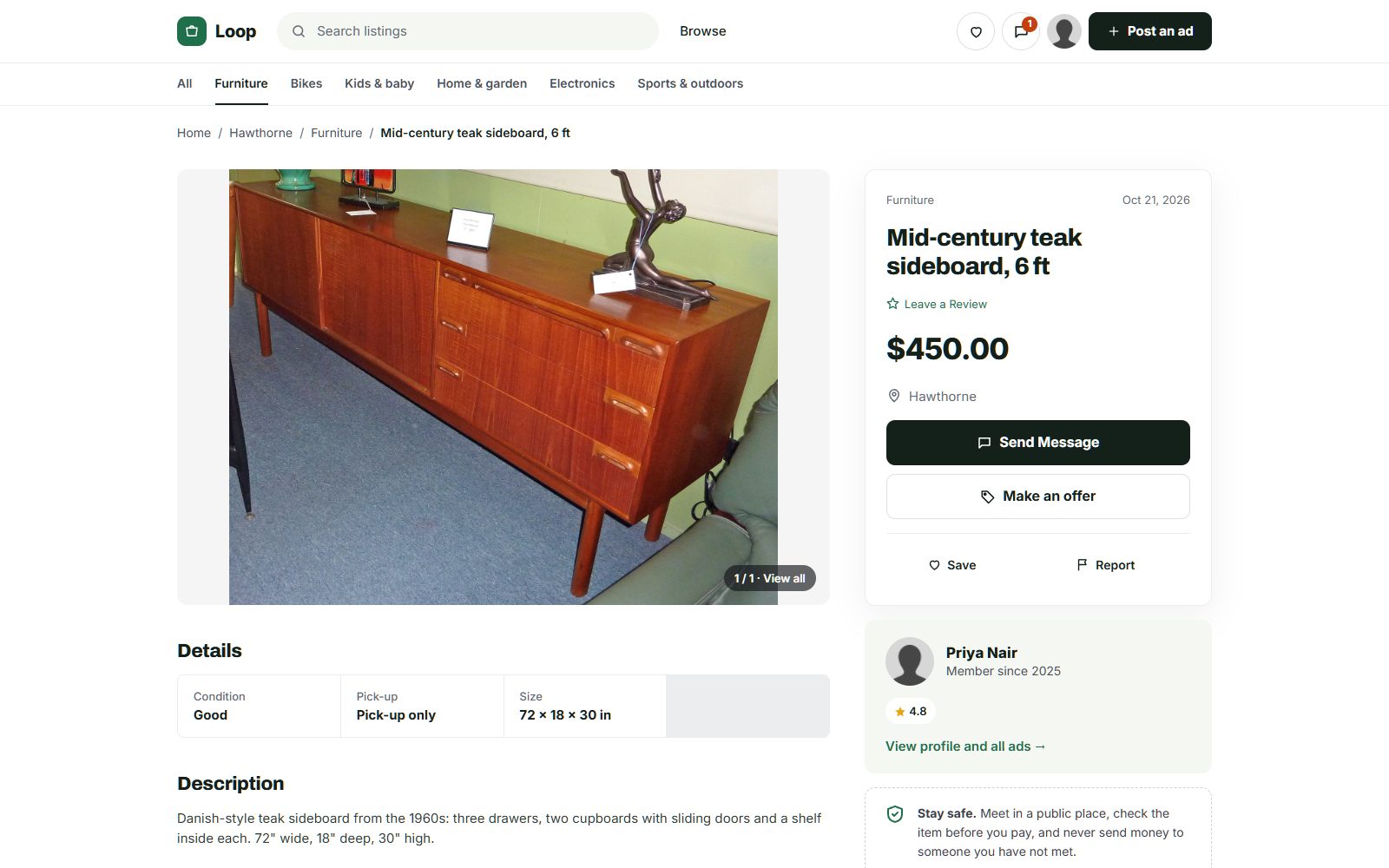
Photo credits
The screenshots show demo sites with made-up sellers. Their photos come from Wikimedia Commons, some cropped or with signs and plates blurred; these ones are under Creative Commons licences:
- McIntosh Teak Sideboard Circa 1960s, CC BY-SA 4.0
- Persian Rug Khorrasan 1, CC BY 2.0
- Fameg bentwood chairs of Poland 01, CC BY-SA 4.0
- View of the "Lost Dining Table and Chairs" in Eltham Palace - geograph.org.uk - 5797282, CC BY-SA 2.0
- Anglepoise Original 1227 Giant Floor Lamp, CC BY-SA 4.0
- Wooden Balance Bike for Kids oak frame with flame red tires, CC BY-SA 4.0
- Baby Crib (49935766018), CC BY 2.0
- Seth Thomas tambour mantel clock ca. 1930, CC BY-SA 4.0
- Rack of rock climbing gear at Horsethief Butte in a Mazamas class, CC BY 4.0
- Sideboard Teak 5 Door Rosando Furniture, CC BY-SA 4.0
- Teak 'Fresco' Sideboard by G Plan angled view, CC BY-SA 4.0