
How to build a free stuff classifieds website where nothing is for sale.
This guide covers building a giveaway site for one town: the reuse community it serves, offered and wanted categories, how a site where nobody pays for items can still cover its costs, finding the first givers, rules against resellers, no-shows and unsafe items, the searches to rank for, and a launch around moving days and clean-up weeks.
Free for 15 days · No credit card · Plans from $19 a month
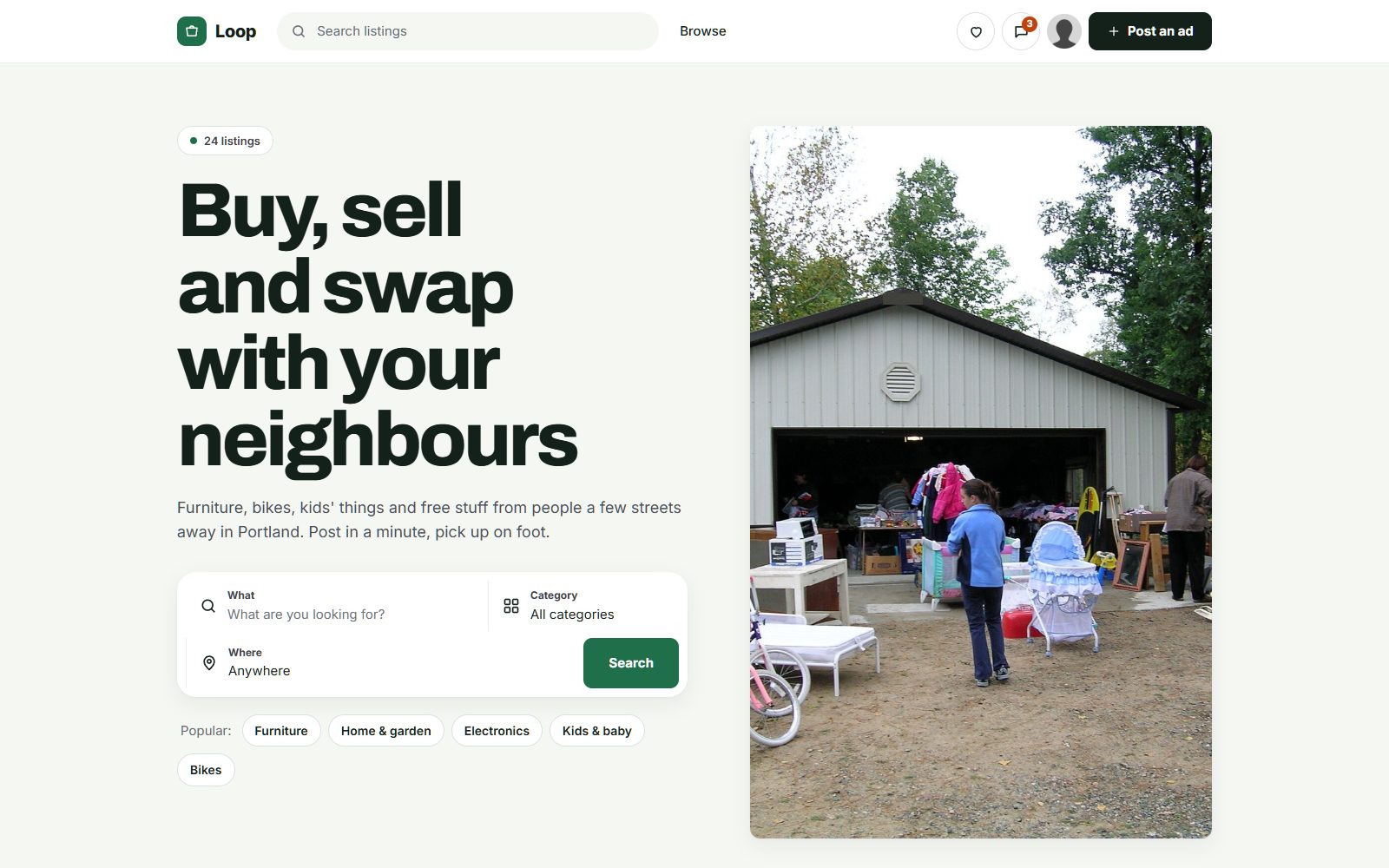
Give your town one place to pass things on instead of throwing them out.
A free stuff site has one rule that shapes everything: nothing is sold. People offer things they no longer need, others ask for things they are looking for, and items change hands at the door. It keeps furniture, baby gear, building leftovers and garden plants out of landfill, and it helps households that are short of money.
Today the trade happens in reuse groups on Facebook, on long-running mailing lists such as Freecycle groups, in the free section of Craigslist, on curbs with a "free" sign, and in apps built for sharing surplus food and household items. Groups bury posts within hours, curbs get rained on, and nobody can search for "crib" across all of them.
Who uses it
- Givers: people moving, decluttering, clearing a relative's home, or finishing a renovation with materials left over.
- Askers: students, new arrivals, families on tight budgets, teachers collecting classroom supplies, artists and makers looking for materials.
- Local organizations: shelters, schools, community gardens and repair cafes that both give and receive.
Picking the angle
Keep it to one town or a few neighborhoods so pickups stay short. Some sites focus on one kind of giving: baby and children's things, building materials, or garden plants and seeds. A general site works too, as long as it stays local.
The promise to givers is simple: it will be gone by tonight, to someone who wants it.
Sort by what it is, offered or wanted, and how to collect it.
A free item has no price, so the fields that usually drive a classifieds search are missing. What askers filter on is what the item is, where it is, and how and when they can collect it. Split every category into offered and wanted, either as a field or as two top-level sections.
Fields to ask for
- Offered or wanted, required on every post.
- Neighborhood or nearest cross streets, never the full address in the listing.
- Pickup: porch pickup, collect from the door, or giver can deliver.
- Available until, as a date, because givers often have a deadline such as moving day.
- Condition: like new, used and working, needs repair, for parts.
- Size or heavy item, so askers know whether they need a truck or a second person.
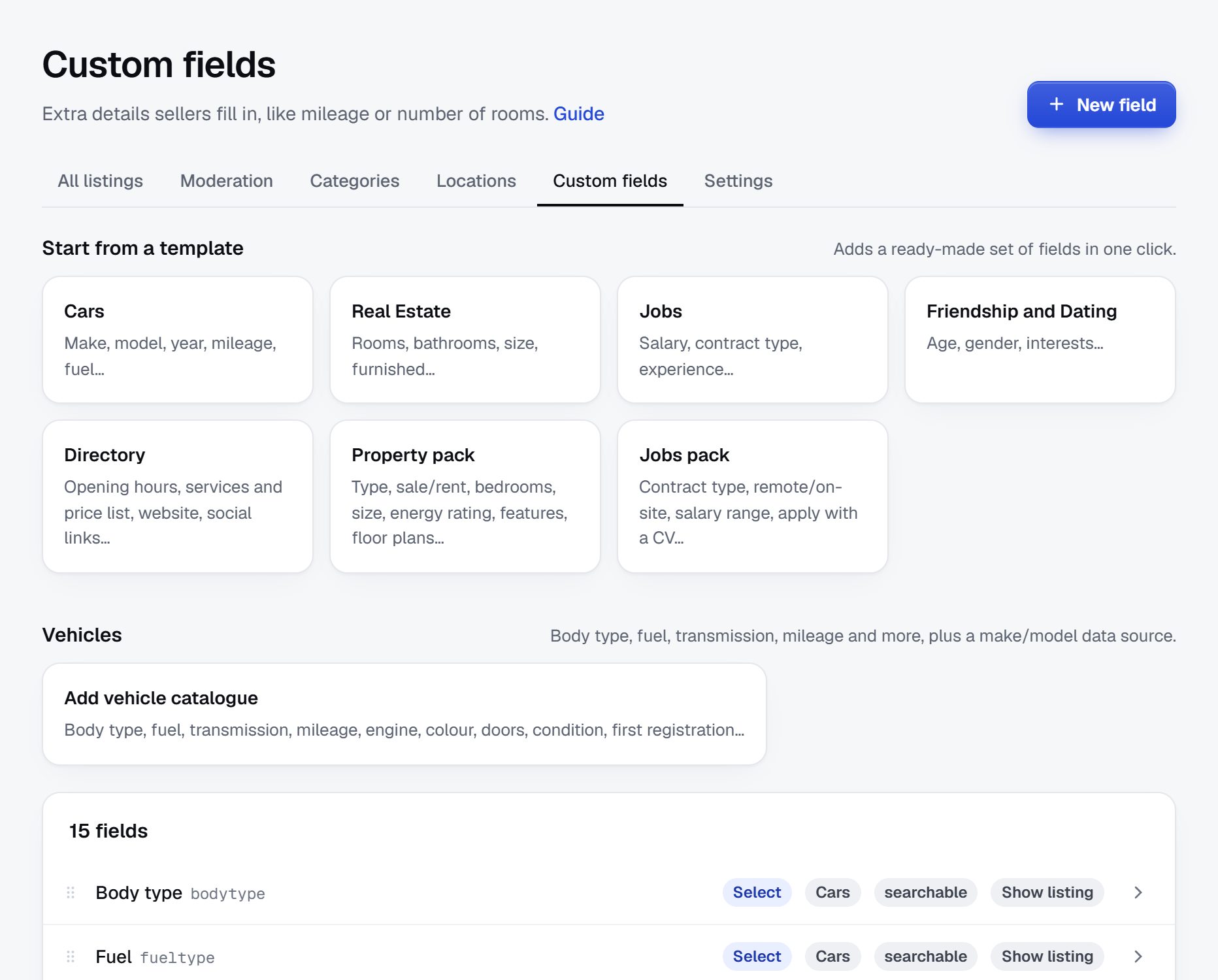
Fields can be text, numbers, dropdowns, checkboxes or dates, required or optional, and shown as search filters, so an asker can look for working items offered with porch pickup in their part of town.
| Category | Example posts | Fields askers filter on |
|---|---|---|
| Furniture | Sofas, dressers, desks, bed frames | Offered or wanted, size, pickup, needs a truck |
| Baby and kids | Clothes by size, toys, strollers, books | Age range, condition, offered or wanted |
| Home and kitchen | Dishes, small appliances, bedding | Condition, working, pickup type |
| Building and garden | Leftover tiles, lumber, pots, plant cuttings | Quantity, material, available until |
| Electronics | Monitors, cables, old phones, printers | Working or for parts, pickup, neighborhood |
| Craft and school supplies | Fabric, yarn, paper, classroom items | Quantity, offered or wanted, neighborhood |
| Wanted | "Looking for a kids' bike", "need moving boxes" | Category, neighborhood, needed by |
Make no price a house rule and reject any post that names one, so no sale slips into a giveaway site.
Cover costs with sponsors and grants, not with charges for items.
A giveaway site that charges givers or askers stops being a giveaway site. Keep posting free for everyone, always, and find money from people who benefit from reuse and from the audience it gathers.
- Local sponsors. A hardware store, a credit union or a moving company can sponsor the site or a category, with their name at the top. Reuse sites tend to attract sponsors who want to be seen supporting their town.
- Banner spaces for repair shops, thrift stores, movers, junk removal, storage units, upholsterers and furniture restorers, all of whom serve the same people.
- Grants and partnerships. Some city and county recycling or waste reduction programs fund reuse projects, and some community foundations support them. Check what is offered in your area.
- Donations from users, collected outside the site, from people who want it to keep running.
If you need a paid feature, consider charging only organizations: a featured spot for a charity collection drive or a school's appeal for supplies, priced low. Never let paid placement push one giver's sofa above another's.
Keep costs low to match: a free site needs moderation time more than money, and a few volunteers can share it.
| Model | Works when | Switch it on |
|---|---|---|
| Local sponsor of the site | Businesses want to back a local reuse effort | Once the site has regular weekly posts |
| Banner spaces | Movers, repair shops and thrift stores want the audience | When you can show local visitor numbers |
| Recycling program or foundation grant | The site keeps measurable items out of landfill | When you can count items given away |
| Featured spots for drives and appeals | Charities and schools collect specific items | Ahead of seasonal drives |
| User donations | Regulars value the site | After the first few months |
Get the first giveaways from movers, renovators and reuse groups.
Free things are easy to give away and hard to find in one place. The first hundred posts come from people who already give regularly.
Where givers are
- Existing reuse groups and mailing lists. Their members are your people. Ask the moderators whether you may share the site, and position it as a searchable home for posts, not a rival.
- Moving season. Apartment complexes, student housing and property managers see furniture left behind every month. Offer them a simple way to post it before it goes to the dumpster.
- Builders, remodelers and kitchen fitters with leftover materials they would rather not haul away.
- Repair cafes, tool libraries, community gardens and seed swaps, which already run on giving.
- Parent groups and schools, where children's clothes, books and gear pass between families all the time.
- Your own home and friends. Clear a closet and post it all on day one.
With Yclas a giver can take a photo and let AI fill in the title, description and category for them to check, which suits a free item nobody wants to spend five minutes describing. Wanted posts matter too: saved searches with email alerts tell an asker the moment someone offers what they need.
Mark items as taken quickly. A list full of things already gone is the fastest way to lose askers.
Write rules against reselling, no-shows and unsafe giveaways.
Free attracts good people and a few who take advantage of it. Clear house rules, posted where givers and askers see them, prevent most problems.
Problems to plan for
- Resellers who take everything free to sell elsewhere. Let givers choose who receives an item, and allow them to ask what it is for.
- No-shows and askers who never collect. Suggest givers set a pickup time and move to the next person if it passes.
- Scams such as a "free" item that needs a shipping or holding fee. Ban any post that asks for money.
- Sales in disguise: "free with purchase", or a link to a store.
- Safety at pickup. Recommend porch pickup and on-site messages, and tell givers not to share their full address until a pickup is agreed.
Items to ban or restrict
Many reuse groups ban live animals, weapons, alcohol, tobacco, prescription medicines and opened food, and some ban mattresses or child car seats. Recalled products, including some cribs and baby gear, can be dangerous to pass on. Rules on giving away food, medicines, chemicals and some electronics differ between places, so check the rules where you operate and keep a short list of what is not allowed.
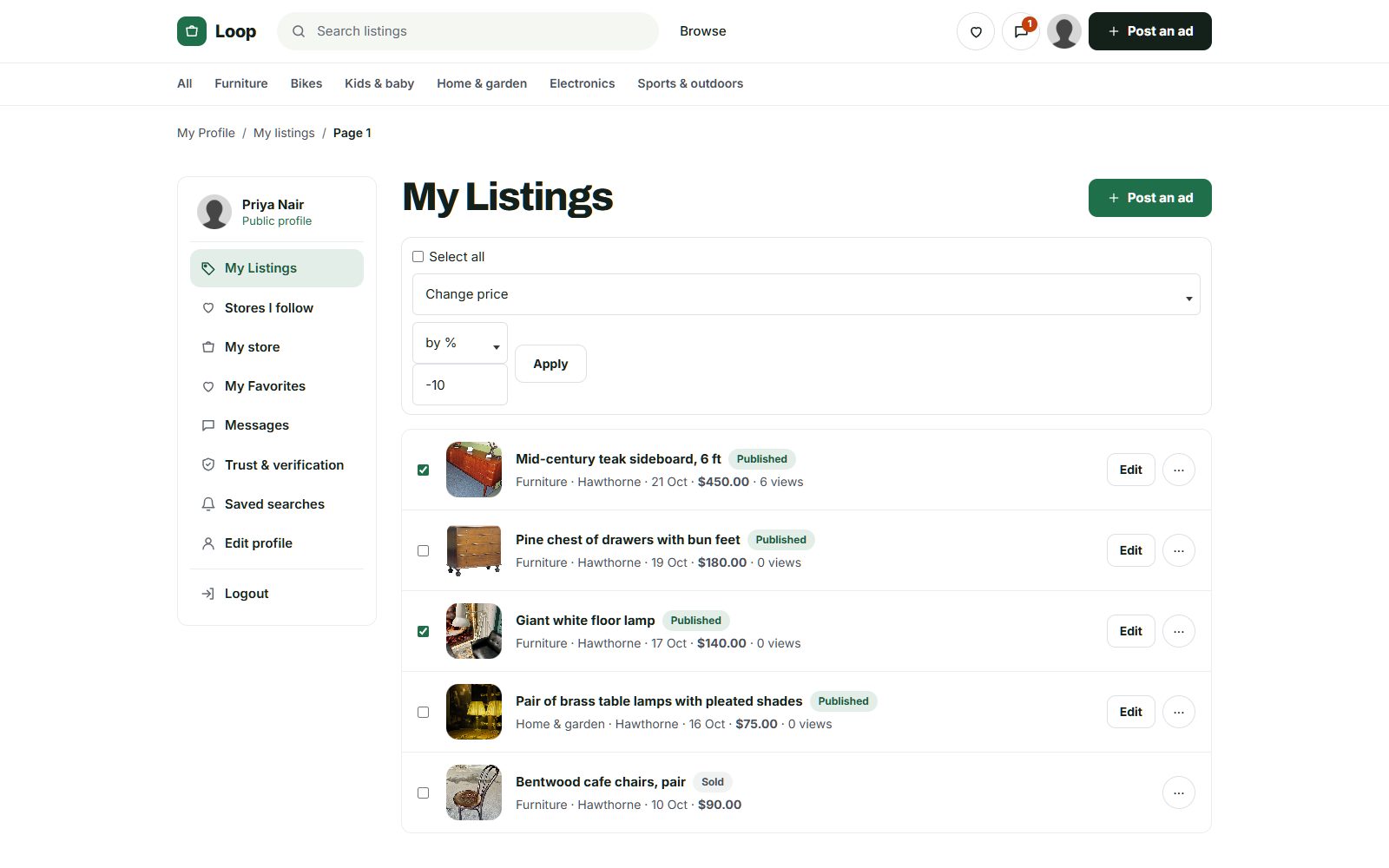
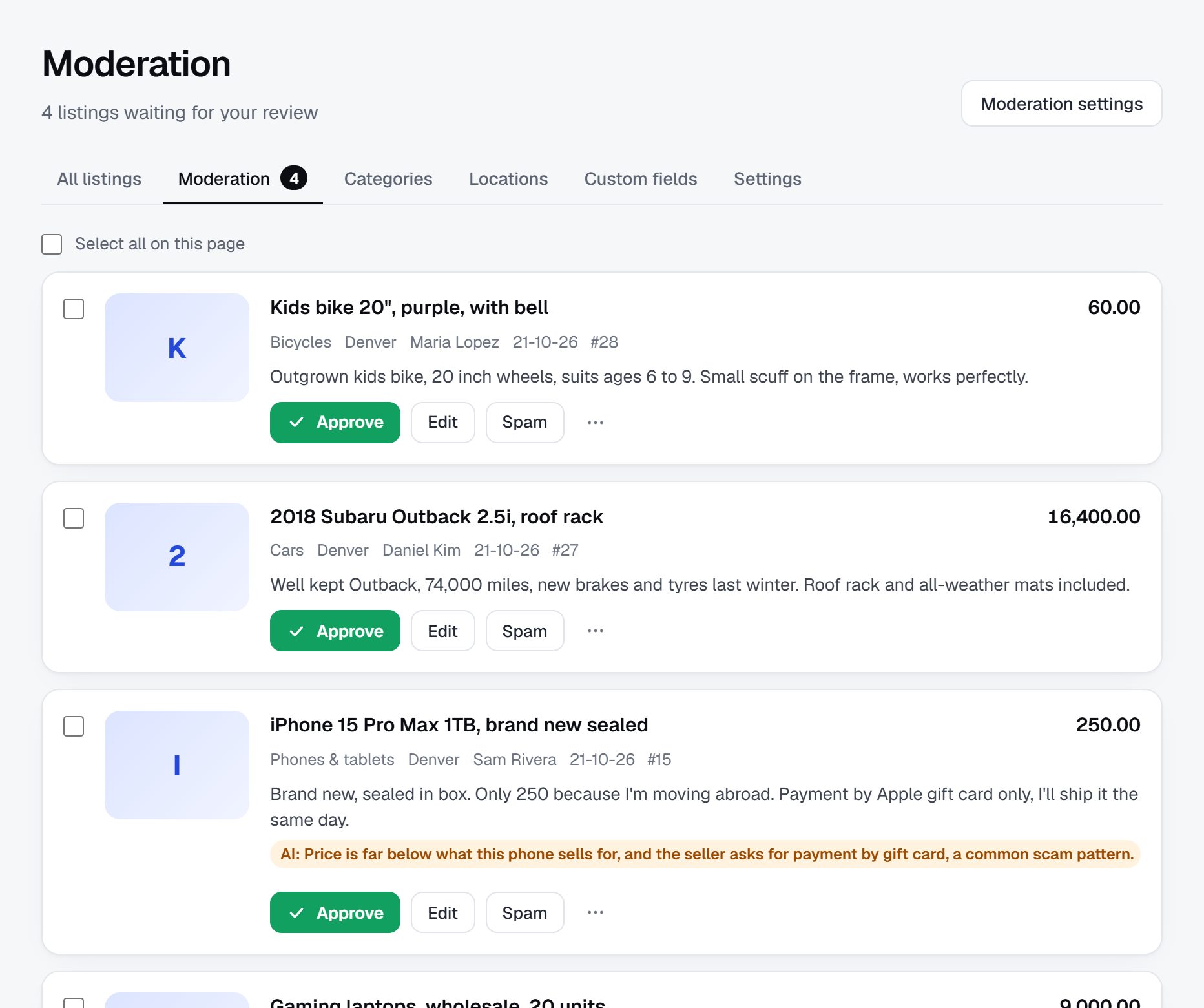
Approve every post at first, then rely on banned words, reports and AI that holds suspicious listings for review once regulars are posting.
Rank for "free stuff near me" and the items people hunt for.
People search for free things by item and place, and often by moment: moving day, a new baby, a first apartment. Many also search for how to get rid of something, which is the giver side of your site.
Searches to target
- "free furniture near me"
- "free stuff [town]"
- "free baby clothes [town]"
- "curb alert [neighborhood]"
- "where to give away a couch for free"
- "free moving boxes [town]"
Pages to build
- A page per category and neighborhood, showing offered items first.
- A wanted page so givers can see what people are asking for.
- A "how to get rid of" guide for awkward items: sofas, mattresses, paint, old electronics, and where each can go if nobody takes it.
- A moving-out guide for students and renters, published before the busy moving dates.
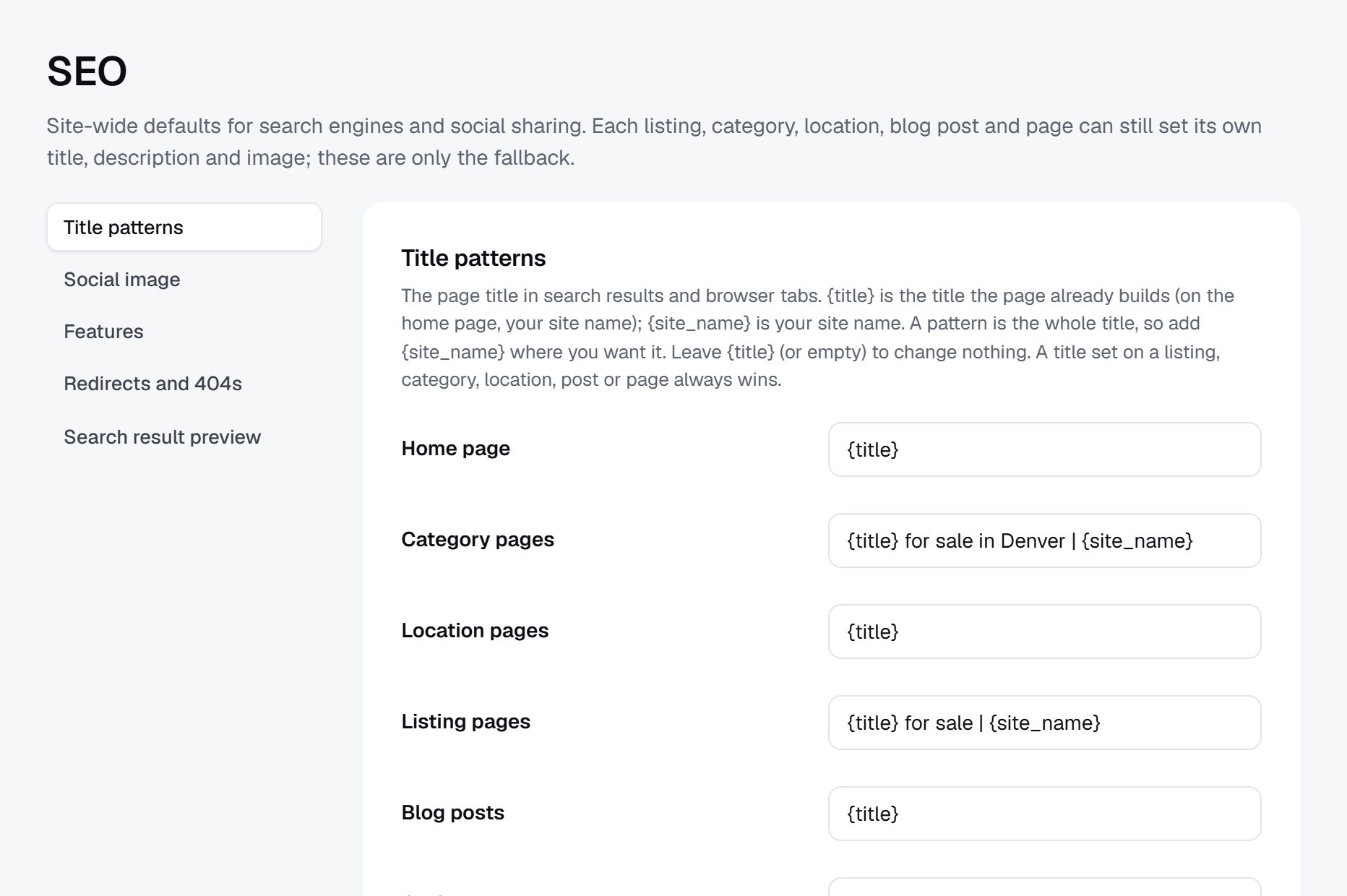
Set title patterns so each post shows offered or wanted, the item and the neighborhood. Keep taken items online only briefly. A running count of items given away, shown on the home page, is a story local news will often cover.
Launch before moving day and spring clean-up week.
Giving peaks when people move and when they clean. In many college towns the end of the spring semester and the end of summer leases bring huge amounts of furniture to the curb. Spring cleaning, town clean-up days and the weeks after the winter holidays are busy too.
Launch plan
- Post 50 to 100 real giveaways yourself and with friends before telling anyone.
- Agree with one or two reuse group moderators to share the site with members.
- Partner with a student housing complex or university office for move-out week.
- Ask the city or county recycling office whether it will list the site on its reuse page.
- Leave flyers at laundromats, libraries, thrift stores and community centers.
- Send a short note to local news with the first month's count of items given away.
Checklist
- No prices allowed; offered or wanted required.
- House rules and a banned items list published.
- Pickup safety advice linked from every post.
- Every post approved at first.
- A habit of reminding givers to mark items as taken.
A worked example: Willamette Free Exchange, Eugene and Springfield, Oregon.
Willamette Free Exchange is a fictional giveaway site for Eugene and Springfield in western Oregon, two neighboring cities with a large university, many renters, and a long habit of putting things on the curb. Its founder ran the local repair cafe and kept seeing working lamps, chairs and toasters thrown out at the end of each lease. She wanted one searchable place where those things could find a new home before the garbage truck came, and where people who needed something could say so.
The categories
- Offered
- Furniture
- Home and kitchen
- Baby and kids
- Building materials
- Garden and plants
- Wanted
- Household needs
- Classroom and craft supplies
- Community drives
Who it serves
Givers are students moving out, families clearing garages, landlords between tenants and remodelers with leftover materials. Askers include students moving in, families on tight budgets, teachers furnishing classrooms, artists collecting materials, and people who simply prefer reuse to buying new. The repair cafe, a tool library and two community gardens post as organizations, giving away surplus seedlings in spring and asking for broken appliances to practice repairs on. A food bank and a refugee resettlement group post wanted lists for families they support, which gives givers a clear reason to clear out a cupboard.
How it started
She launched three weeks before the end of the spring term, after the university's sustainability office agreed to promote the site during move-out week. Volunteers from the repair cafe posted their own surplus so the site never looked empty, and moderators of two reuse groups shared it as a searchable companion to their feeds rather than a replacement. Wanted posts from teachers appeared within days, and givers liked knowing exactly who would use their things. Move-out week brought more posts in seven days than the previous two months together, and several apartment managers asked for flyers to put in their lobbies before the next lease cycle.
How it pays its way
Posting is free for everyone and items are never sold. A local credit union sponsors the site, with its name on the home page and in the weekly email. A furniture restorer, a moving company and a thrift store buy banner spaces, since they serve the same people who give and receive. The founder has also applied for a small reuse grant from the county waste program, using the site's running count of items given away as evidence that it keeps things out of the landfill. Volunteers share the daily moderation, so the only regular costs are the platform, the domain and printed flyers. A tip jar on the about page covers the flyers most months.
| Post | Offered or wanted | Key details |
|---|---|---|
| Solid wood dresser, one drawer sticks | Offered | Porch pickup by Sunday, needs two people and a truck |
| Moving boxes, about 30 | Offered | Folded and dry, in the garage near campus, take some or all |
| Kids' winter coats, sizes 4 to 6 | Wanted | For a family new to town, needed before November |
| Leftover ceramic floor tile, about 40 square feet | Offered | Same color batch, collect from the driveway |
| Tomato and pepper seedlings | Offered | About a dozen pots, available until the end of May |
Your first 90 days: from your own closet to a busy giveaway board.
A giveaway site succeeds when a giver posts something and it is gone within a day. The first ninety days are about making that happen often enough that people tell their friends. Begin about three months before your town's biggest moving date, whether that is the end of a university term or the end of summer leases, so the plan peaks when the curbs fill up.
Track two numbers from the first week: items given away, and the time from posting to taken. Both make a good story for local news and for any grant application later. In this period, moderation matters more than features. Read every post, remove any that name a price, and remind givers to mark items as taken, by message if they forget. A tidy list of current giveaways is what keeps askers checking every morning.
Keep the plan small enough for one person and two or three volunteers. A giveaway site rarely fails for lack of features; it fails when the person running it burns out, so share the daily reading from the start. Write the house rules down in plain words, so every volunteer approves and rejects posts the same way.
| Weeks | Focus | Done when |
|---|---|---|
| 1-2 | Offered and wanted categories, house rules, banned items list, pickup safety page | Rules are published and every category splits offered from wanted |
| 3-4 | Fill the site with your own and volunteers' giveaways | 75 real posts are live, each with a photo and a neighborhood |
| 5-6 | Ask reuse group moderators, repair cafes and tool libraries to share the site | Two groups or organizations have shared it with their members |
| 7-8 | Reach renters through property managers and student housing | One housing office or complex promotes the site for move-out |
| 9-10 | Run the move-out or clean-up week push with flyers in lobbies and laundry rooms | Givers post every day and most items are marked taken within two days |
| 11 | Recruit volunteers and write the moderation guide | Two volunteers approve posts on their own using the written rules |
| 12 | Count items given away and approach a sponsor or grant | A sponsor has said yes or one grant application has been sent |
Three ways to build a giveaway site.
A giveaway site needs features that a sales-focused classifieds product may treat as an afterthought: no price at all, an offered and wanted split, a way to mark items as taken, alerts for wanted items, and moderation that catches anyone trying to sell. Most of the effort is community work, so the route that leaves you the most time for people is usually the right one. Spending evenings fixing a server is time not spent talking to reuse groups and housing offices.
Building it with developers fits only if you want something unusual, such as a matching system that pairs askers with givers automatically, or a lending library alongside the giveaways. For most towns this is more than a volunteer-run project can pay for or maintain.
A classifieds script or WordPress plugin on your own server is cheap to start, and many reuse groups already have a member who runs a website. The catch is that price fields and checkout features are often built in and awkward to switch off, and spam lands on a server someone has to look after every week.
A hosted builder such as Yclas suits a small team or a nonprofit that wants moderation, saved-search alerts and custom fields without running a server. Wherever you build, make sure the price field can be removed or hidden completely, so a site where nothing is sold never shows one.
If a city recycling office or a nonprofit will own the site later, choose something a non-technical successor can run, and keep the domain in the organization's name. Giveaway sites often outlive their founder's spare time, and a clean handover keeps them running.
| Route | Fits when | Watch out for |
|---|---|---|
| Custom build with developers | You want automatic matching of askers and givers | Volunteers rarely have the time or money to maintain custom code once the builder moves on |
| Script or plugin on your own server | A volunteer already runs a website and will look after it | Price and checkout features that are hard to switch off |
| Hosted builder | A small team wants moderation and alerts without a server | Make sure prices can be hidden or removed |
What a free stuff classifieds site costs to run.
The software is the smallest part of the bill. Most of the cost is your time in the first months: finding the first listings, answering questions and checking what gets posted.
Running costs are mostly time for moderation, which volunteers can share, plus flyers for libraries and laundromats. If you apply for a reuse grant, expect to report how many items the site has kept in use.
| Cost | Typical range | On Yclas |
|---|---|---|
| Domain | $10 to $20 a year | Your own, with SSL included |
| Software and hosting | $0 to $100+ a month, plus plugins and updates | Starter $19 a month, Professional $99 |
| Design | $0 to $100 for a theme, or a designer | 109 looks included |
| Payment fees | About 3% per payment | Your Stripe or PayPal fees; Yclas takes nothing |
| Your time | 5 to 10 hours a week at the start | Finding listings, moderation, support |
Mistakes that turn a giveaway site into a junk pile.
- Allowing a price just this once. One post asking for a few dollars invites dozens more, and the site turns into a cheap sales board that askers stop trusting. Reject any post that names a price or asks for gas money, and explain why in the rules. Givers who want money for something have plenty of other places to sell it.
- Leaving taken items up. Askers who message about a sofa that left two days ago soon stop asking at all. Remind givers to mark items taken, and remove posts older than a few weeks. A short reminder message a few days after posting catches most of the forgotten ones.
- Making first come, first served the only rule. It rewards resellers who refresh all day and frustrates people who actually need things. Let givers choose who receives an item, and let them ask what it is for.
- Accepting everything. Broken appliances, stained mattresses and half-empty paint cans make the site look like a dump and pass problems on to someone else. Ask for honest condition, and refuse what nobody should take home. Point givers to the city's recycling or bulky waste service for things that cannot be reused.
- Showing full addresses. A public address plus "on the porch all week" invites theft and unwanted visits. Show only the neighborhood or cross streets, and share the address in messages once pickup is agreed.
- Spreading across a whole region. Askers will not drive an hour for a free chair, and givers will not wait a week for them. Keep pickups short by serving one town or a few neighborhoods, and add another town only when its own givers start posting.
- Treating existing groups as rivals. Reuse group members are your first users, and their moderators can help you or shut you out. Offer the site as a searchable home for their posts, not a replacement for their community. Many groups are happy to have a place where older posts can still be searched.
- Hiding wanted posts. Without them, givers do not know what people need and askers have no reason to return. Give wanted posts their own page and alerts, with a limit per person so the page does not fill with wish lists. A teacher asking for egg cartons for an art class often gets ten offers within a day, and that story spreads.
- No plan for moderation time. A free site still needs someone reading posts every day, and one tired founder is a single point of failure. Recruit two or three volunteers early, write down the rules they apply, and share the work.
Reuse terms a giveaway founder should know.
Givers, askers and reuse groups use these words, and your house rules will too.
| Term | What it means |
|---|---|
| Offer | A post giving an item away. |
| Wanted | A post asking for an item someone needs. |
| Taken | A label added once an item has been collected and is no longer available. |
| Curb alert | A post saying something free has been left at the curb for anyone to collect. |
| Porch pickup | Collection from the giver's porch at an agreed time, without meeting in person. |
| No-show | An asker who agrees to collect an item and never arrives. |
| Gift economy | A community where people pass things on without payment or trade. |
| Buy Nothing group | A hyper-local gift group, often run on social media, where members give and ask without money. |
| Landfill diversion | Keeping items out of the waste stream, a figure reuse grants often ask for. |
| Repair cafe | A free community event where volunteers help people fix broken items. |
| Tool library | A lending service where members borrow tools instead of buying them. |
| Upcycling | Turning a discarded item into something more useful or more valuable. |
| Reuse center | A place that collects building materials or household goods for reuse, often run by a charity or the city. |
| Recall | A safety notice that a product should no longer be used or passed on. |
The same steps for a free stuff classifieds site on Yclas.
- Describe your nicheThe setup wizard writes the categories, an About page and example listings from one sentence.
- Add fieldsSwitch on a field pack or add the fields your buyers filter on.
- Fill itImport dealer spreadsheets, invite sellers and post your own.
- Set the rulesChoose moderation, banned words and AI checks.
- Go liveChoose a plan, connect your domain, switch on paid listings when it is time.
What does a free stuff site cost to run?
Very little: the platform, a domain and some flyers. The main cost is the hour or so a day someone spends approving posts and answering reports.
Can a site where nothing is sold make money?
Yes, through local sponsors, banner spaces for movers and repair shops, reuse grants where they exist, and donations. Posting itself stays free.
How do I stop people reselling free items?
Let givers choose who gets each item and ask what it is for. You cannot stop resale entirely, but givers who choose well rarely mind.
Can people give away pets?
Many reuse sites ban animals because free pets attract people with bad intentions. If you allow rehoming, set separate rules and approve each post.
Am I liable for unsafe items given away?
Rules differ between places, so check them where you operate. Ban recalled and risky items, ask givers to describe condition honestly, and publish clear terms.
How do I compete with free groups on Facebook?
Be searchable and local. Askers can filter by item and neighborhood and get alerts for wanted items, which a group feed cannot offer.
Should wanted posts be allowed?
Yes, with limits. Wanted posts match askers with givers, but cap how often one person can post them so the page does not fill with wish lists.
Should givers or the site decide who gets an item?
Let givers decide. Some pick the first reply, others the person with the best reason, and having the choice is what keeps givers posting week after week. Suggest they say in the post how they will choose, so nobody feels passed over.
Can businesses give things away on the site?
Yes, and it helps: a shop with old display fixtures or a builder with surplus lumber adds variety. Do not let it turn into advertising for their paid products, and hold such posts for review. A business that gives regularly can earn goodwill with a short line about who they are.
What about food giveaways?
Some sites allow sealed, unexpired food and garden produce, while others ban food entirely. Rules on giving away food differ between places, so check the rules where you operate before allowing it. If you allow garden produce, ask givers to say when it was picked.
Do I need volunteers?
Not on the first day, but a giveaway site needs someone reading posts every day. Two or three volunteers sharing moderation, with written rules, make it last beyond your own enthusiasm. Regular givers often make the best volunteers, because they already know the rules from the other side.
How do I measure the site's impact?
Count posts marked taken, and estimate weight for bulky items such as furniture if a grant asks for it. A running total is useful for sponsors, grant applications and local news stories, and showing it on the home page reminds givers that their sofa counted.
Related pages.
The parts of Yclas this leans on.
You have the plan. Now help your town pass things on.
Describe your site in a sentence and the setup wizard writes the categories, example listings and a look. Free for 15 days, no credit card.
Start my classifieds site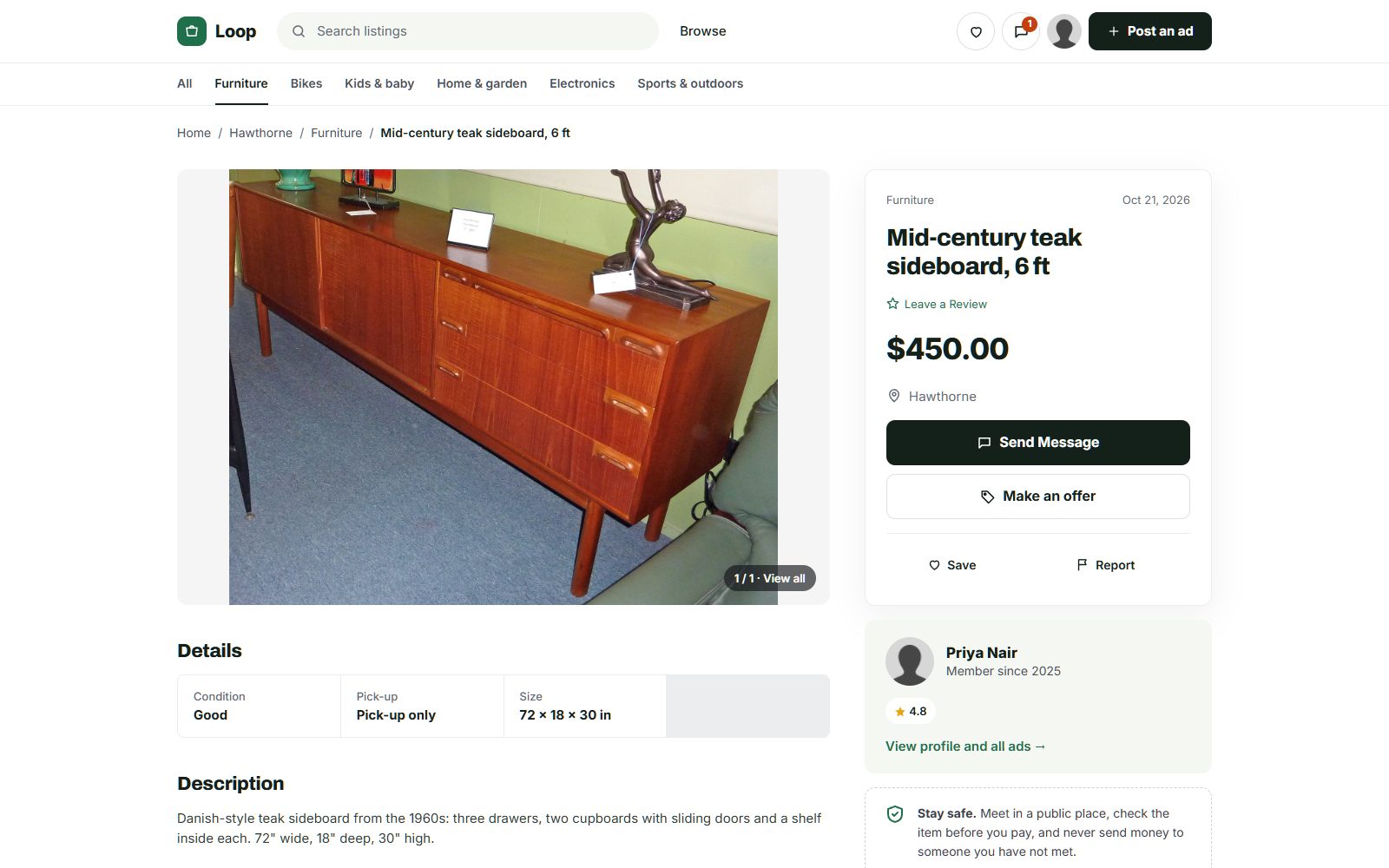
Photo credits
The screenshots show demo sites with made-up sellers. Their photos come from Wikimedia Commons, some cropped or with signs and plates blurred; these ones are under Creative Commons licences:
- McIntosh Teak Sideboard Circa 1960s, CC BY-SA 4.0
- Persian Rug Khorrasan 1, CC BY 2.0
- Fameg bentwood chairs of Poland 01, CC BY-SA 4.0
- View of the "Lost Dining Table and Chairs" in Eltham Palace - geograph.org.uk - 5797282, CC BY-SA 2.0
- Anglepoise Original 1227 Giant Floor Lamp, CC BY-SA 4.0
- Wooden Balance Bike for Kids oak frame with flame red tires, CC BY-SA 4.0
- Baby Crib (49935766018), CC BY 2.0
- Seth Thomas tambour mantel clock ca. 1930, CC BY-SA 4.0
- Rack of rock climbing gear at Horsethief Butte in a Mazamas class, CC BY 4.0
- Sideboard Teak 5 Door Rosando Furniture, CC BY-SA 4.0
- Teak 'Fresco' Sideboard by G Plan angled view, CC BY-SA 4.0