
How to build a newspaper classifieds website that keeps your paper's readers and advertisers.
A guide for local publishers moving print classifieds online: which sections to bring across first, how print and online bundles are priced, where legal notices and obituaries fit, how the ad desk and existing advertisers fill the site, the rules your ad desk already knows and the ones that change online, local search, and a launch run from your own pages.
Free for 15 days · No credit card · Plans from $19 a month
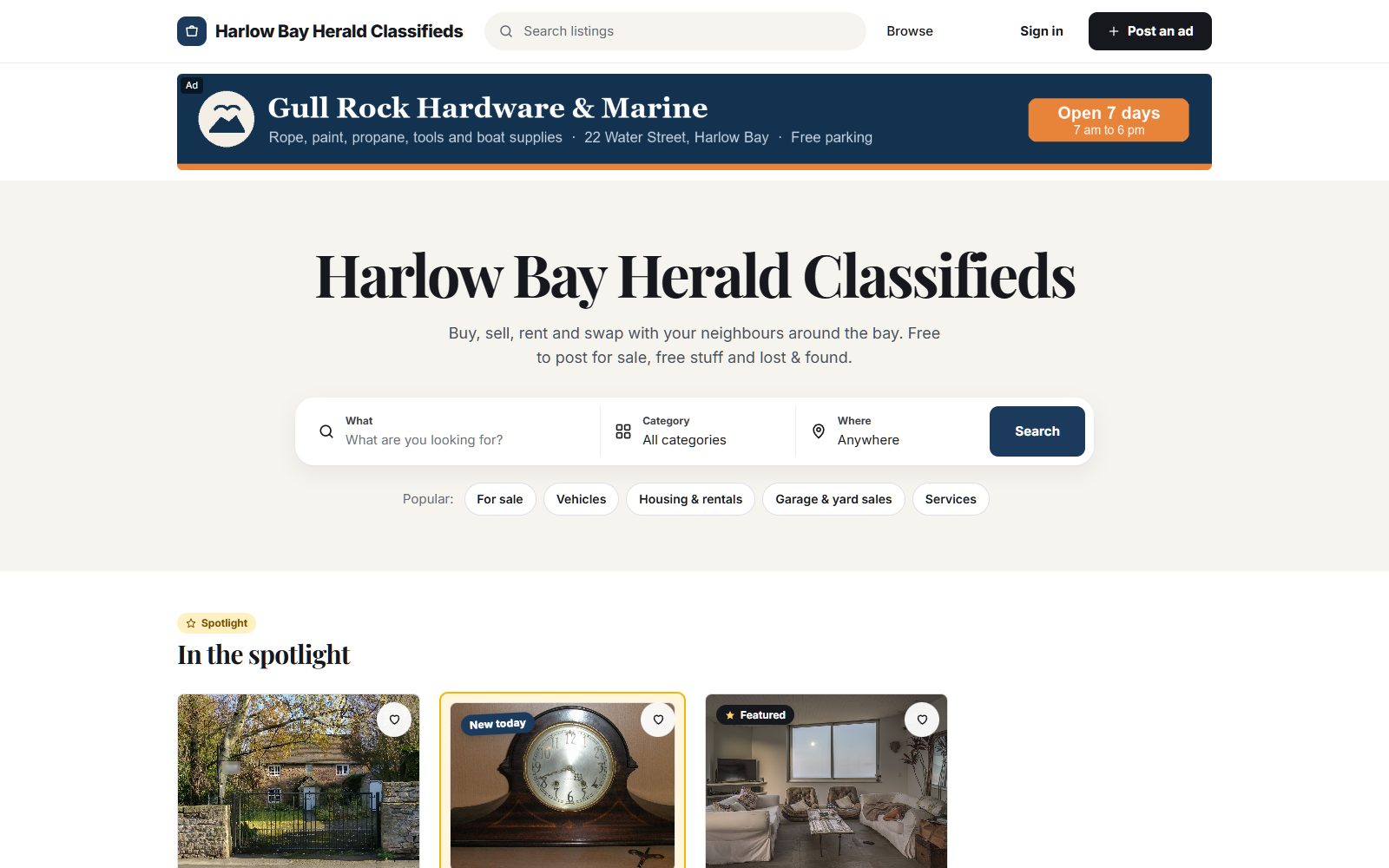
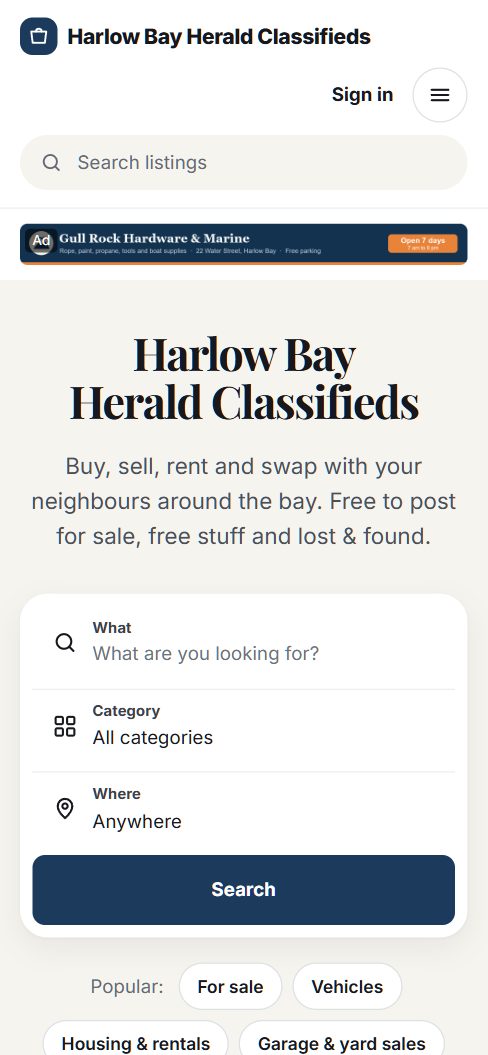
Bring the classifieds section your readers already know online.
A local paper starts with something a new site never has: a name people trust, an ad desk that takes calls every week, and advertisers who have bought space for years. What the print section lacks is search, photos, a life longer than one edition, and a way to post at midnight from a phone. The online site should be the same section, with those gaps closed.
Who uses a newspaper's classifieds
- Private sellers placing a car, a boat, furniture or a garage sale, many of them readers who would never post in an anonymous group.
- Local businesses: car dealers, real estate agents, landlords, auction houses and contractors who book space every week.
- Employers who want local applicants rather than a national flood.
- Families and funeral homes placing obituaries and memorial notices.
- Law firms, courts and public bodies placing legal and public notices.
Why not just leave it to the big sites
Craigslist and Facebook Marketplace took much of the private-party trade from print, but they are national and noisy. A paper's site can be the local, moderated, named alternative, and it keeps the advertiser relationship with the paper instead of giving it away.
Keep the section names your readers know from print: Merchandise, Autos, Real Estate, Rentals, Employment, Announcements, Garage Sales, Legals. Familiar headings make the move from paper to screen easier for older readers.
You are not starting a classifieds site. You are giving an existing one a second home.
Turn print headings into categories and give each one real filters.
Print classifieds are sorted by heading and then by word count. Online, readers expect to narrow results, so each heading needs a few fields that match how people choose. Keep the category list close to your print index so the ad desk can place an ad in either version without translating.
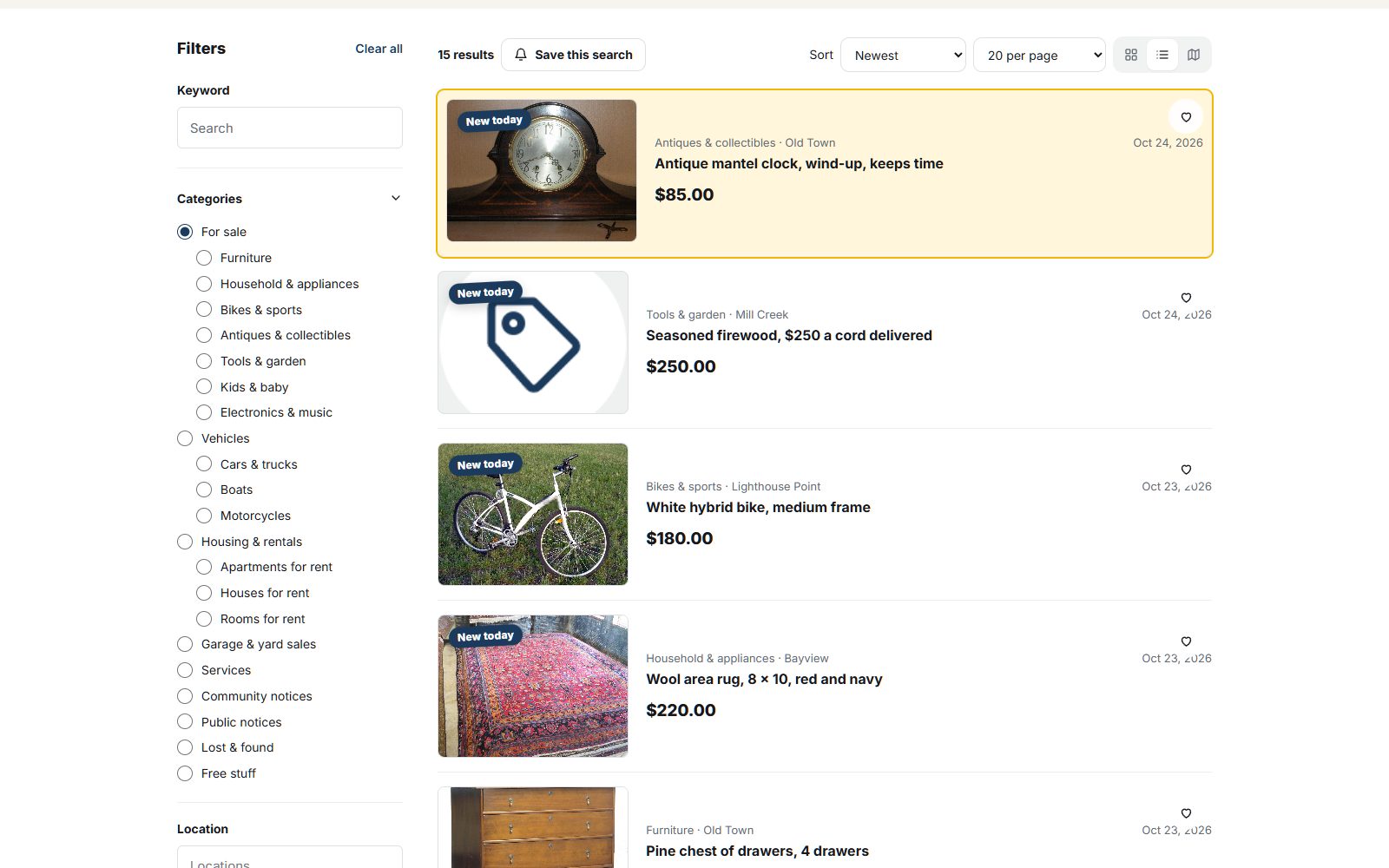
Do not copy every print subheading. A paper may run twenty merchandise headings because of layout; online, two levels and good filters do the job better. Fields can be text, numbers, dropdowns, checkboxes or dates, required or optional, and shown as search filters, and field packs set up cars, property and equipment in one click.
Notices need a different shape from sales. An obituary or legal notice has no price or condition. It needs dates, a place and the full text, and it should be easy to find by name. Add a county field to legal notices and a funeral home field to obituaries, since those are what readers and families search by.
| Section | Example ads | Fields readers filter on |
|---|---|---|
| Autos | Used cars, trucks, campers, motorcycles | Make, model, year, mileage, price, private or dealer |
| Real estate and rentals | Homes for sale, apartments, rooms, storage | Rent or price, bedrooms, town, pets allowed, available from |
| Employment | Local jobs, part-time and seasonal work | Job type, schedule, pay range, town |
| Merchandise | Furniture, tools, firewood, appliances | Condition, price, town, delivery available |
| Garage and estate sales | Weekend yard sales, estate sales, church sales | Sale date, start time, town, map |
| Announcements | Obituaries, memorials, births, anniversaries | Name, town, date of service, funeral home |
| Legal and public notices | Hearings, foreclosures, bids, estate notices | Notice type, county, publication dates |
Use the same section names in print and online so readers and the ad desk recognize them.
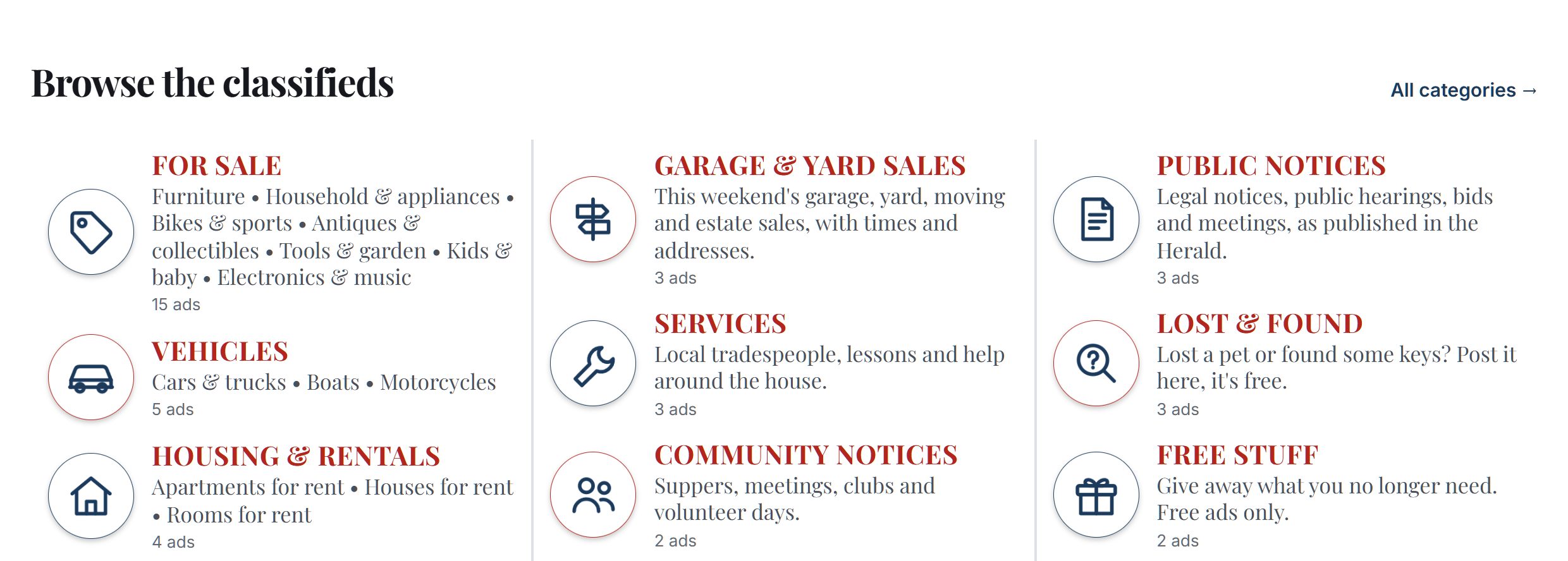
Sell print and online together, then add what only online can do.
Most papers already charge for classifieds, so this is one niche where free posting is not the default. The question is how to price the online part. Many publishers include an online listing with every print ad and sell upgrades on top, which keeps print revenue steady while readers get used to the site.
Common setups
- Print plus online bundles: every paid print ad also runs online for a set number of days. Price the bundle a little above print alone, or include online at no extra charge in the first months.
- Online-only ads for private sellers who would never buy print: free for small merchandise to build volume, paid in autos, real estate and employment.
- Upgrades: featured listings, bumps and extra photos, the online version of bold type and borders.
- Memberships for dealers, agents and landlords who post every week, sold by your existing sales reps alongside display space.
Obituaries and legal notices are usually priced by the publisher's existing rate card and placed through the ad desk. Online, they can be posted by staff once the print order is paid. Keep that process in the newsroom or ad department, not in a public form.
Banner spaces fit naturally because your sales team already sells display ads. Offer online banners in the categories that match an advertiser: a body shop in Autos, a mover in Rentals.
| Model | Works when | Switch it on |
|---|---|---|
| Print and online bundles | Readers still place print ads every week | From launch, through the ad desk |
| Pay to post in autos, real estate and jobs | Those sections already earn in print | From launch, at or below print rates |
| Featured listings and bumps | Online traffic grows beyond print readers | Once each section has steady listings |
| Memberships for dealers and agents | Businesses post every week | With your reps' next renewal round |
| Banner spaces | Display advertisers want local reach | As part of existing display packages |
Fill the site from this week's print section and your ad desk.
A newspaper is the one kind of founder that never needs to beg for the first 100 listings. They are already in this week's edition. The work is moving them across without doubling the ad desk's workload.
Where the first listings come from
- The current print run. Most ad systems can export the week's classifieds to a spreadsheet, and listings can be imported from a CSV, so the online section can open with every live print ad on day one.
- Regular advertisers. Car dealers, real estate offices, property managers and auctioneers already send you copy. Ask for their full stock list and post it, not just the few lines they buy in print.
- The ad desk. Train staff to offer the online listing on every call, and to post it while the customer is still on the phone.
- Funeral homes and law firms that place notices with you: agree how their notices go online and who checks the text.
- Your own pages. Run house ads in print pointing readers to the website, especially next to the classifieds section.
Private sellers who never call the ad desk need a fast way to post. With Yclas a seller can take a photo and let AI fill in the title, description, category and price for them to check, which suits readers who find typing an ad on a phone slow.
Make the online listing part of every print order, so the site grows every week without a separate campaign.
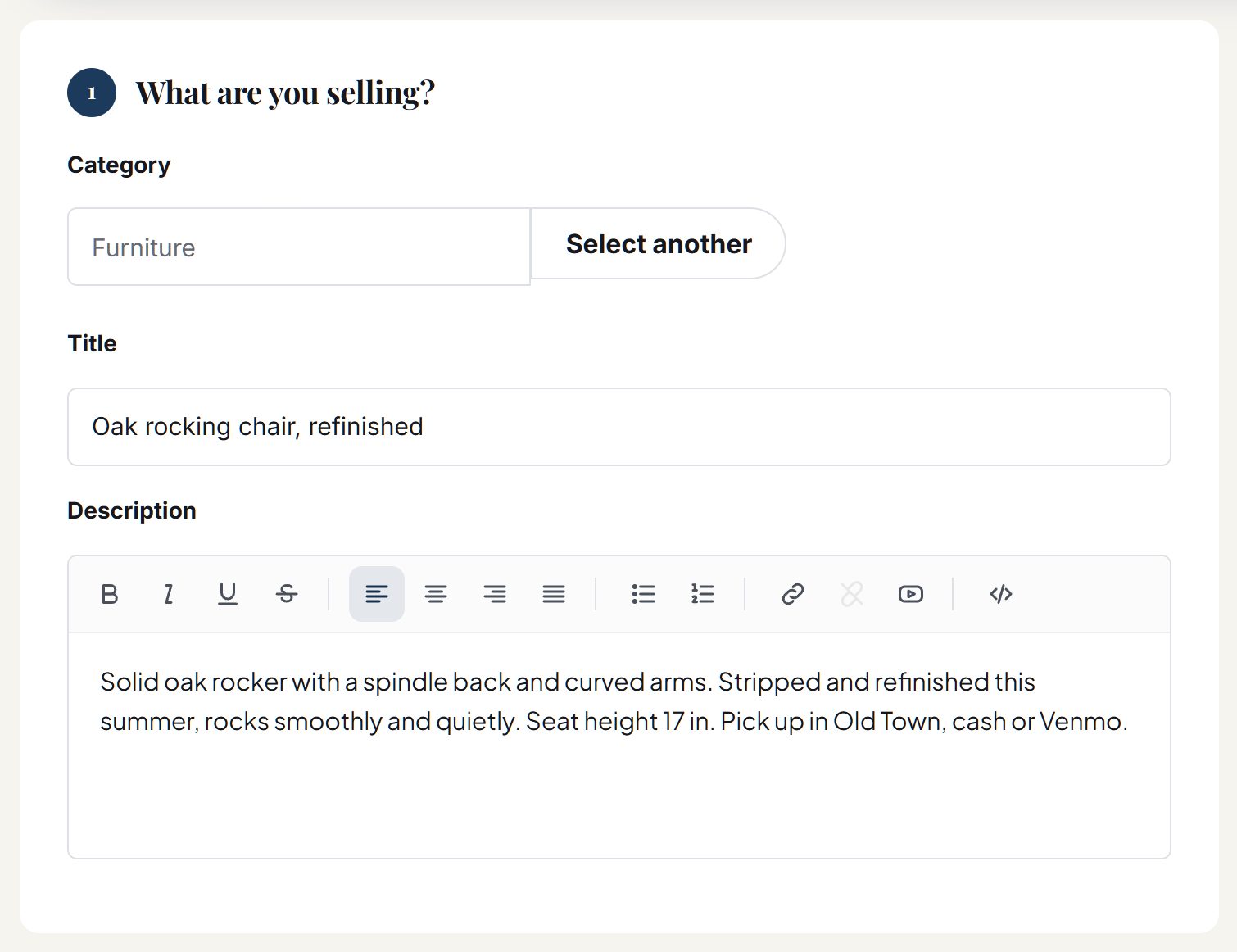
Keep the standards your print ad desk already applies.
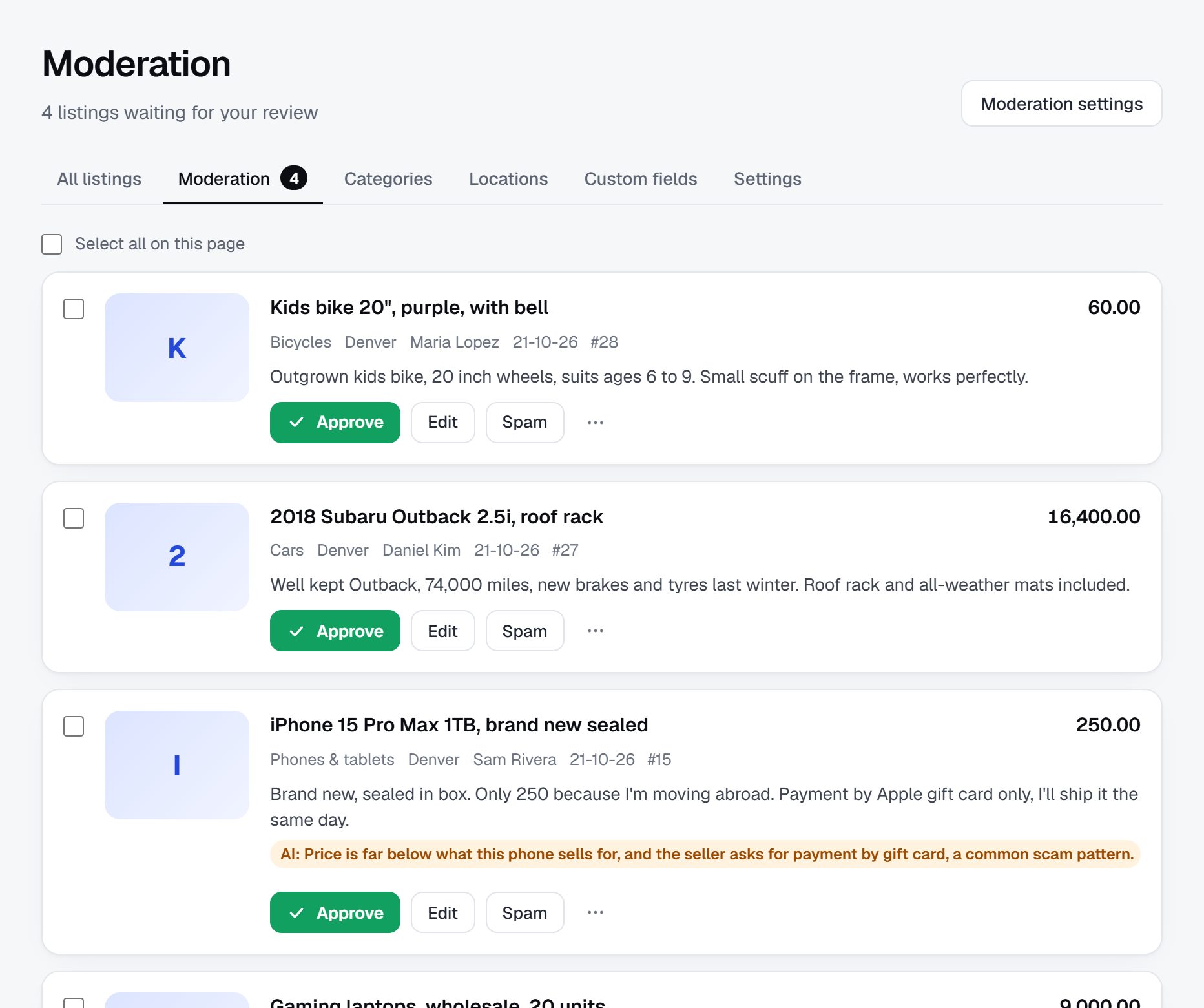
Your ad desk reads every print ad before it runs, which is why readers trust the section. Online posting skips that step unless you rebuild it. Start by approving every listing before it goes live, and keep the same acceptance rules as print.
Risks that are sharper online
- Overpayment and fake check scams aimed at private sellers, and rental listings copied from real homes with a fake landlord asking for a deposit.
- Job ads that are really reshipping schemes or that ask applicants for fees.
- Housing and employment wording that excludes people. Your desk likely already screens print ads for this; apply the same checks online.
- Obituary errors and impostors: a notice placed by someone who is not family, or a name misspelled. Verify through the funeral home or the family before publishing.
Legal notices need care
Rules on where legal and public notices must appear, for how long, and whether an online posting counts are set by law and differ between states, provinces and countries. Some require publication in a printed paper of general circulation; some also require or allow a website. Check the rules where you operate before you change how notices are sold, and keep proof of each publication date.
Online, use banned words for common scam phrases, reCAPTCHA on posting, reader reports, and AI that holds suspicious listings for review. Publish a short safety page and link it from every ad.
Rank for the local searches your paper's name already wins.
A paper's website often has years of links and a name people type into search. The classifieds section should borrow that strength by living on the paper's domain or a clear subdomain of it, not on a separate brand nobody knows.
Searches to target
- "garage sales this weekend in [town]"
- "obituaries [town] this week"
- "apartments for rent [town]"
- "jobs in [county]"
- "used trucks for sale [town] private seller"
- "public notices [county]"
Pages to build
- A page per section and town, so "rentals in Millbrook" has its own address and title.
- An obituaries index that is easy to search by name, since families share these links widely.
- A legal notices page by county and notice type, if your rules allow online publication.
- A weekend garage sale page that refreshes each Thursday.
Set title patterns once so every listing includes the town and the section. The newsroom can help: a short local price guide for used cars, a rental market column, or a first-time seller's checklist gives search engines something to rank beyond the ads, and gives reporters a reason to link to the section.
Launch it in print, in your own voice, over several weeks.
Your launch channel is the paper itself. Readers who place print ads are the same people you want online, so tell them where you tell them everything else.
Timing
Pick a quiet news week and avoid launching just before the holidays, when the ad desk is busiest. Spring is useful: garage sale season and spring car buying both bring readers to classifieds. Line up launch with a section that already sells well, often autos or rentals.
Launch plan
- Import the current print classifieds so the site opens full.
- Train the ad desk to post every print ad online and to explain bundles.
- Agree the obituary and legal notice workflow with funeral homes, law firms and your own editors.
- Run house ads and a front-page note for three to four weeks.
- Add the web address to every print classifieds page header.
- Ask your reps to bring dealers and agents onto memberships at their next renewal.
Checklist
- Section names match print.
- Every listing approved before it goes live.
- Rate card updated with bundles and online upgrades.
- Legal notice rules checked with counsel.
- Site on the paper's domain with SSL.
A worked example: the Kettle River Dispatch, northeastern Minnesota.
The Kettle River Dispatch is a fictional weekly paper serving three rural counties in northeastern Minnesota, with a print run that reaches farms, lake cabins and four small towns. For decades its back pages carried several columns of classifieds every Thursday. When the publisher noticed that younger readers were selling snowmobiles and fishing boats in online groups instead, she decided to move the section onto the paper's own website rather than watch it shrink one edition at a time.
The categories
- Autos and recreation
- Cars and trucks
- Snowmobiles and ATVs
- Boats, motors and docks
- Real estate and rentals
- Homes and land
- Cabins and seasonal rentals
- Employment
- Merchandise
- Firewood and farm supplies
- Household and tools
- Garage and estate sales
- Announcements and obituaries
- Legal and public notices
Who it serves
Most readers are over fifty, with a growing group of younger families who bought homes in the area after working remotely became common. The advertisers are the ones the paper has always had: two car dealers, a marine and powersports shop, three real estate offices, a handful of landlords, the county offices, the school district and two funeral homes. Private sellers fill the merchandise pages, with firewood, deer stands and ice fishing gear in the fall.
How it started
The ad desk exported one week of print classifieds, a little under a hundred ads, and imported them so the site opened full. For the first two months every print ad ran online at no extra charge. A box on page two told readers where to find the section, and the clerk who takes classified calls began offering to add photos whenever a customer placed an ad by phone. The publisher wrote a short column explaining that the same people who check print ads would check online ones.
How it makes money
Print ads now include two weeks online. Private merchandise ads under a set value are free online only, which brought in younger sellers who had never called the desk. Autos, rentals and employment are paid online as well as in print. The powersports shop and the real estate offices added memberships at their annual renewal, and featured listings sell well every fall, when hunters and ice anglers shop for gear. Obituaries and legal notices are still priced on the rate card and posted by staff once paid.
| Listing | Price | Key details |
|---|---|---|
| Snowmobile, 2016, 2,900 miles | $5,800 | Private seller, trailer included, photos of the track |
| Lake cabin rental, two bedrooms | $1,150 per month | October to May, wood stove, no pets |
| Seasoned mixed hardwood firewood | $260 per cord | Delivered within 15 miles, stacking extra |
| Winter road crew, county highway department | $21 to $24 per hour | Commercial driver's license required, on call during storms |
| Farmhouse estate sale | Free to list as part of a print ad | Friday and Saturday, 8 a.m. start, tools and antiques |
Your first 90 days: from this week's print run to a section that runs itself.
A paper's first three months online are mostly about habits, not technology. The ad desk has to place every ad in two places without it feeling like double work, readers have to learn the address, and the sales team has to learn a new product to sell. Plan the work in two-week blocks and give each block one owner, usually the classifieds manager, so nothing waits for a meeting.
Run the plan alongside print, never instead of it. For the first weeks the site is a copy of the print section with photos added; once readers find it, you start adding what print cannot do, such as alerts and upgrades. Measure two things each week: how many print orders also went online, and how many ads came from people who have never called the desk. The second number tells you whether the site is reaching new sellers or only repeating the old ones.
If the ad desk finds online posting slow, fix that first. Every other step depends on it.
| Weeks | Focus | Done when |
|---|---|---|
| 1-2 | Set up sections to match print, write acceptance rules, import this week's ads | Every live print ad is online and each section name matches the print index |
| 3-4 | Train the ad desk and agree the obituary and legal notice workflow | Each clerk has posted ads during a phone call, and funeral homes know who approves their text |
| 5-6 | Run house ads and a front-page note | The web address has appeared in four editions in a row and in the classifieds header |
| 7-8 | Open free online-only merchandise ads for private sellers | Online-only ads arrive every day without staff typing them |
| 9-10 | Bring dealers, agents and landlords onto memberships | Two or three regular advertisers have their full stock online, not just their print lines |
| 11-12 | Add featured listings, bumps and saved-search alerts, then review rates | The rate card lists online upgrades and the first ones have sold |
Three ways to build it, and what a paper needs from each.
A newspaper's classifieds site has needs that a hobby site does not: staff accounts for the ad desk, an approval step before anything goes live, a way to bring in the week's ads from the print system, separate shapes for notices and for sales, and a home on the paper's own domain. Judge each route on those, not on the look of a demo.
Building it with developers makes sense for a group that owns several titles and wants classifieds wired directly into its print ad system and billing. It is also the slowest and most expensive route, and someone has to maintain it long after launch, through every browser change and security update.
Installing a classifieds script or WordPress plugin on your own server is common for papers that already run their news site on WordPress. It keeps everything under one login, but plugins vary widely in how they handle moderation, paid listings and imports, and your web person becomes responsible for updates, backups and spam.
A hosted builder such as Yclas suits a small or mid-sized paper without a developer on staff: the ad desk gets an approval queue and paid upgrades without anyone running a server. Whichever builder you look at, confirm that it runs on your own domain, imports a spreadsheet, and holds listings for approval.
Whatever you choose, keep the classifieds on the paper's domain, so the name readers trust and the links you have earned over the years carry over.
| Route | Fits when | Watch out for |
|---|---|---|
| Custom build with developers | A group with several titles wants classifieds tied to its print ad system | Long build time and maintenance costs that continue every year |
| Script or plugin on your own server | Your news site already runs on WordPress and you have a web person | Updates, security patches, spam and backups fall on your own staff |
| Hosted builder | A small paper wants approval, paid upgrades and imports without a server | Check it runs on your domain and reads the print system's export |
What a newspaper classifieds site costs to run.
The software is the smallest part of the bill. Most of the cost is your time in the first months: finding the first listings, answering questions and checking what gets posted.
Most of the cost is staff time: the ad desk posting and approving ads, and someone checking obituaries and notices. Budget for legal advice before changing how legal notices are published, and for print house ads, which cost you page space rather than cash.
| Cost | Typical range | On Yclas |
|---|---|---|
| Domain | $10 to $20 a year | Your own, with SSL included |
| Software and hosting | $0 to $100+ a month, plus plugins and updates | Starter $19 a month, Professional $99 |
| Design | $0 to $100 for a theme, or a designer | 109 looks included |
| Payment fees | About 3% per payment | Your Stripe or PayPal fees; Yclas takes nothing |
| Your time | 5 to 10 hours a week at the start | Finding listings, moderation, support |
Mistakes that sink a newspaper's classifieds site.
- Charging as much online as in print. If a private seller pays the same for a website ad as for a print ad, they will post in a free group instead. Keep small merchandise ads free online and charge where print already earns: autos, real estate and jobs. A free merchandise section is what teaches a new generation of sellers to look for your name.
- Making the ad desk type every ad twice. Staff who re-key ads by hand will skip it on busy days, and the site will fall behind print within a month. Export from the print system and import, or have the desk post online first and send the copy to print from there. The aim is one entry per ad, whichever edition it starts in.
- Opening with an empty section. Readers who visit once and find six ads do not come back. Open with the full current print run, and keep importing every week until online posting takes over. Photos matter here: add them to imported print ads whenever an advertiser can send one, because a section of text-only ads looks like a scan of the paper.
- Dropping the approval step. Readers trust newspaper classifieds because someone read every ad. Letting online ads go live unchecked invites the rental and job scams your desk has been catching for years, under your masthead. Approving online ads takes the same judgment the desk already uses, so give the job to the people who read print copy.
- Moving legal notices online without checking the law. Public notice rules decide where a notice must appear, for how long, and what proof is kept. Change how you publish them only after checking with counsel, and keep proof of every publication date.
- Putting classifieds behind the paywall. Classified ads are advertising, and a reader who cannot see them is a buyer the advertiser never reaches. Keep listings open to everyone even if news stories are for subscribers.
- Launching under a new brand. A separate name nobody knows throws away the paper's reputation and its search history. Keep the section on the paper's domain, under its masthead, with its familiar section names. Readers in their seventies should find Autos and Garage Sales where they expect them.
- Leaving expired ads online. A truck that sold three weeks ago, still listed, makes every other ad look doubtful. Match online run dates to the print order and let ads expire on schedule.
- Leaving the sales team out. If reps earn nothing on online upgrades and memberships, they will keep selling print only. Add online products to their targets and their commission plan from the first month. A rep who sells a dealer membership alongside display space has a better story to tell than one selling print alone.
Ad desk and notice terms to know.
These terms come up whenever a paper moves its classifieds and notices online.
| Term | What it means |
|---|---|
| Rate card | The published list of prices for every ad size, section and run length. |
| Run | How many days or editions an ad appears, such as a two-week run. |
| Insertion | One appearance of an ad in one edition of the paper. |
| Line ad | A text-only classified priced by the number of lines or words. |
| Classified display | A classified ad with a border, logo or photo, priced by size rather than by line. |
| Upsell | An extra sold with an ad, such as bold type in print or a featured listing online. |
| Legal notice | A notice that a law requires to be published, such as a hearing, foreclosure or estate notice. |
| Affidavit of publication | A sworn statement from the paper proving that a legal notice ran on given dates. |
| Newspaper of general circulation | A legal term for a paper that qualifies to carry legal notices under the rules where it publishes. |
| Paid obituary | A death notice written by the family and placed as a paid ad, separate from a news obituary written by staff. |
| Ad desk | The staff who take classified orders, check copy and schedule ads. |
| Deadline | The cutoff time for an ad to make the next edition. |
| Tearsheet | A copy of the printed page sent to an advertiser as proof that the ad ran. |
| Pickup rate | A reduced price for running an ad again in another edition, title or online. |
The same steps for a newspaper classifieds site on Yclas.
- Describe your nicheThe setup wizard writes the categories, an About page and example listings from one sentence.
- Add fieldsSwitch on a field pack or add the fields your buyers filter on.
- Fill itImport dealer spreadsheets, invite sellers and post your own.
- Set the rulesChoose moderation, banned words and AI checks.
- Go liveChoose a plan, connect your domain, switch on paid listings when it is time.
What does it cost a paper to put its classifieds online?
The direct spend is small: the platform, the domain and a few hours of setup. The real cost is ad desk time to post and check ads, so plan who does it before launch.
Should online ads be free if print ads are paid?
Many papers include online with every print ad and keep small private merchandise ads free online to build volume, while autos, real estate and employment stay paid in both.
Can legal notices run only on the website?
That depends on the law where you publish. Some places require a printed newspaper, some allow or require a website as well, so check the rules where you operate before changing anything.
How do we handle obituaries online?
Keep them in a separate Announcements section, posted by staff after the family or funeral home has approved the text and the print order is paid.
Will an online section hurt print classifieds revenue?
It can if online is free and print is not. Bundling online with every print ad, and selling upgrades on top, keeps the two working together.
How do we compete with Facebook Marketplace?
Do not try to beat it on volume. Offer what it lacks: checked ads, local sections readers know, a name they trust, and an ad desk they can call.
Who should run the site day to day?
Usually the classifieds or advertising department, with the ad desk approving listings and a manager setting rates. The newsroom can add guides and local content.
Should readers post online ads themselves, or should staff place every one?
Let readers post, but hold every listing for approval before it goes live. The desk then reads online ads the same way it reads print copy, without having to type them. Staff time goes into judgment rather than data entry.
How long should an online ad stay up?
Tie it to the print order, so a two-week print run gets two weeks online. For online-only ads, a few weeks with an easy renewal keeps the section current. Remind sellers by email before an ad expires, so the ones still selling renew.
Should classifieds sit behind our paywall?
Usually not. Advertisers pay to reach buyers, and a reader stopped by a paywall cannot reply to an ad. Keep listings open even if articles are for subscribers.
Do we need a separate website for classifieds?
No. Run it on the paper's own domain or a clear subdomain, so readers recognize it and it benefits from the search history your news site has built.
We publish several titles. One site or one per paper?
One site often works, with each paper's area set up as its own location, so readers see nearby ads first and advertisers can buy across titles in one order.
Related pages.
The parts of Yclas this leans on.
Your readers already know your classifieds. Now give them a home online.
Describe your site in a sentence and the setup wizard writes the categories, example listings and a look. Free for 15 days, no credit card.
Start my classifieds site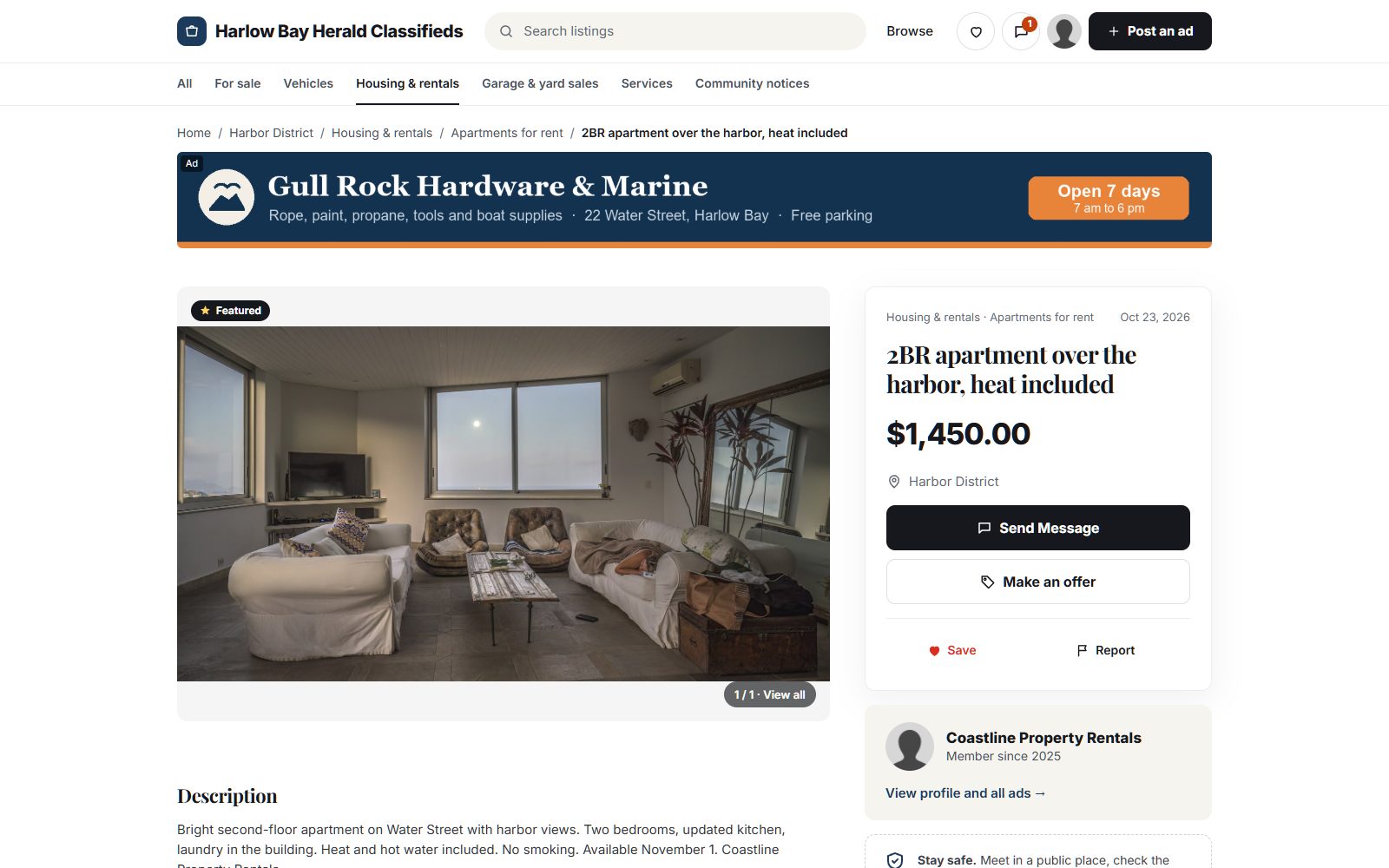
Photo credits
The screenshots show demo sites with made-up sellers. Their photos come from Wikimedia Commons, some cropped or with signs and plates blurred; these ones are under Creative Commons licences: