
How to build an expat classifieds website newcomers trust from day one.
This guide is for founders who want to run the classifieds site for the foreign community in one city: furnished rooms, leaving sales, cars, jobs and services in a language newcomers read. It covers picking the city and the language, the fields that matter abroad, how the site pays, where the first listings come from, scams aimed at new arrivals, search and the arrival seasons.
Free for 15 days · No credit card · Plans from $19 a month
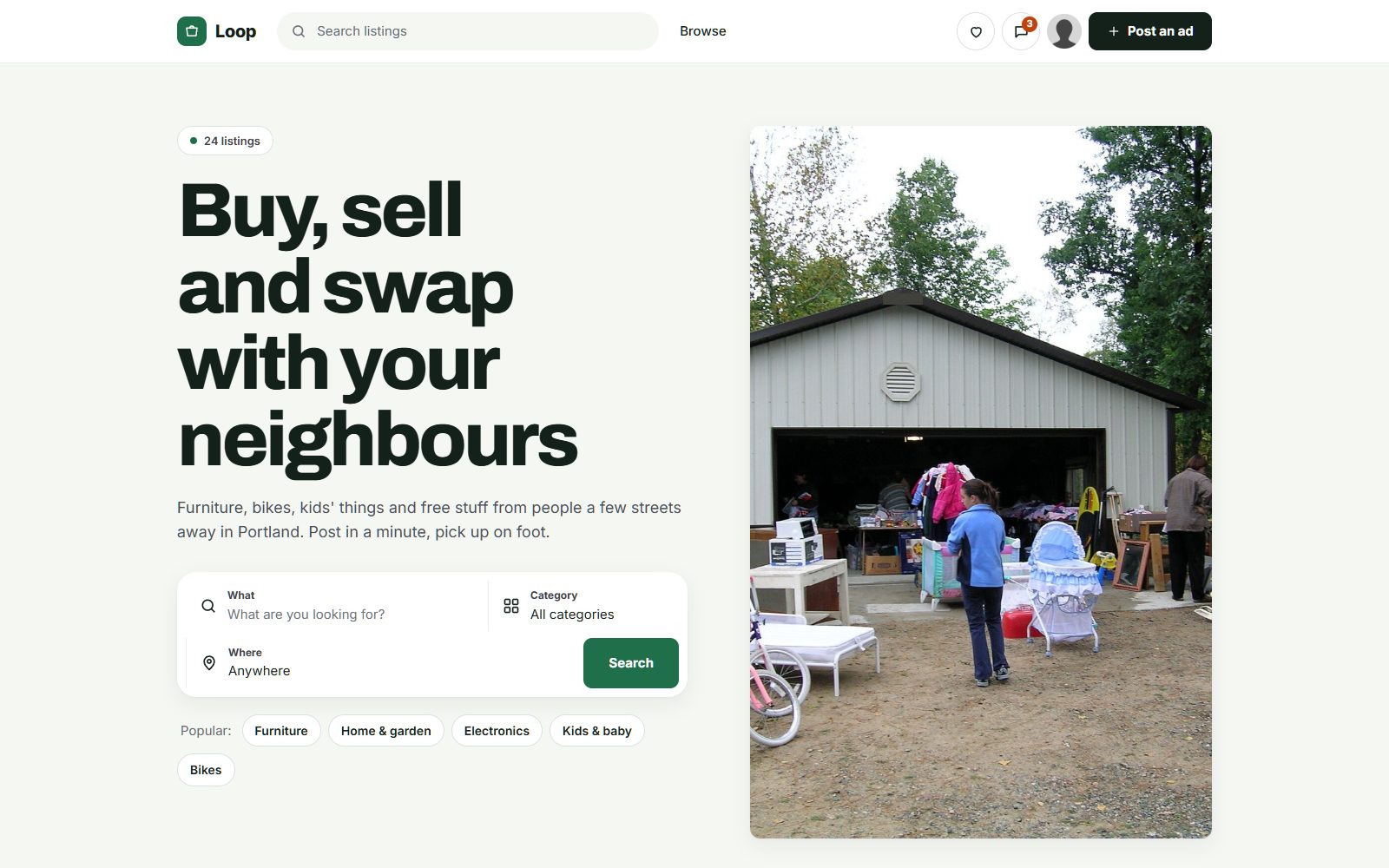
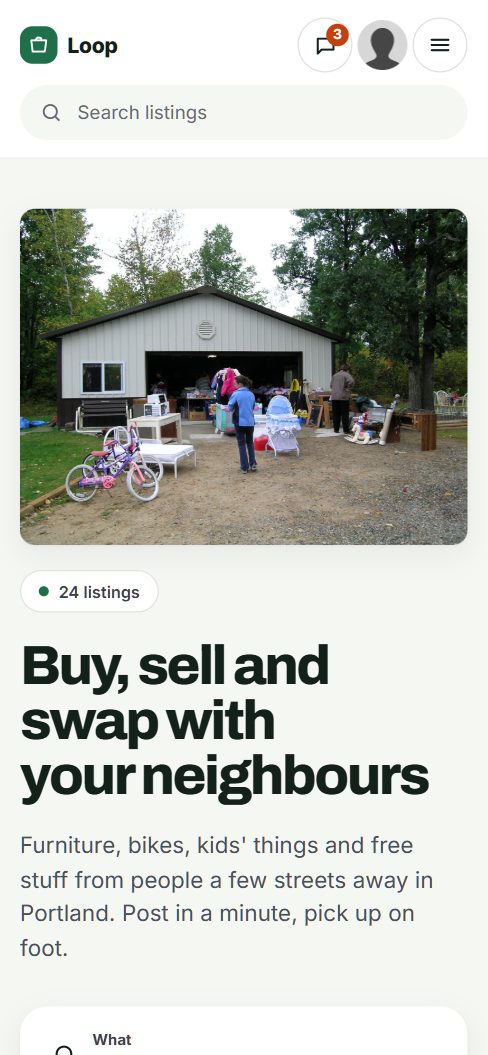
Newcomers abroad need everything at once, in a language they can read.
Someone who has just moved to a new country needs a place to live, a bed, a bike or a car, a phone, maybe a job, and a dentist who speaks their language, usually in the same month. The local classifieds sites are in a language they do not read well yet, use terms they do not know, and are full of listings that assume a local bank account or residency papers.
Meanwhile, people leaving the city at the end of a contract want to sell everything quickly, preferably to someone who will understand the deal. An expat board connects these two groups.
Choosing the angle
- One city with a large foreign community, such as a capital, a tech hub or a retirement destination.
- One language, or two: English plus the local language is a common pair, and some boards serve one nationality in its own language.
- One kind of newcomer if the city has several: corporate transferees, international students, remote workers or retirees all need different things.
Where the trade happens today
Expat Facebook groups, WhatsApp and Telegram chats per neighborhood, notice boards at international schools and churches, coworking spaces, and forums where newcomers ask the same questions every week. They are lively but impossible to search, and the same rental scam gets reposted in every group.
Pick one city and the language its newcomers read, then be more useful than every group chat.
Ask the questions a newcomer cannot ask in the local language yet.
Fields on an expat board should answer what a local site takes for granted and a foreigner worries about. The answers decide whether a listing is any use to them at all.
- Address registration possible as a checkbox for rentals. In some countries, Germany is a well-known example, residents must register their address, and some sublets do not allow it.
- Contract length as a dropdown: one to three months, six months, a year or more.
- Furnished and deposit, since newcomers rarely arrive with furniture.
- Plug and voltage for electronics brought from abroad: local, US or UK plug, dual voltage.
- Car plates as a dropdown for vehicles: local plates, foreign plates, and whether the car is registered in the country.
- Leaving on as a date, so buyers know when a leaving sale must end.
- Languages spoken as checkboxes for services and jobs.
Set up the city's neighborhoods as locations. A newcomer often knows only the area near their office or their child's international school.
| Category | Example listings | Fields buyers filter on |
|---|---|---|
| Rooms and rentals | Furnished rooms, sublets, short contracts, shared apartments | Rent, contract length, furnished, address registration possible |
| Leaving sales | Whole-home sales, bundles, kitchen sets | Leaving on, neighborhood, pickup |
| Furniture and home | Beds, desks, wardrobes, appliances | Condition, plug and voltage, delivery |
| Cars and bikes | Cars, scooters, bikes, child seats | Car plates, year, mileage, price |
| Jobs | Teaching, hospitality, roles needing a second language | Language required, contract type, hours |
| Services | Translators, tutors, movers, cleaners, relocation help | Languages spoken, area, service type |
| Kids and schools | School uniforms, books, sports gear | School, age, condition |
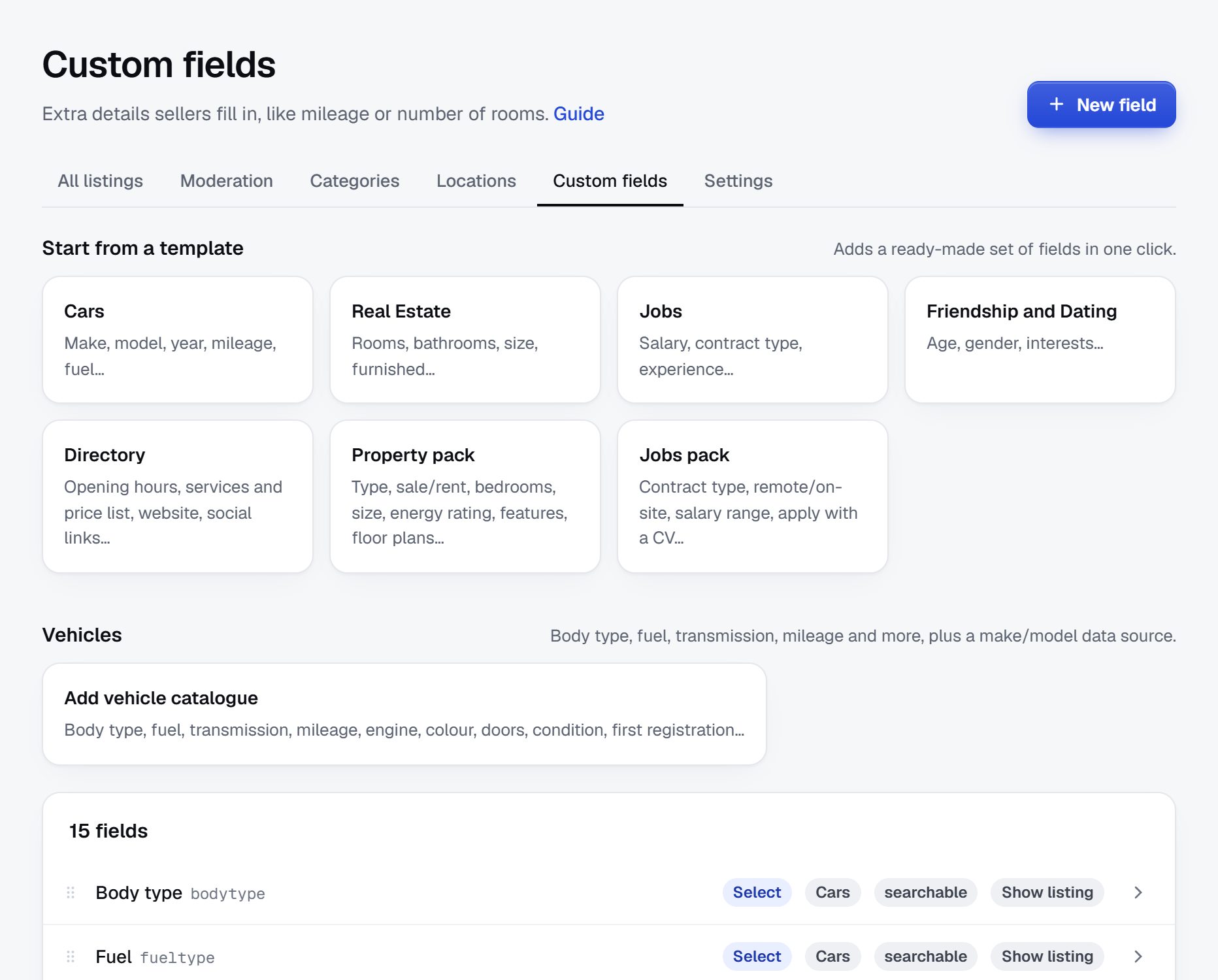
In Yclas, each field can be text, a number, a dropdown, a checkbox or a date, and buyers filter on it in search.
Charge the agents, schools and services that want newcomers as customers.
An expat audience is valuable to a small set of businesses, and they are the ones who should pay. Private newcomers and leavers should post free: they are the reason the audience exists.
Real estate agents and serviced-apartment companies want tenants who arrive with a job and a relocation budget. Relocation firms, international movers, language schools, tutors and English-speaking doctors and dentists want to be found in the first weeks after someone lands. Employers looking for staff who speak a particular language find it hard to reach them anywhere else, and a job post in the right language reaches exactly the people they want.
Be careful with services that need a license or registration in the country, such as immigration advice, tax help or legal services. Ask for proof before you sell them a featured place, because a bad recommendation on your site hurts the people who trusted it most.
Newcomers post free. Agents, schools and relocation services pay to be found.
| Model | Works when | Switch it on |
|---|---|---|
| Pay to post in Rentals for agents | Agents compete for newcomer tenants | Once rentals get steady visits |
| Pay to post in Jobs | Employers need staff with a second language | When job listings start arriving by themselves |
| Memberships for service providers | Tutors, movers and translators post every month | When several post regularly |
| Banner spaces | Language schools, movers and clinics want newcomers | Once you can show monthly visitors |
| Featured leaving sales | Departing residents need a quick sale | Before the summer leaving season |
Find the people leaving, and the organizations that welcome the people arriving.
Departing expats are the fastest source of listings. They have a fixed flight date and a home full of things they cannot take, and they would rather sell to someone who speaks their language.
- Expat groups and chats. Ask recent posters if you can put their leaving sale on the site. A single household can bring thirty listings.
- International schools. Parent associations run uniform swaps and know which families leave in June. Ask if they will share the site.
- Clubs and associations. International women's clubs, chambers of commerce for foreign businesses, and national associations all have newsletters.
- Coworking spaces and language schools. Remote workers and students come and go every month, and the front desk sees all of them.
- Relocation agents and serviced apartments. Their clients need furniture and bikes. Import an agent's rental list from a spreadsheet.
- Service providers who already advertise in English: tutors, translators, movers, cleaners.
Write the posting form and the first listings in the language your newcomers read. A board where half the listings are in the local language and half are not looks unfinished.
Expect rental deposit scams, fake agents and requests to swap currency.
Newcomers are easy targets: they do not know local prices, cannot always view a place before they land, and are used to things working differently at home. Expect scammers to find your site within weeks.
Scams and risks
- Rental deposit scams. A fine apartment at a fair price, a landlord who is abroad, a deposit by wire or a payment app before any viewing. This is the most common scam on expat boards.
- Fake relocation or visa help. Someone promising residence papers, a work permit or a fast appointment for a fee. In many countries, immigration advice is regulated.
- Currency swaps. Offers to exchange money person to person at a good rate, which end in counterfeit notes or a payment that never arrives.
- Discriminating rental ads. Listings that refuse tenants by nationality or religion may break local law.
Rules to set
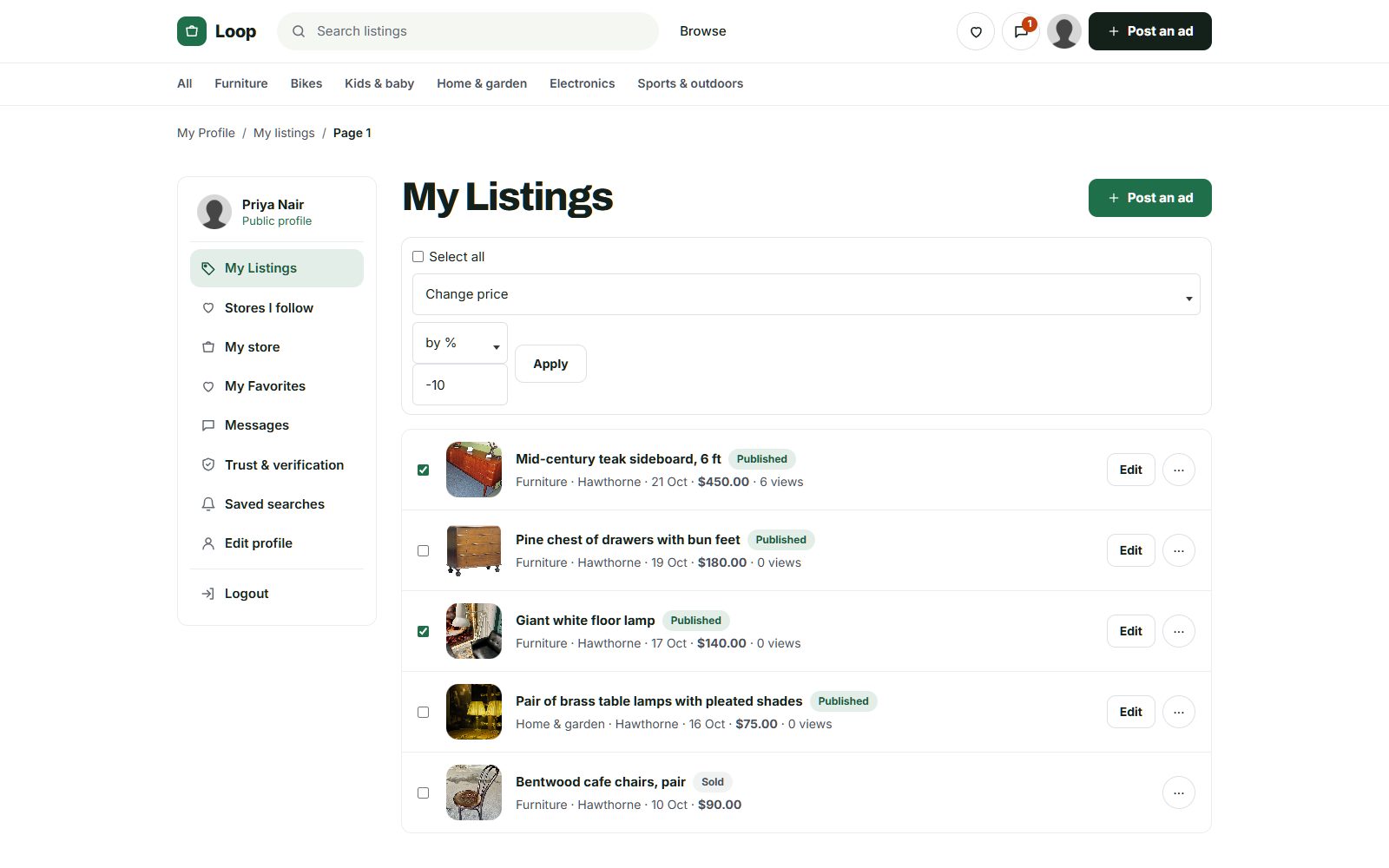
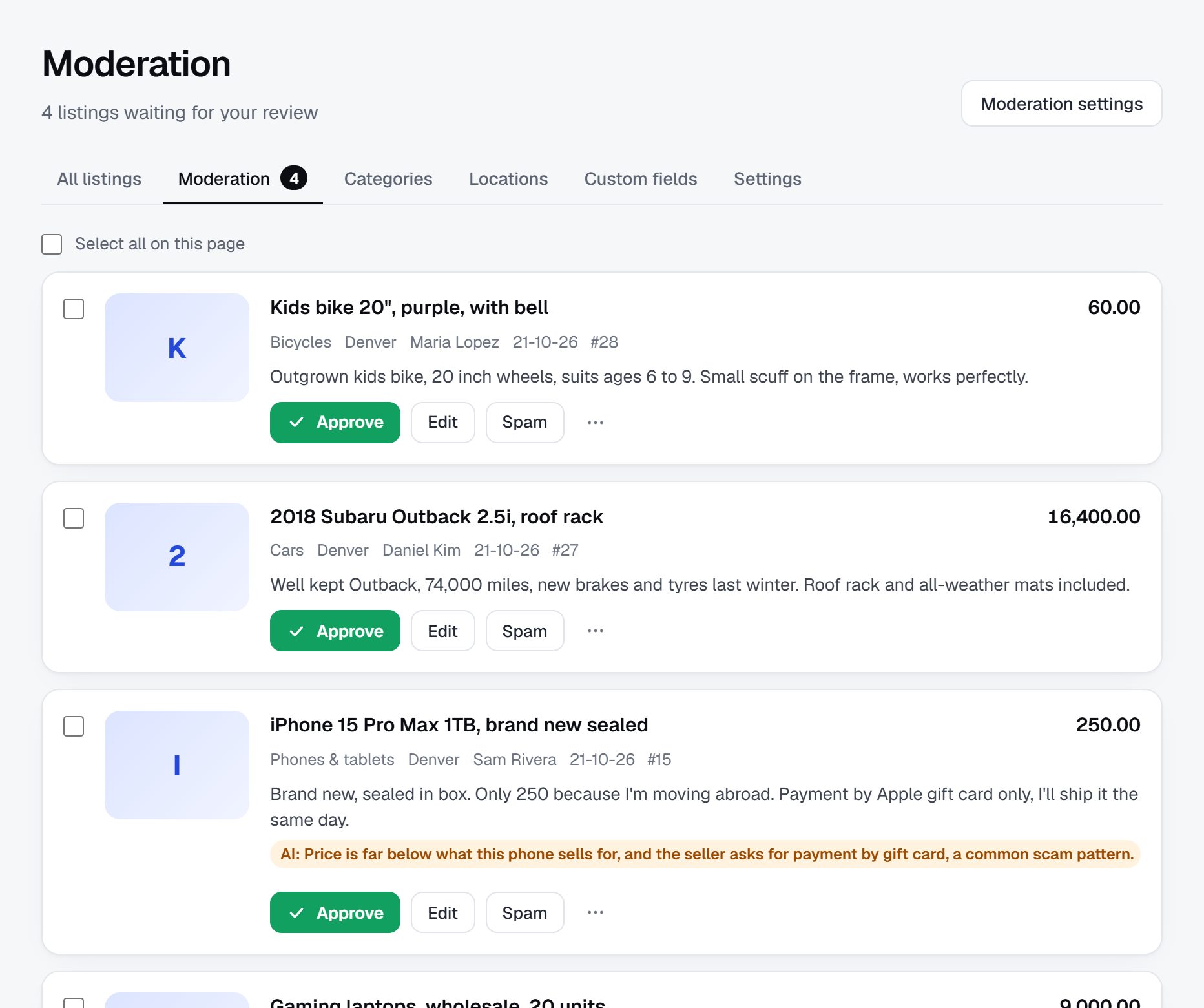
- Approve every listing in Rentals, Jobs and Services while the site is small.
- Ban currency exchange, the sale of documents or appointments, and any promise of a visa or permit.
- Give a verified badge to agents and service providers whose license or registration you have seen.
- Publish a newcomer safety page in every language you serve: view before paying, never pay by gift card or crypto, ask a local friend.
Housing, employment, data protection and consumer rules differ a lot between countries. Check the rules where you operate, preferably with a local professional, before you write your terms.
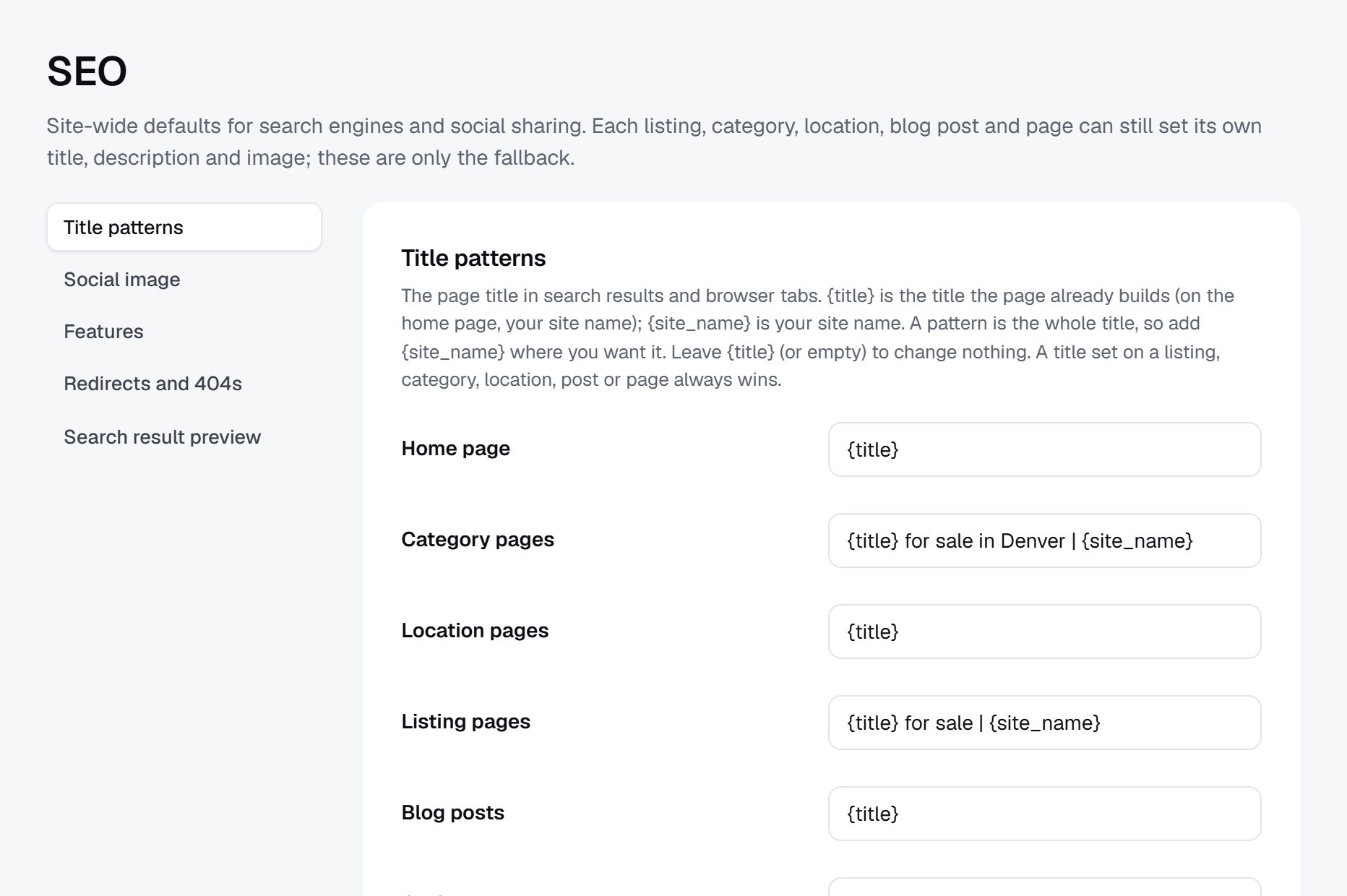
Rank for the city in the newcomer's own language and words.
Expats search in their own language, often before they move, and they mix local words with their own. A search page full of local-language results is exactly the gap your site fills.
- "furnished room Berlin with Anmeldung"
- "leaving Dubai sale furniture"
- "English speaking dentist Mexico City"
- "used car Lisbon for foreigners"
- "short term rental Amsterdam expat"
Pages to build
- Neighborhood pages for rentals and leaving sales, titled in your readers' language.
- A first month guide: where to find furniture, how deposits work, what a typical rental contract looks like.
- A price guide for used furniture, bikes and cars in the city, built from your own sold listings.
- A rental scam page with the local warning signs.
- A services page per need: translators, tutors, movers, English-speaking professionals.
If you serve two languages, give each listing and category its own page in each one, so searches in both languages land on a page written for them. Yclas runs in many languages, which makes a bilingual board straightforward to set up.
Launch before the arrival seasons, when contracts and school years change.
Expat cities have their own rhythm. International school families leave in June and arrive in August. Corporate transfers often start in January or September. University exchange students change every semester. Plan the launch so the site is full of leaving sales just before the busiest arrival month.
Partners worth asking
- Admins of the main expat groups, who are often tired of deleting rental scams.
- International school parent associations and international clubs.
- Relocation firms, coworking spaces and language schools, who meet newcomers every week.
- National associations and chambers of commerce for foreign business owners.
Launch checklist
- The site in the newcomers' language, with neighborhoods set up as locations.
- At least 100 real listings, with rentals, leaving sales and furniture all filled.
- Posting rules with the banned list: currency swaps, documents, visa promises.
- A newcomer safety page linked from every rental listing.
- A home page headline that names the city and who the site is for.
- Flyers with a QR code at coworking spaces, language schools and international schools, where allowed.
A worked example: Tram 28 Exchange, Lisbon, Portugal.
Tram 28 Exchange is a made-up board for the foreign community in Lisbon, Portugal, invented to show how an expat site works in practice. Lisbon suits the example well: its foreign residents include remote workers who stay a few months, families sent by employers for a few years, students and retirees, and they arrive and leave all year. The board runs in English, with Portuguese for categories and safety pages, because many Portuguese landlords and sellers want to reach the newcomers too.
Categories
- Rooms and rentals
- Rooms in shared apartments
- Whole apartments
- Leaving sales
- Furniture and home
- Scooters, bikes and cars
- Jobs
- Services
- Language lessons
- Translators and movers
How it started
The founder, a graphic designer from Ireland who had moved twice inside the city, kept seeing the same fake apartment reposted in three different groups each week. She also noticed that people leaving gave their furniture away in panic during their last weekend because they could not sort through the replies. She set up the board with neighborhoods as locations, added fields for contract length, furnished, deposit and leaving on, and spent a month asking people in the groups who had announced they were leaving whether she could list their sales for them.
A coworking space near the river put a QR code at its front desk, and a Portuguese language school mentioned the site in its welcome email. The founder also added a short-stay option to contract length after noticing that many remote workers wanted rooms for three months or less. The safety page in English and Portuguese, which explains how deposits and written contracts usually work and why nobody should pay before a viewing, became the most visited page within two months.
How it makes money
People posting their own things pay nothing. Agencies and serviced apartment companies pay to post in Rooms and rentals, after showing the founder their registration. Language schools, a relocation firm and an international mover share the banner spaces. Tutors and translators pay a yearly membership to keep their service listings visible. The founder refuses any listing for visa or residence help, because that advice is regulated and a mistake can cost a newcomer their right to stay. Her plan for the second year is a Spanish version of the safety page, since many newcomers from Latin America now arrive in the same neighborhoods.
| Listing | Price | Key details |
|---|---|---|
| Furnished room in a shared apartment, Arroios | €650 per month | Six-month contract in writing, one month deposit, available October 1 |
| Leaving sale, two-bedroom apartment | From €5 per item | Leaving on August 30, Campo de Ourique, pickup on weekends |
| 125cc scooter | €1,400 | Portuguese plates, papers in order, 18,000 km |
| Plug adapters and a 2,000 watt transformer | €25 for the bundle | Brought from the US, pickup near a metro station |
| Portuguese lessons for beginners | €20 per hour | Teacher speaks English and Spanish, online or in person |
The first 90 days: in place before the arrival wave.
Every expat city has an arrival wave: late summer for school families, January and September for many corporate moves, the start of each semester for students. Pick the next one and count back twelve weeks.
Language is the work that newcomers to this niche underestimate. Categories, field names, posting rules and the safety page all need to read naturally in every language you serve, and machine translation alone produces rules nobody takes seriously. Leave time for a native speaker to check them.
The other early task is finding the people who are leaving. Their sales are the stock that brings the newcomers, and they announce themselves in the groups weeks before their flight. Agents and service providers come later, once there is an audience to sell to them.
Keep a simple spreadsheet through all twelve weeks: who is leaving and when, which agents you have checked, and which schools and coworking spaces have agreed to help. On an expat board the people change fast, and that list is what lets you reach the next wave without starting from zero. Plan a short check-in each week with the school or coworking contact who helps most, since the newcomers they meet are your next buyers.
| Weeks | Focus | Done when |
|---|---|---|
| 1-2 | Pick the languages, set up neighborhoods, rental and leaving fields, and the banned list | A test rental shows contract length, deposit and furnished as filters |
| 3-4 | Write the posting rules and newcomer safety page, and have a native speaker check every language | Both pages are published in each language and read naturally to a native speaker |
| 5-6 | Ask people who announced they are leaving to put their sales on the site | At least eight leaving sales are live, with leaving on dates |
| 7-8 | Visit coworking spaces, language schools and international school parent groups | Three of them have agreed to share the link or put up a QR code |
| 9-10 | Check the registration of agents and service providers, then invite them to post | Five verified agents or providers have listings live |
| 11 | Publish the first month guide and the rental scam page | Both are linked from every rental listing, and 100 real listings are live |
| 12 | Launch in the main groups and review every rental and service by hand | Every rental listed in launch week was checked before going live |
Three ways to build an expat board, and why languages decide it.
The needs that set an expat board apart are languages and trust. The site may run in two or three languages, each with its own pages for search, and the rentals section needs a review queue from day one. Everything else, from neighborhoods to fields, is ordinary classifieds work.
Hiring developers for a custom site lets you design the language handling exactly as you want, such as a listing written in Portuguese with an English summary. It is also the slowest and most expensive route, and every new language means more development, not just more translation.
Installing a classifieds script or a WordPress plugin on your own hosting is cheaper. Check carefully how it handles several languages: some translate only the interface, not categories and pages, and some need extra plugins that do not always work together. You also take on updates, backups and the spam that expat boards attract.
A hosted builder that already runs in many languages lets you switch on a second language and translate categories and pages from a control panel. You lose some control over the code, but you avoid building multilingual search pages yourself, which is the hardest part to get right.
Test whichever you choose by posting a listing in each language from a phone, then searching for it from a browser set to that language. If either step feels awkward to you, it will feel worse to someone who arrived last week. Check also that prices show in the local currency and that dates read the way locals write them, since a listing available on 03/10 means two different days to an American and a European.
| Route | Fits when | Watch out for |
|---|---|---|
| Custom build with developers | You need unusual language features and have a budget for them | Cost and time for every added language |
| Script or WordPress plugin on your own hosting | You can run a server and test multilingual plugins | Interfaces translated but categories and pages left in one language |
| Hosted builder with many languages | You want to spend your time on listings, translation and trust | Less control over how languages are handled in the code |
What an expat classifieds site costs to run.
The software is the smallest part of the bill. Most of the cost is your time in the first months: finding the first listings, answering questions and checking what gets posted.
Beyond hosting and a domain, the main expat-specific cost is translation: if you run the site in two languages, budget for a native speaker to check the categories, rules and safety pages. Flyers for schools and coworking spaces cost little.
| Cost | Typical range | On Yclas |
|---|---|---|
| Domain | $10 to $20 a year | Your own, with SSL included |
| Software and hosting | $0 to $100+ a month, plus plugins and updates | Starter $19 a month, Professional $99 |
| Design | $0 to $100 for a theme, or a designer | 109 looks included |
| Payment fees | About 3% per payment | Your Stripe or PayPal fees; Yclas takes nothing |
| Your time | 5 to 10 hours a week at the start | Finding listings, moderation, support |
Mistakes that lose an expat board its newcomers.
- Trusting machine translation for the rules. A safety page that reads like a translation tool wrote it tells newcomers nobody is watching. Write the rules in the main language first, then have a native speaker rewrite each other version.
- Covering a whole country. Newcomers live in one city, and a room three hours away is no use to them. Start with one city and its neighborhoods, and add another only when someone there will help you run it.
- Shutting out local sellers. Many of the best rentals and cars come from locals who are happy to deal with foreigners. Welcome them, and give them posting help in their own language.
- Letting agents flood the rentals. One agency posting the same apartment ten times buries private listings. Limit duplicates in your rules, and charge agents to post once rentals are busy.
- Allowing visa or residence help. These offers look like a service, but in many countries the advice is regulated, and the fake ones take large fees. Ban them, and point newcomers to the official government sources instead.
- Leaving deposits and contracts vague. A rental listing with no contract length or deposit invites misunderstandings that end in lost money. Make both required, and explain in the first month guide how they usually work in your city. Ask too that every price is in the local currency: a page that mixes dollars, euros and pounds confuses buyers and is a favorite trick of fake sellers who claim to be abroad.
- Running it only for your own nationality by accident. A board written for one group's habits can feel closed to others in the same city. Unless you chose one nationality on purpose, use plain language and include the services every newcomer needs. Read your home page as someone from a different continent would, and remove jokes and terms only your own group understands.
- Missing the departures. Most stock comes from people leaving, and they leave on a deadline. Watch the groups for farewells and offer to list a whole home before the movers come.
- Asking for documents in listings. Some landlords ask tenants to post passport scans or pay stubs to prove they are serious, and some sellers include them by accident in photos. Ban personal documents in listings and photos, and tell newcomers to share them only with a verified agent or landlord after a viewing. Blur or remove any photo that shows an ID card, a bank statement or a residence permit.
Expat terms a founder should know.
Newcomers and the people who help them use these terms, though the local word for each one changes from country to country.
| Term | What it means |
|---|---|
| Expat | Someone living outside their home country, often for work, study or retirement. |
| Address registration | Recording where you live with the local authorities, which some countries require and some landlords refuse. |
| Residence permit | The document that allows a foreigner to live in a country for a set period. |
| Tax number | The personal number many countries require before you can rent, sign a phone contract or buy a car. |
| Deposit | Money paid to a landlord at the start of a rental and returned at the end, minus any damage. |
| Notice period | How far ahead a tenant or landlord must say they are ending a rental. |
| Inventory | A signed list of the furniture and condition of a rental at move-in, used to settle the deposit later. |
| Serviced apartment | A furnished apartment rented for weeks or months, with cleaning and bills included. |
| Relocation package | Help an employer pays for when moving staff abroad, such as housing search, movers and paperwork. |
| Leaving sale | A sale of most of a household's belongings before the owners move away. |
| Dual voltage | An appliance that works on both 110 and 220 volt power, so it can move between countries. |
| Trailing partner | The spouse or partner who moves abroad because of the other's job, and often looks for work locally. |
| Local plates | A car registered in the country, as opposed to one still on plates from abroad. |
The same steps for an expat classifieds site on Yclas.
- Describe your nicheThe setup wizard writes the categories, an About page and example listings from one sentence.
- Add fieldsSwitch on a field pack or add the fields your buyers filter on.
- Fill itImport dealer spreadsheets, invite sellers and post your own.
- Set the rulesChoose moderation, banned words and AI checks.
- Go liveChoose a plan, connect your domain, switch on paid listings when it is time.
How much money do I need to start?
Very little: hosting, a domain, and some help checking your translations if the site has two languages. The real investment is time spent in expat groups and with schools and agents.
Which city should I pick?
A city where you live or have lived, with a large foreign community and busy, messy expat groups. Knowing the neighborhoods and the paperwork newcomers face is worth more than a bigger city.
Should the site be in English, the local language or both?
Write it in the language your newcomers read best, often English, and add the local language if locals sell to newcomers too. Each language should have its own pages for search.
What legal points should I check before launch?
Rules on rental ads, job ads, data protection and online platforms differ by country, and some services such as immigration advice need a license. Check the rules where you operate, ideally with a local professional.
How do I stop rental scams?
Approve every rental by hand, ban payment before viewing, verify agents and publish a safety page in every language you serve. Remove any landlord who cannot show the place.
Who pays on an expat site?
Real estate agents, relocation firms, language schools, movers, tutors and employers who need staff with a second language. Private newcomers and leavers post free.
Can I compete with the expat Facebook groups?
Yes, by being searchable, moderated and organized by neighborhood and contract length. Many group admins will happily point rental and sale posts to a site that handles the scams for them.
Is the word expat a problem for the site's name?
Some people use it, others prefer newcomer, international or immigrant, and the choice says something about who the site is for. Look at what your audience calls itself in its own groups, and use that on the home page.
Should locals be allowed to post?
Yes, in most cities. Locals rent out rooms, sell cars and offer services to newcomers, and a board without them misses much of the supply. Ask them to write the listing in the site's main language or with a short translation. A local landlord who answers newcomers patiently often becomes one of the board's most trusted sellers.
How do I moderate listings in a language I do not read?
Ask a trusted bilingual volunteer to review that language, and approve every rental and service by hand. A translation tool is fine for a first check, but do not approve a rental you cannot understand. Ask the volunteer to flag phrases scammers often use in that language, so you learn to spot them yourself.
Can the site serve remote workers who stay only a few months?
Yes, and they are good users: they need short rentals, a bike and a desk, then sell everything again. Add a short-stay option to contract length so they can find each other. Coworking spaces are the best place to reach them, since most work from one in their first weeks.
What if I leave the city myself?
Many expat founders do. Bring in a co-admin early who plans to stay, and keep your list of verified agents, schools and service providers somewhere they can find it.
Related pages.
The parts of Yclas this leans on.
You know what newcomers need. Build the board they find before they land.
Describe your site in a sentence and the setup wizard writes the categories, example listings and a look. Free for 15 days, no credit card.
Start my classifieds site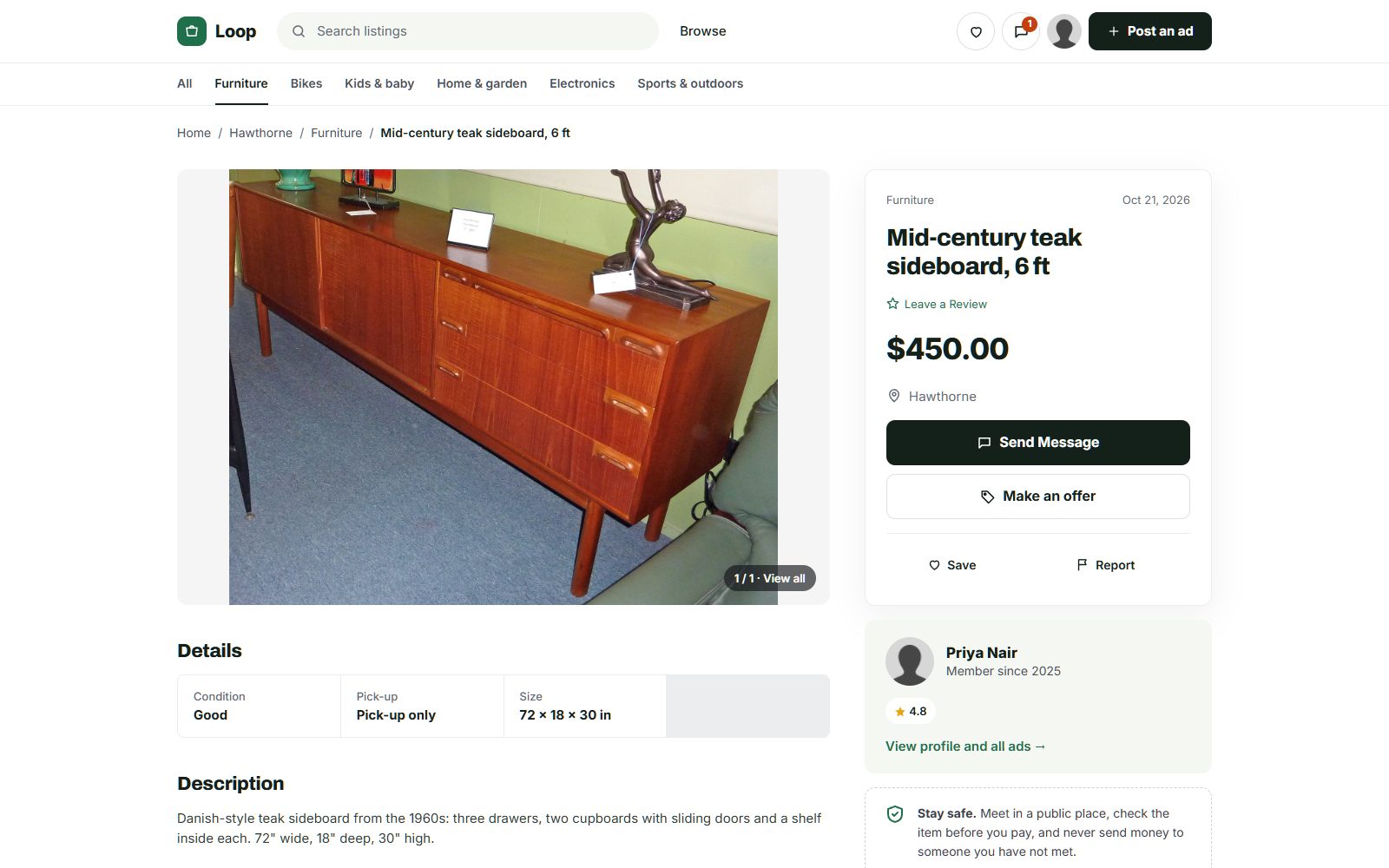
Photo credits
The screenshots show demo sites with made-up sellers. Their photos come from Wikimedia Commons, some cropped or with signs and plates blurred; these ones are under Creative Commons licences:
- McIntosh Teak Sideboard Circa 1960s, CC BY-SA 4.0
- Persian Rug Khorrasan 1, CC BY 2.0
- Fameg bentwood chairs of Poland 01, CC BY-SA 4.0
- View of the "Lost Dining Table and Chairs" in Eltham Palace - geograph.org.uk - 5797282, CC BY-SA 2.0
- Anglepoise Original 1227 Giant Floor Lamp, CC BY-SA 4.0
- Wooden Balance Bike for Kids oak frame with flame red tires, CC BY-SA 4.0
- Baby Crib (49935766018), CC BY 2.0
- Seth Thomas tambour mantel clock ca. 1930, CC BY-SA 4.0
- Rack of rock climbing gear at Horsethief Butte in a Mazamas class, CC BY 4.0
- Sideboard Teak 5 Door Rosando Furniture, CC BY-SA 4.0
- Teak 'Fresco' Sideboard by G Plan angled view, CC BY-SA 4.0