
How to build a campus classifieds website students use every semester.
This guide is for founders who want to run the buy and sell board for one college or university: textbooks, bikes, dorm furniture, sublets, rides and student services. It covers why one campus is the right market, the fields students filter on, how the site makes money, where the first listings come from, campus scams, search and a launch timed to move-out week.
Free for 15 days · No credit card · Plans from $19 a month
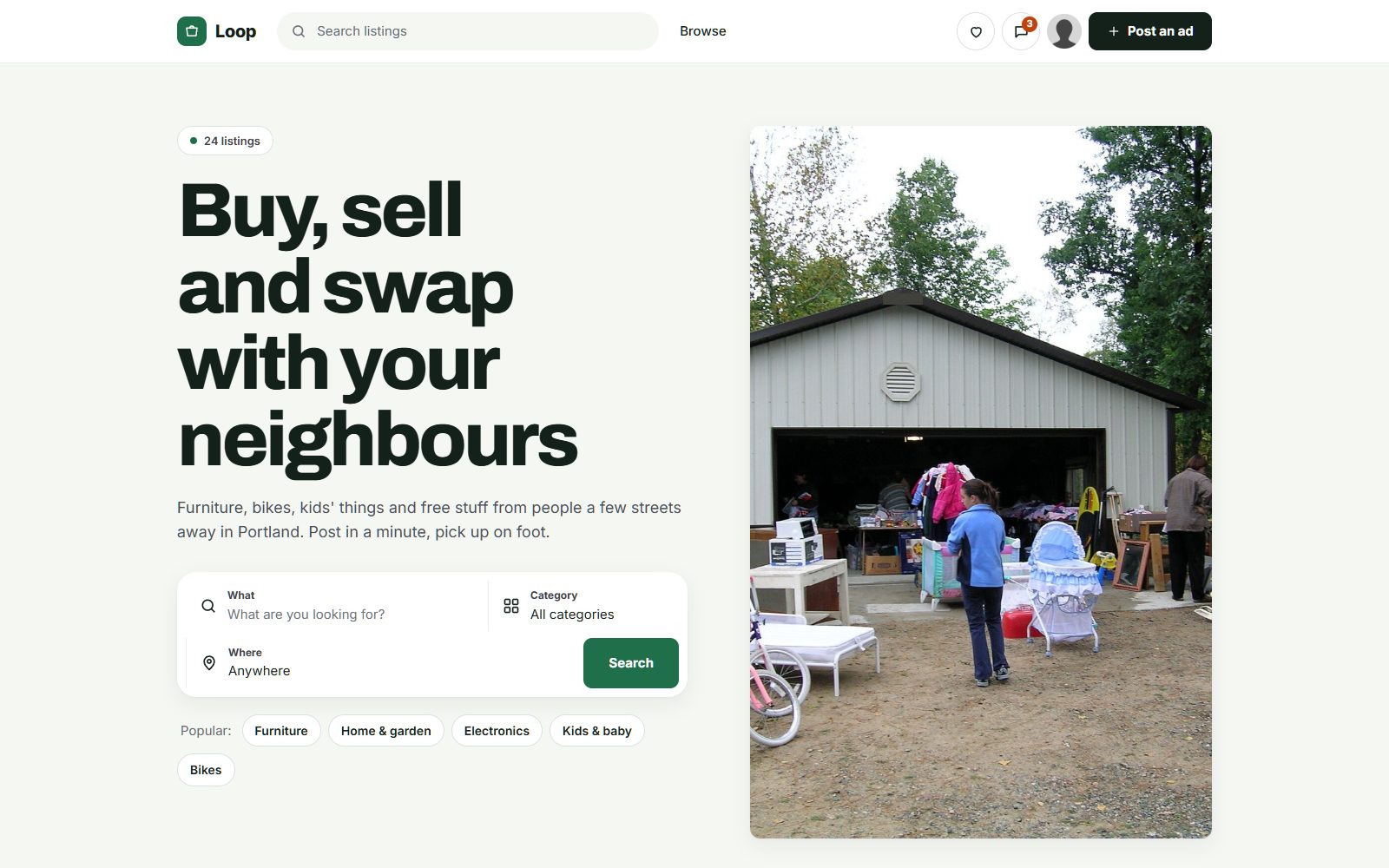
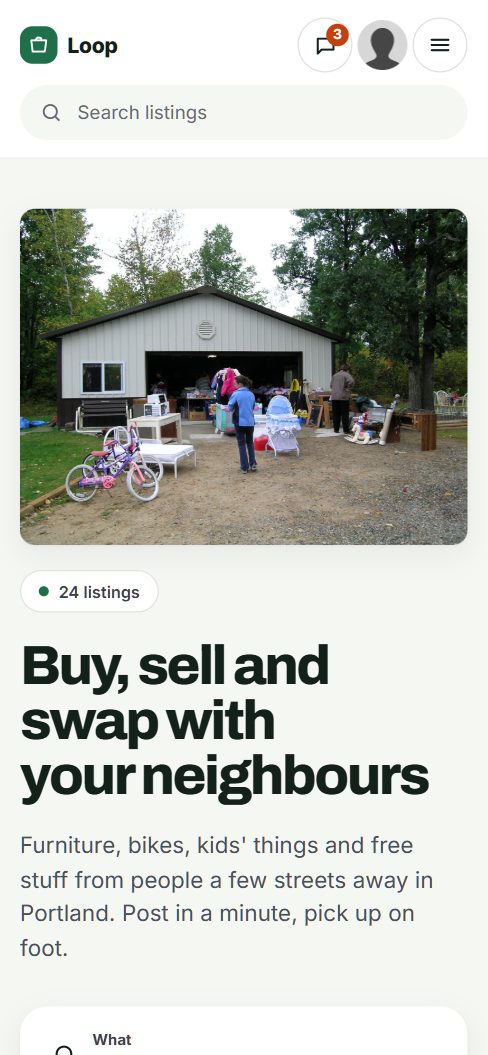
One campus has its own economy, and it turns over every year.
A campus is a town that empties and refills on a schedule. Thousands of students arrive in August needing a desk lamp, a mini fridge and a bike, and leave in May with the same things and nowhere to put them. Every year a new class buys what the last one sold. Few other markets are this predictable.
General marketplaces serve students poorly. A search near campus returns listings from across the city, sellers who want a car ride away, and nothing filtered by course, dorm or pickup on campus. Students want to buy from someone they can meet between classes.
Who uses it
- Students buying and selling books, furniture, electronics, bikes and tickets to campus events.
- Graduating seniors clearing out a whole apartment in one week.
- International students, who arrive with two suitcases and need to furnish a room fast.
- Local businesses near campus: bike shops, pizza places, storage units and landlords.
Where the trade happens today
Class-year Facebook groups, the campus subreddit, group chats, dorm bulletin boards and the free piles that appear outside residence halls in May. Some campuses run a move-out donation drive. All of these are busy for two weeks and useless the rest of the year, and none of them can be searched for a course code.
Start with one campus you know well: its dorms, its course codes and its calendar.
Let students filter by course, pickup spot and the date they need it.
Students search differently from other buyers. A textbook is found by course code more often than by title, furniture has to fit a dorm room and a staircase, and almost everything is picked up on foot. Fields should reflect that.
- Course code and ISBN for books, so a student can type the class they are taking.
- Edition as a dropdown, since an old edition is often useless for a course.
- Pickup spot as a location: north campus, the main library, a named dorm area or the student union.
- Available from as a date, so seniors can list a couch in April and hand it over after finals.
- Frame size and bike type for bikes, the most traded item on many campuses.
- Fits a dorm room as a checkbox for furniture and fridges.
Rides deserve a category too: weekend trips home and airport runs at the start and end of each break, with the date, direction and number of seats.
| Category | Example listings | Fields students filter on |
|---|---|---|
| Textbooks and course materials | Textbooks, lab kits, calculators, art supplies | Course code, ISBN, edition, condition |
| Dorm and apartment | Mini fridges, desks, lamps, futons, rugs | Fits a dorm room, pickup spot, available from |
| Bikes and getting around | Bikes, scooters, locks, helmets | Bike type, frame size, condition, price |
| Electronics | Laptops, monitors, headphones, consoles | Brand, condition, price |
| Sublets and roommates | Summer sublets, spring semester rooms, roommate wanted | Rent, dates, furnished, walk to campus |
| Rides | Weekend rides home, airport runs at break | Date, direction, seats |
| Student services | Tutoring, moving help, photography, haircuts | Subject or service, price per hour |
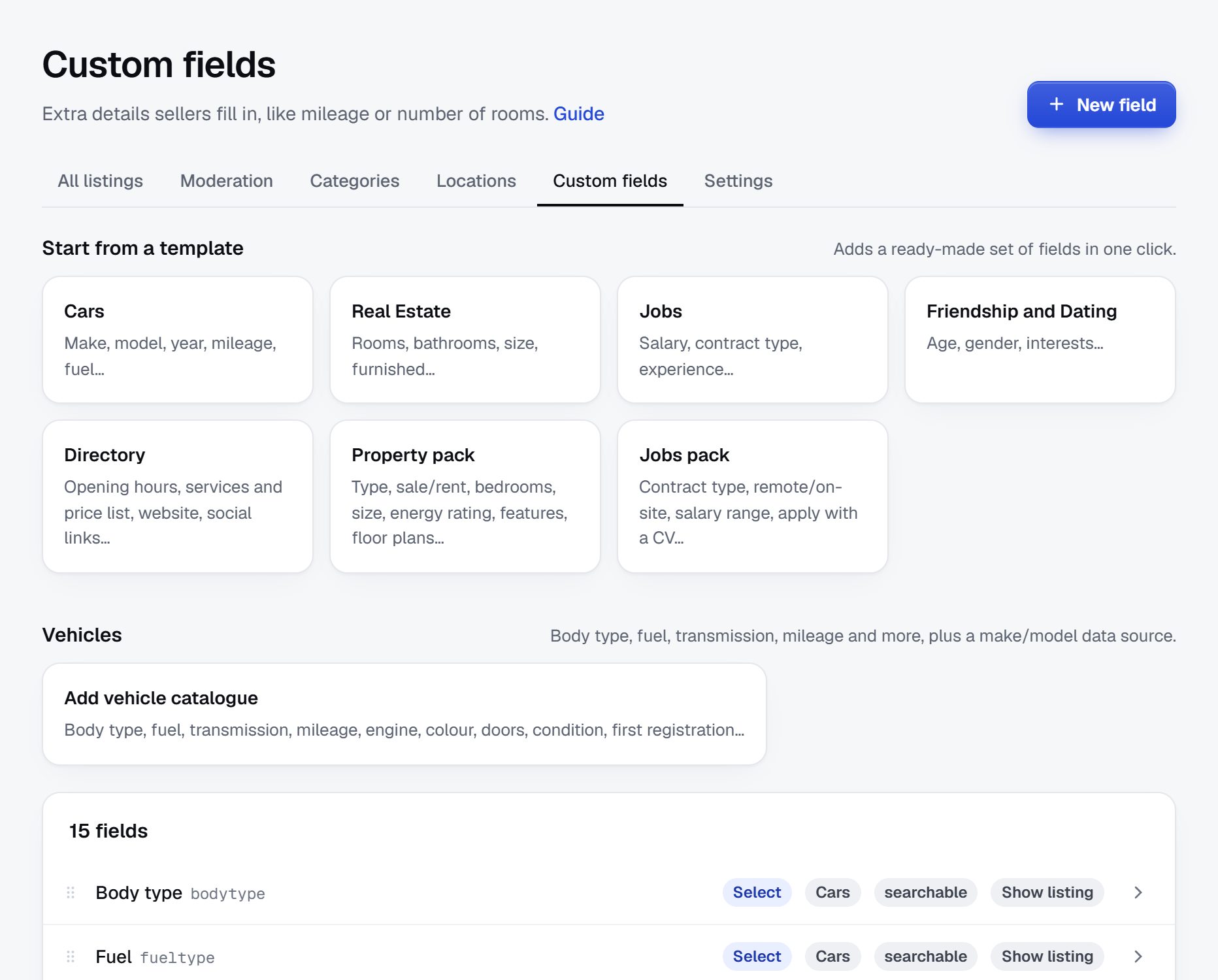
In Yclas, fields like course code or pickup spot are set up once as text, dropdowns, checkboxes or dates, and buyers use them as search filters.
Keep students free, and charge the businesses that want them.
Students will not pay to post a used lamp, and you should not ask them to. A campus board earns its money from the businesses and landlords who want a student audience and find it hard to reach.
Landlords near campus advertise every year and already pay for listings elsewhere, so sublets and rentals from landlords are the first paid category to consider. Pizza places, bike shops, storage companies and phone repair shops want to be seen during move-in week. Storage is a natural fit for move-out: students need somewhere to keep things over summer, and storage firms want them as customers.
Student services are a second source later. A tutor or a student photographer who posts every semester may pay to feature their listing at the start of term.
Watch the calendar. The board is busiest in the first and last weeks of each semester, so time any paid feature to those weeks.
Sell move-in and move-out week banners to local businesses before you sell anything to students.
| Model | Works when | Switch it on |
|---|---|---|
| Pay to post for landlords | Landlords compete for student tenants | Once sublets and rentals get regular visits |
| Banner spaces | Pizza, bike, storage and phone repair shops want students | Before move-in or move-out week |
| Featured listings and bumps | Many listings compete in Textbooks and Dorm | In the first week of each semester |
| Memberships for student services | Tutors and services post every term | When a few post every semester |
Get the first listings during move-out week, when everything is for sale.
The single best week to fill a campus board is the last week of the spring semester. Seniors and students leaving campus have dozens of items each and little time.
- Post for graduating seniors. Offer to list a whole room in one go: photos, prices and a pickup window. One senior can bring twenty listings.
- Work with resident advisors. They see what students leave behind and can share the site in dorm group chats.
- Talk to the sustainability office. Many schools want less going to landfill at move-out, and a resale board fits that goal.
- Ask student clubs. Engineering clubs sell calculators and kits, art clubs sell supplies, outdoor clubs sell gear.
- Bring in course books by course code. Ask a few upperclass students to list the books for the biggest first-year courses.
- Invite local landlords and bike shops to post sublets and used bikes.
Posting has to take a minute on a phone. With AI listing from a photo, a student snaps the textbook or the desk and the AI fills in the title, description, category and price for them to check.
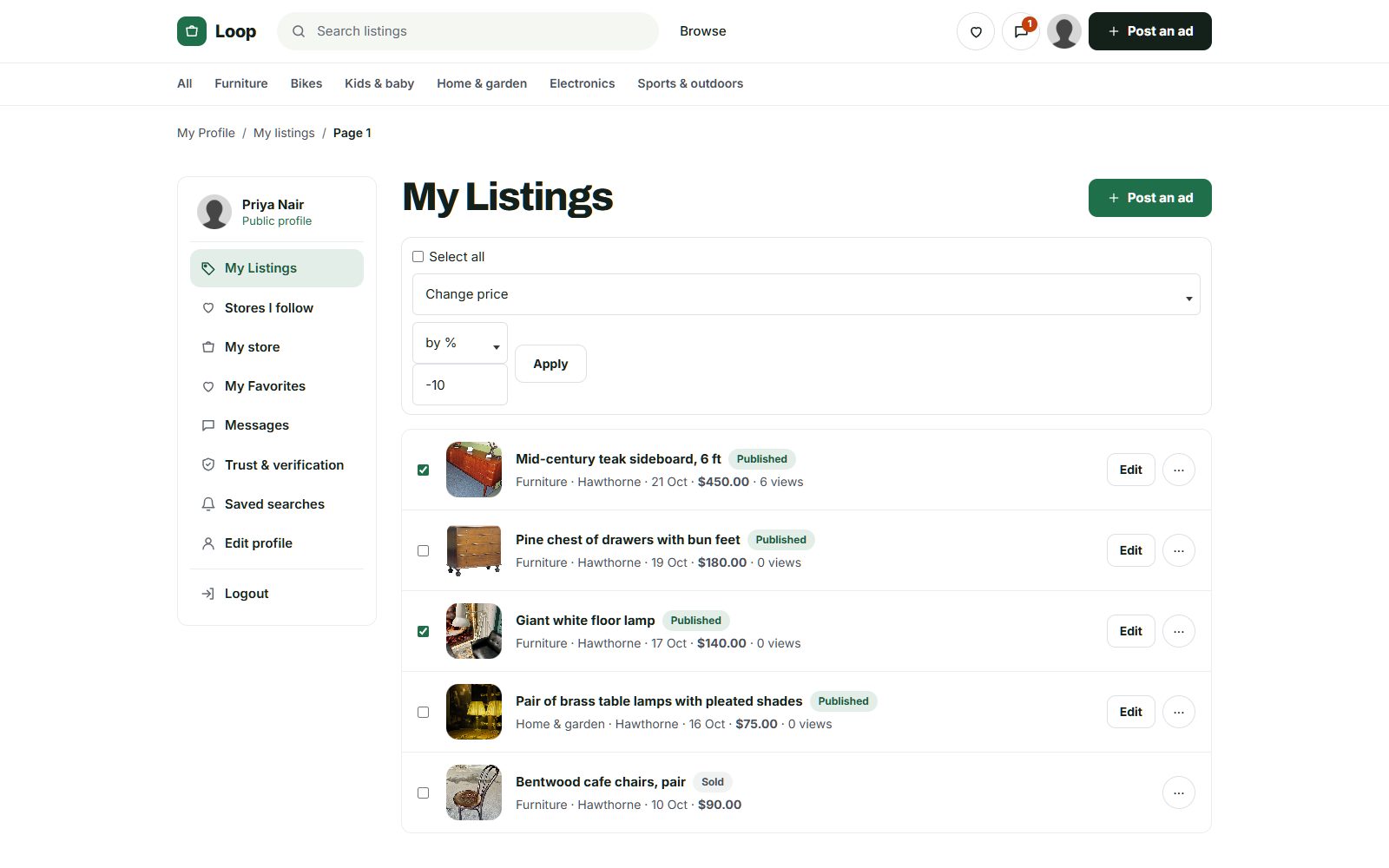
Keep meetings safe, sublets real and banned items off the board.
Campus boards attract a few predictable problems. Most come from people outside the campus who see students as easy targets.
Scams and risks
- Fake sublets. A room near campus, photos taken from another listing, a request for a deposit before a viewing. First-years and international students are the usual victims.
- Fake jobs. Posts offering easy money as a personal assistant or package handler that end in an overpayment or a check scam.
- Ticket scams. Sold-out game or concert tickets that never arrive, or are sold to several buyers.
- Stolen bikes. A cheap bike with no history, sold by someone who will not meet near the bike racks.
Rules to set
- Ban the sale of essays, exam answers, alcohol, prescription drugs and anything your campus does not allow.
- Approve every listing in Sublets, Jobs and Tickets while the site is new.
- Ask bike sellers to list the serial number and suggest buyers check it with the campus or local registry.
- Recommend meeting in public places on campus during the day. Many campus police departments and local police stations offer a safe exchange spot.
Use the university's name only to describe where you are. Do not use its logo or colors in a way that suggests it runs the site. Rules on trademarks, ticket resale and student data differ, so check the rules where you operate and with the school.
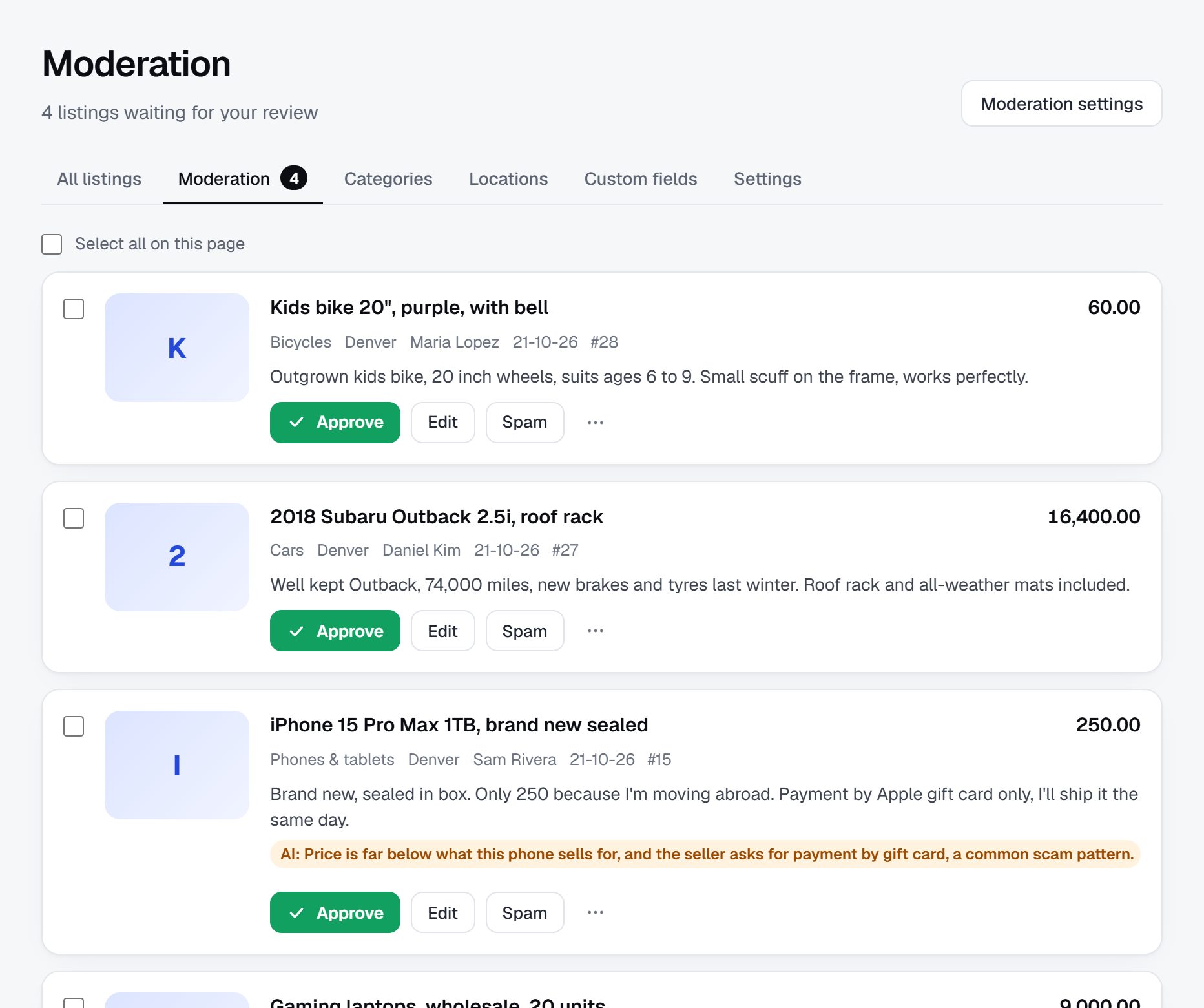
Rank for the campus name next to the thing students need this week.
Students search with the school's short name, often in a hurry. Parents search too, especially before move-in. The searches are short and specific.
- "used textbooks UCLA"
- "mini fridge for sale near campus"
- "sublet spring semester Ann Arbor"
- "cheap bike Madison student"
- "ride to the airport for spring break"
Pages to build
- A page per big first-year course listing the required books on sale, titled with the course code.
- Category pages by campus area: north campus, the main dorms, off-campus streets.
- A move-in buying guide: what to buy used, what to bring, what fits a dorm room.
- A move-out guide: what sells, what to donate, how to price a used futon.
- A sublet safety guide for incoming and international students.
Search traffic follows the calendar. Publish the move-in guide in July and the move-out guide in April, so they are indexed before students start looking. Course book pages need a refresh each term, when reading lists change.
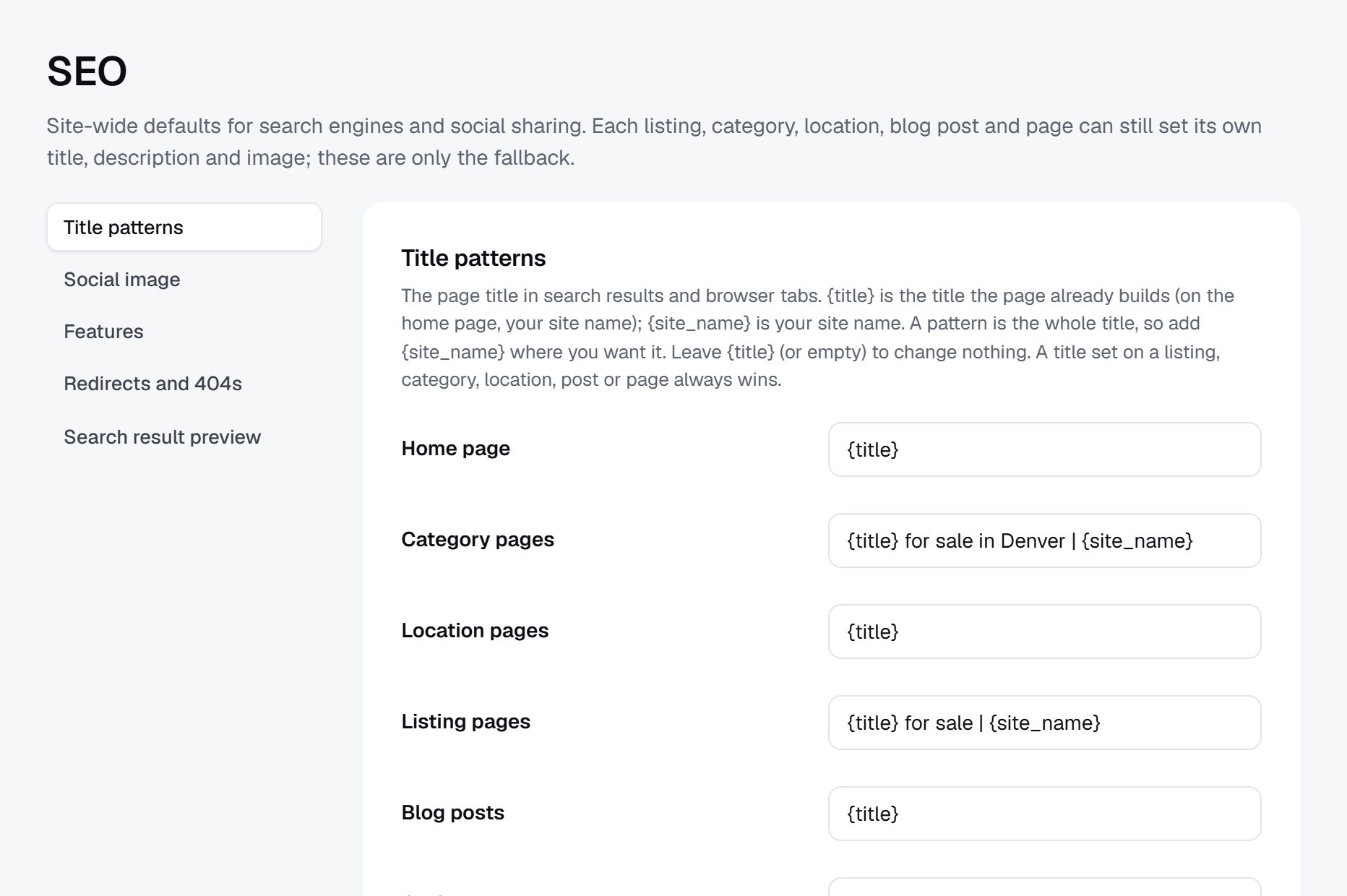
Launch at move-out, then catch the new class at move-in.
A campus board has two launch windows. Move-out week in spring gives you sellers and stock. Move-in week in late summer gives you buyers. The best plan uses both: fill the site in May, keep it alive over summer with sublets and storage, and promote it hard in August.
Partners worth asking
- Student government, which often wants a student resale board and can share it.
- Resident advisors and residence hall councils.
- The sustainability or move-out donation team.
- The international student office, which welcomes new arrivals who need everything at once.
- The student newspaper and campus radio.
Launch checklist
- Campus areas and dorm zones set up as locations.
- Textbooks for the largest first-year courses listed by course code.
- At least 100 real listings across books, dorm items and bikes.
- Posting rules with the banned items list, a sublet safety page and meeting advice.
- A home page headline that names the campus, without the school's logo.
- Flyers with a QR code in dorm lobbies, the library and the student union, where allowed.
A worked example: Hill and Lake Student Exchange, Ithaca, New York.
Hill and Lake Student Exchange is a fictional board for students at one university in Ithaca, New York, made up to show how a campus site comes together. Ithaca is a good test case: the campus sits on a steep hill, many students have no car, winters are long, and the town fills and empties with the academic year. The board serves undergraduates in the dorms, graduate students in apartments down the hill, and the landlords and shops that depend on them.
Categories
- Textbooks and course materials
- By department
- Calculators and lab kits
- Dorm and apartment
- Fridges and microwaves
- Desks, chairs and lamps
- Bikes and winter gear
- Sublets and roommates
- Rides
- Student services
How it started
Two juniors, one in computer science and one in environmental studies, watched the curbs outside the dorms fill with usable furniture every May and the same items get bought new at a big-box store every August. In March they asked the sustainability office whether it would mention a resale board in its move-out emails, and it agreed to share the link without endorsing the site. They spent April collecting listings from seniors in their own buildings, one whole room at a time, and set the pickup spots as campus areas: north campus, west campus, the main library and the streets just below campus.
By the last day of finals the board had several hundred listings, and the August arrivals found mini fridges and desks already waiting. Winter gear became an unexpected category: students from warmer places buy boots and parkas from seniors who are leaving for good. Rides home at Thanksgiving and spring break fill up the week before each break, mostly with students heading to the same few cities.
How it makes money
Students never pay to post. Landlords pay to post in Sublets and rentals, and two storage companies buy the move-out banner every spring. A bike shop and a pizza place take the move-in banner in late August. Tutors can feature a listing in the first two weeks of each semester. The founders treat the income as a way to cover costs and pay a student moderator during the busy weeks, and they have already picked two sophomores to take over when they graduate. Next year they want to add a page for each big first-year course, built from the course codes students actually search.
| Listing | Price | Key details |
|---|---|---|
| Intro to Microeconomics textbook, 9th edition | $45 | Course ECON 101, access code already used, light highlighting |
| Mini fridge, 3.1 cubic feet | $60 | Fits a dorm room, pickup on north campus, available after May 18 |
| Hybrid bike, medium frame | $180 | Serial number listed, new tubes, U-lock included |
| Summer sublet in a four-bedroom house | $750 per month | June 1 to August 15, furnished, eight minutes on foot to campus |
| Winter parka and snow boots, men's medium and size 10 | $70 for both | Worn one winter, pickup at the main library |
The first 90 days: from spring break to the end of finals.
The campus calendar sets the plan. Count back twelve weeks from the last day of spring finals, and you land around the start of spring semester. That leaves time to set up, collect listings during the term and be ready when move-out turns every dorm into a yard sale.
Two rules shape the weeks. First, get the people who already have the students' attention on your side early: resident advisors, the sustainability office and the student government. Second, collect stock before you collect buyers. Seniors with a room to clear are the supply, and next year's first-year students are the demand, so the plan fills the site in spring and leaves the big buyer push for August.
If you start in the fall instead, the same steps work with the end of fall semester as the target, though December is a smaller move-out than May. Students who study abroad, graduate early or switch housing still sell in December, so the steps are the same, only the numbers are smaller. Use the fall run as a rehearsal for the bigger spring week. Note which dorms posted most, which flyers people mentioned and which questions sellers asked, and fix the posting form before May.
| Weeks | Focus | Done when |
|---|---|---|
| 1-2 | Set up campus areas, course code and edition fields, banned items and the sublet safety page | A test textbook listing can be found by course code, and the rules page is published |
| 3-4 | Ask upperclass students to list books for the ten largest first-year courses | Each of those courses has at least two books listed by course code |
| 5-6 | Meet the sustainability office, student government and resident advisors | At least two of them have agreed to share the link in their channels |
| 7-8 | Sign up landlords, a bike shop and a storage company | Three businesses have posted, and a storage company has booked the move-out banner |
| 9-10 | Write the move-out guide and the sublet safety guide, and put up dorm flyers where allowed | Both guides are live, and flyers are up in the dorms, library and student union |
| 11 | Post whole rooms for graduating seniors | 100 real listings are live across books, dorm items and bikes |
| 12 | Run move-out week and review every sublet, ticket and job listing | Every listing in those categories was checked within a day of posting |
Three ways to build a campus board, and the one problem they all face.
Campus boards are often started by students, and the risk every route shares is graduation. A site that depends on one person who leaves in four years needs to be easy to hand over.
Coding it yourself or with classmates is tempting for a computer science student, and it makes a fine portfolio project. The trouble comes later: the code lives in one person's head, and features like course code search, moderation queues, spam filtering and email alerts take months to build properly. Many student-built boards stop when their author takes an internship.
Installing a classifieds script or a WordPress plugin on a rented server is cheaper and quicker than coding from scratch. You still own the updates, the backups and the spam, and spam hits campus boards hard because scammers target students. Plan who will patch the server during finals week, when nobody has time. Write the steps down, because the student who set up the server may be abroad for a semester when it needs attention.
A hosted builder handles the hosting and updates, and you set up course code fields, pickup spots and moderation in a control panel. Handing it over is a matter of adding the next student as an admin. You give up control over the code, which matters only if you want features no builder offers.
Whatever you choose, check how it handles a rush. Move-out week can bring more posts in a few days than the rest of the semester, and a slow or broken site that week costs you a year. Ask any provider or developer what happens when a few hundred students post on the same evening, and test it yourself with friends before the real rush.
| Route | Fits when | Watch out for |
|---|---|---|
| Code it yourself or with classmates | You want to learn and have time to keep building | The site stops when its author graduates or gets busy |
| Script or WordPress plugin on a server | Someone on the team likes running servers | Updates, backups and spam during the busiest weeks |
| Hosted builder | You want a site the next students can take over | Less control over the code, and paying for hosting yourself |
What a campus classifieds site costs to run.
The software is the smallest part of the bill. Most of the cost is your time in the first months: finding the first listings, answering questions and checking what gets posted.
A campus board's extra costs are small: printed flyers and posters for dorms and the student union, and perhaps a table at an orientation fair or club fair if the school charges outside groups for one.
| Cost | Typical range | On Yclas |
|---|---|---|
| Domain | $10 to $20 a year | Your own, with SSL included |
| Software and hosting | $0 to $100+ a month, plus plugins and updates | Starter $19 a month, Professional $99 |
| Design | $0 to $100 for a theme, or a designer | 109 looks included |
| Payment fees | About 3% per payment | Your Stripe or PayPal fees; Yclas takes nothing |
| Your time | 5 to 10 hours a week at the start | Finding listings, moderation, support |
Mistakes that empty a campus board.
- Launching in September. By the time classes start, last year's seniors have gone and their furniture has gone to the curb. Fill the site at the end of spring, when seniors are selling, and promote it in August to the students who are buying.
- Building it around one founder. If only you know the admin login, the board dies the year you graduate. Recruit two younger students in your second year and give them real roles, such as moderating sublets or running the move-in push.
- Letting textbook listings go stale. A professor changes the required edition, and twenty listings for the old one become useless. Refresh the pages for big courses every term, and ask sellers to say which semester they took the course. Before each term, check the bookstore's list for the ten biggest courses and mark the outdated listings.
- Asking students to pay. Even a small posting fee sends students straight back to the class group chat. Keep them free and earn from landlords, storage firms and local shops.
- Leaving tickets unchecked. One sold-out game where three buyers paid for the same seat will travel around campus in a day. Approve ticket listings by hand, and warn buyers to pay only when they can see the ticket transferred.
- No standard meeting spots. When every deal ends with a stranger at a dorm room door, something will go wrong. Set pickup spots in public places, such as the library entrance or the student union, and make them the locations sellers choose from.
- Covering five campuses at once. A city with several colleges looks like a bigger market, but each campus has its own calendar, course codes and slang. Fill one, then add the next with its own locations and pages.
- Forgetting the people who are not students. Parents buy for their children before move-in, international students shop from abroad, and graduate students rent all year. Write a page for each group, and they will find you through search.
- Asking too much at posting time. A student between two lectures will not fill in twelve fields to sell a lamp. Require a photo, a price and a pickup spot everywhere, add course code and edition only in Textbooks, and leave the rest optional.
- Ignoring the free piles. In the last days of move-out, students give away more than they sell, and that is when a board earns goodwill. Add a free category, ask sellers to post what they will leave at the curb, and the new class will remember who furnished their room for nothing.
Campus terms a founder should know.
Students, landlords and bookstores use these terms, and listings make more sense when the board uses them correctly.
| Term | What it means |
|---|---|
| ISBN | The number printed on the back of a book that identifies its exact edition and format. |
| Course code | The department letters and number for a class, such as ECON 101, which students use to find required books. |
| Edition | A version of a textbook, and courses often require one specific edition. |
| International edition | A cheaper printing sold abroad, usually with the same content but different page numbers or covers. |
| Access code | A one-time online code bundled with some new textbooks, usually already used in a secondhand copy. |
| Loose-leaf | A textbook sold as unbound pages for a binder, often hard to resell. |
| Buyback | The campus bookstore paying students for used books at the end of a term, often at a low price. |
| Sublet | Renting your room or apartment to someone else for part of your lease, often for the summer. |
| Lease takeover | A new tenant taking over the rest of a student's lease, usually with the landlord's approval. |
| Move-in week | The days before classes start when new students arrive and buy most of what they need. |
| Move-out week | The end of the spring semester, when students leave and sell or abandon their belongings. |
| RA | A resident advisor, a student who lives in a dorm and looks after the students on their floor. |
| Safe exchange zone | A public, often camera-covered spot where police suggest buyers and sellers meet. |
| OBO | Or best offer: the seller will consider a lower price than the one listed. |
The same steps for a campus classifieds site on Yclas.
- Describe your nicheThe setup wizard writes the categories, an About page and example listings from one sentence.
- Add fieldsSwitch on a field pack or add the fields your buyers filter on.
- Fill itImport dealer spreadsheets, invite sellers and post your own.
- Set the rulesChoose moderation, banned words and AI checks.
- Go liveChoose a plan, connect your domain, switch on paid listings when it is time.
What does it take to start a campus board?
Hosting, a domain and a few weeks of work before move-out week. Most of the effort is posting listings with seniors and getting the link into dorm group chats.
Do I need permission from the university?
You do not usually need it to run an independent site, but you should not use the school's logo or suggest it is official. If you want flyers in dorms or a table at orientation, ask the school, since each campus has its own rules.
How do I compete with class-year Facebook groups?
Offer what the groups cannot: search by course code, filters for pickup spot and price, and listings that stay up for weeks. Invite the group admins to post their own sales on your site.
How does a campus board make money if students pay nothing?
From landlords, local businesses and student services that want a student audience. Banners at move-in, paid landlord listings and featured tutor listings are the usual starting points.
What should I ban from the board?
Essays and exam answers, alcohol, prescription drugs, weapons and anything your campus or local law does not allow. Put the list in your posting rules and approve risky categories by hand.
Should I cover more than one campus?
Not at first. Fill one campus completely before adding a second, and when you do, give each campus its own locations and pages.
What happens over the summer?
Traffic drops, but sublets, storage and early move-in buyers keep it ticking. Use the quiet months to write guides and line up businesses for August.
Can I run a campus board while I am still a student?
Yes, and many are run that way, but plan your weeks around finals. Recruit a co-founder or two from a younger class so the board can carry on when you are busy or after you graduate.
Should posting be limited to students with a school email address?
It keeps outsiders out and lowers the risk of scams, but it also blocks landlords, local shops and graduates who are good sellers. Many boards let anyone read, ask businesses to identify themselves, and approve risky categories by hand.
Can student clubs use the board for fundraisers?
Yes, and it is a good way to bring in members. A club selling tickets to its own event or used gear from its storage room can post like any seller, as long as the sale follows your rules and the school's.
How do I handle textbooks when editions change?
Ask sellers to give the edition and the semester they took the course, and refresh your course pages each term. Mark old editions clearly so first-year students do not buy the wrong book. When a course switches editions, write to the sellers of the old one so they can lower the price or remove it.
What do I do with the site when I graduate?
Hand it over to students you trust, with admin access, the posting rules and a calendar of what happens each month. If nobody can take it on, a student organization or a recent graduate living nearby may keep it going.
Related pages.
The parts of Yclas this leans on.
You know the campus calendar. Build the board students check at every move.
Describe your site in a sentence and the setup wizard writes the categories, example listings and a look. Free for 15 days, no credit card.
Start my classifieds site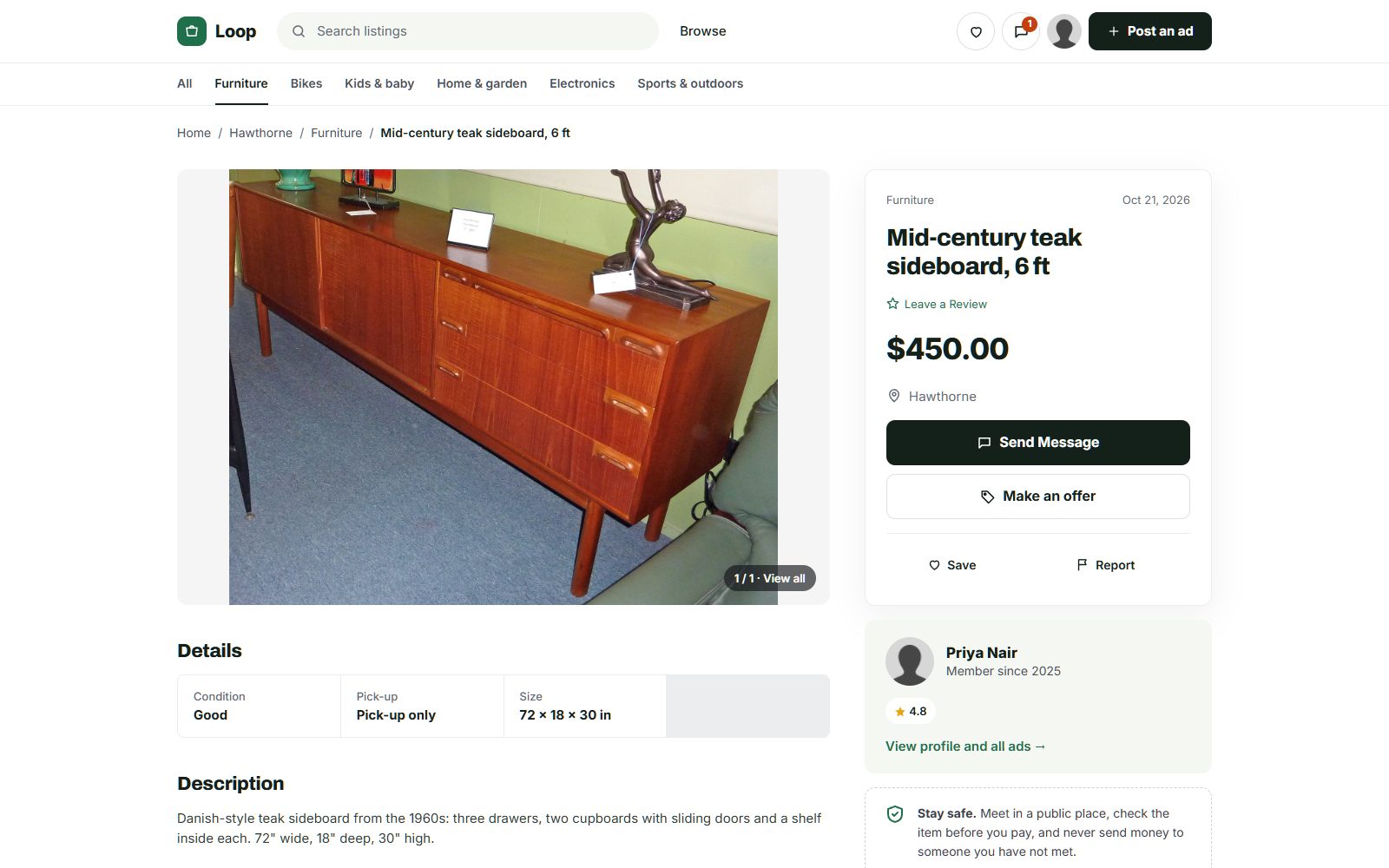
Photo credits
The screenshots show demo sites with made-up sellers. Their photos come from Wikimedia Commons, some cropped or with signs and plates blurred; these ones are under Creative Commons licences:
- McIntosh Teak Sideboard Circa 1960s, CC BY-SA 4.0
- Persian Rug Khorrasan 1, CC BY 2.0
- Fameg bentwood chairs of Poland 01, CC BY-SA 4.0
- View of the "Lost Dining Table and Chairs" in Eltham Palace - geograph.org.uk - 5797282, CC BY-SA 2.0
- Anglepoise Original 1227 Giant Floor Lamp, CC BY-SA 4.0
- Wooden Balance Bike for Kids oak frame with flame red tires, CC BY-SA 4.0
- Baby Crib (49935766018), CC BY 2.0
- Seth Thomas tambour mantel clock ca. 1930, CC BY-SA 4.0
- Rack of rock climbing gear at Horsethief Butte in a Mazamas class, CC BY 4.0
- Sideboard Teak 5 Door Rosando Furniture, CC BY-SA 4.0
- Teak 'Fresco' Sideboard by G Plan angled view, CC BY-SA 4.0