
How to build a food truck classifieds website operators trust.
This guide covers running a classifieds site for food trucks, concession trailers, carts and the kitchen equipment that goes in them: choosing a region or vehicle type, the fields buyers need to judge a build, how the site earns money, where the first 100 listings come from, the permit and lien risks, the searches to rank for, and a launch timed to the vending season.
Free for 15 days · No credit card · Plans from $19 a month
Serve the people starting, upgrading or leaving the food truck trade.
Food trucks change hands often. New operators want a working truck without the cost and wait of a custom build, owners upgrade to bigger rigs, and many sell after a season or two when the business does not work out. Each of those sales needs a buyer who understands what they are looking at.
On a general site, a food truck sits next to delivery vans and camper conversions. Buyers cannot tell whether the kitchen has a fire suppression system, whether it passed a health inspection, or whether the generator is included. A focused site asks those questions on every listing.
Pick your angle
- One state or metro area: trucks are often built to meet local health and fire rules, so many buyers prefer one that already passed inspection nearby.
- Trailers and carts: concession trailers, coffee carts and hot dog carts are cheaper entry points with a large pool of first-time buyers.
- The full kit: trucks plus the equipment, generators and commissary space that go with them.
Where the trade happens today
Operators sell through state food truck association groups, Facebook groups for food truck owners, builder showrooms that take trade-ins, and word of mouth at food truck rallies and festivals. Read those groups for a few weeks and note which sellers ask the same questions twice: those questions become your fields.
Buyers want a truck that will pass inspection where they plan to operate. Help them find one.
Ask for the kitchen, the power and the paperwork, not just the vehicle.
A food truck is two purchases in one: a vehicle and a commercial kitchen. Your fields need to cover both. Keep categories to the type of unit and put the details in filters.
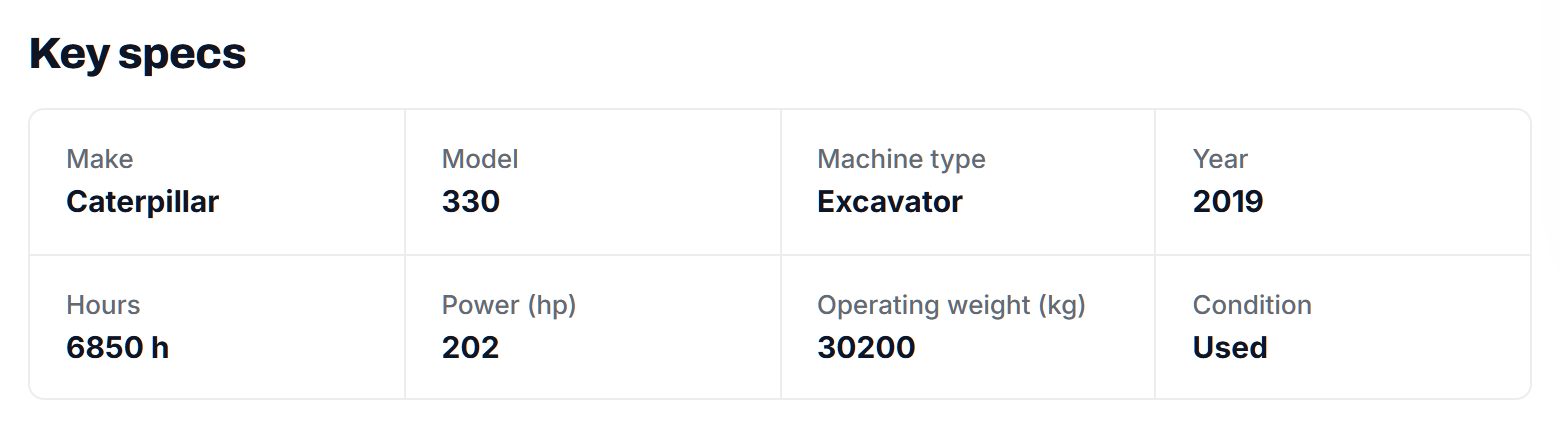
For the vehicle side, ask for year, make, chassis, mileage and length. For the kitchen side, ask for the cooking line, refrigeration, hood and fire suppression, water tanks and sinks. Power is a deal breaker for many buyers, so ask for the generator size or whether the unit runs on shore power or propane.
Paperwork is what separates a useful listing from a vague one. Add a dropdown for last health inspection (passed within a year, older, never inspected) and a field for the state where it was permitted. With Yclas custom fields you can make these dropdowns, numbers or checkboxes, mark them required, and show them as search filters.
Keep a separate category for equipment sold on its own. Operators replace fryers and coolers far more often than trucks.
| Category | Example listings | Fields buyers filter on |
|---|---|---|
| Food trucks | Step vans and box trucks with full kitchens | Year, chassis make, mileage, length, cooking line, fire suppression, generator kW |
| Concession trailers | Enclosed kitchen trailers, BBQ smoker trailers | Length, axles, hood, sinks, water tank size, generator included |
| Carts and kiosks | Coffee carts, hot dog carts, ice cream bikes | Power type, sinks, refrigeration, towable or push |
| Kitchen equipment | Fryers, griddles, prep coolers, hood systems | Fuel type, width, brand, condition, fits truck or trailer |
| Generators and power | Quiet inverter generators, propane setups | Output kW, fuel, noise level, hours |
| Businesses for sale | Trucks sold with brand, menu and event bookings | Location, years trading, included equipment, permit transferable |
Make the inspection and fire suppression fields required: they answer the first question most buyers ask.
Earn from builders, dealers and the businesses that serve operators.
Most private sellers in this niche are selling one truck, often to recover money from a business that did not work out. Keep their posting free, at least until the site has buyers. The repeat posters are custom builders, used food truck dealers and equipment sellers: they have stock every month and pay to reach new operators.
Pay to post makes sense for whole trucks and trailers, which are high-value items, once buyers are messaging sellers. Equipment listings should stay free longer, since they bring operators back between bigger purchases.
Banner spaces fit this niche well. Commissary kitchens, wrap shops, insurance agents, point-of-sale sellers and event organizers all want to reach food truck owners. Sell those spaces once you can show monthly visitors in your area.
A businesses for sale category can carry a higher posting fee later, since the seller is passing on a brand, a menu and event bookings along with the truck. Wait until that category has buyers asking questions before you charge for it.
| Model | Works when | Switch it on |
|---|---|---|
| Pay to post trucks and trailers | A listing is worth thousands to the seller | When those categories get regular buyer messages |
| Featured listings | Buyers browse trucks before the spring season | A few weeks before the vending season starts |
| Builder and dealer memberships | Builders and dealers list new and used units every month | After two or three post regularly |
| Banner spaces | Commissaries, wrap shops and insurers want operators | Once you can show how many local operators visit |
| Bumps | Trucks sit for a few weeks between viewings | When the newest listings page turns over quickly |
Get the first 100 listings from builders, associations and rallies.
Food trucks are not as numerous as cars, so 100 listings should include equipment, trailers and carts as well as complete trucks.
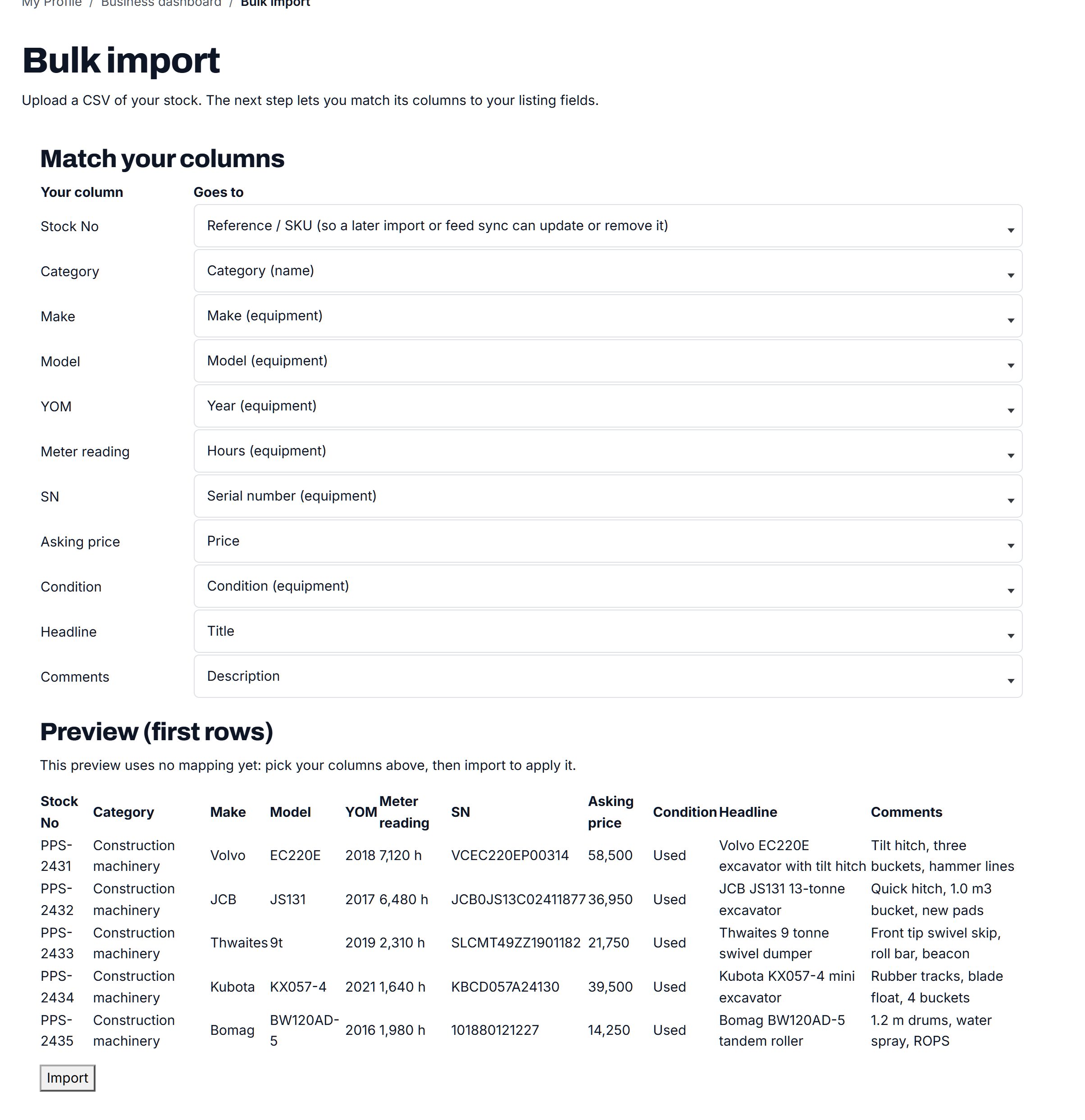
- Custom builders. Builders take trade-ins and often have finished units waiting for buyers. Import their stock list and give them a profile page.
- Used food truck dealers. A handful of dealers specialize in reselling trucks. One dealer can fill a category.
- State and city food truck associations. Offer members a free listing and the association a sponsor mention. Associations know which members are selling or retiring.
- Restaurant equipment auctions. Buyers at auctions often resell what they do not need. Ask them to post the extras.
- Rallies and festivals. Walk the lineup at a food truck rally and talk to operators. Many know someone selling, or plan to upgrade.
- Facebook groups. Contact owners who posted a truck in the last few weeks and offer to list it with the inspection details buyers ask for.
Photos make or break these listings: buyers want to see the kitchen line, the hood and the generator. With Yclas a seller can photograph the truck and let AI draft the title, description, category and price for them to check.
A complete truck with inspection details is worth ten vague ones. Ask for the details on every listing.
Watch for trucks with liens, failed inspections and fake builds.
A food truck is a large purchase, often made by a first-time owner with savings or a small business loan. That makes buyers easy targets and mistakes expensive.
Risks typical of this niche
- Trucks with finance still owed. Many trucks are bought on equipment loans. A seller who still owes money may not be able to transfer a clean title.
- Builds that will not pass inspection. A truck permitted in one county may need changes to pass in another: hood size, sink count, water tank capacity or fire suppression.
- Fake listings. Photos copied from builder websites, priced well below market, with a seller who wants a deposit by wire before a viewing.
- Missing parts after the sale. The generator or a fryer shown in photos is not included on pickup.
Rules and moderation
- Require sellers to state title status, whether finance is owed, and what equipment is included.
- Approve every truck listing while the site is small, and hold listings priced far below others.
- Remove listings that ask for deposits before viewing.
Advice for buyers
Publish a buyer checklist: inspect the truck in person, run the stove and refrigeration, check the VIN and ask for a lien search, ask the local health and fire departments what they require before you buy, and get the equipment list in writing. Permit and inspection rules differ by city, county and state, so check the rules where you operate rather than relying on the seller.

Rank for the unit type, the city and the questions new operators ask.
Many searches in this niche come from people who have not bought a truck yet. They search for trucks to buy, and they also search for what it takes to start. Both are your audience.
- "used food trucks for sale in Texas"
- "concession trailer for sale near me"
- "coffee cart for sale"
- "how much does a used food truck cost"
- "food truck with fire suppression for sale"
Pages to build
- Category plus location pages: food trucks in each state and major city you cover, trailers in each region.
- Unit pages by cuisine or setup: pizza trucks with ovens, BBQ smoker trailers, coffee trucks with espresso machines.
- Buying guides: what to inspect on a used truck, trailer versus truck, how to read an equipment list.
- Price guides: price ranges for step vans, trailers and carts in your area, based on your own listings.
Content ideas
Write a guide to permits in your launch city, written in general terms and pointing readers to the local health department. Add a checklist for buying a truck from another state, and short profiles of operators who bought through the site. These pages earn links from local business blogs and food truck groups.
Launch in one city before the spring vending season.
Food truck buying peaks before the busy season. In most of the US that means late winter and early spring, when operators prepare for festivals, farmers markets and summer events. In warm states the season is longer, but buyers still plan around big local events. Launch six to eight weeks before your area's first major rally or market season opens.
First community
Start with one metro area that has an active food truck association and a few builders or dealers nearby. Local permit rules make a local site more useful, and it is easier to meet operators in person.
Partners
- Food truck associations, for newsletters and member lists.
- Commissary kitchens, which see every operator in the area each week.
- Event organizers who book trucks for festivals and markets.
- Builders and dealers, for stock and trade-ins.
Launch checklist
- Categories for trucks, trailers, carts, equipment and businesses for sale.
- Required fields for inspection status, fire suppression and power.
- At least 100 real listings, with complete trucks and trailers from your launch city.
- A buyer checklist and posting rules linked from every listing.
- A city page and a permits overview page ready for search.
- Your own domain with SSL and a headline that names the city or state.
Be at the first rally of the season with listings already live.
A worked example: a food truck site for the Carolina coast.
Take Lowcountry Rolling Kitchens, a fictional classifieds site for food trucks, trailers and carts along coastal South Carolina, from the Charleston area down toward Beaufort. The founder ran a shaved ice trailer for three summers. When she sold it, the buyer drove in from two states away, and the trailer needed a new sink setup before the county would permit it. That sale gave her the idea: a site where every unit says where it was last inspected and what came with it.
Categories
- Food trucks
- Step vans
- Box trucks
- Concession trailers
- Kitchen trailers
- Smoker trailers
- Carts and kiosks
- Kitchen equipment and power
- Businesses for sale
Who it serves
Buyers are first-time operators testing a menu before opening a restaurant, festival vendors who work the coastal event calendar, and restaurants that want a truck for catering. Sellers include two custom builders who take trade-ins, one used truck dealer, and operators leaving the trade after a season or two.
How it started
She launched in January, aiming to be full before the spring festivals. The builders gave her their trade-in lists, which she imported in an afternoon. The local food truck association put the site in its member newsletter in exchange for a free sponsor spot, and she spent two Saturdays at the busiest commissary kitchen handing out cards and photographing equipment that operators wanted gone.
Her one firm rule was that every truck and trailer listing had to give the county where it last passed inspection, whether fire suppression was fitted, and a written list of included equipment. Buyers began quoting that list in their first message, which is how she knew it worked. Listings that skipped the list were sent back with a short note, and most sellers fixed them the same day.
How it makes money
Private posting was free for the first year. Builder memberships came in month four, once both builders were getting inquiries every week. Banner spaces went to a commissary kitchen and a vehicle wrap shop, and featured listings sold in February and March. In year two she added a fee to post complete trucks and trailers, and kept carts and equipment free.
| Listing | Price | Key details |
|---|---|---|
| 2014 18-foot step van with full kitchen | $68,000 | Passed county inspection in March, hood with fire suppression, 7 kW generator |
| 2019 16-foot smoker trailer | $32,000 | Offset smoker on rear porch, three-compartment sink, 40-gallon fresh water tank |
| Coffee cart with two-group espresso machine | $11,500 | Hand sink, refrigerator under counter, runs on shore power |
| 2017 12-foot shaved ice trailer | $14,000 | Single axle, ice shaver and chest freezer included, propane generator |
| Taco truck business for sale | $95,000 | 2016 truck, brand and recipes, booked festival dates, permit transfer subject to county approval |
The first 90 days: be full before the first big rally.
Count the 90 days back from the event that opens your area's vending season: the first major rally, the farmers market opening day or a large spring festival. Operators shop for trucks in the weeks before it, and the ones who miss it often wait until the next year.
The work splits into three stages. First, build fields that cover the vehicle, the kitchen and the paperwork, because a site that cannot show inspection status is no better than the groups. Second, bring in the sellers who hold more than one unit: builders, dealers and equipment resellers. Third, go where operators already gather each week, which in this trade means commissary kitchens, association meetings and the events themselves.
Measure two things from the start: the share of truck and trailer listings with inspection and equipment details filled in, and the number of messages buyers send. A site with fewer listings but complete ones will win the serious buyers.
| Weeks | Focus | Done when |
|---|---|---|
| 1-2 | Choose the metro area; list builders, dealers, associations and commissaries | A contact list of 25 sellers and partners, including the association's organizer |
| 3-4 | Categories and required fields for inspection, fire suppression, power, finance owed and included equipment | A test truck listing shows every field and filters by generator size and county |
| 5-6 | Sign builders and the used truck dealer; import their stock | Two builders and one dealer live with 40 units between them |
| 7-8 | Write the buyer checklist and a general permits overview for the city | Both pages live and linked from every truck and trailer listing |
| 9 | Visit commissary kitchens and book an association newsletter mention | Cards up at two commissaries and a newsletter date confirmed |
| 10-11 | Fill carts and equipment; message recent sellers in owner groups | 100 live listings, at least 30 of them complete trucks or trailers |
| 12 | Attend the first rally of the season and publish city pages | A table or walk-through at the rally done and the first sale reported by a seller |
Three ways to build it, judged by what food truck buyers need.
A food truck listing carries more detail than most vehicles: the chassis, the kitchen line, the power source, the inspection history and the equipment list. Trailers, carts and businesses for sale each need a different set of those fields. Buyers want large photo galleries of the kitchen, and many sellers are posting from a phone between shifts. Whatever you choose has to handle fields that change by category and keep posting quick.
Hiring developers for a custom build is worth considering only if you plan features well beyond listings, such as storing inspection reports or connecting to a lien search provider. For a listings site it means a long wait and a large first bill, and you will still need someone on call when something breaks during festival season.
Running a classifieds script or a WordPress plugin on your own hosting keeps costs low and the code in your hands. In exchange you look after updates, backups, spam and security yourself. Test early whether the software can show a generator size filter on trucks while hiding it on equipment, because that kind of category-specific field is what this niche depends on.
A hosted builder such as Yclas suits founders who would rather spend their time at commissaries than on servers. Fields, filters, photo uploads and paid extras are already there. You give up some control over the inner workings, which matters little for a site whose value is the listings and the local relationships behind them.
| Route | Fits when | Watch out for |
|---|---|---|
| Custom build | You want inspection report storage, lien checks or other tools built in | A long build, high cost and no one to fix it mid-season unless you pay for support |
| Classifieds script on your hosting | You or a partner can run a server and want full control | Category-specific fields may be limited; security and spam are your job |
| WordPress plus a plugin | You already publish a food truck blog or association site | Plugin updates that break listings, and slow pages with big photo galleries |
| Hosted builder | You want to launch before the vending season with filters ready | Less control over the underlying code |
What a food truck classifieds site costs to run.
The software is the smallest part of the bill. Most of the cost is your time in the first months: finding the first listings, answering questions and checking what gets posted.
Expect to spend on event passes or a table at food truck rallies and association meetings, and perhaps a sponsor slot in an association newsletter. If you offer lien or title searches to buyers, those are paid per report from the provider.
| Cost | Typical range | On Yclas |
|---|---|---|
| Domain | $10 to $20 a year | Your own, with SSL included |
| Software and hosting | $0 to $100+ a month, plus plugins and updates | Starter $19 a month, Professional $99 |
| Design | $0 to $100 for a theme, or a designer | 109 looks included |
| Payment fees | About 3% per payment | Your Stripe or PayPal fees; Yclas takes nothing |
| Your time | 5 to 10 hours a week at the start | Finding listings, moderation, support |
Mistakes that stall a food truck classifieds site.
- Treating a food truck like a van. If the form asks for mileage and color but not the cooking line, hood or water tanks, buyers learn nothing they need. Build the kitchen fields first and the vehicle fields second, and make the ones inspectors ask about required.
- Leaving out where the unit was permitted. A trailer that passed in one county may need a bigger water tank or another sink to pass in the next. Without a state and county field, buyers travel and then find the unit will not work for them, and they blame your site. Ask for the county and the date of the last inspection on every truck, trailer and cart.
- Mixing businesses for sale with trucks. A truck sold with a brand, recipes and event bookings is a different purchase from a bare truck, and the price shows it. In the same category, the business listings look overpriced and the trucks look cheap. Keep them apart.
- Launching in midsummer. By then most operators have bought what they need for the year. A launch in late winter catches the buyers preparing for spring, while a summer launch catches the sellers who are giving up, and nobody to buy from them. Pick the date from the event calendar, not from when the site happens to be ready.
- No written equipment list. The generator in the photos is the classic dispute in this trade: the buyer arrives and it has been sold separately. Require an included equipment field on every truck and trailer, and tell buyers to get it in writing. Hold listings whose photos show equipment the list leaves out.
- Ignoring money owed on the truck. Many trucks are bought with equipment loans. If you never ask whether finance is outstanding, sooner or later a buyer pays for a truck the seller could not legally hand over. A simple yes or no field, plus advice to ask for a lien search, covers most of the risk.
- Waiting for complete trucks to fill the site. There are not enough trucks in one metro to make a busy site on their own. Carts, fryers, coolers and generators post more often and bring operators back every week.
- Writing permit advice as if it were law. Health and fire rules differ by city, county and state and change over time. Describe the questions buyers should ask and point them to the local health department, rather than promising what will pass.
- Forgetting the commissary. Many operators are required to work from a licensed commissary, and they see each other there every week. Ignoring it means missing the cheapest, most trusted channel you have.
Food truck terms a founder should know.
Operators, builders and inspectors use these words constantly, and your fields should use them too.
| Term | What it means |
|---|---|
| Step van | A tall delivery-style truck with a walk-in body, the most common base for a food truck. |
| Build-out | The kitchen fitted inside a truck or trailer: cooking line, hood, sinks, refrigeration and wiring. |
| Commissary | A licensed commercial kitchen where operators prep food, store supplies, fill water and dump waste. |
| Fire suppression system | A system above the cooking line that sprays an extinguishing agent onto a fire; often called an Ansul system after one brand. |
| Hood | The exhaust canopy over the cooking equipment; grease-producing equipment usually needs one. |
| Three-compartment sink | A sink with separate basins to wash, rinse and sanitize, required for dishwashing in many areas. |
| Fresh and gray water tanks | Tanks for clean water and for used water; inspectors often set minimum sizes for each. |
| Shore power | Running the unit from a plug-in electrical supply instead of a generator. |
| kW | Kilowatts, the output rating used to size a generator against the equipment it must power. |
| Mobile food unit permit | The health permit a truck, trailer or cart needs to sell food; names and rules vary by place. |
| GVWR | Gross vehicle weight rating, the most a truck or trailer may weigh fully loaded. |
| Lien | A lender's legal claim on a truck until its loan is paid off. |
| Turnkey | Sold ready to trade, usually with equipment and sometimes with brand and bookings included. |
The same steps for a food truck classifieds site on Yclas.
- Describe your nicheThe setup wizard writes the categories, an About page and example listings from one sentence.
- Add fieldsSwitch on a field pack or add the fields your buyers filter on.
- Fill itImport dealer spreadsheets, invite sellers and post your own.
- Set the rulesChoose moderation, banned words and AI checks.
- Go liveChoose a plan, connect your domain, switch on paid listings when it is time.
Do I need a license to run a food truck classifieds site?
Generally not for listing trucks that others sell, since you are not a dealer or broker. If you start taking commissions or handling the sale yourself, check the rules where you operate.
Should I include businesses for sale, or only trucks?
Include them as a separate category. Some sellers want to pass on the brand, menu and bookings with the truck, and buyers who want a running business look for exactly that.
How do I help buyers avoid trucks that will not pass inspection?
Ask every seller for the last inspection date and the state or county where the truck was permitted, and tell buyers to check local requirements before they pay.
Which food truck sellers should I contact first?
Start with custom builders and used truck dealers, then food truck associations, commissary kitchens and rallies. Facebook groups for owners are full of trucks posted with no details.
How does a food truck classifieds site make money?
Pay to post for whole trucks and trailers, featured listings before the season, memberships for builders and dealers, and banner spaces for commissaries, wrap shops and insurers.
Can I compete with general sites like Craigslist and Facebook Marketplace?
Yes, by asking for what they do not: inspection status, fire suppression, generator size and included equipment. Serious buyers want those answers before they travel.
What about trucks sold across state lines?
Allow them, but mark the state where each truck was permitted and remind buyers that rules differ, so a truck may need work to pass where they plan to operate.
Should builders be allowed to list trucks they have not built yet?
Yes, as a separate condition value such as built to order, with the expected build time stated. Buyers who need a unit this season can then filter those out.
Can operators list a truck for rent or lease instead of sale?
Give rentals their own category so they do not crowd the sales listings. Booking with a calendar and taking deposits online are features of the Marketplace plan; on a classifieds site, renters contact the owner by message.
What photos should a truck or trailer listing include?
The outside from both sides, the full cooking line, the hood and suppression nozzles, the sinks, the generator or power hookup, and the inspection sticker if there is one.
Should sellers be allowed to hide the price?
Allow it only for businesses for sale, where the price often depends on what the buyer takes over. For trucks, trailers and equipment, a price keeps buyers comparing on your site instead of leaving.
What do I do if a sale falls apart over missing equipment?
You are not a party to the sale, but you can remove listings that misdescribe what is included and point to your rule that the equipment list is part of the listing. Encourage buyers to sign a written bill of sale with the list attached.
Related pages.
The parts of Yclas this leans on.
You have the plan. Now build your food truck site.
Describe your site in a sentence and the setup wizard writes the categories, example listings and a look. Free for 15 days, no credit card.
Start my classifieds site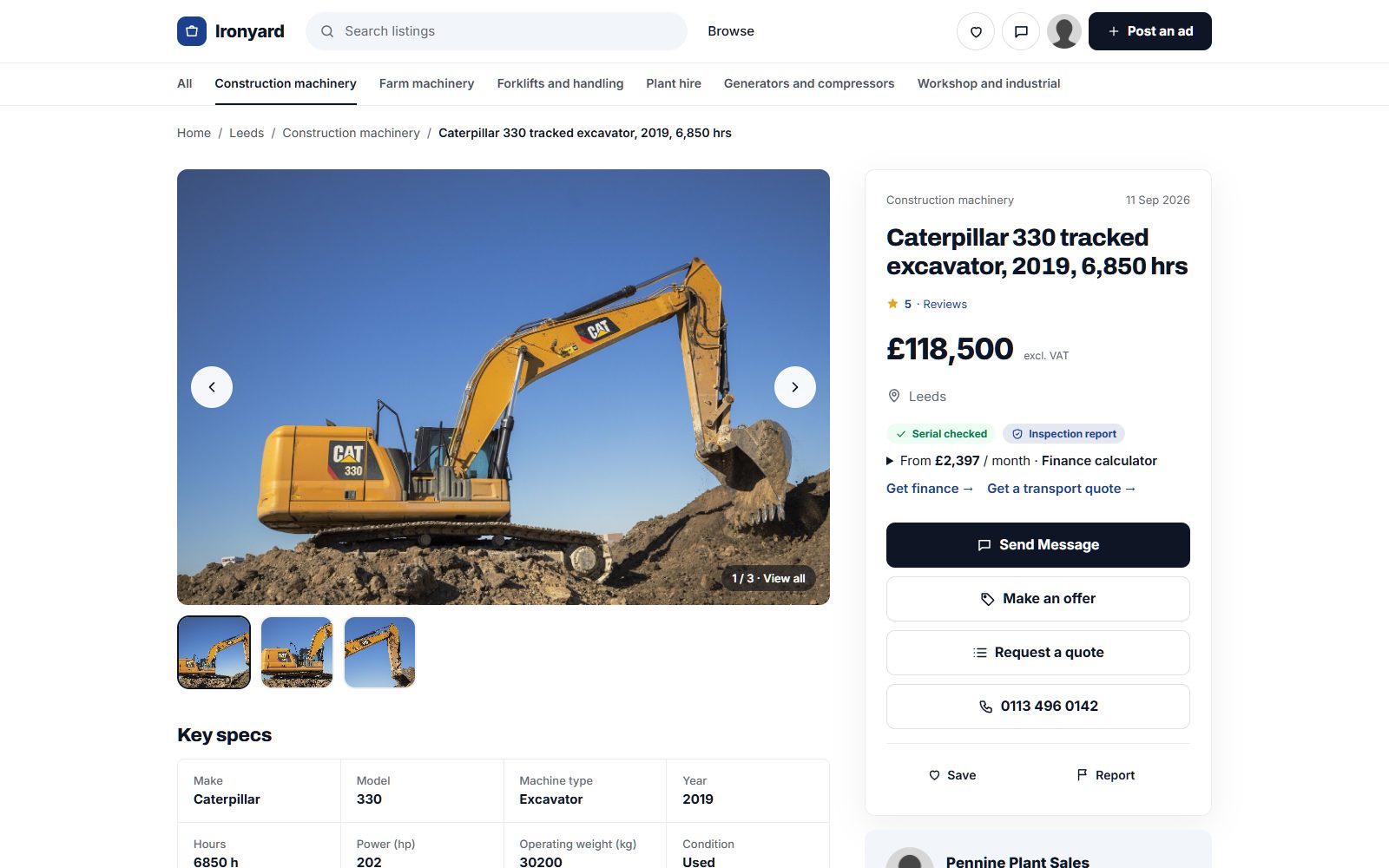
Photo credits
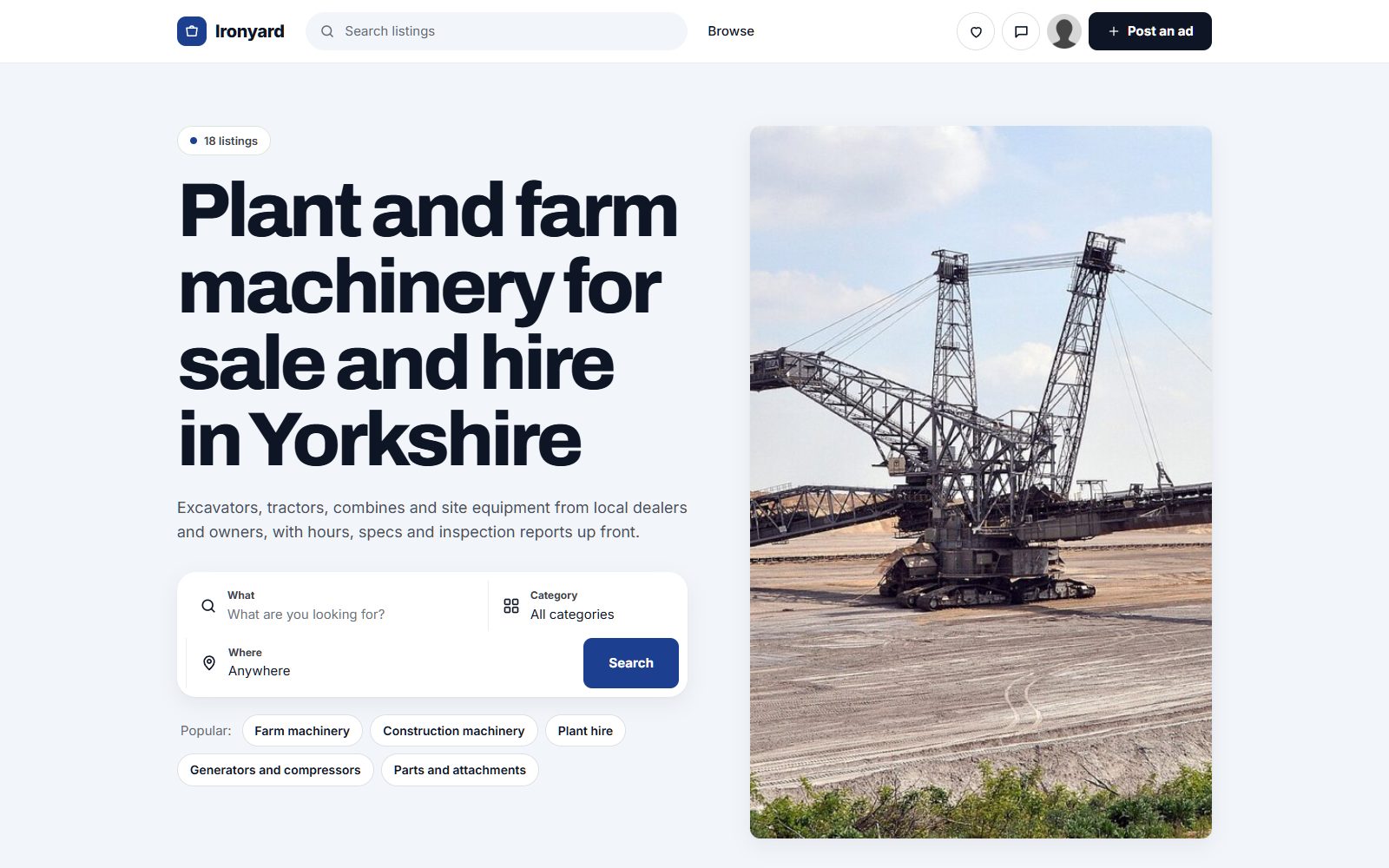
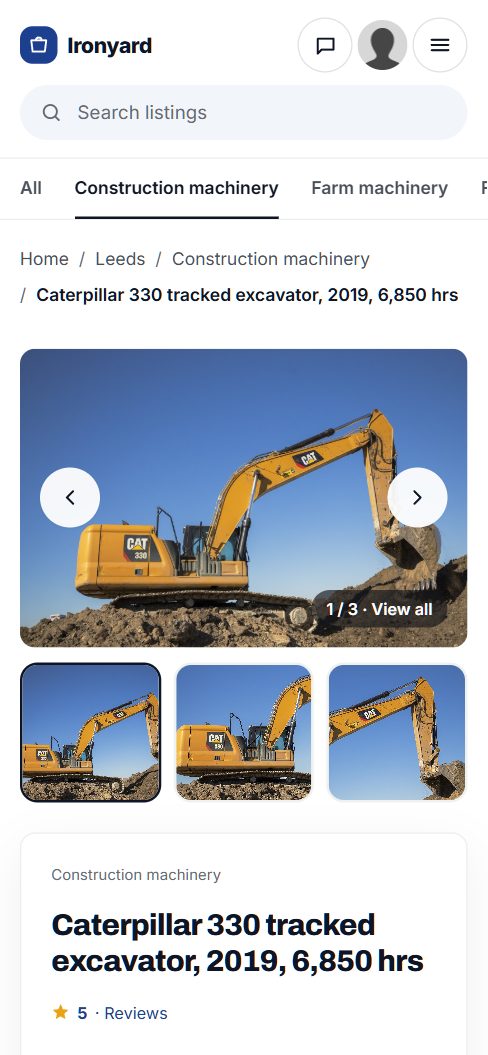
The screenshots show demo sites with made-up sellers. Their photos come from Wikimedia Commons, some cropped or with signs and plates blurred; these ones are under Creative Commons licences:
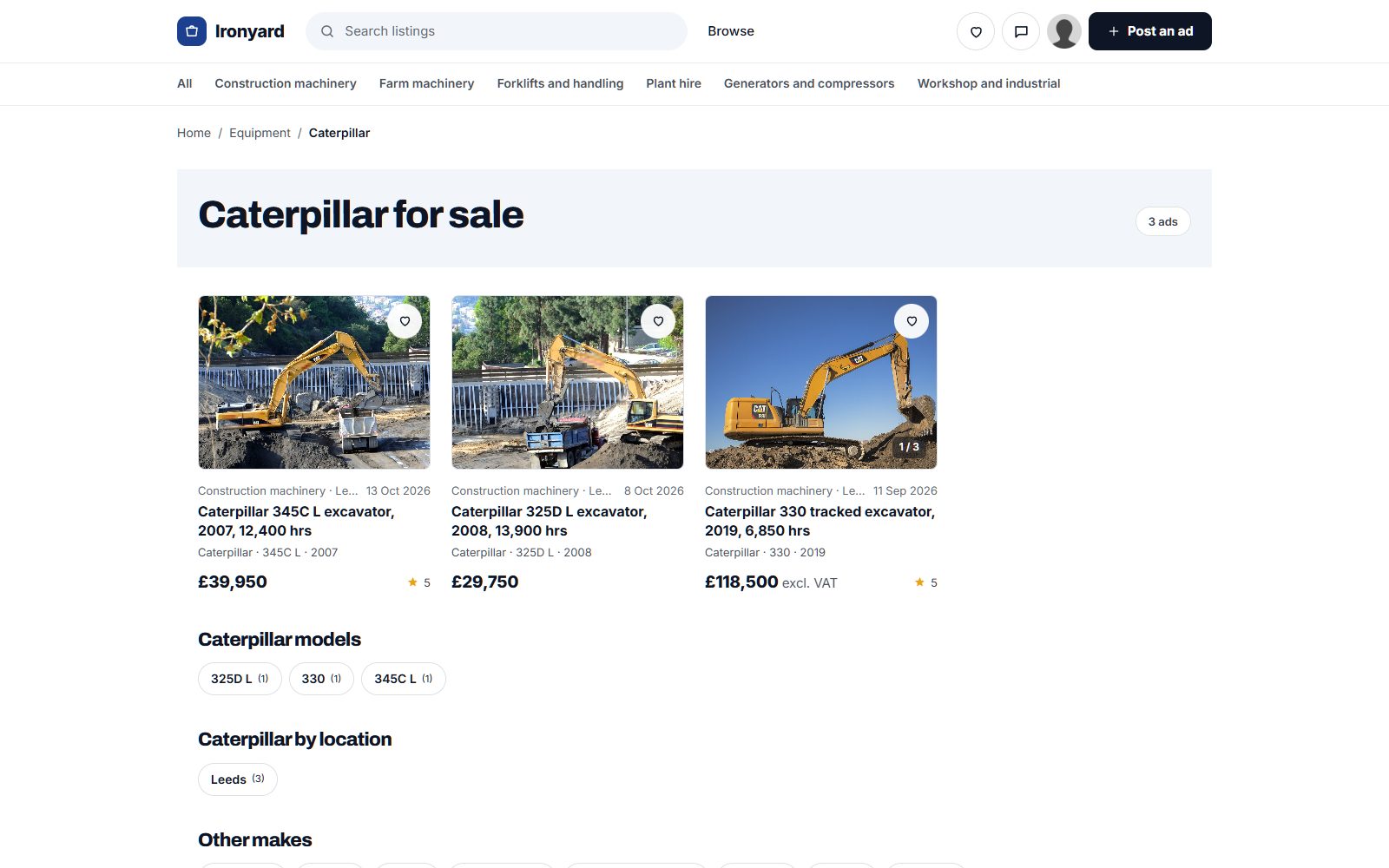
- Caterpillar 330 excavator on a pile of dirt by Matthew T Rader, CC BY-SA 4.0
- Excavator, Sany, 2021 Changsha International Construction Equipment Exhibition, Picture2 by Huangdan2060, CC BY 3.0
- JCB backhoe loader with hydraulic breaker, 2019 Szigetszentmiklós by Globetrotter19, CC BY-SA 3.0
- Polaris ATV Winch (53034864566) by Tony Webster, CC BY 2.0
- Round baler 3070 by Flominator, CC BY-SA 3.0
- Heavy equipment 2022 by Lowcarb23, CC BY-SA 4.0