
How to build a real estate classifieds website that home buyers come back to.
This guide covers a real estate classifieds site for one town, county or region: homes for sale from local agents and from owners selling themselves. It walks through picking the area, the property fields buyers filter on, how agents end up paying, where the first hundred homes come from, how to keep fake listings out, and the launch.
Free for 15 days · No credit card · Plans from $19 a month
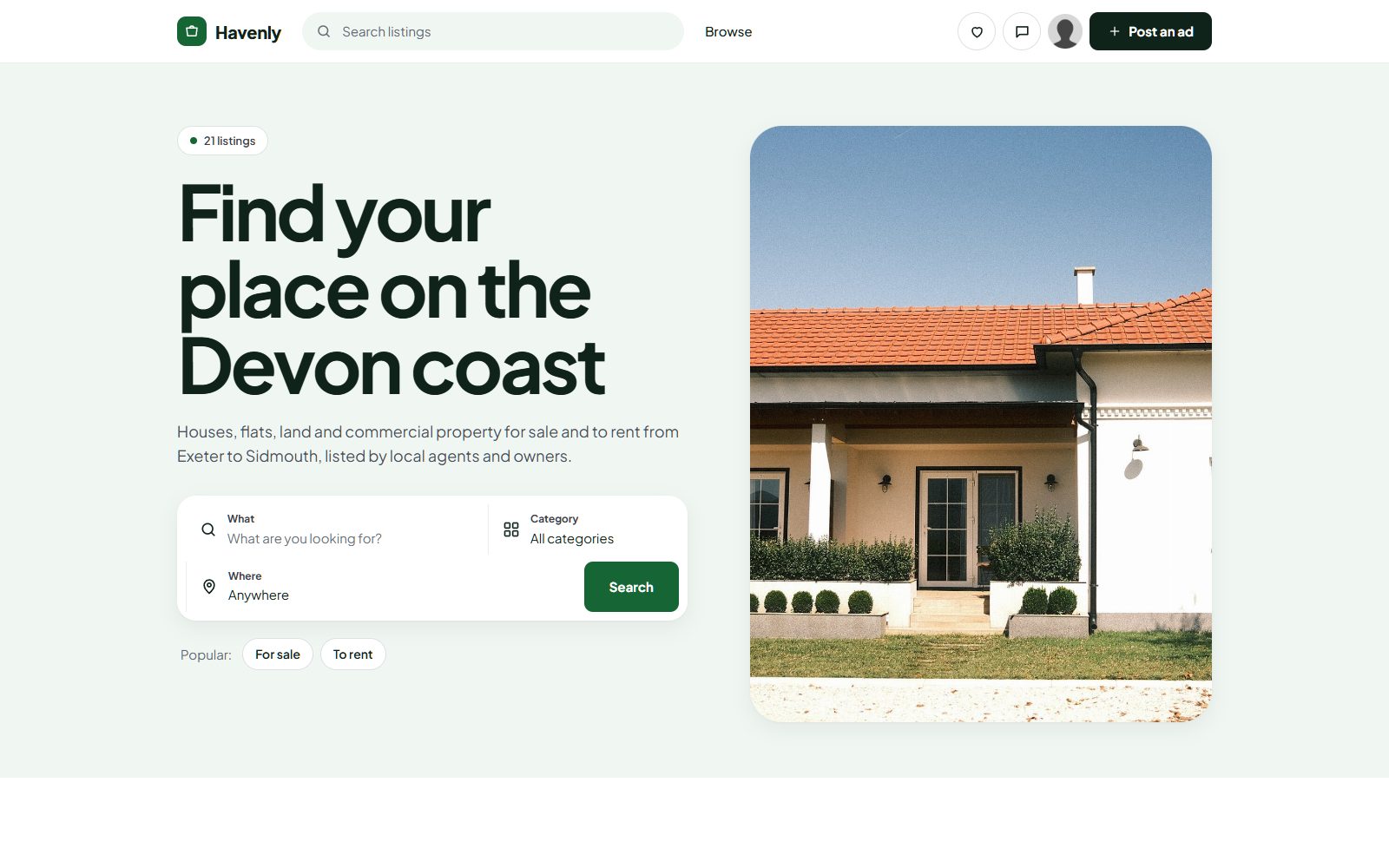
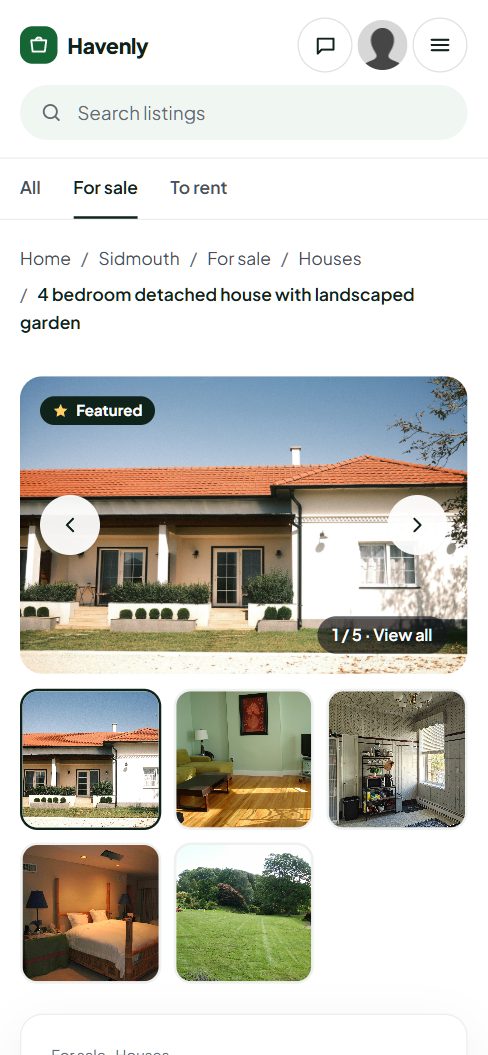
Pick an area and a kind of seller that the national portals serve badly.
The big national property portals are built around agents and the listings they syndicate. That leaves real gaps: owners selling without an agent, small towns where a portal shows twenty homes buried among thousands, holiday areas where buyers come from abroad, and property types the portals file badly, like village houses that need work or homes with a few acres.
Ways to choose your angle
- One area, all sellers. A county or a group of towns, with homes from local agents and private owners side by side. Buyers like seeing everything for one place on one site.
- For sale by owner. A site for owners who do not want to pay an agent's commission, often in markets where owners already sell with a sign in the front yard and a newspaper ad.
- A buyer type. Retirees moving to a coast, foreign buyers in a resort area, first-time buyers looking for starter homes under a price ceiling.
- A property type. Fixer-uppers, rural homes with land, or condos in one city.
Where homes are sold today
Look at agent offices and their window displays, the property pages of the local paper, Facebook groups named after the town plus "homes for sale", owner-sale signs on the roadside, and auction notices. If many owners post in groups and complain about agent fees, a for-sale-by-owner angle has room. If agents complain about portal costs, an all-agents local site does.
A site that shows every home for sale in one county beats a national portal that shows half of them among everything else.
Set up property types as categories and put the detail buyers compare into fields.
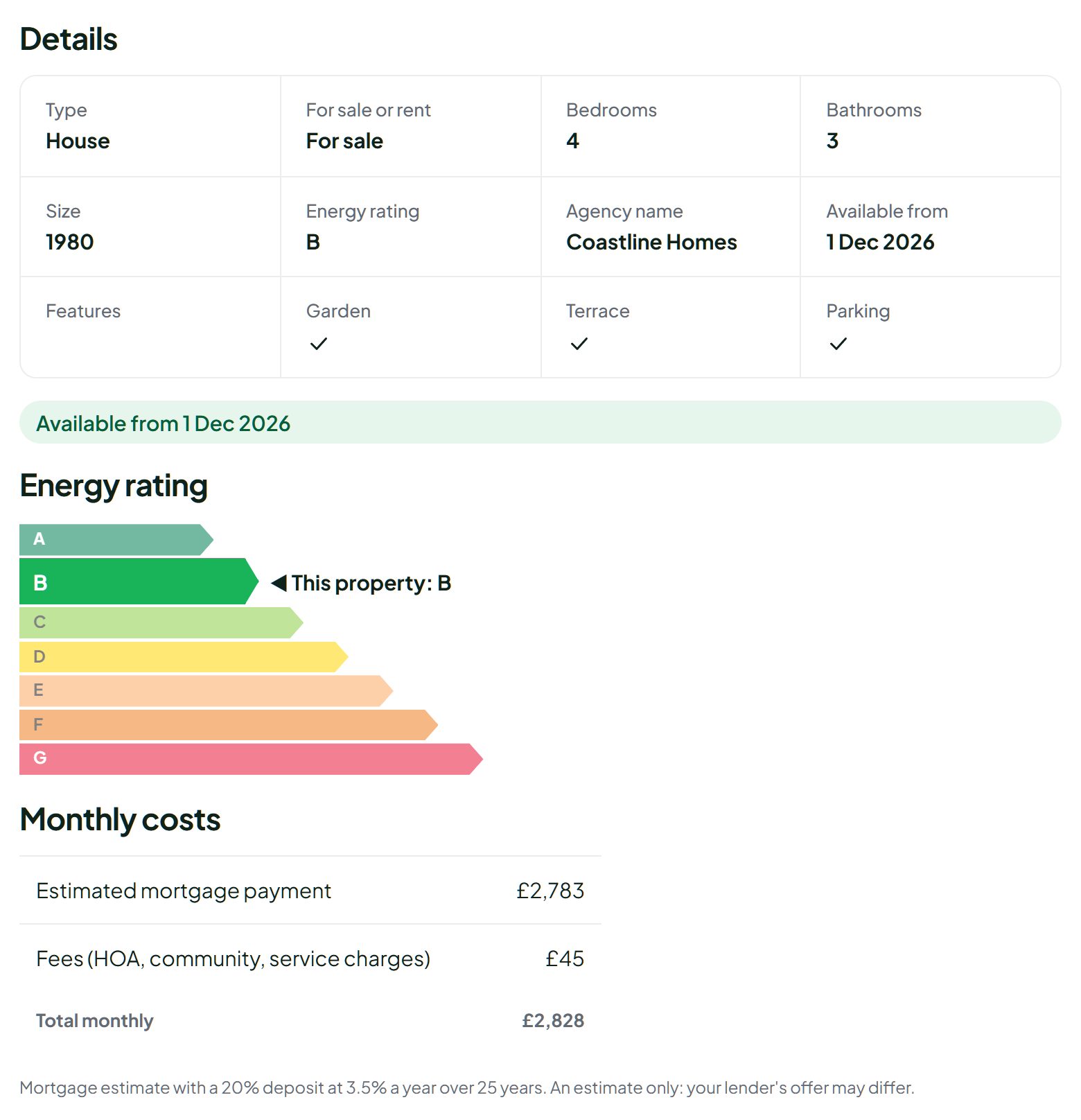
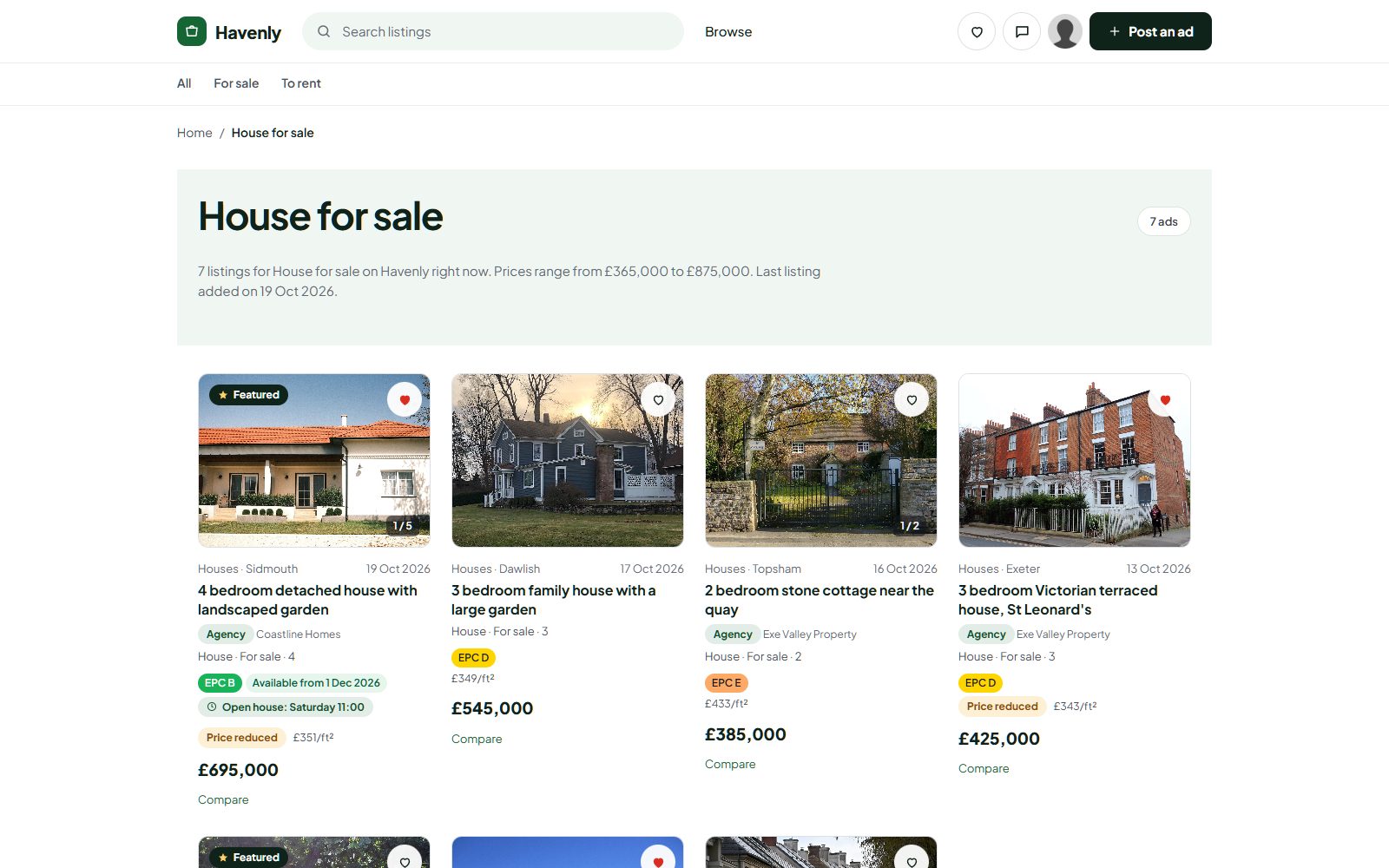
Home buyers search by place first, then by price and bedrooms, so the categories can be few. Put the property type in the category and everything buyers compare into fields. Location matters more here than on almost any other kind of site: use locations for towns or neighborhoods, and show each home on a map.
- Price as a number, so buyers can set a range. Add a checkbox for "price on request" only if agents insist on it, because buyers skip listings without a price.
- Bedrooms and bathrooms as numbers, not free text, so "3+ bedrooms" works as a filter.
- Living area and lot size as numbers with one unit for the whole site, square feet or square meters.
- Seller type: agent or owner. Many buyers filter on it, in both directions.
Agents will want to add many details. Ask only what buyers filter on and leave the rest for the description. Field packs set up property fields in one click, and you can add your own as text, numbers, dropdowns, checkboxes or dates.
| Category | Example listings | Fields buyers filter on |
|---|---|---|
| Houses | Detached homes, townhouses, bungalows | Price, bedrooms, bathrooms, living area, lot size, year built |
| Condos and apartments | Units in a building, penthouses, studios | Price, bedrooms, floor, elevator, parking, monthly HOA or service fee |
| New builds | Homes in a development sold off plan or just finished | Price, completion date, bedrooms, builder |
| Rural homes with land | Farmhouses, homes on acreage, cabins | Price, acres, outbuildings, well or mains water, road access |
| Fixer-uppers | Homes needing renovation, probate and estate sales | Price, condition, bedrooms, lot size |
| Vacation homes | Beach houses, ski condos, lake cottages | Price, distance to beach or slopes, rental history allowed, bedrooms |
Add a dropdown for seller type (agent or owner) to every category, and make price and bedrooms required.
Let homes list free, then charge agents for reach and owners for visibility.
A home is one of the most valuable things anyone lists online, so sellers will pay for results once buyers are on your site. Before that, every agent you ask will want to see your visitor numbers first. Keep posting free until you have a full map of homes for your area and can show steady inquiries.
Who pays
- Agents pay most reliably, and they pay by the month for a membership that lets them post their whole stock, plus featured spots for homes that just came on the market.
- Owners selling themselves pay once per home. A fee per listing in the for-sale-by-owner category works because an owner is saving an agent's commission and will spend a little to be seen.
- Local trades such as mortgage brokers, title companies, moving companies and home inspectors buy banner space, because your visitors are about to need them.
Avoid charging per inquiry or per sale. Home sales close offline and months later, and you have no way to see them.
| Model | Works when | Switch it on |
|---|---|---|
| Agent memberships | Agents post many homes and want them all listed | Once three or four local agents post regularly |
| Pay to post for owners | Owners save an agent fee and want buyers fast | When the owner category gets steady inquiries |
| Featured listings and bumps | Buyers browse a long list of homes in one town | A few hundred active homes |
| Banner spaces for mortgage brokers and movers | Your visitors are close to buying | When you can show monthly visitors for your area |
| Featured agent profiles | Buyers also look for an agent to sell their current home | After agent memberships are running |
Fill the map with the homes already for sale in your area.
A property site with forty homes on it looks closed. Buyers need to believe they are seeing most of what is for sale in the area, so focus on one town until it looks complete before adding the next.
Where the first homes come from
- Independent agents. Small and one-office agencies get the least from the national portals and are the easiest to win. Visit them in person, offer free listing for their whole stock, and ask for a spreadsheet of their current homes. A CSV import puts a whole agency on the site in an afternoon.
- Owners selling themselves. Find the "for sale by owner" signs, the classified ads in the local paper and the posts in town Facebook groups, and offer to post the home for them with their photos.
- Builders and developers. A new development with thirty plots fills the new-builds category and brings buyers who browse everything else.
- Estate and probate sales. Estate lawyers and executors often want a quick, simple way to advertise a house.
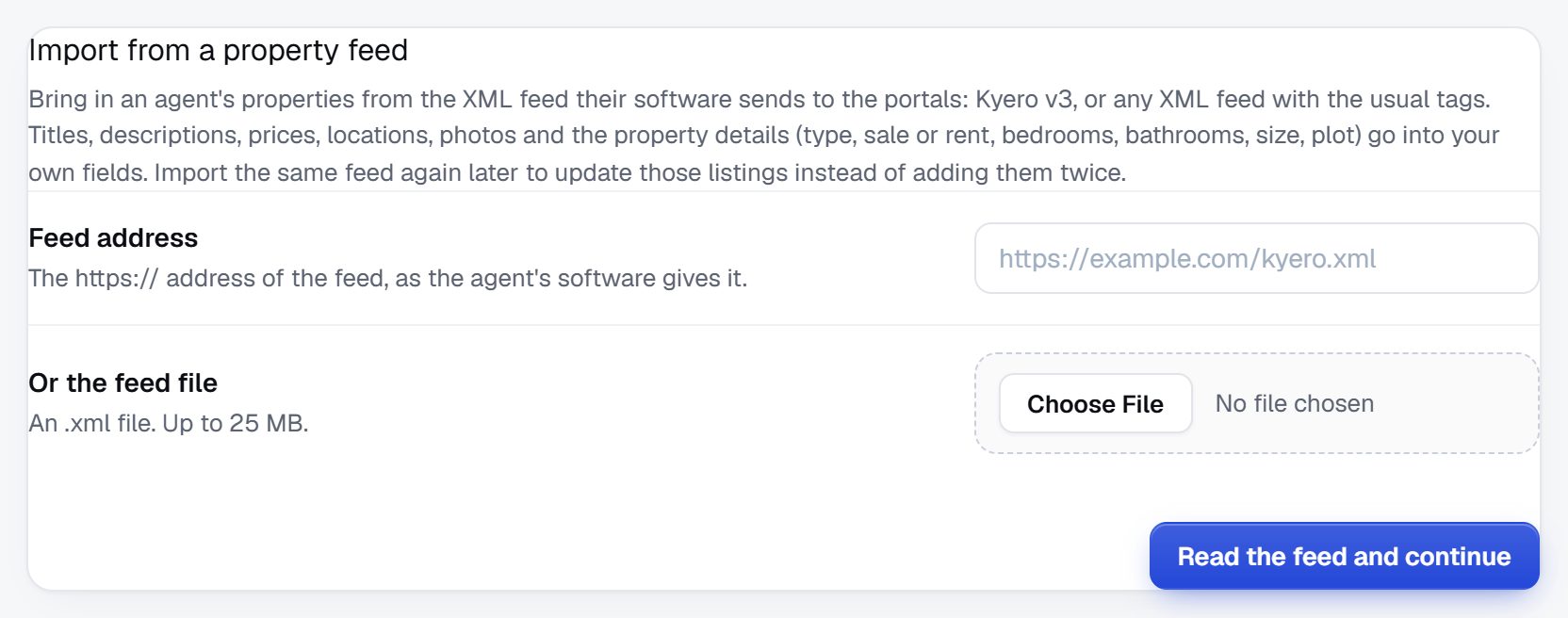
Agents will ask whether their listings update themselves. Be clear: they post on your site or send you an updated spreadsheet, and someone has to remove sold homes. Agree a routine, such as a weekly update, and mark homes as sold rather than deleting them.
Win the independent agents first. The national chains follow when buyers do.
Keep fake homes, stale listings and deposit scams off the site.
Property scams cost people a lot of money, and a single one can ruin a local site's name. The most common ones on home sale sites are easy to recognize once you know them.
Scams and problems to watch for
- Copied listings. Someone copies a real home's photos and description, posts it at a low price and asks buyers for a reservation fee or deposit before a viewing. Check new owner listings by asking for proof of ownership or a photo of the owner at the property with a handwritten note.
- Wire fraud at closing. Fraudsters impersonate agents or closing lawyers and send fake bank details. Tell buyers, in a safety page and in every message thread, to confirm payment details by phone with someone they have met.
- Stale listings. Homes that sold months ago and are left online to collect inquiries. Set listings to expire and ask agents to renew them.
- Misleading details. Wrong bedroom counts or a "sea view" from one corner of the roof. Let buyers report a listing and act on reports quickly.
Rules to set
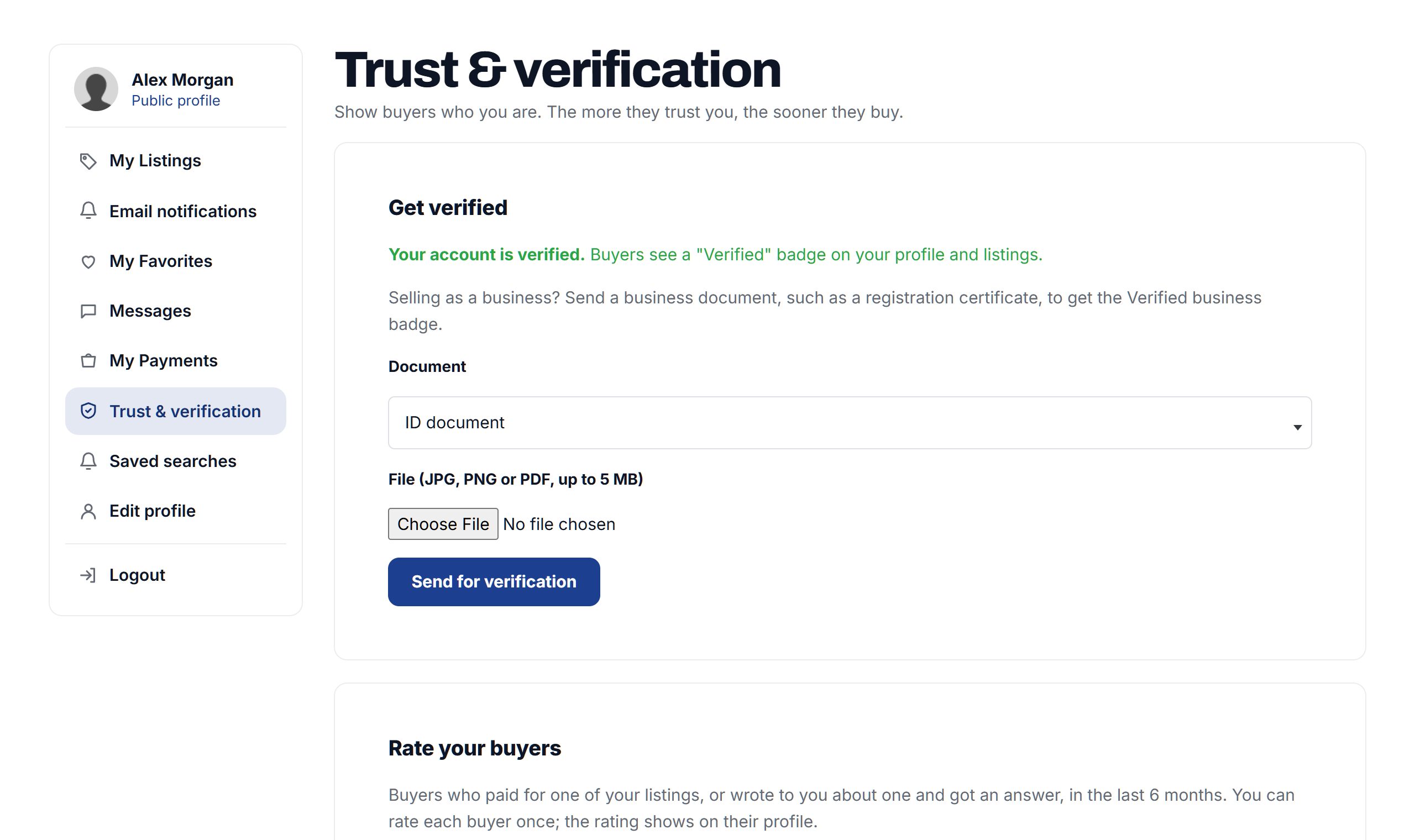
Approve every listing while the site is small, and ask agents for their license or registration details where your area requires one. Verified seller badges tell buyers which agents and owners you have checked. Advertising rules for property differ by country and state, including rules on describing who a home is suitable for, so check the rules where you operate and moderate wording that excludes buyers.
Build a page for every town, neighborhood and price band buyers search.
Home buyers search with a place in almost every query, and the national portals rank for the big city names. Smaller places, property types and owner sales are where a local site can rank.
Searches to target
- "homes for sale in [town]" and "houses for sale [neighborhood]"
- "for sale by owner [county]" and "FSBO [town]"
- "[town] homes with land" and "farmhouse for sale [county]"
- "cheap houses for sale in [town]" and "fixer upper [town]"
- "condos for sale near [beach or landmark]"
Pages to build
- A location page for every town and neighborhood, each with a short paragraph on schools, commute and the kind of homes there.
- Category plus location pages, such as "houses with land for sale in [county]".
- Title patterns that include the bedrooms, type and town, so every listing gets a title like "3 bedroom house for sale in [town]".
Content that ranks and gets shared
- A guide to buying a home in your town: neighborhoods, typical costs to budget for, and local steps such as surveys and inspections.
- A guide for owners on selling without an agent: pricing, photos, viewings and when to call a lawyer.
- A neighborhood series with photos you take yourself.
Keep sold homes online, marked as sold, for a while. They keep ranking and show buyers what homes in the area sell for.
Launch town by town, and time it for the spring buying season.
In most places more homes come on the market in spring and early summer, and buyers start searching in the weeks before. Aim to have your first town full by then. In resort and holiday areas, the season that matters may be when visitors are in town and start looking at prices in shop windows.
Launch plan
- Pick one town and sign up its independent agents before you announce anything.
- Post every owner sale you can find in that town, with permission.
- Write the town's location page and a buying guide.
- Announce in the town's Facebook groups and community pages with a link to the map of homes, not your home page.
- Offer the local paper a short story or a weekly list of new homes.
- Move to the next town only when the first one looks complete.
Partners
Mortgage brokers, home inspectors, moving companies and local lawyers deal with buyers every week and benefit from your site growing. Ask them to mention it and offer them early banner space.
Checklist
- Your own domain connected, with SSL.
- Property fields with price and bedrooms required.
- Map shown on every listing.
- A safety page about deposits and payment details.
- Listing expiry set, with a renewal reminder.
- Saved searches with email alerts, so buyers hear about new homes first.
A worked example: Blue Ridge Porch Listings in Virginia's Shenandoah Valley.
Blue Ridge Porch Listings is a made-up site, but the shape of it is realistic. It covers homes for sale in three counties of the Shenandoah Valley, Virginia, a stretch of small towns, farms and commuter homes where the national portals mix a few local houses into results for much larger cities nearby.
Who it serves
Buyers are mostly local families trading up, retirees moving out from the Washington area, and people working remotely who want land and a lower price. Sellers are a dozen independent agents, a handful of builders, and owners who put a sign by the road and hope someone drives past.
Categories
- Houses
- In town
- Country homes with land
- Townhouses and condos
- New construction
- Farms and acreage with a house
- For sale by owner
Each county is a location, and each town under it is a sub-location, so a buyer can open one town and see every home there on the map.
How it started
The founder, a former newspaper ad salesperson, started with the county seat she knew best. She photographed every by-owner sign in that county over two weekends, called the owners, and posted the homes for free. She then visited four independent agencies with a printout of those homes on a map and asked each for a spreadsheet of its current stock. Within six weeks the first county showed close to everything for sale there, and agents started sending her new homes before she asked. The second county took less time, because agents there had already heard about the site from colleagues and buyers from the first county had started browsing next door.
How it makes money
Owners pay a one-time fee to list in the for sale by owner category once that category gets steady inquiries. Agencies pay a monthly membership that covers all their homes, plus featured spots for new listings in the spring. Two mortgage brokers and a moving company rent banner spaces on the county pages. The founder does not take any share of sales, which keeps her clear of the licensing questions that apply to agents.
The example works because one county looked complete before the founder asked anyone to pay.
| Listing | Price | Key details |
|---|---|---|
| Brick ranch on a quiet street in the county seat | $289,000 | 3 bed, 2 bath, 1,450 sq ft, carport, agent listing |
| Farmhouse with barn on 12 acres | $465,000 | 4 bed, 2 bath, well and septic, fenced pasture, owner sale |
| End-unit townhouse near the university | $238,500 | 2 bed, 2.5 bath, HOA fee monthly, garage, agent listing |
| New build in a 20-lot development | $399,900 | 3 bed, 2 bath, completion in spring, builder listing |
| Cottage needing renovation, estate sale | $129,000 | 2 bed, 1 bath, sold as is, 0.4 acre lot, executor listing |
Your first 90 days: from an empty map to a county buyers trust.
The first three months decide whether agents take your site seriously. Agents judge a new property site by one test: when they search their own town, do they see their own homes and their competitors' homes? Until the answer is yes, every sales conversation is uphill. So the plan below spends the first half of the quarter on supply in one area and only then turns to buyers and money.
Keep a simple sheet of every agency, builder and by-owner seller in your first area, with the date you contacted them and how many homes they have. It becomes your sales list, your proof of coverage and, later, the list of who to invite to paid memberships. Expect the timing to shift with your market: if spring is close, compress the supply weeks and launch to buyers sooner. If your first area is quiet in winter, use the extra weeks to write the town pages and the buying guide properly, because those pages will keep bringing buyers long after the launch posts are forgotten.
| Weeks | Focus | Done when |
|---|---|---|
| 1-2 | Pick the first town or county, set up property categories, fields, locations and the safety page | A test listing shows price, bedrooms, seller type and a map pin correctly |
| 3-4 | Collect by-owner homes from road signs, papers and town groups | At least 15 owner homes are live with the owners' permission |
| 5-6 | Visit independent agencies and import their stock from spreadsheets | Three agencies have all their current homes on the site |
| 7-8 | Write location pages for each town and a local buying guide | Every town in the area has a page with a paragraph and live homes |
| 9-10 | Announce to buyers in town groups and the local paper | Saved searches and inquiries arrive every week |
| 11-12 | Agree update routines, mark sold homes, and offer the first paid extras | Sold homes are marked within a week and one agency or owner has paid |
Three ways to build a property site, and which suits a local founder.
A home sale site needs a few things that ordinary classifieds software may not do well: a map on every listing, filters on numbers like price, bedrooms and lot size, sold status that keeps the page online, agent profiles, and a way to load an agency's stock in bulk. Check every route against that list before you commit.
Build it with developers
A custom build gives you exactly the search you want and room for things like a mortgage calculator or school boundaries. It also means paying for every change, and property search with maps and filters is not a small project. It suits founders with funding and a clear feature no one else offers.
Install a script or WordPress plugin
Real estate themes and plugins for WordPress are common, and some classifieds scripts include property fields. You host them yourself, which means updates, backups, security patches and spam control are your job. Check whether the plugin can import a spreadsheet and handle owner and agent accounts side by side, since many are built for a single agency's website.
Use a hosted builder
A hosted builder such as Yclas gives you categories, custom fields, maps, seller profiles and CSV import without running a server. You give up some control over unusual features, and in return you can spend your time with agents and owners, which is where a local property site is won.
| Route | Fits when | Watch out for |
|---|---|---|
| Custom build with developers | You have funding and a search feature agents and buyers cannot get elsewhere | Months before launch, and every later change costs developer time |
| Self-hosted script or WordPress plugin | You already run servers and want full control of the property search | Plugins built for one agency, updates, backups and spam on you |
| Hosted classifieds builder | Your edge is local coverage and relationships, not software | Check it has maps, number filters, seller profiles and bulk import |
What a real estate classifieds site costs to run.
The software is the smallest part of the bill. Most of the cost is your time in the first months: finding the first listings, answering questions and checking what gets posted.
Expect costs for good photography of your first showcase homes, local print or radio ads in each new town, and a lawyer's review of your terms and listing rules. If you run owner sales, budget time for checking ownership documents.
| Cost | Typical range | On Yclas |
|---|---|---|
| Domain | $10 to $20 a year | Your own, with SSL included |
| Software and hosting | $0 to $100+ a month, plus plugins and updates | Starter $19 a month, Professional $99 |
| Design | $0 to $100 for a theme, or a designer | 109 looks included |
| Payment fees | About 3% per payment | Your Stripe or PayPal fees; Yclas takes nothing |
| Your time | 5 to 10 hours a week at the start | Finding listings, moderation, support |
Mistakes that sink local real estate sites.
- Covering a whole state on day one. Two homes in each of fifty towns looks like a dead site in every town. Pick one county, make it look complete, and only then add the next. Buyers forgive a small area; they do not forgive empty search results for the town they typed.
- Copying listings from agents' websites or portals. Listing photos and descriptions usually belong to the agent or the photographer, and scraping them can bring takedown demands and angry agents. Ask for permission and a spreadsheet instead, and post only what sellers send you.
- Letting sold homes stay as if they were available. Buyers who call about a house that closed two months ago stop trusting the site. Set expiry, ask for weekly updates, and mark homes as sold instead of leaving them as active.
- Hiding the price. Agents sometimes want "call for price" to generate calls. Buyers filtering by budget never see those homes, and the ones who do often move on. Require a price and allow a note for unusual cases, such as a home sold at auction with a guide price.
- Mixing rentals in from the start. Rentals bring a different audience, faster turnover and more scams. If your angle is homes for sale, keep rentals out until sales are working, or run them as a clearly separate section.
- Charging agents before sending them inquiries. Agents pay for buyers, not for software. Track every inquiry you forward and show each agency its own numbers before you ask for a membership.
- Ignoring owners after they post. By-owner sellers are often nervous and inexperienced. A short guide on pricing, photos and viewings, plus a reminder to use a lawyer or title company, turns them into people who recommend you to neighbors.
- Loose wording rules. Phrases describing the ideal buyer can cross into wording that property advertising rules restrict. Write a listing policy, check it against the rules where you operate, and edit or reject ads that do not follow it.
- Weak photos on the first homes. The first listings set the tone for the whole site. Retake or ask for better photos of your showcase homes, especially the front of the house and the main living room.
- Treating every inquiry as the agent's problem. When buyers send messages that go unanswered for days, they blame your site, not the agency. Check reply times in the first months, nudge slow agents, and quietly drop the ones who never answer.
Real estate terms a property site founder should know.
Agents, owners and buyers will use these words in your first week, so learn them before your first agency visit.
| Term | What it means |
|---|---|
| MLS | A multiple listing service, the shared database where member agents in an area list homes and share them with each other. |
| IDX | A data feed that lets MLS members show other members' listings on their own websites under the MLS's rules. |
| FSBO | For sale by owner: a home sold without a listing agent, usually advertised by the owner directly. |
| Listing agent | The agent hired by the seller to market the home and negotiate on the seller's side. |
| Buyer's agent | An agent who represents the buyer in a purchase, under an agreement with that buyer. |
| Comps | Comparable recent sales of similar nearby homes, used to set or judge an asking price. |
| Earnest money | A deposit a buyer pays when an offer is accepted, held by a third party until closing. |
| Under contract | An offer has been accepted but the sale has not closed, so the home is usually no longer available. |
| Contingency | A condition in a purchase contract, such as financing or inspection, that must be met for the sale to go ahead. |
| Closing | The final step where documents are signed, money changes hands and ownership passes to the buyer. |
| Days on market | How long a home has been listed, which buyers use to judge whether the price is realistic. |
| HOA fee | A regular charge paid to a homeowners association for shared areas and services in a development or building. |
| Title insurance | Insurance that protects a buyer or lender against problems with the ownership history of a property. |
The same steps for a real estate classifieds site on Yclas.
- Describe your nicheThe setup wizard writes the categories, an About page and example listings from one sentence.
- Add fieldsSwitch on a field pack or add the fields your buyers filter on.
- Fill itImport dealer spreadsheets, invite sellers and post your own.
- Set the rulesChoose moderation, banned words and AI checks.
- Go liveChoose a plan, connect your domain, switch on paid listings when it is time.
Can a small real estate site compete with the national portals?
Not on every town at once. It can win in one area or one type of sale, such as owner sales or rural homes, where the portals show few listings and buyers want a local view.
Do I need a real estate license to run a property classifieds site?
In many places an advertising site that does not represent buyers or sellers does not need one, but rules differ by country and state. Check the rules where you operate before you start, especially if you plan to help with negotiations or take a fee on sales.
How do I get agents to list on a new site?
Start with independent agents, offer free listing for their whole stock, and do the work for them by importing their spreadsheet. Send them the inquiries you receive, because inquiries are what keep them posting.
Will agents' listings update automatically?
No. Agents post on the site or send you an updated spreadsheet, and you agree a routine for removing sold homes. Listing expiry with renewal reminders keeps stale homes from piling up.
How should I charge owners who sell their own home?
A one-off fee per listing in the owner category works, once that category gets steady inquiries. Keep the first owners free so buyers have homes to look at.
How do I stop fake listings and deposit scams?
Approve every listing while the site is small, check ownership for owner listings, and tell buyers never to pay a deposit before a viewing or send money to bank details they have not confirmed by phone.
When is the best time to launch?
Have your first area full before the spring buying season, or before the visitor season in holiday areas. Launching to an empty site in a quiet month wastes your first announcement.
Can I show MLS listings on my site?
Usually only if you are a member of the MLS or work with a broker who is, and then under that MLS's display rules. A classifieds site that collects listings directly from agents and owners avoids the question, but ask the local MLS if you are unsure.
Can I copy homes from agents' own websites to fill my site faster?
Do not copy them without permission. Photos and descriptions belong to someone, and agents notice. Ask for a spreadsheet and offer to import it, which is quicker for them and gets you their goodwill.
How many homes should be on the site before I announce it to buyers?
Enough that a buyer searching your first town sees most of what is for sale there. In a small town that can be a few dozen homes; in a larger one, a few hundred.
Should I publish sold prices?
Only if the seller or agent agrees and local custom allows it. Many sites show a home as sold without the final price, which still helps buyers see what moves in the area.
Is it worth paying for professional photos of owner listings?
For your first showcase homes, often yes, because they set how the site looks. After that, give owners a short photo guide and let them post their own.
Related pages.
The parts of Yclas this leans on.
You have the plan. Now fill your town's map with homes.
Describe your site in a sentence and the setup wizard writes the categories, example listings and a look. Free for 15 days, no credit card.
Start my classifieds site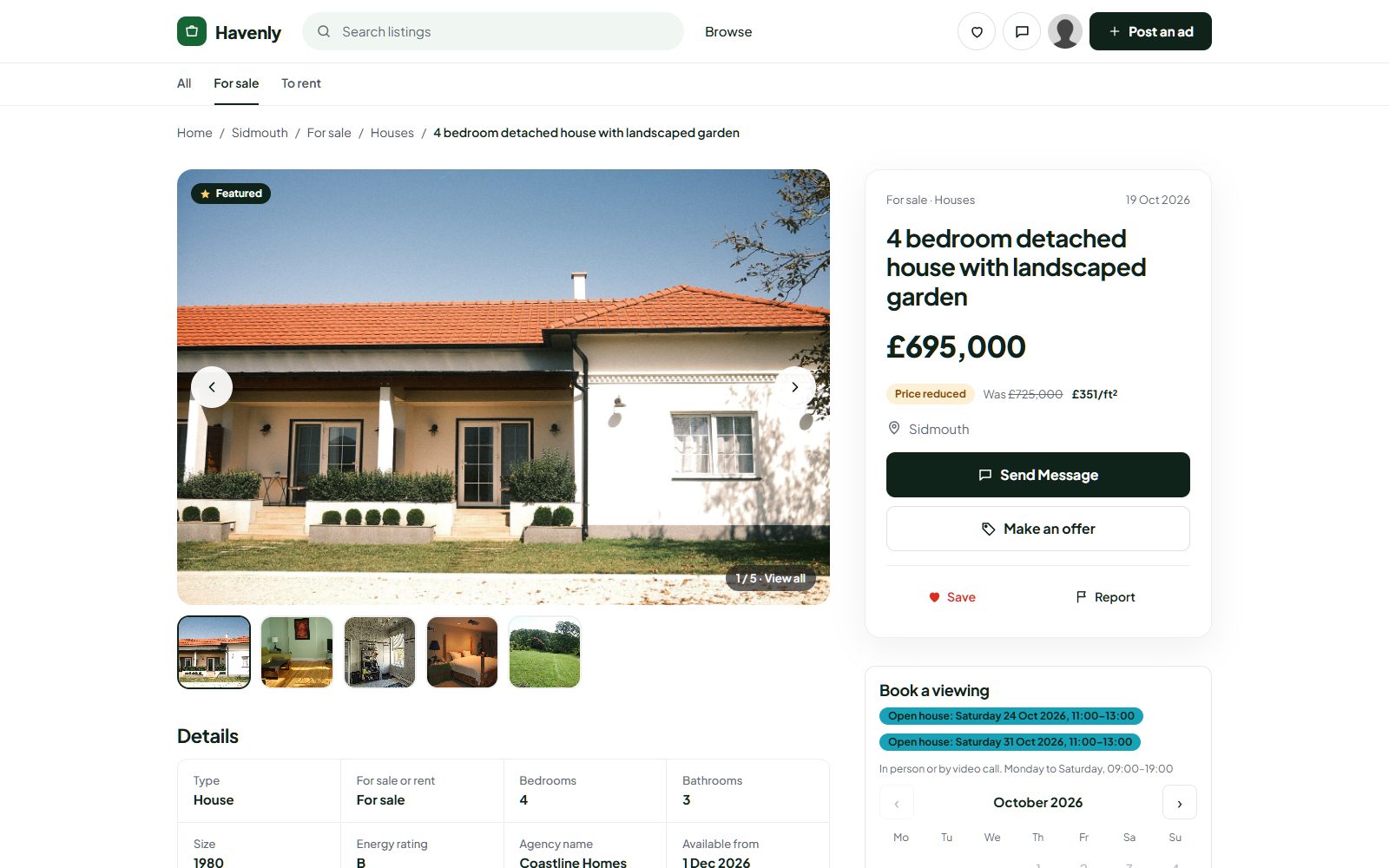
Photo credits
The screenshots show demo sites with made-up sellers. Their photos come from Wikimedia Commons, some cropped or with signs and plates blurred; these ones are under Creative Commons licences:
- Modern house exterior with red roof and landscaped garden under clear blue sky, CC BY 2.0
- Furnished apartment in Cambridge, December 2008, CC BY-SA 3.0
- Front lawn at Holehird - geograph.org.uk - 2046271, CC BY-SA 2.0
- Terraced houses on Walton Street - geograph.org.uk - 5233085, CC BY-SA 2.0
- Stone Cottage, Watnall, CC BY-SA 2.0
- View of the "Lost Dining Table and Chairs" in Eltham Palace - geograph.org.uk - 5797282, CC BY-SA 2.0
- Mountain's chalet in summer, CC BY-SA 4.0
- Monument, bench and flowers at Akureyri Botanical Gardens, CC BY 3.0
- Building plot - geograph.org.uk - 6532306, CC BY-SA 2.0
- Mid Devon , Countryside ^ Farmland - geograph.org.uk - 1953042, CC BY-SA 2.0
- Industrial unit on the Coppi Industrial Park - geograph.org.uk - 4974502, CC BY-SA 2.0
- Burnham Yacht Harbour Marina - geograph.org.uk - 7039536, CC BY-SA 2.0
- Office Chairs at Long Table conference, CC BY 2.0