
How to build a hay and feed classifieds website that growers and buyers rely on.
This guide covers how to build a hay and feed classifieds website for hay, straw, silage and feed sold by the bale or the load: choosing a haul radius, the fields buyers compare, from bale type to forage test results, how the site earns money, where growers come from, quality disputes and freight scams, the searches to rank for, and a launch timed to cutting season.
Free for 15 days · No credit card · Plans from $19 a month
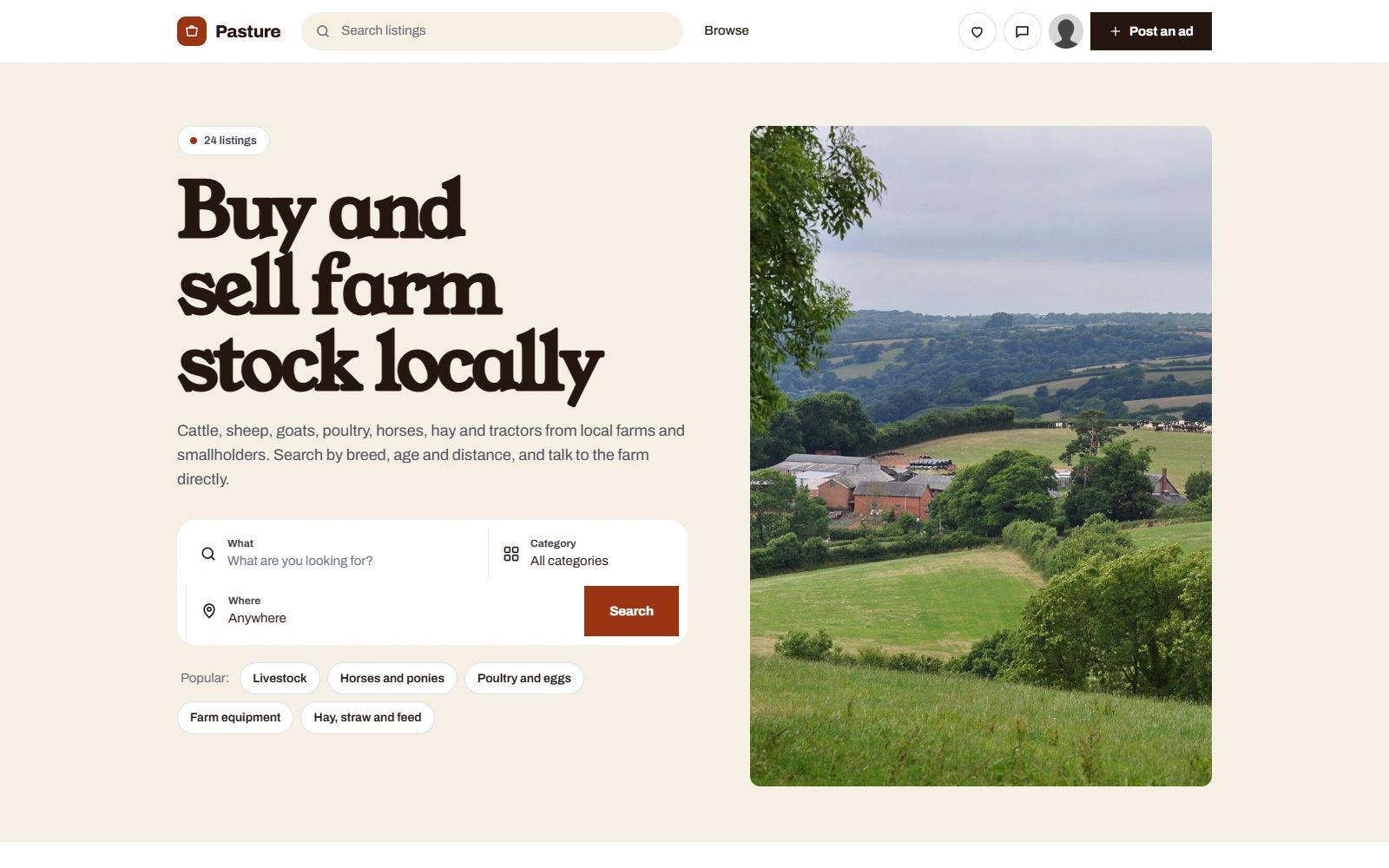
Match growers and buyers within a sensible haul.
Hay is bulky, low in value per pound and expensive to truck, so almost every sale happens within a region. Buyers range from a horse owner who needs fifty small squares for the winter to a dairy that buys semi loads of alfalfa all year. Growers want to sell before the hay sits in the barn too long, and buyers want to know what they are getting before a load arrives. General classifieds sites list hay among farm odds and ends, with no way to compare bale type, cutting or test results.
Who buys and sells hay
- Hay growers, from small farms selling extra bales to commercial producers selling thousands of tons.
- Horse owners and boarding barns, who want clean, dust-free hay and often small squares they can lift.
- Cattle, sheep and goat producers buying round bales, baleage and silage by the load.
- Hay brokers and haulers who move hay from surplus areas to short ones.
Picking the angle
Set the area by trucking distance: one state, or a region that shares a growing season. Then choose your lean. A horse hay site needs quality details and smaller lots; a cattle feed site needs large lots, price per ton and delivery. Many founders start with the horse side, where buyers pay for quality and ask the most questions.
Today this trade runs through phone calls, notice boards at feed stores, hay lists kept by some extension offices and farm organizations, auctions, and farm groups online.
In drought years buyers search far and wide for hay: be the site they find.
Let buyers compare type, cutting, bale and quality.
Hay buyers compare listings line by line, so the fields matter more than the categories. Keep categories to the product type and put the rest in filters.
Fields buyers check first
- Forage type: alfalfa, timothy, orchard grass, Bermuda, brome, mixed grass, oat hay, clover mix.
- Cutting: first, second, third or later, and the year it was baled.
- Bale type and weight: small square, large square or round, with average weight per bale.
- Storage: barn stored, tarped or outside.
- Quantity available, in bales or tons, and the minimum order.
- Price per bale or per ton, picked up or delivered.
- Tested: forage analysis available, with relative feed value, crude protein and moisture.
- Horse quality, weed free certified and rained on, as checkboxes.
Add a delivery field with the distance the seller will haul and whether they have a loader. A buyer with no tractor needs to know the seller can unload round bales.
| Category | Example listings | Fields buyers filter on |
|---|---|---|
| Horse hay | Timothy small squares, orchard grass, alfalfa mix | Forage type, cutting, bale weight, barn stored, tested |
| Cattle hay | Net-wrapped rounds, large squares, grass hay by the load | Bale type, quantity, price per ton, delivery radius |
| Alfalfa | Dairy quality alfalfa, alfalfa grass mix | Cutting, relative feed value, protein, moisture, bale type |
| Straw and bedding | Wheat straw, barley straw, shavings | Type, bale type, quantity, price per bale |
| Silage and baleage | Corn silage, wrapped baleage, haylage | Type, moisture, bale or bulk, quantity |
| Grain and feed | Whole oats, corn, feed pellets, mineral | Type, quantity, bagged or bulk, price per ton |
Ask for the bale weight even on small listings: a bale can weigh far more or less than a buyer expects.
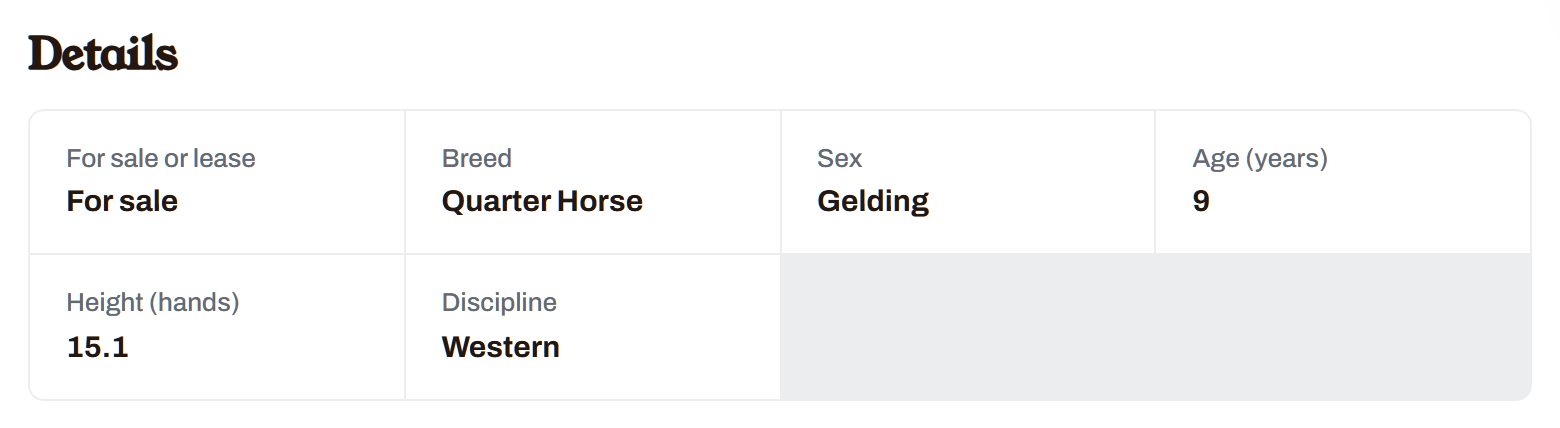
Charge when hay is scarce and sellers are busy.
Hay prices swing with the weather, and so does the value of your site to each side. In a good year growers have too much and want buyers; in a dry year buyers will drive hundreds of miles and growers sell out by phone. Keep posting free while you build, and switch on paid features that fit the season.
- Featured listings and bumps suit growers with surplus in a good year and sellers of horse quality hay all year.
- Memberships for commercial growers and hay brokers give them a seller profile with every lot, a verified seller badge and reviews from buyers.
- Pay to post in bulk categories fits brokers selling semi loads, where one sale is worth a lot.
- Banner spaces suit forage testing labs, haulers, equipment dealers, seed and fertilizer suppliers, feed stores and farm insurers.
For a grower selling many lots, the site can work as a price board, too: when buyers can see who has hay and at what price, growers gain a reason to keep their listings current. With Yclas you can add featured listings, bumps, paid posting in chosen categories, seller memberships and banner spaces when each makes sense.
| Model | Works when | Switch it on |
|---|---|---|
| Featured listings and bumps | Several growers compete for the same buyers | After first cutting, once lots pile up |
| Grower and broker memberships | Sellers list many lots each season | When a few growers post every cutting |
| Pay to post bulk loads | Brokers sell semi loads across the region | When bulk buyers visit every week |
| Banner spaces | Labs, haulers and dealers want farm buyers | When you can show visitors from farm counties |
| Featured winter supply | Horse owners and ranchers fill barns for winter | Late summer, before winter buying starts |
Find growers through co-ops, feed stores and hay lists.
Hay growers are busy farmers who answer the phone between fields. Your first listings come from making posting effortless and from the places they already advertise.
Places growers already advertise
- Feed stores and farm supply stores. Their bulletin boards carry hay ads with phone numbers. Call those growers and offer to post their hay for them.
- Extension hay lists and farm organizations. Some keep lists of local hay for sale; growers on them already want buyers.
- Custom balers and haulers, who know which farms have hay to sell after each cutting.
- Hay auctions, where growers and buyers meet in person every week or month during the season.
- Boarding barns and horse clubs, who can tell you which growers supply them and buy from you once they trust the listings.
- Farm groups online, where people post hay with a photo and a phone number.
Most growers sell several lots from the same farm: first cutting rounds, second cutting small squares, straw. Ask for each lot as its own listing, with a photo of the stack and a close photo of an open bale showing color and leaf. A grower with lots in a spreadsheet can import them from a CSV in one go.
A photo of an open bale tells a horse owner more than a paragraph of description.
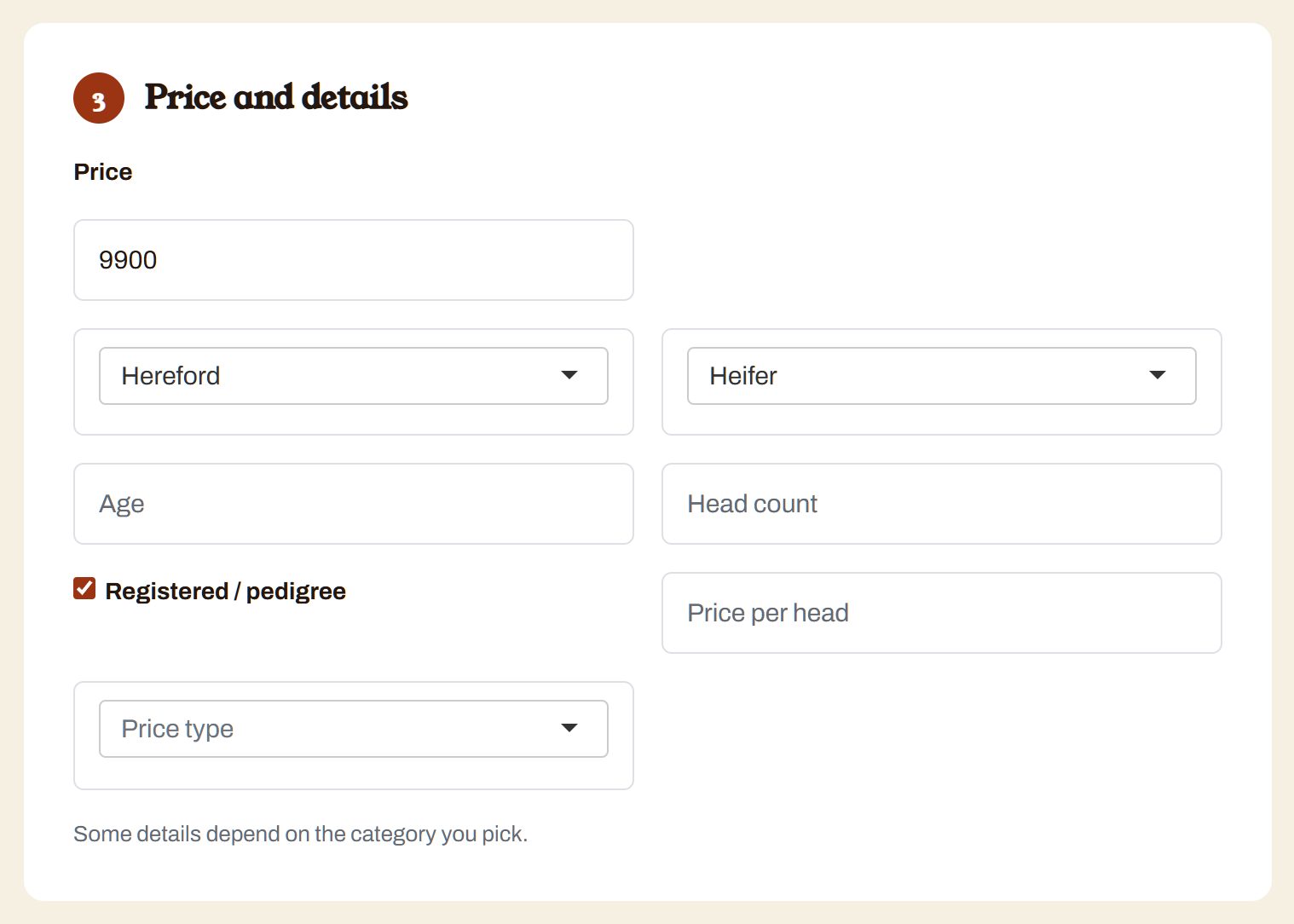
Head off quality disputes, short bales and deposit scams.
Most problems on a hay site come from the gap between the listing and what arrives on the truck.
Common problems
- Quality not as described. Moldy, dusty or weedy hay, or rained-on hay sold as clean. Moldy or dusty hay can make horses ill. Ask sellers to state storage and rain, and encourage forage tests for higher-priced hay.
- Short weight. Light bales sold by the bale at a price that assumes heavy ones. Ask for average bale weight, and suggest buyers ask for scale tickets on loads sold by the ton.
- Toxic contaminants. Blister beetles in some alfalfa are dangerous to horses, and some weeds are harmful to livestock. Ask sellers to mention any known issue and buyers to inspect before feeding.
- Deposit scams in dry years. A seller far away with cheap hay who wants a deposit and freight paid before loading. Tell buyers to see the hay or use a known hauler, and pay on delivery.
Rules to set
Approve listings while you are small, ask commercial growers to verify their farm, and collect reviews after each sale so reliable growers stand out. Publish a short guide on reading a forage test and checking a load on arrival. Weed free certification, moving hay across state lines and rules for feed sold as a commercial product differ by place, so check the rules where you operate.
Rank for hay type, bale and place.
Hay searches are short and urgent, and almost all of them include a place. Build pages that answer them directly.
Searches to target
- "hay for sale near me"
- "horse hay for sale Kentucky"
- "timothy hay small square bales"
- "alfalfa hay for sale by the ton"
- "round bales for sale delivered"
- "straw bales for sale"
- "weed free certified hay"
Pages to build
- Hay type and state pages, such as alfalfa in Idaho or orchard grass in Pennsylvania, built from live listings.
- County and area pages for the places with the most buyers, since hay rarely travels far.
- A hay price page that shows current asking prices on your site by type and bale, updated from your own listings rather than outside figures.
- Guides: how to read a forage test, how much hay a horse eats over winter, small squares versus round bales, how to store hay safely to avoid heating and fire.
Keep expired lots online for a short while marked as sold, with a link to the same grower's new lots. Buyers often come back to a grower they liked the next season.
Launch before first cutting and grow through winter buying.
The hay year has clear peaks. First cutting arrives in late spring or early summer in many regions, and growers want buyers lined up before it is baled. Late summer and fall bring winter buying, when horse owners and ranchers fill barns. Late winter brings the scramble when supplies run short. Launch a few weeks before first cutting, so growers list as soon as hay is in the barn.
Launch plan
- Pick one region and sign up ten growers, from small farms to one commercial producer.
- Post every lot as its own listing with bale weight, cutting and storage.
- Ask two feed stores and a boarding barn to put up a sign and share the site.
- Agree a referral with a forage testing lab or a hauler, so buyers have answers about quality and delivery.
- Share full categories, such as all the horse hay in the state, in horse and farm groups.
Checklist
- Forage type, cutting, bale type, weight, storage and tested as search filters.
- Saved searches with email alerts for buyers waiting on one type of hay.
- Posting rules and a buyer guide on testing and checking loads.
- A map, so buyers see how far each lot is.
- Your own domain, and terms that say growers, not the site, stand behind each load.
A worked example: Magic Valley Bale Board, southern Idaho.
Magic Valley Bale Board is a fictional site, made up for this guide to show how a hay site works from the first grower to the first paid extra. Picture a custom baler in south-central Idaho who spent every summer fielding calls from horse owners asking whether he knew anyone with clean second cutting in small squares. He did, but the growers kept their lists in notebooks and on a feed store corkboard, and every dry year he watched buyers from neighboring states call around for days.
Who it serves
The site covers the Magic Valley and the stretch of the Snake River Plain within a few hours' truck haul. Alfalfa growers are its backbone, from family farms with a few hundred tons to larger operations selling to dairies. On the buying side it serves horse owners and boarding barns wanting small squares, cattle and sheep producers buying rounds, and dairy buyers who purchase large squares by the semi load.
Categories at launch
- Alfalfa
- Horse quality small squares
- Dairy quality large squares
- Grass and grass mix hay
- Straw and bedding
- Feed grain and pellets
- Hauling and custom work
How it started
The baler started with the growers whose fields he cut. Twelve agreed to list, and he posted each cutting as its own lot with a stack photo, a close photo of an open bale, the bale weight and whether a forage test was available. Two larger growers sent their inventory as a spreadsheet and went online in one import. He put a printed sign with the site's address on the board at three feed stores and asked a boarding barn manager to share the horse hay category with her boarders. When a dry August pushed buyers to look further afield, the site was already full of tested lots, and growers who had held back started calling him to be added before the next cutting.
How it makes money
Listing hay is free. Hay brokers and larger growers pay a seasonal membership for a seller profile, a verified seller badge and reviews. Featured listings come back each August and September, when growers with surplus compete for winter buyers. A forage testing lab and a trucking company take banner spaces, and the Hauling and custom work category charges a small fee to post, since those listings are businesses selling a service. Prices for each extra are reviewed after the winter buying season, once it is clear which ones growers paid for twice.
A grower's stack photo plus a test result outsold every listing without them.
| Lot | Price | Key details |
|---|---|---|
| Second cutting alfalfa, small squares | $14 per bale | About 65 pounds, barn stored, no rain, RFV 175, 400 bales available |
| Dairy quality alfalfa, 3x4 large squares | $245 per ton | Third cutting, 80 tons, tested, delivered within 60 miles |
| Orchard grass and timothy mix, small squares | $12 per bale | First cutting, horse quality, tarped stack, minimum 50 bales |
| Net-wrapped grass rounds, 5x6 | $85 per bale | About 1,200 pounds, stored outside on gravel, seller loads trailers |
| Wheat straw, small squares | $6 per bale | Bright and clean, 300 available, pickup at the farm on weekends |
The first 90 days, timed to the hay year.
The hay year sets the pace for a new site more than any other factor. Growers think about selling in the weeks before and after each cutting, and buyers think about hay in late summer, when they fill barns, and again in late winter, when supplies run short. Start your 90 days so that week 9 falls around first cutting in your region, and you will have growers listing just as buyers start to look.
The other rule is to keep each lot separate. A grower's first cutting rounds and second cutting small squares are different products for different buyers, so the plan asks for them as separate listings from the start. That habit is what makes the filters useful and the price page accurate later.
Finally, expect to post for growers. Many will gladly read a listing you wrote from their phone call and photos, but few will sit at a computer in June. Budget a few hours a week for it through the whole first season, and send each grower a quick note when their lot gets its first message.
| Weeks | Focus | Done when |
|---|---|---|
| 1-2 | Set the haul radius and categories; add forage type, cutting, bale type, bale weight, storage and tested fields | A test lot can be filtered by forage type, cutting and bale type on a phone |
| 3-4 | Call growers from feed store boards, extension hay lists and custom balers | Ten growers have agreed to list at their next cutting |
| 5-6 | Write the buyer guide on reading a forage test and checking a load, plus posting rules | Guide and rules are live and linked from every category |
| 7-8 | Put signs in feed stores and ask boarding barns and horse clubs to share the site | Three feed stores display a sign and two barns have shared the link |
| 9-10 | Post each cutting as its own lot with stack and open bale photos | At least sixty lots are live, each with bale weight and storage |
| 11-12 | Publish the first price page from your own listings; agree a referral with a lab or hauler | The price page is live and one testing lab or hauler has agreed to a referral |
Three ways to build a hay site, and what hay needs.
A hay and feed site lives on a handful of practical features. Buyers compare lots by forage type, cutting, bale type, weight, storage and test results, so those must be real filters, with numbers for price and weight. Distance matters more than almost anything, so a map and location search help buyers judge freight. Growers list several lots at once and change quantities often, which means easy editing and bulk import from a spreadsheet. And the price page you build later depends on prices entered as numbers in a consistent unit.
A custom build
Developers can build exactly what you picture, including a price chart over time or a freight cost estimate. It takes months and a lasting budget, and suits a farm organization or hay broker with staff and an existing customer list rather than a founder starting alone.
Your own server with a script or plugin
A classifieds script or WordPress plugin on your own hosting is cheaper to start. Check whether price per bale and price per ton can both be filtered properly, whether the map works without extra paid services, and whether you are ready to handle updates, backups and spam yourself through a busy summer.
A hosted builder
A hosted builder such as Yclas takes care of hosting and updates, and gives you custom fields as search filters, maps, CSV import and saved searches with email alerts without code. That suits a founder whose summer will be spent on the phone with growers between cuttings.
| Route | Fits when | Watch out for |
|---|---|---|
| Custom development | A farm organization or broker wants price history and freight tools | Build time and an ongoing developer budget |
| Self-hosted script or plugin | You can maintain a server through the busy season | Price and weight fields that cannot filter, maps that need extra work |
| Hosted builder | You want growers listing before first cutting | Less control over specialist tools such as freight calculators |
What a hay and feed classifieds site costs to run.
The software is the smallest part of the bill. Most of the cost is your time in the first months: finding the first listings, answering questions and checking what gets posted.
Budget for a domain, signs and cards for feed stores and auctions, and perhaps a few forage tests to show growers what a tested listing looks like. In a drought year, plan for more of your time on moderation, since deposit scams rise when hay is short.
| Cost | Typical range | On Yclas |
|---|---|---|
| Domain | $10 to $20 a year | Your own, with SSL included |
| Software and hosting | $0 to $100+ a month, plus plugins and updates | Starter $19 a month, Professional $99 |
| Design | $0 to $100 for a theme, or a designer | 109 looks included |
| Payment fees | About 3% per payment | Your Stripe or PayPal fees; Yclas takes nothing |
| Your time | 5 to 10 hours a week at the start | Finding listings, moderation, support |
Mistakes that empty a hay site.
- One listing for the whole farm. A grower who posts all their hay as one listing makes it impossible for a buyer to filter for second cutting small squares. Ask for one listing per lot, with its own cutting, bale type and quantity, and help the first growers set them up that way.
- No bale weight. A small square can weigh anywhere from about 40 to well over 70 pounds, so price per bale means little without it. Make average bale weight a required number field, and remind buyers to ask for scale tickets on hay sold by the ton.
- Launching after first cutting. Growers who have already lined up buyers for their first cutting have no reason to try a new site until next year. Be ready, with growers signed up and categories set, a few weeks before the first hay is baled.
- Leaving sold-out lots live. Nothing frustrates a buyer more than calling about hay that sold two weeks ago. Remind growers to mark lots sold or adjust quantities, and expire listings after a sensible time so stale lots drop off.
- Ignoring the photo of the open bale. A stack photo shows quantity, not quality. Horse owners in particular want to see color, leaf and stems inside a bale. Ask for that photo every time, taken in daylight, and put an example of a good one in the posting guide.
- Letting deposit scams run in dry years. When hay is scarce, fake sellers advertise cheap loads far away and ask for freight and a deposit up front. Approve listings while small, verify commercial growers, and tell buyers to inspect hay or use a known hauler before paying.
- Inventing price figures. A price page built from guesses or outside reports you cannot check will be wrong somewhere, and growers will notice. Build it only from current asking prices on your own site, by type and bale, and say so on the page, with the date it was last updated.
- Promising quality on the growers' behalf. If your pages imply the site stands behind each load, you invite complaints you cannot settle. Make clear in your terms that each grower stands behind their own hay, and point buyers to forage tests and inspection. You can still remove growers who misdescribe hay more than once.
- Dropping off in winter. Hay buyers come back in late winter, but if the site sits idle from October to March they may not. Grain, feed, bedding and hauling listings keep it useful, and late winter is when buyers short on hay need it most.
Hay and feed terms to know.
Growers, haulers and buyers use this shorthand in listings and on the phone, so your fields should use it too.
| Term | What it means |
|---|---|
| Cutting | Each harvest of a hay field in a season, such as first, second or third cutting. |
| Small squares | Rectangular bales light enough to lift by hand, popular with horse owners. |
| Large squares | Big rectangular bales, often 3x3 or 3x4 feet in cross section, moved with a loader. |
| Round bales | Cylindrical bales, often net-wrapped, common for cattle and stored outside or under cover. |
| Baleage | Hay baled at higher moisture and wrapped in plastic so it ferments, also called wrapped bales. |
| RFV | Relative feed value, a number from a forage test that estimates the hay's feeding value. |
| Crude protein | The protein content of hay as measured by a forage test. |
| Forage test | A lab analysis of core samples from a lot of hay that reports nutrients and moisture. |
| Rained on | Hay that got wet after cutting and before baling, which can lower quality. |
| Weed free certified | Hay inspected under a state or regional program, often required on some public lands. |
| Blister beetle | An insect sometimes found in alfalfa that is toxic to horses. |
| Heating | A rise in temperature in damp stored hay that can spoil it and, in severe cases, cause fire. |
| Scale ticket | A printed weight from a certified scale, used when hay sells by the ton. |
| Leaf loss | Leaves shattering off dry hay, especially alfalfa, which reduces its feed value. |
The same steps for a hay and feed classifieds site on Yclas.
- Describe your nicheThe setup wizard writes the categories, an About page and example listings from one sentence.
- Add fieldsSwitch on a field pack or add the fields your buyers filter on.
- Fill itImport dealer spreadsheets, invite sellers and post your own.
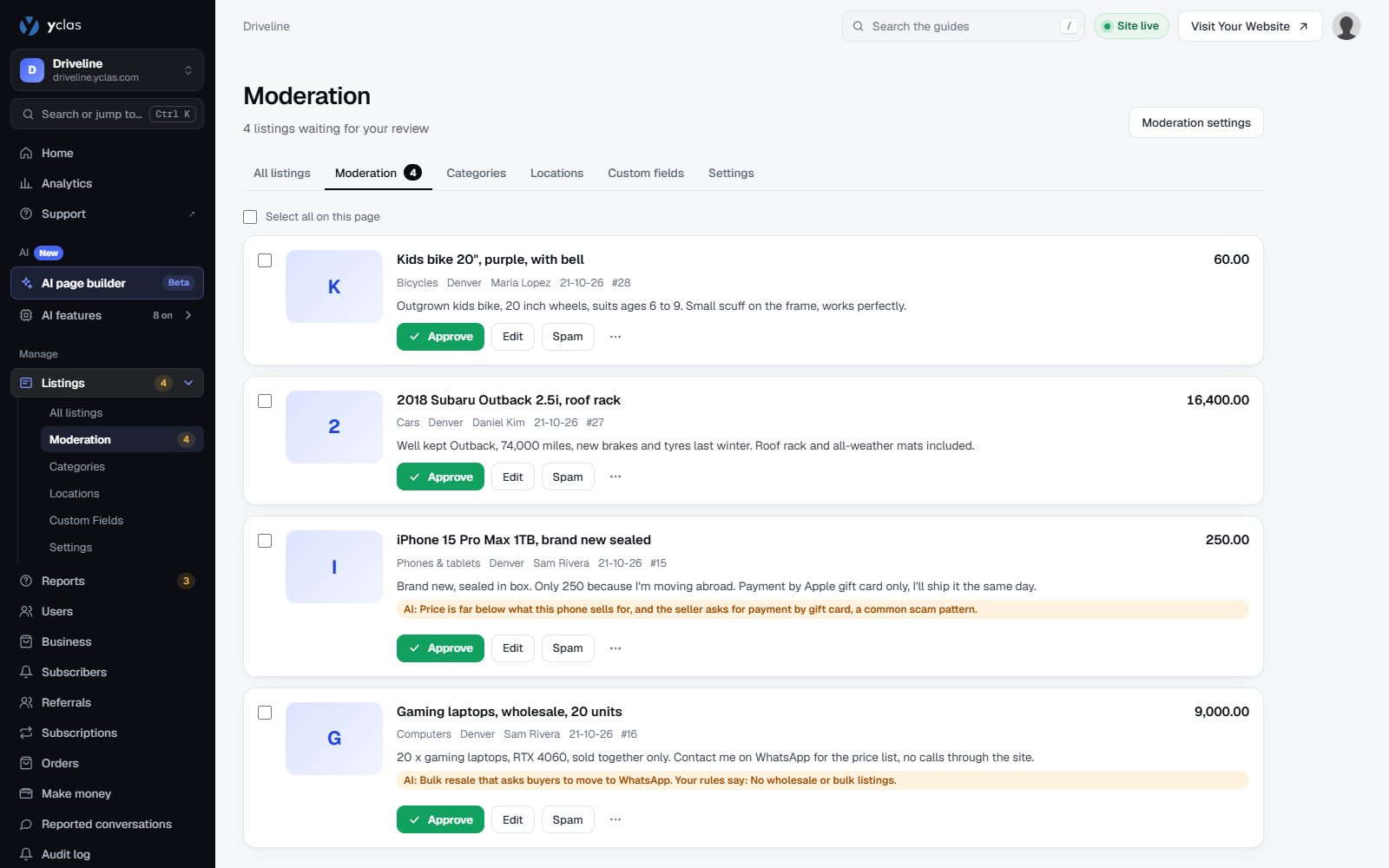
- Set the rulesChoose moderation, banned words and AI checks.
- Go liveChoose a plan, connect your domain, switch on paid listings when it is time.
How much does it cost to start a hay and feed site?
Running it on a hosted platform costs little; the spending goes on a domain, signs and cards for feed stores, and your time calling growers before first cutting.
Should I show hay prices?
Yes, let growers show price per bale or per ton, picked up or delivered. A page of current asking prices on your site becomes a reason for buyers and growers to visit.
How do I handle complaints about moldy or light hay?
Ask sellers for storage, rain, bale weight and test results, collect reviews after sales, and remove sellers who misdescribe hay more than once.
Do I need any license to list hay and feed?
A listing site usually does not sell the hay itself, but rules on commercial feed, weed free certification and moving hay between states differ. Check the rules where you operate.
How do I get busy growers to post?
Post for them from a phone call and two photos, import lots from a spreadsheet, and show them the inquiries their listings get.
Can a regional site compete with farm groups online?
Yes, by letting buyers filter by forage type, cutting, bale and distance, and by alerting them when the hay they want is posted. Groups bury those details in long threads.
Is there demand all year?
Demand peaks after cutting and before winter, and spikes in dry years. Grain, feed and bedding listings keep the site useful in the quieter months.
Should my site cover feed grain and bagged feed too?
A grain and feed category keeps the site useful outside haying season and brings in feed stores and grain farmers. Rules on selling commercial feed differ by place, so check the rules where you operate before you invite manufactured feed.
How do I get growers to keep quantities up to date?
Remind them after each sale, make editing a listing quick, and expire listings after a set time so they must renew. Growers who see buyers calling about sold hay usually start updating on their own.
Do buyers expect delivery prices on a hay site?
Many do. Ask growers for their price picked up and, if they haul, a delivered price or a per mile rate and the distance they will travel. A field for whether the seller can load helps buyers without equipment.
How should I handle out-of-state buyers in a drought year?
Welcome them, but remind them of the rules on moving hay across state lines and about weed free certification where it applies. Encourage them to use a known hauler and to see the hay or a recent test before paying.
Can I list hay that has been rained on or is only fit for cattle?
Yes, as long as the listing says so. Rained-on or lower quality hay has buyers among cattle producers and for bedding, and honest condition fields keep horse owners from buying it by mistake.
Related pages.
The parts of Yclas this leans on.
You have the plan. Now build your hay and feed site.
Describe your site in a sentence and the setup wizard writes the categories, example listings and a look. Free for 15 days, no credit card.
Start my classifieds site
Photo credits
The screenshots show demo sites with made-up sellers. Their photos come from Wikimedia Commons, some cropped or with signs and plates blurred; these ones are under Creative Commons licences:
- Cattle Ranch (5451966167) by Alex Proimos from Sydney, Australia, CC BY 2.0
- Cattle in pasture, Alaska by L T Hunter, CC BY 2.0
- Dexter cattle PM16-2 by Pieter Delicaat, CC BY-SA 4.0
- Suffolk Ewe with twin lambs by J gareth p at English Wikipedia, CC BY-SA 3.0
- Sheep in a field in Alsager 02 by Dominic Nelson, CC BY-SA 4.0
- Shetland sheep moorit by Jean, CC BY 2.0
- Boer goat444 by Benjamint444, CC BY-SA 3.0
- Flock of Rhode Island Red, Easter Egger, and Barred Plymouth Rock Hens by HeatherLion, CC BY-SA 3.0
- Pekin duck in Buddha park lake, Eluru by iMahesh, CC BY-SA 4.0
- Quarter Horse(REFON)-cleaned by José Reynaldo da Fonseca, derivative work by Pitke, CC BY 2.5
- Haflinger 3607 by Flominator by Flominator, CC BY-SA 3.0
- Cheval (Gypsy horse) by Gzen92, CC BY-SA 4.0
- Harvest Straw Bales in Schleswig-Holstein by Jan van der Crabben (Photographer), CC BY-SA 2.0
- Trailer and Barn, South Hall Farm, Paglesham - geograph.org.uk - 8117991 by Roger Jones, CC BY-SA 2.0
- Mid Devon , Countryside ^ Farmland - geograph.org.uk - 1953042 by Lewis Clarke, CC BY-SA 2.0