How to build a vinyl record marketplace crate diggers trust.
This guide covers building a marketplace where record shops, dealers and collectors sell vinyl by artist, pressing and grade, and buyers pay on the site: picking a genre or region, the pressing details buyers filter on, commission and fees, where the first sellers come from, overgrading and bootlegs, the searches to target and a launch built around record fairs and Record Store Day.
Free for 15 days · No credit card · Plans from $19 a month
Build for buyers who care which pressing they are getting.
Record buyers range from people who want a clean copy of an album they love to collectors who will pay many times more for a first pressing with the right matrix number in the runout groove. Both groups are poorly served by general sites, where a listing says "old records, good condition" and the photo shows a stack on a carpet. A vinyl marketplace earns its place by making pressing and condition searchable and by gathering sellers who grade honestly.
The two sides are clear. Sellers are independent record shops with more stock than wall space, dealers who buy collections and sell at fairs, labels selling their own releases and leftover stock, and collectors trimming their shelves. Buyers are genre collectors, DJs looking for specific 12 inch singles, new listeners building a first collection, and people replacing albums they sold years ago.
Choose where to start
- A genre. Jazz, soul and funk, punk and hardcore, metal, reggae, electronic 12 inches. Each has its own vocabulary and its own obsessive buyers.
- A country or scene. Records pressed in one country, or the local scene of one city, with sellers who know it well.
- A format. 7 inch singles, 78s, or new releases from small labels.
Discogs is the database most collectors use and the place many already sell, alongside eBay, record fairs, shop counters and genre groups on Facebook. Your angle has to be narrower and friendlier than those, with sellers who know the genre.
Pick a genre where the sellers already know each other. They will bring their customers with them.
Describe every record by pressing, then by grade.
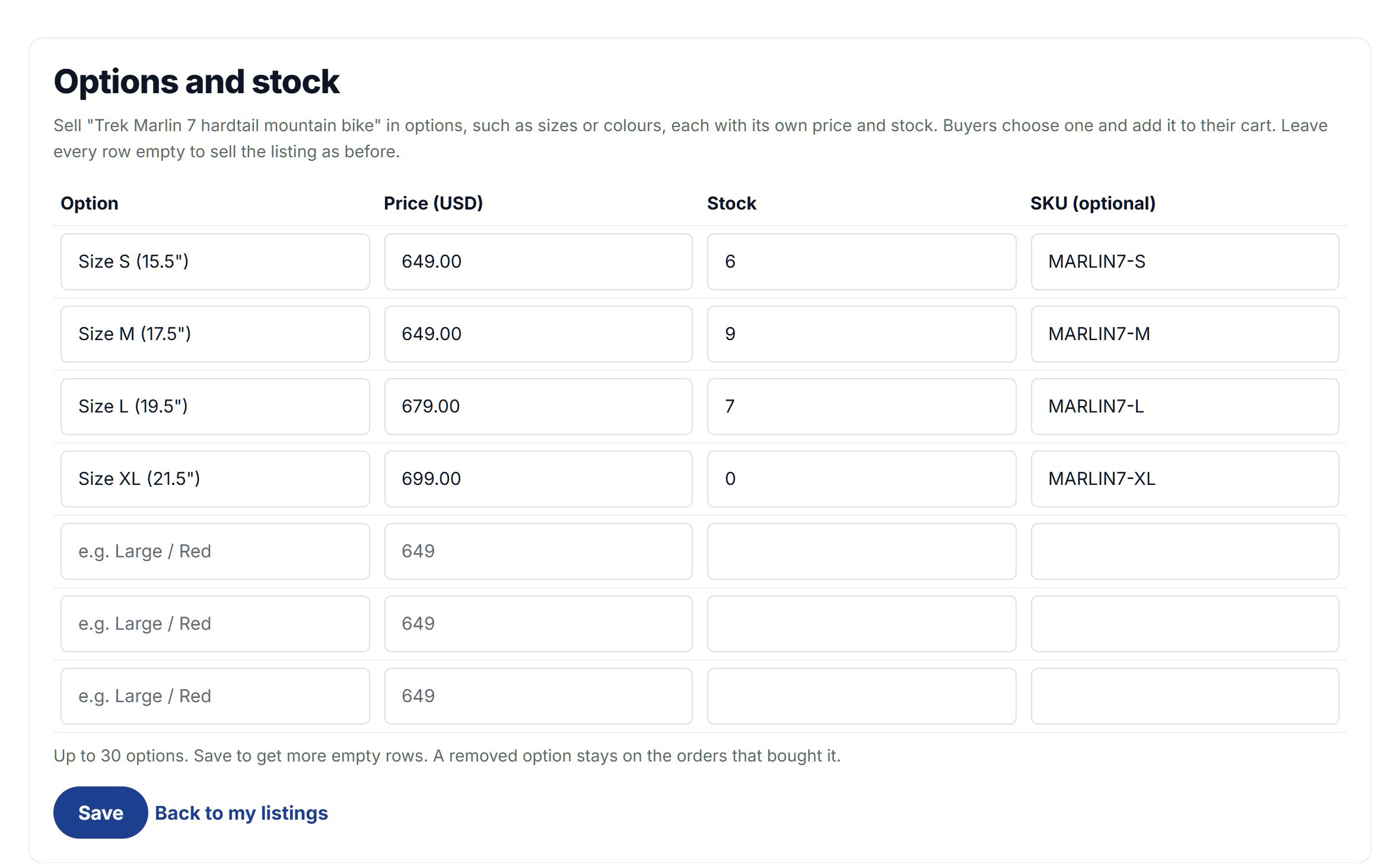
Use genres as top categories and keep them few. Then let fields carry the detail collectors care about. Custom fields can be text, numbers, dropdowns, checkboxes or dates, required or optional, and each one shows as a search filter.
The most important rule: grade the record and the sleeve separately. A near mint record in a worn sleeve and a worn record in a sealed looking sleeve are different purchases. Use the scale buyers know (Mint, Near Mint, VG+, VG, G+, G, Fair, Poor) as two dropdowns, one for media and one for sleeve, and require both.
Pressing details come next. A catalog number and a matrix or runout text field let collectors identify the exact pressing. Country of pressing and year matter because an original pressing and a later reissue can look identical in a photo. Add checkboxes for what comes with the record: inner sleeve, insert, poster, hype sticker, and the obi strip on Japanese pressings, since a missing obi changes the price a lot.
For DJs and newer buyers, speed and size filters are enough to start. Collectors will ask for more fields later; listen and add them.
| Category | Example listings | Fields buyers filter on |
|---|---|---|
| LPs | Original jazz pressings, classic rock albums | Artist, title, label, catalog number, country, year |
| 12 inch singles | House and techno records, extended mixes | Artist, label, BPM range, promo copy, media grade |
| 7 inch singles | Northern soul 45s, punk singles | Artist, A side, B side, label, picture sleeve |
| New releases | Small label pressings, colored vinyl editions | Sealed, color, limited edition, pressing size |
| Japanese and imports | Japanese pressings, European editions | Obi strip, country, insert included, sleeve grade |
| Lots and collections | Boxes of mixed LPs, genre bundles | Number of records, genres, average grade |
Require separate grades for the record and the sleeve; most vinyl disputes start when the two are mixed together.
Earn a commission per record and let busy shops pay for reach.
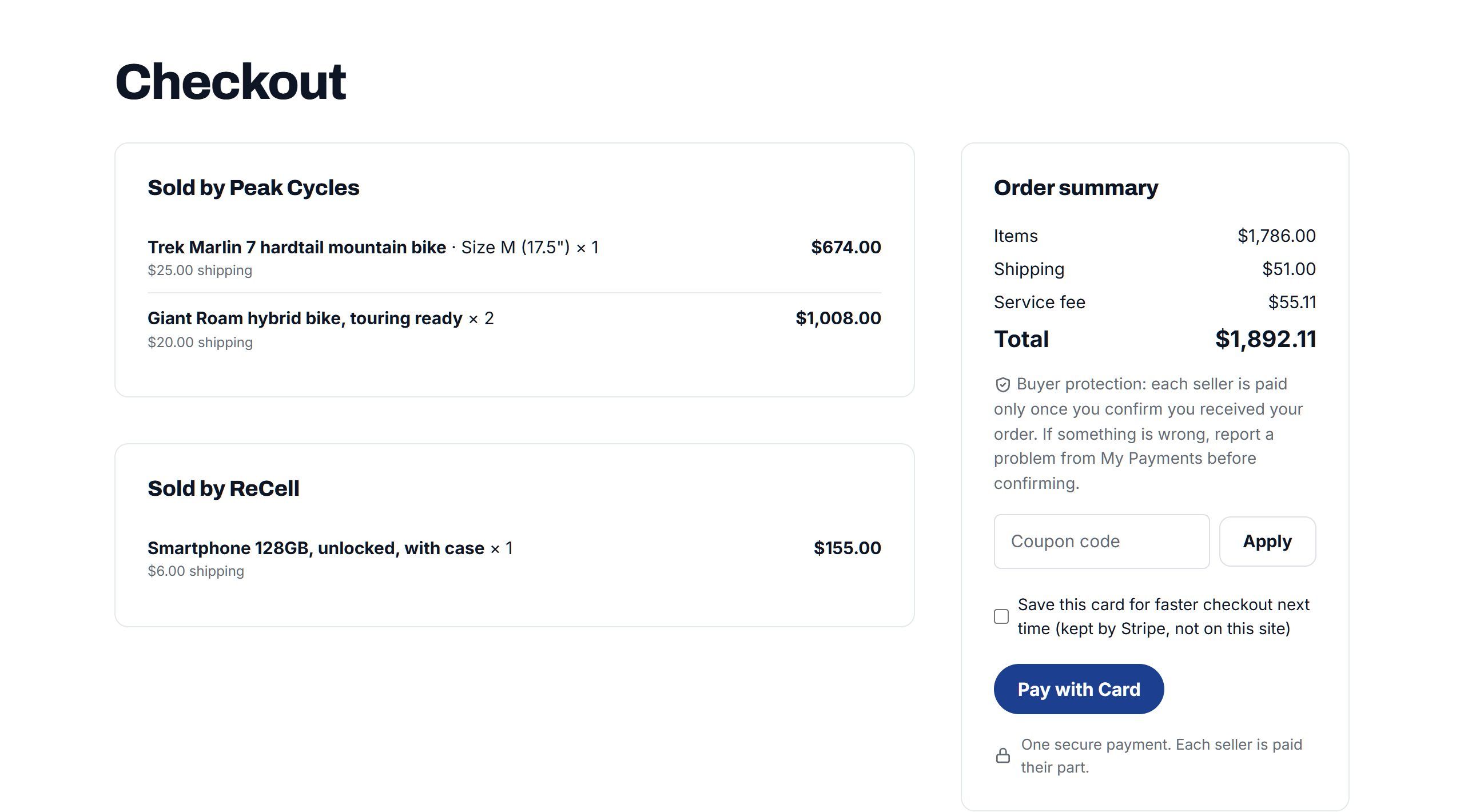
Buyers pay on the site with Stripe, sellers ship, and you keep a commission per sale. Vinyl buyers often buy several records at once, and a cart that holds items from several sellers, with shipping set per seller, fits how they shop. Encourage sellers to offer combined shipping: a buyer who adds a fifth record to the same box should not pay for five boxes.
Sellers will compare your cut with what they pay on the large record sites and on eBay. Set yours a little below, keep it to one number, and do not raise it until the site is busy. An optional buyer service fee can work when buyers clearly get something in return, such as a strict grading policy and a single checkout, but introduce it after you have steady orders.
Visibility extras suit record dealers well. A shop that has just bought a collection will pay to feature the best records or bump a fresh batch to the top of a genre. Seller memberships fit shops listing hundreds of records a month. Auctions with bidding and Buy now are useful for rare pressings where nobody knows the price. Banner spaces can go to labels promoting a new release or to a record fair advertising its next date.
| Model | Works when | Switch it on |
|---|---|---|
| Commission per sale | Collectors buy and pay on the site | At launch, slightly below the big record sites |
| Buyer service fee | Buyers value your grading rules and one checkout | Once orders are steady and disputes are rare |
| Featured listings and bumps | Shops list fresh collections and want them seen | When each genre gets daily visits |
| Seller memberships | Shops and dealers list in bulk every month | When a handful of sellers list hundreds of records |
| Banner spaces | Labels and record fairs want your audience | When you can show them real traffic in a genre |
Start with shops and dealers who are sitting on unlisted stock.
Most record shops have far more stock than they show online. Bins in the back, boxes from collections they bought last month, and dollar records nobody has time to list. That is your first supply.
- Independent record shops. Ask which genre sells slowly in the shop but well online. Offer to list it for them for the first month.
- Record fair dealers. Fairs are where the professional dealers meet. Go with cards and talk to stallholders in the quiet hour after opening.
- Small labels. Labels pressing a few hundred copies of a release need direct buyers and often have leftover stock from older pressings.
- DJs and collectors downsizing. Genre groups on Facebook and forums are full of collectors asking where to sell a few hundred records without dealing with a dealer's low offer.
Shops already track stock in spreadsheets or in inventory exports from other sites, and listings can be imported from a CSV file, so a seller can move a whole genre across in one upload. For a collector listing a few records, AI listing from a photo fills in the title, description, category and price from a picture of the sleeve, ready for the seller to check and add the grade.
Ask every new seller for ten records listed with full pressing details. Those listings set the standard that the next sellers copy.
Supply first: a buyer who finds three records in their genre does not come back.
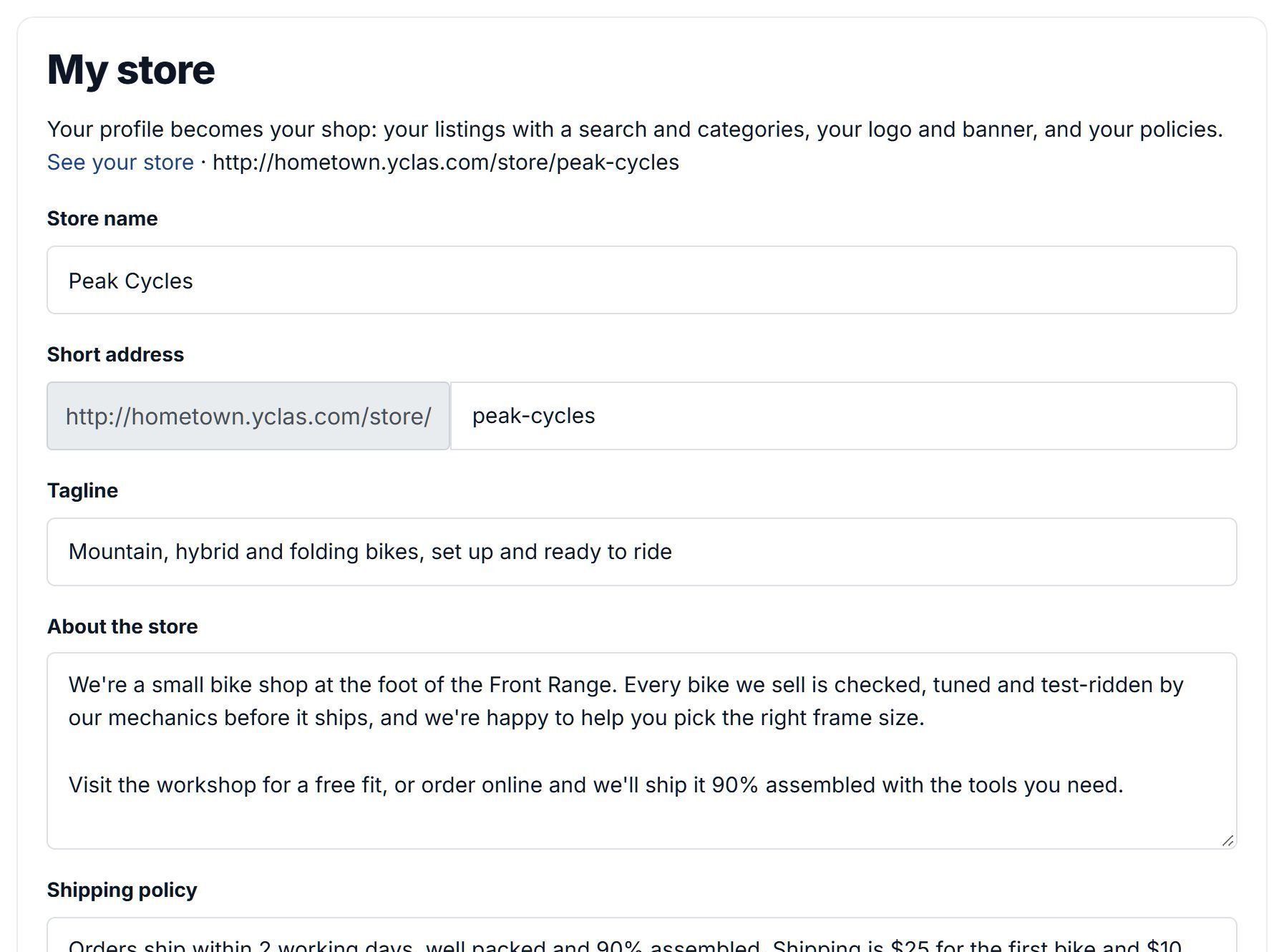
Handle overgrading, bootlegs and warped records before they happen.
The most common complaint in the record trade is overgrading: a record sold as VG+ that crackles all through side one. Grading by eye is not enough for expensive records, so ask sellers to say in the listing whether they play graded the record, and to describe any marks, warps, seam splits or writing on the sleeve. Show buyers the grading scale on every listing page.
Problems specific to vinyl
- Bootlegs and counterfeits. Unofficial pressings of rare records are common and some copy the original label closely. Require the matrix number on any listing that claims to be an original pressing, and remove listings that pass off reissues as originals.
- Shipping damage. Records crack and warp. Set packing standards: records out of the outer sleeve to avoid seam splits, stiffeners on both sides, a proper record mailer. Heat in summer warps records left in a delivery van, so tell sellers to watch the forecast.
- Sealed copies. A sealed record can be a resealed used copy. Ask sellers to state where a sealed copy came from.
- Payment scams. Keep all payments on the site, and ban sellers who invite buyers to pay outside it.
Moderation tools help: approve every listing at first, report buttons, and AI that holds suspicious listings for review. Ratings and reviews on seller profiles do the slow work of showing which sellers grade fairly.
Write a returns policy for records that do not match their grade: a short window, who pays return shipping, and that buyers should report a problem before leaving a review.
Win searches for artists, pressings and record values.
Vinyl searches combine an artist with a buying intent. People search "blue note first pressing for sale", "buy northern soul 45s", "japanese pressing with obi", "punk records for sale uk", "how much is my record collection worth" and "VG+ vs NM vinyl". Every listing has its own page, so a well named listing can rank for the artist, album and pressing at once.
Pages to build
- Genre pages with a short introduction written by someone who knows the genre.
- Label pages for collectable labels, each with a short history and live listings below.
- Pressing guides. How to tell an original from a reissue for a famous album, using matrix numbers and label variations.
- A grading guide with photos of each grade and what each grade sounds like.
- Selling guides for people who inherited a collection: how to sort it, what is likely to be worth something, how to ship records.
Content that answers the inherited collection question is especially useful, because it attracts the sellers you need most. Many of those people have no idea what they own and will list with a site that helped them understand it.
Set the SEO title pattern to artist, title, label, country and year. Reissue anniversaries and new box sets create spikes of interest in the original pressings, so publish around them.

Use record fairs and Record Store Day to find your first crowd.
The record calendar has fixed moments. Record Store Day in April, and its smaller Black Friday edition, bring huge crowds into independent shops and fill social feeds with limited releases. Record fairs run on a regular schedule in most cities, and a fair is the best place to meet dealers and buyers in one room. Autumn and the weeks before the holidays are busy for gifts.
Launch checklist
- Pick one genre or one country, and write the category list and fields with two or three sellers who know it.
- Sign up five sellers and help each list at least a hundred records with full grades.
- Publish the grading guide, packing rules and returns policy.
- Write two pressing guides and one guide for people who inherited records.
- Print cards with the commission in one line for the next local record fair.
After launch
Avoid launching on Record Store Day itself, when shops are overwhelmed. Visit the week after, when they have leftover limited releases to sell. Post in genre forums and groups only where the rules allow it, and answer grading and pressing questions to earn trust. Track searches that return nothing, then recruit sellers in those genres. Turn on saved searches with email alerts so a buyer hunting one pressing hears when it is listed.
One well stocked genre and honest grades make a better launch than every genre half full.
A worked example: Bayou Groove Record Exchange, Texas Gulf Coast.
Bayou Groove Record Exchange is an invented site that shows how a genre focused record marketplace might look in practice. It specializes in soul, funk, Texas blues and zydeco, the music pressed by small regional labels along the Gulf Coast from the 1950s to the 1970s, and it serves collectors anywhere in the United States who want those records from sellers who know them.
The idea came from a dealer in Houston who spent weekends at estate sales and record fairs between Beaumont and Corpus Christi. Local 45s on tiny labels turned up regularly, but listing them on the large sites meant competing with thousands of generic soul records and answering the same pressing questions over and over. Collectors elsewhere in the country had no easy way to see what the Texas dealers had in their crates.
Categories
- 45s
- Soul and funk
- Blues and R&B
- Zydeco and Cajun
- LPs
- Original pressings
- Later reissues
- Label promos and test pressings
- Collection lots
It serves two groups of buyers: collectors who already know the regional labels and search by label name and catalog number, and DJs who play soul nights and need original 45s with strong media grades. Sellers are four Gulf Coast record shops, a handful of traveling dealers and a few older collectors selling what they gathered decades ago.
How it started
The founder recruited sellers first, at a record fair in Houston and by visiting shops in person, and asked each one to list fifty records with media grade, sleeve grade and a photo of the label. One shop sent an inventory export, which was cleaned up and imported in an afternoon. The site opened with roughly 1,500 records, and the first buyers came from a soul night DJ who shared the link with his followers.
How it makes money
The site keeps a commission on each sale, set slightly below what the shops paid on the bigger sites. Six months in, it began selling bumps to dealers returning from a buying trip and a banner space to a regional record fair. Rare 45s with no clear market price go to auctions with bidding and Buy now, which close on weekday evenings.
| Listing | Price | Key details |
|---|---|---|
| Regional soul 45, small Houston label, 1968 | $85 | Media VG+, plain company sleeve, light label wear |
| Zydeco LP, original pressing | $60 | Media VG, sleeve VG with ring wear, catalog number shown |
| Funk 45, white label promo | $140 | Media NM, promo stamp on label, plays clean through |
| Texas blues LP, 1990s reissue | $24 | Sealed, reissue noted in title, hype sticker intact |
| Lot of 40 soul and R&B 45s | $120 | Media G+ to VG, listed individually in the description |
Your first 90 days on the record calendar.
A record marketplace lives or dies on its first impression with collectors, and collectors judge a site by two things: whether it has records they want, and whether the grades can be believed. The first quarter should build both before anyone is invited to buy.
Line the twelve weeks up with whatever is coming on the record calendar near you. A monthly record fair gives you a recurring place to meet dealers, and if Record Store Day or its November edition falls inside the quarter, plan to visit shops the week after, not on the day. Track every seller conversation in a sheet with genre, rough stock size and whether they play grade. That sheet becomes your recruiting map, showing which labels and decades are still thin.
The plan below assumes one genre or scene. If you picked a country instead, swap the genre tasks for the main genres within that country and keep the order the same.
| Weeks | Focus | Done when |
|---|---|---|
| 1 to 2 | Choose the genre, write fields for media grade, sleeve grade and pressing details | Both grade fields and catalog number are required on every listing |
| 3 to 4 | Meet shops and fair dealers in the genre | Five sellers have committed and each has named the records they will list first |
| 5 to 6 | Import inventory exports and help collectors list by photo | At least 800 records are live with a label photo |
| 7 | Publish the grading guide, packing rules and returns policy | Every listing page shows the grading scale and the returns window |
| 8 to 9 | Invite buyers through one fair and two genre groups | The first 25 orders have arrived without a grading complaint |
| 10 to 11 | Write label pages and two pressing guides | Five label pages are live with listings below them |
| 12 | Review empty searches, returns and seller feedback | You know which labels buyers want and have asked sellers to find them |
Choosing how to build your record marketplace.
Records bring their own software needs. A listing has two separate grades, a catalog number, a matrix inscription and a country of pressing, and buyers want to filter on most of them. Sellers often have inventory exports from other selling sites and expect to bring stock across in bulk. Buyers fill carts from several sellers, so shipping has to be set per seller, ideally with combined rates for extra records in the same mailer.
Custom development makes sense if your plan depends on something no off the shelf tool has, such as matching each listing to a release database or showing audio clips of the actual copy. That is a serious budget and a long timeline, and payment handling becomes part of your job.
A self hosted marketplace script or WordPress plugin keeps costs down if you are comfortable running a server. Test it with a real inventory export before committing: some tools struggle with thousands of short listings, and multi-seller shipping often needs extra add-ons.
A hosted builder such as Yclas covers the core needs, with custom fields for grades and pressing details as search filters, CSV import, a cart across sellers and a commission per sale, without anyone writing code. You give up the ability to build unusual features of your own.
Whichever route you take, do a test with a hundred real records from one seller before launch. The way the software handles that hundred tells you more than any feature list.
| Route | Fits when | Watch out for |
|---|---|---|
| Custom development | You need a release database or audio samples built in | Cost, a long build and responsibility for payments and security |
| Self hosted script or plugin | You can run a server and want low starting costs | Bulk import limits, add-ons for multi-seller shipping, your own backups |
| Hosted builder | Your time is better spent with dealers than on code | Features are what the platform offers, not what you design |
| Selling through an existing big site first | You want to test demand before building anything | You build their audience, not your own, and cannot set the rules |
What a vinyl record marketplace costs to run.
The software is the smallest part of the bill. Most of the cost is your time in the first months: finding the first listings, answering questions and checking what gets posted.
Plan for record mailers and stiffeners to test your packing rules, a stall or entry fee at a few record fairs, and printed cards. Stripe payment fees come out of each sale, and a turntable for checking test copies is useful.
| Cost | Typical range | On Yclas |
|---|---|---|
| Domain | $10 to $20 a year | Your own, with SSL included |
| Software and hosting | $0 to $100+ a month, plus plugins and updates | Marketplace $149 a month for checkout and commission |
| Design | $0 to $100 for a theme, or a designer | 109 looks included |
| Payment fees | About 3% per payment | Your Stripe or PayPal fees; Yclas takes nothing |
| Your time | 5 to 10 hours a week at the start | Finding listings, moderation, support |
Mistakes that kill record marketplaces.
- Allowing one combined grade. A single "VG+" field hides whether the problem is the record or the sleeve, and buyers argue about it after delivery. Require separate media and sleeve grades from the first listing, and show both next to the price in search results so buyers never have to open the listing to find them.
- Accepting stock photos. A picture of the album cover from the internet says nothing about the copy for sale. Ask for a photo of the actual label, and of the runout area for anything sold as an original pressing. Collectors read label details closely, and a seller who refuses to show them is usually hiding something.
- Treating reissues as originals by default. Many reissues copy the original artwork. When the listing does not say which pressing it is, a buyer who paid original prices feels robbed. Make pressing type a required dropdown.
- No combined shipping. Record buyers rarely stop at one. If every record in a cart carries full shipping, buyers go back to fairs and shops. Ask sellers to set a lower rate for each extra record, and mention combined shipping in their storefront so buyers keep browsing the same seller.
- Launching across every genre at once. Ten records each in thirty genres means no collector finds enough to return. Go deep in one genre where you know the sellers and the vocabulary. A jazz collector and a hardcore punk collector want different filters, different guides and different sellers.
- Shipping in summer heat with no rules. Warped records arrive, buyers ask for refunds, and sellers blame the carrier. Tell sellers to hold shipments during heat waves and to ship early in the week, so a parcel does not sit in a hot depot over the weekend.
- Charging for extras while the site is quiet. A shop that pays to feature a rare pressing and sells nothing will not try again. Hold paid extras until each genre gets daily visits.
- Letting sellers price far above the market without context. A wall of overpriced common records makes the whole site look expensive and drives collectors back to fairs. Show recently sold prices on your own site where you can, and talk to sellers whose prices never move.
- Ignoring people who inherited records. They hold some of the best stock and need help, not jargon. A plain guide for them, and a simple way to list with a photo, brings in supply other sites miss.
Most of these come back to one rule: describe the exact copy for sale, not the album.
Record collector terms worth learning.
Sellers and buyers will use these words in listings and messages from the first week.
| Term | What it means |
|---|---|
| Media grade | The condition of the record itself, judged by look and ideally by playing it. |
| Sleeve grade | The condition of the outer jacket or picture sleeve, graded separately from the record. |
| Matrix number | The code etched into the runout groove that identifies the exact pressing and plant. |
| Runout groove | The smooth area between the last track and the label, where matrix codes and stamps appear. |
| First pressing | Copies from the earliest production run of a release, usually the most valued by collectors. |
| Reissue | A later pressing of a release, sometimes with the same artwork, priced well below an original. |
| Promo | A copy sent to radio stations or reviewers, often with a white label or a promotional stamp. |
| Test pressing | A small run made to check sound quality before full production, rare and often collectable. |
| Obi | The paper strip wrapped around Japanese pressings, whose absence lowers the value noticeably. |
| Seam split | A tear along the edge of a sleeve, often caused by shipping a record inside its jacket. |
| Ring wear | A circular worn patch on the sleeve where the record has rubbed against the cardboard over time. |
| Play graded | Graded after listening to the record, not only by looking at the surface under light. |
| Bootleg | An unofficial pressing made without the rights holder, sometimes copying the original label closely. |
The same steps for a vinyl record marketplace on Yclas.
- Describe your marketplaceThe setup wizard writes the categories, an About page and example listings from one sentence.
- Add fieldsThe details buyers filter on, as dropdowns, numbers or checkboxes.
- Bring sellersInvite them, import their stock from a spreadsheet, or post for them.
- Set the rulesChoose moderation, verified sellers, reviews and reports.
- Take paymentsOn Marketplace, buyers pay on the site and you keep a commission, with Stripe.
What does it cost to get a vinyl marketplace off the ground?
Beyond the platform, a domain and some printed cards, most of the early spending goes on record fair entry, packing supplies and your own time. It can start on a few hundred dollars.
How do I compete with Discogs and eBay?
Not on size. Pick one genre or country, recruit sellers who know it, enforce honest grading and keep fees lower. Buyers come for curation and sellers come for buyers who care.
Which grading scale should sellers use?
Use the scale collectors already know, from Mint down to Poor, and require one grade for the record and one for the sleeve. Publish a guide with examples so everyone reads the grades the same way.
Can I sell new records from labels too?
Yes. Small labels need direct buyers, and new releases bring younger listeners who later buy used records. Give new releases their own category with a sealed checkbox.
How should sellers ship records?
Records out of the outer sleeve, stiffeners on both sides, a proper record mailer, and combined shipping for several records. Ask sellers to avoid shipping in extreme heat.
What do I do about bootlegs?
Require pressing details on any listing that claims to be an original, ask for matrix numbers, and remove sellers who pass off unofficial pressings as originals.
When should I start charging sellers more than the commission?
Once each genre has daily returning buyers. Featured listings, bumps and memberships only sell when sellers can see the traffic.
Should sellers be allowed to list records without playing them?
Visual grading is common for cheap records, but expensive ones should be play graded or say clearly that they were not. Add a play graded checkbox so buyers can filter for it.
How do I handle a record that arrives warped?
Ask the buyer for photos on arrival, refund or replace through the seller if packing or timing was poor, and use repeat cases to tighten your heat and packing rules.
Can I let buyers listen to a sample before buying?
Most marketplaces do not host audio of each copy, and uploading recorded music raises rights questions. Ask sellers to describe noise and skips in words, and check the rules where you operate before hosting any audio.
Is a local pickup option worth adding?
For large collections and boxes of LPs, yes. A pickup category lets buyers in the same city skip shipping on heavy lots, and it brings local dealers onto the site.
Do I need to collect sales tax on record sales?
In many places a marketplace has to handle sales tax or VAT on the orders it processes. The rules depend on your country and state, so ask an accountant and check the rules where you operate before you open.
Related pages.
The parts of Yclas this leans on.
You have the plan. Now open the record marketplace your genre has been missing.
Describe your site in a sentence and the setup wizard writes the categories, example listings and a look. Free for 15 days, no credit card.
Start my marketplace