How to build a wholesale marketplace where small brands meet independent shops.
This guide covers building a wholesale marketplace where makers and small brands sell in bulk to independent retailers: choosing a product field and a region, the details shop buyers filter on such as case packs and minimum orders, a commission model brands accept, recruiting the first brands, verifying retailers, the searches to rank for, and a launch timed to the buying seasons.
Free for 15 days · No credit card · Plans from $19 a month
Pick a product field where small brands and small shops already look for each other.
Wholesale between small brands and independent shops still runs largely on trade shows, sales reps, emailed line sheets and PDF order forms. A gift shop owner who finds a candle maker on social media has to email for the wholesale price list, wait, fill in a spreadsheet and pay by bank transfer. The maker repeats that with every shop. Large wholesale platforms exist, but they cover everything at once, and many makers and retailers in a narrow field feel lost among thousands of brands.
Choose the angle
- One product field. Stationery and paper goods, natural body care, pet accessories, specialty food for delis, home textiles.
- One region or origin. Brands made in one state, country or tradition, sold to shops that want that story on the shelf.
- One kind of shop. Museum stores, garden centers, bookstores, boutiques in tourist towns.
The two sides need different things. Brands want new stockists without paying a rep or a booth, and orders that arrive complete. Retailers want small opening orders, so they can test a line, and products nobody else on their street carries. Watch where both meet today: regional gift fairs, maker markets that hold a trade day, retail association newsletters, and buyer groups on social media.
Narrow beats big here. A shop buyer who trusts your edit will order from brands they have never heard of.
Show wholesale terms on every product, not hidden in a PDF.
Categories follow how a shop lays out its floor: home, bath and body, paper, kitchen, kids, accessories. Fields carry the trade terms that decide whether a buyer can order at all. A boutique owner checks the wholesale price against the suggested retail price to see the margin, then the case pack, then the minimum order and lead time. If any of those is missing, they email the brand and often never come back.
Keep units precise. "Case of 6" and "sold in sixes" must mean the same thing on every listing, so make case pack a number field and minimum order a number with a dropdown for units or dollars. Lead time and ships-from location help shops plan seasonal stock, and "made in" answers the question every independent retailer is asked by customers.
Add a reorder minimum separate from the opening minimum, because many brands ask less of a shop that already stocks them. A field for exclusivity, such as "one stockist per town", helps shops that want lines their competitors do not carry.
| Category | Example listings | Fields shop buyers filter on |
|---|---|---|
| Home and candles | Soy candle, 8 oz, case of 6 | Wholesale price, suggested retail price, case pack, scent |
| Bath and body | Goat milk soap bars, case of 12 | Ingredients, certifications claimed, case pack, shelf life |
| Paper and stationery | Greeting cards, assorted dozen | Minimum order, design count, envelope included |
| Kitchen and pantry | Small-batch hot sauce, case of 12 | Shelf life, lead time, ships from, labeling |
| Kids and toys | Wooden stacking toys, case of 4 | Age range, safety testing stated, case pack |
| Accessories | Leather card wallets, 6 colors | Made in, minimum order, reorder minimum, lead time |
Make suggested retail price required, so every listing shows the shop its margin.
Charge brands a commission on orders you bring them.
Wholesale platforms usually earn a commission on each order, paid by the brand, because the brand is getting a stockist it did not have to find. Shops pay through checkout and you keep your share of each sale. Brands compare your cut to the cost of a trade show booth or a sales rep's commission, so the number has to look fair against those. A useful split some platforms use is a higher rate on a shop's first order with a brand, which you introduced, and a lower one on reorders.
Retailers expect wholesale prices to stay wholesale, so think carefully before adding a buyer service fee on top. It can work for very small orders, where the fee covers handling, but large opening orders should not carry it.
Seller memberships suit established brands that list many products and want to be found first in their category. Featured listings fit the weeks before buying seasons, when every brand wants to be on the home page.
| Model | Works when | Switch it on |
|---|---|---|
| Commission per order | Shops pay through the site | From the first order |
| Higher rate on first orders | You are bringing brands new stockists | Once brands see new shops ordering |
| Featured brands | Shops browse before gift and holiday buying | A month before each buying season |
| Brand memberships | Brands carry a large range and reorder often | When a category has many competing brands |
| Small-order fee for buyers | Shops place tiny test orders that cost brands to pack | Only below a set order size |
Recruit fifty brands with full line sheets before inviting shops.
A retail buyer judges a wholesale site in a few minutes. It needs enough brands in your field that the visit feels like walking a trade fair aisle, not one table. Start with supply.
- Maker markets and craft fairs. Many exhibitors already sell to a handful of shops and want more. Collect line sheets at the booth.
- Regional trade shows and gift fairs. Walk the floor, especially the emerging-brands section, and follow up the week after.
- Small brands on social media. A post saying "wholesale inquiries welcome" is a brand that wants your help.
- Makers' guilds, small business centers and export programs. One introduction can bring many brands.
- Shops you have already spoken to. Ask which brands they buy from directly, then approach those brands with a shop already interested.
Every brand has a line sheet: a PDF or spreadsheet with product names, wholesale and retail prices, case packs and minimums. Turn it into a CSV and import it, so a brand can be live in an afternoon. The AI listing from a photo helps makers with a few new products: they take a picture, the AI fills in the title, description, category and price, and they check it before it goes live.
Never launch a brand with half its range. Shops ask for the full line before placing a first order.
Protect brands from fake retailers and shops from fake brands.
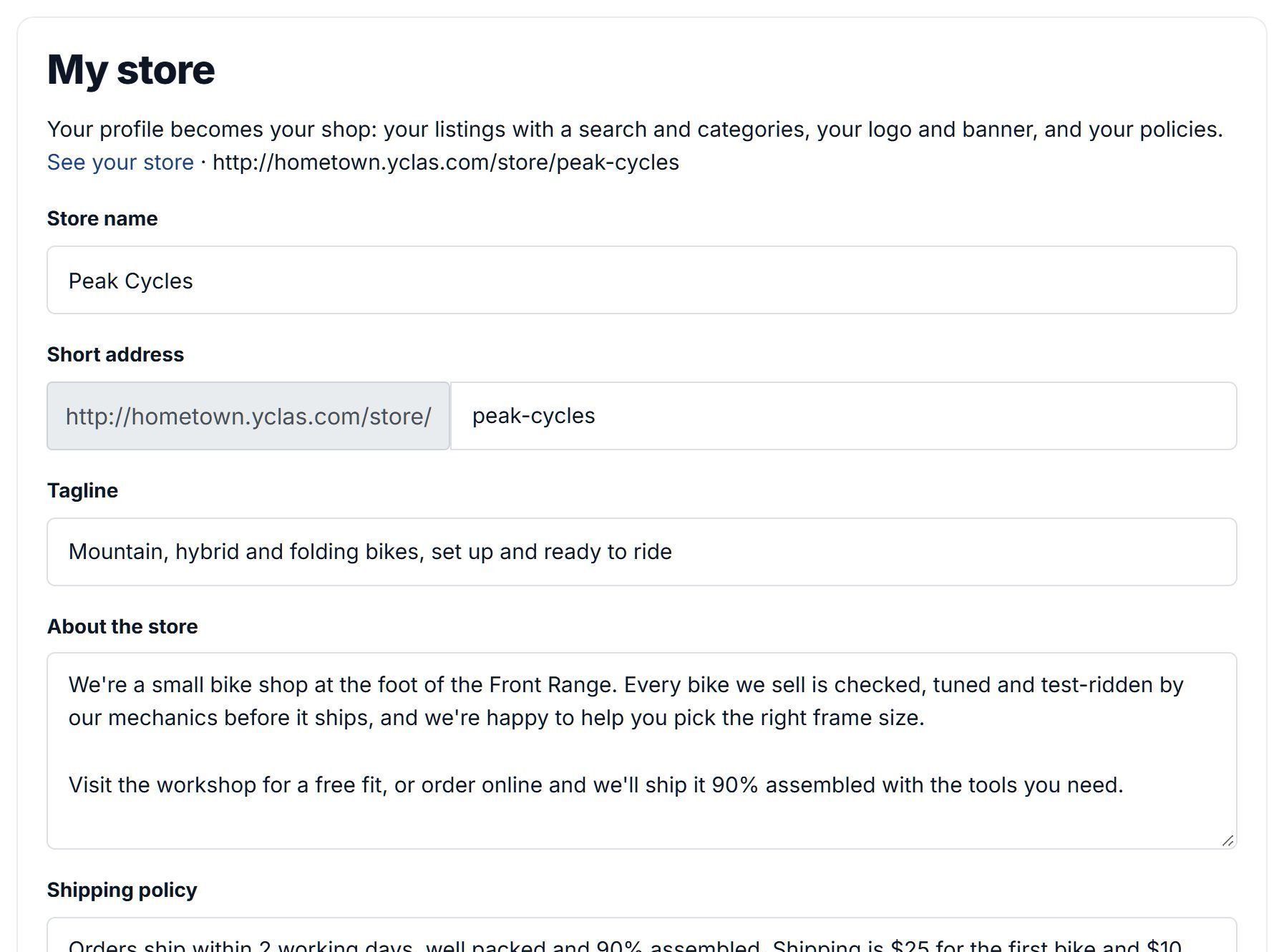
Wholesale attracts its own fraud. The classic scam is a buyer posing as a shop to get wholesale prices, then reselling online at a discount that undercuts the brand's real stockists. Ask retailers for a shop name, address, website and, where it applies, a resale or tax certificate before their first order, and tell brands what you check. Sales tax and resale exemption rules differ between places, so check the rules where you operate rather than assuming a certificate settles it.
Other risks
- Counterfeit or relabeled goods. A seller passing off bought-in products as handmade, or copies of a known brand. Ask new brands where products are made and remove listings on credible reports.
- Regulated products. Cosmetics, food, children's toys and candles can have labeling and safety rules. Ask brands to confirm their products meet the rules for the places they ship to.
- Damaged shipments. Glass and ceramics break. Ask brands to state packing and how they handle breakage claims.
- Returns. Wholesale orders are usually not returnable for change of mind. Write that down so shops know before ordering.
- Pricing promises. Some brands ask shops not to discount below a set price; that is between brand and shop, so do not enforce it for them.
Verified seller badges, brand profiles and shop reviews help a retailer trust a brand on a first order.
Rank for the searches shop owners make when they need new lines.
Shop owners search for suppliers in plain words. Expect searches such as "wholesale candles for boutiques", "handmade soap wholesale low minimum", "wholesale greeting cards small business" and "local makers wholesale Texas". Low minimum and made-in phrases are especially common, because small shops cannot commit to large orders.
Pages to build
- Category pages with the trade terms in the title: "Wholesale ceramics, minimum order under $200".
- Region pages: "Wholesale brands made in Vermont", "Pacific Northwest makers for retailers".
- Brand pages: story, range, minimums, lead times, and stockists who agreed to be named.
- Buyer guides: how to price at keystone, how to place a first wholesale order, how to plan holiday stock.
Write for the shop owner's calendar. Articles on holiday buying, back-to-school stock or tourist season ranges get found in the months when buyers plan, and they lead straight into the matching categories. Brand interviews with photos of the workshop give shop owners the story they will retell to their own customers.

Open before a buying season, with one field and one region.
Retailers buy in seasons. Many independent shops place holiday orders in late summer and early fall, and spring and summer orders around the turn of the year. Launch a few weeks before one of those windows so the first shops arrive with budgets to spend.
First steps
- Launch with brands in one field and one region, all with complete line sheets.
- Invite fifty shops that fit, by phone or in person where you can. Bring printed examples of three brands you know they would like.
- Partner with a retail association or a regional gift fair and offer their members a first look.
- Ask the first brands to tell their existing stockists to reorder through you, so shops see real activity.
Launch checklist
- Every product has wholesale price, suggested retail price, case pack and minimum order.
- Retailer check in place, and brands told what it covers.
- Shipping per brand set, with a clear note on breakage and returns.
- A short page explaining how shops pay and how brands get paid through Stripe.
- A buying-season calendar on the home page.
After the first season, look at which categories shops searched with no results and recruit brands for those gaps first.
A worked example: Dune Grass Wholesale, west Michigan.
Imagine Dune Grass Wholesale, a fictional marketplace where brands made in Michigan sell to the gift shops, galleries and general stores of the Lake Michigan shore, from the beach towns near the Indiana line up to the resort villages of the northern Lower Peninsula. Most of those shops are seasonal: they open in May, do most of their year's sales between Memorial Day and the color season in October, and close or cut their hours over winter.
How it started
The founder owned a gift shop in a lakeside town for nine years and bought from about forty Michigan makers. Every February she spent two weeks emailing for line sheets, retyping prices into order forms and chasing makers who had changed their minimums. She noticed that the makers had the same problem in reverse: each one emailed dozens of shops one at a time. She started by putting her own suppliers on the site, with their permission, then invited the shop owners she knew from the regional retail association. Her first rule was simple: only brands that make their goods in Michigan, checked by a visit or a video call with the workshop.
Categories
- Home
- Candles and home scent
- Ceramics and mugs
- Textiles and blankets
- Pantry
- Jams and preserves
- Coffee and tea
- Cherry and maple products
- Paper
- Cards and notebooks
- Prints and maps
- Apparel and accessories
- Knitwear
- Bags and totes
Who it serves
On the selling side are small Michigan brands with one to ten staff, many of them working from a home studio or a shared commercial kitchen. On the buying side are independent shops in tourist towns that want local goods, because visitors ask for something made nearby.
How it makes money
Dune Grass keeps a higher commission on a shop's first order with a brand and a lower one on every reorder after that. Brands accept the split because the first order is the one they could not have found alone. Featured placements sell in January and February, when shops plan their opening stock. Five food brands with large ranges pay for memberships. In the second year, a regional packaging supplier bought a banner space aimed at the brands, selling boxes and void fill sized for glass jars and ceramics.
The busiest weeks of the year are not in summer. They are the six weeks before shops open, and a second, shorter burst in August for the fall color and holiday season.
| Listing | Wholesale and retail price | Key details |
|---|---|---|
| Soy candle, 9 oz tin, lake scent | $11 wholesale, $22 retail | Case of 6, opening minimum $150, ships within 5 days |
| Tart cherry preserves, 10 oz jar | $5.50 wholesale, $11 retail | Case of 12, made in a licensed kitchen, best before date on lid |
| Stoneware mug, lighthouse glaze | $14 wholesale, $28 retail | Case of 4, made to order, 3-week lead time |
| Letterpress shoreline map, 8 x 10 in | $9 wholesale, $20 retail | Minimum 6 per design, sleeves and backing boards included |
| Wool blend knit beanie | $16 wholesale, $34 retail | Assorted case of 6 colors, reorder minimum $100 |
The first 90 days: aim every week at one buying season.
A wholesale marketplace has a deadline built into it: the next buying season. Pick the window your shops buy in, such as late summer for holiday stock or the turn of the year for spring, and make day 90 land about two weeks before it opens. Launching inside the window, rather than before it, means shop budgets are already spent at trade shows.
Brands come first, but not just any brands. Every week you spend recruiting outside your chosen field and region makes the site look less like an edit and more like a directory. Collect complete line sheets, not promises, and do not count a brand as signed until every product shows wholesale price, suggested retail, case pack and minimum.
Shops come last and in small numbers. Thirty shop owners who fit your field and order this season will teach you more than three hundred sign-ups who browse once. Track the orders, not the accounts. A shop that places one opening order and then a reorder within the same season is the clearest sign the marketplace works, so watch for those first reorders and ask those shops why they came back.
| Weeks | Focus | Done when |
|---|---|---|
| 1-2 | Choose the field, region and shop type | Ten shop buyers have said which lines they struggle to find and how they order now |
| 3-4 | Write brand terms | Commission, retailer checks, breakage and returns fit on one page that three brands have read and accepted |
| 5-7 | Collect and import line sheets | Forty brands are live, each with every product's wholesale price, suggested retail, case pack and minimum |
| 8-9 | Check and invite retailers | Thirty shops have accounts with shop name, address and resale details checked |
| 10-11 | Bring existing stockists across | Brands have asked their current shops to reorder through the site, and the first twenty orders are paid |
| 12 | Review the first season | Each brand has seen its orders, and you have a list of categories shops searched with no results |
Ways to build it, judged by how well it handles trade terms.
A wholesale marketplace looks like an online shop but behaves differently. Shops compare wholesale price against suggested retail, order by the case, meet a minimum per brand and pay several brands in one go. Some founders also want prices visible only to checked retailers, and some brands want payment terms such as net 30. List which of these you need on day one and which can wait, because that list decides the route.
Building it yourself with developers is the route when trade terms are the product: hidden wholesale prices, tiered pricing by order size, minimums enforced per brand, invoices with terms. All of that can be built, but it takes months and a budget to match, and it is easy to build features shops never use.
Installing a multi-vendor script or WordPress plugin on your own server can work if you are comfortable maintaining it. Check carefully whether it handles case packs, per-brand minimums and per-brand shipping without a pile of extra add-ons, and who updates them.
A hosted marketplace builder gets brands and shops trading fastest: a cart across sellers, shipping per seller and card checkout come ready. You accept its limits: wholesale prices may be visible to any visitor, so you handle retailer checks yourself before approving accounts.
Many founders start hosted, prove that shops reorder, and only then pay for custom trade features. By then they know which features shops actually ask for, which is rarely the list they wrote on day one.
| Route | Fits when | Watch out for |
|---|---|---|
| Custom build | Hidden prices, tiered pricing or net terms are essential from the start | Months of building before the first order, and features nobody asked for |
| Multi-vendor script or plugin on your own server | You can maintain a server and test updates before buying seasons | Case packs and per-brand minimums handled by add-ons that may conflict |
| Hosted marketplace builder | You want brands and shops trading this season | Prices that may be public, and retailer checks done by hand |
| Shared order form per brand | You are testing the idea with five brands and ten shops | No combined cart, so shops still place one order per brand |
What a wholesale marketplace costs to run.
The software is the smallest part of the bill. Most of the cost is your time in the first months: finding the first listings, answering questions and checking what gets posted.
Budget for walking trade shows and maker fairs to meet brands, samples you may want to see in person before featuring a brand, and time spent checking retailer details. Some founders also pay for a booth at a regional gift fair once the site has enough brands to show.
| Cost | Typical range | On Yclas |
|---|---|---|
| Domain | $10 to $20 a year | Your own, with SSL included |
| Software and hosting | $0 to $100+ a month, plus plugins and updates | Marketplace $149 a month for checkout and commission |
| Design | $0 to $100 for a theme, or a designer | 109 looks included |
| Payment fees | About 3% per payment | Your Stripe or PayPal fees; Yclas takes nothing |
| Your time | 5 to 10 hours a week at the start | Finding listings, moderation, support |
Mistakes that make brands and shops drift away.
- Opening the doors to anyone who signs up. If any visitor can buy at wholesale, a reseller will undercut your brands' real stockists within weeks, and brands will leave. Check every retailer before the first order, and remove accounts that order single items to their home address.
- Publishing half a line. A brand with three of its twenty products online looks small and makes a shop buyer email for the rest. Import the whole line sheet, including seasonal items marked as coming soon, or wait until it is complete.
- Leaving out suggested retail price. A buyer working out margin needs both numbers side by side. Without the retail price they cannot tell whether a candle at $11 is a good buy, and they move on.
- Trying to cover every product field. A site with three brands each in candles, socks, pet treats and hot sauce looks empty everywhere. Fifty brands in one field look like a trade fair aisle; keep other fields for later.
- Launching after the buying season started. Shops spend opening budgets at trade shows and with reps weeks before the season. Arrive after that and your first orders wait six months. Work back from the window your shops actually buy in.
- Letting reorders leave the site. Once a shop has bought from a brand, the easy path is an email to the maker. If your reorder rate is high and reorders bring brands nothing extra, they will steer shops off the site. A lower commission on reorders keeps them inside.
- Ignoring lead times and stock. A shop that orders mugs for May and receives them in July has a gap on its shelf at the busiest moment. Require a lead time on every product and ask brands to mark made-to-order items clearly. When a brand runs out of an item mid-season, it should mark it unavailable the same day rather than take orders it cannot fill.
- Accepting brands that discount online. If a brand sells the same product on its own site or on discount platforms for less than the suggested retail price, shops cannot compete with it. Ask brands how they price direct to consumers before you invite them.
- Treating shops as anonymous buyers. Small retailers are loyal to people. A note after a first order, a call before the season and a question about what sold well will keep them ordering more than any feature. Keep a simple record of each shop's season, opening month and best-selling categories, and use it when you recruit new brands.
Wholesale terms brands and shop buyers expect you to know.
The trade vocabulary you will see on every line sheet and order form.
| Term | What it means |
|---|---|
| Line sheet | A brand's list of products with wholesale prices, retail prices, case packs and order minimums. |
| MSRP | Manufacturer's suggested retail price: the price a brand recommends shops sell at. |
| Keystone | Retail pricing at double the wholesale cost, the margin many gift shops aim for. |
| Opening order minimum | The smallest first order a brand accepts from a new shop, in dollars or units. |
| Reorder minimum | The usually lower minimum a brand asks of a shop that already stocks it. |
| Case pack | The number of units sold together in one case, such as six candles of one scent. |
| Lead time | How long a brand needs between receiving an order and shipping it. |
| Stockist | A shop that carries a brand's products. |
| Net 30 | Payment terms where the shop pays the invoice 30 days after it is issued. |
| Resale certificate | A document some places use to let a business buy goods for resale without paying sales tax on them. |
| Sell-through | The share of the stock a shop bought that it has sold to customers. |
| Territory exclusivity | A promise that a brand sells to only one shop in a town or area. |
| Backorder | An ordered item that is out of stock and will ship later. |
| Drop ship | An arrangement where the brand ships directly to the shop's customer instead of to the shop. |
| Open stock | Products a brand keeps in stock all year, as opposed to seasonal or limited runs. |
The same steps for a wholesale marketplace on Yclas.
- Describe your marketplaceThe setup wizard writes the categories, an About page and example listings from one sentence.
- Add fieldsThe details buyers filter on, as dropdowns, numbers or checkboxes.
- Bring sellersInvite them, import their stock from a spreadsheet, or post for them.
- Set the rulesChoose moderation, verified sellers, reviews and reports.
- Take paymentsOn Marketplace, buyers pay on the site and you keep a commission, with Stripe.
What does it take to start a wholesale marketplace?
Mostly time: collecting line sheets, importing them and calling shops. Money goes on travel to fairs and trade shows, and perhaps a booth later. You do not hold stock, because brands ship their own orders.
Do retailers need a resale certificate to buy wholesale?
Rules on resale certificates and sales tax differ by state and country. Check the rules where you operate, and ask shops for their business details either way, because brands want to know their products go to real stores.
How do I stop consumers buying at wholesale prices?
Check each retailer before their first order and remove accounts that look like private buyers. Minimum orders also help, because few consumers want twelve of the same candle.
What commission do brands accept?
Brands compare it to the cost of a sales rep or a trade show booth. A higher rate on first orders you bring them and a lower rate on reorders feels fair to most.
How do I compete with the big wholesale platforms?
Be the best place for one product field or one region. Shops come for a curated range they cannot find elsewhere, and brands come because they are not lost among thousands of others.
Who handles shipping and breakage?
Each brand ships its own orders and sets its own shipping. Ask brands to state how they pack and what they do when an order arrives broken.
Should wholesale orders be returnable?
Most wholesale is sold without change-of-mind returns, but damaged and wrong items should be put right. Publish the policy so shops see it before their first order.
Should wholesale prices be visible to everyone?
Many wholesale sites hide them until a retailer is checked, but that takes extra development. If prices are public on your site, check retailers before their first order, and tell brands plainly that their wholesale prices can be seen.
Can brands offer shops net 30 terms?
Checkout takes payment when the order is placed, so payment terms are not part of a standard order. If a brand wants to extend terms to a long-standing stockist, that is an arrangement between them outside the marketplace. Make sure your rules say whether such orders still count toward your commission, so nobody is surprised later.
What about brands from other countries?
Cross-border wholesale brings customs duties, import rules and longer shipping times, and product rules differ between countries. Most founders start with brands from one country and add others only once shops ask for them.
How do I prove to brands that the site is working?
Send each brand a short monthly note with the shops that viewed or ordered its products, and name new stockists you introduced. Include the categories shops searched for, which helps brands plan new products. Brands renew when they can see shops they would never have met otherwise.
Should I also sell the same products to consumers?
Keep the two apart. Consumers buying on a wholesale site at retail prices would compete with your own shops. A separate retail site can come later, but it changes how brands and shops see you, and some shops may stop ordering if they feel you now compete for their customers.
Related pages.
The parts of Yclas this leans on.
You have the plan. Now put small brands on the shelves of independent shops.
Describe your site in a sentence and the setup wizard writes the categories, example listings and a look. Free for 15 days, no credit card.
Start my marketplace