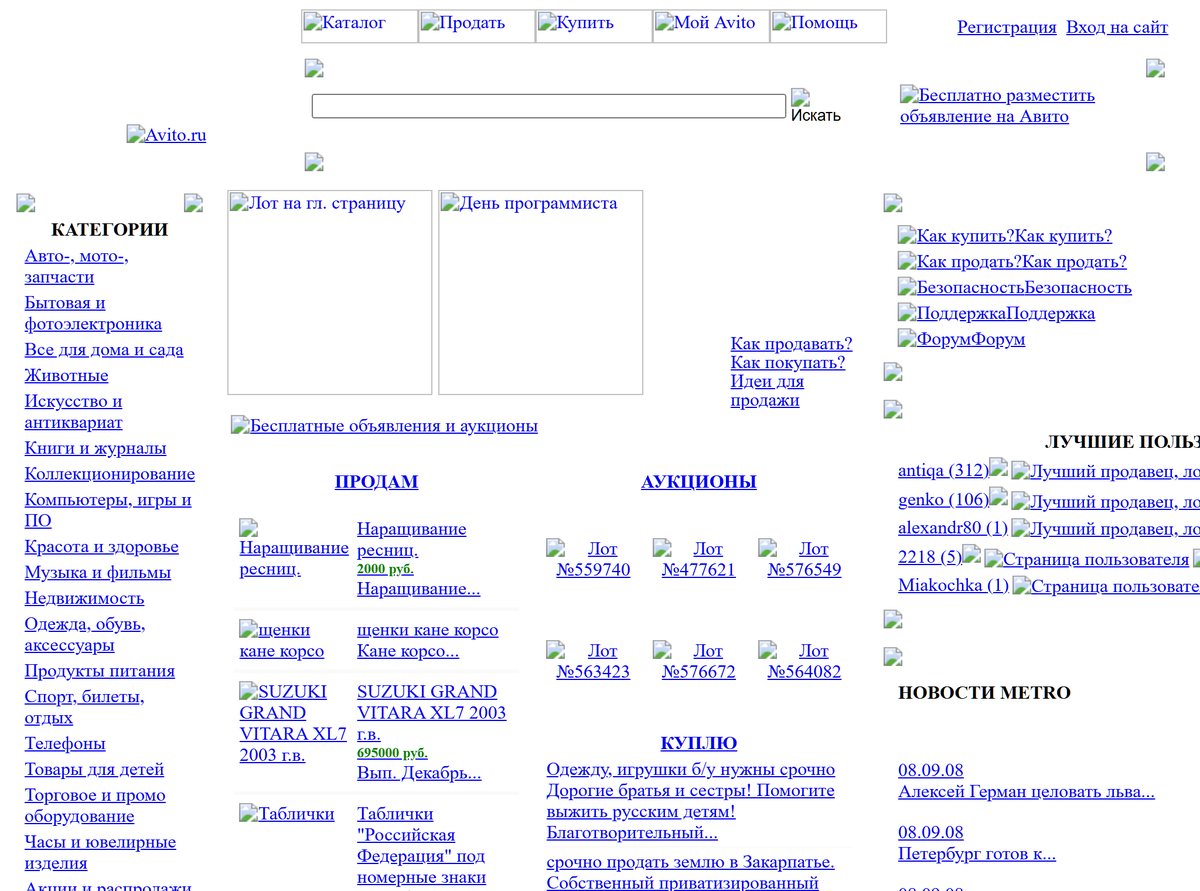
Avito's first version flopped. It launched in Moscow in October 2007 as half classifieds site, half eBay-style auction, and within about a year the auctions were failing, a chief executive had been fired and taken to court, and the founders were cutting staff in the middle of the 2008 crisis2,3,4.
Six years later, Avito had about 140,000 people listing items every day, and about one in five used cars sold in Russia went through it5.
What happened in between was not a big TV budget: it was small, cheap, unglamorous work in two cities. The founders bought search keywords nobody else wanted, kept posting free, and answered every phone call. Only when a buyer would find a full site did they turn on television. This teardown covers 2007 to 2011, and what a small classifieds site can copy in 2026.
The short version
- Avito dropped its clever auction model and kept the simple one: post an ad, get a call, meet, pay cash.
- Posting stayed free for private sellers; money came years later from optional extras and business "shops".
- It filled two cities before opening more, and bought narrow search phrases for kopecks while rivals paid $1.
- TV came more than two years after launch, only in the two full cities, and its message was "sell your clutter".
At a glance
- Founded
- 15 October 2007 (first version live), Moscow7. Some English press gives October 200810.
- Founders
- Jonas Nordlander (co-founder of Tradera, Sweden's eBay-style auction site, sold to eBay in 2006) and Filip Engelbert (former investment banker and brokerage CEO who had run the Russian Yellow Pages business)1,3,4
- Country
- Russia (Moscow and St Petersburg first)3
- Category
- General classifieds: personal items, cars, property, jobs
- First-seller tactic
- Free posting for private sellers, a focus on two cities, cheap long-tail search keywords, phone and email support; TV only after supply existed3,8
- Where it is now
- Russia's leading classifieds site. Naspers took full control in 2019; after 2022 it was sold to Kismet Capital Group for 151 billion roubles9,13,16
Part of the guide Marketplace case studies
The cold-start problem: a print habit, rivals already online
The market. When Nordlander arrived, Russian internet use was low but rising fast. He later put penetration under 30% at the time2. In a 2009 interview he counted about 30 million internet users in Russia, growing by around a fifth a year, and noted that half of Moscow was online: as many people as the whole of Sweden4.
What sellers did before. There was no easy way for an ordinary person to sell something they no longer needed. You went to a kiosk and paid for a classified ad in a newspaper1,2. The biggest name was Iz ruk v ruki ("From hand to hand"), a classifieds paper published since 1992, which also ran the website irr.ru11,12.
The competitors online. Avito was not first. The Iz ruk v ruki catalogue had already moved online, and free classifieds sites such as Slando existed12. By early 2012 the top four were Avito, Slando, irr.ru and OLX.ru8. Slando and OLX later ended up owned by Naspers, the South African media group behind OLX worldwide5,9.
Why two Swedes were in Russia at all. Nordlander has said it was partly an accident of contract law: after eBay bought Tradera, Russia was one of the few markets his non-compete agreement did not cover1. Vostok Nafta, a Swedish investment company with an interest in a small existing Russian classifieds site, invited Nordlander and Engelbert to run it as managers and part-owners3. Kinnevik and Vostok Nafta were the first investors6.
So the problem was the classic one, made harder by geography: a huge country, an audience only starting to go online, an old print habit, and competitors already in place.
How they got the first sellers: six moves
The public record does not say exactly where the very first listings came from. No credible source says Avito copied ads from newspapers or other sites, so this article does not claim it. What the founders and the press of the time do record is a series of decisions that got sellers posting and kept them posting.
Move 1: Drop the clever model, keep the simple one
The 2007 plan was a hybrid of Blocket (Sweden's classifieds site, article 2 of this series) and Tradera (Sweden's auction site)4. A 2007 interview had presented it as a Russian Tradera4. There was also a plan for a Yelp-style business directory next to the classifieds3.
The auctions underperformed. In March 2009 Nordlander explained why: auctions in Russia run into logistics, payments and trust4. An auction works only if the buyer trusts that the item will arrive and the payment will go through. In Russia in 2008, the post, payment systems and banks were not reliable enough for that4.
Classifieds avoid all three problems. Buyer and seller meet, look at the item and pay in cash. During the 2008 crisis the founders decided to focus on one business, classifieds, where competition was also thinner3. Auctions were split off and then dropped completely in 20097,13. Nordlander later described this as remaking Avito "into a more pure play classified model"2.
Why it worked: the product now matched how people already traded. A seller had nothing new to learn: write what you have, add a phone number, wait for calls.
Move 2: Make posting free for private sellers
Print ads cost money and needed a trip to a kiosk1. Avito cost nothing and could be done from home. Posting stayed free for private sellers through the early years; Avito only began charging for optional extras in the last quarter of 20106.
Even then, the basic listing stayed free. In early 2012 the paid options were things like a week at the top of the results for 180 roubles or a VIP block for 90 roubles8. About 90% of listings came from private sellers, and an industry figure interviewed at the time credited the free-to-post model for Avito's huge number of users8.
This was the Blocket model: free supply first, money later from sellers who want more visibility and from businesses. By 2013 about 4,000 small businesses were paying for their own "shops" on Avito, while consumers still listed for free14.
Why it worked: every free listing made the site more useful to buyers, which made the next seller more likely to post. A fee at the start would have slowed the one thing an empty marketplace needs most.
Move 3: Two cities, quietly, then the next ones
Avito did not try to cover Russia at once. The founders started quietly in Moscow and St Petersburg3.
The Financial Times, which interviewed them in 2011, explained the logic. Sellers tend to give up if their first few items get no offers, and buyers stop coming back if categories look empty3. So the company expanded more slowly than it would have in a country like Sweden, keeping supply and demand in balance city by city3. By 2011 it had rolled out to 28 cities3.
Liquidity is the word marketplace people use for this: the chance that a listing finds a buyer, or a search finds something worth buying. You get liquidity by concentrating. Two cities with full categories beat twenty cities with three ads each.
Why it worked: a seller in Moscow got calls. That seller posted again, told a friend, and the next seller got calls too.
How many listings make one area feel full? Work it out for your own categories and town before you promote anywhere:
Calculator
How many listings do you need at launch?
Visitors leave a category that looks empty. Pick how many listings a category page needs to look alive, for the categories and places you launch with.
Too many weeks? Launch with fewer categories or one area first, and add more as listings come in. More free tools →
Move 4: Buy the search words nobody else wanted
Avito's early paid growth was not TV. It was search advertising, done in a very specific way. Instead of bidding on broad, expensive words like "car", Avito bought narrow phrases like "blue Ford", which cost far less3.
"People were paying $1 for some words. We were paying kopecks." Filip Engelbert, Financial Times
A kopeck is one hundredth of a rouble. For a classifieds site this matters a lot. Someone searching "blue Ford Focus 2005 Moscow" is a buyer who knows what they want. If your site has that exact car, you have just delivered a buyer to a seller, and that seller is now a fan.
Nordlander also mentioned a partnership with Yandex, Russia's leading search engine, comparing it to a Swedish directory's deal with Google4. The interview does not give details. And in 2009, during the crisis, the company cut its ad spend but, in Nordlander's words, got better at finding the right channels for traffic4.
Why it worked: long-tail keywords (specific, multi-word searches) are cheap because few advertisers bother with them, and they bring the visitors most likely to contact a seller.
If you do want to test paid search, check first what a small budget can bring at today's click prices:
Calculator
What will paid ads bring your marketplace?
Use the cost per click your ad platform shows for your keywords and country, and your own sign-up rate once you have one.
Compare the cost per seller with what a seller brings you over a year: ads pay off when it is clearly lower. More free tools →
Move 5: Be the site that answers the phone
Nordlander has said that in Russia at the time, talking to customers, answering their emails and taking their calls was almost unheard of, and that Avito did all three1. In early 2012, with only 40 employees, Avito ran support 24 hours a day by email and phone, with listing moderation running around the clock in shifts8. Moderation had been introduced in 20107.
Trust was the problem that killed the auctions. A site that checked listings and picked up the phone felt very different from a newspaper or an unmoderated board.
Why it worked: sellers who get help post again. Buyers who see fewer scams come back.
Move 6: TV, only once supply was there
This is the part most people remember, so the timing matters.
Avito's first television campaign began at the start of 2010, more than two years after launch, and it ran only in Moscow and St Petersburg, the two cities where supply was already deep. The FT put its cost at 15 million roubles3. Monthly unique visitors went from 3 million to 8.5 million within nine months3.
The campaign line, created by the agency Practica, was "Skolko stoit vash besporyadok?": "How much is your clutter worth?"15,7. The ads made household objects the heroes and told viewers their unused things could become money15. Notice what it sold: not "find bargains" (the buyer message) but "sell your stuff" (the seller message). It was a supply campaign.
Estimates of the 2010 spend vary. TNS counted more than 32,500 Avito TV spots in 2010, which the trade publication AdIndex estimated cost at least $2 million, with total 2010 advertising perhaps above $4 million6. These are outside estimates, not company figures.
The first national, federal TV broadcast only came in January 2012, starring members of the comedy group Kvartet I15. Nordlander said at the time that this was the first time the campaign would air at federal level15.
Why it worked: TV multiplied something that already worked. A Moscow visitor arriving from a TV ad in 2010 found a full site, so the new buyers stayed and the new sellers sold.
What didn't work: auctions, a second business, an early expansion
Avito's founders have been open about their mistakes. The ones useful to a small site:
- The auction model. It failed on logistics, payments and trust, and was dropped in 20094,7.
- Doing two businesses at once. The Yelp-style directory plan was dropped in the 2008 crisis in favour of one business3.
- The original setup and team. After about a year, Nordlander has said, the original setup was not working and the team parted ways2. The founders' first big job as managers was firing the chief executive of the site they had come to run. He then demanded money for the domain names and other assets, and the dispute went through the courts for over two years before the founders won3. Nordlander says he fired more than 20 people in the first twelve months1, and in 2009 he described cutting staff they were not fully confident in4.
- Expanding too early, later on. Nordlander calls the move into the Middle East and North Africa, which took almost two years of his time, "a bad decision"2. He estimates the same effort in Russia could have been worth a couple of hundred million dollars more2. His lesson: keep things simple, stay focused, do not stray too early2.
How supply turned into demand: from 128,000 listings to first place
Once two cities had real liquidity, the numbers moved fast:
- October 2007First version live in Moscow: classifieds plus auctions7.
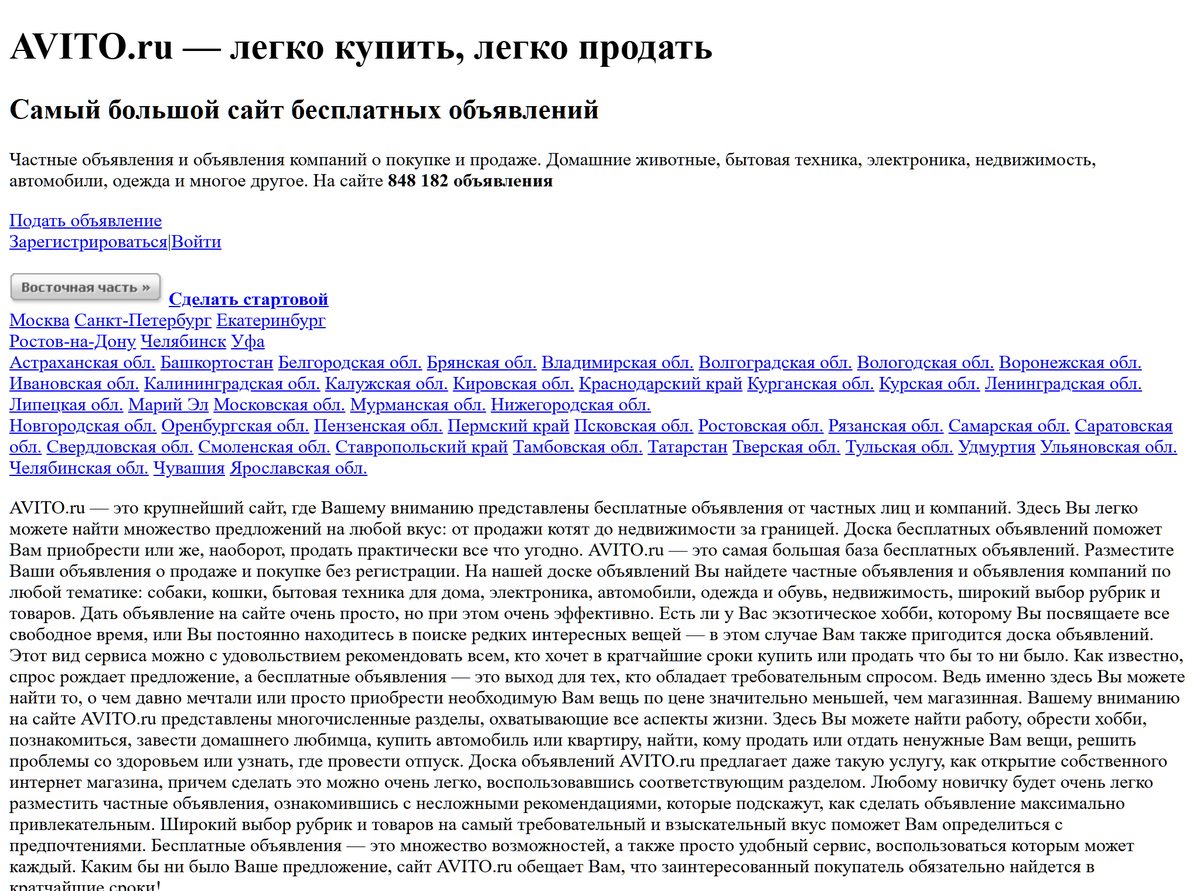
- September 2008The homepage counts 128,263 listings19.
- 2009Auctions dropped; Avito becomes pure classifieds7.
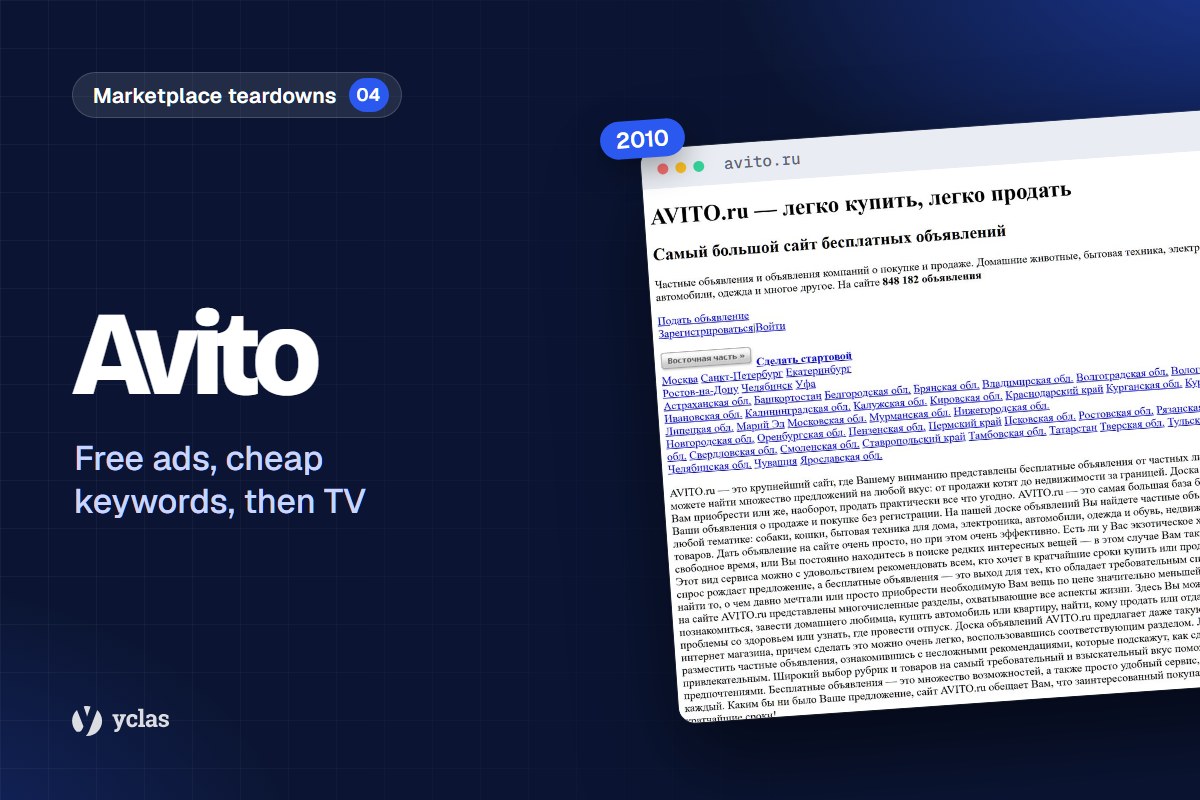
- February 2010848,182 listings on the homepage20. First TV campaign starts, in Moscow and St Petersburg only; monthly visitors go from 3m to 8.5m in nine months3.
- Q4 2010First paid extras for sellers6. Revenue for the year about $1m5.
- 20115.5m weekly unique visitors vs 1.8m for the nearest rival, Slando; 28 cities; about 100 staff3. Revenue $8.5m5.
- Early 2012Over 25m monthly visitors and over 5m active listings; passes irr.ru8. First federal TV15.
- 2012About 30m monthly visitors, 6m new items a month; $75m raised from Accel and Baring Vostok10. Revenue about $30m5.
- March 2013Merger with Naspers's Slando.ru and OLX.ru, valued at over $570m5,14.
Monthly visitors from the first TV campaign in two cities (early 2010) to 2012. Sources 3, 8, 10.
Show the numbers
| When | Monthly visitors | Notes |
|---|---|---|
| Early 2010 | 3m | start of first TV campaign, Financial Times 2011 |
| Late 2010 | 8.5m | nine months later, same FT article |
| Early 2012 | 25m+ | BFM.ru, 2012 |
| 2012 | about 30m | The Next Web / TechCrunch, 2012 |
The tipping point was 2010: deep supply in two cities, then TV that told people to sell their clutter. By early 2012, Avito had overtaken the old Iz ruk v ruki site to take first place among private-listing sites8.
The busy categories were not the obvious ones. The FT reported that cars drove the most traffic, but women's clothing was the most popular category for actually buying and selling, and pets were also large3. One Russian trade analysis reportedly concluded that "personal items" mattered more to Avito than property or cars6. Everyday stuff from ordinary people is what filled the site.
The 2013 merger ended the fight. Naspers folded Slando.ru and OLX.ru into the Avito brand and invested $50 million in cash for an 18.6% stake, in a deal valued at more than $570 million5,14. Before the deal, comScore data for January 2013 reportedly put Avito first in Russian classifieds with about 16.5 million monthly users, Slando second with 10.9 million and OLX fifth with 4 million17.
comScore figures reported by ComNews just before Naspers merged Slando and OLX into Avito. Source 17.
Show the numbers
| Site | Monthly users | Notes |
|---|---|---|
| Avito | about 16.5m | 1st, comScore January 2013 (reported) |
| Slando | 10.9m | 2nd, same data |
| OLX.ru | 4m | 5th, same data |
After the merger, Slando and OLX closed registration and sent their visitors to Avito18. Nordlander framed the goal as building the most liquid trading platform in Russia18.
What Iz ruk v ruki did next is the other half of the lesson. It stopped printing in Moscow and St Petersburg in spring 2015, made almost all online ads free in May 2015, and still lost its audience. Its owner closed the websites in November 201711. Free was not enough once the buyers had moved.
The playbook: eight lessons for a small site
Choose the model that matches how people already trade. Avito dropped auctions because people did not trust post and payments; classifieds let them meet and pay cash. If your buyers want to see a tractor or a horse before they pay, run a simple contact-the-seller site, not checkout and escrow. Add payments later, only where they are trusted.
Make it free for the people you need most. Avito charged private sellers nothing for years and only sold optional extras. Keep basic posting free until you have liquidity, and plan to earn later from featured listings and business sellers, as Avito did with its shops.
Go deep in one place before going wide. Avito started in two cities and grew city by city to keep categories full. Pick one town, region or niche, and do not open a new one until the first has listings that get replies. A search that returns nothing is a buyer you lose.
Buy (or earn) the long tail, not the head. Avito paid kopecks for "blue Ford" while others paid $1 for "car". The free version today: write titles and pages for specific searches ("used John Deere 5075 Kenya", "puppies for sale Cork"), and answer specific questions in Facebook groups and Reddit threads. If you buy ads, bid only on exact, narrow phrases.
Be reachable. Avito ran 24-hour support with 40 people because trust was the market's weak point. You cannot do 24 hours, but you can reply to every seller within a day, phone your first 50 sellers, and put a WhatsApp number on the site.
Advertise to sellers, and only after supply exists. Avito's first TV ran more than two years after launch, only in its two strongest cities, and it was about selling your clutter. Your version is a poster in the farm supply shop or the laundromat, or a post in the local Facebook group, that says "Sell it here, free". Put it up once a buyer arriving today would find something.
Say no to the second business. The directory, the auctions and the Middle East all took focus from the core. Do not add jobs, events and a forum to a site that does not yet have 50 live listings.
Watch what people actually trade, not what you expected. Cars brought traffic, but clothing and pets were where trading happened. Check which categories get listings and replies on your site, and give those the best spot on the home page.
Try this this week
A message that sounds personal gets far more yeses than a copied ad. Start from this one for the outreach task below:
Template
Outreach message to recruit your first sellers
Use this to contact people already selling on other sites, in groups or in shops; personalise the first line every time and offer what you can really deliver.
Send no more than one follow-up to people who did not reply, and keep a list of who asked not to be contacted. More free tools →
- Monday, 45 minutes: list 20 specific searches your buyers type. "Brand + model + town", not "cars". Mark which ones your site can answer today, and write a category or page title for each.
- Tuesday and Wednesday, 1 hour a day: write to 30 private sellers personally. Find them on Facebook Marketplace, local Facebook and WhatsApp groups, or Instagram. Offer to post their item on your site for free. Target: 10 yeses.
- Thursday, 1 hour: post 15 listings for those sellers yourself. Copy their text and photos (with their OK) so they only have to answer calls.
- Friday, 30 minutes: narrow your launch area. If your site covers a whole country with 12 listings, choose one city or region to promote for the next month, with a target of 50 listings there.
- Saturday, 1 hour: put up 5 posters that speak to sellers ("Sell your [tools / tack / baby things] here, free, in 2 minutes") where your sellers go: a farm shop, a garage, a community board.
- Every day, 15 minutes: answer every message within 24 hours and note what people ask. Their questions are your FAQ and your next feature list.
- Next Monday, 30 minutes: message your first 10 sellers. Ask: did you get contacts? If not, find out which buyers you are missing and go find them in that category first.
Doing it on Yclas
- Find and invite the first sellers: Recruit sellers (admin panel > Recruit sellers) helps you find local businesses to invite, gives each a personal invite link (/join/...), keeps a timeline of who you contacted, and drafts the invite with "Write it with AI". Its list of searches that returned nothing on your site is your version of Avito's "blue Ford" list: the specific things buyers want that you do not have yet.
- Post for sellers quickly: "Add listings from text" turns a pasted list of Facebook or WhatsApp posts into draft listings; CSV import and import from another platform handle larger batches. Posting from a photo with AI lets a seller take a picture and get the listing filled in, which keeps posting as easy as Avito made it.
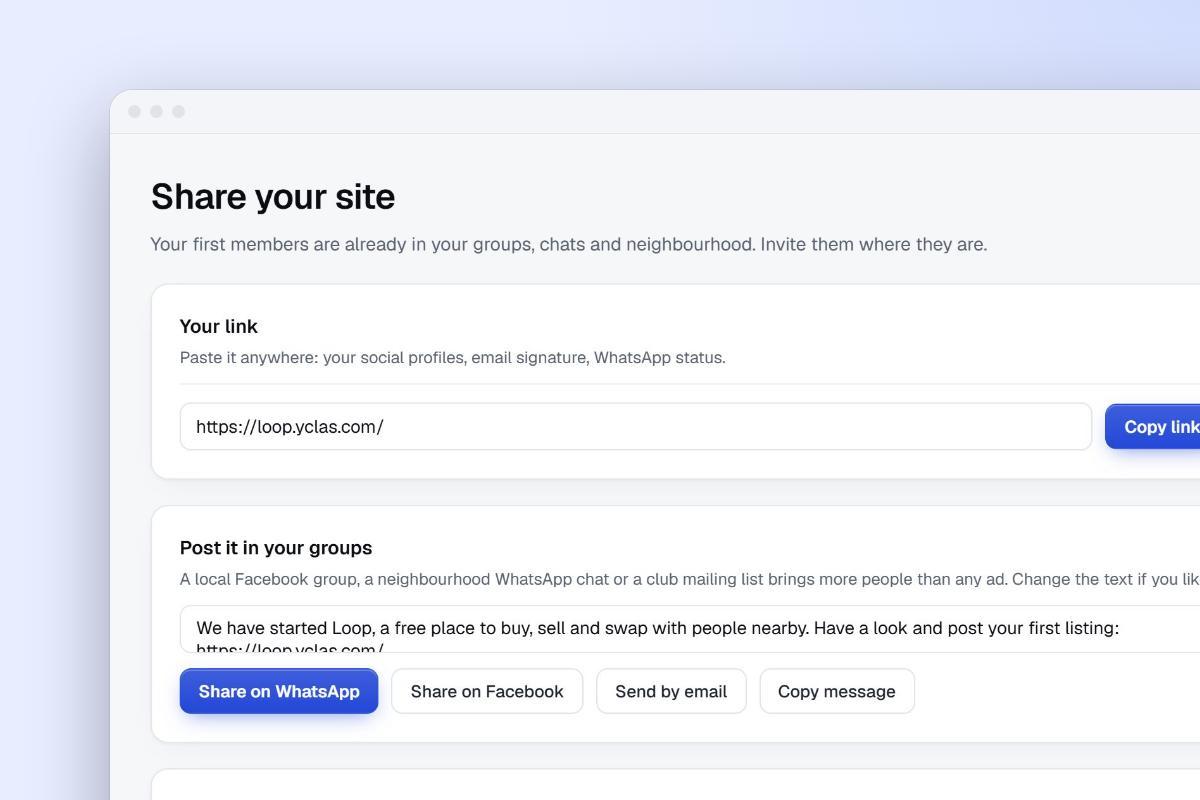
Seller-focused promotion: Share your site (admin panel > Share your site) gives you a ready group message for WhatsApp, Facebook or email, a QR code and a printable A4 poster.
Focus by niche and place: custom fields and categories per niche let you build categories around the specific searches your buyers make.
- Free now, paid later: keep basic posting free, then add featured or paid listings and paid plans for business sellers once you have liquidity, the order Avito followed. The member email digest of new listings brings past visitors back as supply grows.
For a broader look at how Avito grew later, see our earlier post on Avito as a leading online classifieds marketplace, and for how its 2013 merger partner OLX grew, the success of OLX.
Sources
- How two guys applied Swedish ethos to conquer Russian e-commerce — Tech.eu (2017) — https://tech.eu/2017/06/01/avito/
- Keep things simple, stay focused and don't stray away too early: Avito's Jonas Nordlander — Accel (2017) — https://accel.com/news/keep-things-simple-stay-focused-and-dont-stray-away-too-early-it-takes-time-to-build-your-core-business-avitos-jonas-nordlander
- Ahead of the competition (Courtney Weaver), Financial Times, reposted by SWEA Moskva — SWEA Moskva blog (2011) — https://sweamoskva.blogspot.com/2011/10/mer-om-jonas-och-filip-o-avito-fran.html
- Svårt att starta ryskt Tradera — Realtid (2009) — https://www.realtid.se/bors-finans/svart-att-starta-ryskt-tradera/
- Avito.ru, Slando.ru and OLX.ru merge to create online classifieds giant — East-West Digital News (2013) — https://ewdn.com/?p=13476
- Ryska Blocket växer så det knakar — Realtid (2011) — https://www.realtid.se/bors-finans/ryska-blocket-vaxer-sa-det-knakar/; and Avito vs IRR market article — Sostav.ru (2011) — https://www.sostav.ru/articles/2011/03/04/ko2/
- Avito company history (first version 15 October 2007; auctions dropped 2009; moderation 2010; 2010 TV slogan) — Habr, Avito blog (2017) — https://habr.com/ru/amp/publications/345530
- Avito overtook irr.ru; 40 staff, 24-hour support, paid options — BFM.ru (2012) — https://www.bfm.ru/news/171293
- Avito.ru — Wikipedia (accessed 2026) — https://en.wikipedia.org/wiki/Avito.ru
- Russian classifieds website Avito.ru raises massive $75m round — The Next Web (2012) — https://thenextweb.com/news/russian-classifieds-website-avito-ru-raises-massive-75m-round-from-accel-kinnevik-and-others; and Russian Classified Giant's $75M From Accel — TechCrunch (2012) — https://techcrunch.com/?p=544567
- "Iz ruk v ruki" and Job.ru close — Vedomosti (2017) — https://www.vedomosti.ru/technology/articles/2017/11/23/742903-iz-ruk
- Doska obyavleniy za $4 mlrd. Kak Avito stal IT-gigantom? — Rambler News (2019) — https://news.rambler.ru/internet/41604616-doska-obyavleniy-za-4-mlrd-kak-avito-stal-it-gigantom/
- Avito — Russian Wikipedia (accessed 2026) — https://ru.wikipedia.org/wiki/Авито
- Russia's Avito becomes world's 3rd biggest classifieds site after $570M deal with Naspers — TechCrunch (2013) — https://techcrunch.com/?p=775582
- AVITO.ru TV campaign with Kvartet I (press release) — AdIndex (2012) — https://adindex.ru/news/releases/2012/01/11/84665.phtml
- Dagens PS: Oligark köper Blocket-kopia grundad av svenskar — Dagens PS (2022) — https://www.dagensps.se/varlden/oligark-koper-blocket-kopia-grundades-av-svenskar
- Naspers skleil obyavleniya: Avito.ru obyedinyat so Slando.ru i OLX.ru — ComNews (2013) — https://www.comnews.ru/content/70657/2013-03-12/naspers-skleil-obyavleniya-avitoru-obedinyat-so-slandoru-i-olxru
- Avito obyedinilsya so Slando i OLX — Sostav.ru (2013) — https://www.sostav.ru/publication/avito-obedinilsya-so-slando-i-olx-1880.html
- avito.ru homepage, 14 September 2008 ("Vsego obyavleniy na saite: 128263") — Internet Archive (2008) — https://web.archive.org/web/20080914080844/http://www.avito.ru/
- avito.ru homepage, 7 February 2010 ("Na saite 848 182 obyavleniya") — Internet Archive (2010) — https://web.archive.org/web/20100207224341/http://www.avito.ru/