Before Wallapop had a single seller, its CEO went round flea markets with his young cousin, photographing what was for sale17,18. That hand-made catalogue was the app's first stock.
The market they were entering looked closed. In 2012 two Spanish classifieds websites, Milanuncios and Segundamano, held about 80% of it between them, with around 11 million and 8 million monthly visitors15. The founders expected to be the losers, Gómez later told Forbes España: a small app living next to the big sites11.
Six months after launch, Wallapop had more than 1 million users and more than 2 million products listed3. It did not win with more money. It won by making selling easier and more local than anyone else. Every one of its first moves has a version a one-person classifieds site can run in 2026.
The short version
- The CEO filled the empty app himself, photographing flea-market stalls before launch.
- Listing took four fields and one phone photo, so people listed things they would never have advertised before.
- Results were sorted by distance, so a small number of listings still looked full to people nearby.
- National TV came only after the product worked, and it was paid with shares, not cash.
At a glance
- Founded
- 23 May 2013 according to one company history, June 2013 according to another, in Barcelona, first named Fleapster; the iOS app launched in September or October 201313,14,18
- Founders
- Agustín Gómez (CEO) and David Muñoz (engineering), with Gerard Olivé (BeRepublic) and Miguel Vicente (LetsBonus) through their Antai venture builder; most press lists Gómez, Olivé and Vicente1,6,11,14
- Country
- Spain
- Category
- Local second-hand goods, person to person, mobile app1,2
- First-seller tactic
- A first catalogue photographed by the founder at flea markets; a listing that takes under a minute from a phone photo, sorted by distance; then a national TV campaign paid for with shares3,17,18
- Where it is now
- 15 million users in Spain in 2021, about half of Spanish internet users12; bought outright by South Korea's Naver in 2025, in a deal valuing it at about €600 million14
Part of the guide Marketplace case studies
The cold-start problem: two giants, both built for the desktop
Spain's classifieds market belonged to two websites. In June 2012, Milanuncios held around 50% of it and Segundamano close to 30%15. Segundamano was owned by Schibsted, the Norwegian group behind Blocket and Leboncoin (articles 2 and 3 in this series), and in 2014 Schibsted bought Milanuncios too15. The leader and the runner-up ended up with one owner.
What sellers did before. You sat at a computer, wrote an ad, uploaded photos from a camera and waited for emails or calls. Search was by province, not by street. Selling a lamp took the same effort as selling a car.
What had changed. Spaniards now carried phones with good cameras and GPS. The founders' bet was to "monetizar la calle", to monetise the street1. eBay, Gómez argued, was built for trades between cities and countries; Wallapop wanted the trades between neighbours1.
Who started it. Gómez had spent about 15 years in consulting11. He and Muñoz, a telecoms engineer and a mathematician14, left their jobs18. They chose second-hand goods partly because the other person-to-person niches, like accommodation and transport, were already crowded14,18.
How much money. Gómez put in the €30,000 he had saved17. Through Antai, the venture builder of Olivé and Vicente, the project had about €100,000 at the start18, then a €1.6 million round from Antai, Caixa Capital Risc, Bonsai and others1,14. The first team worked from a flat in Barcelona's Gràcia district17,18 and built the iOS app in one to two months (accounts differ)1,14.
Gómez told Forbes they had money to survive about six months11. That shaped everything that followed: they could not wait for slow organic growth.
How they got the first sellers
Move 1: Copy the flea market, not the classifieds site
Gómez and Muñoz grew up in L'Hospitalet de Llobregat and Santa Coloma de Gramenet, on the edge of Barcelona, around the culture of the mercadillo, the street market11. They named the first version Fleapster, after flea markets14,18. Gómez has said the team went out into the streets to learn what sellers and buyers needed7.
A flea market works because of three things: you can see the item, it is close, and you can haggle on the spot. Wallapop copied all three:
- See it: a photo at the centre of every listing1,2.
- Close: results ordered by distance, nearest first2.
- Haggle: a chat on every product page, where a buyer could ask a question or make a counter-offer1.
Why it worked: the product matched a habit people already had, the Sunday market, instead of asking them to learn a new one.
Move 2: Fill the shelves yourself, at the flea market
While the app was being built, Wallapop had no sellers and no money to buy them. So the CEO did it by hand. Gómez went round flea markets with his young cousin, who was not paid, taking photos17.
"Así, picando piedra, elaboramos el primer inventario para toda España." Agustín Gómez, eldiario.es
("Like that, breaking stones, we built the first inventory for all of Spain.") A company history reviewed by early employee Daniel Mulero adds that the two worked markets in the big cities, noting and photographing items in a notebook18. That became Wallapop's first catalogue.
The first people to open the app saw real second-hand things with real photos, not a blank screen asking them to be the first seller. The catalogue also showed the kind of items and prices the app wanted people to list next. The sources do not say how those items appeared in the app (under the team's account or the stallholders'), or how many there were.
Why it worked: supply has to come before demand, and the cheapest supply is stock already sitting in your town's markets and shops.
Before you start your own round, it helps to know how many listings "looks alive" means for your site.
Calculator
How many listings do you need at launch?
Visitors leave a category that looks empty. Pick how many listings a category page needs to look alive, for the categories and places you launch with.
Too many weeks? Launch with fewer categories or one area first, and add more as listings come in. More free tools →
Move 3: A listing in four fields, from one photo
To list something on Wallapop at launch you needed four things: a photo, a name, a description and a price1. You took the photo in the app and the item was live2. There was no web version at all: listing and browsing happened only on the phone2.
This is the most copyable part of the story. Supply in a marketplace is mostly limited by effort. On a desktop classifieds site, selling a €15 item meant a camera, a cable, a computer and a long form. Most people did not bother. On Wallapop it took less than a minute, so people listed small things they would never have advertised before.
That is how an app six months old had more than 2 million products listed by April 2014, about two for every user3.
Products listed against users when the first national campaign was announced: listings grew faster than users. Source 3.
Show the numbers
| Measure | Millions | Notes |
|---|---|---|
| Products listed | 2m+ | Marketing Directo, April 2014 |
| Users | 1m+ | same article |
Why it worked: a seller who listed one item found it so easy that they listed a second and a third. Listings grew faster than users.
Move 4: Show nearby items first, so every new listing is seen
Most classifieds sites sort by date or by category. Wallapop put the items closest to you first: your neighbours, your colleagues, people from your part of town2.
A new seller's biggest fear is that nobody will see the item. In a distance-sorted feed, a new listing appears near the top for everyone nearby, even when the whole country has few listings. You do not need a million listings to feel full; you need enough within walking distance. Wallapop became known first for second-hand trading in Barcelona and Catalonia, and grew from that base to the rest of Spain7.
The same local logic brought a second kind of seller. By October 2013, small local businesses were listing next to individuals: craft products, restaurants, antiques2. A feed sorted by distance is free local advertising for a shop, so shops joined.
Why it worked: density, not size. In marketplace language this is liquidity: the chance that a listing finds a buyer, or a search finds a listing, in a reasonable time. Check where your own site stands:
Calculator
Is your marketplace working yet?
Liquidity means a listing finds a buyer. Count last month on your site: the listings that were live, how many got at least one reply, and how many sold.
Work these out every month and compare areas and categories: put your effort where they rise, not where traffic is biggest. More free tools →
Move 5: Launch hard, then let odd listings do the marketing
Gómez told Forbes they bet everything on marketing11, and told eldiario.es they spent their last €10,000 on marketing in the two days around launch, without saying on which channels17. On launch day the iOS app went to number one in Spain17. It passed 70,000 downloads in September 201314,18.
They then hired a developer who barely slept for two weeks to ship the Android app17,18. One month in, the app had 300,000 downloads and led the lifestyle category on both app stores2. The first item sold, in 2013, was a coffee maker19.
A chart position brings free downloads, and press followed. Genbeta's early piece on the Spanish app that wanted to monetise the street counted about a million downloads1. According to INESEM Business School, Wallapop did not use conventional advertising at first: well-known YouTubers made videos about items listed on the app, and digital newspapers wrote stories about them13. Stories about unusual sales, like two helicopters worth about €500,000 bought by a Russian buyer, kept it going for years11.
Why it worked: odd listings are content. Every strange or cheap item was a reason for someone to talk about the app.
Move 6: Pay for TV with shares, not cash
By early 2014 the app worked in Barcelona but needed to become a national habit, and it had little money. So Wallapop traded shares for advertising, a deal called "media for equity". Grupo Godó (La Vanguardia), Grupo Zeta (El Periódico) and Atresmedia (Antena 3, La Sexta) together put in €1.3 million of advertising space3,16.
Gómez's pitch to Atresmedia was simple: give us the airtime you have not sold17. The first spot ran on a 10 a.m. talk show17. The campaign, announced in April 2014, put TV spots in prime time on Antena 3 and La Sexta, print ads in La Vanguardia, Mundo Deportivo, Sport and several magazines, plus radio and online3. The agency was Drop & Vase and the claim was "¡Walla!"3. The targets were concrete: collectors, vintage fans, bargain hunters, and people selling things to pay for new ones3.
Gómez's verdict, years later: "El factor tele fue decisivo" (the TV factor was decisive)11. Forbes España reported that the ads multiplied growth by ten11. Treat that as the founder's estimate, but the numbers around it fit: just over 1 million users in April 20143 and 5 to 7 million downloads by April 2015 (sources differ)4,6. Later funding, about $40 million by April 2015 from investors including Accel and Insight Venture Partners, paid for up to €1 million a month of user acquisition, according to sources quoted by Novobrief6.
Why it worked here: TV came after the product already worked in one city. The ads sent new users into an app with millions of listings, so the first visit was not an empty screen.
What didn't work: the far-away bets
The international rush. Within its first two years Wallapop opened in France and the UK6,7,14, then the United States, where by April 2015 it operated in ten cities on the East Coast and in California4. Gómez called the US the company's big bet8. The US was full of well-funded rivals, from OfferUp to Facebook Marketplace8.
The letgo deal. In May 2016 Wallapop and letgo, another second-hand app backed by Naspers (the owner of OLX), combined their US operations only, with $100 million of new money from existing shareholders. Letgo controlled the US business8. In 2018 Wallapop sold its letgo stake for $189 million12. That year Rob Cassedy, who came from eBay Germany, replaced Gómez as CEO14.
Years without revenue. In 2015 the company had no revenue at all; listings were free and paid features were only planned4,5. By 2016 it charged €1.99 to make a listing more visible7. Free listings suited the cold start, but heavy spending with no income meant long losses: still €25 million in 2024, the year Wallapop's Spanish business reached break-even14. Its 2024 revenue was about €101 million, up 13% on 2023, and it reported more than 19 million monthly users in southern Europe (Ara).
The lesson for a small site: win one place completely before spreading. Wallapop's lasting asset was Spain, built from Barcelona outwards. The far-away markets cost money and attention.
How supply turned into demand
On Wallapop, buyers and sellers were often the same people. Someone downloads the app to sell a bike, browses what is nearby while waiting, and buys a lamp. That is why listings grew faster than users: by April 2014, more than 2 million products for just over 1 million users3.
- May-June 2013Fleapster is founded with about €100,000 and a six-month runway; the CEO photographs flea markets for the first catalogue11,14,17,18.
- Sept-Oct 2013Launched as Wallapop on iOS, number one in Spain on day one; 70,000+ downloads in September and 300,000 after one month2,14,17,18.
- Early 2014About 1 million downloads; press writes about the app that wants to monetise the street1.
- April 2014First national TV and press campaign, paid with shares; 1M+ users, 2M+ products, 10M+ a month in transactions3.
- April 20155M+ downloads, 25M+ chat conversations, €450M+ of goods sold, according to company figures6.
- May 2016US operations combined with letgo; Wallapop valued at over $570M by sources8.
- 2017Shipping through Correos, the Spanish postal service, arrives, years after the local base20.
- 202115M users, about half of Spain's internet population; about 20% of goods sold are shipped12.
From one month after launch to 18 months after launch. April 2015 sources differ (5m+ and 7m); the lower figure is shown. Sources 1, 2, 6.
Show the numbers
| When | Downloads | Notes |
|---|---|---|
| Oct 2013 | 300,000 | one month after launch, WWWhat's New |
| Early 2014 | about 1m | Genbeta |
| April 2015 | 5m+ | Novobrief; Capital Riesgo reports 7m |
Two details show how demand kept flowing. By spring 2015 users had started more than 25 million chats, the real measure of buyers contacting sellers6. And the growth team later ran Google Play store-page experiments that raised conversion by 17%10.
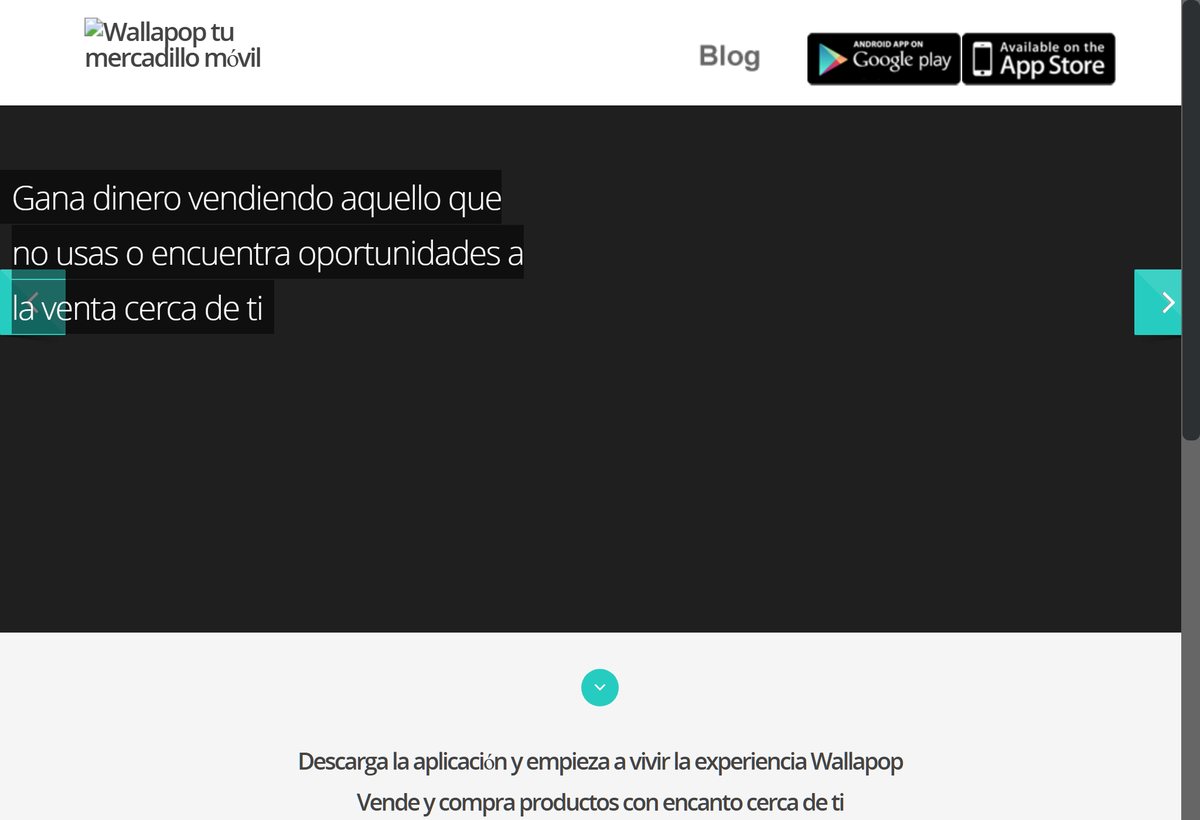
Segundamano, renamed Vibbo at the end of 2015, said in 2016 that almost 70% of its traffic now came from mobile9. The old leaders had moved to the phone, but by then Wallapop was the second-hand app people had on it.
The playbook
Make listing take less than a minute. Supply grows when posting is easier than not posting. Cut your form to what a buyer needs to decide (photo, title, price, location, one line of description) and make everything else optional. If you cannot post with one hand while standing up, it is too long.
Show what is nearby first. Density beats size. Pick one town, district or region and make it feel full before you promote anywhere else. Say "listings near you in [town]" on your home page and in your messages, and add a location to every listing, so the first 50 listings look like a busy market.
Go where your sellers already are, and listen first. Wallapop's team went into the street. Your street is the local Facebook and WhatsApp groups, flea markets, car-boot sales, shop counters and forums in your niche. Spend an afternoon reading how people sell there, then use their words in your categories and messages.
Stock the first shelves by hand, starting with local businesses. A shop, dealer, market stall or farm with 20 items gives you 20 listings from one conversation. Ask if you can photograph and list their stock with their price and contact details, free, seen by people nearby. Use a short, personal message:
Template
Pitch to a local partner to promote your marketplace
Send it by email or message to an association, club, shop or community group whose members are your buyers or sellers; change the offer to something you can really give them.
Partners say yes more often when you hand them finished content to share than when you ask them to write about you. More free tools →
Turn strange and cheap listings into content. The odd item is the shareable item. Each week, post your three most unusual or best-value listings to your Facebook page, Instagram, local groups and community newsletter, with a link back. That brings buyers, and each buyer is a future seller.
Pay for reach with something other than cash. Offer a local newspaper, radio show, club newsletter, community Facebook page or school fair free featured listings or a "partner" banner in exchange for a mention or a poster spot. Ask only once your site has listings to show.
Advertise only once the shelves are full. TV worked for Wallapop because millions of products were already listed. Do not spend your first €100 on ads that send buyers to an empty site; spend it after you have at least 50 live listings in your target area.
Win one place before opening the next. Wallapop's lasting value came from Spain, not the US. Stay in one town or one niche until people there know your name, then expand to the town next door, not the next country.
Try this this week
- Time your form (20 minutes). Post 3 test listings from your phone. If one takes more than 60 seconds, remove or make optional the fields that slow you down.
- Choose your one place (10 minutes). Write down the single town, district or region you will fill first, and put its name in your site title and home page text.
- Read before you post (1 hour). Join 5 local buy-and-sell groups (Facebook, WhatsApp, Telegram) in that place and note the 10 most common item types and price ranges. Create or rename categories to match.
- Write to 30 sellers (2 hours). Message 20 people who recently posted items in those groups and 10 local shops or dealers, inviting them to list free. Target: 10 sellers and 50 live listings within 7 days.
- Do a flea-market round (Saturday morning). Ask 5 stallholders at one market if you can photograph and list 5 items each. Target: 25 listings, all with the seller's agreement.
- Put up 10 posters (1 hour). Print a poster with a QR code and place it where people already buy and sell: the market, the supermarket notice board, the library, a café, a garage.
- Share 3 listings (15 minutes, Friday). Post the three most surprising or best-value items in your local groups, each linking to the listing.
Doing it on Yclas
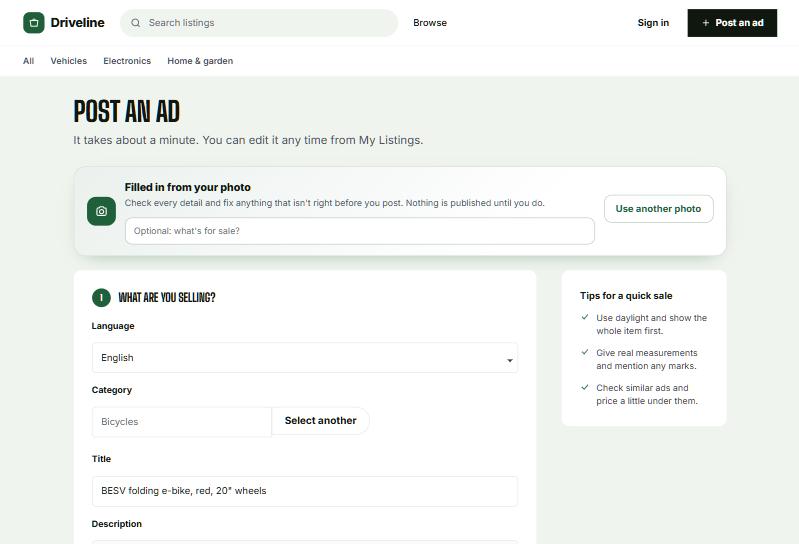
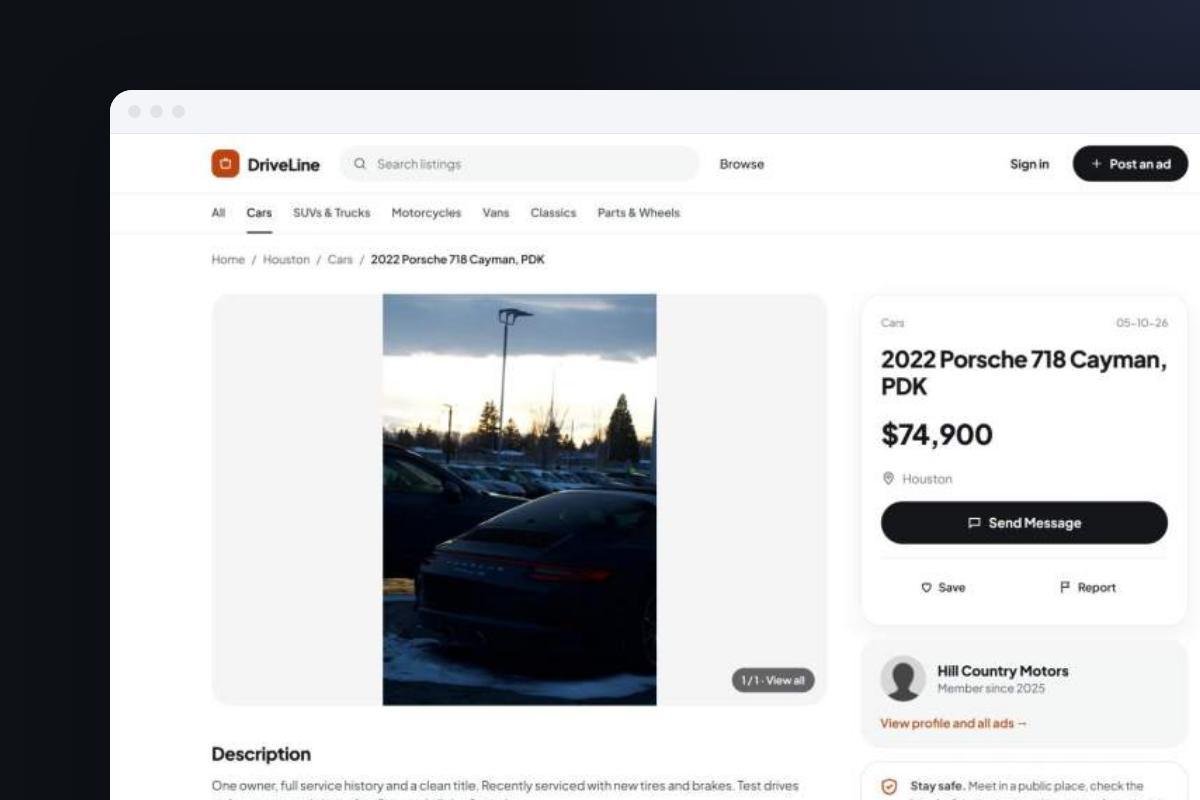
- Listing in under a minute: posting from a photo with AI fills in the title, description and category from a picture, close to Wallapop's photo-first form. Keep custom fields per category to what buyers actually need.
- Sellers and local shops: Recruit sellers (admin panel > Recruit sellers) finds local businesses to invite, gives each a personal invite link (/join/...), drafts the message with "Write it with AI", and keeps a timeline of who you contacted. Its list of searches that returned nothing shows what buyers want that you don't have yet.
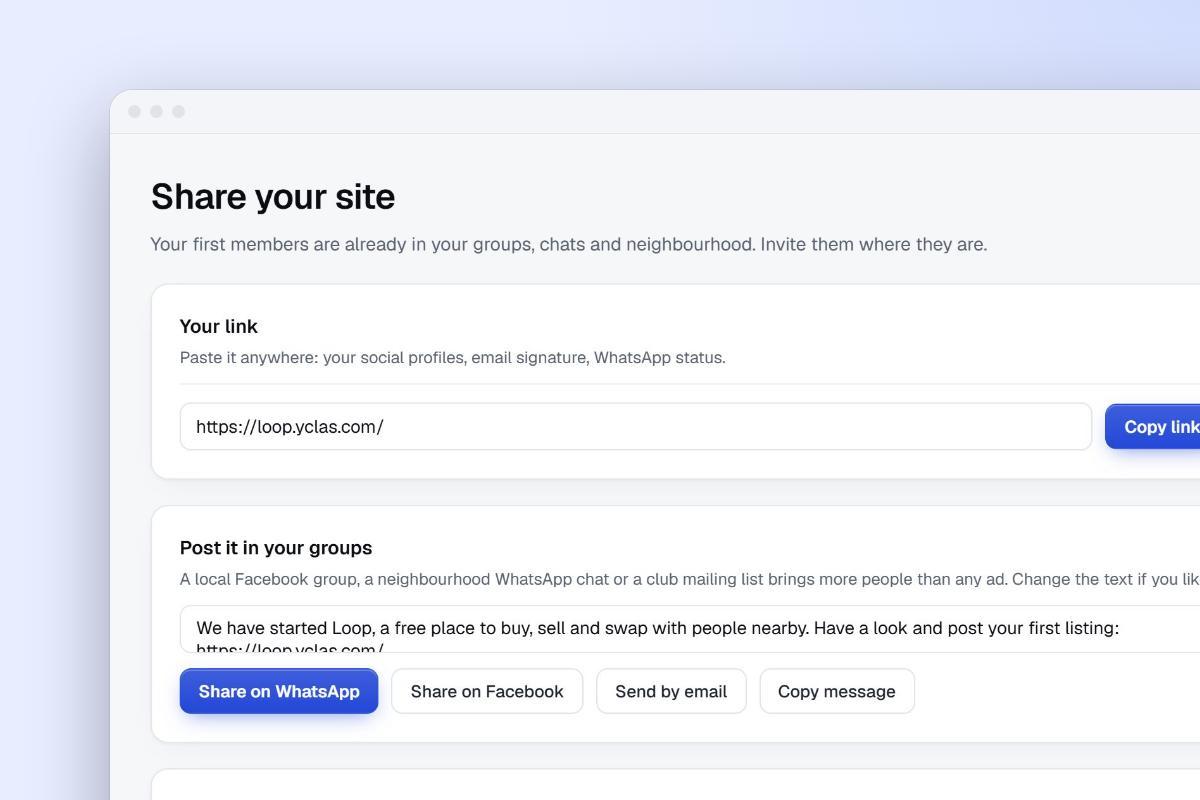
- Groups and posters: Share your site (admin panel > Share your site) has a ready message for WhatsApp, Facebook and email, a QR code and a printable A4 poster for the market notice board.
- Bring existing posts across: "Add listings from text" turns a pasted list of Facebook or WhatsApp posts into draft listings, and the CSV and platform importers move a shop's stock in one go. AI example listings in setup show what a finished listing looks like before real ones arrive.
- Later, when the market is busy: featured and paid listings, and paid plans for sellers, are the equivalent of Wallapop's €1.99 boost. The member email digest of new listings brings buyers back each week.
For more on how other classifieds sites won their markets, see our earlier posts on OLX and Avito.
Sources
- Wallapop, la app española para compraventa de segunda mano que quiere "monetizar la calle" — Genbeta (early 2014) — https://www.genbeta.com/movil/wallapop-la-app-espanola-para-compraventa-de-segunda-mano-que-quiere-monetizar-la-calle
- Wallapop: comprando y vendiendo cosas de segunda mano desde el móvil — WWWhat's New (2013) — https://wwwhatsnew.com/2013/10/24/wallapop-comprando-y-vendiendo-cosas-de-segunda-mano-desde-el-movil/
- Atresmedia entra en el accionariado de Wallapop bajo un modelo "media for equity" — Marketing Directo (2014) — https://www.marketingdirecto.com/anunciantes-general/anunciantes/atresmedia-entra-en-el-accionariado-de-wallapop-bajo-un-modelo-media-for-equity
- Wallapop consigue 38 millones y se centrará en competir en EE.UU. (from La Vanguardia) — Capital Riesgo (2015) — https://capital-riesgo.es/es/articles/wallapop-consigue-38-millones-y-se-centrará-en-competir-en-ee-uu-/
- El mercadillo de los mil millones — Capital Riesgo / Hemerotek (2015) — https://capital-riesgo.es/es/articles/el-mercadillo-de-los-mil-millones/
- Wallapop funding and early metrics — Novobrief (2015) — https://novobrief.com/?p=2714
- The secret to Wallapop's success — VIA Empresa (2016) — https://www.viaempresa.cat/via-empresa-in-english/the-secret-to-wallapop-s-success_19133_102.html
- Wallapop and LetGo, two Craigslist rivals, merge to take on the U.S. market, raise $100M more — TechCrunch (2016) — https://techcrunch.com/2016/05/10/wallapop-and-letgo-two-craigslist-rivals-plan-merger-to-take-on-the-u-s-market
- "Los Millennials son la puerta de entrada al mercado de segunda mano" (interview with Vibbo) — Reason Why (2016) — https://www.reasonwhy.es/actualidad/empresa/los-millennials-son-la-puerta-de-entrada-al-mercado-de-segunda-mano-2016-04-04
- Android Developer Story: Wallapop — Google Play / Android Developers Blog (2017) — https://android-developers.googleblog.com/2017/01/android-developer-story-wallapop.html
- Agustín Gómez, CEO de Wallapop: "Cuando empezamos creíamos que íbamos a ser unos losers" — Forbes España (2018) — https://forbes.es/?p=41613
- Spain's Wallapop raises $191M at an $840M valuation for its classifieds marketplace — TechCrunch (2021) — https://techcrunch.com/2021/02/24/spains-wallapop-raises-191m-at-an-840m-valuation-for-its-classifieds-marketplace
- Wallapop y su espectacular growth hacking — INESEM Business School (undated, c. 2016) — https://www.inesem.es/revistadigital/gestion-empresarial/wallapop-y-su-espectacular-growth-hacking
- Historia de Wallapop: cómo nació la líder española de las apps de segunda mano — Marketing4eCommerce (updated 2025) — https://marketing4ecommerce.net/historia-wallapop-la-app-espanola-lider-de-segunda-mano/
- Milanuncios — Wikipedia (accessed 2026) — https://en.wikipedia.org/wiki/Milanuncios
- Wallapop — Wikipedia (accessed 2026) — https://en.wikipedia.org/wiki/Wallapop
- Agustín Gómez, fundador de Wallapop: "Mi gran función fue mendigar dinero" — eldiario.es (2021) — https://www.eldiario.es/catalunya/economia/agustin-gomez-fundador-wallapop-gran-funcion-mendigar-dinero_128_7910273.html
- Historia de Wallapop. Un éxito emprendedor (reviewed by early employee Daniel Mulero) — Carballar.com (c. 2022) — https://carballar.com/historia-de-wallapop-un-exito-emprendedor
- Wallapop cumple 10 años con más de 640 millones de productos subidos por su comunidad — Wallapop (2023) — https://about.wallapop.com/wallapop-cumple-10-anos-con-mas-de-640-millones-de-productos-subidos-por-su-comunidad/
- Wallapop se alía con Correos y lanza Wallapay para mejorar la seguridad de sus operaciones — Marketing4eCommerce (2017) — https://marketing4ecommerce.net/wallapay-wallapop-se-alia-con-correos/