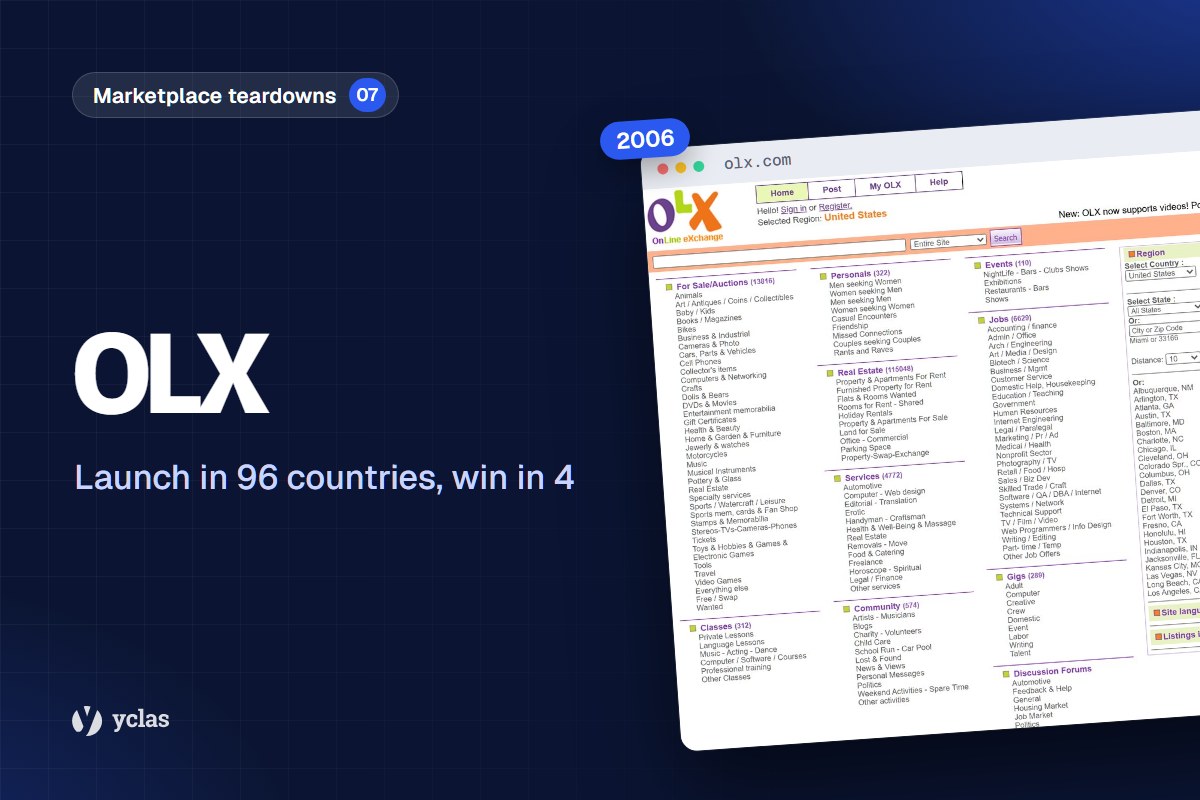
In 2006 two founders with about $10 million in the bank broke the first rule of marketplaces. Instead of winning one city, they launched a free classifieds site in country after country, until OLX was live in 96 countries and 51 languages. Each country got roughly $50,000 over five months, about $5 million in total.1
It was not a plan to win 96 markets. It was a test: where do sellers show up without being pushed? The answer was four places, Brazil, India, Portugal and Pakistan.1,3,6 Most of the rest went nowhere.
What OLX did next is the useful part. It pulled money out of almost everywhere, sent sales people after car dealers and brokers, rebuilt the site for Google, then spent heavily on TV in two countries, with ads aimed almost entirely at sellers. By 2014 it had 200 million monthly users and was the largest marketplace in India, Brazil and Poland.2 In its year to March 2025, OLX Group reported revenue of US$777 million across nine markets and 29 million monthly app users (Prosus, June 2025).
You do not have $5 million. But the method behind OLX's early years works at any size: test cheaply, measure one number, then put everything into the place that responds.
The short version
- OLX ran the same cheap test in about 96 countries and counted one thing: new listings per 1,000 people. Four countries stood out.
- Its first sellers were professionals (dealers, brokers, job advertisers), signed by a sales team that took their listings in whatever format they already had.
- Every listing became a Google landing page, and later the TV ads spoke only to sellers: sell it, it is free.
- It went wrong when it chased quantity over quality and stayed too far from its markets. Schibsted and Avito took share with better-moderated sites.
At a glance
- Founded
- Incorporated March 2006, launched mid-20061,4
- Founders
- Fabrice Grinda (France) and Alec Oxenford (Argentina), co-CEOs1
- Country
- Offices in New York and Buenos Aires; engineering in Buenos Aires5,6
- Category
- Free general classifieds: used goods, cars, real estate, jobs, services
- First-seller tactic
- Cheap long-tail search ads in many countries, plus a multilingual sales team signing dealers and brokers by importing their existing feeds6,3
- Where it is now
- Naspers bought a majority in 20107; OLX is part of the Prosus/Naspers group and has run classifieds in dozens of countries
Part of the guide Marketplace case studies
The cold-start problem: no Craigslist outside the US, only print
Both founders had done this before. Grinda had sold two companies (Aucland, a French auction site, and Zingy, a ringtone company). Oxenford had run DeRemate, an eBay-style auction site in Latin America sold to MercadoLibre in 2005. Most of DeRemate's engineers became OLX's first team.1,6
The idea was a better Craigslist for the rest of the world. Grinda says he first offered to help Craigslist for free, then tried to buy it, and was turned down both times.3 He saw Craigslist as dated, badly moderated (spam and scams) and barely present outside the US.8 In December 2009 Businessweek noted that Craigslist ranked only No. 42 in Brazil, according to comScore.9
So in most countries there was no strong online incumbent. The competition was print: newspaper classifieds, notice boards, word of mouth.
In the US and much of Western Europe it was the opposite. Craigslist, Kijiji, Schibsted's sites and others already had the network effect (a marketplace gets more useful as more people use it). OLX's early plan also tried to be "Craigslist 2.0" and a free eBay at the same time. Grinda later admitted both ideas were naive.1
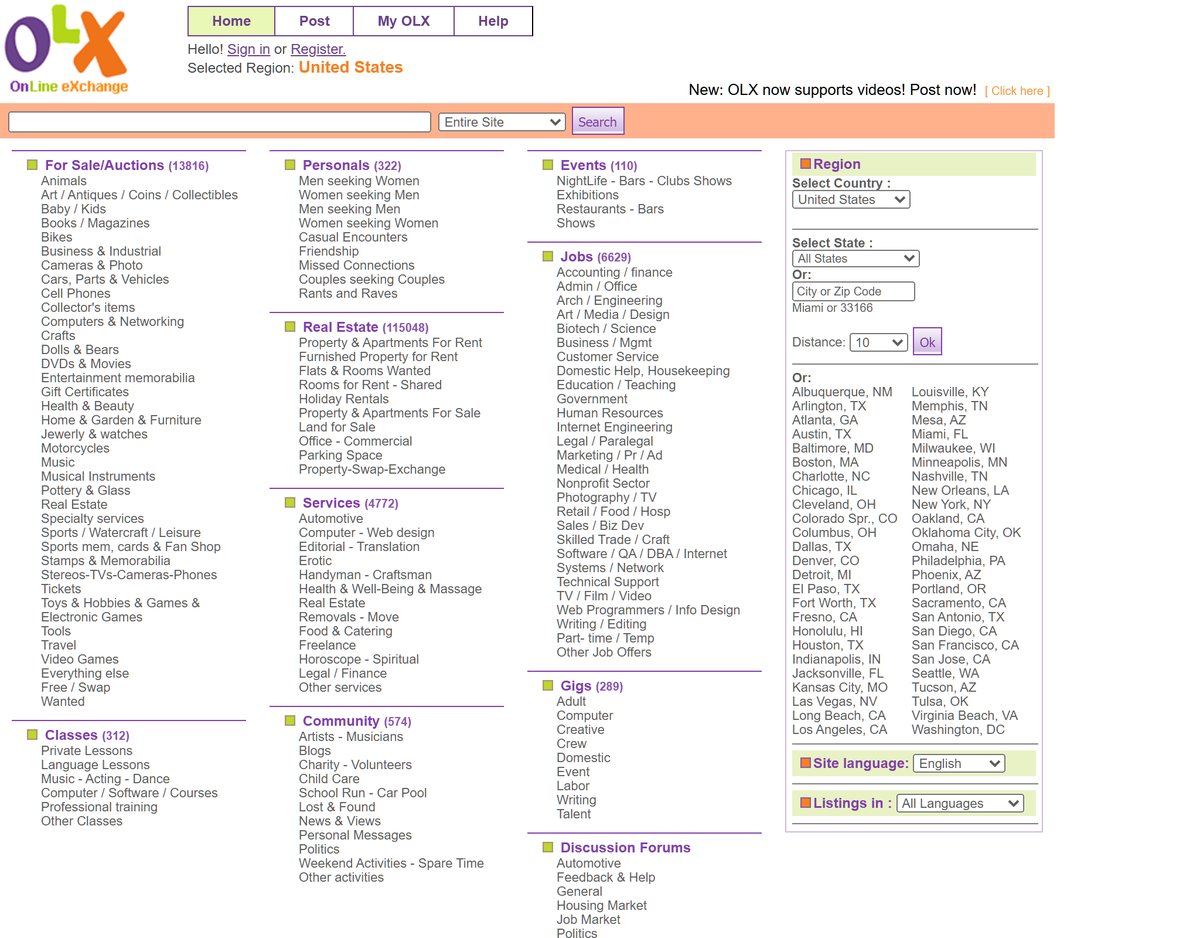
One promise never changed: posting is free. In October 2006, a few months after launch, Grinda said OLX would never charge for posting an ad.4 Money came from Google ads next to search results and, later, paid promoted listings.6,2
The hard part was patience. At the end of 2007, with over 80 employees in 40 countries, Grinda wrote that because online classifieds do not spread virally, the project would take years.10
How they got the first sellers: six moves
Move 1: Test 96 countries cheaply and let sellers vote
OLX did not open 96 countries on day one. In October 2006 it was in about 20 countries and four languages, with Mexico, Spain, India, Canada and the US as flagships.4 It grew to 40 countries by the end of 2007, more than 87 by May 2009 and 90 by the end of 2009.10,5,11 Grinda puts the budget at about $50,000 per country over five months, spent as each country opened.1
OLX's country-by-country test, each country with about $50,000 over five months. Sources 4, 10, 5, 11, 1.
Show the numbers
| When | Countries | Notes |
|---|---|---|
| October 2006 | about 20 | Clubic interview, four languages [4] |
| End of 2007 | 40 | Grinda's 2007 review [10] |
| May 2009 | 87+ | TechCrunch [5] |
| End of 2009 | 90 | Grinda's 2009 review [11] |
| At its widest | 96 | in 51 languages, Grinda [1] |
Most of that money went into Google search ads. In the US those clicks were expensive. In smaller markets, OLX could bid on millions of long-tail keywords (very specific searches, like a phone model plus a city) in each language for about a cent per click. It tracked the cost all the way to a posted ad and a reply, not just a visit.6,3
The point was to compare countries side by side. Grinda's measure was net new listings per capita: new ads per thousand people. Run the same site, the same spend and the same tests in many countries, and the ones where people start listing on their own stand out.3
Why it worked: OLX did not have to guess which market was ready. It let sellers vote. And it could afford the test because, in countries with no incumbent, traffic was cheap.
Your version of the test does not need 96 countries. It needs 3 to 5 towns or sub-niches and one number per area: new listings per 1,000 people. Use this calculator to see where each of your areas stands today.
Calculator
Is your marketplace working yet?
Liquidity means a listing finds a buyer. Count last month on your site: the listings that were live, how many got at least one reply, and how many sold.
Work these out every month and compare areas and categories: put your effort where they rise, not where traffic is biggest. More free tools →
Move 2: Sign up dealers first by taking their feed as it is
Grinda is clear that OLX started with supply.3,8 A sales team in Buenos Aires, native speakers of the target countries' languages, called the biggest advertisers in cars, real estate and jobs: dealers, brokers, even newspapers.6,8
The pitch was honest: OLX is free, and it does not have much traffic yet. The hook was that joining took no work. OLX accepted a partner's existing listings feed in whatever format it already had, so a dealer or a real estate site did not have to change anything to appear on OLX.6
OLX also borrowed audiences. It bought Mundoanuncio, a Spanish-language classifieds site, in 2006, invested in the Chinese site Edeng in 2007, and ran white-label classifieds (its listings under someone else's brand) for the social networks Friendster and hi5. TechCrunch credited much of its success in the Philippines to the Friendster deal.5,7
Why it worked: professional sellers bring many listings at once, and they already keep them in a file. Removing all the work of joining made "yes" easy, even for a site with no buyers yet.
When you write to those sellers, the first message matters most. This template gives you a first email or DM and two follow-ups.
Template
Outreach message to recruit your first sellers
Use this to contact people already selling on other sites, in groups or in shops; personalise the first line every time and offer what you can really deliver.
Send no more than one follow-up to people who did not reply, and keep a list of who asked not to be contacted. More free tools →
Move 3: Make every listing a Google landing page
The early traffic came from paid search, but the lasting traffic came from organic search. Grinda admits that at first nobody at OLX had even thought about SEO (search engine optimisation). Two small acquisitions happened to bring in two SEO experts, and OLX rebuilt the site from the ground up to be search-friendly.1
"We basically were making every mistake in the text book." Fabrice Grinda, on OLX's early SEO1
The logic is specific to classifieds. Every listing is a page that someone, somewhere, is searching for. Grinda puts it the same way: each listing is an ad that can be indexed.3 More sellers means more pages, more search visitors, more replies, and so more sellers.
By early 2010 OLX passed 100 million unique visitors a month.1,11 In December 2009, Businessweek reported that it had become the world's second most visited online classifieds property, ahead of eBay's Kijiji sites.9
Move 4: Start with things people sell often, add big-ticket categories later
OLX started with cheap used consumer goods, then added cars, real estate and jobs.8 The reason was frequency. People buy and sell phones, furniture and clothes often, so they come back, about twice a month according to Grinda, mostly through organic search. That habit then carried traffic to the rarer but more valuable categories like cars and property.3
In 2010 OLX said cars, real estate and jobs made up 90% of its revenue worldwide.12 The cheap categories brought the visits; the big ones brought the money.
Grinda also designed for women, who he argues make most household buying decisions, and who were badly served by unmoderated sites.8
Move 5: Cut to four countries, then hire locally
Once the test was over, OLX narrowed hard. Grinda says the company went from about 100 countries to four, then put most of its weight on Brazil and India.3,8 In 2012 he told Pakistan's Dawn that those four were the focus markets.13
Focus meant people on the ground. For years OLX had run everything from Buenos Aires, with almost no local staff.3 In 2012 roughly 200 of its 270 employees were still in Argentina.6 That changed one country at a time:
- Brazil: OLX opened a Brazilian office in February 2010 for marketing, support and customer relationships, led by Rodrigo Ribeirão. Brazil then had about 14 million monthly visitors and over 1 million ads, after 450% growth in two years. The target was 20 million monthly users and 3.5 million ads within two years.12
- India: Nexus Venture Partners, an Indian fund, invested $5 million in 2009.5 OLX India ran its own campaigns with a local country head, Amarjit Singh Batra.14,15
- Pakistan: OLX had been there about four years by 2012, but serious focus started only a year earlier. It quadrupled in a year to about 5 million (non-unique) visits a month, became the largest classifieds site in Pakistan, and planned a local office.13
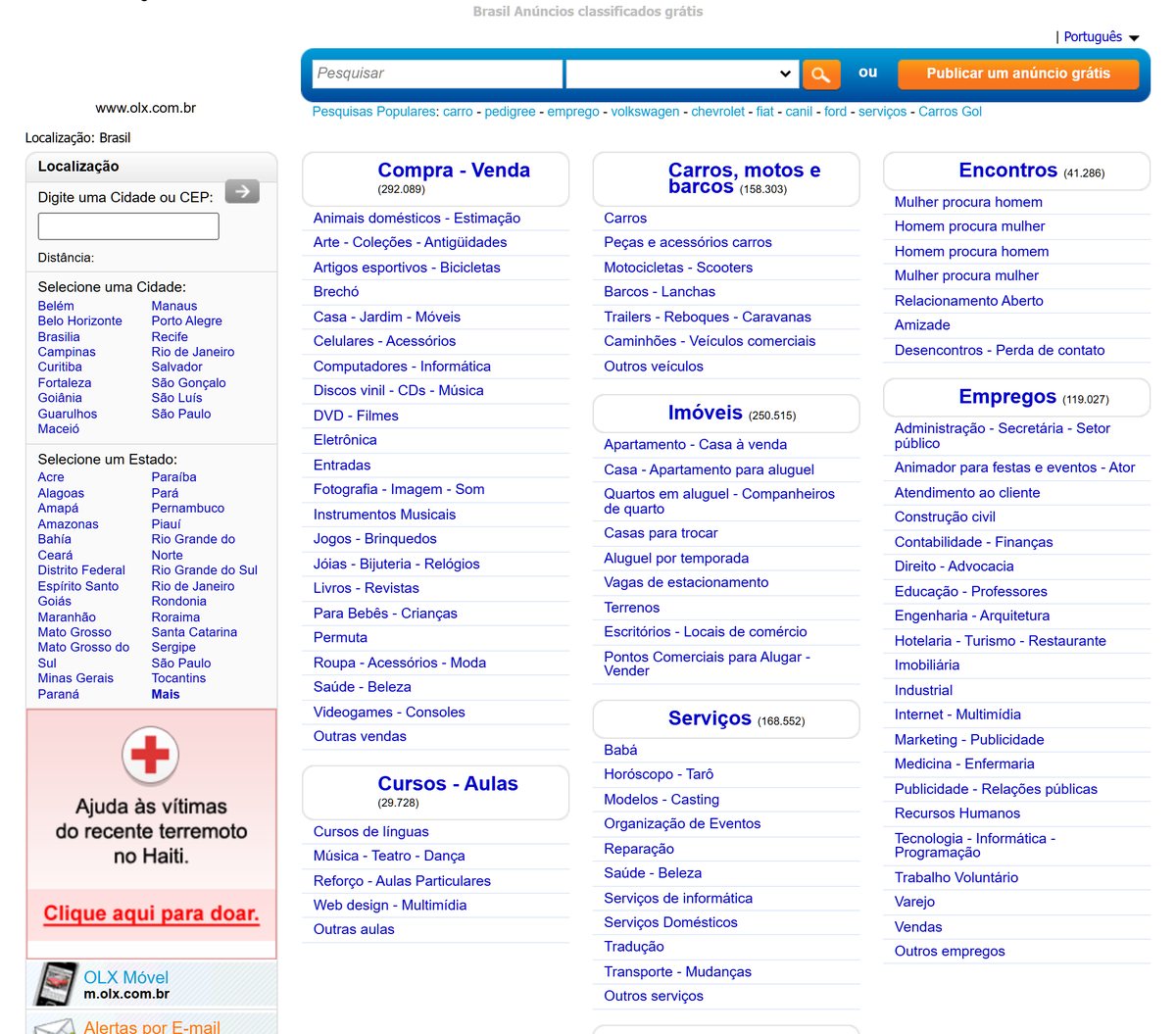
Grinda later wrote that OLX decided to decentralise and give real power to local country managers.1
Move 6: Advertise to sellers, not buyers
This is the move people remember. In India, OLX ran Hindi TV ads made by Saatchi & Saatchi under the line "Bech De" ("sell it"). Grinda wrote about loving them in June 2011.16 Batra later said that in the early years almost all of OLX India's advertising sold the seller's side. The buyers, he said, were already there.15,17
The ads were about everyday things: the old sofa, the phone you no longer use. A September 2012 spot targeted men aged 18 to 44 and stressed one point: posting is free. Batra said the earlier "Bech De" ads had built awareness and this one had to drive action.14 He called the approach FMCG-style advertising, the way soap or soft drinks are sold (FMCG means fast-moving consumer goods).15
The results show up in mobile traffic, reported in May 2012 after TV campaigns in both countries.18
Reported in May 2012, after TV campaigns in India and Brazil. Source 18.
Show the numbers
| Country | Mobile page views per month | Notes |
|---|---|---|
| India, before | 70,000 | Mobile Time, 2012 [18] |
| India, after | 580,000 | same report |
| Brazil, before | 300,000 | same report |
| Brazil, after | 600,000 | same report |
The bigger numbers: OLX India grew from about 10 million page views a month in 2011 to 2.5 billion in 2015.15 In 2013 OLX Brazil spent R$145 million on TV and media, making it Brazil's 37th biggest advertiser.19
In 2012 Grinda said that after TV in India and Brazil, more than half of OLX's traffic came directly or from people searching for the brand.6 That matters: traffic you own does not depend on Google.
Mobile came with it. OLX India's app launched in 2009, and by 2015 about 85% of its traffic was mobile.15 Users could photograph or film an item and post it straight from a phone or tablet.18
What didn't work: five mistakes OLX paid for
Attacking incumbents head-on. Paid acquisition did not work in the US or other developed countries, where incumbents were strong and ads were expensive.6 Grinda's own verdict on the early "Craigslist 2.0" and free-eBay ideas: naive.1
Thinking a lead was safe. Portugal was one of OLX's four winners, and Grinda says the team thought it was impregnable there. Then Schibsted, the Norwegian owner of Blocket and Leboncoin (articles 2 and 3 in this series), entered with aggressive marketing and higher-quality content, and started taking share. In Russia, Avito copied Schibsted's playbook exactly and ran away with the market.1 (OLX had a Moscow office in 2009 and had run TV ads in Russia.5,16)
Quantity over quality. OLX first reviewed ads after they went live. The fix, after Schibsted showed what quality could do, was to review every ad before publishing, focus on engagement, remove personal ads and speed up the site.1,13 Grinda now warns that the biggest single mistake in a marketplace is to pile in endless supply: sellers who never get a reply leave, and dead listings hurt everyone.3
Reviewing before publishing is easier with written rules. This template gives you a short moderation policy you can adapt in ten minutes.
Template
Moderation and content-removal policy
Publish this so users know how listings are checked, how to report one and how to appeal a decision; fill in your timings and contact points.
A starting point, not legal advice: have it checked for your country. More free tools →
Running everything from one office. Customer care and operations for many countries ran from Buenos Aires for a long time.3 Local offices came late, and only once OLX was fighting for specific countries.
Profitable, but too slow. By about 2011 OLX was profitable, growing 70 to 80% a year.2 Against Schibsted and well-funded local rivals like Quikr in India, that was not enough.1
How supply turned into demand: the 25% sell-through line
For a classifieds site, buyers mostly follow listings. Each new ad is a new page in Google, and someone searching for "used Honda City Delhi" lands on it. OLX's job was to keep sellers coming, then keep the buyers who arrived from Google: showing similar items, alternatives when something had already sold, and links to search results.6
The tipping point Grinda describes is liquidity: the chance that a listed item actually sells. Below about 20 to 25%, a marketplace struggles; above it, word spreads and the flywheel keeps turning on its own. On OLX, that chance rose from around 25% to 50 to 60% in strong markets.3,8
Then came the turning point with money. When Naspers, the South African media group, approached OLX in 2010, the founders realised something about their own market:
"The business was essentially a natural monopoly on a national level." Fabrice Grinda1
In other words, in each country the biggest site tends to take almost everything. Naspers bought out all of OLX's venture investors (Bessemer, General Catalyst, Founders Fund, DN Capital, Nexus). The price was not disclosed; TechCrunch's sources said $20 to 40 million for the new money, and Grinda later said the deal valued OLX at $150 to 210 million for about 70%.7,6 OLX then had over 125 million monthly visitors in 90 countries, after raising about $30 million.7
Naspers pushed OLX to focus on its key markets, and the new money paid for faster, less profitable growth through TV.1,2 Grinda says profits from Brazil later funded expansion back into about 30 countries.3
- Early 2010OLX passes 100 million unique visitors a month.1,11
- February 2010First Brazilian office opens; Brazil has over 1 million ads.12
- August 2010Naspers buys out the venture investors; OLX has 125 million monthly visitors in 90 countries.7
- June 2011The "Bech De" TV ads run in India.16
- 2013OLX Brazil spends R$145 million on media; Schibsted's Bom Negócio spends R$101 million.19
- November 2014Naspers and Schibsted merge their Brazilian sites under the OLX brand.19
- Late 2014200 million monthly users, 25 million listings and 8.5 million transactions a month, across 40 countries.2
The playbook: eight lessons for a small marketplace
Test before you commit, and measure one number. OLX spread a small budget across many markets and compared new listings per thousand people. On your site, test 3 to 5 towns or sub-niches for a month each, with the same effort in each: a few posts in local Facebook and WhatsApp groups, a poster, ten direct messages. Put the next three months into the winner.
Sign up professional sellers first, and do the work for them. OLX's sales team accepted any feed in any format. Call or visit dealers, agents, rental owners and shops, and offer to upload their stock yourself from a spreadsheet, a list of Facebook posts or their own website. "Free, and I'll do it for you" is the strongest offer a site with no buyers can make.
Treat every listing as a search page. Buyers find classifieds through Google. Make titles say what and where, fill in categories and locations, and keep your site indexable. A site with 300 well-titled listings gets found. A site with 30 does not.
Start with what people sell often, add what is worth more later. Frequent, cheap items bring people back; cars, property and equipment bring the money. On a niche site, that might mean parts and accessories before whole vehicles, or rentals before sales. Pick the category that gives visitors a reason to come back every week.
Quality over quantity, from day one. Review listings before they go live, delete expired or fake ones, and follow up with sellers who get no replies. One hundred live, answered listings beat a thousand dead ones. This is how Schibsted took share from OLX.
Be local, in person and in language. OLX only started winning when it had people on the ground and ads in local languages. For you, that means writing in your sellers' language, showing up at markets, trade shows and dealer lots, and putting your face and phone number on the site.
Talk to sellers, not buyers. For years OLX's ads said one thing: sell your stuff, it's free. Your posters, group posts and messages should do the same: "Selling a tractor? List it free in 2 minutes." Buyers will come for the listings.
Win one place before you add another. In classifieds, the biggest site in an area tends to take almost everything. Stay in your first town or niche until you are clearly the place people go, then expand. OLX expanded again only after Brazil was profitable.
Try this this week
- Monday, 30 minutes: pick 3 test areas (towns, neighbourhoods or sub-niches) and write down how many live listings each has today.
- Monday to Tuesday, 2 hours: find 30 professional sellers in your best area (dealers, agents, shops) and send all 30 a personal offer to list their stock for free, for them.
- Wednesday, 2 hours: post 20 listings from sellers who said yes (or public posts they let you share), each with a "what + where" title.
- Thursday, 1 hour: share one seller-focused message ("Sell your X free here") in 5 local Facebook or WhatsApp groups, and put up 5 printed posters where your sellers meet.
- Every day, 10 minutes: review each new listing before it goes live, and message any seller who has had no contact after 7 days.
- Friday, 20 minutes: count new listings per area this week, per 1,000 people. Keep the top area as your focus for the next 4 weeks.
Doing it on Yclas
- Recruit sellers (admin panel > Recruit sellers) finds local businesses to invite, gives each a personal /join/ link, keeps a timeline of who you contacted, and can draft the invite with "Write it with AI". Its list of searches that returned nothing shows what buyers want that you don't have yet.
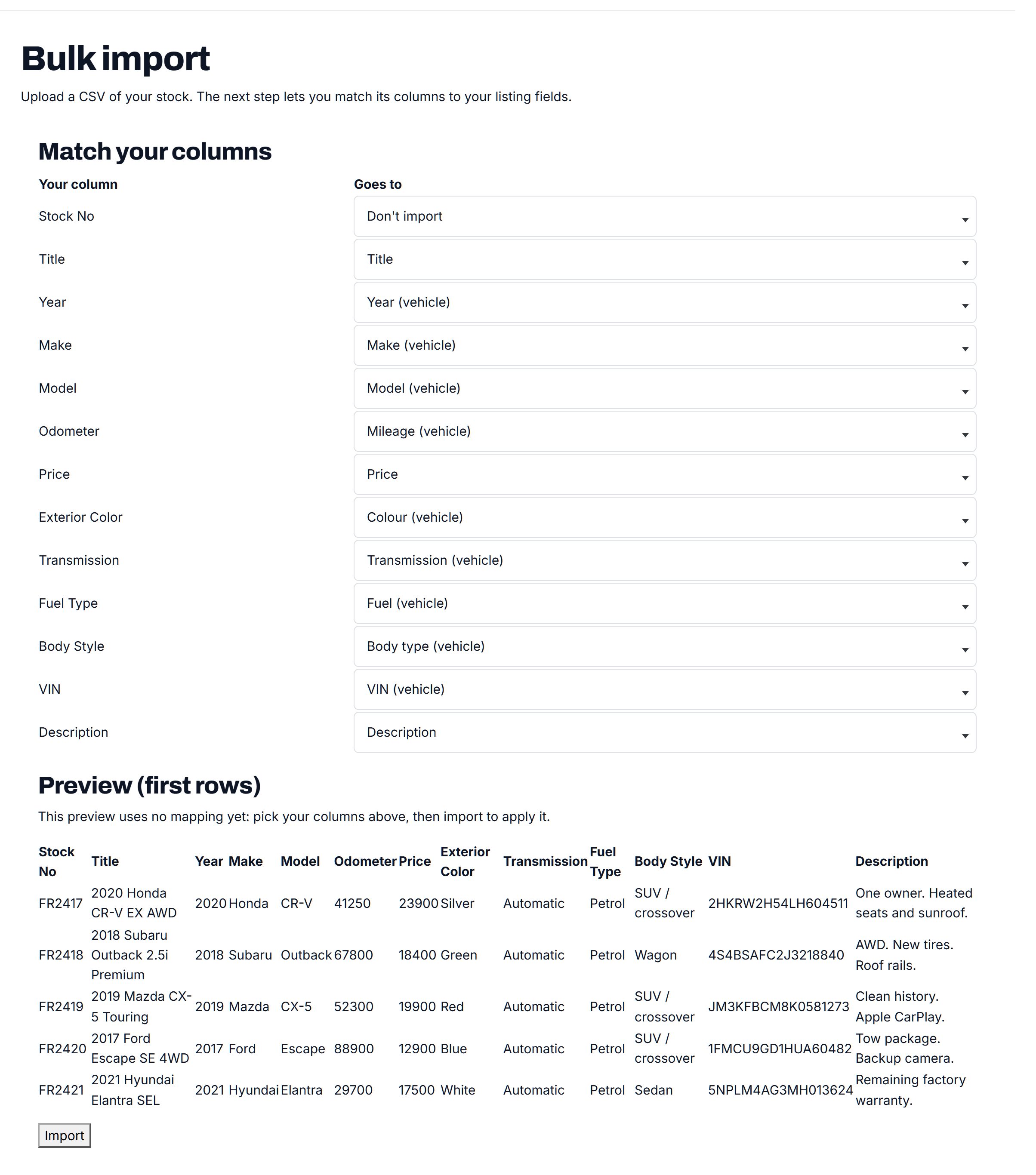
- Importers do the "we'll upload it for you" work from move 2: CSV import, import from another platform, and "Add listings from text", which turns a pasted list of Facebook or WhatsApp posts into draft listings.
- Share your site gives you a ready message for WhatsApp, Facebook and email, a QR code and a printable A4 poster for the seller-focused posts in lesson 7.
- Custom fields and categories give listings the "what + where" structure that makes them searchable, for example year, make and location for vehicles.
- Posting from a photo with AI cuts a casual seller's work to a single photo, close to what OLX's mobile apps did for phone sellers.
- Later, featured listings, paid seller plans and the member email digest are how you earn money and bring buyers back, in the order OLX followed: free posting first, paid promotion later.
For a wider look at OLX's business model, see our earlier post, The success of OLX.
Sources
- Why I am leaving OLX — Fabrice Grinda (2012) — https://fabricegrinda.com/why-i-am-leaving-olx/
- OLX emerging markets (interview with Alec Oxenford) — Fortune (2014) — https://fortune.com/2014/10/29/olx-emerging-markets
- Zero to Billions: Techstars alumni conversation with Alejandro Garcia-Amaya — Fabrice Grinda — https://fabricegrinda.com/zero-to-billions-techstars-alumni-conversation-with-alejandro-garcia-amaya/
- Fabrice Grinda: "OLX est l'idée la plus risquée que j'ai jamais entreprise" — Clubic (2006) — https://www.clubic.com/actualite-54982-.html
- Craigslist competitor OLX scores $5 million for online classifieds — TechCrunch (2009) — https://techcrunch.com/2009/05/07/craigslist-competitor-olx-scores-5-million-for-online-classifieds
- OLX: Why introverted founders need to be rejected (repeatedly), with Fabrice Grinda — Mixergy (2012) — https://mixergy.com/interviews/fabrice-grinda-olx-interview/
- Naspers makes strategic investment in Craigslist competitor OLX — TechCrunch (2010) — https://techcrunch.com/2010/08/26/naspers-makes-strategic-investment-in-craigslist-competitor-olx/
- OpenVC: My most in-depth video interview ever — Fabrice Grinda — https://fabricegrinda.com/openvc-my-most-in-depth-video-interview-ever/
- A web of classified ad rivals challenges Craigslist — Bloomberg Businessweek (2009) — https://www.bloomberg.com/news/articles/2009-12-07/a-web-of-classified-ad-rivals-challenges-craigslist
- Looking back at 2007, looking forward to 2008 — Fabrice Grinda (2007) — https://fabricegrinda.com/looking-back-at-2007-looking-forward-to-2008/
- Looking back at 2009, looking forward to 2010 — Fabrice Grinda (2009) — https://fabricegrinda.com/looking-back-at-2009-looking-forward-to-2010/
- OLX quer 20 mi de brasileiros por mês — Baguete (2010) — https://www.baguete.com.br/noticias/olx-quer-20-mi-de-brasileiros-por-mes
- Classified success: an interview with the co-CEO of OLX Inc — Dawn (2012) — https://www.dawn.com/news/727520/classified-success
- OLX.in highlights its free-of-cost proposition with new TVC — Campaign India (2012) — https://www.campaignindia.in/video/olx-in-highlights-its-free-of-cost-proposition-with-new-tvc/417347
- "We took a leaf out of the FMCG style of advertising": Amarjit Batra, OLX India — afaqs! (2015) — https://www.afaqs.com/interviews/470_we-took-a-leaf-out-of-the-fmcg-style-of-advertising-amarjit-batra-olx-india
- I love the OLX India TV ads! — Fabrice Grinda (2011) — http://www.fabricegrinda.com/olx/i-love-the-olx-india-tv-ads/
- OLX turns to buyers' needs — afaqs! (2015) — https://www.afaqs.com/news/advertising/42950_olx-turns-to-buyers-needs
- OLX dobra audiência móvel após campanha na TV — Mobile Time (2012) — https://www.mobiletime.com.br/?p=44973
- Controladores de OLX e BomNegócio se unem — Meio & Mensagem (2014) — https://www.meioemensagem.com.br/marketing/controladores-de-olx-e-bomnegocio-se-unem
- OLX Brasil homepage, 8 February 2010 — Internet Archive (2010) — https://web.archive.org/web/20100208061830/http://www.olx.com.br/